

"It was agreed that the ultimate aim of the (British) Government's policy in Ireland was a united Ireland with a separate parliament of its own, bound by the closest ties to Great Britain, without offending the Protestants of Ulster (sic)..."
- a statement issued by the British cabinet, on the 3rd December 1919, after those politicians had had a discussion on 'the Irish Question'.
Needless to say, "the Protestants of Ulster" (sic) or, at least, the political leadership of same, were practically up in arms when they heard about the "separate parliament" discussions and, on the 15th December, that cabinet stated that they had held meetings with (Six County) Unionist leadership figures and agreed with the Unionists, who were "doubtful whether a Northern Parliament (sic) of Ireland would be able effectively to govern three Ulster counties - Donegal, Cavan and Monaghan - where there was a Nationalist majority".
Of the remaining six counties - Antrim, Armagh, Down, Fermanagh, Derry and Tyrone - Fermanagh and Tyrone also had Nationalist majorities but, with the aid of a manipulated vote (ie a gerrymandering protocol) and supine Free State politicians in the Twenty-Six Counties, the London politicians and the Ulster Unionists knew they could enforce their illegitimate writ in those two Irish counties.
And so it remains today.
"Any attempt at secession (by the Staters) will be fought with the same determination, with the same resources, with the same resolve as the Northern States of America put into the fight against the Southern States. It is important that that should be known, not merely throughout the world, but in Ireland itself..."
- Mr David Lloyd George (the British PM at the time), 22nd December, 1919.
Before and after the 15th December "Doubtful" statement and between then and the 22nd, the British Government and Unionists in Ireland cobbled-together a plan which they themselves, in-house, referred to as 'The Fourth Home Rule Bill' but were devious enough to call, in public, 'The Better Government of Ireland Bill'.
The pro-British political boss in Ulster, a Mr James Craig (the '1st Viscount Craigavon'!) knew the score and convinced the others that a Six County 'State' within the Nine-County Ulster would be easier to

That new 'law' introduced two 'parliaments' - one for the six-north eastern counties of Ireland and one for the other twenty-six counties - which sounds, and IS, equally as ludicrous today as it was then!
The London political boss, Mr David Lloyd George, also knew the score ; when introducing the new 'law', he declared -
"There is a path of fatality which pursues the relations between the countries and makes them eternally at cross purposes..."
And - again - so it remains today...
==========================
ON THIS DATE (3RD DECEMBER) 48 YEARS AGO : STATE MEDIA REPORT THAT AN ESCAPED IRA LEADER HAD BEEN CAPTURED AFTER 50 MONTHS ON THE RUN.
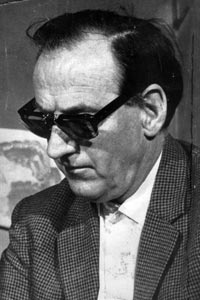
In March 1973, IRA leader Joe Cahill was arrested by the Free State Navy in Waterford, aboard the Claudia, a ship from Libya loaded with five tons of weapons, and was sentenced to three years imprisonment, and another IRA leader, Seamus Twomey (pictured), was appointed IRA Chief of Staff.

In early October that year, Twomey was caught and arrested by the Free Staters and imprisoned in Mountjoy Jail, which meant that three top IRA operatives (Twomey, J.B. O'Hagan and Kevin Mallon) were now housed in the one location - and the IRA wanted them back!
An 'American businessman', a 'Mr. Leonard', approached the manager of the 'Irish Helicopters' company at Dublin Airport and discussed hiring a helicopter for an aerial photographic shoot in County Laois and, after being shown the company's fleet of helicopters, this 'businessman' booked a five-seater Alouette II helicopter for October 31st.
'Mr Leonard' arrived at Irish Helicopters on the day and was introduced to the pilot of the helicopter, a Captain Thompson Boyes, who was instructed to fly to a field in Stradbally, County Laois, to pick up photographic equipment.
After landing, the pilot saw two armed and masked men approaching the helicopter from nearby trees and he was held at gunpoint and told he would not be harmed if he followed instructions.
'Mr Leonard' left the area with one gunman, while the other gunman climbed aboard the helicopter armed with a pistol and an Armalite rifle. Captain Boyes was told to fly towards Dublin following the path of railway lines and the Royal Canal, and was ordered not to register his flight path with Air Traffic Control.
As the helicopter approached Dublin, Captain Boyes was informed of the escape plan and instructed to land in the exercise yard at Mountjoy Prison.
On Wednesday, 31st October 1973, at 3.40pm in the afternoon, the Alouette II helicopter landed in the 'D Wing Exercise Yard' of Mountjoy Prison in Dublin, when a football match was taking place between the prisoners, and Twomey, O'Hagan and Mallon jumped aboard, but were quickly spotted (!) by an alert (!) prison screw who used his training and power of intuition to take immediate action - he *called on the screws at the gate to close them over as he feared the helicopter was trying to escape (*according to the RTE 'Scannal - Prison Break' programme!).

Another IRA prisoner who was in the yard at the time recalled how an embarrassed screw told him that he had apologised to the prison governor in relation to the incident, saying that he thought the helicopter contained a visiting (Free State) Minister for Defence (and well-known publican) Paddy Donegan : the IRA prisoner replied that, in fact, "..it was our Minister of Defence leaving...!"
All three men reported back to the IRA and continued their work for the Movement but, after a few weeks of freedom, Kevin Mallon was recaptured at a GAA Dance in the Montague Hotel in Co. Laois on 10th December 1973, J.B.O'Hagan was recaptured in Dublin in early 1975 and Seamus Twomey managed to remain uncaptured until December 2nd, 1977, after the Special Branch came across him in a 'suspicious car' parked in Sandycove, in Dublin.
He had managed to evade the forces of 'law and order', North and South, for fifty months, despite been hunted by the best that Leinster House and Westminster could throw at him!
GAS LADS...

The massive finds of oil and gas on our western seaboard could ensure Ireland's financial security for generations.
Wealth approximating that of the Arab countries is within our grasp, but the Irish government seems content to sell off our birthright for a handful of votes and a few dollars.
In a special 'Magill' report, Sandra Mara investigates just what we are giving away, and why.
From 'Magill' magazine, March 2002.
Noel Tracey, (State) Minister for Science, Technology and Commerce, told the gathering at the annual dinner of the Institute of Petroleum in November last -
"The Tosco transaction represents an excellent deal for Ireland.
It radically improves the situation for both the refinery and the terminal by placing them squarely within the fold of a major integrated oil business, where opportunities for profitable trading are maximised and a culture of investment in both plant and people predominates."
Joe Higgins, though, condemned the sale of INPC in the Dail (sic), saying that it was "a policy which has been dictated not by the interests of working or ordinary people, but by the interests of multinational corporations exerting huge pressure on governments."
Industry experts say that INPC, which dealt with the retail end of the business, was well placed to win contracts from organisations such as the ESB, Iarnrod Eireann and other State agencies for the supply of fuel, and at the time of the sale already had a substantial turnover...
(MORE LATER.)
ON THIS DATE (3RD DECEMBER) 138 YEARS AGO : EVE OF THE BIRTH OF A 'TROUBLESOME WOMAN'.

'4th December 1887 - Winifred Carney, trade unionist and revolutionary, is born in Bangor, Co. Down.
Winifred Carney was a suffragist and an advocate for trade unions. She was an activist in the Irish Textile Workers Union and became James Connolly's personal secretary while he was based in Belfast in 1912. She was active in organising solidarity work for workers during the Dublin Lockout and she joined Cumann na mBan.
She became involved in the Easter Rising when Connolly asked her to come to Dublin to work for him. She was the only woman who participated in the initial occupation of the GPO where the Irish Citizen Army set up its headquarters. She was armed with a typewriter and a revolver.
Winifred was well known for her reputation of being a crack shot. She was among the final group to leave the GPO (along with Elizabeth O’Farrell and Julia Grennan) as she would not leave the wounded Connolly. She was arrested and taken to Kilmainham Gaol and later Aylesbury prison and was released in December 1916. Winifred died in 1943 and is buried in Belfast...' (From here.)
"The conditions of your toil are unnecessarily hard, that your low wages do not enable you to procure sufficiently nourishing food for yourselves or your children, and that as a result of your hard work, combined with low wages, you are the easy victims of disease, and that your children never get a decent chance in life, but are handicapped in the race of life before they are born.."
- part of the speech which Winifred Carney and James Connolly prepared for his speech to millworkers in Belfast in late 1911. Connolly was the Belfast Organiser for the ITGWU at the time, and Carney was just a few weeks away from becoming the full-time Secretary of the then newly-formed 'Irish Textile Workers' Union'.
On the 4th of December 1887, Alfred and Sarah Carney welcomed the birth of their sixth child, Winifred, into their existing family - three boys (Ernest, Louie and Alfred) and two girls ( Maud and Mabel).
The family were then living in Bangor, County Down but, not long after Winifred was born, the marriage broke down and Sarah moved with the children to Carlisle Circus in Belfast, where she started a small shop.
Winifred found work as a teacher and developed a love for the Irish language, joining the Gaelic League to further her interest and, at 27 years of age, she joined (membership number 56077) the then newly-formed 'Cumann na mBan' organisation and, indeed, was present in Wynn's Hotel in Dublin in April 1914 when that organisation was founded.
Her duties included teaching first aid to the other members as well as training in the use of weapons, as she was known to be proficient in that particular field (a skill no doubt learned due to her activity with the 'Irish Citizens Army', which she joined on its formation in 1913).
This was two years before the (1916) Easter Rising and, due to her connection with James Connolly and her membership of various republican/nationalist organisations, Winifred Carney knew that an action against British interference in Ireland was being discussed and she was determined to play her part in any such blow against the 'empire' and said as much to Connolly, who by then had stationed himself in Dublin to assist the workers there in what became known as 'the great lock out'.
Winifred Carney stayed in Belfast, collecting whatever money she could for the Dublin strikers and billeting as many families of the strikers as she could. Connolly kept her up to date on developments and, when the time came - April 1916 - he asked her to come to Dublin to help with the preparations for a rising against Westminster, which she did.
At first she was 'jobbed' in Liberty Hall, writing dispatches and mobilisation orders etc but, on the day the rising began - 24th April 1916 - as an Adjutant in the Irish Citizen Army, she carried both 'tools of her trade' into the GPO : a typewriter and a revolver.

During the early stages of the week-long battle she was the only female in the building and, towards the end of that particular battle (..but not the end of the fight itself!) she refused orders at the time to leave the premises, as did her two colleagues, Julia Grenan and Elizabeth O'Farrell.
Altogether, there was a total of thirty-four women in the GPO at the time, members of the 'Irish Citizens Army' and 'Cumann na mBan', thirty-one of whom followed orders and vacated the building, with the wounded.
The female Volunteers were also tasked with carrying military instructions around the city during which trips they gathered intelligence on the strength and locations of the enemy and carried as much food and ammunition as they could safely deliver to their comrades.
The Rising ended when Winifred Carney, Nurse Elizabeth O'Farrell and Julia Greenan, who were by now based in the Moore Street Headquarters as there was no safety or shelter to be had in the remains of the GPO, were instructed to deliver a surrender notice to British General Lowe, stating the following -
'In order to prevent further slaughter of the civil population and in the hope of saving the lives of our followers, the members of the Provisional Government present at headquarters have decided on an unconditional surrender, and commandants or officers commanding districts will order their commands to lay down arms.
P.H. Pearse, Dublin, 30th April 1916.'

Winifred Carney, Brigid Foley, Maire Perolz, Nell Ryan and Helena Moloney were the five female Volunteers that were deported to prisons and internment camps in England and Wales, following the surrender, as were 1,836 male Volunteers, and approximately 80 other female Volunteers were taken, firstly, to Richmond Barracks and then to Kilmainham Jail and, although most were released within a week, Winifred Carney, Helena Moloney and Nell Ryan were held captive in Aylesbury Prison in Buckinghamshire in England until the 24th December (1916).
They had been offered early release if they signed an undertaking "...not to engage in any act of a seditious character.." but they had refused to do so.
She maintained her republican principles in the years that followed, despite being targeted repeatedly by agents of the State and, despite many personal setbacks (most of which were related to her strong political beliefs) she never compromised her republicanism.
When ill health forced her off the picket and protest lines she continued to verbally challenge the State at every opportunity until even that became too much for her : she died at fifty-five years of age on the 21st November 1943, just as opposed to Free Staters and partition as she had always been, and is buried in Milltown Cemetery in Belfast.

On the 3rd December, 1920, Galway County Council discussed and agreed a 'Peace Resolution' which called on the Irish republican, 32-County Dáil Éireann to negotiate a truce with the British.
Pro-British presstitute 'journalists' in England and in Ireland reported, gleefully, that the resolution was bitterly criticised by the Republican Movement, including (ironically) by Michael Collins, and newspaper reports mentioned that the British took it as an indication that rebel resolve was weakening.
However, on closer examination, the truth emerged later but, as usual with all things spun by politicians and their hirelings in the media, it didn't receive the same coverage as the original article.
Six members out of the 32 members of Galway County Council turned up for the meeting (six not being a quorum), as the other 26 were 'on the run' from foreign gunmen, and those six elected reps did indeed discuss a 'Peace Resolution' but did not pass it as an agreed motion.
But the lie was half way around the world before the truth even got its trousers on / falsehood flies, and truth comes limping after it / a lie will go round the world while truth is pulling its boots on...!

On the same date that six Galway political sleveens were sleveening their way into notoriety, IRA GHQ issued 'General Order No.15 [New Series]', authorising IRA Brigade Commanders to collect funds in their area to financially support the Movement.
The Commanders were told to be thorough in their endeavours and to approach everyone "except declared enemies", and leaflets were drawn-up, printed and distributed, similiar to this one which was delivered practically door-to-door in the Cork IRA Brigade No.3 area -
'A collection is being made in this area, by authority of the General Head Quarters of our Army, to enable me to carry on the work of arming the Volunteers in this Brigade, and so sustaining and increasing the fight waged against the enemy here.
You are asked to subscribe a fair amount.
It is for your own protection as well as for the national good.
The enemy forces are running loose whenever they get an opportunity.
They are murdering defenceless people.
They are pillaging, burning, outraging, wherever they go.
Arms are needed to meet them and to beat them.
Money is required to get the arms.
That is the plain statement of the case.
It is no appeal ; it is just a request to every man and every woman who believes in Ireland to help the Army of Ireland to carry on the fight.
During the next week collectors appointed by the Officer-in-charge of the area will call on you...'
The IRA Brigade Commander for the 3rd (West) Cork area, Volunteer Tom Barry, later reported back to GHQ that over £5,000 had been collected in three nights in his area - the citizens were willing, as was their army!

On the same date that IRA GHQ issued 'G Order 15 [NS]', Archbishop Patrick Joseph Clune (pictured) was visiting Arthur Griffith and Eoin MacNeill (Irish-republican-gamekeepers-turned-Free State poachers) in Mountjoy Jail in Dublin.
Two days previously, Mr Clune had had a chat 'about peace in Ireland' with a Mr David Lloyd George and he was due to meet with Michael Collins (another republican-gamekeeper-turned-Free State-poacher) the next day (4th).
However, the British demand that the IRA must surrender their arms meant that nothing came from those talks.
As Mr Clune was visiting the poachers in the 'Joy (!), the then ten-year-old 'Church of England Peace League' issued a statement in London condemning reprisals in Ireland which they said undermined "the very foundations of justice and order..."
A purposely ambiguous position, as it's not clear whether that church grouping were referencing British Army revenge attacks on civilians or IRA attacks on the British military...?!

On the same date that that church body were formulating their murky statement, a patrol of five RIC members, led by a Mr Daniel McMorrow ('Service Number 60344') were leaving their barracks in the town of Youghal, in County Cork, and were crossing the old metal 'Blackwater Bridge' when shots were fired at them.
An IRA ASU, with Volunteer James Mansfield (3rd Battalion, West Waterford Brigade) in command, had established an ambush position and the RIC members were now in the middle of it.
One of the RIC members was hit and fell to the ground ; his colleagues took whatever cover they could find as bullets bounced off the ground beside them.
Job done, the rebels returned to base.
The wounded RIC man, a Mr Maurice Prendiville (/Prenderville, 46, 'Service Number 57219'), a married man with six children, from Kerry, was carried by his buddies to nearby Torrens Chemist shop where he died from his wounds.
Mr Prendiville had 26 'years of service' with that paramilitary grouping, and two of his brothers - James and Edmund - were also tied-up with it.
Incidentally, Mr Prendiville and one of his RIC pals, a Mr Peter Ryan ('Service Number 62404') had been captured by the IRA during an ambush at Piltown Cross, Waterford, on the 1st November (1920) but both were released unharmed on the understanding that they would resign from the RIC.
Neither of them did.
Also incidentally (!) -
The family which owned the chemist shop, the Torrens, had come to the attention of the rebels before the 3rd December 1920 -
'Notice to quit Ireland within 7 days or die -
We hereby give you solemn notice to leave this country within 7 days or forfeit your life.
So take your choice.
It's up to yourself, beware, for this is no idle threat.
Signed J.K.A.'
- a note delivered to John Morrison Torrens from the IRA in that area, after Mr Torrens and his family had again given assistance to enemy forces.
Indeed, a letter dated December 1920, and signed by a 'JJ Carroll, Captain, County Inspector's Office', surfaced afterwards, in which Mr Torrens was thanked.. "..for kindness to wounded officers on two recent occasions, on behalf of the Royal Irish Constabulary..."
The Torrens family duly left Ireland.

On the 3rd December, 1920, 'The Spectator Magazine' in London claimed that the British Government's failure to enlist the support of Britsh public opinion for its policies (!) in Ireland was the result of its failure to use its propaganda resources to the fullest.
Looking for extra ad revenue, perhaps...?!
==========================

THE MONTH UNSPUN...
The stories that hit the headlines.
From Magill magazine, August 2002.
In general, it was welcomed among the major parties, although David Trimble was extremely cautious in his optimism.
Trimble had questioned in the House of Commons what role Sinn Féin should play in the Executive in the absence of concrete evidence of a republican transition from violence to democracy.
The fact that the timing of the statement strengthened Sinn Féin's position in that discussion was hardly coincidental, 'The Irish Times' newspaper believed.
The 'paper argued that the statement, along with two acts of decommissioning and Alex Maskey's recent Somme commemoration, could be used to allay unionist anger over violence in Belfast, the murder (sic) of alleged drug dealers and the events in Colombia - all indications, it would seem, that the IRA ceasefire is not being maintained...
(MORE LATER.)


On the 3rd December, 1921, in a show of strength in the days before the 'Treaty of Surrender' was signed (6th December, 1921, at 10 Downing Street in London, England), about 2,000 IRA Volunteers held a parade through the town of Kilreekil, in County Galway.
The rebels were inspected by Volunteer leadership figures Richard Mulcahy and Michael Brennan : two Irish republican-gamekeepers-turned-Free State-poachers.
The irony, for shame.
==========================
DEATH IN THE MEDITERRANEAN...

Desmond Boomer, a Belfast engineer working in the Libyan oil-fields, disappeared seven years ago.
Officially, the plane on which he was a passenger crashed as a result of mechanical failure and pilot error.
But is that the real story?
Or were the Irishman and his fellow passengers unwitting victims of the shady war between Islamic fundamentalism and Mossad, Israel's intelligence network?
A special 'Magill' investigation by Don Mullan, author of 'Eyewitness Bloody Sunday'.
From 'Magill' magazine, January 2003.
The Maltese Report fails to note, however, that the wife and children of Carmelo Bartolo publicly stated, through their lawyer, in 'The Times' newspaper, Malta, on the 23rd April 1999, that they did not recognise the voice on the tape as that of their loved one.
Paul Lehman, the Piper Corporation Senior Accident Investigator, told the Maltese Board of Inquiry that following his examination of the recovered wreckage he was satisfied it belonged to Piper Lance 9H-ABU and that it was his expert opinion the aircraft had crashed into the sea.
On Thursday June 14th 2001, Cormac Boomer telephoned Mr. Lehman at the Piper Corporation headquarters in Florida.
A number of telephone calls were made before he was eventually put through to a woman who identified herself as a lawyer who was in the presence of Paul Lehman. Lehman and the lawyer conducted the telephone conversation by conference.
Boomer asked Lehman if he would be willing to give an interview for a television documentary, and his lawyer replied that questions would need to be forwarded in advance before a decision could be taken.
Then he asked Lehman if he was satisfied the aircraft had crashed into the sea...
(MORE LATER.)


As a 14-years-young teenager, John Dooley from Loughbrown, Newbridge, in County Kildare, joined Na Fianna Éireann and, shortly afterwards, started work in a gravel pit in Knockbrown, County Wexford, which was owned by the Great Southern and Western Railway Company.
He stayed with NFÉ and the gravel pit job for five years, then abandoned the NFÉ, the gravel pit job and his principles for a 'career as a soldier' with the newly-spawned Free State Army (which he joined on the 4th July, 1922, 'Service Number 401').
He was part of an FSA military convoy (he was driving one of the trucks) which, on the 1st December 1922, was travelling from the village of Wellington Bridge, in the south of County Wexford (about fifteen miles west of Wexford Town) into Wexford Town when an IRA landmine exploded under the lorry.
The young Mr Dooley was seriously injured and died from his wounds on the 3rd December.
One of his Stater comrades, a Mr Washington, also from Newbridge, was actually blown out of the truck and into the air by the explosion but, when he landed, his only injury was a sprained ankle.
'Tugann an Diabhal aire dá mhuintir féin' ('The Devil looks after his own').
As Mr Washington was landing on his arse in County Kildare, 250 km (about 155 miles) away, across the country and down the road a bit in Castleisland, County Kerry, a 26-year-old man, Mr William Brosnan, who kept himself to himself, had locked-up his butchers shop on Main Street and was walking home.
It was his usual routine - doors closed to the public at about 8.30pm, sweep the floor, lights off, close door and lock it, walk home.
As he was walking down Main Street he was shot dead.
The Free State Army had declared a 9pm curfew for that night and a motorised FSA patrol passed him on the street, no questions, no warning - one of the State gunmen simply shot him dead.
They at least had the decency not to plant a firearm on him.
Marbhfháisc air!
RIP Mr William Brosnan.
At about the same time that poor Mr Brosnan was locking-up his shop, 100 km (about 62 miles) away across the country, in County Cork, a Free State Army member, a Mr George McGlynn, and his colleagues, were trying to escape from an IRA ambush in the village of Ballyvourney.
Mr McGlynn was badly wounded and died from his injuries the next day.
The Stater Army had him on their books as a 'Sergeant' ('Service Number 20743') and a 'Corporal' ('Service Number 56600').
He was from Forge, New Row, Naas, County Kildare, and died on the 4th December 1922 in the Mercy Hospital in Cork.
==========================
ON THE 2ND DECEMBER 105 YEARS AGO - QUESTIONS ASKED IN WESTMINSTER RE 'ESCAPING' IRISH PRISONERS BEING SHOT BY BRITISH FORCES IN IRELAND ARE SIDE-STEPPED, BUT COVERED BY SOME NEWSPAPERS ON THE 3RD.

Ireland, 1920 : a flavour of the chaos inflicted here by the British political and military presence : in January that year, the 1st Cork Brigade of the IRA captured Carrigtwohill 'Royal Irish Constabulary' (RIC) barracks.
In February, the 'Home Rule Bill' was published, in which Westminster voiced its intention to establish a 128-member 'parliament' in Dublin and a 52-member 'parliament' in Belfast despite knowing, from previous partition experiments, that two 'parliaments' in one country was a receipe for political disaster.
Sinn Féin Lord Mayor of Cork, Tomás Mac Curtain, was murdered in his house by British forces in March.
In April, a hunger-strike began in Mountjoy Prison in Dublin by IRA prisoners who were demanding POW status.
In May that year, forty IRA prisoners who were on hunger-strike in Wormwood Scrubs in London, England, were released and in June an armed British militia in Ireland, the RIC, got the go-ahead from Westminster to'officially' shoot republicans dead.
In July 1920, those deemed not fit for the regular British forces in Ireland were given a new home in the 'ADRIC' ('Auxiliary Division Royal Irish Constabulary') and in August Terence MacSwiney went on hunger-strike in Brixton Prison in England.
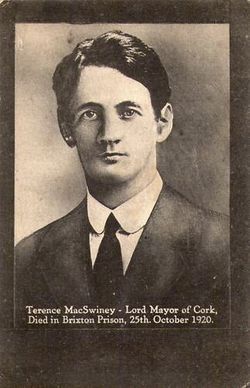
In September the 'Black and Tans' destroyed more than fifty properties in Balbriggan town in Dublin, a British militia, the 'USC', was established in October, in November fourteen British spies were executed in Dublin by the IRA and in December 1920 Westminster declared 'Martial Law' in Cork, Kerry, Limerick and Tipperary.

Questions re 'the Irish situation' surfaced occasionally in the grand halls of Westminster and, on the 2nd December 1920 (covered by some newspapers on the 3rd), the following exchange took place in that venue but was dismissed by the chairperson as 'the wrong question having been asked' :
Lieut-Commander KENWORTHY asked the Chief Secretary for Ireland how many prisoners in Ireland have been shot dead while trying to escape, according to police reports, up to the end of November of this year and during the present year; how many have been wounded; and how many of these were handcuffed at the time of their death or wounding?
Mr. GALBRAITH asked the Chief Secretary for Ireland what is the total number of persons who have been shot at in Ireland when attempting to escape from custody; and how many of such persons have been wounded and killed, respectively?
Mr. HENRY : According to the police reports the number of prisoners fired at while attempting to escape from custody within the period from 1st January to 30th November, 1920, is 11. Of these nine were killed and two wounded. One of the prisoners killed and one of those wounded are stated to have been handcuffed while attempting to escape.
Lieut-Commander KENWORTHY : Is the right hon. and learned Gentleman aware that when the bodies have been given to the relatives that in many cases those men have been found to be riddled with bullets through the head: how does he think that men can try to escape from police lorries; and can he inform me if all these cases have been investigated by a court of inquiry?
Mr. HENRY : I must have notice of that question.
Mr. MacVEAGH : Can the Attorney-General say whether the figure he has quoted includes those shot dead on the allegation that they were attempting to resist arrest?
Mr. HENRY : The question put to me was as to the number of men shot whilst attempting to escape from custody.
Lieut-Commander KENWORTHY : Surely the right hon. and learned Gentleman can say whether there has been an inquiry into these cases, in view of the very serious allegations made and reported in the newspapers throughout the country?
Major O'NEILL : Is the right hon. and learned Gentleman aware that when General Lucas was captured, the officer who was captured with him attempted to escape, and was shot by the Sinn Feiners?
Mr. MacVEAGH : Also does the right hon. and learned Gentleman know that when General Lucas was released he stated that he had been treated with the greatest consideration by his captors?
Mr. SPEAKER : We are getting a long way from the question on the Paper...
(HANSARD 1803–2005 ? 1920s ? 1920 ? December 1920 ? 2 December 1920 ? Commons Sitting ? IRELAND. ESCAPING PRISONERS [SHOOTING]. HC Deb 02 December 1920 vol 135 cc1410-1 1410.)
That was 105 years ago and shows that those political defenders of British imperialism were as quick then as they are now to use obfuscation in an attempt to 'neutralise' an embarrassing situation.
But Irish republicans had been fighting the British writ in Ireland centuries before the Westminster parliament was established and - no obfuscation here - will continue to do so, in one form and/or another, until they remove themselves, politically and militarily, from our country!


As a teenager, James Woods (pictured), who was born in March 1900, from Ballyreen, Lisdoonvarna, County Clare, studied to be a teacher and acquired a position as a trainee teacher, but left after one year and joined the Volunteer Movement.
When the Free State 'An Garda Síochána' was established in February 1922, he showed an interest in that grouping and, in November that year, he paid a visit to their recruitment office at Ship Street Barracks in Dublin and joined up ('Service Number 2358'), as did two of his brothers.
Young James (23) was sent to 'do his duty' in Bantry Garda Barracks in County Cork and, six months later, he was promoted to the rank of sergeant and, within weeks, he was transferred to Scartaglen Garda Barracks in the Sliabh Luachra area of County Kerry.
On the night of the 3rd December, 1923, six armed and masked men entered the barracks and took control of it, holding the occupants - Sergeant Woods and one other Garda member - at gunpoint ; they were there to confiscate weapons, uniforms and any other material they deemed useful.
The armed men ordered Sergeant Woods to hand over his weapons and his uniform and, when he resisted them, he was shot and died instantly.
Mr Woods is the first State cop to have died 'in the line of duty'.
==========================
ON THIS DATE (3RD DECEMBER) 54 YEARS AGO : NEWS BREAKS THAT THREE IRA PRISONERS HAD JOINED NINE OF THEIR COMRADES!

Crumlin Road Jail, Belfast (pictured) - known for its good quality bed sheets...
In November 1971, there were more than 700 IRA prisoners being held in Crumlin Road Jail in Belfast, with at least the same number again 'housed' in Long Kesh and other prisons.
All had access to an exercise yard and, in Crumlin Road Jail, the escape committee decided to use that yard as part of their plan to free three of their number - Martin Meehan, Anthony 'Dutch' Doherty and Hugh McCann.
The plan was for the three men to hide themselves under a sewer manhole in about two feet of water, which they did, for about five hours.
As luck would have it, when they eventually let themselves out, a thick fog had settled in the area, giving good cover. They ran for the prison wall and, using bed sheets which they had roughly fashioned into a rope ladder, with a home-made 'hook' tied to the top of the 'ladder', they managed to scale the wall.
Within hours, Martin Meehan and Hugh McCann were in a safe house in the Free State and their comrade, Anthony Doherty - who stayed in Belfast following the escape - joined them two weeks later.
Incidentally, on the 17th November 1971 - about two weeks before the above-mentioned 'rope ladder' escape - nine other IRA prisoners had also escaped from that same prison with the use of rope-ladders!
The nine were Thomas Kane, Seamus Storey, Bernard Elliman, Danny Mullan, Thomas Fox, Tom Maguire, Peter Rogers, Christy Keenan and Terrence 'Cleaky' Clarke and all of them escaped in two cars which were waiting for them on the near-by Antrim Road.
To add further to the distress caused to the then British 'Home Affairs Minister', Brian Faulkner, and his side-kick, 'Sir' Edmund Compton ("...torture would never happen in a British jail..") by those jail breaks, they were referenced in a popular song of the time -
OVER THE WALL.
In Crumlin Road Jail all the prisoners one day
took out a football and started to play,
and while all the warders were watching the ball
nine of the prisoners jumped over the wall!
Over the wall, over the wall,
who would believe they jumped over the wall?
over the wall, over the wall,
It's hard to believe they jumped over the wall!
Now the warders looked on with the greatest surprise
and the sight that they saw brought tears to their eyes,
for one of the teams was not there at all
they all got transferred and jumped over the wall!
Now the governor came down with his face in a twist
and said "Line up those lads while I check out me list,"
but nine of the lads didn't answer at all
and the warder said "Please Sir, they're over the wall."
The 'security forces' were shook to the core
so they barred every window and bolted each door,
but all their precautions were no use at all
for another three prisoners jumped over the wall!
Then the news reached old Stormont, Brian Faulkner turned pale
when he heard that more men had escaped from his jail,
said he - "Now we'll have an enquiry to call, and we'll get Edmund Compton to whitewash the wall."
Ah, whitewash : the second-favourite liquid used in Westminster, after Earl Grey, of course!
The newspapers made for good reading on the 3rd December, 1971...!


The much vaulted and 'Establishment'-lauded so-called 'Tripartite Agreement' was agreed to and signed on the 3rd December, 1925, by representatives from the Westminster, Leinster House and Stormont administrations.
In effect, by agreeing to the document, and signing it, the Staters were 'officially' accepting the enforced partition of Ireland.
The three political entities consented to suppress the report of the 'Boundary Commission' (that report was suppressed for 44 years ie it wasn't released until 1969!), that the partition/border between the Free State and the Occupied Six Counties was to remain unchanged, that issues regarding republican prisoners held in those Six Counties would be the imprimatur of Westminster (and Stormont would accept that that is the case ; Leinster House not even mentioned), that the Staters would be freed from 'Article 5'* financial penalties, that the powers (!) granted to the so-called 'Council of Ireland' (a GONGO agency/talking shop, which never even held one meeting!)) would be transferred to Stormont and, finally, that "the two Irish governments (sic - Stormont and Leinster House were being referenced ie two 'governments' actually spawned by the British!) would meet together, as and when necessary, for the purpose of considering matters of common interest..." (the actual 'common interest' that both entities shared was to maintain the imposed border ie to keep the country partitioned).
That last clause ("common interest") was never invoked and Mr Cosgrave and Mr Craig were never to meet again!

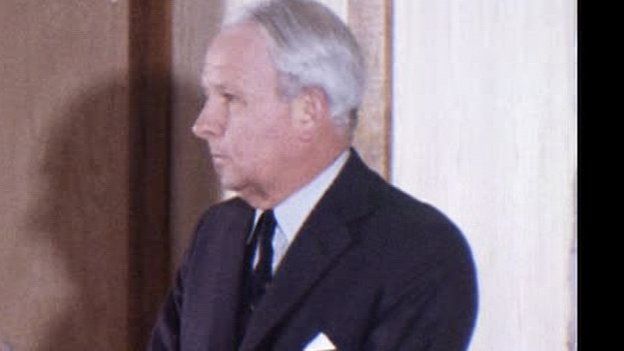
The Irish historian, Maureen Wall (pictured, née McGeehin), summed-up the farce by declaring -
"Ambiguities were now at an end ('1169' comment - verbally, at least!).
This time the unionists had got all they wanted, and the agreement bore the signatures not only of the British and Free State representatives but, for the first time, the signatures also of the representatives of Northern Ireland (sic)..."
The British civil servant and 'Irish Under-Secretary' in Westminster, a Mr James McMahon, stated -
"The Boundary Commission crisis was resolved surprisingly easy when British financial generosity allowed the three governments (sic) to come to an agreement that buries the commission’s findings..."
A Mr FE Smith (the '1st Earl of Birkenhead'), a prominent British politician who had involved himself in the various 'Treaty of Surrender' events, in a letter he wrote to one of his political buddies, 'Lord Reading', the British 'Lord Lieutenant of Ireland', said -
"...both the Northern Ireland and Free State governments (sic) developed a friendly and competitive enthusiasm in the task of plundering us..." (pot calling the kettle black right there!).
And, finally, speaking in Westminster about the Boundary Commission plunder (!), the then British 'Chancellor of the Exchequer', a Mr Winston Churchill stated -
"The Irish question will only be settled when the human question is settled..."
The so-called 'Irish question' will only ever be properly settled when the British finally withdraw, politically and militarily, from Ireland.
(*'Article 5' left the Staters liable for a share of British public debt and, under that Article, Leinster House had actually agreed [!] to repay compensation payments it got from Westminster for damage etc done here between July 1914 and November 1918 during 'World War 1'...!)
==========================
Thanks for the visit, and for reading - appreciated.
Sharon and the team.
(We'll be back on Wednesday, 17th December, 2025, which will be our last post for this year.)