PROSE AND CONS.
By prisoners from E1 Landing, Portlaoise Prison, 1999.
ACKNOWLEDGMENTS :
Grateful thanks to the following for their help, support, assistance and encouragement, and all those who helped with the typing and word processing over the past few months. Many thanks to Cian Sharkhin, the editor of the book, Mr Bill Donoghue, Governor, Portlaoise, Mr Seán Wynne, supervising teacher, the education unit in Portlaoise Prison and the education staff, especially Zack, Helena and Jane. Education officers Bill Carroll and Dave McDonald, Rita Kelly, writer, print unit, Arbour Hill.
First Print : November 1999, reprinted March 2000, illustrations by D O'Hare, Zack and Natasha. Photograph selection : Eamonn Kelly and Harry Melia.
GIFT.
I was standing around
and in a crowd,
when I took a sniff
and then went stiff,
my mind went high
right up to the sky,
I won't tell a lie.
The pain inside
I can't describe,
the veins are fading
the mind is craving,
I need the stuff
a sniff's not enough,
higher and higher
I'm a liar.
I ran out of luck
or was it the stuff,
that's all in the past
it didn't last,
so I will say good-bye
and lie down and die.
Hi! don't sniff
that is my gift
get the drift?
Anon.
NOTHING.
They grease your hand
and talk about the promised land.
But slide you out without a doubt
before you know what it's all about.
You realise they told lies
the promised land was only sand,
that ran through your fingers
like hot cinders.
Jack, I won't be back to break my back,
be wise get yourself a financial advisor
before you're left with only a fiver,
and end up in the lonely Ivyer.
Anon.
(Next - 'The Value of a Smile' by Richard Birmingham.)
"WE SUPPORT THE USE OF ARMED STRUGGLE IN THE SIX COUNTIES..." - MARTIN McGUINNESS.
The following piece was published in the 'Socialist Republic!' newspaper in September 1986 and records some of the words of Martin McGuinness from a speech he delivered in Bodenstown on Sunday 22nd June of that year. That publication was 'the newspaper of the Scottish Communist Republican Party (SCRP)' , both of which are now apparently defunct as separate entities as, indeed, is McGuinness himself, in relation to Irish republicanism. Less than six months after he delivered the following speech, Martin McGuinness assisted other nationalists in splitting the Republican Movement.
Quote from Martin McGuinness, Sunday 22nd June, 1986, Bodenstown: "Despite the multi-million dollar hype of the (Hillsborough) Agreement, despite disinformation, despite the rewriting of Irish history by West Britons and British propaganda, more and more people are beginning to realise that internal tinkering with the six-county statelet solves nothing.."(...which is exactly what McGuinness and his nationalist colleagues are doing now - "internal tinkering with the six-county statelet.")
IRELAND : "ONLY A SOCIALIST REPUBLIC CAN END DECADES OF WAR, INJUSTICE AND POVERTY" - Sinn Féin.
"All the resources, weaponry and technology available to the British government have not been sufficient to defeat our struggle", said Martin McGuinness, "the men and women Volunteer soldiers of the Irish Republican Army have, with courage and determination, continued the fight against numerically superior forces. And I apologise to no-one * for saying that we support and admire the freedom fighters of the IRA. (*...he quickly changed his tune when a British-funded political career was on offer : "... it’s appropriate that where people lost their lives apologies should be made, apologies have been made and I think they’re heartfelt.." [from here.] )
In the North, attacks on the British Army, the RUC and the UDR continue. The IRA has shown continued resourcefulness and capability to strike where and when it wants. Its strategy has caused considerable damage not only to British Crown personnel and fortifications but to Britain's carefully planned Ulsterisation policy. The British and their native collaborators in the twenty-six counties know that the IRA is out to win.
My message to them is crystal clear - if there is no freedom there will be no peace. We do not fear you. The struggle continues and we are going to win."
(END OF 'We Support The Use Of Armed Struggle In The Six Counties' : NEXT - 'Chilean Fighters Need Your Help Now!' ; from the same source.)
STUNNING SILENCE....
The British publishing group 'Macmillan' must have been sorely disappointed by the media's reaction, or lack of it, to the launch last month of Paul Foot's book 'Who Framed Colin Wallace?' By Eamonn McCann, from 'Magill' magazine, June 1989.
In the event, the British media didn't treat the publication as any sort of news at all, apart from two brief pieces by Richard Norton-Taylor in 'The Guardian' - no other national paper mentioned it. The only radio interest shown was by the London commercial station LBC and by Radio Sussex, both of which carried interviews recorded at the book launch.
A firm arrangement for the author, Paul Foot, to appear on Mervyn Bragg's 'Start The Week' programme on May 15th was cancelled - as the production team frankly concedes - after intervention from "higher up". There was no mention of the book being published anywhere on British television.
'Channel 4 News' , much the most assiduous of British news programmes in following the Colin Wallace story in recent years, turned down an offer from Macmillan of exclusive access to the last stages of the race to meet the May 10th deadline. Macmillan hoped for better things when Foot and Wallace travelled to Dublin for the Irish launch on May 10th.... (MORE LATER).
ON THIS DATE (2ND SEPTEMBER) 73 YEARS AGO : "IF FROM THE PATH YOU CHANCE TO STRAY...
..KEEP IN MEMORY OF THAT MORN, WHEN IRELAND'S CROSS WAS PROUDLY BORNE.."  "I met the bravest of the brave this morning..." Tom Williams, 12th May 1924 – 2nd September 1942."Williams was one of six IRA volunteers sentenced to death by hanging in 1942. A group of eight, including two women, had mounted a diversionary operation to take away attention from three republican parades held in Belfast to celebrate the 1916 Easter Rising. All such parades had been banned under the Stormont regime since the partition of Ireland and the introduction of the Civil Authorities (Special Powers) Act of 1922. A police (RUC) patrol managed to capture the group but not before an exchange of shots which resulted in the death of RUC constable Patrick Murphy. Although only 18 years old, Tom Williams was in charge of the unit and in a controversial statement to the police he assumed full responsibility for the shooting. Following a remarkable international reprieve campaign, the colonial Governor of Northern Ireland commuted five of the six death sentences to terms of penal servitude. But the British had decided that Tom Williams should hang..."(from here)'Time goes by as years roll onwards
But in my memory fresh I'll keep
Of a night in Belfast Prison
Unshamefully I saw men weep
For the time was fast approaching
A lad lay sentenced for to die
And on the second of September
He goes to meet his god on high
Now he's walking to the scaffold
Head erect he shows no fear
For on his proud and gallant shoulders
Ireland's cross he holds so dear
Now the cruel blow has fallen
For Ireland he has fought and died
And we the countrymen who bore him
Will love and honour him with pride
Brave Tom Williams we salute you
And we never will forget
Those who planned your cruel murder
We vow to make them all regret
So come all you Irish rebels
If from the path you chance to stray
Bear in memory of the morn, when Irelands cross was proudly borne
By a lad who lay within these prison walls.'(From here) For Tom, and all the other brave men and women.
ON THIS DATE (2ND SEPTEMBER) 92 YEARS AGO : FIFTH HUNGER-STRIKER IN SEVEN YEAR PERIOD DIES.
Pictured, left ; the grave of 19-years-young Irish republican Joe Whitty, who died on hunger-strike on the 2nd September 1923, and was buried in Ballymore cemetery, Killinick, Co. Wexford.
Joseph Whitty came from Connolly Street in Wexford town. He was a volunteer in the IRA's South Wexford Brigade and was arrested and imprisoned in late 1922, after the counter-revolution had begun. Prior to his imprisonment, he was among the many Republicans in County Wexford to suffer at the hands of Britain's occupation forces and later at the hands of the Free State traitors.
In February 1923, members of Cumann na mBan had gone on hunger strike in protest against ongoing internment and successfully secured their release. By May the Civil War had officially ended, but thousands of republicans remained imprisoned, often in very poor conditions. This resulted in further hunger strikes during 1923. The Free State government had since passed a motion outlawing the release of prisoners on hunger strike, and this was to have dire consequences for Joseph Whitty and others. He died in Newbridge Internment Camp, on September 2nd, at the age of 19. He was the fifth Republican to die on hunger strike since 1917, and was laid to rest in Ballymore Cemetery, Killinick with full military honours.
'At a public meeting held in New Ross on Sunday July 22nd 1923, Miss Dorothy MacArdle read a letter from Newbridge prison camp. She did not think it had passed through the hands of the censor. The letter referred to the condition of 19 year old Óglach Joseph Whitty, William Street, Wexford. She asserted that he was not in the organisation at all and that he was being punished as revenge for the activities of his brothers. He signed the undertaking reluctantly on the advice of a friend but despite the boasting of the government that signing meant release, he was still in gaol and dying.
The first time his mother went to visit him the authorities refused to allow to do so. The second time when they allowed her to see her son he was unable to recognise her.
The meeting should demand that he be released before he died, said Miss MacArdle. Professor Caffery proposed a resolution demanding the immediate release of Joseph Whitty and the other prisoners in Ireland and Britain and suggested that a telegram should be sent to the pope. Miss Nellie O'Ryan seconded the resolution which was put to the meeting. All present signified assent by raising their right hands. Unfortunately, the free state government failed to release Joseph Whitty. On Thursday September 2nd, 1923, he died in the Newbridge military hospital. He had been arrested about a year earlier. Interment took place in Ballymore the following Sunday before a large crowd. When the remains were laid to rest his comrades fired three volleys over them and recited a decade of the rosary in Irish....' (from 'Boards.ie')
Joe Whitty is one of twenty-two Irish republicans to die on hunger-strike between 1917 and 1981, all of whom are remembered each year by the Republican Movement.
ON THIS DATE (2ND SEPTEMBER) 95 YEARS AGO : 'SPECIAL (LOYALIST) CONSTABULARY' FIRST MOOTED.
A member of the pro-British 'Special Constabulary' (pictured, left), on his way to the 'office' for yet another normal day of 'policing'....
At a meeting in London on the 2nd September 1920 - 95 years ago on this date - the then 'Prime Minster' of Stormont, 'Sir' James Craig ("All I boast is that we are a Protestant Parliament and Protestant State...") demanded that a force of 'Special Constabulary' be established for Ulster and, six days later - on the 8th September - Westminster agreed that a force of "loyal citizens" were needed, and insisted that the then pro-British paramilitary gang known as the 'Ulster Volunteer Force' should be made 'official' and employed as such. And, with a simple name change and the provision of a British uniform, a new State-sponsored paramilitary gang , the A,B and C Specials, was born : the 'A' gang (about 3,500 of them in total) were full-time operatives who lived in the local RIC barracks and were used as re-inforcements for the RIC, and were armed and on a wage. Essentially, their presence allowed more 'police officers' free to leave their desks and assist their British colleagues in cracking nationalist skulls. The 'B' outfit (numbering 16,000 approximately) were armed but part-time and on 'expenses' only, and were usually to be found on street patrol and operating checkpoints and the 'C' grouping (about 1,000) were a reserve force with no specific duty as such but were 'on call' as an armed militia
Nationalists knew the danger of such a move for them - the UVF/Specials were not by any means 'neutral' in the conflict. The then 'Daily News' newspaper stated, re the establishment of the 'Specials' -'The official proposal to arm "well-disposed" citizens to "assist the authorities" in Belfast raised serious questions of the sanity of the government. It seems the most outrageous thing which they have ever done in Ireland. A citizen of Belfast who is "well-disposed" to the British government is, almost from the nature of the case, an Orangeman, or at any rate, a vehement anti-Sinn Feiner. These are the very same people who have been looting Catholic shops and driving thousands of Catholic women and children from their homes...' But all words of opposition, or even caution, were ignored.
The officer class in the 'Specials' were hired if they passed a civil service examination and were mostly upper and middle-class protestants with a moral connection to their 'mainland' (England) whereas the rank-and-file consisted of the thugs that once populated any anti-Irish paramilitary gang that would have them. The latter were not allowed 'serve' in their own county or that of a family member and were relocated on a fairly regular basis, living in the local barracks and single men were not allowed to leave same at night to socialise. 'Specials' who wanted to get married could only do so after they had been with the gang for seven years or more and even then only if their girlfriend was deemed 'suitable' by the officer class, a 'test' which included the nature of her job before and after the marriage. Any such 'Special' family were under orders not to take in lodgers, not to sell produce locally (ie eggs, vegetables etc) and the husband was not entitled to days off (no 'rest days' or annual holidays) and was not permitted to vote in elections!
After Westminster forcibly partitioned Ireland in 1921 the British wanted control over the new 'State' to be exercised by their own kind (as opposed to 'Paddies in British uniforms') and, in late 1925, they felt confident enough to declare that the 'Specials' should be wound-up and a kitty containing £1,200,000 was put on the table to secure their disbandment : their main man in that part of Ireland, 'Sir' James Craig - up to then a great friend and supporter of the Specials - was jobbed to pass on the bad news : on 10th December 1925, Craig told the 'A' and 'C' Specials that they were out of work (the 'B' gang were to be kept on) and offered each man two months pay. End of announcement - at least as far as Craig and Westminster were concerned, but the 'A' and 'C' Specials were not happy with the "disband" order and discontent in the ranks grew. The 'A' and 'C' Specials held meetings between themselves and, on 14th December 1925, they mutinied!
'A' and 'C' members in Derry 'arrested' their own Officers, as they did in Ballycastle - two days later (ie on 16th December 1925) a demand from the 'A' and 'C' 'rebels' was handed over to 'Sir' Richard Dawson Bates, the Stormont 'Minister for Home Affairs', a solicitor by trade, who was also Secretary of the 'Ulster Unionist Council', a position he had held since 1905. He was not impressed with their conduct. The 'A' and 'C' Specials were looking for more money ; they demanded a £200 tax-free 'bonus' for each member that was to be made redundant. Two days later (ie on 18th December 1925) 'Sir' Bates replied to the Special 'rebels' that not only would they not be getting the £200 'bonus' but if they didn't back down immediately they would loose whatever few bob they were entitled to for being made redundant and, on 19th December 1925, the 'rebels' all but apologised to Bates, released their hostages and signed on for the dole - the 'hard men' of the 'Specials' had been put in their place by a bigger thug than they were! By Christmas Day, 1925, the 'A' and 'C' Sections of the 'Ulster (sic) Special Constabulary Association (the 'Specials') were disbanded. It was only in 1970 that the 'B' Special gang of thugs 'disbanded' (ie changed uniform into that of the 'Ulster Defence Regiment' (UDR) and carried-on with their mis-deeds) . It was actually in September 1969 that the (British) 'Cameron Commission' described the 'B' Specials as "a partisan and paramilitary force..." while the October 1969 'Hunt Report' recommended that the 'B' Specials be disbanded. Since then, the RUC (formed in 1922) have been amalgamated into the 'PSNI' but, even though the uniforms changed, the objective didn't - the preservation of British rule in Ireland.
ON THIS DATE (OR WAS IT ?) 263 YEARS AGO...
... the Gregorian calendar was adopted in Ireland and Britain, 170 years after some other countries had done so (France in 1582, Austria in 1584, and Norway in 1700). This resulted in the 2nd of September 1752 being followed, 24 hours later, by the 14th September 1752!
In 1752, the British 'Empire' ordered the abolishment of the dates between the 2nd and the 14th of September for all colonies controlled by them. This meant that the so-called 'British Isles', English colonies and America lost 11 days in September 1752. The days in that September month began with the 1st and the 2nd but 11 days were skipped and the days continued with the 14th, 15th etc untill the 30th day. This meant that from the 3rd to 13th of September 1752, nothing actually happened because there were no dates for anything to happen on (?!)
At the time, many people mistakenly believed that their lives would be shortened by 11 days and some were also unhappy and suspicious at the moving of saint's days and holy days, including the date of Easter etc. But not everyone was unhappy about the new calendar ; according to W.M. Jamieson in his book, 'Murders Myths and Monuments of North Staffordshire', there is a tale about one William Willett of Endon. Always keen on a joke, he apparently wagered that he could dance non-stop for 12 days and 12 nights. On the evening of September 2nd 1752, he started to jig around the village and continued all through the night. The next morning, September 14th by the new calendar, he stopped dancing and claimed his bets!
We won't be doing a jig here in '1169 Towers' , but we do hope to be back next Wednesday, 9th September. That's if there is a Wednesday, 9th of September...!
Thanks for reading, Sharon.
ELEVEN DAYS DISAPPEAR IN IRELAND..
A 'gift' from Portlaoise Prison, 1999..../ Martin McGuinness - "The IRA has shown continued resourcefulness and capability to strike where and when it wants..."/ If from the path you chance to stray - the bravest of the brave...../ Irish POW, 1923 : "The first time his mother went to visit him the authorities refused to allow to do so. The second time when they allowed her to see her son he was unable to recognise her...."/ 1925 - British 'police' in Ireland mutiny and take their own officers as hostages.../ 'Time flies' , but how can eleven days disappear overnight in Ireland?
(MORE ON WEDNESDAY 2ND SEPTEMBER 2015).
Thanks for checking in - do the same again tomorrow....Sharon.
PROSE AND CONS.
By prisoners from E1 Landing, Portlaoise Prison, 1999. Acknowledgments : grateful thanks to the following for their help, support, assistance and encouragement - all those who helped with the typing and word processing over the past few months, many thanks to Cian Sharkhin, the editor of the book, Mr Bill Donoghue, Governor, Portlaoise, Mr Séan Wynne, supervising teacher, education unit, Portlaoise Prison and education staff, especially Zack, Helena and Jane. Education officers Bill Carroll and Dave McDonald, Rita Kelly, writer. And the print unit, Arbour Hill.
INTRODUCTION :
Deep within the life of every person there is expression. This collection, 'Prose and Cons', is the voice of that expression. Sad, humourous, lonely, bitter, joyful, angry, questioning, dedicated, rejected, content, reflective, philosophical - just some of the tones expressed throughout this unique volume. Of themes there are many, but love illuminates the pages of this fabulous collection of work.
The lads on E1 landing, Portlaoise Prison, have worked long hours to bring this book to fruition. I commend their enthusiasm and willingness to work, individually and together, in an interested and challenging manner. Writing is a craft. It involves the writer and his/her audience. I hope you enjoy reading these poems and stories , as I have enjoyed their journey to here, and I leave you with the words of the writer, Rita Kelly, from her recent poem, 'Big House' :
You cannot hear the activity of the living
you cannot hear life driving its articulated truck
you cannot see the bright smile of the lads
heading into the snooker hall close to the coliseum
or the woman with her cranky little pomeranian.
You cannot smell that oil and salt and sharpness
of the vinegar in its immediacy, as the young fellow leaves the chipper."
With every good wish, Jane Meally, Creative Writing Tutor. (MORE LATER).
NOT "NATIONAL", BUT WORTH SUPPORTING ANYWAY.
 On Saturday, 29th August 2015, a demonstration will be held in Dublin to voice opposition to the on-going fiasco that is the double-tax on water. The organisers, although no doubt well-meaning (re their opposition, for now , anyway, to this double-tax), have described the up-coming protest as a "national demonstration" even though they are aware that the so-called 'remit' of the 'Irish Water' company does not extend to our six north-eastern counties. They have made this mistake before, but continue to refuse to amend their posters and leaflets etc to reflect the true (geographical) position of their own remit. I can usually work alongside that 'Trot' mentality but it grates on me, sometimes, as does the attitude of the trade union leadership in relation to this issue - for instance, on Friday 21st August last, SIPTU sent an email to subscribers re the water tax issue, in which they called for support for "...a national (sic) demonstration on the public water supply...concerning the future of the public water supply.." which is an attempt by that section of the trade union leadership to shift the focus of the protest away from the issue of unfair double-taxation to one of 'distribution of water'. And considering that SIPTU is the trade union that represents the scab workers that are helping to impose this double tax, it's no surprise that it should seek to shift that focus in any manner that it can.
Anyway : this new water company, with whom I am not registered as a 'customer', are now demanding that I pay them just under €130 for a 'service' that I have always paid for through general taxation and car tax etc but I won't be paying. I'm one of the lucky few thousand in this corrupt little State that can actually afford to pay this double- tax but, as I point blank refuse to pay twice for any one service, I won't be paying it. Misnomer as it most certainly is regarding the description of this up-coming protest, I'll be there regardless - Saturday, 29th August 2015, 2pm at Houston Station. See ye then!
"WE SUPPORT THE USE OF ARMED STRUGGLE IN THE SIX COUNTIES..." - MARTIN McGUINNESS.
The following piece was published in the 'Socialist Republic!' newspaper in September 1986 and records some of the words of Martin McGuinness from a speech he delivered in Bodenstown on Sunday 22nd June of that year. That publication was 'the newspaper of the Scottish Communist Republican Party (SCRP)' , both of which are now apparently defunct as separate entities as, indeed, is McGuinness himself, in relation to Irish republicanism. Less than six months after he delivered the following speech, Martin McGuinness assisted other nationalists in splitting the Republican Movement.
Quote from Martin McGuinness, Sunday 22nd June, 1986, Bodenstown: "Despite the multi-million dollar hype of the (Hillsborough) Agreement, despite disinformation, despite the rewriting of Irish history by West Britons and British propaganda, more and more people are beginning to realise that internal tinkering with the six-county statelet solves nothing.."(...which is exactly what McGuinness and his nationalist colleagues are doing now - "internal tinkering with the six-county statelet.")
IRELAND : "ONLY A SOCIALIST REPUBLIC CAN END DECADES OF WAR, INJUSTICE AND POVERTY" - Sinn Féin.
"We want a society free from multinational profiteering and foreign influence. We want a society that is truly non-aligned. Our aim is not to provide poets and song-writers with more ballads of defeat but to build a really revolutionary organisation that will change Irish society for the betterment of the oppressed, the deprived and the unemployed men and women of this country."
Pointing to the unquenchable spirit of freedom of the Irish people, Martin McGuinness said : "This present resistance struggle has lasted longer than any other in the history of our country. We have experienced and withstood internment, torture, murder and martial law. Our people have shown a dedication, a heroism and a willingness to sacrifice everything in their fight for freedom that has inspired freedom-loving peoples throughout the world - black South Africans, Palestinians, Nicaraguans and Filipinos know all about Bobby Sands and Brighton.
The Irish people have proved that, no matter how militarily and technologically superior an oppressor can be, the will for freedom cannot be defeated. This movement will stand its ground. The IRA has said that the war will go on, and this movement will advance the struggle for what is rightfully ours - the freedom of Ireland and the establishment of the Republic." (MORE LATER).
STUNNING SILENCE.
The British publishing group 'Macmillan' must have been sorely disappointed by the media's reaction, or lack of it, to the launch last month of Paul Foot's book 'Who Framed Colin Wallace?' By Eamonn McCann, from 'Magill' magazine, June 1989.
The British publishing group 'Macmillan' must have been sorely disappointed by the media's reaction, or lack of it, to the launch last month of Paul Foot's book, 'Who Framed Colin Wallace?' The book deals with the bizarre and, at least at first sight, incredible story of the former British Army 'press officer' in the North of Ireland who was convicted of manslaughter in Sussex in the early 1980's and who has since protested his innocence and claimed that he was likely set-up in order to discredit his revelations of security force disinformation and dirty tricks in the early 1970's. ('1169...' comment - those British 'dirty tricks' were not confined to the 1970's and, indeed, are still on-going to this day).
The book was rushed into publication on May 9th this year (1989) so as to avoid being banned under Britain's new 'Official Secrets Act' which came into force at midnight the following day. The new law would have covered information and documents included in the book relating to Wallace's activities as a 'black propagandist' working out of Britiah Army headquarters in Lisburn.
The book was prepared and printed in secrecy and no review copies distributed until the launch in London hosted by Macmillan chairman, Lord Stockton. Macmillan had calculated that the absence of normal pre-publicity would be more than offset by the news value of the books hectic and secret preparation and its last-minute 'escape' before the latest shutters on official information slammed down.... (MORE LATER).
ANNUAL EVE OF ALL-IRELAND RALLY 2015.
"One of the largest public rallies seen in Dublin for years was held by Sinn Féin at the GPO on the eve of the All-Ireland Football Final. Headed by a Colour Party and a pipe band, a parade of more than 2,000 people marched from Parnell Square through the main city thoroughfare as a protest against the continued unjust imprisonment of Irishmen without charge or trial. Contingents from all over the country took part and many carried banners and placards including groups from England and Scotland. In the Ulster section was a strong representation of the Derry supporters who thronged the capital city for the Final. One placard they carried asked - 'Why are Six-County Nationalists interned in the Curragh?' ....." (From 'An tÉireannach Aontaithe/The United Irishman' newspaper, November 1958.) The Annual Eve Of All-Ireland Rally will be held in Dublin on Saturday 19th September 2015. Those attending are asked to assemble at the Garden Of Remembrance at 1.45pm for the parade to the GPO in O'Connell Street at 2pm. All genuine republicans welcome!
INTERNATIONAL DAY OF SUPPORT FOR IRISH POW'S.
The 5th Annual International Day in Support of the Irish Prisoners of War held in Maghaberry, Portlaoise, and Hydebank jails will be held on the 24th, 25th and 26th of October 2015 ; this event, since 2011, has been held annually on the last weekend of October and, as in previous years, it is organised by the "International Committee to Support the Irish Prisoners of War". The committee is supportive of all Irish Republican prisoners held in Irish and British jails.
The last weekend of October is a historical date for Irish Republicans ; on October 25th, 1917, the Ard-Fheis of Sinn Féin adopted a Republican Constitution and, three years later, Sinn Féin’s Lord Mayor of Cork, Terence MacSwiney, died after 74 days on hunger strike. Furthermore, Joseph Murphy died on hunger strike in Cork prison on that day. On October 27th 1980, the first H-Block hunger strike began and on October 26th 1976, Máire Drumm, Vice-President of Sinn Féin, was murdered in the Mater Hospital, Belfast, by a loyalist death squad. Finally, on the last day of October 1973, the helicopter escape from Mountjoy jail took place.
In 2015, as in previous years, to mark these historical events as well as highlighting the plight of today's Irish Republican POW's, protests and pickets will be organised by various organisations and concerned individuals in Ireland, England, Scotland, Continental Europe, USA, Australia, and elsewhere. If you want to add a city or country to that list, contact the Organising Committee. All international organisations, Irish republican activists and their supporters are invited to join preparations to make the 5th annual POW-Day a success.
We would appreciate if those who want to support the Irish Republican POW’s on October 24th, 25th and 26th 2015 would contact us as soon as possible.
E-mail: supportthepows AT irish-solidarity.net Web: http://supportthepows.irish-solidarity.net
ON THIS DATE (26TH AUGUST) 95 YEARS AGO : RIC BARRACKS RAIDED BY IRA.
The RIC barracks in Drumquin, County Tyrone - raided by the IRA on the 26th August 1920.
95 years ago on this date, the IRA attacked the then RIC barracks in Drumquin, County Tyrone, an operation which resulted in the death of one IRA man and one RIC man, and another uniformed member of that British force was injured and later received £500 compensation for his injuries. A large haul of arms was captured by the IRA Unit, which consisted of Sam O’Flaherty, John McGroarty, Michael Doherty, James Curran, Henry McGowan, Patrick McGlinchey, Dr. J.P. McGinley, Jim Dawson, Anthony Dawson, Eamon Gallagher, Hugh McGraughan, Hugh Sweeney, William McLaughlin, Patrick McMonagle, James McMonagle, Hugh McGrath, John McLaughlin, Edward McBrearty, J.J. Kelly, James McCarron, John Flaherty, Jim Hannigan, John Byrne, Edward Thomas Coyle and Michael Bogan. A statement given by IRA Company Captain Henry McGowan (from Navany, Ballybofey, Donegal) 4th Donegal Brigade, to the Bureau of Military History, on the 16th March 1957, read as follows :
"I was born at Navany, Ballybofey, County Donegal, in the year 1892 and received my primary education at Knock National School, a short distance from my home. In my young days I was very keen on soldiering and having no other outlet, I joined the British Army in 1911. By the spring of 1914 I found that I had enough of Barrack Square and peace-time soldiering. Availing of the opportunity then pertaining, I bought myself out for the sum of £18. At that time there was no indication that World War1 was imminent. Had I remained for another four months I would not get the opportunity of leaving. I returned home and settled down for two years or more. I developed a great admiration for the men who took part in the Rebellion of 1916.
On Saturday, 29th August 2015, a demonstration will be held in Dublin to voice opposition to the on-going fiasco that is the double-tax on water. The organisers, although no doubt well-meaning (re their opposition, for now , anyway, to this double-tax), have described the up-coming protest as a "national demonstration" even though they are aware that the so-called 'remit' of the 'Irish Water' company does not extend to our six north-eastern counties. They have made this mistake before, but continue to refuse to amend their posters and leaflets etc to reflect the true (geographical) position of their own remit. I can usually work alongside that 'Trot' mentality but it grates on me, sometimes, as does the attitude of the trade union leadership in relation to this issue - for instance, on Friday 21st August last, SIPTU sent an email to subscribers re the water tax issue, in which they called for support for "...a national (sic) demonstration on the public water supply...concerning the future of the public water supply.." which is an attempt by that section of the trade union leadership to shift the focus of the protest away from the issue of unfair double-taxation to one of 'distribution of water'. And considering that SIPTU is the trade union that represents the scab workers that are helping to impose this double tax, it's no surprise that it should seek to shift that focus in any manner that it can.
Anyway : this new water company, with whom I am not registered as a 'customer', are now demanding that I pay them just under €130 for a 'service' that I have always paid for through general taxation and car tax etc but I won't be paying. I'm one of the lucky few thousand in this corrupt little State that can actually afford to pay this double- tax but, as I point blank refuse to pay twice for any one service, I won't be paying it. Misnomer as it most certainly is regarding the description of this up-coming protest, I'll be there regardless - Saturday, 29th August 2015, 2pm at Houston Station. See ye then!
"WE SUPPORT THE USE OF ARMED STRUGGLE IN THE SIX COUNTIES..." - MARTIN McGUINNESS.
The following piece was published in the 'Socialist Republic!' newspaper in September 1986 and records some of the words of Martin McGuinness from a speech he delivered in Bodenstown on Sunday 22nd June of that year. That publication was 'the newspaper of the Scottish Communist Republican Party (SCRP)' , both of which are now apparently defunct as separate entities as, indeed, is McGuinness himself, in relation to Irish republicanism. Less than six months after he delivered the following speech, Martin McGuinness assisted other nationalists in splitting the Republican Movement.
Quote from Martin McGuinness, Sunday 22nd June, 1986, Bodenstown: "Despite the multi-million dollar hype of the (Hillsborough) Agreement, despite disinformation, despite the rewriting of Irish history by West Britons and British propaganda, more and more people are beginning to realise that internal tinkering with the six-county statelet solves nothing.."(...which is exactly what McGuinness and his nationalist colleagues are doing now - "internal tinkering with the six-county statelet.")
IRELAND : "ONLY A SOCIALIST REPUBLIC CAN END DECADES OF WAR, INJUSTICE AND POVERTY" - Sinn Féin.
"We want a society free from multinational profiteering and foreign influence. We want a society that is truly non-aligned. Our aim is not to provide poets and song-writers with more ballads of defeat but to build a really revolutionary organisation that will change Irish society for the betterment of the oppressed, the deprived and the unemployed men and women of this country."
Pointing to the unquenchable spirit of freedom of the Irish people, Martin McGuinness said : "This present resistance struggle has lasted longer than any other in the history of our country. We have experienced and withstood internment, torture, murder and martial law. Our people have shown a dedication, a heroism and a willingness to sacrifice everything in their fight for freedom that has inspired freedom-loving peoples throughout the world - black South Africans, Palestinians, Nicaraguans and Filipinos know all about Bobby Sands and Brighton.
The Irish people have proved that, no matter how militarily and technologically superior an oppressor can be, the will for freedom cannot be defeated. This movement will stand its ground. The IRA has said that the war will go on, and this movement will advance the struggle for what is rightfully ours - the freedom of Ireland and the establishment of the Republic." (MORE LATER).
STUNNING SILENCE.
The British publishing group 'Macmillan' must have been sorely disappointed by the media's reaction, or lack of it, to the launch last month of Paul Foot's book 'Who Framed Colin Wallace?' By Eamonn McCann, from 'Magill' magazine, June 1989.
The British publishing group 'Macmillan' must have been sorely disappointed by the media's reaction, or lack of it, to the launch last month of Paul Foot's book, 'Who Framed Colin Wallace?' The book deals with the bizarre and, at least at first sight, incredible story of the former British Army 'press officer' in the North of Ireland who was convicted of manslaughter in Sussex in the early 1980's and who has since protested his innocence and claimed that he was likely set-up in order to discredit his revelations of security force disinformation and dirty tricks in the early 1970's. ('1169...' comment - those British 'dirty tricks' were not confined to the 1970's and, indeed, are still on-going to this day).
The book was rushed into publication on May 9th this year (1989) so as to avoid being banned under Britain's new 'Official Secrets Act' which came into force at midnight the following day. The new law would have covered information and documents included in the book relating to Wallace's activities as a 'black propagandist' working out of Britiah Army headquarters in Lisburn.
The book was prepared and printed in secrecy and no review copies distributed until the launch in London hosted by Macmillan chairman, Lord Stockton. Macmillan had calculated that the absence of normal pre-publicity would be more than offset by the news value of the books hectic and secret preparation and its last-minute 'escape' before the latest shutters on official information slammed down.... (MORE LATER).
ANNUAL EVE OF ALL-IRELAND RALLY 2015.
"One of the largest public rallies seen in Dublin for years was held by Sinn Féin at the GPO on the eve of the All-Ireland Football Final. Headed by a Colour Party and a pipe band, a parade of more than 2,000 people marched from Parnell Square through the main city thoroughfare as a protest against the continued unjust imprisonment of Irishmen without charge or trial. Contingents from all over the country took part and many carried banners and placards including groups from England and Scotland. In the Ulster section was a strong representation of the Derry supporters who thronged the capital city for the Final. One placard they carried asked - 'Why are Six-County Nationalists interned in the Curragh?' ....." (From 'An tÉireannach Aontaithe/The United Irishman' newspaper, November 1958.) The Annual Eve Of All-Ireland Rally will be held in Dublin on Saturday 19th September 2015. Those attending are asked to assemble at the Garden Of Remembrance at 1.45pm for the parade to the GPO in O'Connell Street at 2pm. All genuine republicans welcome!
INTERNATIONAL DAY OF SUPPORT FOR IRISH POW'S.
The 5th Annual International Day in Support of the Irish Prisoners of War held in Maghaberry, Portlaoise, and Hydebank jails will be held on the 24th, 25th and 26th of October 2015 ; this event, since 2011, has been held annually on the last weekend of October and, as in previous years, it is organised by the "International Committee to Support the Irish Prisoners of War". The committee is supportive of all Irish Republican prisoners held in Irish and British jails.
The last weekend of October is a historical date for Irish Republicans ; on October 25th, 1917, the Ard-Fheis of Sinn Féin adopted a Republican Constitution and, three years later, Sinn Féin’s Lord Mayor of Cork, Terence MacSwiney, died after 74 days on hunger strike. Furthermore, Joseph Murphy died on hunger strike in Cork prison on that day. On October 27th 1980, the first H-Block hunger strike began and on October 26th 1976, Máire Drumm, Vice-President of Sinn Féin, was murdered in the Mater Hospital, Belfast, by a loyalist death squad. Finally, on the last day of October 1973, the helicopter escape from Mountjoy jail took place.
In 2015, as in previous years, to mark these historical events as well as highlighting the plight of today's Irish Republican POW's, protests and pickets will be organised by various organisations and concerned individuals in Ireland, England, Scotland, Continental Europe, USA, Australia, and elsewhere. If you want to add a city or country to that list, contact the Organising Committee. All international organisations, Irish republican activists and their supporters are invited to join preparations to make the 5th annual POW-Day a success.
We would appreciate if those who want to support the Irish Republican POW’s on October 24th, 25th and 26th 2015 would contact us as soon as possible.
E-mail: supportthepows AT irish-solidarity.net Web: http://supportthepows.irish-solidarity.net
ON THIS DATE (26TH AUGUST) 95 YEARS AGO : RIC BARRACKS RAIDED BY IRA.
The RIC barracks in Drumquin, County Tyrone - raided by the IRA on the 26th August 1920.
95 years ago on this date, the IRA attacked the then RIC barracks in Drumquin, County Tyrone, an operation which resulted in the death of one IRA man and one RIC man, and another uniformed member of that British force was injured and later received £500 compensation for his injuries. A large haul of arms was captured by the IRA Unit, which consisted of Sam O’Flaherty, John McGroarty, Michael Doherty, James Curran, Henry McGowan, Patrick McGlinchey, Dr. J.P. McGinley, Jim Dawson, Anthony Dawson, Eamon Gallagher, Hugh McGraughan, Hugh Sweeney, William McLaughlin, Patrick McMonagle, James McMonagle, Hugh McGrath, John McLaughlin, Edward McBrearty, J.J. Kelly, James McCarron, John Flaherty, Jim Hannigan, John Byrne, Edward Thomas Coyle and Michael Bogan. A statement given by IRA Company Captain Henry McGowan (from Navany, Ballybofey, Donegal) 4th Donegal Brigade, to the Bureau of Military History, on the 16th March 1957, read as follows :
"I was born at Navany, Ballybofey, County Donegal, in the year 1892 and received my primary education at Knock National School, a short distance from my home. In my young days I was very keen on soldiering and having no other outlet, I joined the British Army in 1911. By the spring of 1914 I found that I had enough of Barrack Square and peace-time soldiering. Availing of the opportunity then pertaining, I bought myself out for the sum of £18. At that time there was no indication that World War1 was imminent. Had I remained for another four months I would not get the opportunity of leaving. I returned home and settled down for two years or more. I developed a great admiration for the men who took part in the Rebellion of 1916.
Sometime later I became acquainted with a man named Dan Kelly, who had been arrested after Easter 1916 and served a term of imprisonment in Frongoch. Prior to his arrest, Kelly was a station master on the Derry-Lough Swilly Railway, but lost his job on account of his Sinn Féin activities. After his release he set up in business In Ballybofey. He then organised a Sinn Féin Club in Ballybofey ; I believe it was the first organised in Donegal. Kelly then organised a Company of the Irish Volunteers, most of the members being young men already attached to the Sinn Féin Club. I was appointed 0/C of the Company, probably due to my experience in the British Army. At this time the Companies operated on an independent parish basis. It was two years later that they were organised into Battalions and Brigades.
In 1918 the Company was busily engaged preparing for the General Election. Shortly before the election, Sinn Féin decided to support E.J. Kelly, the Nationalist candidate in this constituency, so as not to split the vote and thereby prevent the Unionist candidate from gaining the seat. It was agreed that the Nationalists would not contest the seat in Derry, where Fain McNeill was going forward as candidate. County and District Council elections were held some time afterwards. I was elected a member and appointed Chairman of theDistrict Council. By virtue of that I automatically became a member of the County Council. Shortly after my election I attended a meeting of the County Council, presided over by P. J. Ward, later Brigade O/C in South Donegal and a member of Dáil Éireann. At that meeting it was decided to withhold all monies from the Local Government Board, the County Council to be responsible for the financial administration within the County. After the elections were over the men in the Company were principally engaged in training, parades, route marches etc. We collected all shotguns in the area; in most cases they were handed up willingly. We got a few rifles in the collection, one a good service Lee Enfield, the property of a member of the British Army who had deserted. We also got a Mauser rifle but only a few rounds of suitable ammunition for it. In 1919 Companies were organised into Battalions and Brigades. Ernie O'Malley visited the area and carried out the organisation. Sam O'Flaherty, who up until then had been a student in the National University, was appointed Brigade O/C and I was appointed vice-O/C. A number of arrests of Staff Officers from time to time led to numerous changes on the Battalion and Brigade Staffs.
Acting on instructions received in Easter 1920, the following vacated R.I.C. barracks were burned : Convoy, Brockagh and Killeter. One vacant barracks in theBallybofey district was by this time occupied by civilians and was left untouched. The barracks at Castlefin, evacuated at a later date, was not burned for the same reason. In August, Seán O'Flaherty summoned a meeting of the Battalion Staff and Battalion Commanders. He informed us that he had information from a man named Tom Johnston who had recently resigned from the R.I.C. that the R.I.C. barrack in Drumquinn, County Tyrone, would be an easy target, as the R.I.C. garrison there were a careless lot. After discussion it was decided that a day1ight attack was more likely to be successful. August the 26th, which was called 'fairday' in Drumquin, was the date selected, as a party of strangers collecting in the town on fair day was unlikely to arouse suspicion. Men from Letterkenny, Castlefinn, Clady and Ballybofey Companies were instructed to travel by car to a point near Drumquin where final instructions would be issued. Each man was to be armed with a revolver, carry a stick and dress in such a way as would make him resemble a cattle buyer. Each party arrived at the appointed place. Johnston, the ex-R.I.C.man, met Sam O'Flaherty there and gave him any information he could collect about the location of the R.I.C. at that particular time. Unfortunately, O'Flaherty did not transmit this information in detail to each member of his party, which led to confusion later.
The general outline of the plan of attack was for the party to move into the town and, under the pretext of buying cattle, the main attacking force to get as near as possible to the R.I.C. barracks. More men were detailed to move through the town and hold up and disarm any R.I.C. who might be on patrol or, more likely, to be found in licenced premises. Another party was detailed to cut phone and telegraph wires. We were a bit early moving into the town; the fair was only beginning to gather. As a result, there was some delay before we could put our plan into effect. While waiting for the signal to move, I met an unarmed policeman who remarked "There is a lot of you buyers in town today". I replied "Cattle have got a big raise in price and we have a big order to supply." He seemed satisfied with my statement and moved off. When sufficient cattle had arrived in the fair we pretended to buy and moved with the cattle until we got into position outside the barrack. James Curran and myself were detailed to hold up an R.I.C.Constable standing at the barrack door. Our intention was to quietly order him to put up his hands, disarm and take him away. Just then, James McMonagle, from Letterkenny, rushed over to him and shouted "Hands Up". The R.I.C. man turned suddenly and made a move as if he was about to grapple with McMonagle who immediately shot him through the head, and he fell dead in the doorway. The sound of the shot had the effect of alerting the R.I.C. inside. By the time we got into the day-room there were no R.I.C. there. I dashed into the kitchen, which was empty. I then searched the cells thinking that I would find a quantity of grenades stored there, but found none. Coming back to the day-room I got three rifles and a large quantity of ammunition which I
collected.
On reaching the front hall I found that the R.I.C. had taken up positions upstairs and were firing down into the hall. Next a grenade was tossed down, exploding in the hall and filling the place with fumes and dust. I got no instructions to rush the stairs at any time, neither did I fire any shots as I saw no target to fire at. Sam O'Flaherty then ordered us to withdraw, return to the cars and get away. In the rush to get away, Michael Doherty, Liscooley, Castlefin, 0/C of the 1st Battalion, who was on outpost duty in the town, was left behind. His absence was not discovered for some time afterwards. He eventually travelled home by train by a circuitous route. 0'Flaherty had issued instructions that our cars would leave Drumquin via the Newtownstewart road, turn left on to a bye-road and get out at Victoria Bridge, near Sion Mills. This route would take us to Clady and so avoid passing any R.I.C. barrack on the way. The cars conveying the Letterkenny party travelled by the direct route, passing through Castlederg, where there was an R.I.C. station. The cars were easily traced afterwards and the British forces had good information as to the identity of sane of the Volunteers in the attack. I travelled back with Sam O'Flaherty in a car owned and driven by John McGroarty from Killygordon. On arriving at a point near Killygordon, O'Flaherty and I left the car and, taking the captured rifles and ammunition with us, we moved,undercover of some hedges, in the direction of McGroarty's home. McGroarty went ahead with the car and put it in his garage. We had only reached a garden, attached to McGroarty's, when his sister came out and told us that the local R.I.C.Sergeant was about to call at the house.
I thought and felt at the time that it was foolish and cowardly for two armed men to be hiding from one R.I.C. man and said so to Sam Flaherty. He replied that we could not very well shoot an unarmed man in coldblood and that we could not take him prisoner as we could not hold him and, in addition, any such action would attract attention to McGroarty and be responsible for having his home burned. It transpired that the Sergeant had called to pay an account for car hire, due to John McGroarty. When he enquired where John was, Miss McGroarty told him he was workng at the flax crop. The Sergeant then left saying that he would see him later. McGroarty called at the barrack later in the evening and collected his money. There the Sergeant told him about the raid on Drumquin barrack. He also told him that he had instructions to check on all cars in his district and added that it was an easy task as McGroarty's was the only car in the district and he had seen it in the garage that day when he called at his home...." (from here.)
On the 1st June 1922, the RIC changed its name and uniform and became known as the RUC which, in turn, was amalgamated into the 'new' PSNI on the 4th November 2001 - another tweaking of its name and uniform only, as the 'police' in that part of Ireland are still, overall, administered in the main by Westminster and are as anti-republican as ever. And such a partitionist 'police force' will never be acceptable to Irish republicans.
ON THIS DATE (26TH AUGUST) 102 YEARS AGO : THE DUBLIN 'LOCK OUT'.
On the 26th of August 1913, a workers dispute in Dublin that was to last until May 1914 escalated : Dublin, at that time, lacked an industrial base and work in 1913 was generally of a casual nature with poor trade union organisation and slave wages ; a third of the city's teeming population inhabited the city centre tenement slums - the overcrowding, squalor and inadequate sanitation combined with poor diet to give Dublin one of the highest infant death rates in Europe.
Violence and prostitution were further evidence of the degraded but desperate condition of the population. It was , in many ways, an unlikely seed-bed for trade-unionism : the social system was typified by insecurity of employment, personal daily struggles for survival and the frequent indifference of the longer established, but conservative, craft trade unions. The 'New Unionism', marked by its organisation of the unskilled and socialist zeal, had enjoyed a brief flourish in Dublin of the 1890's but the odds were heavily stacked against permanent success and many union organisations had become moribund. With James Larkin's arrival in Ireland as Organiser for the National Union of Dock Labourers, the waterfront workers rose again, firstly in Belfast in 1907 and subsequently in other Irish ports. Disagreement with the Liverpool Executive of the National Union of Dock Labourers led to Larkin's suspension and the launch of a specialist Dublin-based unskilled workers union, the Irish Transport and General Workers Union : from the beginning the new union proclaimed in its rule book a wide programme of industrial and political agitation to change society in the interests of the Irish working class. The employers, however, would not be silent observers.
Under the calculating leadership of William Martin Murphy, owner of the 'Irish Independent' newspaper and controller of the Dublin Tramways Company, over 400 employers combined in the 'Dublin Employers Federation' to deny the same right of combination to the city's underprivileged. The 'target' was the threat, in class terms, of the message of the Irish Transport and General Workers Union so marvellously articulated by Jim Larkin's street oratory. The crunch came on August 15th, 1913, when William Martin Murphy offered the 'Independent' newspaper's 'Despatch Department' the choice of union - or job : they chose the Union, and were fired! Solidarity action saw the dispute escalate with further dismissals in Eason's and on the trams and, at at 9.40am on Tuesday 26th August 1913, Dublin tram drivers and conductors abandoned their vehicles in protest at the anti-union activities of their employer, and daily street protests ensued. On the 31st August 1913 the police attacked an innocent crowd gathered to hear Jim Larkin address them in O'Connell Street, Dublin - the meeting had been banned by the authorities, and the ITGWU had transferred their activities to their social premises in Croydon Park, Clontarf, Dublin. Scores were injured in the baton charge and public opinion was shocked at the scenes, so much so that questions were raised in the British House of Commons about it and the matter was debated at the British Trade Union Conference. Violence was not new for the beleaguered workers, however, as scabs were protected and pickets frequently attacked : James Nolan, James (John) Byrne, Alice Brady and Michael Byrne paid for their loyalty to the workers' cause with their lives.
Support soon came on foot of the distress but Jim Larkin's 'Fiery Cross' crusade in Britain, where he preached the 'Divine Mission of Discontent', generated rank and file rather than official reaction and assistance was limited to food and material support rather than sympathetic industrial action. James Connolly, now co-ordinating industrial matters, drew the port of Dublin shut as 'tight as a drum' and both sides settled for a long attritional war through the winter with the bosses relying on starvation and the workers on the simple message of 'Each for all and all for each'. The Trade Union Council 'Dublin Food Fund' and other support marshalled by the Dublin Trades Council sustained the workers and there can have been few occasions as emotive as the landing of the food ships on the quays. The violence - physical, mental and emotional - that was used by the bosses against the working class prompted the then unemployed and starving population towards the need to be capable of defending themselves, and a 'citizen army' was founded. Intellectuals and many middle-class sympathisers rallied to the side of the workers, shocked at the awful conditions and horrified at the pig-headedness of the employers : however, the Catholic Church was less sympathetic and positively hostile to the notion of Dublin's starved youngsters going to the 'Godless' homes of English sympathisers for the duration of the battle. James Connolly wondered why souls were of greater concern than bellies!
In the face of uneven odds the Lock-Out began to crumble in January 1914 as the Building Labourers' Union returned, as many others were to do, without signing the offending document re trade union membership. Some stuck it out until May 1914 but, in the end, the employers could and did claim victory as resistance collapsed - but they lacked the strength to enforce their victory, as the Irish Transport and General Workers Union survived ; in defeat, the ITGWU had gained many adherents and, more significantly, had laid the foundations that led James Connolly to conclude : "From the effects of this drawn battle both sides are still bearing heavy scars. How deep those scars are, none will ever reveal. But the working class has lost none of its aggressivness, none of its confidence, none of the hope in the ultimate triumph. No traitor amongst the ranks of that class has permanently gained, even materially, by his or her treachery. The flag of the Irish Transport and General Workers Union still flies proudly in the van of the Irish working class, and that working class still marches proudly and defiantly at the head of the gathering hosts who stand for a regenerated nation, resting upon a people industrially free..."
The 1913 Lock-Out tried to outlaw a culture which was counter to capitalism ; it failed partly because it was so crude and ham-fisted. Today's attack is more subtle and all the more dangerous because of it ; we still have acute housing problems, unemployment, emigration, attacks on hard-won health, education and social services and new problems of urban decay, drug abuse, vandalism, crime and the alienation of our youth. To honour the memory of 1913 we must begin, on an individual basis, to commit ourselves to trade union activity, not just trade union membership*.
[Reposted, in the main, from a piece we first posted here in 2006.]
(*...but first, in my opinion and experience, we need a proper trade union infrastructure ie one not managed by a mirror-image of the bosses/factory owners and politicians that constantly try to attack our pay and conditions.)
NOT LIVING UP TO HER NAME!
O.M.G. But wouldn't you be only mortified?!
The lovely couple featured in this short piece are known to us, as we ourselves and our friends have been 'introduced' to the pair of them and their friends and work colleagues many times over the years and, while we can't say we fully enjoyed the experience, we do at least realise that those 'meetings' were unavoidable. This couple are of a similar mindset to each other, which explains their jobs and attitude, but they failed to understand - when in Rome etc (even if only for six weeks!) - that what was commonplace for them at home (ie their way of doing things in the territory they occupied [!] ) would be looked at with raised eyebrows elsewhere.
To describe your hosts as being stuck in the 1960's and sneeringly dismiss your new abode as a village trying to be a country and then to opine, in public, that that 'village' is in agreement with you that the territory needs outsiders to run it is not the best way to make new friends in a new area. But it's an easy mistake to make if you were a member of the 'ruling class' in the last place you lived in and, with that in mind, we were going to ask our readers to sign this petition in support of her but poor Amanda has been through enough already so we decided instead to just make an award to the woman - - and, judging by her resignation letter (dated 17th August 2015) , Amanda seems to believe she hasn't really committed any offence : "Further to our conversations in recent days, I am writing formally to hand in my resignation with immediate effect. Since I arrived in Anguilla, I have given the role my all and was working hard to improve policing on this island. I oversaw the policing of a safe and successful Summer Carnival, and arranged for specialised training for all CID officers and monthly professional development training for all officers. I had commenced work on increasing the visibility of the RAPF on the streets and focused on planning to tackle serious crimes. All of this was what I had come to Anguilla to do.
Following the newspaper article published in Belfast, I have been the subject of intense media and social media criticism with calls for my resignation, not because of the job I was trying to do, but because of quotes taken out of context. As soon as I saw the article I issued an honest and sincere apology for any offence caused, but the personal criticism has continued. This has now affected my health and I have been left with no alternative than to resign and leave Anguilla.
I am sorry that I have let people down who supported me and put faith in me to do this job. I should like to take this opportunity to thank the officers of the Royal Anguilla Police Force for their welcome and support. They do a difficult job in challenging circumstances. I wish them the very best for the future as they work to keep Anguilla safe and secure.
With best wishes,
Mrs Amanda Stewart."
And, speaking of 'best wishes', you can offer yours to Amanda here. And tell her every village needs someone like her.
TAKING FURTHER ADVANTAGE OF AN ECONOMIC DOWNTURN.
"Cant believe it , sick to my stomach , you always hear of dunnes treating there workers badly but i didnt think it was this bad, i got a 6 month contract and was kept on,was told i would be permanent when im there a year and a day, im there a year next week and today was called up to be told my contract was terminated immediately to hand over my key of my till and to leave the shop....." (from here, posted on 'Facebook' on the 18th August last.)
Yet Dunnes management still attempt to promote their company as 'decent' - 'Our success has only been possible thanks to the talented people who work for us. Each individual plays an essential role in continuing the growth and development of Dunnes Stores.....we offer a broad range of challenging, rewarding careers (and are) committed to exceeding expectations (with) opportunities for advancement and competitive salaries..'(from here.) The above 'Facebook' post (from Lauren Smyth) highlights just how much Dunnes 'value' their employees, a sentiment echoed in a recent survey of those workers : 'A survey of Dunnes Stores employees has found widespread dissatisfaction with their treatment by the company....over 1,300 employees (were asked) about their views on conditions within the store (and) 76% said they were on part-time flexible contracts, with 98% saying they wished for more stable working hours....' (from here.)
Dunnes Stores and its owners/management have a track record in regards to bad industrial relations and seriously need to be encouraged to treat their staff with some decency - trade-union organised pickets and boycotts would be a good start, and the sooner the better.
GORGEOUS GALWAY...
..VERSUS.....NARKY NEW YORK! And there was only ever gonna be one winner - New York! If you want to relax, get away from it all, stun yourself with your surroundings and (literally, for the most part!) cut yourself off from the outside world - then you'll love the part of Galway that we were in! Myself and two of the daughters stayed in the same bungalow in Ballyconneely that we holidayed in last year and it was lovely - the landscape, the air, the quietness , the vast outdoors and nature itself.
But I missed the buzz. And the noise, the smells, the steel, the sweat, the concrete, the cheeky and ignorant and arrogant facade of New York City and its inhabitants and/or those that are just barely existing in that wannabe hell hole. Galway is great for a rest, but NYC is an experience, a 'lifestyle', where all human life slaps you in your senses and challenges you to hit back.
Anyway - good to be here again, and thank you for dropping by!
Thanks for reading, Sharon.
..BUT IN AN INSTANT DROPPED HIS HAND AND REACHED FOR HIS REVOLVER...
...he was in the act of drawing same from his holster when the IRA man fired first, hitting him in the forehead....Angela speaks her mind and proves herself unworthy of owning one.....an up-coming protest, billed as "national", but which isn't, is worth supporting anyway...see 1169 blog this Wednesday, 26th August 2015.
Thanks, Sharon.
REMINDER - SATURDAY, 15TH AUGUST 2015.
"We are the most cosmopolitan race in the whole universe; but Irishmen should have a country; they have a right to the country of their birth. By the use and aid of one steel – the pen – our committee have taken possession of that right, and as their title one day may be disputed, I trust they will be able and willing to prove it by the aid of another steel – the sword." - the words of Jeremiah O'Donovan Rossa : on Saturday, 15th August 2015, Republican Sinn Féin will hold a wreath-laying ceremony at 11am in Glasnevin Cemetery, Dublin, at the grave of O'donovan Rossa (those attending are asked to assemble at the cemetery gates) following which a seminar will be held, in Wynn's Hotel, Abbey Street, Dublin, from 1pm to 4.30pm. All genuine republicans welcome!
"WE SUPPORT THE USE OF ARMED STRUGGLE IN THE SIX COUNTIES..." - MARTIN McGUINNESS.
The following piece was published in the 'Socialist Republic!' newspaper in September 1986 and records some of the words of Martin McGuinness from a speech he delivered in Bodenstown on Sunday 22nd June of that year. That publication was 'the newspaper of the Scottish Communist Republican Party (SCRP)' , both of which are now apparently defunct as separate entities as, indeed, is McGuinness himself, in relation to Irish republicanism. Less than six months after he delivered the following speech, Martin McGuinness assisted other nationalists in splitting the Republican Movement.
Quote from Martin McGuinness, Sunday 22nd June, 1986, Bodenstown: "Despite the multi-million dollar hype of the (Hillsborough) Agreement, despite disinformation, despite the rewriting of Irish history by West Britons and British propaganda, more and more people are beginning to realise that internal tinkering with the six-county statelet solves nothing.."(...which is exactly what McGuinness and his nationalist colleagues are doing now - "internal tinkering with the six-county statelet.")
IRELAND : "ONLY A SOCIALIST REPUBLIC CAN END DECADES OF WAR, INJUSTICE AND POVERTY" - Sinn Féin.
"In the past week we have witnessed the twenty-six-county administration in the ridiculous position of having to exert diplomatic pressure on Libya at the British government's behest. The bold Peter Barry is now a mouthpiece both in Ireland and abroad of British interests." In contrast to imperialism's anti-people and hateful plans for Ireland, Martin McGuinness outlined Sinn Féin's aim of a 32-county socialist republic - "More and more people are beginning to realise that internal tinkering with the six-county statelet solves nothing," he pointed out, "Only the achievement of a socialist republic, as advocated by Sinn Féin, can end decades of war, injustice and poverty in Ireland. We are a socialist republican movement, a movement that supports the use of armed struggle in the six-counties of Ireland."
"In the whole of Western Europe there is not a revolutionary or a socialist organisation that enjoys as much popular support as we do. We must be conscious of that fact and attempt to build on it. Our position is perfectly simple - the Irish are a subject people who have the right to be free and have the absolute right to oppose in arms the occupying forces of Britain in the six counties."
"We are out to establish a society in which no-one is oppressed or exploited, where women are freed from their traditional oppressions, where the young people have nope and where freedom, justice and power rests with the people of Ireland." (MORE LATER).
THE PRICE OF PEACE......
Last month, 28 women who protested peacefully in the Phoenix Park, Dublin, against US President Ronald Reagan's visit to Ireland received £1000 each arising from their action for wrongful arrest. Gene Kerrigan recalls the weekend when another State determined Irish security requirements and details the garda action which could cost tens of thousands of pounds. From 'Magill' magazine, May 1987.
Section 9 of the Phoenix Park Act, already quoted above, is quite clear - the Garda Commissioner may make regulations "for the routes" to be observed by people and vehicles. He may also direct gardai to preserve order under existing law. The regulations the Commissioner is empowered to make were clearly intended to be ones which would regulate the procession of people or vehicles but, in the event, immense powers were brought into force to arrest and hold a small group of people who were deemed an embarrassment to the government. An obscure clause in an Act designed to regulate the mundane governance of a public park was certainly stretched to its limit.
At the end of March 1987, one of the women, Jane Morgan, settled a civil suit against the State and the gardai, out of court : she and 27 others had taken the cases, all of which were settled. Jane Morgan was given £1,000 damages and £900 special damages and the others will get £1,000. All of them will get their costs, and the final cost to the taxpayer for this affair will run into tens of thousands of pounds, but the cost to 'the flagship and flashfire of the future' is incalculable.
[END of 'The Price Of Peace'.] (Next : 'Prose And Cons' , from Portlaoise Prison, 1999.)
"WE HAVE WORN DOWN THEIR WILL....."
Ed Moloney speaks to a leading member of the Provisionals who has been authorised to speak on behalf of the (P)IRA Army Council. From 'Magill' magazine, September 1980.
Ed Moloney : What are the present state of relations between the IRA and the Palestine Liberation Organisation?
IRA : Well unfortunately, the PLO are in a bad situation. They have found it necessary to adopt certain policies. Some would say in order to ingratiate themselves with the EEC Governments for recognition. We do not question or judge them because we know the position of their people is very bad. They're denied their homeland and live in deplorable refugee camps. They're also subjected to frequent Israeli attacks and from Haddad, on Southern Lebanon. We sympathise with them, but we cannot dictate their relationships with other people. That's just unfortunate. There are only solidarity links between the IRA and the PFLP, but the Brits have used that to try to embarrass us, as they did with the Marxist smear, with those links. The IRA is a national liberation organisation.
Ed Moloney : Do the negotiations over the H Blocks between Cardinal O Fiaich and Humphrey Atkins involve the republican movement?
IRA : No. But these negotiations are causing a lot of anxiety, although by the time this interview appears in print there might be some conclusion to those negotiations. It is for the men in the H Blocks and their comrades in Armagh to decide. It's not even up to us to decide. They are the sole negotiating body. They are undoubtedly political prisoners. In February and March this year we privately decided to suspend attacks on prison warders, but the beatings meted out by them to the prisoners continued. It wasn't until June this year after prisoners had been continually beaten, after there was no progress in Cardinal 0 Fiaich's 'initiative', that we decided to resume attacks. Since June, there has only been one IRA attack on the warders but we have said it is open season on them again. We want the H Blocks settled, we don't want to see warders killed and the H Blocks are of no propaganda purpose to use. Our people in the jails are suffering real deprivations and we want that resolved.
[END of 'We Have Worn Down Their Will'.] (Next : 'Stunning Silence' , by Eamonn McCann , from 'Magill' magazine , June 1989.).
ON THIS DATE (12TH AUGUST) 46 YEARS AGO : POLITICAL RIOT IN DERRY.
The 'Battle of the Bogside' (pictured, left) , Derry, 12th, 13th and 14th of August 1969 : a reaction to British interference in Irish affairs.
The 'Battle of the Bogside' has had so many thousands of words printed about it over the last 46 years that it is unlikely that we can give any fresh insights into it nor do we feel it necessary to even attempt to do that - regardless of the position that this incident is viewed from, it is beyond doubt that it helped to further expose the lie from Westminster that its 'police force', the RUC/PSNI, and its army, were only in that part of Ireland to 'keep the peace between two warring religious factions'. The Free State administration declared that it "...could not stand by and watch innocent people injured and perhaps worse.." and they didn't - they dressed the wounds of the injured (!) but backed off when it came to intervening to prevent any more injuries and, indeed, have themselves inflicted injuries on those of us who continue to oppose the British military and political presence in Ireland. But we have broad shoulders, as had those whose footsteps we follow, and we will persist.
Tuesday 12 August 1969 : As the annual Apprentice Boys parade passed close to the Bogside area of Derry serious rioting erupted. The Royal Ulster Constabulary (RUC), using armoured cars and water cannons, entered the Bogside, in an attempt to end the rioting. The RUC were closely followed and supported by a loyalist crowd. The residents of the Bogside forced the police and the loyalists back out of the area. The RUC used CS gas to again enter the Bogside area. [This period of conflict between the RUC and Bogside (and Creggan) residents was to become known as the 'Battle of the Bogside' and lasted for two days.]....serious rioting spread across Northern Ireland from Derry to other Catholic areas stretching the Royal Ulster Constabulary (RUC). The rioting deteriorated into sectarian conflict between Catholics and Protestants and many people, the majority being Catholics, were forced from their homes....Jack Lynch, then Taoiseach (Irish Prime Minister), made a television address in which he announced that 'field hospitals' would be set up in border areas. He went on to say that: "... the present situation is the inevitable outcome of the policies pursued for decades by successive Stormont governments. It is clear also that the Irish government can no longer stand by and see innocent people injured and perhaps worse...."
After two days of continuous battle, and with the Royal Ulster Constabulary (RUC) exhausted, the Stormont government asked the British government for permission to allow British troops to be deployed on the streets of Northern Ireland. Late in the afternoon troops entered the centre of Derry. John Gallagher, a Catholic civilian, was shot dead by the Ulster Special Constabulary ('B-Specials') during street disturbances on the Cathedral Road in Armagh. [John Gallagher was recorded, by the Royal Ulster Constabulary (RUC), as the first 'official' victim of 'the Troubles'.] In Belfast vicious sectarian riots erupted and continued the following day. In Divis Street the RUC fired a number of shots, from a heavy Browning machine-gun mounted on an armoured car, into the Divis Flats and Towers. One of the shots killed a young Catholic boy while he lay in bed... (from here.)
The Irish republican position is the same now as it was then - as long as Westminster maintains a political and military presence in any part of Ireland then 'Bogside-type- Battles' are inevitable.
ON THIS DATE (12TH AUGUST) 93 YEARS AGO : DEATH OF ARTHUR GRIFFITH.
Arthur Griffith (pictured, left) was born at 61 Upper Dominick Street, Dublin, in 1871 (31st March) into a family of Welsh descent - his father was Arthur Charles (a printer) and his mother's name was Mary (nee Whelan). He left school before he was thirteen years of age but mastered the art of autodidacticism and was theoretician by nature, in that whereas he did envisage a single political parliament for all Ireland, in Ireland, he was against 'mixing' social issues with the fight for national freedom, opining that economic issues could not be improved until a British political and military withdrawal had been secured.
At 26 years of age he travelled to South Africa (mostly for reasons of climate - he was recovering at the time from TB) and worked there for two years - one of his jobs was as an editor of the 'Middelburg Courant' newspaper, during his tenure of which the paper folded, not least because Griffith couldn't see eye-to-eye with it's pro-British readership!
He was an unlikely Irish Republican and took no part in the 1916 Rising (because, according to his wife, Maud, - "he was against all that...") but was still imprisoned over same, and was released in 1917. He became a Sinn Féin MP in 1918, and was Acting President of the Dail Government of 1919-20 while Eamon de Valera was in America.
Griffith led the Irish delegates as chief negotiator in the Treaty talks of late 1921 and became President of the Dail and was perhaps better known in his day as, if not an actual capitalist, then an aspiring one! He was a follower of Deak, the Hungarian author, and was of the opinion that Irish members of the British Parliament should withdraw from that institution, as he was opposed to the British legislating for internal Irish affairs but was known to personally favour a dual monarchy system (ie as with Hungary and Austria) which would leave the British monarch as 'King of Ireland and England', but with separate parliaments in both countries, and was concerned with the authority/powers that any Irish Parliament could win for itself from the British Government - indeed, he wrote a series of articles in 1904 for the 'United Irishman' newspaper entitled 'The resurrection of Hungary: a parallel for Ireland', in which he discussed that very subject.
However, that is not to say that the Arthur Griffith-linked Sinn Féin organisation, which was founded on November 28th, 1905 (compromised of an amalgamation of Cumann na nGaedheal, the National Council [which was founded in the main to organise protests at the visit of the British King, Edward VII, and included in its ranks Edward Martyn, Séamus McManus and Maud Gonne] and the Dungannon Clubs, a largely IRB-dominated republican campaign group) was, in its first years, not republican in character but rather sought a limited form of Home Rule on the dual monarchist model ; Brian O'Higgins, a founding member of Sinn Féin, who took part in the 1916 Rising and was a member of the First and Second Dáil and who remained a steadfast republican up to his death in 1962, had this to say in his Wolfe Tone Annual of 1949: "It is often sought to be shown that the organisation set up in 1905 was not republican in form or spirit, that it only became so in 1917; but this is an erroneous idea, and is not borne out by the truths of history. Anyone who goes to the trouble of reading its brief constitution will see that its object was 'the re-establishment of the independence of Ireland.' The Constitution of Sinn Féin in 1905, and certainly the spirit of it, was at least as clearly separatist as was the constitution of Sinn Féin in and after 1917, no matter what private opinion regarding the British Crown may have been held by Arthur Griffith."
On the 3rd December 1921, in a heated all-day debate in the Mansion House in Dublin, the then Irish republican delegation was once again at odds regarding the treaty which Westminster sought to impose on Ireland : the Irish Minister for Defence, Cathal Brugha, just managed to stop short of describing two of his then colleagues, Michael Collins and Arthur Griffith, as traitors ("...the British government selected its men..") whilst de Valera declared he himself might have been flexible on either one of the descriptive terms 'Irish unity/unconditional independence' but did not believe that compromise should be accepted on both ("...you got neither this nor that..") and, indeed, such was the falling out that three of them -Barton, Childers and Duffy- travelled to London that night from the North Wall and the other three -Collins, Griffith and Duggan- left for London via Dun Laoghaire ('Kingstown', as it was known then) and, at that same meeting, Griffith is recorded as having declared in favour of the 'offer' : 'Mr. Griffith in favour of Treaty...he did not like the document but did not think it dishonourable...' (from here) and, three days later (ie on the 6th December 1921), he issued the following press release (pictured, left) -
-"I have signed a Treaty of peace between Ireland and Great Britain. I believe that treaty will lay foundations of peace and friendship between the two Nations. What I have signed I shall stand by in the belief that the end of the conflict of centuries is at hand".(Counting chickens on a long hand there, Arthur!)
Michael Collins and Arthur Griffith (both pro-Treaty) pressurised their colleague, Richard Barton (the Irish Minister for Economic Affairs) to accept the Treaty of Surrender, telling him that if he did not sign then he would be responsible for "Irish homes (being) laid waste and the youth of Ireland (being) butchered" and, at about 11pm on Monday, 5th December 1921, Barton signed the document. Ten days later (ie on the 15th December) he had this to say in relation to that eventful day - "I want first of all to say we were eight and a half hours on that Monday in conference with the English representatives and the strain of an eight and a half hours conference and the struggle of it is a pretty severe one. One, when I am asked a question like that, "Was it or was it not?", I cannot give you an answer. But as regards particular aspects of that question, which I cannot take on oath, I can only give you my impression. It is in my notes that the answer is given, and it is there because it was my impression of that conference. It did appear to me that Mr. Lloyd George spoke to me and I had an impression that he actually mentioned my name; but I could not swear on oath that he mentioned my name, or actually addressed me when he spoke. It appeared to me that he spoke to me. What he did say was that the signature and the recommendation of every member of the delegation was necessary, or war would follow immediately and that the responsibility for that war must rest directly upon those who refused to sign the Treaty..."
In a speech he delivered in the then Dáil Éireann (the 32-county institution) on the 19th December 1921, Arthur Griffith called for support for the Treaty of Surrender : "...we have made a bargain....I signed the Treaty, not as an ideal thing, but fully believing what I believe now, as a Treaty honourable to Ireland, and safe-guarding the interests of Ireland. Now by that Treaty I am going to stand, and every man with a scrap of honour who signed it will do the same...I hold that it is good enough...we went there to see how to reconcile the two positions, and I hold we have done it...it is the first Treaty signed between the representatives of the Irish Government and the representatives of the English Government since 1172, signed on an equal footing...it is the first Treaty that admits the equality of Ireland...it is a Treaty of equality, and because of that, I am standing by it...we have brought back to Ireland her full rights and powers of fiscal control...we are told that it is a Treaty not to be accepted; that it is a poor thing, and that the Irish people ought to go back and fight for something more, and that something more is what I describe as a quibble of words...I ask the Dáil to pass this resolution...let us stand as free partners equal with England and make after 700 years the greatest revolution that has ever been made in the history of the world, in the history of Europe - a revolution which sees the two countries standing, not apart as enemies, but standing together as equals. I ask you, therefore, to pass this resolution" (from here) .
The prolonged strain of the campaign took its toll on the man and, at 51 years of age (in 1922) , Arthur Griffith died from a brain hemorrhage. He was mentally exhausted and bore a heavy load in that he had witnessed the start of the political and military fight against his Treaty. He tried to take a break by resting in a nursing home but could not settle in and returned to his political job (administering the affairs of the Free State) and, on the 12th August 1922, he collapsed and, despite the best efforts of three doctors, he died. He was buried in Glasnevin Cemetery, Dublin, four days later. But the opposition to the Treaty he supported lives on.
ON THIS DATE (12TH AUGUST) 145 YEARS AGO : 'UNPREDICTABLE' BRITISH GENERAL BORN.
British General Sir Hubert de la Poer Gough, GCB, GCMG, KCVO (!) (pictured, left) was born in Gurteen, Co Waterford, on August 12th 1870, to General Sir Charles Gough and his wife, Harriet Anastatia de la Poer (who was the daughter of Edmund de la Poer MP). He was destined for a military life and trained for same at Sandhurst Military Academy, before joining the 16th ('Queen's') Lancers, with which he served in the Tirah Expedition in India, to suppress an uprising, and also fought in the Boer War. He served his Empire in Ireland as commander of the 3rd cavalry brigade in the Curragh (in his memoirs, he described himself as "an Englishman but Irish by blood and upbringing") and was the main architect behind the 'Curragh Mutiny' in 1914, as he was completely opposed to any notion of 'Home Rule' been imposed on his political brethren in the north-east of Ireland.
Yet, in spite of his political sympathies for pro-British unionists in Ireland, he couldn't let that support override his sense of injustice about the manner in which the Irish population in general was being abused by his own grouping and its political chiefs : in 1921 he stated that "Law and order (in Ireland) have given place to a bloody and brutal anarchy in which the armed agents of the Crown violate every law in aimless and vindictive and insolent savagery. England has departed further from her own standards and further from the standards even of any nation in the world, not excepting the Turk and Zulu, than has ever been known in history before..." , feelings which, no doubt, led to his decision the following year (1922) to retire from the British Army (even though he resurfaced in 1937 to accept a 'Knight Grand Cross of the Bath' award from the British establishment!)
And, finally, that British General wasn't the only one of his ilk to voice concern about the atrocious treatment inflicted on the Irish by Westminster, politically and militarily - other examples can be read here.
ON THIS DATE (12TH AUGUST) 146 YEARS AGO : THE KING OF THE U.S.A. ISSUES AN EDICT.....!
"At the pre-emptory request of a large majority of the citizens of these United States, I Joshua Norton, formerly of Algoa Bay, Cape of Good Hope, and now for the last nine years and ten months past of San Fransisco, California, declare and proclaim myself the Emperor of these United States.... ...and with those words a new 'royal family' came into being, although it took the man - Joshua Abraham Norton - ten years after his 'anointment' to abolish some of the 'opposition', which he did (!) on August 12th, 1869, by declaring - "Being desirous of allaying the dissension's of party strife now existing within our realm, (I) do hereby dissolve and abolish the Democratic and Republican parties, and also do hereby degree the disfranchisement and imprisonment, for not more than ten, nor less than five years, to all persons leading to any violation of this our imperial decree...."
JAN was his own man, with his own currency!
Anyone of that 'character' is bound to have left a few choice words in his/her wake and the Emperor is no exception - "We, Norton I, do hereby decree that the offices of President, Vice President, and Speaker of the House of Representatives are, from and after this date, abolished......now, therefore, the Directors of the company are hereby ordered to see that precautions are taken to make travel on said railroad perfectly safe by using a screw with at least twenty-four inches diameter.....it is my desire that, in case Maximillian will surrender, he be sent here a prisoner of war, but that in the event of his continuing the war, or refusing to surrender, then he be shot.....we do hereby command the Leaders of the Hebrew, Catholic and Protestant Churches to sanctify and have us crowned Emperor of the United States and Protector of Mexico.....we further decree that the Senate of the United States elect a prominent Democrat as their presiding officer, to act as President until the next election, and to reconstruct the Cabinet according to our wishes hereafter to be declared...."
This English-born 'royal' proclaimed himself as '(his) Imperial Majesty Emperor Norton I, Emperor of the United States of America and Protector of Mexico' on the 17th of September 1859 and has been variously described as being both (and between!) eccentric and barking mad. Nevertheless, when he died in 1880, at 61 years of age, about 30,000 people turned out for his funeral and the cortege was two miles long! More about Jan the Man can be had here. And it is hereby declared a violation should you not click on that link!
PLUSH GREEN CARPETS INSTEAD OF CONCRETE JUNGLE... (..although I much prefer the latter!)
New York doesn't (scare me, that is),although I love when it tries to! Galway didn't (nor will it) but sometimes, one or other of my three daughters do! Especially so when one of them won't be accompanying me and her two sisters to Galway next week, for a holiday - which is why there won't be any posts here next Wednesday, 19th August 2015 : myself and the other New York fanatics (see above link) had considered going on our usual adventure to New York, and had received an offer (again!) of free accommodation and transport (hi Joel!) but, even so, in order to have the same spending power as we had on previous trips we would have each needed about an extra one thousand euro because of the lousy exchange rate [one euro buys only one dollar and nine cents, at the time of writing :-( ] so we took an almost (!) group decision not to go, but consoled ourselves in the knowledge that that decision should mean that we will be able to afford to go for a full month next year. Anyway , for now, Galway for a break, New York (2016!) for a holiday! I'll be back here on Wednesday, 26th August next, if I'm not out searching for that third daughter of mine...!
Thanks for reading, Sharon.


 "I met the bravest of the brave this morning..."


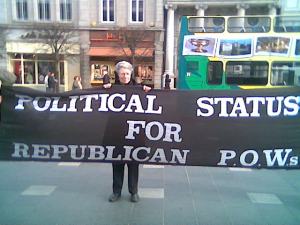


:origin()/pre01/34d1/th/pre/i/2009/101/0/4/auxiliary_constable__r_i_c__by_linseed.jpg)