ON THIS DATE (22ND NOVEMBER) 94 YEARS AGO : DEATH OF AN IRA HUNGER-STRIKER.
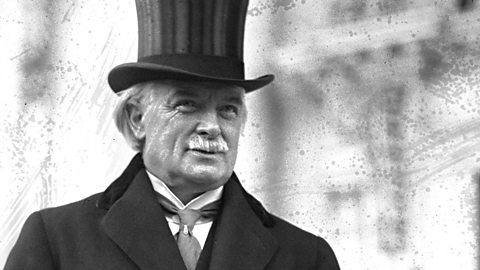
Andrew Sullivan (aka Andy O'Sullivan, pictured, left), 5th Battalion, Cork 4th Brigade, was one of three IRA men to die on hunger-strike in 1923 - he was 41 years of age at the time (the other two men were Joe Witty, 19 years young, and Dennis Barry, 40 years of age ; Joe died on the 2nd September that year, and Dennis died on the 20th November).
'Captain Andrew Sullivan was born in Denbawn, County Cavan in 1882, the oldest of eight children born to Michael Sorahan and Mary Smith...he eventually became the agricultural inspector for the Mallow area, County Cork and held that position for many years. During the War of Independence Sullivan was the Commanding Officer for Civil Administration in the North Cork area and later in the 1st Southern Cork division...a supporter of the anti-Treaty side during the Irish Civil War, he was arrested and interred on July 5, 1923. Between 1922 and 1923, hundreds of others in all parts of Ireland were arrested by the (*) British controlled Irish police force (*), without any charge, and were kept in the prisons and internment camps without trial...in the Autumn of 1923 the conditions in the prisons grew worse and the men and women were being treated as convicts rather than political prisoners. To protest their imprisonment and bring public attention to the cruelty they were receiving, the only 'tool' they felt they had at their disposal was a hunger strike...' (from here).
(*)- an accurate description, in our opinion, but the timeline would show that, 'officially', at least, the then existing 'police force' would be acting under instruction from the then 'new' Free State administration in Leinster House rather than 'officially' taking orders from Westminster. However, as republicans know (and history has since attested to) that 'police force' was a proxy force for Westminster - as, indeed, was the Leinster House 'parliament' that established that 'police force'- so the description 'British controlled Irish police force' is, as we said, accurate. Also, as regards the POW's being treated as convicts, one of the prisoners, Alfred McLoughlin, who was interned for a year without being told why, managed to get a letter published in 'The Irish Times' newspaper in which he wrote - "I slept on bare boards in the Curragh military prison for five nights..I was handcuffed night and day..I was threatened, with a gun, several times, that I would be shot...". W.B. Yeats, Lord Granard and Sir Bryan Mahon campaigned for proper treatment for the prisoners and, in April 1923, the 'International Committee of the Red Cross' carried out an 'investigation' into the conditions in the prisons, reporting (in keeping with those who had facilitated their visit ie the Staters) that "the prisoners were treated like prisoners of war". However, it later emerged that their report was flawed as not one prisoner was interviewed during their 'investigation'!
Anyway - in that particular year (1923), there were about 12,000 Irish republicans interned by the Free Staters and, as stated, above, those men and women "were being treated as convicts rather than political prisoners", and a decision was made, by both the POW's themselves and the leadership outside, to go on hunger strike and, on the 13th October 1923, Michael Kilroy (a respected republican, at the time) OC of the IRA POW's in Mountjoy Jail, announced that 300 republicans in that prison/internment camp (including ten men who had been elected to a 32-County Dáil Éireann) had voted to go on hunger strike (those 300 men were soon joined by 162 more of their comrades in that institution) and, within days, thousands more imprisoned republicans joined the protest - 70 in Cork Jail, 350 in Kilkenny Jail, 200 in Dundalk Jail, 711 in Gormanstown Prison Camp, 1,700 in Newbridge, 123 in 'Tintown', 3,390 in the Curragh Camp, 100 in Harepark Camp and 50 women in the North Dublin Union prison (good condensed background piece here about that period in our history).
While on hunger strike, Andrew wrote to his brother Michael on the 7th November, 1923 - the 25th day of the protest ;
"Dearest Br. Miceal,
Thanks ever so much. I really can't find words to explain adequately my gratitude for your prompt response to my appeal for some cash. I have been very hard up for many things especially smokes and of course I would not ask anyone - besides, I could never bring myself to beg. I am much cheered by the news that Cork is now with us in the fight. I always expected that and should it be a fight to a finish I shall die happy in the thought that my bones will moulder in its confines.
I asked you for to arrange that I should be buried by my old chief's side in Fermoy. My heart is so set on the freedom (of my people) that my spare moments are always devoted to devising ways and means to expedite that Glorious Dawn. With that object in view I have decided that if Mallow Republicans provide a Republican Plot in the new Cemetery near the Railway...I shall order my interment there instead of at Fermoy, as the latter place has enough in L. Lynch's and Fitz Gerald's graves to keep aflame the burning torch of Freedom. Matter wants something in its midst to counter the awful shoneenism that permeates its walls and I came to the conclusion that if I can no longer alive take the same active part in the battle I may at least in my mouldering grave do still some little to help those who come after me with that object in view.
I ordered that nothing should be inscribed besides my name etc by way of epitaph. Over my remains but the simple motto of my late life work...when the Republic so estated functioning and duly recognised then, but not till then, let men dare to eulogise my name in cold press over my grave. Then too will Lynch's and Emmet's blazon forth. This is rather gruesome but one so often thinks of the apparent inevitable in this struggle that it becomes quite secondary, thoughts of the spiritual world.
In the latter line I am quite at peace, prepared and content. There will be no swerving from the straight rugged path to the goal. I set the motto for the strike, 'Freedom or Death'. I am Prison Adjutant now and by long ways the strongest man on the strike even though judging by the looseness of my clothes I must have dropped at least 3 stone weight. There are 124 of us on strike now.
A large number were shifted to the various camps and many of the leaders were taken from here to Kilmainham. It is all alike to us, we carry on. Of course some weak ones have given in. About 60 out of the total here have gone off and taken food on a promise of release. Immediately they were strong enough in hospital they were thrown back into C wing just as they were before the strike and told they could not be released until a big batch was ready.
Fr. James McCabe came up when they heard of my being on Hunger Strike and with his friend went to G.H.L and found they have me held on suspicion only but have no evidence and would release me if I went off strike and signed the usual form. Of course Fr. James asked me to do this and I sent him out the definite reply NEVER! At the same time my profuse thanks for his trouble in my behalf. Well, I must close this long winded letter. Remember the change, Mallow instead of Fermoy, in case I do. Undying Love,
Your Aff Br. Andy."
Finally - from 'The Scotsman' newspaper, 26th November 1923 (page 10) - 'Death of Irish Hunger-Striker : At the inquest on Saturday on Andrew Sullivan, a hunger-striker, who after removal from Mountjoy Prison, Dublin, died on Friday afternoon in a military hospital, a doctor stated that Sullivan went on hunger-strike on October 14, and about a week ago he lost his sight. The jury found that death was due to pneumonia.' We mention that because the Friday in question would have been the 23rd November, 1923 and, on researching the inconsistency, we found the following : 'Many of the newspapers of the time reported Captain Andrew O'Sullivan died on November 22, 1923. That may have been the date he was removed from Mountjoy Prison and brought to St. Bricin's Military Hospital where he was pronounced dead on November 23, 1923...he died on 23 November 1923 at St. Bricin Military Hospital, Dublin City, County Dublin, Ireland, at age 41.5...the information on the death record was provided by Louis A. Burns, coroner for the City of Dublin. Inquest held 24 November 1923...(and) at the inquest on Saturday on Andrew Sullivan, a hunger-striker, who after removal from Mountjoy Prison, Dublin, died on Friday afternoon in a military hospital, a doctor stated that Sullivan went on hunger-strike on October 14, and about a week ago he lost his sight...' (from here). However, the majority opinion is that the man died on the 22nd November 1923, and we, ourselves, believe that to be the correct date.
IRA Captain Andy O' Sullivan, from Cork, died after 40 days on hunger-strike, on the 22nd November 1923, at 41 years of age, 94 years ago on this date.
RESURGENCE.
From 'The United Irishman' newspaper, October 1954.
One danger is the attempts of Free State politicians to divert this (republican) revival to their party advantage. Just as the nation-wide resentment at the passing of the 'Ireland Bill' was successfully controlled and canalised by those politicians until it became a campaign of futile verbal abuse, with the squandering of the £50,000 subscribed as a protest fund, so there is the danger that the present revival may be diverted, controlled and stifled by the same politicians, with the connivance of Stormont. Republicans must be alive to that danger and should expose it at every opportunity.
THE LATE ALICE FRENCH...
Appropriately entitled 'In Ireland's Cause', it expresses the ever urgent desire to help in every way within her power in the cause of Ireland's freedom. This was the message which inspired all her work, this was the lesson she earnestly sought to impress on our young people today. As far back as July 1949 she wrote -
I would that I'd an arm, Oh! a strong stout arm
to wield in a splendid cause!
With a nerve of steel, and a heart to feel
that the strife must know no pause.
While the foe is there, in his trenched lair -
our land in his trenchant claws!
No talk there about bargaining or compromise. The issue is clear and unambiguous - either Ireland is a Nation, entitled to her freedom, or else we are a land of slaves. Every generation has demonstrated our will to be free and like Pearse, Alice French maintained that until our freedom has been obtained there could be and should be no peace in Ireland.
"I sigh for a place in the striving race -
it matters not great or small,
if the foe is hit, even one small bit
by my hand, before its fall.
Whatever the weal,or the woe to come,
Oh! that would repay for all!" (MORE LATER).
"AFTER 32 YEARS - AN OPEN LETTER," by POW Philip Clarke. From 'The United Irishman' newspaper, February 1955.'Under the title 'After 32 Years - an open letter', the following article was written for 'THE UNITED IRISHMAN' newspaper by Philip Clarke (pictured, right), shortly before his arrest in connection with the Omagh Raid on October 17 last (1954). The circumstances surrounding the arrest and trial of Phil Clarke and his comrades are ample proof that there are young men in Ireland today who have taken the words of Pearse to heart : "It is not enough to say merely 'I believe', one must also say 'I serve' ".
THE ONLY WEAPON.
Our means to attain our ends will be similar to the means you use to maintain your ends. The pike and the gun which you use to subject us has proven itself to be the only eloquent weapon by which the voice of resurgent Ireland has ever made itself heard.
You adhere to the traditional policy of preserving your colonies at any price, but we hearken to the voice of the great Irish separatist, Theobald Wolfe Tone, and adopt the means he advocated and employed to obtain our sovereign independence. (Next, from the same source - 'THE STRUGGLE IS COMING'.)
GROWING UP IN LONG KESH...
SIN SCÉAL EILE.
By Jim McCann (Jean's son). For Alex Crowe, RIP - "No Probablum". Glandore Publishing, 1999.
Biographical Note : Jim McCann is a community worker from the Upper Springfield area in West Belfast. Although born in the Short Strand, he was reared in the Loney area of the Falls Road. He comes from a large family (average weight about 22 stone!). He works with Tús Nua (a support group for republican ex-prisoners in the Upper Springfield), part of the Upper Springfield Development Trust. He is also a committee member of the 'Frank Cahill Resource Centre', one of the founders of 'Bunscoil an tSléibhe Dhuibh', the local Irish language primary school and Naiscoil Bharr A'Chluanaí, one of the local Irish language nursery schools.
His first publication last year by Glandore was 'And the Gates Flew Open : the Burning of Long Kesh'. He hopes to retire on the profits of his books. Fat chance!
ESCAPING REALITY.
We were joined in the 'tunnel' by the Escape Committee OC ; "I know this looks a bit big but we wanted to give ourselves plenty of room to work in before we start digging out.." but the Cage OC, shrugging his shoulders, said "Right, everyone, get your arses up into the Middle Hut until we sort this out." It was decided to stop any further digging until the next day but, unfortunately, fate was just about ready to deal the tunnel a fatal blow...
The footballers were playing in the yard when suddenly the ball hit the outside of the shower hut where the pressure of the hidden earth was at its most critical - the hut literally exploded with the impact. It was constructed from sheets of aluminium and came apart like a house of cards, with the tunnel earth covering the ground all round the base of the remains of the hut.
The screws in the Observation Post between Cage 10 and 11 saw what happened and the sirens went off, one after another. Luckily enough, because of the earlier decision to suspend the digging, the tunnel diggers had already left the tunnel and were cleaned and changed. The cage was invaded by screws looking for the tunnel, and it took them about ten minutes to find it. The lads were depressed that their work had been uncovered - the screws were enjoying one of their rare successes.
They were gloating about it and giving us a hard time about how they knew for weeks that we were digging a tunnel, rubbing their hands gleefully. They were insulting us about wasting our time digging tunnels while they were on the job. This was bad enough, but one of them who had actually been inside the study hut and had been inside the tunnel said, after winking at his mate, "Tunnel? What tunnel? Did someone dig a tunnel...?", and laughed. "The Assistant Governor and the Chief Officer are considering charging Junior (the cage OC) with digging a wine cellar without planning permission..."
The screws were all laughing their heads off at our expense. That wasn't one of my happier memories of the Kesh but there you have it. (Next - "Send Out The Horse.")
41ST ON THE 25TH...
'1169 Towers' got a phone call the other day from the Cabhair office, requesting that we mention a 'gig' coming up in December, which has a distinctive December-type tinge to it but...OMG!!..don't they realise it's still only November and not yet time for the 'C' word and as a mother of three girls I just want to stay away from that 'merriment' cascade for as long as I can so NO! Cabhair - NO! (Maybe later...!)
Thanks for reading,
Sharon.
Wednesday, November 22, 2017
AN ELOQUENT USE OF THE PIKE AND THE GUN.
Wednesday, November 08, 2017
TYRANNY, CORRUPTION AND SLAVERY VERSUS JUSTICE, HONESTY AND FREEDOM.
RESURGENCE.
From 'The United Irishman' newspaper, October 1954.
One danger is the attempts of Free State politicians to divert this (republican) revival to their party advantage. Just as the nation-wide resentment at the passing of the 'Ireland Bill' was successfully controlled and canalised by those politicians until it became a campaign of futile verbal abuse, with the squandering of the £50,000 subscribed as a protest fund, so there is the danger that the present revival may be diverted, controlled and stifled by the same politicians, with the connivance of Stormont. Republicans must be alive to that danger and should expose it at every opportunity.
THE LATE ALICE FRENCH.
It is with sincere regret that we announce the death of one of our best and most regular contributors, Miss Alice French. She died at her residence at Kincora Road, Clontarf, Dublin, on the 20th September (1954), and was buried in the family graveyard at Ballapousta, Ardee, County Louth, on Wednesday 22nd September.
Her poems have been a regular feature of the 'United Irishman' almost since it's first issue appeared and they have been noted for their real depth of feeling and sincere national feeling. In this issue we publish a poem received from her only a few days before her death... (MORE LATER).
ON THE 15TH NOVEMBER 1985...
..the Stormont Treaty (a.k.a. 'Anglo-Irish Agreement/Hillsborough Agreement/London-Dublin Agreement') was signed at Hillsborough Castle, County Down, by Garret Fitzgerald and Margaret Thatcher (pictured, left, doing the deed) and we mention this now because on the actual date when it was signed in 1985 - the 15th November - we won't be able to post about it here, as we'll be recovering from and doing the final tidy-up after a 650-ticket RSF gig, which will be held on the Dublin/Kildare border on Sunday 12th November next. The preparations for these monthly events begin, like clockwork, on the Tuesday before the gig and finish on the Monday (or Tuesday) evening after it, which means that we won't have the time to put one of our usual offerings together ; it will probably be Wednesday 22nd November before we post here again.
Anyway - a wee comment on that Treaty which, at the time, the then Sinn Féin organisation was opposed to (it wasn't a Leinster House-registered 'political party' at the time, although some did leave shortly afterwards and formed a group which then registered itself with that institution) ; "Despite the multi-million dollar hype of the (Hillsborough) Agreement, despite disinformation, despite the rewriting of Irish history by West Britons and British propaganda, more and more people are beginning to realise that internal tinkering with the six-county statelet solves nothing.." - so said the late Martin McGuinness, speaking in Bodenstown, on Sunday 22nd June, 1986. Less than six months after he delivered those fine words, he was assisting other nationalists and ex-republicans in splitting the Republican Movement, although he had yet to meet his queen. Gerry Adams denounced that Treaty, describing it as "..the formal recognition of the partition of Ireland...a disaster for the nationalist cause (which) far outweighs the powerless consultative role given to Dublin.."
Meanwhile, as I type this, Gerry and Co. are in a somewhat "powerless consultative role" themselves, regarding Westminster, as they wait nervously to see what type of a financial allowance they get from Westminster to enable them to put a 'budget' together to run that bastard statelet on behalf of the British. They should actually lodge a complaint along those lines, next time they meet and greet their queen...
"AFTER 32 YEARS - AN OPEN LETTER," by POW Philip Clarke. From 'The United Irishman' newspaper, February 1955.'Under the title 'After 32 Years - an open letter', the following article was written for 'THE UNITED IRISHMAN' newspaper by Philip Clarke (pictured, right), shortly before his arrest in connection with the Omagh Raid on October 17 last (1954). The circumstances surrounding the arrest and trial of Phil Clarke and his comrades are ample proof that there are young men in Ireland today who have taken the words of Pearse to heart : "It is not enough to say merely 'I believe', one must also say 'I serve' ".
FREEDOM VERSUS SLAVERY.
Your gospel is and has been to maintain the connection of Ireland with England for the good of England. Our gospel, you know only too well, is to break the connection between Ireland and England for the good of Ireland.
Between these creeds lies an unbridgeable gulf as between Communistic Atheism and Christianity. One stands for tyranny, for corruption, for slavery, the other for justice, for honesty, for freedom - the one for the denial of human rights, the other for the fulfilment of the Will of God. Time itself will not outlive these principles.
(Next, from the same source : 'THE ONLY WEAPON'.)
ON THIS DATE (8TH NOVEMBER) 22 YEARS AGO - DEATH OF A 'GUN-RUNNER'.
Neil T. Blaney (pictured, left), born 29th October 1922, died 8th November 1995 : 22 years ago on this date.
On November 10th 1966, when Sean Lemass resigned as Free State Taoiseach and leader of Fianna Fail, George Colley and Charles J.Haughey made known their desire for that position. Neil Blaney entered on the nomination of another Fianna Fail Minister, Kevin Boland, but Haughey and Blaney withdrew when Sean Lemass nominated Jack Lynch. George Colley stayed in the contest and was defeated by 53 votes to 19 ; the Colley-Haughey power struggle began to develop, but all concerned (George Colley, Haughey, Boland, Neil Blaney and Jack Lynch) continued to cooperate with each other within the confines of the Fianna Fail 'TACA' group. Neil Blaney was interested in the workings and objectives of the 'Civil Rights Association' in the Six Counties but let it be known that he didn't consider them to be hardline enough and tried to steer Fianna Fail away from having too much to do with them, a position which some seen as a challenge to Free State Taoiseach Jack Lynch, and more so with each speech Blaney made in which he verbally attacked a politician favoured by Lynch, Six County (British) 'Premier', Captain Terence O'Neill (who was also under attack by Ian Paisley). Blaney actually advised nationalists in the Six Counties not to support 'Premier' O'Neill.
However, for the sake of party unity (a State-wide general election was due in June 1969), Neil Blaney softened his tone in public but tension remained high between him, George Colley and Haughey, although Jack Lynch tried to avoid taking sides. Seamus Brady, a Fianna Fail 'spin doctor' and a linkman between Blaney and the media of that time, was a well-respected Fianna Fail activist in the Dublin North-East area and was friendly with Blaney, who maintained his contacts in the Six Counties even though the Fianna Fail party itself, officially, did not bother to keep in touch too much with the few remaining contacts it had in the North, a position it regretted finding itself in as the Six County area was in open turmoil.
Jack Lynch made a speech on television in which he stated - "The Stormont Government is evidently no longer in control of the situation...the Government of Ireland (sic) has requested the British Government to apply to the United Nations for urgent dispatch of a peace-keeping force to the Six Counties...many injured do not wish to be treated in Six County hospitals, so Irish Army (sic) authorities have been instructed to establish field hospitals in Donegal and other points on the border.." and the State Minister for External Affairs, Patrick Hillery, flew to London (where he was told to mind his own business) before flying off to America and the UN, where he was to raise the Six County issue at the Security Council.
Leinster House decided that money would have to be provided to deal with 'distress' in the Six Counties and wanted any such funds spent in a way which would win friends and influence people for the Fianna Fail Government : £100,000 from State exchequer funds was agreed and a special sub-committee of the State Cabinet was appointed to deal with the whole Northern 'problem'; elected to that sub-comittee were Padraig Faulkner, Joe Brennan, Neil Blaney - their constituencies were on the border - and Charles J.Haughey, who was (FS) Minister for Finance and had strong Northern connections, his father having come South to join the Free State Army in the 1920's. The objectives of that 'Northern sub-committee' were outlined by Charles Haughey at the 'Arms Trial'-
"We were given instructions that we should develop the maximum possible contacts with persons inside the Six Counties and try to inform ourselves as much as possible on events, political and other developments - within the Six County area." This 'Northern Sub-Committee' made contact with the Belfast IRA, with Saor Éire elements through the Citizens Committee located in a house in Kildare Street in Dublin (now demolished) the use of which was made available by the New Ireland Assurance Company, and contact was also made with Cathal Goulding, the IRA Chief Of Staff, with the objective of using every possible contact to influence decision making in the Northern nationalist community. Leinster House was not prepared to be 'compromised' by the decisions taken in either the Civil Rights Association or the IRA. Neil Blaney's friend, Seamus Brady, was appointed (on the 15th August 1969) by Haughey to the 'Propaganda Corps' attached to the State sub-committee and he was sent into the Six Counties and, later on that month, gave a report to Jack Lynch which concentrated on the strength of the IRA in the area.
Seamus Brady had produced a booklet entitled 'Terror in Northern Ireland' for the Central Citizens Defence Committee (CCDC) in Belfast - he had been chosen to infiltrate the CCDC and this publication launched him nicely into his work. The full costs of producing the booklet were paid by the Leinster House-established 'Information Bureau', and a jointly-written booklet by Seamus Brady and local Civil Rights activist Aidan Corrigan was produced, entitled - 'Eye Witness in Northern Ireland' ; this too was financed by the 'Information Bureau' and was printed - 5,000 copies - at the Cityview Press in Dublin despite its imprint stating that it was 'Published and printed in the Province of Ulster'. The booklet was launched at a press conference in Dublin's Jury's Hotel on October 5th, 1969 (the same month in which Neil Blaney, speaking at celebrations for his 21st year in Leinster House, said - "..the Fianna Fail party has never taken a decision to rule out the use of force if the circumstances in the Six Counties so demand .."), at an event organised by Brady who, along with Neil Blaney (the then State Minister for Agriculture) had had a meeting with an IRA staff officer, in Dublin (in Blaney's office in 'Government Buildings'!), the previous month (ie September 1969).
Neil Blaney's political career also encompassed ministerial sackings, the 'Arms Trial' ,an inquiry by the State 'Committee of Public Accounts' into exactly how a sum of money* (£100,000) was spent and power struggles in the Fianna Fail party, and I hope our few paragraphs, above, can give a flavour of Neil Blaney's involvement re the occupied six counties. (*For instance - on the 14th November 1969, a bank account was opened [by a person operating on behalf of Charles J. Haughey, State Minister for Finance at that time] in a Baggot Street, Dublin, bank, in the name of 'Ann O'Brien', and the money in same was used mainly for the running and promotion of a newspaper called 'Voice of The North', which was based in an office in Monaghan and which pushed the views of Fianna Fail on 'the Northern Question'). The 'Gun Runner' died on the 8th of November, 1995, in his 74th year, 22 years ago on this date.
GROWING UP IN LONG KESH...
SIN SCÉAL EILE.
By Jim McCann (Jean's son). For Alex Crowe, RIP - "No Probablum". Glandore Publishing, 1999.
Biographical Note : Jim McCann is a community worker from the Upper Springfield area in West Belfast. Although born in the Short Strand, he was reared in the Loney area of the Falls Road. He comes from a large family (average weight about 22 stone!). He works with Tús Nua (a support group for republican ex-prisoners in the Upper Springfield), part of the Upper Springfield Development Trust. He is also a committee member of the 'Frank Cahill Resource Centre', one of the founders of 'Bunscoil an tSléibhe Dhuibh', the local Irish language primary school and Naiscoil Bharr A'Chluanaí, one of the local Irish language nursery schools.
His first publication last year by Glandore was 'And the Gates Flew Open : the Burning of Long Kesh'. He hopes to retire on the profits of his books. Fat chance!
ESCAPING REALITY.
The tunnel was to blame for the toilets being blocked up. Communications were coming in from up the Camp that the toilets were near blocked up as far as Lisburn! The tunnellers were asked to find another method of disposing of the earth or stop digging, so they tried to get more of the earth into the walls of the shower hut but, before long, there was an ominous creaking coming from that hut.
The Cage OC called everyone together and urged us to put our heads together and come up with a better method of disposing of the earth. It was at this point that we paid our first and only visit to the tunnel. We passed the footballers kicking the ball in the yard and entered the study hut. A small trap door was lifted and three of us jumped into the mouth of the tunnel. The drop down into the tunnel, I thought, seemed very long and it was only my hitting the ground and nearly breaking both legs and my neck that stopped me thinking anymore about the 'long drop'.
A candle was lit and we found ourselves standing in what I thought was a subterranean cavern. It was about seven foot deep and about eight foot wide all round. "What in the name of Jesus is this.." screamed the Cage OC. "It's the mouth of the tunnel", came the response. "What tunnel?" asked the Cage OC. "The Mersey Tunnel..?" he asked... (MORE LATER).
Thanks for reading, Sharon.
From 'The United Irishman' newspaper, October 1954.
One danger is the attempts of Free State politicians to divert this (republican) revival to their party advantage. Just as the nation-wide resentment at the passing of the 'Ireland Bill' was successfully controlled and canalised by those politicians until it became a campaign of futile verbal abuse, with the squandering of the £50,000 subscribed as a protest fund, so there is the danger that the present revival may be diverted, controlled and stifled by the same politicians, with the connivance of Stormont. Republicans must be alive to that danger and should expose it at every opportunity.
THE LATE ALICE FRENCH.
It is with sincere regret that we announce the death of one of our best and most regular contributors, Miss Alice French. She died at her residence at Kincora Road, Clontarf, Dublin, on the 20th September (1954), and was buried in the family graveyard at Ballapousta, Ardee, County Louth, on Wednesday 22nd September.
Her poems have been a regular feature of the 'United Irishman' almost since it's first issue appeared and they have been noted for their real depth of feeling and sincere national feeling. In this issue we publish a poem received from her only a few days before her death... (MORE LATER).
ON THE 15TH NOVEMBER 1985...
..the Stormont Treaty (a.k.a. 'Anglo-Irish Agreement/Hillsborough Agreement/London-Dublin Agreement') was signed at Hillsborough Castle, County Down, by Garret Fitzgerald and Margaret Thatcher (pictured, left, doing the deed) and we mention this now because on the actual date when it was signed in 1985 - the 15th November - we won't be able to post about it here, as we'll be recovering from and doing the final tidy-up after a 650-ticket RSF gig, which will be held on the Dublin/Kildare border on Sunday 12th November next. The preparations for these monthly events begin, like clockwork, on the Tuesday before the gig and finish on the Monday (or Tuesday) evening after it, which means that we won't have the time to put one of our usual offerings together ; it will probably be Wednesday 22nd November before we post here again.
Anyway - a wee comment on that Treaty which, at the time, the then Sinn Féin organisation was opposed to (it wasn't a Leinster House-registered 'political party' at the time, although some did leave shortly afterwards and formed a group which then registered itself with that institution) ; "Despite the multi-million dollar hype of the (Hillsborough) Agreement, despite disinformation, despite the rewriting of Irish history by West Britons and British propaganda, more and more people are beginning to realise that internal tinkering with the six-county statelet solves nothing.." - so said the late Martin McGuinness, speaking in Bodenstown, on Sunday 22nd June, 1986. Less than six months after he delivered those fine words, he was assisting other nationalists and ex-republicans in splitting the Republican Movement, although he had yet to meet his queen. Gerry Adams denounced that Treaty, describing it as "..the formal recognition of the partition of Ireland...a disaster for the nationalist cause (which) far outweighs the powerless consultative role given to Dublin.."
Meanwhile, as I type this, Gerry and Co. are in a somewhat "powerless consultative role" themselves, regarding Westminster, as they wait nervously to see what type of a financial allowance they get from Westminster to enable them to put a 'budget' together to run that bastard statelet on behalf of the British. They should actually lodge a complaint along those lines, next time they meet and greet their queen...
"AFTER 32 YEARS - AN OPEN LETTER," by POW Philip Clarke. From 'The United Irishman' newspaper, February 1955.'Under the title 'After 32 Years - an open letter', the following article was written for 'THE UNITED IRISHMAN' newspaper by Philip Clarke (pictured, right), shortly before his arrest in connection with the Omagh Raid on October 17 last (1954). The circumstances surrounding the arrest and trial of Phil Clarke and his comrades are ample proof that there are young men in Ireland today who have taken the words of Pearse to heart : "It is not enough to say merely 'I believe', one must also say 'I serve' ".
FREEDOM VERSUS SLAVERY.
Your gospel is and has been to maintain the connection of Ireland with England for the good of England. Our gospel, you know only too well, is to break the connection between Ireland and England for the good of Ireland.
Between these creeds lies an unbridgeable gulf as between Communistic Atheism and Christianity. One stands for tyranny, for corruption, for slavery, the other for justice, for honesty, for freedom - the one for the denial of human rights, the other for the fulfilment of the Will of God. Time itself will not outlive these principles.
(Next, from the same source : 'THE ONLY WEAPON'.)
ON THIS DATE (8TH NOVEMBER) 22 YEARS AGO - DEATH OF A 'GUN-RUNNER'.
Neil T. Blaney (pictured, left), born 29th October 1922, died 8th November 1995 : 22 years ago on this date.
On November 10th 1966, when Sean Lemass resigned as Free State Taoiseach and leader of Fianna Fail, George Colley and Charles J.Haughey made known their desire for that position. Neil Blaney entered on the nomination of another Fianna Fail Minister, Kevin Boland, but Haughey and Blaney withdrew when Sean Lemass nominated Jack Lynch. George Colley stayed in the contest and was defeated by 53 votes to 19 ; the Colley-Haughey power struggle began to develop, but all concerned (George Colley, Haughey, Boland, Neil Blaney and Jack Lynch) continued to cooperate with each other within the confines of the Fianna Fail 'TACA' group. Neil Blaney was interested in the workings and objectives of the 'Civil Rights Association' in the Six Counties but let it be known that he didn't consider them to be hardline enough and tried to steer Fianna Fail away from having too much to do with them, a position which some seen as a challenge to Free State Taoiseach Jack Lynch, and more so with each speech Blaney made in which he verbally attacked a politician favoured by Lynch, Six County (British) 'Premier', Captain Terence O'Neill (who was also under attack by Ian Paisley). Blaney actually advised nationalists in the Six Counties not to support 'Premier' O'Neill.
However, for the sake of party unity (a State-wide general election was due in June 1969), Neil Blaney softened his tone in public but tension remained high between him, George Colley and Haughey, although Jack Lynch tried to avoid taking sides. Seamus Brady, a Fianna Fail 'spin doctor' and a linkman between Blaney and the media of that time, was a well-respected Fianna Fail activist in the Dublin North-East area and was friendly with Blaney, who maintained his contacts in the Six Counties even though the Fianna Fail party itself, officially, did not bother to keep in touch too much with the few remaining contacts it had in the North, a position it regretted finding itself in as the Six County area was in open turmoil.
Jack Lynch made a speech on television in which he stated - "The Stormont Government is evidently no longer in control of the situation...the Government of Ireland (sic) has requested the British Government to apply to the United Nations for urgent dispatch of a peace-keeping force to the Six Counties...many injured do not wish to be treated in Six County hospitals, so Irish Army (sic) authorities have been instructed to establish field hospitals in Donegal and other points on the border.." and the State Minister for External Affairs, Patrick Hillery, flew to London (where he was told to mind his own business) before flying off to America and the UN, where he was to raise the Six County issue at the Security Council.
Leinster House decided that money would have to be provided to deal with 'distress' in the Six Counties and wanted any such funds spent in a way which would win friends and influence people for the Fianna Fail Government : £100,000 from State exchequer funds was agreed and a special sub-committee of the State Cabinet was appointed to deal with the whole Northern 'problem'; elected to that sub-comittee were Padraig Faulkner, Joe Brennan, Neil Blaney - their constituencies were on the border - and Charles J.Haughey, who was (FS) Minister for Finance and had strong Northern connections, his father having come South to join the Free State Army in the 1920's. The objectives of that 'Northern sub-committee' were outlined by Charles Haughey at the 'Arms Trial'-
"We were given instructions that we should develop the maximum possible contacts with persons inside the Six Counties and try to inform ourselves as much as possible on events, political and other developments - within the Six County area." This 'Northern Sub-Committee' made contact with the Belfast IRA, with Saor Éire elements through the Citizens Committee located in a house in Kildare Street in Dublin (now demolished) the use of which was made available by the New Ireland Assurance Company, and contact was also made with Cathal Goulding, the IRA Chief Of Staff, with the objective of using every possible contact to influence decision making in the Northern nationalist community. Leinster House was not prepared to be 'compromised' by the decisions taken in either the Civil Rights Association or the IRA. Neil Blaney's friend, Seamus Brady, was appointed (on the 15th August 1969) by Haughey to the 'Propaganda Corps' attached to the State sub-committee and he was sent into the Six Counties and, later on that month, gave a report to Jack Lynch which concentrated on the strength of the IRA in the area.
Seamus Brady had produced a booklet entitled 'Terror in Northern Ireland' for the Central Citizens Defence Committee (CCDC) in Belfast - he had been chosen to infiltrate the CCDC and this publication launched him nicely into his work. The full costs of producing the booklet were paid by the Leinster House-established 'Information Bureau', and a jointly-written booklet by Seamus Brady and local Civil Rights activist Aidan Corrigan was produced, entitled - 'Eye Witness in Northern Ireland' ; this too was financed by the 'Information Bureau' and was printed - 5,000 copies - at the Cityview Press in Dublin despite its imprint stating that it was 'Published and printed in the Province of Ulster'. The booklet was launched at a press conference in Dublin's Jury's Hotel on October 5th, 1969 (the same month in which Neil Blaney, speaking at celebrations for his 21st year in Leinster House, said - "..the Fianna Fail party has never taken a decision to rule out the use of force if the circumstances in the Six Counties so demand .."), at an event organised by Brady who, along with Neil Blaney (the then State Minister for Agriculture) had had a meeting with an IRA staff officer, in Dublin (in Blaney's office in 'Government Buildings'!), the previous month (ie September 1969).
Neil Blaney's political career also encompassed ministerial sackings, the 'Arms Trial' ,an inquiry by the State 'Committee of Public Accounts' into exactly how a sum of money* (£100,000) was spent and power struggles in the Fianna Fail party, and I hope our few paragraphs, above, can give a flavour of Neil Blaney's involvement re the occupied six counties. (*For instance - on the 14th November 1969, a bank account was opened [by a person operating on behalf of Charles J. Haughey, State Minister for Finance at that time] in a Baggot Street, Dublin, bank, in the name of 'Ann O'Brien', and the money in same was used mainly for the running and promotion of a newspaper called 'Voice of The North', which was based in an office in Monaghan and which pushed the views of Fianna Fail on 'the Northern Question'). The 'Gun Runner' died on the 8th of November, 1995, in his 74th year, 22 years ago on this date.
GROWING UP IN LONG KESH...
SIN SCÉAL EILE.
By Jim McCann (Jean's son). For Alex Crowe, RIP - "No Probablum". Glandore Publishing, 1999.
Biographical Note : Jim McCann is a community worker from the Upper Springfield area in West Belfast. Although born in the Short Strand, he was reared in the Loney area of the Falls Road. He comes from a large family (average weight about 22 stone!). He works with Tús Nua (a support group for republican ex-prisoners in the Upper Springfield), part of the Upper Springfield Development Trust. He is also a committee member of the 'Frank Cahill Resource Centre', one of the founders of 'Bunscoil an tSléibhe Dhuibh', the local Irish language primary school and Naiscoil Bharr A'Chluanaí, one of the local Irish language nursery schools.
His first publication last year by Glandore was 'And the Gates Flew Open : the Burning of Long Kesh'. He hopes to retire on the profits of his books. Fat chance!
ESCAPING REALITY.
The tunnel was to blame for the toilets being blocked up. Communications were coming in from up the Camp that the toilets were near blocked up as far as Lisburn! The tunnellers were asked to find another method of disposing of the earth or stop digging, so they tried to get more of the earth into the walls of the shower hut but, before long, there was an ominous creaking coming from that hut.
The Cage OC called everyone together and urged us to put our heads together and come up with a better method of disposing of the earth. It was at this point that we paid our first and only visit to the tunnel. We passed the footballers kicking the ball in the yard and entered the study hut. A small trap door was lifted and three of us jumped into the mouth of the tunnel. The drop down into the tunnel, I thought, seemed very long and it was only my hitting the ground and nearly breaking both legs and my neck that stopped me thinking anymore about the 'long drop'.
A candle was lit and we found ourselves standing in what I thought was a subterranean cavern. It was about seven foot deep and about eight foot wide all round. "What in the name of Jesus is this.." screamed the Cage OC. "It's the mouth of the tunnel", came the response. "What tunnel?" asked the Cage OC. "The Mersey Tunnel..?" he asked... (MORE LATER).
Thanks for reading, Sharon.
Labels:
Alice French Clontarf 20th September 1954,
George Colley.,
Neil T Blaney,
The Ireland Act 1949
Wednesday, November 01, 2017
"THE OCCUPATION FORCES ARE VERY MUCH ON EDGE..."
ON THIS DATE (1ST NOVEMBER) 97 YEARS AGO : IRISH 'LAD OF 18 SUMMERS' EXECUTED BY WESTMINSTER.
Kevin Barry (pictured, left) wearing the uniform of 'H' Company, 1st Battalion, Dublin Brigade of the IRA. He was 18 years of age when that photograph was taken, and that same age when he was put to death by Westminster.
He was executed on November 1st 1920 - 97 years ago on this date - in Mountjoy jail in Dublin by the British. He was the first Irish republican to be executed by the British since 1916, and was captured while on active service outside the entrance of Monk's bakery in Dublin. Although he was born in Dublin he spent much of his life at the family home in Tombeigh, Hackettstown, in Carlow. Both sides of his family, the Barry's and the Dowling's, came from the area, and some of his ancestors had fought in 1798. His was a strong republican family. At the time of his death his eldest brother Mick was O/C of the volunteers in Tombeigh and his sister Sheila was in Cumann na mBan.
On Monday 20th September,1920, 18-year-old Kevin Barry had gone to Mass and received Holy Communion, then joined a party of IRA volunteers on Bolton Street in Dublin. Their orders were to ambush a British army truck as it picked up a delivery of bread from Monk's Bakery at the junction of North King Street and Church Street and capture their weapons. The ambush was scheduled for 11am, which gave him enough time to take part in the operation and return to UCD in time for a medical examination he had at 2pm. The gun he was using jammed during the operation (he had left his own weapon in Carlow and was using a borrowed one) and he was forced to seek shelter - he rolled under the British Army truck and continued trying to free the jammed gun. His comrades left the scene as they were outnumbered and had lost the element of surprise, and Barry might very well have escaped capture in his hiding place had a local woman, a Mrs Garrett, who ran a coal and vegetable shop near the bakery, not shouted out to the driver of the British Army lorry that he shouldn't move it as the person under it (Kevin Barry) could get run over. Barry was captured and placed in the back of the military lorry along with three dead or mortally wounded British soldiers.
The woman who shouted the warning blamed herself, as did some of her neighbours, but Kevin's sister, Kathy, exonerated the woman from any blame for his capture - "Incidentally, I should mention that some months after his execution we were most distressed to hear that this woman had been driven mad and was in an asylum as a result of the blame attached to her by her neighbours. There was nothing we could usefully do about it beyond explaining where we could that, in Kevin's own account of it to me on the day of his court martial, he was convinced that she cried out because she was afraid that the man under the lorry would be run over..."
On Halloween night, 1920 - the night before his execution - Kevin Barry was given a blue-leaded pencil and paper with which to write his last letter : "Dear Boys, I had quite a crowd of visitors today and a crowd from the college prayed and sang outside the gates but perhaps you were there. Well boys, we have seen some good times, and I have always considered myself lucky to have such a crowd of pals. It's the only thing which makes it hard to go, the fact of leaving you chaps and other friends behind. Now I charge you thank anybody you know for me, who has had masses etc said. Everybody has been awfully decent and I can assure you I appreciate it. Also say just a few more prayers when I go over, and then you can rest. Your pal, Kevin." As he was writing that last letter, Father Francis Browne SJ, a teacher at Belvedere College, cycled to the Vice Regal lodge in Dublin's Phoenix Park to plead for Barry's life, but to no avail : 18-year-old Kevin Barry was hanged in Mountjoy Jail in Dublin on the 1st November 1920, the first republican to be executed since the leaders of the Easter Rising of 1916.
'Just a lad of eighteen summers...'
UNITY! ON WHAT BASIS? asks Sinn Féin President. From 'The United Irishman' newspaper, October 1954.
Speaking at a public meeting held by the Austin Stack Cumann, Sinn Féin, at Elverys Corner in O'Connell Street, Dublin, on Saturday 25th September (1954), Tomas O Dubhghaill said - "We in Sinn Féin are being repeatedly asked why don't you unite with such-and-such a group, why don't you co-operate with so-and-so party? We of Sinn Féin are all for unity, our greatest hope is to bring together all sections and groups in the country for the benefit of the Nation as a whole. But we must achieve that unity on a proper basis, on the basis on which it was attained before.
That basis is the Republic of All Ireland, the re-assembly of the Republican Parliament for all 32 Counties, the putting into effect of the Declaration of Independence issued by the First Dáil Éireann in January 1919. On that basis our people stood united in face of a reign of torture and terror until the disastrous Treaty in 1922. On that basis they can be again united, and can take up the struggle from where it was left off then, and carry it to victory!"
The instinct of the people is sound, they will respond if given the opportunity. We intend to provide that opportunity and if necessary to clear all the politicians out of the way when doing so. This is the basis for unity - unity for the Republic - unity to secure that every man born within the four shores of Ireland will have the opportunity to secure a decent livelihood for himself and his family here at home - unity to bring the dream of the men of Easter Week into living reality. Other speakers were Seoirse Dearle, Sean O Suileabhain and Padraig O' h-Airneide. A large crowd, with many Meath and Kerry supporters gave the speakers an enthusiastic reception.
RESURGENCE.
The political tempo in the Six Counties is steadily building up. With the British troops permanently 'standing to' since the raid on Gough Barracks, with the scare at Hollywood Military Barracks just outside Belfast, the panic about an explosion during the English queen's visit and the alleged shooting into a police barracks in Derry, the occupation forces are very much 'on edge'.
Symptoms of their nervous tension are the repeated raids, questioning, threatening and spasmodic outbursts of police savagery. These, instead of suppressing, only help to heighten the National Spirit in the area... (MORE LATER).
ON THIS DATE (1ST NOVEMBER) 133 YEARS AGO : BIRTH OF WHAT MORPHED INTO A 'GRAB ALL ASSOCIATION'.
'On 1st November 1884 the Gaelic Athletic Association was founded at Miss Hayes' Commercial Hotel, Thurles, Co. Tipperary, by Michael Cusack (Clareman, teacher, sportsman and nationalist) and Maurice Davin (a Tipperary man who at the time was Ireland’s most famous athlete). Other founding members present were John Wyse-Power, John McKay, J.K. Bracken, Joseph O'Ryan and Thomas St George McCarthy. Many of the seven men who attended the meeting were Fenians. Not present at the Thurles meeting was Patrick W. Nally, a keen athlete and leading IRB organiser who also played a prominent role in bringing about the birth of the GAA : he was the one who suggested the organisation to Cusack...' (from here.)
The objective of the new organisation was to to foster and promote native Irish pastimes, to open athletics to all social classes and to aid in the establishment of hurling and football clubs and, in order to encourage contact between towns and cities, it organised inter-county matches. One of its founding members, Michael Cusack, was a pioneer of Irish language revival and a founder member of the Gaelic League, and was inspired by the ideal of restoring pride in the national games of hurling and football and - through them - instilling hope and determination among Irish manhood in their ability to control their country's destiny.
It had somewhat of a republican 'leaning' to it in its earlier years, through people like Michael Cusack and, for instance, James Nowlan who, in 1898, at 36 years of age, was elected as Alderman to Kilkenny Corporation and availed of the position to great effect in publicising the then fourteen-year's young 'Gaelic Athletic Association', but was less successful in persuading the Central Council of the GAA that it should begin preparations to commemorate the 100th anniversary of the 1798 Rising - indeed, the GAA leadership refused to even appoint representatives to the 1798 Centenary Committee, but James Nowlan and a few other republican-minded GAA members insisted on playing their part in the celebrations. At the GAA Congress held in September 1901, he was elected President (the sixth president of the GAA, a position he served in from 1901 to 1921) and attempted to steer the organisation towards a more republican path ; for instance, when the 'Irish Volunteers' was formed, Nowlan stated that it was a most suitable group for GAA members to join, even though other GAA leaders were not as enthusiastic about the group, or about republicanism in general.
And that 'mildly nationalist/small-'r' republican'-outlook has unfortunately prevailed in the overall leadership and membership of the GAA, so much so that, during the 1981 hunger-strikes.. '...the whole question of the role of the GAA in Nationalist affairs was raised, with it becoming blatantly clear that the courage was lacking from top GAA officials to come out openly, and support with direct action, motions passed at successive GAA congresses which backed the prisoners' demands. The influence of Fianna Fáil and Fine Gael members, and the ever-present voice of the Garda Síochána in the GAA, was beginning to cause even more alarm among GAA Headquarters' staff ; the grassroots' support at Northern level was understandable as many clubs had at least one member in Long Kesh, but the gulf in understanding of many Southern GAA personnel was a reflection of how removed from the realities of the Northern situation they had become. GAA Headquarters kept one careful eye on events in Long Kesh and the other on those middle-class conservatives who wanted the GAA to steer well clear of involvement in the H-Blocks crisis. Statements from the GAA management committee referred to bringing "the whole sad situation to an end..in the interests of peace.." - hardly words calculated to cause Southern politicians to take seriously the degree of GAA concern over the prison situation..other statements talked of "humanitarian concern", while the increased pressure exerted by some GAA members in the South gave rise to terms such as "condemnation of violence and men of violence" being increasingly included in policy statements from the GAA management committee..' (from here.)
All in all - between the above and the 'Rule 21' issue, it's not surprising that republicans have learned not to depend on overall GAA structures as a support base and, indeed, to be extra vigilent in any dealings with the GAA as it's still 'influenced by Fianna Fáil, Fine Gael and the Garda Síochána..'.
"AFTER 32 YEARS - AN OPEN LETTER," by POW Philip Clarke. From 'The United Irishman' newspaper, February 1955.'Under the title 'After 32 Years - an open letter', the following article was written for 'THE UNITED IRISHMAN' newspaper by Philip Clarke (pictured, right), shortly before his arrest in connection with the Omagh Raid on October 17 last (1954). The circumstances surrounding the arrest and trial of Phil Clarke and his comrades are ample proof that there are young men in Ireland today who have taken the words of Pearse to heart : "It is not enough to say merely 'I believe', one must also say 'I serve' ".
LEGALISED TYRANNY.
Are we doomed to remain forever your slaves? We in the Republican Movement think not. You are strong indeed but you are far from omnipotent. You have the armed might of a powerful nation behind you, but we have humbled that might before. You have the constitutions of both North and South to legalise your tyranny, but we take our stand by a Cause which is older by far than either of them. You may have the ears of the world to fill with your propaganda but we still have the heart of the Irish nation beating in unison with ours. You have 'respectable' politicians in your livery but we have Irishmen of honesty and integrity to displace them. (MORE LATER).
SIX FOOT OF CONCRETE - 21ST FEBRUARY 1976 (HEAR ALL ABOUT IT [MAYBE] ON THE 4TH NOVEMBER 2017).
'Exhumed in glory a November moon was drifting
And freedom's light aglow
When some IRA had gathered in a graveyard in Mayo.
Those brave Irish Freedom fighters
Who came together in the West
Had come to fill the promise to lay Frank Stagg at rest.'
Frank Stagg had begun his fourth (and final) hunger strike in late 1975 - having been convicted under the notorious 'British Conspiracy Laws' (enacted by Westminster during the latter half of the 19th century to imprison Irish political activists without a fair trial) - as it was the only 'weapon' he had at his disposal with which to impress on his British captors his desire to be repatriated to Ireland. He died, blind and weighing just four stone, in Wakefield Prison on 12th February 1976, after 62 days on hunger strike.
His remains were hijacked by suited, uniformed and armed members of the State, acting under orders from FS Taoiseach Liam Cosgrave and his 'Justice' Minister, Paddy Cooney - the airplane carrying his coffin was diverted from Dublin to Shannon and, when it landed, the Special Branch surrounded it and forcibly removed the coffin and buried it, supported by an armed escort, under six feet of concrete in Leigue Cemetery in Ballina, County Mayo, in a grave purchased by the Free Staters and which was located about 70 meters from the Republican Plot in that cemetery.
Armed State operatives maintained a heavy presence in the graveyard to prevent Irish republicans from affording Frank Stagg a proper burial but they were not the only group keeping a watch on the grave : the IRA were aware of their presence and, after the Staters withdrew, the IRA made their move: on the night of November 5th, 1977, Paul Stanley, of Straffan, Co Kildare, and other IRA men, disinterred Frank Stagg's remains and reburied them with his comrade, Michael Gaughan.
When questioned in Leinster House about this sordid affair, Paddy Cooney stated - "The persistent attempts by members of an unlawful organisation and their associates to exploit the situation that arose are well known and, indeed, notorious. Because of this and because also of certain obligations of confidentiality, I must decline to make any comment on the question of the choice of burial place.." The "question of the choice of burial place" was, thankfully, not one that was left to Cooney and his thugs to decide. However : a documentary on this subject, entitled 'Frank Stagg's Three Funerals', promoted by the following blurb - 'Frank Stagg's body was placed in a grave in Ballina by the Gárdaí, it was covered with concrete and an armed guard stood by to prevent his body being moved to the Republican plot where he wished to be buried. However, they overlooked one minor detail..' - will be aired on the 'Documentary On One' programme on RTE Radio 1, on Saturday 4th November 2017, at 2pm. That's presuming the Free Staters don't attempt to pull/bury it, of course...
ON THIS DATE (1ST NOVEMBER) 97 YEARS AGO : THE EVE OF EXECUTION.
'On 28 June 1920, five men from C Company of the 1st Battalion at Wellington Barracks, Jalandhar, Punjab decided to protest against the effects of martial law in Ireland by refusing to soldier. They were soon joined in their protest by other Rangers (the protesters included at least one Englishman, John Miranda, from Liverpool) declaring they would not return to duty until British forces left Ireland. Led by Private James Daly ( whose brother William took part in the protest at Jalandhar), the protest spread to the Connaught Ranger company at Solon however the Connaught Ranger company at Jutogh hill-station remained loyal to the British crown. A party of men led by Daly made an attempt to recover their arms, storming the armory.
The loyal British guard successfully defended it, and two of Daly's party, Privates Patrick Smythe and Peter Sears, were killed in the firefight. Within days, both garrisons were occupied by loyal British troops; Daly and his followers surrendered and were taken prisoner. Eighty-eight mutineers were court martialed : nineteen men were sentenced to death (eighteen later had their sentences commuted to life imprisonment), 59 were sentenced to 15 years imprisonment, and ten were acquitted. The 21-year-old Daly was shot by a firing squad in Dagshai Prison on 2 November 1920. He was the last member of the British Armed Forces to be executed for mutiny. Private Sears and Private Smyth were buried at Solan, while Daly and Miranda (who later died in prison) were buried at the Dagshai graveyard until 1970..' (from here.)
'On November 2nd, 1920, James Daly was killed by a British Army firing squad in India. He had been one of the leaders of the so-called 'India Mutiny', but had not been among its instigators. The mutiny began on May 28th, 1920, led by Joseph Hawes at Wellington barracks in Jullundar, India, when 350 Irish members of the famous Connaught Rangers regiment of the British Army laid down their arms and refused to keep soldiering as long as British troops remained in Ireland...as word of more and more British violence against the Irish people spread among the troops, they had begun to question the morality of wearing the uniforms of the same army that was terrorising families back home. The mutiny soon spread to Ranger detachments in Solon and Jutogh. Daly was stationed at Solon and helped lead the action of the mutineers there. Two would die in Solon during a brief confrontation. Eventually, 61 Rangers were convicted by courts martial and 14 sentenced to death. All but one of those condemned men had their sentences reduced. James Daly of Tyrellspass, County Westmeath, was the only one shot. The Connaught Rangers would not survive much longer than Daly ; in 1922 the regiment was disbanded after the signing of the Anglo-Irish treaty that created the Irish Free State. In 1970, James Daly's body was brought home and buried at Tyrellspass. Among those in the guard of honor at the reinterment ceremony were five of his fellow mutineers: Joseph Hawes, James Gorman, Eugene Egan, Patrick Hynes, and William Coote...' (from here.)
"The moral courage and sacrifice shown by James Daly and his comrades shines like a beacon light years after those momentous events in Jullander and Solon in India in June and July of 1920. The leadership shown by James Daly and Joe Hawes galvanised their comrades into striking a blow for the freedom of their own land. We also remember with pride the sacrifices of Peter Sears and Patrick Smythe who died at the hands of the British army during the mutiny and who are interred in Glasnevin cemetery.." - RSF President Des Dalton, 2010 : more here.
At that time, in Ireland, the Black and Tan War was at its height. Irishmen serving with the British Army in India mutinied in protest at the atrocities being committed in Ireland by the British. On June 27th, 1920, 350 Irishmen gave in their arms and refused to soldier for England. The mutiny was confined chiefly to members of 'B' and 'C' Companies, 1st Battalion, Connaught Ranger Regiment, stationed at Wellington Barracks, Jullunder, Punjab, India. The men at Jullunder were led by Private Joseph Hawes and their protest was joined two days later by a detachment of 'C' Company at the hill-station in Solon, under Private James Daly (regimental number 35025), a member of the Irish Republican Brotherhood. On June 30th, 1920, following the deaths of Privates Patrick Smythe, Louth (regimental number10079) and Peter Sears, Mayo (regimental number 32781) in an attempt to capture the magazine at Solon, the mutiny ended. Seventy-five of the mutineers were arrested and taken to Lucknow where they were held until September when they were moved to Dayshai Prison to stand trial.
While awaiting trial, the prisoners were subjected to such harsh treatment by the British that it resulted in the death of one of the men, Private John Miranda, a native of Liverpool. At the subsequent general court-martial , fourteen of the prisoners were sentenced to death and the remainder to terms of imprisonment varying from ten to twenty years. In mid-October 1920, 13 of the fourteen death sentences were commuted to life imprisonment - the exception was Jim Daly, a native of Tyrellspass, County Westmeath. After six months, the mutineers were transferred to Portland Convict Prison in England, where they suffered long periods of solitary confinement and ill-treatment during their fight for political status. They were later moved to Maidstone Prison and, on January 3rd, 1923, the remaining sixty mutineers were released and returned to Ireland.
In October 1970, the remains of Daly, Smythe and Sears were brought back to Ireland : Smythe, a native of Drogheda, Co. Louth and Sears, from Neale, Co. Mayo, were buried in the Republican Plot in Glasnevin Cemetery in Dublin. James Daly, who was executed in Jullunder in India on November 2nd, 1920, as per orders issued by Major-General Sir G. de S. Barrow, K.C.B., K.C.M.G., of 'Northern Command of the British Army in India', was re-interred in his native Tyrellspass. These men and those like them are remembered and cherished by Irish republicans, as they should be. The 1st November, 1920 - 97 years ago on this date - was James Daly's last full day on this Earth. Gone but never forgotten.
GROWING UP IN LONG KESH...
SIN SCÉAL EILE.
By Jim McCann (Jean's son). For Alex Crowe, RIP - "No Probablum". Glandore Publishing, 1999.
Biographical Note : Jim McCann is a community worker from the Upper Springfield area in West Belfast. Although born in the Short Strand, he was reared in the Loney area of the Falls Road. He comes from a large family (average weight about 22 stone!). He works with Tús Nua (a support group for republican ex-prisoners in the Upper Springfield), part of the Upper Springfield Development Trust. He is also a committee member of the 'Frank Cahill Resource Centre', one of the founders of 'Bunscoil an tSléibhe Dhuibh', the local Irish language primary school and Naiscoil Bharr A'Chluanaí, one of the local Irish language nursery schools.
His first publication last year by Glandore was 'And the Gates Flew Open : the Burning of Long Kesh'. He hopes to retire on the profits of his books. Fat chance!
ESCAPING REALITY.
Outside the study hut all types of activities were happening to ensure that there was always a crowd of men in that general vicinity, so that the men coming out of the study hut carrying bags of earth from the tunnel were always surrounded by footballers, Irish dancers and spectators as they made the twenty foot journey from the study hut to the shower hut.
The two large jaw boxes in the shower hut couldn't cope with the volume of earth being flushed down them. Other places of disposal were sought, including the walls of the shower hut and any orifice that could hold earth.
The digging was going on for about two, maybe three, weeks, and we (those of us who were not involved in the tunnel) were speculating as to the length of it. The estimations ran anywhere from 20 feet to 75 yards, but we could get no information out of the diggers, as for obvious reasons they were not allowed to say. There was one fact that you couldn't escape concerning the escape, and that was the toilets... (MORE LATER).
ON THIS DATE (1ST NOVEMBER) 97 YEARS AGO : A TERRIBLE UGLINESS IS BORN...
On the 1st November 1920 - 97 years ago on this date - a 'volunteer police force/ Ulster Special Constabulary' scheme was officially announced by the British government, and recruitment for same began. This 'new' grouping, which was to be formed mainly from the ranks of the existing 'Ulster Volunteer Force' (UVF), a pro-British militia, received full backing from the then British Prime Minister, David Lloyd George, as it would free up the RIC and other British military units for use elsewhere in Ireland, plus it was cheaper than having to raise a 'proper' (!) force, as this 'new' grouping was to be formatted in a manner that not all recruits would be paid : it would be established in three 'parts' and, at first, would only be set-up in the Belfast area of County Antrim and also in County Tyrone, but was soon extended to all six of the occupied counties. The 'A Specials' would be a paid, full-time group, armed and equipped in an equal manner to the RIC, the 'B Specials' would be part-time and unpaid, except for a clothing allowance, and would only be armed if their local RIC commander deemed it necessary.
Their 'contract' stipulated that they would do only "..occasional duty, usually one evening per week exclusive of training drills, in an area convenient to members, day duties being required only in an emergency.." The 'C Specials' were to be a reserve group, to be called out on 'duty' only in case of an emergency. When this three-part outfit was 'fully staffed', it numbered about 5,000 'A', 18,000 'B' and 7,000 'C', and was an openly sectarian pro-British murder unit, which could count an estimated one in every five of the adult male Protestant population in Ireland as a member.
In 1925, Westminster thought it was time to 'modernise' its occupation of the part of Ireland it still claimed jurisdiction over - our six north-eastern counties (as remains the position today) and, in December that year, it offered the approximately 30,000 to 40,000-strong 'Special Constabulary' organisation a few bob to 'go away' (!) - £1,200,000 was put on the table, provided most of them agreed to disband (similar to what happened with the PIRA 73 years later - buying them out with a 'bank-load' of money). 'Sir' James Craig, up to then a great friend and supporter of the 'Specials', stated that they would have to go : on 10th December 1925, Craig told the 'A' and 'C' Specials that they were out of work and offered each man two months pay, adding that the 'B Specials' were to be maintained as they were. However, the 'A' and 'C' Specials were not happy with the 'disband now' order from Craig ; not enough money was offered, it was on the mouth of Christmas, and the unemployment rate was running at over 20% - so the 'A' and 'C' Specials held meetings between themselves and, on 14th December 1925, they mutinied!
'A' and 'C' members in Derry 'arrested' their own Officers, as they did in Ballycastle - two days later (ie on 16th December 1925) a demand from the 'A' and 'C' 'rebels' (!) was handed over to 'Sir' Richard Dawson Bates, the Stormont 'Minister for Home Affairs', a solicitor by trade, who was also Secretary of the 'Ulster Unionist Council', a position he had held since 1905. The 'Special Rebels' were looking for more money ; they demanded a £200 tax-free 'bonus' for each member that was to be made redundant. Two days later (on the 18th December 1925) 'Sir' Bates replied to them that not only would they not be getting the £200 'bonus' but if they didn't back down immediately they would loose whatever few bob they were entitled to for being made redundant! That message was delivered to the 'mutiniers' on 18th December 1925 ; on 19th December 1925 they all but apologised to Bates, released their hostages and signed on for the dole - the 'hard men' of the 'Specials' had been put in their place by a bigger thug than they were! By Christmas Day, 1925, the 'A' and 'C' Sections of the 'Ulster' (sic) Special Constabulary Association - the 'Specials' - were disbanded.
The 'B' Specials were indeed kept on as they were - it was only in 1969 that that gang of thugs 'disbanded' (actually, they changed uniform into that of the 'Ulster Defence Regiment' [UDR] and carried-on with their thuggery). It was in September 1969 that the (British) 'Cameron Commission' described the 'B' Specials as "a partisan and paramilitary force", while the October 1969 'Hunt Report' recommended that the 'B' Specials be disbanded. We now suffer from the RUC/PSNI, (mostly) confined ('officially' anyway) to operating in the six occupied counties and wearing more 'people-friendly' uniforms. But if a leopard could change its spots, it would still be, under its 'new skin', a leopard.
Thanks for reading, Sharon.
Kevin Barry (pictured, left) wearing the uniform of 'H' Company, 1st Battalion, Dublin Brigade of the IRA. He was 18 years of age when that photograph was taken, and that same age when he was put to death by Westminster.
He was executed on November 1st 1920 - 97 years ago on this date - in Mountjoy jail in Dublin by the British. He was the first Irish republican to be executed by the British since 1916, and was captured while on active service outside the entrance of Monk's bakery in Dublin. Although he was born in Dublin he spent much of his life at the family home in Tombeigh, Hackettstown, in Carlow. Both sides of his family, the Barry's and the Dowling's, came from the area, and some of his ancestors had fought in 1798. His was a strong republican family. At the time of his death his eldest brother Mick was O/C of the volunteers in Tombeigh and his sister Sheila was in Cumann na mBan.
On Monday 20th September,1920, 18-year-old Kevin Barry had gone to Mass and received Holy Communion, then joined a party of IRA volunteers on Bolton Street in Dublin. Their orders were to ambush a British army truck as it picked up a delivery of bread from Monk's Bakery at the junction of North King Street and Church Street and capture their weapons. The ambush was scheduled for 11am, which gave him enough time to take part in the operation and return to UCD in time for a medical examination he had at 2pm. The gun he was using jammed during the operation (he had left his own weapon in Carlow and was using a borrowed one) and he was forced to seek shelter - he rolled under the British Army truck and continued trying to free the jammed gun. His comrades left the scene as they were outnumbered and had lost the element of surprise, and Barry might very well have escaped capture in his hiding place had a local woman, a Mrs Garrett, who ran a coal and vegetable shop near the bakery, not shouted out to the driver of the British Army lorry that he shouldn't move it as the person under it (Kevin Barry) could get run over. Barry was captured and placed in the back of the military lorry along with three dead or mortally wounded British soldiers.
The woman who shouted the warning blamed herself, as did some of her neighbours, but Kevin's sister, Kathy, exonerated the woman from any blame for his capture - "Incidentally, I should mention that some months after his execution we were most distressed to hear that this woman had been driven mad and was in an asylum as a result of the blame attached to her by her neighbours. There was nothing we could usefully do about it beyond explaining where we could that, in Kevin's own account of it to me on the day of his court martial, he was convinced that she cried out because she was afraid that the man under the lorry would be run over..."
On Halloween night, 1920 - the night before his execution - Kevin Barry was given a blue-leaded pencil and paper with which to write his last letter : "Dear Boys, I had quite a crowd of visitors today and a crowd from the college prayed and sang outside the gates but perhaps you were there. Well boys, we have seen some good times, and I have always considered myself lucky to have such a crowd of pals. It's the only thing which makes it hard to go, the fact of leaving you chaps and other friends behind. Now I charge you thank anybody you know for me, who has had masses etc said. Everybody has been awfully decent and I can assure you I appreciate it. Also say just a few more prayers when I go over, and then you can rest. Your pal, Kevin." As he was writing that last letter, Father Francis Browne SJ, a teacher at Belvedere College, cycled to the Vice Regal lodge in Dublin's Phoenix Park to plead for Barry's life, but to no avail : 18-year-old Kevin Barry was hanged in Mountjoy Jail in Dublin on the 1st November 1920, the first republican to be executed since the leaders of the Easter Rising of 1916.
'Just a lad of eighteen summers...'
UNITY! ON WHAT BASIS? asks Sinn Féin President. From 'The United Irishman' newspaper, October 1954.
Speaking at a public meeting held by the Austin Stack Cumann, Sinn Féin, at Elverys Corner in O'Connell Street, Dublin, on Saturday 25th September (1954), Tomas O Dubhghaill said - "We in Sinn Féin are being repeatedly asked why don't you unite with such-and-such a group, why don't you co-operate with so-and-so party? We of Sinn Féin are all for unity, our greatest hope is to bring together all sections and groups in the country for the benefit of the Nation as a whole. But we must achieve that unity on a proper basis, on the basis on which it was attained before.
That basis is the Republic of All Ireland, the re-assembly of the Republican Parliament for all 32 Counties, the putting into effect of the Declaration of Independence issued by the First Dáil Éireann in January 1919. On that basis our people stood united in face of a reign of torture and terror until the disastrous Treaty in 1922. On that basis they can be again united, and can take up the struggle from where it was left off then, and carry it to victory!"
The instinct of the people is sound, they will respond if given the opportunity. We intend to provide that opportunity and if necessary to clear all the politicians out of the way when doing so. This is the basis for unity - unity for the Republic - unity to secure that every man born within the four shores of Ireland will have the opportunity to secure a decent livelihood for himself and his family here at home - unity to bring the dream of the men of Easter Week into living reality. Other speakers were Seoirse Dearle, Sean O Suileabhain and Padraig O' h-Airneide. A large crowd, with many Meath and Kerry supporters gave the speakers an enthusiastic reception.
RESURGENCE.
The political tempo in the Six Counties is steadily building up. With the British troops permanently 'standing to' since the raid on Gough Barracks, with the scare at Hollywood Military Barracks just outside Belfast, the panic about an explosion during the English queen's visit and the alleged shooting into a police barracks in Derry, the occupation forces are very much 'on edge'.
Symptoms of their nervous tension are the repeated raids, questioning, threatening and spasmodic outbursts of police savagery. These, instead of suppressing, only help to heighten the National Spirit in the area... (MORE LATER).
ON THIS DATE (1ST NOVEMBER) 133 YEARS AGO : BIRTH OF WHAT MORPHED INTO A 'GRAB ALL ASSOCIATION'.
'On 1st November 1884 the Gaelic Athletic Association was founded at Miss Hayes' Commercial Hotel, Thurles, Co. Tipperary, by Michael Cusack (Clareman, teacher, sportsman and nationalist) and Maurice Davin (a Tipperary man who at the time was Ireland’s most famous athlete). Other founding members present were John Wyse-Power, John McKay, J.K. Bracken, Joseph O'Ryan and Thomas St George McCarthy. Many of the seven men who attended the meeting were Fenians. Not present at the Thurles meeting was Patrick W. Nally, a keen athlete and leading IRB organiser who also played a prominent role in bringing about the birth of the GAA : he was the one who suggested the organisation to Cusack...' (from here.)
The objective of the new organisation was to to foster and promote native Irish pastimes, to open athletics to all social classes and to aid in the establishment of hurling and football clubs and, in order to encourage contact between towns and cities, it organised inter-county matches. One of its founding members, Michael Cusack, was a pioneer of Irish language revival and a founder member of the Gaelic League, and was inspired by the ideal of restoring pride in the national games of hurling and football and - through them - instilling hope and determination among Irish manhood in their ability to control their country's destiny.
It had somewhat of a republican 'leaning' to it in its earlier years, through people like Michael Cusack and, for instance, James Nowlan who, in 1898, at 36 years of age, was elected as Alderman to Kilkenny Corporation and availed of the position to great effect in publicising the then fourteen-year's young 'Gaelic Athletic Association', but was less successful in persuading the Central Council of the GAA that it should begin preparations to commemorate the 100th anniversary of the 1798 Rising - indeed, the GAA leadership refused to even appoint representatives to the 1798 Centenary Committee, but James Nowlan and a few other republican-minded GAA members insisted on playing their part in the celebrations. At the GAA Congress held in September 1901, he was elected President (the sixth president of the GAA, a position he served in from 1901 to 1921) and attempted to steer the organisation towards a more republican path ; for instance, when the 'Irish Volunteers' was formed, Nowlan stated that it was a most suitable group for GAA members to join, even though other GAA leaders were not as enthusiastic about the group, or about republicanism in general.
And that 'mildly nationalist/small-'r' republican'-outlook has unfortunately prevailed in the overall leadership and membership of the GAA, so much so that, during the 1981 hunger-strikes.. '...the whole question of the role of the GAA in Nationalist affairs was raised, with it becoming blatantly clear that the courage was lacking from top GAA officials to come out openly, and support with direct action, motions passed at successive GAA congresses which backed the prisoners' demands. The influence of Fianna Fáil and Fine Gael members, and the ever-present voice of the Garda Síochána in the GAA, was beginning to cause even more alarm among GAA Headquarters' staff ; the grassroots' support at Northern level was understandable as many clubs had at least one member in Long Kesh, but the gulf in understanding of many Southern GAA personnel was a reflection of how removed from the realities of the Northern situation they had become. GAA Headquarters kept one careful eye on events in Long Kesh and the other on those middle-class conservatives who wanted the GAA to steer well clear of involvement in the H-Blocks crisis. Statements from the GAA management committee referred to bringing "the whole sad situation to an end..in the interests of peace.." - hardly words calculated to cause Southern politicians to take seriously the degree of GAA concern over the prison situation..other statements talked of "humanitarian concern", while the increased pressure exerted by some GAA members in the South gave rise to terms such as "condemnation of violence and men of violence" being increasingly included in policy statements from the GAA management committee..' (from here.)
All in all - between the above and the 'Rule 21' issue, it's not surprising that republicans have learned not to depend on overall GAA structures as a support base and, indeed, to be extra vigilent in any dealings with the GAA as it's still 'influenced by Fianna Fáil, Fine Gael and the Garda Síochána..'.
"AFTER 32 YEARS - AN OPEN LETTER," by POW Philip Clarke. From 'The United Irishman' newspaper, February 1955.'Under the title 'After 32 Years - an open letter', the following article was written for 'THE UNITED IRISHMAN' newspaper by Philip Clarke (pictured, right), shortly before his arrest in connection with the Omagh Raid on October 17 last (1954). The circumstances surrounding the arrest and trial of Phil Clarke and his comrades are ample proof that there are young men in Ireland today who have taken the words of Pearse to heart : "It is not enough to say merely 'I believe', one must also say 'I serve' ".
LEGALISED TYRANNY.
Are we doomed to remain forever your slaves? We in the Republican Movement think not. You are strong indeed but you are far from omnipotent. You have the armed might of a powerful nation behind you, but we have humbled that might before. You have the constitutions of both North and South to legalise your tyranny, but we take our stand by a Cause which is older by far than either of them. You may have the ears of the world to fill with your propaganda but we still have the heart of the Irish nation beating in unison with ours. You have 'respectable' politicians in your livery but we have Irishmen of honesty and integrity to displace them. (MORE LATER).
SIX FOOT OF CONCRETE - 21ST FEBRUARY 1976 (HEAR ALL ABOUT IT [MAYBE] ON THE 4TH NOVEMBER 2017).
'Exhumed in glory a November moon was drifting
And freedom's light aglow
When some IRA had gathered in a graveyard in Mayo.
Those brave Irish Freedom fighters
Who came together in the West
Had come to fill the promise to lay Frank Stagg at rest.'
Frank Stagg had begun his fourth (and final) hunger strike in late 1975 - having been convicted under the notorious 'British Conspiracy Laws' (enacted by Westminster during the latter half of the 19th century to imprison Irish political activists without a fair trial) - as it was the only 'weapon' he had at his disposal with which to impress on his British captors his desire to be repatriated to Ireland. He died, blind and weighing just four stone, in Wakefield Prison on 12th February 1976, after 62 days on hunger strike.
His remains were hijacked by suited, uniformed and armed members of the State, acting under orders from FS Taoiseach Liam Cosgrave and his 'Justice' Minister, Paddy Cooney - the airplane carrying his coffin was diverted from Dublin to Shannon and, when it landed, the Special Branch surrounded it and forcibly removed the coffin and buried it, supported by an armed escort, under six feet of concrete in Leigue Cemetery in Ballina, County Mayo, in a grave purchased by the Free Staters and which was located about 70 meters from the Republican Plot in that cemetery.
Armed State operatives maintained a heavy presence in the graveyard to prevent Irish republicans from affording Frank Stagg a proper burial but they were not the only group keeping a watch on the grave : the IRA were aware of their presence and, after the Staters withdrew, the IRA made their move: on the night of November 5th, 1977, Paul Stanley, of Straffan, Co Kildare, and other IRA men, disinterred Frank Stagg's remains and reburied them with his comrade, Michael Gaughan.
When questioned in Leinster House about this sordid affair, Paddy Cooney stated - "The persistent attempts by members of an unlawful organisation and their associates to exploit the situation that arose are well known and, indeed, notorious. Because of this and because also of certain obligations of confidentiality, I must decline to make any comment on the question of the choice of burial place.." The "question of the choice of burial place" was, thankfully, not one that was left to Cooney and his thugs to decide. However : a documentary on this subject, entitled 'Frank Stagg's Three Funerals', promoted by the following blurb - 'Frank Stagg's body was placed in a grave in Ballina by the Gárdaí, it was covered with concrete and an armed guard stood by to prevent his body being moved to the Republican plot where he wished to be buried. However, they overlooked one minor detail..' - will be aired on the 'Documentary On One' programme on RTE Radio 1, on Saturday 4th November 2017, at 2pm. That's presuming the Free Staters don't attempt to pull/bury it, of course...
ON THIS DATE (1ST NOVEMBER) 97 YEARS AGO : THE EVE OF EXECUTION.
'On 28 June 1920, five men from C Company of the 1st Battalion at Wellington Barracks, Jalandhar, Punjab decided to protest against the effects of martial law in Ireland by refusing to soldier. They were soon joined in their protest by other Rangers (the protesters included at least one Englishman, John Miranda, from Liverpool) declaring they would not return to duty until British forces left Ireland. Led by Private James Daly ( whose brother William took part in the protest at Jalandhar), the protest spread to the Connaught Ranger company at Solon however the Connaught Ranger company at Jutogh hill-station remained loyal to the British crown. A party of men led by Daly made an attempt to recover their arms, storming the armory.
The loyal British guard successfully defended it, and two of Daly's party, Privates Patrick Smythe and Peter Sears, were killed in the firefight. Within days, both garrisons were occupied by loyal British troops; Daly and his followers surrendered and were taken prisoner. Eighty-eight mutineers were court martialed : nineteen men were sentenced to death (eighteen later had their sentences commuted to life imprisonment), 59 were sentenced to 15 years imprisonment, and ten were acquitted. The 21-year-old Daly was shot by a firing squad in Dagshai Prison on 2 November 1920. He was the last member of the British Armed Forces to be executed for mutiny. Private Sears and Private Smyth were buried at Solan, while Daly and Miranda (who later died in prison) were buried at the Dagshai graveyard until 1970..' (from here.)
'On November 2nd, 1920, James Daly was killed by a British Army firing squad in India. He had been one of the leaders of the so-called 'India Mutiny', but had not been among its instigators. The mutiny began on May 28th, 1920, led by Joseph Hawes at Wellington barracks in Jullundar, India, when 350 Irish members of the famous Connaught Rangers regiment of the British Army laid down their arms and refused to keep soldiering as long as British troops remained in Ireland...as word of more and more British violence against the Irish people spread among the troops, they had begun to question the morality of wearing the uniforms of the same army that was terrorising families back home. The mutiny soon spread to Ranger detachments in Solon and Jutogh. Daly was stationed at Solon and helped lead the action of the mutineers there. Two would die in Solon during a brief confrontation. Eventually, 61 Rangers were convicted by courts martial and 14 sentenced to death. All but one of those condemned men had their sentences reduced. James Daly of Tyrellspass, County Westmeath, was the only one shot. The Connaught Rangers would not survive much longer than Daly ; in 1922 the regiment was disbanded after the signing of the Anglo-Irish treaty that created the Irish Free State. In 1970, James Daly's body was brought home and buried at Tyrellspass. Among those in the guard of honor at the reinterment ceremony were five of his fellow mutineers: Joseph Hawes, James Gorman, Eugene Egan, Patrick Hynes, and William Coote...' (from here.)
"The moral courage and sacrifice shown by James Daly and his comrades shines like a beacon light years after those momentous events in Jullander and Solon in India in June and July of 1920. The leadership shown by James Daly and Joe Hawes galvanised their comrades into striking a blow for the freedom of their own land. We also remember with pride the sacrifices of Peter Sears and Patrick Smythe who died at the hands of the British army during the mutiny and who are interred in Glasnevin cemetery.." - RSF President Des Dalton, 2010 : more here.
At that time, in Ireland, the Black and Tan War was at its height. Irishmen serving with the British Army in India mutinied in protest at the atrocities being committed in Ireland by the British. On June 27th, 1920, 350 Irishmen gave in their arms and refused to soldier for England. The mutiny was confined chiefly to members of 'B' and 'C' Companies, 1st Battalion, Connaught Ranger Regiment, stationed at Wellington Barracks, Jullunder, Punjab, India. The men at Jullunder were led by Private Joseph Hawes and their protest was joined two days later by a detachment of 'C' Company at the hill-station in Solon, under Private James Daly (regimental number 35025), a member of the Irish Republican Brotherhood. On June 30th, 1920, following the deaths of Privates Patrick Smythe, Louth (regimental number10079) and Peter Sears, Mayo (regimental number 32781) in an attempt to capture the magazine at Solon, the mutiny ended. Seventy-five of the mutineers were arrested and taken to Lucknow where they were held until September when they were moved to Dayshai Prison to stand trial.
While awaiting trial, the prisoners were subjected to such harsh treatment by the British that it resulted in the death of one of the men, Private John Miranda, a native of Liverpool. At the subsequent general court-martial , fourteen of the prisoners were sentenced to death and the remainder to terms of imprisonment varying from ten to twenty years. In mid-October 1920, 13 of the fourteen death sentences were commuted to life imprisonment - the exception was Jim Daly, a native of Tyrellspass, County Westmeath. After six months, the mutineers were transferred to Portland Convict Prison in England, where they suffered long periods of solitary confinement and ill-treatment during their fight for political status. They were later moved to Maidstone Prison and, on January 3rd, 1923, the remaining sixty mutineers were released and returned to Ireland.
In October 1970, the remains of Daly, Smythe and Sears were brought back to Ireland : Smythe, a native of Drogheda, Co. Louth and Sears, from Neale, Co. Mayo, were buried in the Republican Plot in Glasnevin Cemetery in Dublin. James Daly, who was executed in Jullunder in India on November 2nd, 1920, as per orders issued by Major-General Sir G. de S. Barrow, K.C.B., K.C.M.G., of 'Northern Command of the British Army in India', was re-interred in his native Tyrellspass. These men and those like them are remembered and cherished by Irish republicans, as they should be. The 1st November, 1920 - 97 years ago on this date - was James Daly's last full day on this Earth. Gone but never forgotten.
GROWING UP IN LONG KESH...
SIN SCÉAL EILE.
By Jim McCann (Jean's son). For Alex Crowe, RIP - "No Probablum". Glandore Publishing, 1999.
Biographical Note : Jim McCann is a community worker from the Upper Springfield area in West Belfast. Although born in the Short Strand, he was reared in the Loney area of the Falls Road. He comes from a large family (average weight about 22 stone!). He works with Tús Nua (a support group for republican ex-prisoners in the Upper Springfield), part of the Upper Springfield Development Trust. He is also a committee member of the 'Frank Cahill Resource Centre', one of the founders of 'Bunscoil an tSléibhe Dhuibh', the local Irish language primary school and Naiscoil Bharr A'Chluanaí, one of the local Irish language nursery schools.
His first publication last year by Glandore was 'And the Gates Flew Open : the Burning of Long Kesh'. He hopes to retire on the profits of his books. Fat chance!
ESCAPING REALITY.
Outside the study hut all types of activities were happening to ensure that there was always a crowd of men in that general vicinity, so that the men coming out of the study hut carrying bags of earth from the tunnel were always surrounded by footballers, Irish dancers and spectators as they made the twenty foot journey from the study hut to the shower hut.
The two large jaw boxes in the shower hut couldn't cope with the volume of earth being flushed down them. Other places of disposal were sought, including the walls of the shower hut and any orifice that could hold earth.
The digging was going on for about two, maybe three, weeks, and we (those of us who were not involved in the tunnel) were speculating as to the length of it. The estimations ran anywhere from 20 feet to 75 yards, but we could get no information out of the diggers, as for obvious reasons they were not allowed to say. There was one fact that you couldn't escape concerning the escape, and that was the toilets... (MORE LATER).
ON THIS DATE (1ST NOVEMBER) 97 YEARS AGO : A TERRIBLE UGLINESS IS BORN...
On the 1st November 1920 - 97 years ago on this date - a 'volunteer police force/ Ulster Special Constabulary' scheme was officially announced by the British government, and recruitment for same began. This 'new' grouping, which was to be formed mainly from the ranks of the existing 'Ulster Volunteer Force' (UVF), a pro-British militia, received full backing from the then British Prime Minister, David Lloyd George, as it would free up the RIC and other British military units for use elsewhere in Ireland, plus it was cheaper than having to raise a 'proper' (!) force, as this 'new' grouping was to be formatted in a manner that not all recruits would be paid : it would be established in three 'parts' and, at first, would only be set-up in the Belfast area of County Antrim and also in County Tyrone, but was soon extended to all six of the occupied counties. The 'A Specials' would be a paid, full-time group, armed and equipped in an equal manner to the RIC, the 'B Specials' would be part-time and unpaid, except for a clothing allowance, and would only be armed if their local RIC commander deemed it necessary.
Their 'contract' stipulated that they would do only "..occasional duty, usually one evening per week exclusive of training drills, in an area convenient to members, day duties being required only in an emergency.." The 'C Specials' were to be a reserve group, to be called out on 'duty' only in case of an emergency. When this three-part outfit was 'fully staffed', it numbered about 5,000 'A', 18,000 'B' and 7,000 'C', and was an openly sectarian pro-British murder unit, which could count an estimated one in every five of the adult male Protestant population in Ireland as a member.
In 1925, Westminster thought it was time to 'modernise' its occupation of the part of Ireland it still claimed jurisdiction over - our six north-eastern counties (as remains the position today) and, in December that year, it offered the approximately 30,000 to 40,000-strong 'Special Constabulary' organisation a few bob to 'go away' (!) - £1,200,000 was put on the table, provided most of them agreed to disband (similar to what happened with the PIRA 73 years later - buying them out with a 'bank-load' of money). 'Sir' James Craig, up to then a great friend and supporter of the 'Specials', stated that they would have to go : on 10th December 1925, Craig told the 'A' and 'C' Specials that they were out of work and offered each man two months pay, adding that the 'B Specials' were to be maintained as they were. However, the 'A' and 'C' Specials were not happy with the 'disband now' order from Craig ; not enough money was offered, it was on the mouth of Christmas, and the unemployment rate was running at over 20% - so the 'A' and 'C' Specials held meetings between themselves and, on 14th December 1925, they mutinied!
'A' and 'C' members in Derry 'arrested' their own Officers, as they did in Ballycastle - two days later (ie on 16th December 1925) a demand from the 'A' and 'C' 'rebels' (!) was handed over to 'Sir' Richard Dawson Bates, the Stormont 'Minister for Home Affairs', a solicitor by trade, who was also Secretary of the 'Ulster Unionist Council', a position he had held since 1905. The 'Special Rebels' were looking for more money ; they demanded a £200 tax-free 'bonus' for each member that was to be made redundant. Two days later (on the 18th December 1925) 'Sir' Bates replied to them that not only would they not be getting the £200 'bonus' but if they didn't back down immediately they would loose whatever few bob they were entitled to for being made redundant! That message was delivered to the 'mutiniers' on 18th December 1925 ; on 19th December 1925 they all but apologised to Bates, released their hostages and signed on for the dole - the 'hard men' of the 'Specials' had been put in their place by a bigger thug than they were! By Christmas Day, 1925, the 'A' and 'C' Sections of the 'Ulster' (sic) Special Constabulary Association - the 'Specials' - were disbanded.
The 'B' Specials were indeed kept on as they were - it was only in 1969 that that gang of thugs 'disbanded' (actually, they changed uniform into that of the 'Ulster Defence Regiment' [UDR] and carried-on with their thuggery). It was in September 1969 that the (British) 'Cameron Commission' described the 'B' Specials as "a partisan and paramilitary force", while the October 1969 'Hunt Report' recommended that the 'B' Specials be disbanded. We now suffer from the RUC/PSNI, (mostly) confined ('officially' anyway) to operating in the six occupied counties and wearing more 'people-friendly' uniforms. But if a leopard could change its spots, it would still be, under its 'new skin', a leopard.
Thanks for reading, Sharon.
Wednesday, October 25, 2017
STRENGTHENING THE GRIP OF THE ROBBER EMPIRE.
BRUSSELS / EU AND ITS 'SERVANTS' RIPPING US OFF.
'All Members of the European Parliament (MEP's) receive an *extra* €4,342 a month that goes straight to their bank account of choice...the money is supposed to pay for a regional office and their phone bills. But no-one checks how they spend it. Some MEP's use it properly. But an investigation revealed that 1 in 3 MEP's don't even have a regional office on the record. And we're still sending them €4,342 every month - no questions asked. The journalists behind the investigation took the European Parliament (EP) to court for a lack of transparency and the President of the EP committed to introducing concrete proposals for reform by the end of this year. But he hasn't yet done so....' (From here, the 'WeMove.EU' group, '..a citizens' movement campaigning for a better Europe (and) for a European Union committed to social and economic justice, environmental sustainability and citizen-led democracy...')
For the last three (soon to be four) years, this bent little State has been paying more money into Brussels than we have been getting out of it, a fact that is mostly glossed over by political commentators here and, to the best of our knowledge, has never been mentioned at all by the MEP's from this Free State. What that translates as, in effect, is that any 'grants' received by farmers, builders etc here is money that we ourselves paid in, only to have it recycled and, minus 'commission', returned to us! And EU Commissioner Gunther Oettinger is on record for stating, more-or-less, that we Paddy's ain't seen nothin' yet in that regard, as we're gonna have to accept less of a 'pay out' from his crowd but will have to pay more into their (our?!) coffers in the near future and, considering that Westminster hands over to Brussels about twelve billion euro every year more than it takes out and that that 'pay in' will come to an end with 'Brexit' then, no doubt, the political muppets that are, for now, in power here, will soon be 'explaining' to us why we should be proud to fill that financial gap!
This blog not only supports the Brits in their 'Brexit' decision (...and please, Theresa ['F' off!], don't forget our 'pay out' for said support...!) but we call for an 'Irexit'. For these reasons, among others...
UNITY! ON WHAT BASIS? asks Sinn Féin President. From 'The United Irishman' newspaper, October 1954.
Speaking at a public meeting held by the Austin Stack Cumann, Sinn Féin, at Elverys Corner in O'Connell Street, Dublin, on Saturday 25th September (1954), Tomas O Dubhghaill said - "We in Sinn Féin are being repeatedly asked why don't you unite with such-and-such a group, why don't you co-operate with so-and-so party? We of Sinn Féin are all for unity, our greatest hope is to bring together all sections and groups in the country for the benefit of the Nation as a whole. But we must achieve that unity on a proper basis, on the basis on which it was attained before.
That basis is the Republic of All Ireland, the re-assembly of the Republican Parliament for all 32 Counties, the putting into effect of the Declaration of Independence issued by the First Dáil Éireann in January 1919. On that basis our people stood united in face of a reign of torture and terror until the disasterous Treaty in 1922. On that basis they can be again united, and can take up the struggle from where it was left off then, and carry it to victory!"
Sinn Féin propose to tackle this task in three stages. First we will contest all twelve seats in the Six-County area in the next Westminster election. There is no question of attendance at Westminster - Sinn Féin candidates will go forward seeking election to the Republican Parliament of all Ireland - they will take part in nothing less. Secondly, we must end the farce of men allegedly representing sections of the Irish people, either at Stormont, in Corporations, County Councils etc, taking an oath of allegiance to a foreign monarch.
We deny the right and we oppose the claim of any outside power to rule Ireland or any portion of Ireland and no Irishman owes or should swear allegiance to anyone but the Irish Nation. Thirdly, we will put forward candidates in the 26-County elections, again seeking election to the Republican Parliament of all Ireland. The various political parties in the South assert that they aim to secure the unity and freedom of the country. Their actions over the last thirty years contradict their words. Idle empty phrases will no longer satisfy us - we will call their bluff and force them to take their stand openly either on the side of Ireland or on that of the invader, England. Despite all their protests to the contrary they have in practice helped to strengthen the grip of the robber Empire on our country. We know that this is against the will of the great majority of the people who unthinkingly support these parties... (MORE LATER).
A 'FUNNY SPEECH' IN FRONT OF AN EVEN 'FUNNIER' STAGE GRAPHIC!
Fine Gael's Regina Doherty (left), as pictured in 'The Sunday Times' on the 22nd October last, page 3. She was one of the speakers at the Blueshirts 'Presidential Dinner' in Dublin on Saturday, 21st October and, apparently (we weren't there, invite lost in post..!) used the occasion to show her 'sense of humour' by making political jokes (Fine Gael-type joke here..) and barbs about other political misfits, including the outfit she herself is affiliated to. We'll spare you the 'jokes' but if you're determined to see 'the lighter side' of the political 'elite' who, for a (good) living, make your purse/wallet lighter (BOOM BOOM!) then click on the pic to enlarge it - doing so won't make the 'jokes' any funnier, but at least you'll be able to read them without squinting. But you'll squint afterwards, believe me..!
Anyway - Regina 'The Joker', and her colleagues in the venue with her that night (..before, during and since that night, actually), obviously missed the biggest joke of the evening - the wording on the stage graphic behind her, as seen in our pic, above, which insinuates that those present are representative of the 'Government of Ireland'. Ho! Ho! Those in Leinster House are part of a political entity which claims to have jurisdiction over a 26-county State, whereas this country consists of 32 counties, therefore they are not representative of a 'Government of Ireland' and need new scriptwriters and graphic artists. If any of them had a sense of humour, they'd laugh at their own brass neck for claiming otherwise.
"AFTER 32 YEARS - AN OPEN LETTER," by POW Philip Clarke. From 'The United Irishman' newspaper, February 1955.'Under the title 'After 32 Years - an open letter', the following article was written for 'THE UNITED IRISHMAN' newspaper by Philip Clarke (pictured, right), shortly before his arrest in connection with the Omagh Raid on October 17 last (1954). The circumstances surrounding the arrest and trial of Phil Clarke and his comrades are ample proof that there are young men in Ireland today who have taken the words of Pearse to heart : "It is not enough to say merely 'I believe', one must also say 'I serve' ".
As you are only too well aware, England, thirty-two years have now passed since last the manhood of Ireland denied in arms your 'right' to politically domineer any part of this country - a passage of time which, though spanning almost the lifetime of our dominion rule politicians, manifests merely the breathing space of the Irish separatist nation. During all this time an uneasy truce has reigned supreme, intermittently shattered by a Coercion Act in the North, or a savage jail sentence in the South.
A world war has come and gone, countries have been subjugated, others uplifted from tyranny, but still you have managed to maintain the accursed connection between Ireland and England.
CONSTITUTIONAL EPOCH.
During this 'constitutional' epoch in our history, while we in the South have been busy exploring the measure of freedom you so unwillingly ceded us, you, through your administrators in Stormont, have strengthened your stranglehold on our industrial North. We in the South now unabashedly use your language and your monetary system and make believe that we are free men. You in England utilise our produce and our emigrated manhood and know we are still your slaves. We talk about partition, its rights and wrongs, and take the 'decisive' stand of non-cooperation with the Atlantic Alliance until the question is settled by them. You, in turn, maintain your armed soldiery in the Six Counties and induct our exiles into 'Her Majesty's' forces to ensure that Irishmen will assist in cementing a disintegrating British Empire. After all our fathers' sacrifice, then, are we doomed to remain forever your slaves? (MORE LATER).
ON THIS DATE (25TH OCTOBER) 97 YEARS AGO : DEATH OF TWO IRISH HUNGER-STRIKERS.
Joseph Murphy (left of pic) and Terence MacSwiney : both men died on hunger-strike on this date - 25th October - in 1920, 97 years ago.
In his book 'History of the Irish Working Class' ,Peter Beresford Ellis wrote : "On October 25th, 1920, Lord Mayor of Cork, Terence MacSwiney - poet, dramatist and scholar, died on the 74th day of a hunger-strike while in Brixton Prison, London. A young Vietnamese dishwasher in the Carlton Hotel in London broke down and cried when he heard the news - "A Nation which has such citizens will never surrender". His name was Nguyen Ai Quoc who, in 1941, adopted the name Ho Chi Minh and took the lessons of the Irish anti-imperialist fight to his own country."
Terence MacSwiney, his wife Muriel and their daughter, Máire, photographed in 1919.
He was the Commandant of the 1st Cork Brigade of the IRA and was elected as the Lord Mayor of Cork. He died after 74 days on hunger strike in Brixton Prison, England, on the 25th October, 1920, and his body lay in Southwark Cathedral in London where tens of thousands of people paid their respects.
'Joe Murphy (pictured, left) was born in Lynn, Massachusetts in the USA. He had 14 siblings, with only 5 surviving (and) was one of 3 children born in America, but he did not have American citizenship. The Murphy family returned to their native Cork and settled in Pouladuff Road, in the suburbs...he joined H Company, 2nd Battalion of the Cork No.1 Brigade of the IRA in Cork city (and) would eventually rise to the rank of Commandant..but would be expelled from the IRA for "bringing the army into disrepute", although it's not clear what the exact reason for this was. Joe would later be arrested by the British for possession of a bomb to be used in an attack on British forces (but) it is likely these were trumped-up charges by the British even though Murphy was not a member of the IRA at this time...' (from here.)
Two gallant Corkmen who perished on hunger strike on October 25th 1920 - 97 years ago on this date.
GROWING UP IN LONG KESH...
SIN SCÉAL EILE.
By Jim McCann (Jean's son). For Alex Crowe, RIP - "No Probablum". Glandore Publishing, 1999.
Biographical Note : Jim McCann is a community worker from the Upper Springfield area in West Belfast. Although born in the Short Strand, he was reared in the Loney area of the Falls Road. He comes from a large family (average weight about 22 stone!). He works with Tús Nua (a support group for republican ex-prisoners in the Upper Springfield), part of the Upper Springfield Development Trust. He is also a committee member of the 'Frank Cahill Resource Centre', one of the founders of 'Bunscoil an tSléibhe Dhuibh', the local Irish language primary school and Naiscoil Bharr A'Chluanaí, one of the local Irish language nursery schools.
His first publication last year by Glandore was 'And the Gates Flew Open : the Burning of Long Kesh'. He hopes to retire on the profits of his books. Fat chance!
ESCAPING REALITY.
The plan was laid out in front of us. The head of Cage Ten's escape committee, called Tommy, addressed the would-be escapees. As with all captured soldiers, I was eager to escape and become famous. Cage Ten at that time, befor the H-Blocks were even thought about, was almost plumb in the centre of the Kesh - the closest the Cage was to the perimeter wire was about 200 yards.
When Tommy said the word 'tunnel', my heart hit my boots. The amount of dirt coming out of a 200-yard tunnel could reclaim a small lake ; disposing of it would be a logistical nightmare, not to mention a physical impossibility. I asked him if it was an ego thing (always a danger) on his part or had he come up with a new way of disposing of the dirt. He gave me a dirty look and said "If you're not interested, then leave and let the ones who are interested get on with it." I closed the door quietly behind me.
Over the next few days a series of security measures were implemented to facilitate the diggers in the tunnel. Pipe-smokers and non pipe-smokers alike tapped pipes on the sides of huts when a screw approached within range of the diggers at work. Men with 'The Irish News' newspaper made over the top gestures with their papers when the sound of pipe tapping reached their ears. Perfectly healthy young men started coughing their lungs up on seeing 'The Irish News' being waved wildly down the line. Finally, a heavy thump on the floor of the study hut at the sound of someone retching brought an end to the digging until the danger had passed... (MORE LATER).
Thanks for reading, Sharon.
'All Members of the European Parliament (MEP's) receive an *extra* €4,342 a month that goes straight to their bank account of choice...the money is supposed to pay for a regional office and their phone bills. But no-one checks how they spend it. Some MEP's use it properly. But an investigation revealed that 1 in 3 MEP's don't even have a regional office on the record. And we're still sending them €4,342 every month - no questions asked. The journalists behind the investigation took the European Parliament (EP) to court for a lack of transparency and the President of the EP committed to introducing concrete proposals for reform by the end of this year. But he hasn't yet done so....' (From here, the 'WeMove.EU' group, '..a citizens' movement campaigning for a better Europe (and) for a European Union committed to social and economic justice, environmental sustainability and citizen-led democracy...')
For the last three (soon to be four) years, this bent little State has been paying more money into Brussels than we have been getting out of it, a fact that is mostly glossed over by political commentators here and, to the best of our knowledge, has never been mentioned at all by the MEP's from this Free State. What that translates as, in effect, is that any 'grants' received by farmers, builders etc here is money that we ourselves paid in, only to have it recycled and, minus 'commission', returned to us! And EU Commissioner Gunther Oettinger is on record for stating, more-or-less, that we Paddy's ain't seen nothin' yet in that regard, as we're gonna have to accept less of a 'pay out' from his crowd but will have to pay more into their (our?!) coffers in the near future and, considering that Westminster hands over to Brussels about twelve billion euro every year more than it takes out and that that 'pay in' will come to an end with 'Brexit' then, no doubt, the political muppets that are, for now, in power here, will soon be 'explaining' to us why we should be proud to fill that financial gap!
This blog not only supports the Brits in their 'Brexit' decision (...and please, Theresa ['F' off!], don't forget our 'pay out' for said support...!) but we call for an 'Irexit'. For these reasons, among others...
UNITY! ON WHAT BASIS? asks Sinn Féin President. From 'The United Irishman' newspaper, October 1954.
Speaking at a public meeting held by the Austin Stack Cumann, Sinn Féin, at Elverys Corner in O'Connell Street, Dublin, on Saturday 25th September (1954), Tomas O Dubhghaill said - "We in Sinn Féin are being repeatedly asked why don't you unite with such-and-such a group, why don't you co-operate with so-and-so party? We of Sinn Féin are all for unity, our greatest hope is to bring together all sections and groups in the country for the benefit of the Nation as a whole. But we must achieve that unity on a proper basis, on the basis on which it was attained before.
That basis is the Republic of All Ireland, the re-assembly of the Republican Parliament for all 32 Counties, the putting into effect of the Declaration of Independence issued by the First Dáil Éireann in January 1919. On that basis our people stood united in face of a reign of torture and terror until the disasterous Treaty in 1922. On that basis they can be again united, and can take up the struggle from where it was left off then, and carry it to victory!"
Sinn Féin propose to tackle this task in three stages. First we will contest all twelve seats in the Six-County area in the next Westminster election. There is no question of attendance at Westminster - Sinn Féin candidates will go forward seeking election to the Republican Parliament of all Ireland - they will take part in nothing less. Secondly, we must end the farce of men allegedly representing sections of the Irish people, either at Stormont, in Corporations, County Councils etc, taking an oath of allegiance to a foreign monarch.
We deny the right and we oppose the claim of any outside power to rule Ireland or any portion of Ireland and no Irishman owes or should swear allegiance to anyone but the Irish Nation. Thirdly, we will put forward candidates in the 26-County elections, again seeking election to the Republican Parliament of all Ireland. The various political parties in the South assert that they aim to secure the unity and freedom of the country. Their actions over the last thirty years contradict their words. Idle empty phrases will no longer satisfy us - we will call their bluff and force them to take their stand openly either on the side of Ireland or on that of the invader, England. Despite all their protests to the contrary they have in practice helped to strengthen the grip of the robber Empire on our country. We know that this is against the will of the great majority of the people who unthinkingly support these parties... (MORE LATER).
A 'FUNNY SPEECH' IN FRONT OF AN EVEN 'FUNNIER' STAGE GRAPHIC!
Fine Gael's Regina Doherty (left), as pictured in 'The Sunday Times' on the 22nd October last, page 3. She was one of the speakers at the Blueshirts 'Presidential Dinner' in Dublin on Saturday, 21st October and, apparently (we weren't there, invite lost in post..!) used the occasion to show her 'sense of humour' by making political jokes (Fine Gael-type joke here..) and barbs about other political misfits, including the outfit she herself is affiliated to. We'll spare you the 'jokes' but if you're determined to see 'the lighter side' of the political 'elite' who, for a (good) living, make your purse/wallet lighter (BOOM BOOM!) then click on the pic to enlarge it - doing so won't make the 'jokes' any funnier, but at least you'll be able to read them without squinting. But you'll squint afterwards, believe me..!
Anyway - Regina 'The Joker', and her colleagues in the venue with her that night (..before, during and since that night, actually), obviously missed the biggest joke of the evening - the wording on the stage graphic behind her, as seen in our pic, above, which insinuates that those present are representative of the 'Government of Ireland'. Ho! Ho! Those in Leinster House are part of a political entity which claims to have jurisdiction over a 26-county State, whereas this country consists of 32 counties, therefore they are not representative of a 'Government of Ireland' and need new scriptwriters and graphic artists. If any of them had a sense of humour, they'd laugh at their own brass neck for claiming otherwise.
"AFTER 32 YEARS - AN OPEN LETTER," by POW Philip Clarke. From 'The United Irishman' newspaper, February 1955.'Under the title 'After 32 Years - an open letter', the following article was written for 'THE UNITED IRISHMAN' newspaper by Philip Clarke (pictured, right), shortly before his arrest in connection with the Omagh Raid on October 17 last (1954). The circumstances surrounding the arrest and trial of Phil Clarke and his comrades are ample proof that there are young men in Ireland today who have taken the words of Pearse to heart : "It is not enough to say merely 'I believe', one must also say 'I serve' ".
As you are only too well aware, England, thirty-two years have now passed since last the manhood of Ireland denied in arms your 'right' to politically domineer any part of this country - a passage of time which, though spanning almost the lifetime of our dominion rule politicians, manifests merely the breathing space of the Irish separatist nation. During all this time an uneasy truce has reigned supreme, intermittently shattered by a Coercion Act in the North, or a savage jail sentence in the South.
A world war has come and gone, countries have been subjugated, others uplifted from tyranny, but still you have managed to maintain the accursed connection between Ireland and England.
CONSTITUTIONAL EPOCH.
During this 'constitutional' epoch in our history, while we in the South have been busy exploring the measure of freedom you so unwillingly ceded us, you, through your administrators in Stormont, have strengthened your stranglehold on our industrial North. We in the South now unabashedly use your language and your monetary system and make believe that we are free men. You in England utilise our produce and our emigrated manhood and know we are still your slaves. We talk about partition, its rights and wrongs, and take the 'decisive' stand of non-cooperation with the Atlantic Alliance until the question is settled by them. You, in turn, maintain your armed soldiery in the Six Counties and induct our exiles into 'Her Majesty's' forces to ensure that Irishmen will assist in cementing a disintegrating British Empire. After all our fathers' sacrifice, then, are we doomed to remain forever your slaves? (MORE LATER).
ON THIS DATE (25TH OCTOBER) 97 YEARS AGO : DEATH OF TWO IRISH HUNGER-STRIKERS.
Joseph Murphy (left of pic) and Terence MacSwiney : both men died on hunger-strike on this date - 25th October - in 1920, 97 years ago.
In his book 'History of the Irish Working Class' ,Peter Beresford Ellis wrote : "On October 25th, 1920, Lord Mayor of Cork, Terence MacSwiney - poet, dramatist and scholar, died on the 74th day of a hunger-strike while in Brixton Prison, London. A young Vietnamese dishwasher in the Carlton Hotel in London broke down and cried when he heard the news - "A Nation which has such citizens will never surrender". His name was Nguyen Ai Quoc who, in 1941, adopted the name Ho Chi Minh and took the lessons of the Irish anti-imperialist fight to his own country."
Terence MacSwiney, his wife Muriel and their daughter, Máire, photographed in 1919.
He was the Commandant of the 1st Cork Brigade of the IRA and was elected as the Lord Mayor of Cork. He died after 74 days on hunger strike in Brixton Prison, England, on the 25th October, 1920, and his body lay in Southwark Cathedral in London where tens of thousands of people paid their respects.
'Joe Murphy (pictured, left) was born in Lynn, Massachusetts in the USA. He had 14 siblings, with only 5 surviving (and) was one of 3 children born in America, but he did not have American citizenship. The Murphy family returned to their native Cork and settled in Pouladuff Road, in the suburbs...he joined H Company, 2nd Battalion of the Cork No.1 Brigade of the IRA in Cork city (and) would eventually rise to the rank of Commandant..but would be expelled from the IRA for "bringing the army into disrepute", although it's not clear what the exact reason for this was. Joe would later be arrested by the British for possession of a bomb to be used in an attack on British forces (but) it is likely these were trumped-up charges by the British even though Murphy was not a member of the IRA at this time...' (from here.)
Two gallant Corkmen who perished on hunger strike on October 25th 1920 - 97 years ago on this date.
GROWING UP IN LONG KESH...
SIN SCÉAL EILE.
By Jim McCann (Jean's son). For Alex Crowe, RIP - "No Probablum". Glandore Publishing, 1999.
Biographical Note : Jim McCann is a community worker from the Upper Springfield area in West Belfast. Although born in the Short Strand, he was reared in the Loney area of the Falls Road. He comes from a large family (average weight about 22 stone!). He works with Tús Nua (a support group for republican ex-prisoners in the Upper Springfield), part of the Upper Springfield Development Trust. He is also a committee member of the 'Frank Cahill Resource Centre', one of the founders of 'Bunscoil an tSléibhe Dhuibh', the local Irish language primary school and Naiscoil Bharr A'Chluanaí, one of the local Irish language nursery schools.
His first publication last year by Glandore was 'And the Gates Flew Open : the Burning of Long Kesh'. He hopes to retire on the profits of his books. Fat chance!
ESCAPING REALITY.
The plan was laid out in front of us. The head of Cage Ten's escape committee, called Tommy, addressed the would-be escapees. As with all captured soldiers, I was eager to escape and become famous. Cage Ten at that time, befor the H-Blocks were even thought about, was almost plumb in the centre of the Kesh - the closest the Cage was to the perimeter wire was about 200 yards.
When Tommy said the word 'tunnel', my heart hit my boots. The amount of dirt coming out of a 200-yard tunnel could reclaim a small lake ; disposing of it would be a logistical nightmare, not to mention a physical impossibility. I asked him if it was an ego thing (always a danger) on his part or had he come up with a new way of disposing of the dirt. He gave me a dirty look and said "If you're not interested, then leave and let the ones who are interested get on with it." I closed the door quietly behind me.
Over the next few days a series of security measures were implemented to facilitate the diggers in the tunnel. Pipe-smokers and non pipe-smokers alike tapped pipes on the sides of huts when a screw approached within range of the diggers at work. Men with 'The Irish News' newspaper made over the top gestures with their papers when the sound of pipe tapping reached their ears. Perfectly healthy young men started coughing their lungs up on seeing 'The Irish News' being waved wildly down the line. Finally, a heavy thump on the floor of the study hut at the sound of someone retching brought an end to the digging until the danger had passed... (MORE LATER).
Thanks for reading, Sharon.
Subscribe to:
Posts (Atom)