ON THIS DATE (23RD NOVEMBER) 146 YEARS AGO : BIRTH OF THE BLUFFER BATES.
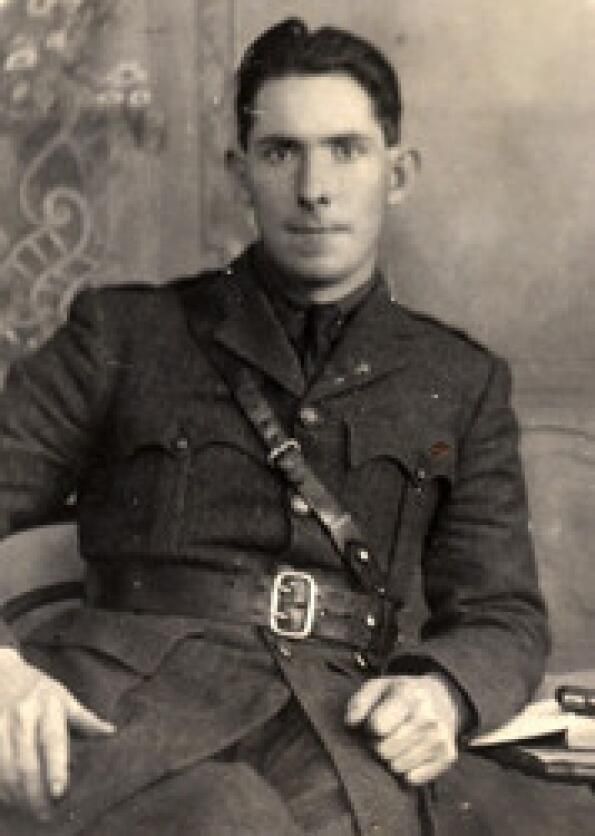
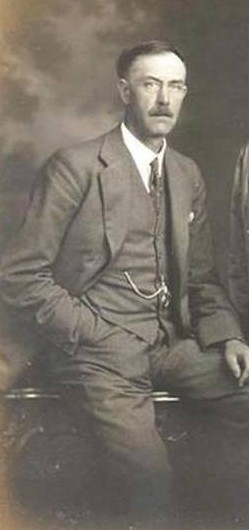
'Sir' Richard Dawson Bates (pictured) was born in Strandtown, Belfast, on the 23rd November 1876 - 146 years ago on this date - and was a solicitor (in Belfast) by profession.
He was Secretary to the 'Ulster Unionist Council' at 28 years young, and held that position until he was aged 44 (ie from 1905 to 1921). In 1921, he was elected to Stormont and was appointed as the 'Minister of Home Affairs', a position he held for 22 years (from 1921 to 1943).
In 1943, at 66 years of age, he retired to the 'back benches', where he stayed until 1945.
As the British 'Minister of Home Affairs' in the Six County 'parliament', he gave himself unprecedented powers to, for instance, "..outlaw organisations...to detain or intern people indefinitely without charge or trial...(and)...to destroy houses and buildings..", amongst other 'rights'.
He was to become the envy of others with a similar mind-set : some 40 years later (ie in [April] 1963) a Mr. Vorster , then South African 'Minister for Justice', was introducing a new Coercion Bill in the South African Parliament when, no doubt thinking of 'Sir' Bates and his colleagues in Stormont and Westminster, he stated that he "..would be willing to exchange all the legislation of that sort for one clause of the Northern Ireland (sic)
Special Powers Act." Birds of a feather indeed.
'Sir' Richard Dawson Bates was a known bigot, and apparently took it as a compliment when it was said of him in Stormont (by a Senior Civil Servant) - "He has such a prejudice against Catholics that he made it clear to his Permanent Secretary that he did not want his most juvenile clerk or typist, if a Papist (Catholic), assigned for duty to his ministry."
In 1935, however, he seemed to believe that he could treat everyone like dirt, regardless of their religion - on 18th June that year (1935), 'Sir' Bates issued an 'official order' banning all parades, not just those with a republican/nationalist 'flavour' : the Orange Order objected and told Bates and his people that it was their intention to hold a parade on the 23rd June (1935) and that said parade would be going ahead.
Bates was not pleased - it was one thing to trample over the rights of the 'Papists', but the Orange Order were his own people and he expected that they would support him. Bates put his troops on notice, and repeated his 'banning order'. On the 23rd June (1935), the Orange Order took to the streets, as they said they would - and the RUC, and 'Sir' Bates, stood and watched!
At that parade, the then Orange Grand Master, a 'Sir' Joseph Davison, 'put it up' to his friend, 'Sir' Bates - "You may be perfectly certain that on the 12 July the Orangemen will be marching throughout Northern Ireland (sic).
I do not acknowledge the right of any government, Northern or Imperial, to impose conditions as to the celebration."
On the 22nd December 1938, 'Sir' (or 'Master'?) Bates introduced internment for republicans, saying - "The (Stormont) Government decided there was no alternative other than to arrest and intern well-known leaders and prominent members of this illegal organisation (IRA)." No 'backing-down' on that one.
Bates was a 'product' of the times and 'class' he was born into ; he could not help but be arrogant, a trait which was to his advantage when it came to his chosen 'career'. He died in Somerset, England, on the 10th June 1949 at 72 years of age, having been a 'proud Orangeman' for all his adult life.
'TOMÁS MacCURTAIN COMMEMORATION...'
From 'The United Irishman' newspaper, April 1955.
In his oration, Domhnall O Cathain said -
"The names and the fame of deeds of Irishmen (sic) are recorded indelibly in the hearts of their descendents but their slanderers are lost in the mists of oblivion. The present bearers of the light of freedom will be vindicated by posterity and their critics will be relegated to the place of their predecessors.
'Greater love than this no man hath than to lay down his life for his friends' ; Tomás Mac Curtain laid down his life that we might be free - in the flower of his youth, in the tree of his manhood, he was soldier and patriot.
The Treaty of Surrender dissipated all that had been achieved through his efforts and those of his comrades ; the unity of the Irish people was signed away with their freedom and today, 34 years after, there is only one way of re-uniting the Irish people. There is real unity only in the Republican Movement..."
(MORE LATER.)
ON THIS DATE (23RD NOVEMBER) 155 YEARS AGO : THREE IRISH FENIANS EXECUTED BY THE BRITISH.
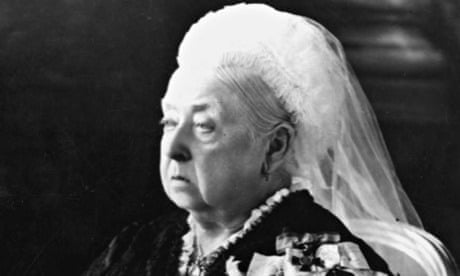
"These Irish are really shocking, abominable people. Not like any other civilised nation..." - the words of Britain's 'Queen' Victoria, on hearing about the 'Manchester Outrage', as she called it.
Her comments were replied to by one of the 'uncivilised Irish' people she was speaking about : "I will die proudly and triumphantly in defence of republican principles and the liberty of an oppressed and enslaved people..." - the words of 18-years-young William Allen, from Bandon, County Cork. The "outrage", as far as the British are concerned, anyway , began on the 11th September that year (1867) (....although, in reality, it began for us Irish in 1169) when, in the early hours of the morning of Wednesday, 11th September 1867, two men were arrested by police in Shudehill, Manchester, on suspicion that they were about to commit a robbery.
The two men were charged under the 'Vagrancy Act' and were detained in police custody, and it was then they were recognised (by fellow Irishmen in British police uniforms) as Colonel Thomas J.Kelly and Captain Timothy Deasy, two known Fenians. Their comrades in Manchester, which was the 'Bandit Country' of its day, vowed to free the two men and, on the 18th of September, 1867, as a prison van carrying the two men (and a 12-years-young boy, plus three female prisoners) was travelling on the Manchester to Salford road, on its way to 'deposit the cargo' in Belle Vue Gaol on the Hyde Road in Gorton, Manchester, accompanied by a team of 12 horse-mounted policemen, it was attacked by about 50 Fenians.
Kelly and Deasy were handcuffed and locked in two separate compartments inside the van, guarded by a police sergeant, a Charles Brett, and, as such, were unable to assist their comrades outside.
The mounted police escort fled the scene on seeing the number of attackers but Brett was obviously unable to do so : the Fenian rescuers were unable to force open the van and advised Brett that it would be for his own good to open the doors and let the prisoners go. Brett refused the offer, and was looking through the keyhole to further assess his situation when one of the rescuers decided to shoot the lock apart - the bullet went through the keyhole and hit Brett in the head, killing him instantly.
One of the female prisoners had the good sense to take the keys from his pocket and hand them out through an air vent to those outside, and Kelly and Deasy were taken to safety.
Twenty-six men were later arrested and tried for playing a part in the rescue, and five of them were detained to stand trial, on 1st November 1867, for their alleged part in what the British called the "Manchester Outrage" : all five were actually sentenced to be hanged, but one was granted clemency and another was 'pardoned' as the evidence against him was found to be perjured.
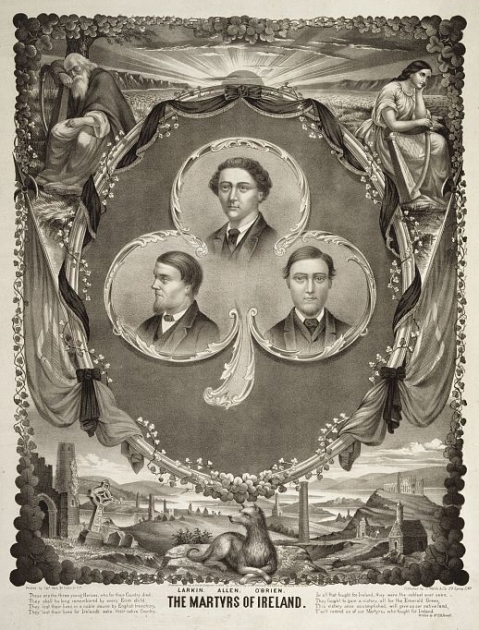
The other three - William Allen, Michael O'Brien and Michael Larkin - the 'Manchester Martyrs', were hanged in front of thousands of baying spectators on Saturday, 23rd November 1867 - 155 years ago on this date - in Salford, Manchester, outside the New Bailey Jail.
In an address to the court, William Philip Allen, 18, stated - "No man in this court regrets the death of Sergeant Brett more than I do, and I positively say, in the presence of the Almighty and ever-living God, that I am innocent ; aye, as innocent as any man in this court. I don't say this for the sake of mercy : I want no mercy — I'll have no mercy. I'll die, as many thousands have died, for the sake of their beloved land, and in defence of it.
I will die proudly and triumphantly in defence of republican principles and the liberty of an oppressed and enslaved people. Is it possible we are asked why sentence should not be passed upon us, on the evidence of prostitutes off the streets of Manchester, fellows out of work, convicted felons — aye, an Irishman sentenced to be hanged when an English dog would have got off.
I say positively and defiantly, justice has not been done me since I was arrested. If justice had been done me, I would not have been handcuffed at the preliminary investigation in Bridge Street ; and in this court, justice has not been done me in any shape or form. I was brought up here and all the prisoners by my side were allowed to wear overcoats, and I was told to take mine off. What is the principle of that? There was something in that principle, and I say positively that justice has not been done me.
As for the other prisoners, they can speak for themselves with regard to that matter. And now, with regard to the way I have been identified. I have to say that my clothes were kept for four hours by the policemen in Fairfield station and shown to parties to identify me as being one of the perpetrators of this outrage on Hyde Road. Also in Albert station there was a handkerchief kept on my head the whole night, so that I could be identified the next morning in the corridor by the witnesses.
I was ordered to leave on the handkerchief for the purpose that the witnesses could more plainly see I was one of the parties who committed the outrage. As for myself, I feel the righteousness of my every act with regard to what I have done in defence of my country. I fear not. I am fearless — fearless of the punishment that can be inflicted on me ; and with that, my lords, I have done."
However, he then added the following - "I beg to be excused. One remark more. I return Mr. Seymour and Mr. Jones my sincere and heartfelt thanks for their able eloquence and advocacy on my part in this affray. I wish also to return to Mr. Roberts the very same. My name, sir, might be wished to be known. It is not William O'Meara Allen. My name is William Philip Allen. I was born and reared in Bandon, in the County of Cork, and from that place I take my name ; and I am proud of my country, and proud of my parentage. My lords, I have done."
Michael Larkin, 32, lived in the Banagher region of County Offaly and was a tailor by trade. He was not of good health and himself and his two comrades were captured as they carried him away from the scene of the rescue. He, too, addressed the court :
"I have only got a word or two to say concerning Sergeant Brett. As my friend here said, no one could regret the man's death as much as I do. With regard to the charge of pistols and revolvers, and my using them, I call my God as witness that I neither used pistols, revolvers, nor any instrument on that day that would deprive the life of a child, let alone a man.
Nor did I go there on purpose to take life away. Certainly, my lords, I do not want to deny that I did go to give aid and assistance to those two noble heroes that were confined in that van, Kelly and Deasy. I did go to do as much as lay in my power to extricate them out of their bondage ; but I did not go to take life, nor, my lord, did anyone else. It is a misfortune there was life taken ; but if it was taken it was not done intentionally, and the man who has taken life we have not got him.
I was at the scene of action, when there were over, I dare say, 150 people standing by there when I was. I am very sorry I have to say, my lord, but I thought I had some respectable people to come up as witnesses against me ; but I am sorry to say as my friend said — I will make no more remarks concerning that. All I have to say, my lords and gentlemen, is that so far as my trial went, and the way it was conducted, I believe I have got a fair trial.
What is decreed a man in the page of life he has to fulfil, either on the gallows, drowning, a fair death in bed, or on the battle-field. So I look to the mercy of God. May God forgive all who have sworn my life away. As I am a dying man, I forgive them from the bottom of my heart. God forgive them."
Michael O'Brien, 31, from Ballymacoda in Cork, was a lieutenant in the US Army and was better known in England by the name 'William Gould'. He delivered the following speech to the court :
"I shall commence by saying that every witness who has sworn anything against me has sworn falsely. I have not had a stone in my possession since I was a boy. I had no pistol in my possession on the day when it is alleged this outrage was committed. You call it an outrage, I don't. I say further my name is Michael O'Brien. I was born in the county of Cork and have the honour to be a fellow-parishioner of Peter O'Neal Crowley, who was fighting against the British troops at Mitchelstown last March, and who fell fighting against British tyranny in Ireland.
I am a citizen of the United States of America, and if Charles Francis Adams had done his duty towards me, as he ought to do in this country, I should not be in this dock answering your questions now. Mr. Adams did not come, though I wrote to him. He did not come to see if I could not find evidence to disprove the charge, which I positively could, if he had taken the trouble of sending or coming to see what I could do.
I hope the American people will notice this part of the business."
He then read a passage from a paper he was holding - "The right of man is freedom. The great God has endowed him with affections that he may use, not smother them, and a world that may be enjoyed.
Once a man is satisfied he is doing right, and attempts to do anything with that conviction, he must be willing to face all the consequences. Ireland, with its beautiful scenery, its delightful climate, its rich and productive lands, is capable of supporting more than treble its population in ease and comfort.
Yet no man, except a paid official of the British Government, can say there is a shadow of liberty, that there is a spark of glad life amongst its plundered and persecuted inhabitants. It is to be hoped that its imbecile and tyrannical rulers will be for ever driven from her soil amidst the execrations of the world.
How beautifully the aristocrats of England moralise on the despotism of the rulers of Italy and Dahomey — in the case of Naples with what indignation did they speak of the ruin of families by the detention of its head or some loved member in a prison. Who has not heard their condemnations of the tyranny that would compel honourable and good men to spend their useful lives in hopeless banishment?
They cannot find words to express their horror of the cruelties of the King of Dahomey because he sacrificed 2,000 human beings yearly, but why don't those persons who pretend such virtuous indignation at the misgovernment of other countries look at home, and see that greater crimes than those they charge against other governments are not committed by themselves or by their sanction?
Let them look at London, and see the thousands that want bread there, while those aristocrats are rioting in luxuries and crimes. Look to Ireland ; see the hundreds of thousands of its people in misery and want. See the virtuous, beautiful and industrious women who only a few years ago — aye, and yet — are obliged to look at their children dying for want of food.
Look at what is called the majesty of the law on one side, and the long deep misery of a noble people on the other. Which are the young men of Ireland to respect — the law that murders or banishes their people or the means to resist relentless tyranny, and ending their miseries for ever under a home government? I need not answer that question here. I trust the Irish people will answer it to their satisfaction soon.
I am not astonished at my conviction. The Government of this country have the power of convicting any person. They appoint the judge ; they choose the jury ; and by means of what they call patronage (which is the means of corruption) they have the power of making the laws to suit their purposes. I am confident that my blood will rise a hundredfold against the tyrants who think proper to commit such an outrage.
In the first place, I say I was identified improperly by having chains on my hands and feet at the time of identification, and thus the witnesses who have sworn to my throwing stones and firing a pistol have sworn to what is false, for I was, as those ladies said, at the jail gates. I thank my counsel for their able defence, and also Mr. Roberts, for his attention to my case."
All three men shouted the words "God Save Ireland!" at different times during the 'trial', perhaps realising that, then, as now, the British were going to get their 'pound of flesh' one way or the other.
The three men were, as stated, hanged by the British on this date - 23rd November - 155 years ago, and are still remembered and commemorated today by Irish republicans.
'THE BRITISH STORY...'
Roy Foster (pictured) in the British media.
By Barra Ó Séaghdha.
From 'Magill' Annual, 2002.
It can hardly be denied that the years immediately before and after the anniversary produced a rich crop of sober work on the Famine (sic) ; overviews, specialised collections of essays, studies in local history, folklore and so on. Fifteen minutes in a library should be enough to reassure Jonathan Freedland and Tim Teeman that Irish history-writing has not descended into a welter of sentiment and self-indulgence, as suggested by Roy Foster's comment.
In the Teeman interview, we are also told - "You get these appalling, winsome, self-indulgent little snippets of autobiography in the middle of what should be history books. There are a number of Irish historians who used to write beautifully but now collapse genres into each other."
To whom can the good professor be referring? The year 1994 saw the publication by a prominent writer - formerly renowned for his style, wit and perceptiveness - of a historical study that presented no coherent framework of understandng, that frequently reduced the complexities of history to caricature and mumbo-jumbo about the Irish psyche, that was interrupted by irrelevant personal and family reminiscences, that grotesquely misrepresented Bloody Sunday, and that sometimes clashed on fundamental points with Roy Foster's book, 'Modern Ireland'...
(MORE LATER.)
ON THIS DATE (23RD NOVEMBER) 109 YEARS AGO : 'IRISH CITIZEN ARMY' FOUNDED.
Ireland 1915 ; The 'Irish Volunteer' movement had split ; approximately 170,000 men stayed with John Redmond and fought with England in the belief that to do so would guarantee a form of 'Home Rule' for Ireland - but about 10,000 men broke away as they had no faith in Redmond's plan.
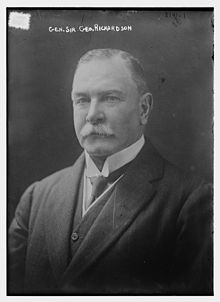
Months earlier, British 'Sir' George Richardson had taken command of the Ulster Volunteer Force (a pro-British militia) and had landed about 25,000 rifles and two-and-a-half million rounds of ammunition at Larne in County Antrim - when the British Government in Westminster attempted to move against the UVF (as they had no control over them then), British Army officers mutinied in objection.
Meanwhile, elsewhere in Ireland, other forces were recruiting : Irish republicans were re-organising ; the 'Irish Citizen Army' was recruiting for volunteers, as was Sinn Féin, the 'Irish Republican Brotherhood' and John Redmond's 'United Irish League'. There was turmoil in the country.
On the 11th of November 1913 in Dublin, in the then 68-year-old Wynn's Hotel on Lower Abbey Street, a group of Irishmen and women held a meeting to discuss the formation of an 'Irish National Volunteer Force'.
Those present at that meeting and/or at five other such meetings which were held immediately afterwards in the space of a two-week period, included Sean Fitzgibbon, John Gore, Michael J Judge, James Lenehan, Michael Lonergan, Peadar Macken, Seamus O'Connor, Colm O'Loughlin, Peter O'Reilly, Robert Page, George Walsh, Peadar White and Padraig O'Riain, amongst others (all of whom were well known in Irish nationalist circles ie Sinn Féin, Cumann na mBan, Na Fianna Éireann, the Gaelic League, the IRB, the Ancient Order of Hibernians, the Irish Parliamentary Party and the United Irish League).
Then, on the 25th November 1913, the inaugural enrolment meeting for the 'Irish Volunteers' was held at the Rotunda Rink in Dublin, to "secure the rights and liberties common to all the people of Ireland". That meeting was overseen by a provisional committee consisting of thirty members, all of whom had been elected at the above-mentioned meetings.
Previous to the formation of the 'Irish Volunteers', James Connolly and others had formed the 'Irish Citizen Army', and both groups were in competition for members, the former on a 32-county basis whereas the latter was confined to the Leinster area, although attempts were made, through trade union structures, to recruit in Cork, Belfast, Derry, Sligo, Limerick, Kilkenny, Waterford, Dundalk, Galway and Wexford, but with little success.
Also, those joining the 'Volunteers' were supplied with a uniform and other equipment while those joining the 'ICA' had to purchase their gear themselves. Relations between the two organisations were not the best, as the 'Volunteers' allowed, for instance, employers to join and this at a time when employees and other trade unionists would most likely be 'ICA' members or supporters and, actually, when the 'Volunteers' were in conference for the first time (25th November 1913) Irish Citizen Army members and supporters loudly made their presence felt and they also objected in print - their first leaflet stated that the 'Volunteers' were controlled by those who were opposed not only to trade unionism but also to workers rights regarding working conditions etc.
Within a few months, however, the animosity had lessened to the extent that there was some official co-operation between both groups at the Wolfe Tone commemoration in June 1914 and again in October that year during the events held to commemorate Charles Stewart Parnell, and both groups joined forces at Easter 1916 and took part side-by-side in the 1916 Rising, during which almost 100 women, members of Cumann na mBan and the Irish Citizen Army, played a full part in the fighting : Cumann na mBan , formed in April 1914, and the Irish Citizen Army, were in training months before the 1916 Rising.
Both groups received instruction in first aid, signalling and weapons preparation. Connolly's daughters, Nora and Agnes, who were both members of Cumann na mBan, joined other members of that organisation in travelling around the country to ascertain the strengths and weaknesses in a particular area.
'The Irish Citizen Army :
Founded as workers’ Defence corps during the Dublin Lock-Out by James Larkin and James Connolly on 23 November 1913. Their Headquarters was at Liberty Hall. The movement was eventually taken over by Connolly in the spring of 1914. He re-organised them into an armed and uniformed force whose aims were the ownership of the land of Ireland by the people of Ireland and the establishment of a Workers Republic.
The General Secretary of the Army was Sean O' Casey. About 200 members took part in the 1916 Rising in Dublin. The Irish Citizen Army supported the Irregulars/anti Treaty forces during the Civil War. A prominent influencing role in refusing to accept The Treaty was played by Constance Markievicz...' (from here.)
The 'Irish Citizen Army' was formed by James Connolly and Jack White on the 23rd November 1913 - 109 years ago on this date - and other prominent members included Seán O'Casey, Constance Markievicz, Francis Sheehy-Skeffington, P. T. Daly and Christopher Poole.
The organisation proper became inactive in the late 1930's although its ethos lives on to this day.
FUNDS AND FINE GAEL'S LEADER.
Michael Lowry has so far been the focus of media attention about Fine Gael fundraising.
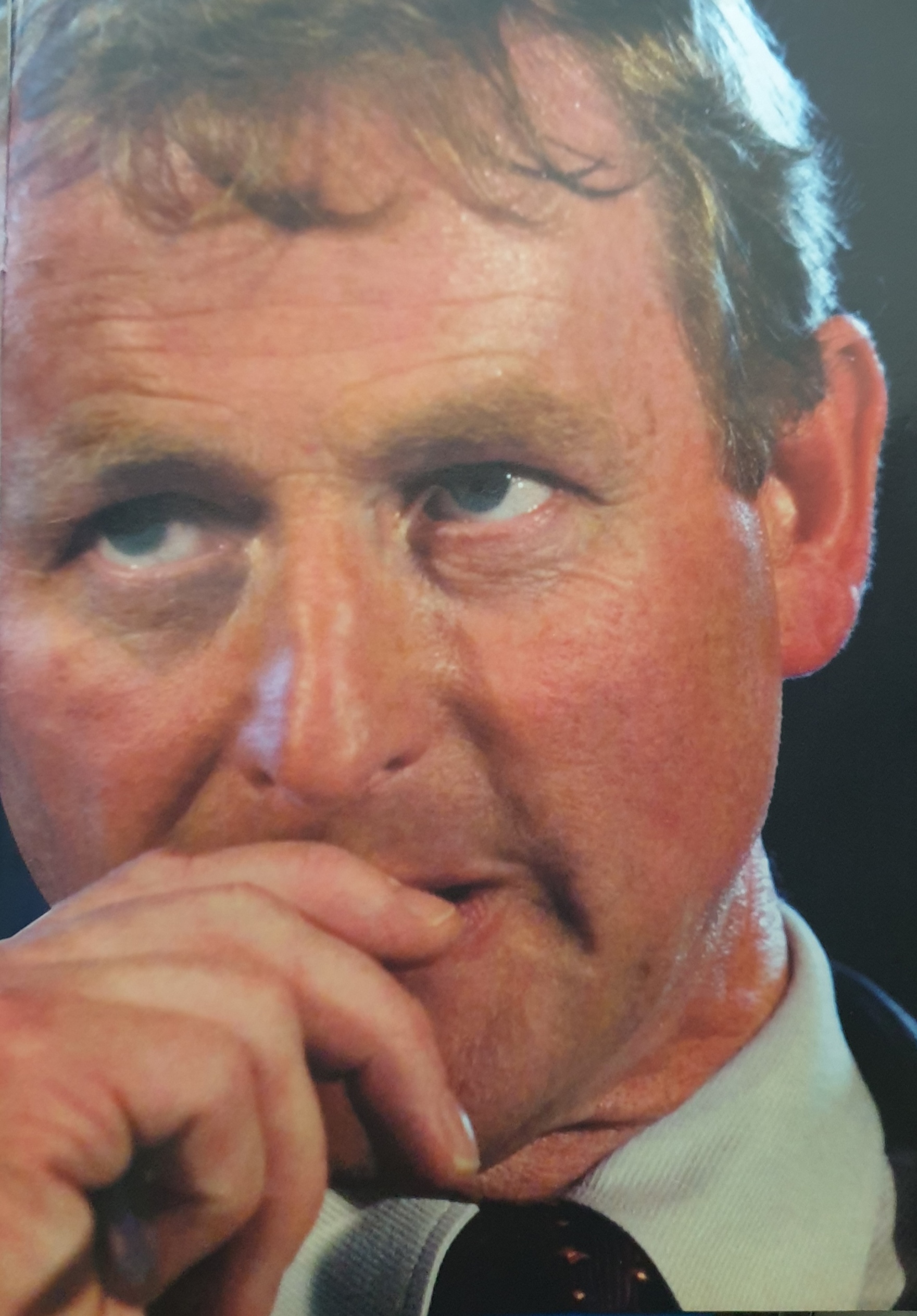
But the party's current leader, Enda Kenny (pictured), hosted a £1,000-a-plate dinner two days before the second mobile phone licence was awarded. And other guests say that one of the bidders for that licence was in attendance.
By Mairead Carey.
From 'Magill' magazine, January 2003.
Fine Gael leader Enda Kenny (pictured) hosted a fundraising event days before the contract for the second mobile phone licence was awarded. Guests say that a man claiming to be a bidder for the licence was also in attendance.
The then Taoiseach John Bruton and (State) Communications Minister Michael Lowry were the guests of honour at the £1000-a-plate dinner at the Conrad Hotel in Dublin, even though Lowry had been advised by his department officials not to meet bidders.
It is not known whether any of the senior Fine Gael politicians at the dinner knew of this businessman's apparent involvement with the bidding consortium...
(MORE LATER.)
Thanks for the visit, and for reading,
Sharon and the team.
WHY IS THIS STATE POLITICIAN SWEATING...?
Would it have something to do with a political buddy of his from Tipperary, and/or an expensive dinner and/or a mobile phone licence?
Or maybe it's something to do with a fundraising issue for his political party?
Or could it be that he's stressed-out about one of his pensions...?
'How to be a Politician ;
Transparent, they say they'll be,
then hide so much from you and me,
make a promise that can't be met,
blame someone else and hope you forget.
Give and take as they see fit,
no need to worry of elections yet,
take your money and tell a lie,
hope your memory fades with time..'
(From here.)
Thanks for the visit, and for reading ; check back with us on Wednesday, 23rd November 2022, when all will be revealed...!
Sharon and the team.
THE 'AARIR' GROWLS (!) IN AMERICA 102 YEARS AGO ON THIS DATE.
Ireland 1920 ; Black and Tans on the rampage, the Irish republican Lord Mayor of Cork, Thomas MacCurtain shot dead by RIC members who were out of uniform at the time (for that purpose) ; notices, thousands of them, were stapled-up throughout the country, warning that '...for every member of the Crown Forces shot, two Sinn Féiners would also be shot.. '.
The then President of the Irish Republic (all 32 Counties), Eamon de Valera, was in America ; he had been there since June 1919, campaigning for support to get the British out of Ireland, politically and militarily and, at a meeting in Washington on the 16th November 1920 - 102 years ago on this date - he announced the formation of the 'American Association for the Recognition of the Irish Republic' (AARIR), nicknamed 'the Growl' due to how the acronym 'aarir' sounded when it was spoken.
This new Irish republican organisation was headquartered in Chicago and, within a year, was said to consist of about 150 branches/councils throughout America and a claimed membership of about 800,000 activists.
This was not new political territory for Irish republicanism, as there were other support groups in existence, in Ireland, America and elsewhere. For instance, there were two main Irish support groups in America - 'Clan na Gael' (founded in June 1867 by Jerome J. Collins) and the 'Friends of Irish Freedom' (FOIF) organisation, founded in March 1916 by different Irish groups collectively known as the 'Irish Race Convention'.
Members of the 'Clan' were militant, and openly supported the physical force element in the struggle for Irish freedom - they supported the Irish Republican Brotherhood and recognised the Brotherhood "as the Government of the Irish Republic virtually established." They had no second-thoughts about the use of force in removing the British presence from Ireland, whereas the 'Friends of Irish Freedom' group (although guided by the 'Clan') stated that its aim was "to encourage and assist any movement that will tend to bring about the National Independence of Ireland". Both groups, while perhaps not seeing eye-to-eye on every issue, played their parts well.
The Irish-American support group, the 'Friends Of Irish Freedom', was 'gently-prodding' the candidates in the November 1920 US presidential election not to forget the Irish situation ; the candidates were gently, but firmly, reminded that the Irish vote could be of assistance to them in their bid to be elected.
But others in the Irish camp did not agree that 'gentle-prodding' was the way to go ; de Valera had support in the Clan na Gael organisation (and some support in the 'Friends Of Irish Freedom' organisation as well) for his opinion that, using the huge Irish vote as leverage, both US presidential candidates could and should be convinced to take a stronger line re the 'Irish (ie British) Problem' - if they wanted the Irish vote then both candidates would have to have it included in their manifesto's that the Irish situation would be a priority for them (ie a 'Brits Out' policy). However, some members of the Clan na Gael were more, and/or also, supportive of the FOIF 'gentle-prodding' route. Confusion reigned, and circumstances, grudges and in-fighting were by now joining the fray.
And that wasn't the first time that grudges and personality issues took from the objective - a few years previously (ie around 1916) the Clan na Gael group (as powerful then as it was in 1920) had brought pressure to bear on US President Wilson to demand from the British that they get out of Ireland. Wilson was not overtly concerned about the Irish situation, but was damned if he was going to support any proposals/requests /demands from a man he disliked ; US Democrat (and Irish Fenian) Judge Daniel Cohalan!
It was Cohalan (pictured) and the Clan organisation that financed the opposition to US President Wilson's 'League of Nations' proposal - indeed, of the estimated $900,000 dollar 'war fund' that the Clan had, only $115,000 dollars was spent in Ireland ; the other $785,000 dollars was spent in attacking the 'League of Nations', or 'Britains League', as Judge Daniel Cohalan and John Devoy called it. The 'Big Guns' of the day - Henry Cabot Lodge and William Borah, for instance - addressed huge rallies against Wilson's /'Britains League', and those rallies were organised and financed by Clan na Geal.
At the National Convention of the US Republican Party, the delegates were being canvassed by Judge Daniel Cohalan and his people when Eamon de Valera arrived with his team to canvass the same crowd - Judge Cohalan had previously requested that de Valera and his team stay away, and a verbal row between both camps ensued, in full view of those they were trying to canvass!
By June 1920, however, both the US Republican and Democratic candidates had accepted the 'gentle prodding' approach towards the situation in Ireland, as recommended by John Devoy, Judge Cohalan and others in the 'Friends Of Irish Freedom'. The other resolution (ie 'put-it-in-writing-or loose-the-Irish-vote'), which was supported by Eamon de Valera, Harry Boland and Clan na Gael, was rejected by both US camps.
However, the dispute between the Clan and the FOIF had been closely monitored by the Irish Republican Brotherhood leadership in Ireland and they were not at all pleased with either group.
The Clan recognised the Supreme Council of the Irish Republican Brotherhood as the Government of the (all-Ireland) Irish Republic so, when - within weeks of the Clan/FOIF dispute - an order came from the leadership of the Irish Republican Brotherhood in Ireland directing the Clan "to stand down", it obeyed - but under protest. Without the support of the Irish Republican Brotherhood in Ireland, both the Clan and the FOIF were severely weakened and could not now claim to be linked to the Republican Movement in Ireland.
And so it was that, on the 16th November in 1920 - 102 years ago on this date - Eamon de Valera (and other leadership figures in Ireland) set-up a new organisation - the 'American Association for the Recognition of the Irish Republic' (the 'GROWL') - and, with the backing and promotion of the IRB leadership and the support in America of figures such as Joseph McGarrity, the 'AARIR' was successful, and raised thousands of dollars for the then Republican Movement in Ireland.
Eamon de Valera was back in Ireland by December that year (ie 1920), but had left his mark in America ; the publicity generated by the fall-out between the Clan na Gael and the Friends Of Irish Freedom organisations, and the establishment of the new 'AARIR' group had put the Irish situation back on 'Page One' - it was a hot topic again.
The British were, of course, watching every move - they realised that the millions of Irish people in America, with their sympathy, support and money for an armed campaign in Ireland, plus steady support amongst the Irish population in England itself for an armed campaign, was perhaps more than they could successfully counter in the short-term ; they were losing the propaganda war. A willingness to hold truce talks with the Irish rebels was signalled, which led to the 'Treaty Of Surrender' in December 1921.
But, thirteen months after it was formed (ie November 1920 - December 1921), the 'American Association for the Recognition of the Irish Republic' was thrown into disarray because of that 'Treaty' - splits and divisions loomed -'divide and conquer' was brought into play by those who were opposed to the republican objective.
The 'Treaty of Surrender' was, at first, supported by one of the main Irish-American leaders in the US, Joseph McGarrity, who claimed that it confirmed that "Irelands sovereign independence is acknowledged by the British Cabinet and their action is approved by Britain's King. This much is certain ...", and he verbally attacked those in America who doubted that it was a legitmate conclusion to the centuries of occupation because of, among other reasons, the clause demanding an 'Oath of Allegiance' to the British Crown which was contained in it.
Those who raised the issue of the oath were, said McGarrity - "doubters (who) were guilty of a despicable attempt to make it appear that the citizens of the Republic (sic) of Ireland are to give allegiance to (Britains) King George.." and he dismissed the oath ( "the supposed oath", as he called it) as "a very clever juggling with words" on the part of the British - he suggested that it was simply a face-saving exercise by Westminster "to give as little hurt to the British Ministers and to the King's pride as possible."
McGarrity was, at this stage, 'in for a penny, in for a pound' ; some of his comrades in America were doubtful about the 'benefits' of that Treaty, while others had already rejected it and still others were in support of it ; amongst the questions raised about it was one concerning the name of the new ('officially' British-free) State, but Joseph McGarrity was going 'hell for leather' to 'sell' it to his fellow Irish-American comrades, as he apparently believed himself that it was the answer to the question of the British presence in Ireland.
But when it was brought to his attention that, among others, Cathal Brugha, Austin Stack and Eamon de Valera had stated that it (the Treaty) was "...in violent conflict with the wishes of the Irish people..", he re-evaluated his position to it thus 'repairing' his standing with the Anti-Treaty forces and again threw his political weight behind de Valera.
McGarrity continued to support de Valera even when dev left the Republican Movement and formed Fianna Fail in 1926, and he also supported the Fianna Fail organisation when they entered Leinster House in 1927 (a move which even the remnants of the 'Clan na Gael' organisation in America could not stomach, thus prompting THEM to disown the Fianna Fail group!) .
But even Joseph McGarrity had his limits ; Fianna Fail had by now strayed so far from the republican path that he began to 'go cool' in his relationship with them - this happened in the early 1930's, when IRA people were being not only jailed by Fianna Fail but executed by them, too. Also in the mid-1930's, McGarrity became the 'main man' behind the new 'Irish Hospitals Sweepstakes' organisation, a fantastic money-spinner in its day. But that's another story...!
The 1921 'Treaty of Surrender' caused a split in the Republican Movement in Ireland and, of course, the 'American Association for the Recognition of the Irish Republic', which was by then, as stated, just 13 months on the go, followed suit - and split ; it found itself in a weakened position and unable to provide proper assistance to the Irish republican cause during the 1922-1923 Free State/British counter revolution against the Republic and, by the time de Valera left the Republican Movement in 1926, the 'AARIR' existed, to all intent and purpose, in name only.
The 'AARIR' (the 'GROWL') was an organisation established by Eamon de Valera and others to assist the Irish republican cause but it was to be allowed to drift and die by dev and his crew because that was the fate they hoped would befall Irish republicanism - that it would drift and die.
Yet, 102 years after the establishment of the 'AARIR' and 96 years after it faded, Irish republicanism still exists. And its objective is the same - a full British military and political withdrawal from Ireland, and the establishment of a true 32-County federal democratic socialist republic.
And regardless of how this State, and others, growl (!) and/or object to it - SFP/RSF is here for the long haul!
'TOMÁS MacCURTAIN COMMEMORATION...'
From 'The United Irishman' newspaper, April 1955.
In his oration, Domhnall O Cathain said -
"Wolfe Tone has told us that there is but one cure for all our evils - break the connection with England - and 800 years of history has proved that there is but one means of achieving that object.
Then there are others who say beware of oath-bound societies and calmly, unemotionally, I can tell you that there is no oath attached to any branch of the Republican Movement. Men (sic) of unswerving loyalty, capable of the greatest sacrifices, whose only reward is the threat of punishment, imprisonment or even death ; such men (sic) don't need an oath.
The pages of Irish history are full of noble deeds and heroic sacrifices, but they are also puncuated by slander. There were always those who hastened to throw cold water on anything that looked likely to revive the spirit of freedom but, nevertheless, the struggle has gone on and will be carried on until the last British soldier is driven out of Ireland..."
(MORE LATER.)
ON THIS DATE (16TH NOVEMBER) 102 YEARS AGO : WILLIAMSTOWN HOUSE MASSACRE.
In 1920, in Ireland, the IRA were both attacking British and pro-British forces and defending themselves from attacks by those armed forces.
In November that year the British combatants in the RIC Barracks in Scariff, in County Clare, were attacked by the IRA in their base and, despite searching the area, the RIC and their colleagues in the Auxiliaries were unable to find them.
So they put a plan together to hunt down the 'dissidents' and, on Tuesday, the 16th November (1920) - 102 years ago on this date - they put their plan into action ; those British forces (the Auxies) took command of a 'Board of Works' steamship called 'The Shannon', in Killaloe and, with dozens of its armed members on board, hidden below deck, they sailed the vessel into Williamstown Harbour, East Clare, and docked it there.
Locals were more or less expecting this, as the harbour was due to be dredged and the arrival of such a ship was perceived to be the start of that job, but what they weren't expecting was for dozens of armed British agents to move quickly from the ship and take up offensive positions around the nearby Williamstown House , on the shores of Lough Derg, near Whitegate, paying particular attention to the caretakers lodge.
Some of the Auxies entered the lodge and 'arrested' the caretaker, Michael Egan, and found three other men on the premises - Michael 'Brud' MacMahon, Alfie Rogers and Martin Gildea. Those three men were officers of the Fourth Battalion of the East Clare Brigade, IRA, and had been on the run since the last attack on Scariff RIC Barracks, but Michael Egan was not an IRA man.
The four prisoners were treated roughly, put on board the steamship and taken to the town of Killaloe, were they were tortured by the Auxies, before being marched, at about midnight, in the direction of Killaloe Bridge, which had to be crossed to gain access to the local RIC Barracks.
The Auxies claimed that they fired ten shots on the bridge and the four men (with their hands tied behind their backs) were shot dead ; the Auxies claimed that Martin Gildea died from one bullet in the head, as did the caretaker, Michael Egan. Alfie Rogers was killed by two bullets to his abdomen and one bullet to his head, and Brud MacMahon died from one bullet to the abdomen. Four bullets had apparently 'missed their targets' because, according to the Auxies, the four men had made a break for it on the bridge and were 'shot dead while trying to escape from custody', but only after they had failed to halt when called upon to do so.
An 'inquest' was held into the shooting but no medical report was produced, but a report from a local newspaper was - 'It is remarked as a peculiar circumstance that the prisoners should have been brought there at that hour, as it is stated they had been brought to the Lakeside Hotel, occupied by the police, early that evening.
At the bridge, which is about 200 yards long, the road is straight and narrow, and underneath flows the Shannon at a depth which would mean instantaneous death to a man plunging off the bridge. The spot would not, therefore, be considered a favourable place to attempt an escape.
The natives heard 15 or 20 rifle shots that night, followed by moans and a pathetic cry for the priest. No priest was, however, summoned, although the Presbytery is only about 100 yards from the scene of the tragedy...'
The British repeated their claim that the four men were shot while trying to escape, but the coroner's inquest returned a verdict of wilful murder against the British forces stationed at Killaloe, and the local clergy spoke up about having been denied admission to the barracks where the bodies were laid out.
On the 18th November (1920), the families of the four men were sent telegrams informing them that their man was shot dead while trying to escape, and that lie was repeated in Westminster and, indeed, the British 'Chief Secretary for Ireland' told the 'House of Commons' that the crown forces were entitled to fire on people who were trying to escape and who refused to halt when challenged.
When, eventually, the families were 'permitted' to claim the bodies, they were transported to Scariff Church in four hearses.
Despite the enforced 7pm to 7am curfew, the locals were determined to hold their own inquiry and the coroner for East Clare, Patrick Culloo, at great risk to himself, made his way to the church and convened an inquest there. A doctor agreed to examine the bodies and he found that each had at least 17 bullet wounds, all fired from close range. An inquest jury returned a verdict of wilful murder by members of the crown forces.
Although treated with contempt by the British forces, over 50 priests gathered in Scariff Church, in East Clare, and held a requiem mass for the four men, following which the men were buried together in the church grounds, despite the best efforts of four lorry-loads of Black and Tans and Auxiliaries who had surrounded the church, the graveyard and the mourners, forcing people to pass through a cordon when leaving the church which, incidentally, was noisily searched by the crown forces while funeral proceedings were underway.
'The dreadful news through Ireland has spread from shore to shore,
for such a deed no living man has ever heard before.
The deeds of Cromwell in his time I'm sure no worse could do,
than those Black and Tans who murdered those four youths at Killaloe.
Three of the four were on the run and searched for all around,
until with this brave Egan lad from Williamstown was found,
they asked him were the boys inside ; in honour he proved true,
because he would not tell the pass he was shot in Killaloe.
On the fourth day of November that day of sad renown,
they were sold and traced through Galway to that house in Williamstown.
They never got a fighting chance but were captured while asleep,
and the way that they ill-treated them would cause your blood to creep.
They bound them tight both hands and feet with twine they could not break,
and they brought them down to Killaloe by steamer on the lake.
Without clergy, judge or jury upon the bridge they shot them down,
and their blood flowed with the Shannon, convenient to the town.
With three days of perseverance, their bodies they let go,
at ten o'clock at night their funeral passed through Ogonnelloe.
They were kept in Scarriff chapel for two nights and a day,
now in that place of rest they lie, kind people for them pray.
If you were at their funeral it was an awful sight,
to see the local clergy and they all dressed up in white,
such a sight as these four martyrs in one grave was never seen,
for they died to save the flag they loved, the orange white and green.
Now that they are dead and gone I hope in peace they'll rest,
like all their Irish brave comrades, forever among the blessed.
The day will come when all will know who sold the lives away,
of young McMahon, Rogers, and valiant Egan and Gildea.'
'THE BRITISH STORY...'
Roy Foster (pictured) in the British media.
By Barra Ó Séaghdha.
From 'Magill' Annual, 2002.
It was symbolically appropriate that when Professor Foster was writing his own 'Modern Ireland 1600-1972' his famine chapter should be titled 'The Famine : Before and After' - before, after, but not during.
If instead of brushing a cataclysm under the historical carpet, perhaps out of fear of inflaming popular prejudice, professional historians had gathered and made known in an accessible fashion the results of their research into the famine, there might not have been the same sudden - and temporary - surge in emotionalism as people contemplated and imagined the event for the first time.
Jonathan Freedland paraphrases Foster as suggesting that the 150th anniversary "prompted not a series of sober, factual analyses, but a 200-acre famine theme park on Knockfierna Hill in West Limerick, promising tourists the chance to 'experience first hand' the privations of mass hunger."
Foster seems happier to denounce this little-known park than to address the far more serious and successful 'Famine Museum' at Strokestown House...
(MORE LATER.)
'FORTH HIS BANNERS GO...'
Jer O'Leary (pictured) has become bannermaker to the radical and labour movement. Brian Trench reports on the growing recognition of his art.
From 'Magill' magazine, May 1987.
Jer O'Leary has never felt obliged to turn any commission down on the basis that it was politically unacceptable ; "I don't get asked by the wrong people. They know my stand."
With last year's exhibition of his work in the Project Arts Centre in Dublin and this year's participation in international events, Jer's street art has come inside. The Arts Council and the Cultural Relations Committee have helped him get to Huddersfield and New York.
At the last time of asking, the inner core of Aosdána, the artists' assembly, did not want to take him into their membership as an artist. There are some grounds for believing that, on the next occasion, they may view the matter differently.
(END of 'Forth His Banners Go' ; NEXT - 'Funds and Fine Gael's Leader', from 2003.)
Thanks for the visit, and for reading,
Sharon and the team.
ON THIS DATE (2ND NOVEMBER) 36 YEARS AGO : SINN FÉIN REORGANISED.
'The story of how Gerry Adams tried to turn an eighty year old revolutionary movement into a British constitutional party. How he broke the Sinn Féin constitution, created fake cumainn to give him fake votes and barred life long republicans from voting.
How he managed to expel himself and his supporters from Sinn Féin membership. And how a small band of republicans managed to keep the Sinn Féin constitution and traditional policy in tact...in 1986, Section 1b. of the Sinn Féin constitution read as follows :
"No person who is a member of any political party, organisation, or who approves of or supports the candidature of persons who, if elected, intend taking part in the proceedings of the Westminster or partitionist 26-County or 6-County parliaments or who approves of or supports the candidature of persons who sign any form or give any kind of written or verbal undertaking of intention to take their seats in these institutions, shall be admitted to membership or allowed to retain membership...'
The Adams leadership put forward a motion, titled 'Resolution 162', at the 1986 Ard Fheis, thus expelling themselves from membership - more here.
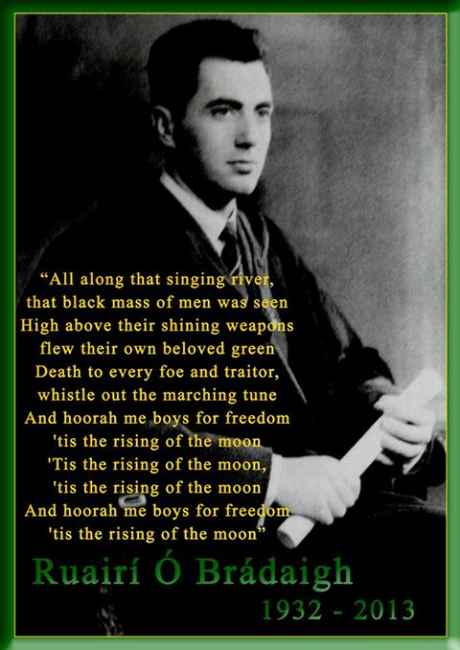
"Sitting in Leinster House is not a revolutionary activity. Once you go in there, once you sign the roll of the House and accept the institutions of the state, once you accept their rulings, you will not be able to do it according to your rules.
You will have to go according to their rules and they can stand up and gang up on you and put you out on the street and keep you out on the street. And those in Leinster House, who have done everything - the firing-squads, the prison cells, the internment camps, the hunger strikes - the lot, and weren't able to break this movement, that they can come and say 'At last, we have them towing the line, it took us 65 years, but they have come in from the cold, they have come in from the wilderness and we have them now.'
Never! That is what I say to you. Never!" - Ruairí Ó Brádaigh, Sinn Féin Ard Fheis, 2nd November 1986.
In an interview with 'The Irish News' newspaper on Thursday, July 17th, 1997, Gerry Adams stated that the aim of Provisional Sinn Féin (PSF) was to achieve "maximum constitutional change and a renegotiation of the union."
And therein lies the difference between Adams and his people and Irish republicans - the former will settle for 'a kind of peace' and financial security for themselves in a 'new' Westminster/Stormont-ordered Six-County 'state' while the latter continue to strive for real change outside of the present constitutional arrangements and an end - not a "renegotiation" - of "the union".
On that Sunday, the 2nd November 1986 - 36 years ago on this date - Ruairí Ó Brádaigh, Dáithi Ó Conaill and other Sinn Féin (Republican) delegates reconvened the Ard Fheis in a hotel in Chapelizod, Dublin, and that Irish republican organisation will hold its 117th Ard Fheis on Saturday, 12th November 2022, in a Dublin venue. And long may they last!
ON THIS DATE (2ND NOVEMBER) 222 YEARS AGO : DEATH OF A LEINSTER HOUSE-TYPE POLITICIAN WHO WOULDN'T 'BUCK' THE SYSTEM.
Thomas 'Buck' (or 'Jerusalem') Whaley (pictured) was born in Dublin in December 1766, son of a notorious 'landlord', law judge and British politician, and eventually grew-up (with an inherited fortune to his name), age-wise, at least, to become a man that others of his ilk, including his father, Richard 'Burn-Chapel' Whaley, would be proud of.
His father earned that nick-name due to what was said to be a hobby of his - harassing local catholics.
His son, 'Buck', had his own problems - he was feckless and reckless, a spoiled child who 'matured' into a spoiled adult, believing that he had a sense of entitlement to the good life, and not of the opinion that he should have to earn it.
He wrote in his memoirs about how the quiet life (!) "...did not suit my volatile disposition : in order, therefore, to vary the scene, I sent over to London for a female companion, with whom I had been intimate, and who immediately accepted the invitation. I had no motive whatever in giving her the preference but that she was an exotic.
My inamorata was neither distinguished for wit or beauty ; but I will do her the justice to say that she had none of that rapacity and extravagance so common of her profession. What I expended on her account was from my own free will and suggestion. I hired her a magnificent house, suitably furnished, and settled an allowance of five hundred a year on her ; this was merely pro forma, for she cost me upwards of five thousand.
At her house I kept my midnight orgies, and saw my friends, according to the fashionable acceptation of the word. But soon growing tired of this manner of living, I conceived the strange idea of performing, like Cook, a voyage around the world.."
Well, to his credit, he seems to have finally realised that the world didn't actually 'voyage' around him.
He was elected as a member of the 'Irish House of Commons' for the Newcastle area of Dublin in 1785 (when he was only 19 years of age) but used his political position almost exclusively to promote himself within 'high society' and cared little for those he was supposed to be representing (carrying on in that same manner when, at 31 years of age, he bought his way in to politics again, this time as a 'representative' for Enniscorthy, Wexford) so much so that he was a 'guest' in a debtors' prison in London (from which he unsuccessfully attempted to escape!), claiming later that he had wasted a financial fortune of about £400,000 on 'the good life', stating that he never had "one hour's true happiness" during his spending spree!
During his second term as a political representative (!) he at first supported the then (1799) proposed 'Act of Union' and let it be known that he was amenable to vote against same if the price was right - and it was, apparently, as he voted against it in 1800!
And someone, somewhere, 'voted' against him that same year (1800) - he died, on the 2nd of November, 222 years ago on this date, from rheumatic fever, t'was said, or then again, maybe, the rumour mill of the day got it right ; '...that he was stabbed in a fit of jealousy by two sisters to whom he was paying marked attentions at a time when each of them was in ignorance of his concealed attachment to the other. Sarah, or Sally Jenkinson, is stated to be the lady from whom he received his death wound..'
That particular lady was said to have been 'won' by 'The Buck' from the Prince of Wales in a wager!
Buck Whalley lacking much of cash
And being used to cut a dash
he wagered full ten thousand pound
He'd visit soon the Holy Ground
In Loftus's fine ship
He said he'd take a trip
And Costello so famed
The Captain then was named.'
He was buried in the Isle of Man and, having made a bet that he would be buried in Irish soil, he was determined to 'win' - he had imported enough Irish soil, and was buried in it, to ensure 'victory'!
It would be nice to say that 'they don't make them like that anymore', but that's not the case - Leinster House is full of such unscrupulous political chancers, for sale to the highest bidder.
'TOMÁS MacCURTAIN COMMEMORATION...'
From 'The United Irishman' newspaper, April 1955.
In his oration, Domhnall O Cathain said -
"When Tomás MacCurtain was done to death in the presence of his family by the liveried servants of the British Government, the detractors and the caluminiators began their work.
MacCurtain, the peer of any Irishman (sic) in the 100 years before his time or the 600 years before that, the slanderers said and tried to make it stick that he had been murdered by his own comrades. Foul lies that were hurled back in the teeth of the liar. History repeats itself. Recently calumny and detraction has reared their ugly heads.
The apologists fell over one another to say their hearts are in the right place but only "the elected representatives" have the right to lead, or some such platitude.
We say to the apologists that the Republican Movement of today has as much in common with the elected representatives as Pearse and MacCurtain had with Redmond, as Mitchell had with O'Connell, as Tone had with Grattan..."
(MORE LATER.)
ON THIS DATE (2ND NOVEMBER) 102 YEARS AGO : EXECUTED BY THE BRITISH FOR OBJECTING TO IMPERIALISM.
'On November 2nd, 1920 (102 years ago on this date) James Daly was killed by a British Army firing squad in India. He had been one of the leaders of the so-called 'India Mutiny', but had not been among its instigators. The mutiny began on May 28th, 1920, led by Joseph Hawes at Wellington barracks in Jullundar, India, when 350 Irish members of the famous Connaught Rangers regiment of the British Army laid down their arms and refused to keep soldiering as long as British troops remained in Ireland.
As word of more and more British violence against the Irish people spread among the troops, they had begun to question the morality of wearing the uniforms of the same army that was terrorising families back home. The mutiny soon spread to Ranger detachments in Solon and Jutogh. Daly was stationed at Solon and helped lead the action of the mutineers there. Two would die in Solon during a brief confrontation. Eventually, 61 Rangers were convicted by courts martial and 14 sentenced to death.
All but one of those condemned men had their sentences reduced. James Daly of Tyrellspass, County Westmeath, was the only one shot. The Connaught Rangers would not survive much longer than Daly ; in 1922 the regiment was disbanded after the signing of the Anglo-Irish treaty that created the Irish Free State. In 1970, James Daly's body was brought home and buried at Tyrellspass. Among those in the guard of honor at the reinterment ceremony were five of his fellow mutineers: Joseph Hawes, James Gorman, Eugene Egan, Patrick Hynes, and William Coote...' (From here.)
"The moral courage and sacrifice shown by James Daly and his comrades shines like a beacon light years after those momentous events in Jullander and Solon in India in June and July of 1920. The leadership shown by James Daly and Joe Hawes galvanised their comrades into striking a blow for the freedom of their own land. We also remember with pride the sacrifices of Peter Sears and Patrick Smythe who died at the hands of the British army during the mutiny and who are interred in Glasnevin cemetery..." -(the then) RSF President, Des Dalton, in 2010 : more here.
At that time, in Ireland, the Black and Tan War was at its height. Irishmen serving with the British Army in India mutinied in protest at the atrocities being committed in Ireland by the British. On June 27th, 1920, 350 Irishmen gave in their arms and refused to soldier for England. The mutiny was confined chiefly to members of 'B' and 'C' Companies, 1st Battalion, Connaught Ranger Regiment, stationed at Wellington Barracks, Jullunder, Punjab, India. The men at Jullunder were led by Private Joseph Hawes and their protest was joined two days later by a detachment of 'C' Company at the hill-station in Solon, under Private James Daly, a member of the Irish Republican Brotherhood.
On June 30th, 1920, following the deaths of Privates Patrick Smythe and Peter Sears in an attempt to capture the magazine at Solon, the mutiny ended. Seventy-five of the mutineers were arrested and taken to Lucknow where they were held until September when they were moved to Dayshai Prison to stand trial.
While awaiting trial, the prisoners were subjected to such harsh treatment by the British that it resulted in the death of one of the men, Private John Miranda, a native of Liverpool. At the subsequent general court-martial , fourteen of the prisoners were sentenced to death and the remainder to terms of imprisonment varying from ten to twenty years. In mid-October 1920, 13 of the fourteen death sentences were commuted to life imprisonment - the exception was Jim Daly, a native of Tyrellspass, County Westmeath.
After six months, the mutineers were transferred to Portland Convict Prison in England, where they suffered long periods of solitary confinement and ill-treatment during their fight for political status. They were later moved to Maidstone Prison and, on January 3rd, 1923, the remaining sixty mutineers were released and returned to Ireland.
In October 1970, the remains of Daly, Smythe and Sears were brought back to Ireland : Smythe, a native of Drogheda, Co. Louth and Sears, from Neale, Co. Mayo, were buried in the Republican Plot in Glasnevin Cemetery in Dublin. James Daly, who was executed in Jullunder in India on November 2nd, 1920 - 102 years ago on this date - was re-interred in his native Tyrellspass.
These men and those like them are remembered and cherished by Irish republicans, as they should be.
'THE BRITISH STORY...'
Roy Foster (pictured) in the British media.
By Barra Ó Séaghdha.
From 'Magill' Annual, 2002.
An innocent reader of these interviews would be forgiven for imagining that Ireland is awash with sentimentalised and regressively nationalist history-writing and that nothing constructive or properly critical emerged from either the Great Famine (sic) or 1798 anniversaries.
Let us take the Famine (sic) as a case in point ; any outsider looking at Irish history-writing of all shades - republican, left-wing, middle-of-the-road, revisionist, reactionary or unionist - up to the 1980's, would be struck by just how little research there had been into the 'Famine'.
The removal through starvation, disease and emigration of a quarter of the population of the country in less than ten years and its effects on family life, rural class structure, popular culture, language and religious observance - all this was of little interest either to those who wanted to present an uplifting narrative of popular resistance or to those early Cambridge-trained professionals paralysed by the need to prove to their British peers how unsentimental and scientific they were...
(MORE LATER.)
ON THIS DATE (2ND NOVEMBER) 72 YEARS AGO - DEATH OF A BRILLIANTLY CONFUSED IRISHMAN.
"Power does not corrupt men ; fools, however, if they get into a position of power, corrupt power" - George Bernard Shaw, dramatist, critic and social reformer (pictured).
An enigma, I think, is the best way to describe 'GBS', who was born in Dublin on the 26th of July 1856, and was known to be a 'problem child' - he grew into what many of his contemporaries and, indeed, society at large, considered to be a 'problem adult'!
In relation to Irish politics, he supported 'Home Rule' within the British 'empire' ("...socialism can be brought about in a perfectly constitutional manner by democratic institutions.." [which might indeed be possible elsewhere, but the Leinster House institution is not a "democratic institution", as far as Irish republicans are concerned]) and constantly voiced opinion against Irish separatism (yet, at 90 years of age [in 1946] he refused an award from Westminster of an 'Order of Merit Honour').
In 1916, at 60 years of age, he condemned "militant Irish nationalism" and accused those attempting to overthrow British misrule in Ireland as having 'learned nothing and forgot nothing' and again voiced his opinion that independence from England 'was impractical', although he did object to the British executions of the rebels that followed.
He supported Mussolini ("...the right kind of tyrant.."),spoke of his admiration for Stalin and Karl Marx, condemned all sides in the 'First World War', flirted with 'Fabianism' and 'Eugenics' and flirted occasionally with 'Flat Earthism/Zeteticism'!
'GBS' departed this Earth (flat or not!) on the 2nd November 1950 - 72 years ago on this date - at the grand age of 94.
"Dying is a troublesome business," the man himself opined, "there is pain to be suffered, and it wrings one's heart ; but death is a splendid thing - a warfare accomplished, a beginning all over again, a triumph. You can always see that in their faces."
And, in the opinion of this blog, this world needs more 'faces' (and free-thinking attitudes) like that of 'GBS' today, even if we wouldn't agree with all of his political positions. But he sounds like an interesting man to have had the pleasure of discussing life (and things!) with!
'FORTH HIS BANNERS GO...'
Jer O'Leary (pictured) has become bannermaker to the radical and labour movement. Brian Trench reports on the growing recognition of his art.
From 'Magill' magazine, May 1987.
Artist and lecturer Charlie Cullen had done many of the recent banners for Dublin trade union branches so, at first, Jer O'Leary concentrated on work for union organisations outside Dublin.
Charlie Cullen was one of those who helped him, as did artist Robert Ballagh and the head of the 'National College of Art and Design', Noel Sheridan. At first, Jer and his wife, Eithne, would cut and stitch the complete banner but, more recently, as the commissions have piled up, they have been handing over the designs to a Dublin firm which makes flags and banners.
The general unions, Jer notes, generally give him a free hand but craft unions tend to be more concerned to know the precise detail of his designs...
(MORE LATER.)
ON THIS DATE (2ND NOVEMBER) IN...
...1752 :
The Bishop of Raphoe, Philip Twisden (who was the son-in-law of Thomas Carter) died on the 2nd November, 1752.
The poor bishop was said to be just that - poor, financially - so, on the 2nd November, 1752, he (allegedly/apparently) dressed-up as a highwayman and headed-off to either Hounslow Heath in London or Wrotham Heath in Kent to await the arrival of a stagecoach.
And, sure enough, along came such a vehicle, and Bishop Twisden attempted to rob the passengers of their earthly coinage and a gunfight ensued and the poor bishop was shot dead.
Or maybe not?
There is a record of a 'Bishop Twysden' having died on the 2nd November, 1752, in his home in Jermyn Street, Saint James's, in London but, according to religious author Henry Cotton, the bishop died (on the 2nd November 1752) at Roydon Hall in East Peckham, in Kent, his father's country house, and was buried in the south chancel of Saint Michael's Church, East Peckham, under a plain stone with no inscription.
But sure maybe his ghost is still out on the heath, looking for a stagecoach...
======================================
...1918 :
On the 2nd November, 1918, 'The Larne Times' newspaper carried a report that an RIC member, a 'Constable' Thomas Kyle, had died from gas poisoning which he suffered at Greencastle RIC barracks in Donegal on the 22nd October 1918.
But please don't make a connection with the above 'Short Story' and this...
======================================
...1920 :
On Tuesday, the 2nd November, 1920, the Black and Tans were on the rampage in Tralee, in County Kerry, as they couldn't locate two of their number and suspected that the local IRA were holding them for interrogation.
Shops had been closed and schools in the town were shut 'by order' of the Tans, who stalked the empty streets firing shots into the air and/or shooting through house windows.
An IRA Volunteer, Thomas Wall, was standing at a corner on the Main Street in Tralee, watching proceedings, thinking he'd be safe enough, as he had fought in France for the British in 'World War 1'. But not so ; a few of the Tans approached him and one of them smashed his rifle butt into Thomas's face and shouted at him to get off the street. As Thomas was stumbling away from the scene he was shot dead by the Tans, who later claimed that Thomas Wall was their prisoner and he was shot trying to escape from their custody.
======================================
...1920 :
On Monday, 1st November 1920, an RIC man was shot in the village of Ballinalee in County Longford.
The next day, eleven lorries of British troops and Black and Tans entered the village seeking revenge but they were met by an IRA column (under the command of Seán MacEoin, pictured - an IRA-gamekeeper-turned-Free State-poacher, unfortunately.).
A two-and-a-half-hour battle commenced, at the end of which the British forces retreated, leaving behind some munitions and equipment of use to the rebels, who remained in the village for a week, to ensure the safety of the villagers.
======================================
...1920 :
On the 2nd November, 1920, Éamonn O'Modhráin (pictured), the Vice-Chairperson of Kildare County Council, was 'arrested' at his home by British forces for "being in possession of seditious literature" ie republican leaflets etc.
He was 'tried' by court-martial and sentenced to 16 months imprisonment, 6 months of which was remitted.
======================================
...1920 :
On the 2nd November, 1920, as RIC members were driving through Auburn, Glasson, near Athlone in County Westmeath, in two lorries, they came under attack from the IRA at about 9.30am, an action in which IRA Volunteer James (Seamus) Finn (21), from Kileenbrack, Ballymore, in County Westmeath, lost his life.
A London-born 'Constable', Sydney George James Larkin(/Larking) (22), was shot dead and two other RIC members - a 'Sergeant' Meany and a 'Constable' Costello - were wounded.
RIC member Larkin(/Larking) was serving his 'queen' in Ireland as a member of the 3rd Battalion of the Somerset Light Infantry and had also 'kept the peace' in this country as a member of the Devonshire Regiment.
RIP Volunteer James Finn.
======================================
...1922 :
On the 2nd November, 1922, an IRA Column, under the command of Charlie Daly (28), was captured by Free Staters at Munacool, Dunlewey, in County Donegal.
Among the republican prisoners were Timothy O'Sullivan (24), Daniel Enright (23) and Sean Larkin (26) and, on the 18th January, 1923, the Staters announced that they intended to execute those four men.
On the morning of Wednesday, the 14th March 1923 (about six weeks before the end of the 'Civil War') the four IRA prisoners were marched from their cell at Drumboe Castle, Donegal, to an improvised firing range about 300 yards up a gently sloping field in the woods at Drumboe.
It was at this spot that the four men were executed by a Free State firing squad and their bodies were thrown into a ready-made grave.
'These four Irish soldiers were dragged from their cell,
for months they had suffered the torments of hell,
no mercy they asked from their merciless foe,
and no mercy was shown by the thugs at Drumboe...'
======================================
...1922 :
A unit of Free State troops, under the command of republican-gamekeeper-turned-Free State-poacher Michael 'Tiny' Lyons who was, by then, viciously anti-republican, came across two known IRA Volunteers, Michael O'Sullivan and Denny Connor, at Knockanes, near Headford Junction, in County Kerry, on the 2nd November, 1922.
Volunteer O'Sullivan was shot dead by the Staters "while attempting to escape" and Volunteer Connor did escape.
Lyons is purported to have died alone in a bedsit in Manchester. In dire straits, hopefully.
======================================
...1922 :
The home of Free State Army General Richard Mulcahy (a republican-gamekeeper-turned-Free State-poacher), Lissonfield House, Rathmines, in Dublin (near Portobello Free State Army Barracks), came under gun attack on the 2nd November, 1922. Mr Mulcahy escaped injury.
Shortly after that attack, IRA Volunteer Frank Power (a Volunteer with the IRA's 'Number 4 Section')was shot dead outside Rathmines Church by the Staters.
======================================
...1922 :
A Private in the Free State Army, John Caddigan, was killed in County Kerry on the 2nd November 1922. We can't find any more information on this killing.
======================================
ON THIS DATE (2ND NOVEMBER) 54 YEARS AGO : THOSE SEEKING CRUMBS WERE BATONED AWAY FROM THE BRITISH TABLE.
On the 2nd November 1968 (a Saturday) - 54 years ago on this date - the fifteen committee members of the 'Derry Citizen's Action Committee' (DCAC) (formed only a few months earlier), which included Ivan Cooper (chairperson), John Hume (deputy chairperson), James Doherty, Claude Wilton and Paddy Doherty, set-out on a 'civil rights' protest march on the same route that a previous protest march was to be held on (on the 5th October), but which had been banned by the British 'authorities' in Stormont.
Thousands of people joined in on the 2nd November protest march even though it, too, had been 'banned by the authorities'.
Those that organised the 'civil rights' protests were no doubt well-meaning individuals but their actions were interpreted by the British as a sign of weakness, in that those that Westminster had 'conquered' had come to accept themselves as a conquered people that desired only to be treated better 'by those in charge', and even that was asking too much.
That mistake (ie asking 'the boss' to treat you better!) has been repeated and amplified since those days but 'the boss' has since learned to 'box clever' - if you fight against 'the boss' him/herself you are seen as a threat but if you're only looking to be treated better by that 'boss' you will be accommodated to a certain extent and will sometimes be accepted in the bosses circle as a 'house negro' rather than a 'field negro'.
The former will be allowed to contest for a position in 'the big house' whereas the latter will be considered as trouble-making outcasts - 'dissidents' - to be condemned by those in 'the big house' and by those who aspire to be accepted into the master's parlour.
But we 'dissies' sleep easier for it!
====================================
And (once again!) - we won't be here next Wednesday, 9th November, 2022, as we'll be doing a few bits and pieces for the 117th Ard Fheis of Republican Sinn Féin Poblachtach, which is being held in a Dublin venue on Saturday, 12th November - it's a busy few days for us, before and after the event, but it's for, and in, a good cause, and we're looking forward to it.
We'll be back on Wednesday, 16th November 2022, and ya can catch us on 'Facebook' and 'Twitter' between this and then, if yer gonna miss us that much!
Thanks for the visit, and for reading,
Sharon and the team.