DROPPING OFF SOME GOODIES ON THE 18TH...
..Wednesday the 18th December 2024, that is..
...but not, unfortunately, the best 'Goodie' that we wish we were delivering - a United Ireland.
And as sure as the 18th and the 25th will come, so will our best Goodie!
But, for now, yis will have to make do with the dozen-or-so pieces that we'll be posting here on Wednesday, 18th December, 2024, included in which will be the full script for the following pieces -
In the late 19th Century, before the working-class were properly unionised (...some would say they still aren't today, as the trade unions are staffed by mostly careerists, who see their careers on the opposite side of the negotiating table. And, in our opinion, the "some" that say that would be right!), the workers in this particular industry got together and formed themselves into a sort of 'representative body' which didn't hold back when it came to 'negotiating'. But then they were infiltrated and betrayed...
Ireland, 1919 - perhaps it was an 'affair of the heart', or guilt about how he had conducted himself, or maybe his British Army comrades were pushing him to be more 'macho' in his dealings with the Irish...? But, whatever it was, the only way out that he could apparently see was a farewell note and a long walk off a short pier...
Westminster, 1919 - figures were announced by a top politician in relation to their 'spending', financially and militarily ('man power'), in Ireland : a shocking amount for both which, considering Britain itself was societally in the doldrums, should have made them think twice but, apparently, didn't faze them one bit...
In reference to an article from 2002 - "...one of the main differences between the unvetted and illegal Irish in America, who are willing - indeed, anxious - to earn their keep and not be a burden or a threat to the American people, and the fake and/or dangerous so-called 'refugees' who are, at the time of writing, in this State in their tens of thousands, leeching off the abilities of State taxpayers, overpowering the indigenous Irish and our whole social welfare system and destroying us societally..."
So do, please, give us a shout on Wednesday, 18th December 2024, and if'n ya don't...
..then we'll know yer being naughty, not nice!
Thanks for the visit, and for reading - see ya on the 18th!
Sharon and the team.
On the 11th December, 1919, a British politician, 'Sir' James Ian MacPherson (pictured - Mr MacPherson had been appointed, in January that year, by Westminster, as the 'Chief Secretary for Ireland') received a letter from the British 'Lord Lieutenant for Ireland', Field Marshall 'Sir' John Denton Pinkstone French (the '1st Earl of Ypres, KP, GCB, OM, GCVO, KCMG, PC ETC ETC'!).
The letter was in connection with directives issued by their Dublin Castle administration in Ireland, and disagreements by 'officials' in the Castle team about how best to keep the natives down.
British civil servant and 'Under-Secretary for Ireland', a Mr James MacMahon and 'Sir' John James Taylor, the British 'Assistant Under-Secretary for Ireland', didn't see eye-to-eye on the policies that would serve the Crown better than serve 'Paddy' (!).
In his letter, Mr 'Sir' John Denton Pinkstone French stated...
"..the anomalous situation of McMahon and Taylor is causing me a great deal of worry.
Efficient government is quite impossible as things are at present, and steps must be taken at once to cut MacMahon off from any access to papers or documents which really matter.
The place seems to be honeycombed with spies and informers and men who cannot be trusted..."
However - the (Irish and other) "spies and informers and men who cannot be trusted" that Mr French encountered in his world-wide 'military career' were cheated on the 22nd May, 1925, when Mr French died from bladder cancer...
==========================
A missionary agent for the 'Irish Church Mission', a Mr John Pearson, who was born in Donegal in 1862, married a Miss Charlotte Jane Cole McIntosh (a school mistress) when he was 19 years of age.
The couple had eleven children, of whom - by 1911 - only eight survived.
One of their daughters, Jane Violet, was born in County Louth, in 1903, and moved with her family to Dublin, where they lived in Number 105 South Circular Road.
On the 11th December, 1919, the then 15-soon-to-be-16-years-young Jane Violet was out on her pushbike when a British Army truck passed her - but the out-of-service British Army truck it was towing didn't : it ran over the poor girl, killing her.
It was an accident, but that was no comfort to her family.
==========================
'WHY ARE THE DEAF BEING EXCLUDED FROM THE COMPENSATION SCHEME FOR ABUSED CHILDREN...?'
Amid the considerable controversy about the deal struck between the Catholic Church and the State over compensation to victims of institutional child abuse, little attention has been focused on the proposed exclusion from the compensation scheme of a number of institutions run by the church where abuse clearly took place.
By John Cradden.
From 'Magill' magazine, March 2002.
Stories of abuse in schools for the deaf are commonplace in deaf communities throughout Ireland.
Some of these stories were dealt with on RTE's 'States of Fear' programme, and were severe.
The 'Commission To Inquire Into Child Abuse' considered four areas of abuse - sexual, physical, emotional and neglect and, as well as the sexual abuse that they say took place, many deaf victims strongly feel that the introduction of compulsory oral education into State schools for the deaf in the 1950's, which saw the use of sign language banned in many cases, constituted emotional abuse and neglect.
The 'Irish Deaf Society' pointed to recent research showing that compulsory oral education resulted in loss of confidence, self-esteem, and poor educational attainment among many profoundly deaf adults.
For example, pupils were often segregated into 'deaf and dumb' classes (for those who couldn't master speech) and 'oral' classes (for those who could).
The use of sign language and inability to speak were stigmatised under this system...
(MORE LATER.)
In June, 1919, when he was in England on Irish republican business, Mr Éamon de Valera disappeared from view.
He had been secretly smuggled aboard the 'SS Lapland' in Liverpool for transportation to America, for an eighteen-month fund-raising and publicity tour.
The exercise was a huge success, with Irish republicanism reinvigorated among the Irish and Irish-Americans in that country, and about $6 million raised for the 'Irish National Loan' purse.
On the 11th December, 1920, Mr de Valera was smuggled aboard the SS Celtic in New York harbour and prepared himself for the nine-day journey home.
==========================
On the night of Saturday, 11th December, 1920, 'A Company' of the 1st Battalion of the 1st Cork Brigade IRA took up an ambush position at Dillon's Cross, in Cork.
Two British Army Crossley Tender trucks, carrying armed members of 'K Company' of the British Army Auxiliaries, was due to pass through the Cross and, when they arrived at the scene, the IRA opened fire on them, killing one, a soldier named Spencer Chapman (a former officer in the 4th Battalion of the London Regiment of the 'Royal' Fusiliers) and wounding eleven others.
The Volunteers returned safely to base but, later that night, the Crown Forces went looking for them. Or anyone else they could get.
Dozens of them stormed into Cork City Centre, set fire to the commercial centre of the city and burned down both the City Hall and the Carnegie Library.
Over 60 premises were burned and looted, including two department stores, and two IRA Volunteers - brothers Cornelius and Jeremiah Delaney, Volunteers with 'F Company', 1st Battalion, 1st Cork Brigade IRA - were killed in their beds.
Two firefighters were among the half-a-dozen or so people that were shot and wounded by the Crown Forces that night/early morning.
Damages ran to over £3,000,000 and 1500 to 2000 people were put out of work by the destruction.
Incidentally, the 'Cork incidents' were discussed in the British 'House of Commons' on the 13th December (1920) and a 'Sir' Hamar Greenwood (who had been appointed by Westminster to the position of 'Chief Secretary for Ireland' on the 12th April that year) actually denied any involvement by Crown Forces in the burning of the centre of Cork City, and claimed, for instance, that the reason that Cork City Hall was destroyed by flames was because those flames drifted over from buildings that were on fire in Patrick St – a quarter-of-a-mile away, with a river in between...!
Perhaps his own people believed him...
==========================
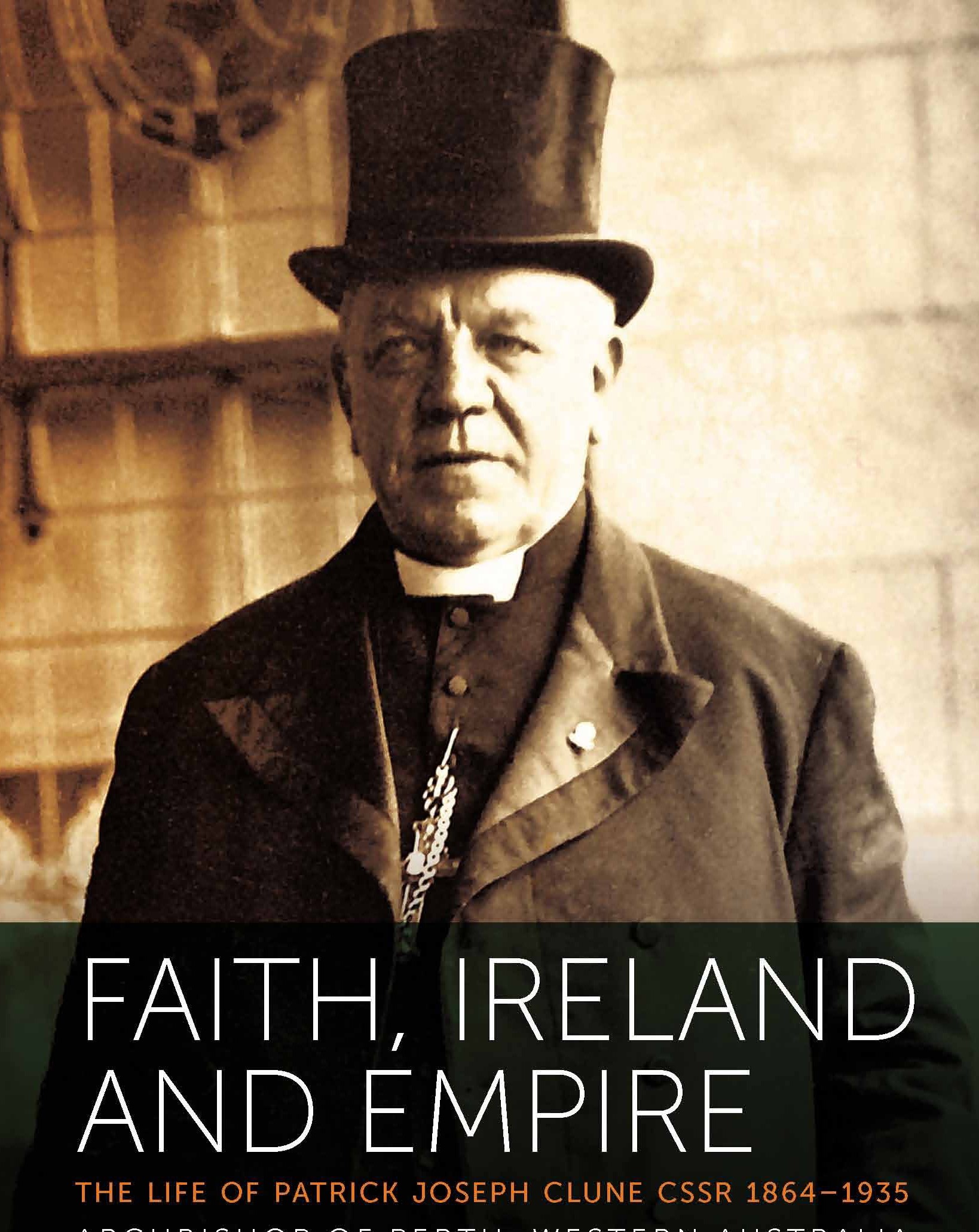
Irish-born (but better known in Australia) Archbishop Patrick Joseph Clune (pictured, aka 'Dr Walsh'), known among Irish republicans to be pro-British, had a meeting in London with a Mr David Lloyd George, the British Prime Minister, in December, 1920, to discuss the 'Irish problem'.
The two men agreed that Mr Clune should travel to Dublin on the 11th December with a message from Westminster to the Irish republican leadership that the (32-County) Dáil would be allowed (!) to meet openly 'to discuss peace terms' but republican weapons would first have to be surrendered to the British Army and, by the way (!), Richard James Mulcahy and Michael Collins, two of the better-known rebels of the time, must not be allowed to attend any such meeting!
On his arrival in Dublin, Mr Clune was met by Bishop Fogarty of Killaloe, County Clare, who arranged for him to meet with Mr Arthur Griffith, the then 'Acting President' of the Irish Republic (and 'AP'of Sinn Féin) and delivered the 'peace terms' to him.
Two days later (13th December 1920), he got his reply from Mr Griffith - the terms demanded by Mr Lloyd George.. "...amounted to a call for surrender. There would be no surrender, no matter what frightfulness was used.."
Yet, less than one year later, Mr Griffith was to accept such a surrender ; he (and others) recognised the British Crown in Ireland and acknowledged the Free State's status as a 'New Dominion of the British Commonwealth', an acceptance which did not offer Irish unity.
"Put not your trust in Princes..."
==========================
In 1917, a Mr James Lawlor, from Inchicore, in Dublin, got a transfer from his job with Iarnród Éireann (Irish Rail) from Dublin to Lismore, in County Waterford.
On the 11th December, 1920, he had finished his shift (driving the regular evening goods train from Cork to Lismore) and was walking home when he was shot dead by a British Army soldier.
The soldier later claimed that Mr Lawlor "had failed to respond to a challenge to halt", so he shot him.
'The Cork Examiner', then a decent and proper newspaper, reported -
"At both masses on Sunday, the clergy referred to the tragic occurrence, and advised people to keep off the streets at night. Railway workers such as James Lawlor had no choice but to be on the streets at night on their way to and from work.."
If that were to happen now in our Occupied Six Counties, that same newspaper would start a 'GoFundMe' for counselling for the British soldier and would call for the Lawlor family to reimburse the British Army for the price of the bullet.
==========================
Apropos to our piece, above, in relation to Mr Arthur Griffith :
Mr Griffith was 'arrested' by the British on the 25th November, 1920, but continued to maintain his position as 'Acting President' from his prison cell.
At meetings of the (32-County) Dáil cabinet on the 27th November and the 4th December (both of which were presided over by JJ O'Kelly as Ceann Comhairle of the Dáil), he was asked to nominate a successor and, on the 9th December, he nominated Michael Collins.
That nomination was ratified at a cabinet meeting on the 11th December.
(Michael Collins's position as 'Acting President' was short-lived, as de Valera resumed his tenure on his return to Ireland on the 23rd December.)
==========================
On the 11th December, 1920, a Crown Forces raiding party broke their way into Number 198 Great Britain Street (now known as Parnell Street) in Dublin, and made their way down to the basement.
There they found what they were looking for - an IRA bomb factory/munitions dump, and all the material was taken away by them, but no arrests were made.
But, within days, the IRA established a new factory/dump at Numbers 1-2 Luke Street, in Dublin, and normal operations resumed...!
==========================
THE FORGOTTEN PEOPLE...
Emigration from Ireland to the United States continued throughout the 1990's, although the reasons were no longer so bluntly economic.
Now, in the wake of September 11th, the US authorities have been granted increased powers to investigate legal status, and Irish illegal emigrants are more vulnerable than ever before.
By Mairead Carey.
From 'Magill Annual', 2002.
Former US Congressman Bruce Morrison said -
"Nobody expects Irish nationals to be a terrorist threat in the US but, that said, if you board a flight in the US today you get the full treatment.
When there is heightened scrutiny, what people didn't catch before, they will catch now."
People generally did well for themselves in the 60's, 70's and 80's, says Fr Flynn - "It was much more difficult to come to America, but as a result people were better prepared. Now, because flights are so cheap, it's easier to come.
But we are seeing people who have a lot less motivation, who are less prepared and more vulnerable as a result.
In the 1980's it was easy to get a driver's licence, but it is nearly impossible now. That limits the options open to people looking for a job.
In the last few years I have seen a significant number of girls, particularly, out of work for long periods of time. Many couples who come out end up with the guy subsidising the girl."
Josephine has been living permanently in New York for the last two years, but she had travelled to the US in the 1980's when it was possible to get a driving licence and a bank account...
(MORE LATER.)
On the 11th December, 1922, Liam Lynch wrote to Éamon de Valera expressing concern about the state of play in relation to the 'peace initiatives' and the rumours that were circulating in IRA circles about them.
He told Mr de Valera that he and others were insisting that the terms agreed at the Mid-October (1922) IRA Executive meeting (held in Poulatar, Ballybacon, County Tipperary) have to be adhered to ie that any agreement with Westminster or the Leinster House Free State administration will be based on Ireland not being part of the 'British Empire' and, to that end, the IRA Executive would have the last word on acceptance or otherwise of any such offer from the British or Staters.
On the 12th, Mr de Valera wrote back to Liam Lynch, stating, in effect, that he and others felt that the on-going military campaign by the IRA was losing the Republican Movement support, to which (on the 14th) Liam Lynch replied, rejecting that assertion.
Mr de Valera replied (on the 15th) saying that Lynch had too low an estimate of the strength and determination of their opponents and too high an estimation of their own ie preparing the ground to accept less than what was agreed on at the Mid-October meeting in County Tipperary.
Although both men had rejected the 'Treaty of Surrender', Mr de Valera was later to actually enforce it, politically and militarily, against Liam Lynch and his comrades who, to their credit, continued on with their struggle for proper justice.
==========================
In May, 1918, 28-year-old Pax Ó Faoláin (Patrick Pax Whelan, pictured), from Blackpool, near Abbeyside, Dungarvan, in County Waterford, was 'arrested' by the Crown Forces and charged in the local court with the 'offence' of "being observed wearing the uniform of an Irish Volunteer..."
On the 11th December, 1922, Pax Whelan, then the Officer Commanding of the First Battalion, West Waterford Brigade of the Volunteers and a member of the IRA Executive, was 'arrested' by the Free Staters for the same 'offence' - being an Irish republican.
And an Irish republican he remained for the rest of his life : born on the 8th July, 1890, Pax died on the 14th September, 1986, at 96 years of age.
'The Irish Press' newspaper carried the following obituary on the 15th September -
'Civil War veteran dies.
One of the best known Munster veterans of the War of Independence, Pax Whelan, of Abbeyside, Dungarvan, died at the age of 96 yesterday.
He was O.C. of the Deise Brigade of the Old IRA, directing operations against the Black and Tans, in Co. Waterford.
Later he joined the anti-Treaty side in the Civil War and was jailed in various English prisons...'
RIP, Pax.
==========================
On the 11th December, 1922, in a building in Kildare Street, Dublin (where the Leinster House administration now sit), the Free State Senate, another useless talking shop and holding-centre for failed and wannabe politicians, met for the first time.
A Mr James Henry Mussen Campbell (aka'Lord Glenavy') was elected to the Chair, prompting one of those present to declare - "The past is dead, not only for us but for this country (sic). We are assembled here no longer in a Nationalist or Unionist sense, but merely as members of the Senate..."
Wishful thinking - the State Senate, then and now (described, for instance, in 2008, by a journalist in 'The Irish Times', as "the most curious political grouping in the history of the Irish state..."), was and is an anti-republican, pro-unionist institution which seeks to maintain the political status-quo if not, indeed, to have this State (re-)join the 'British Commonwealth'.
No true Irish republican would have anything to do with it, except to assist in its abolishment.
==========================
BEIR BUA...
The Thread of the Irish Republican Movement from The United Irishmen through to today.
Republicanism in history and today.
Published by the James Connolly/Tommy O'Neill Cumann, Republican Sinn Féin, The Liberties, Dublin.
August 1998.
('1169' comment - 'Beir Bua' translates as 'Grasp Victory' in the English language.)
REPUBLICANS AND THE STATE :
One of the predecessor organisations of Sinn Féin, the Dungannon Club, wrote in its manifesto in 1905 -
"We can show that the conquest is not completed yet, nor is it likely ever to be now.
Such agents as we propose to establish would do an immense service to Ireland - they would gain the sympathy and assistance of other people, and aid materially in the upbuilding of the Irish Nation."
(END of 'Beir Bua' ; NEXT - 'Political Lifestyles', from 2003.)
Thanks for the visit, and for reading - appreciated!
Sharon and the team.
14 ON THE 11 FOR (2nd LAST OF) 24...!
Oh I know..
..I'm not sure about using that graphic either, but - it's Christmas month, and the lads haven't had a proper break (...in the Canary Islands, like..) so I sez to meself ah sure let them away with it, what harm. Just if they pull another stunt like that, they're outta here..!
The translation of it, they tell me, is that we'll be posting 14 pieces on Wednesday, 11th December 2024, and it'll be our second-last post for this year. Yeah, I think the cold might have got to them...
Among the instances we'll be mentioning is one in which, in the 1900's in Ireland, Westminster noted that the natives (!) were not behaving themselves, so one top British politician wrote to another and expressed his concerns that not only were their operatives in Dublin Castle fighting the Irish rebels, politically and militarily, but they were fighting each other, too...
A few paragraphs about Irish republican smuggling operations in the early 1900's, mentioning ports in England, America and Ireland - but what was being smuggled...?
The city centre area of a town in Munster was wrecked by the Crown Forces in the early 1900's, costing literally millions of pounds worth of destruction but, two days later when, unusually, the carnage was raised in Westminster, water-proof fires (!) were mentioned as a possible cause if, indeed, something like that had indeed, actually, happened at all...
This Irish Archbishop wasn't as clever as he thought he was or, indeed, as clever as the British apparently considered him to be - his alter ego/nom de plume and his motives were known about by the IRA but they agreed to meet with him anyway...
...and there'll be at least ten other stories from our political and military past as well.
So, if you're passing this way again on Wednesday, 11th December 2024, drop in and see what we're gonna be on about. And if you're not passing this way - then make a bleedin' detour, don't have us to come lookin' for ya...!
Thanks for the visit, and for reading - see yis all on the 11th!
Sharon and the team.
WE'RE BACK IN DUBLIN...
..ALL 08° OF IT (AND RAINING) -
- FROM BETWEEN 20° AND 26° IN THE CANARY ISLANDS!
SERIOUSLY - HOW DO YOU PEOPLE ACTUALLY LIVE LIKE THIS??!
Thankfully, our bail money for the Ministerio de Asuntos Exteriores was raised by family and friends, 'cause we spent all ours on booze and booty!
The five of us had our own 'lil villa,
(!) swimming pool out the back, 15-minute walk in one direction to the foodshops and shopping centres, 15-minute walk in the opposite direction to the beach.
Bliss!
I put a few pics up on X/Twitter and Facebook and, as a special bonus for yis (!), one of the Girl Gang took a pic of a crowd scene in which I'm clearly visible - but ye will have to find it on 'X/FB' for yerselves. Na na na naaa na...!
Anyway - we're back with the blog on Wednesday, 11th December 2024 and, in one of the pieces we'll be posting, we'll be tellin' ya about an incident which took place in the early 1900's in Dublin when one British Army truck was being towed by another...and, talking about 'another' (groan!), we'll also name names about a letter sent from ? to ? , both high-ranking officers in the British Army, in the 1900's, in connection with 'spies in the camp'...
So, if yer not livin' it up like a debauched sailor(ess) in the Canary Islands (oh no wait...that was us!!) then give us a shout on Wednesday, 11th December 2024.
Thanks for the visit, and for reading - see ya on the 11th, Sunshine!
Sharon and the team.
BLOG BREAK : 8TH NOVEMBER 2024 - ??TH NOVEMBER 2024.
Meself and the Girl Gang have the 20kg bags packed, the backpacks and the extra-large handbags ready, the paperwork is signed, sealed and will be delivered on Friday, 8th November 2024, to the nice weighing-scale-blind people at the Aer Lingus check-in Desk in Dublin Airport for our ??-week trip to ??!
The two lads are taking advantage of my absence to catch up on a few other projects they are working on and have a bit of a break, too, but it'll be damp, cold and wet where their going 'cause they'll be staying in Dublin!
And it's gonna be warm, sunny and dry where we're going, and we'll have nuthin' to be doin' and all day to be doin' it - no work in the home or outside of it, just shopping, eating out, shopping, sight-seeing, night life, shopping...!
No children, grandchildren, other family members, neighbours or other friends dropping in.
Our travel-agent girlfriend will, with two days notice, change our flight home to suit us, as we'll more than likely extend our holiday by at least a week... "And don't worry," says she, "if yis are a wee bit overweight on the return journey - I'll have that fixed for y'all, too.."
Far as we could tell, she was talking about the luggage...(??!)
So there ya have it - my tale of woe. But we should be alright, once the Factor 50 does its job!
And I'll be posting a few words and pics on X/Twitter and Facebook, and maybe even one or two of the five of us together on one of our outings, if we can get anyone mad enough to try and get us to stand upright...still..for a few minutes!
WINTER IN THE ALGARVE (...or thereabouts!)
This State can be a tiring place,
The wind blows, and it pours with rain,
Some years it can get very cold,
And we see snow and ice again.
People can get very stressed,
Life does not feel like fun,
That's why we're all hoping to get,
A dose of Winter Sun.
There's nothing quite like it,
For getting you going again,
A couple of weeks in Madeira,
Or a trip to the Caribbean...
(Mr Bill Wright, slightly edited!)
Thanks for the visit, and for reading - see y'all back here sometime in November 2024!
Sharon and the team.
OCTOBER NOTIFICATION VERIFIED...
..and we did mention it in (early) October, on the blog.
But - if you can't remember ('cause let's face it, other stuff happened ya in October..!) or you're just not bothered to check back and find out what I'm on about, then tune in here again on Wednesday, 6th November 2024 and we'll give ya the full skinny...!
(...well..maybe not the 'full' skinny, 'cause we actually don't know the full of it just yet ourselves...!)
Thanks for the visit, and for reading - more on the 6th!
Sharon and the team.
ON THE LAST WEDNESDAY IN OCTOBER 1973.....
The Alouette II helicopter used by the PIRA on the last Wednesday in October, 1973, to escape from the exercise yard of Mountjoy Prison in Dublin.
On this day (the last Wednesday in October) 51 years ago (1973) , at 3.41pm, the
helicopter took off from Mountjoy Prison with three leading Provisional IRA Volunteers on board - Seamus Twomey, J.B. O'Hagan and Kevin Mallon.
Kevin Mallon's freedom was shortlived ; he was arrested at a dance-hall in Portlaoise six weeks later and he got four years (Marion Coyle was charged with allegedly firing at a State detective at the dancehall but she was acquitted through lack of identification).
The helicopter escape severely embarrassed the political administration in Leinster House and led directly to a review of national security (sic - the Leinster House Administration has not got national authority) carried out by Free State Justice Finlay.
But if the escape was an embarrassment to that administration , it was an inspiration to the PIRA and inspired another operation : on the 24th January, 1974, Rose Dugdale posed as a journalist and hired a helicopter along with two others to fly to Tory Island.
Eddie Gallagher and Rose Dugdale (pictured) had registered as man and wife in a hotel in Gortahork, County Donegal, prior to the operation.
According to Eddie Gallagher, they first met in a 'doss house' in Edinburgh, in Scotland - they were both fascinated at how 'dossers' could sleep on ropes when they could not afford to pay for a flea-infested bed in the dormitory. They were very close, and Rose Dugdale later gave birth to Gallagher's son in prison.
However - the helicopter was hijacked and forced to fly to Strabane RUC Station with three milk-churn bombs aboard. The bombs failed to explode when dropped.
In March 1973, PIRA leader Joe Cahill was arrested by the Free State Navy in Waterford, aboard the Claudia, a ship from Libya loaded with five tons of weapons, and was sentenced to three years imprisonment, and another PIRA leader, Seamus Twomey, was appointed IRA Chief of Staff.
In early October that year, Twomey was caught and arrested by the Free Staters and imprisoned in Mountjoy Jail, which meant that three top PIRA operatives (Twomey, J.B. O’Hagan and Kevin Mallon) were now housed in the one location - and the PIRA wanted them back!
An 'American businessman', a 'Mr. Leonard', approached the manager of the 'Irish Helicopters' company at Dublin Airport and discussed hiring a helicopter for an aerial photographic shoot in County Laois and, after being shown the company’s fleet of helicopters, this 'businessman' booked a five-seater Alouette II helicopter for Wednesday October 31st.
'Mr Leonard' arrived at Irish Helicopters on the day and was introduced to the pilot of the helicopter, a Captain Thompson Boyes, who was instructed to fly to a field in Stradbally, County Laois, to pick up photographic equipment.
After landing, the pilot saw two armed and masked men approaching the helicopter from nearby trees and he was held at gunpoint and told he would not be harmed if he followed instructions. 'Mr Leonard' left the area with one gunman, while the other gunman climbed aboard the helicopter armed with a pistol and an Armalite rifle.
Captain Boyes was told to fly towards Dublin following the path of railway lines and the Royal Canal, and was ordered not to register his flight path with Air Traffic Control. As the helicopter approached Dublin, Boyes was informed of the escape plan and instructed to land in the exercise yard at Mountjoy Prison.
On this day (the last Wednesday in October 1973), at 3.41pm in the afternoon, the Alouette II helicopter landed in the D Wing exercise yard of Mountjoy Prison in Dublin, when a football match was taking place between the prisoners, and Twomey, O’Hagan and Mallon jumped aboard, but were quickly spotted (!) by an alert Screw who used his training and power of intuition to take immediate action - he *called on the Screws at the gate to close them over as he feared the helicopter was trying to escape (* …according to the RTE 'Scannal - Prison Break' programme..)!
Another PIRA prisoner who was in the yard at the time recalled how an embarrassed Screw told him that he had apologised to the prison governor in relation to the incident, saying that he thought the helicopter contained a visiting (Free State) Minister for Defence (and well-known publican) Paddy Donegan : the PIRA prisoner replied that, in fact, "..it was our Minister of Defence leaving...!"
All three men reported back to base and continued their work for the PIRA but, after a few weeks of freedom, Kevin Mallon was recaptured at a GAA Dance in the Montague Hotel in County Laois on the 10th December, 1973, J.B.O’Hagan was recaptured in Dublin in early 1975 and Seamus Twomey managed to remain uncaptured until the 2nd December, 1977, after the Special Branch came across him in a 'suspicious car' parked in Sandycove, in Dublin.
The 'Wolfe Tones' ballad group released a song called 'The Helicopter Song' which topped the Irish Charts for 4 weeks and 'The Wolfhounds' (pictured) also recorded the event in song and, in January 1974, a close associate of Kevin Mallon’s, Eddie Gallagher, along with Doctor Rose Dugdale, hijacked another helicopter in Donegal to bomb the RUC station in Strabane from the air but the milk-churn bombs they dropped never exploded.
There have been 'ups and downs' (pardon the pun!) in this long on-going struggle to achieve full Irish freedom and Irish republicans may tend to get on a 'high' (!) during the 'Up' periods but we very seldom go on a 'Downer' during the 'Down' periods.
We know from our own experiences and from our history that we will witness both such periods repeatedly but we have learned to take the good with the bad, in that an 'up' period does not mean that victory has been achieved no more than a 'down' period means that all is lost.
The prize we seek is more valuable to us than that sort of short-term thinking would allow for!
On the 30th October, 1919, a Lance-Corporal with the British Army's 'Welsh Regiment', a Mr Edward Perry, is listed as having 'killed himself in the North Dublin Union in Ireland'.
We could find no information on the man or the incident.
Even the British 'National Army Museum' has no record of the man or what happened to him.
==========================
"HE SHOT A SOLDIER WITH AN EXPANDING BULLET..."
In his report, statement and comments to the Westminster 'Irish Situation Committee of the British Cabinet' on the 30th October, 1920, a Mr 'Sir' Cecil Frederick Nevil Macready, the General Officer Commanding-in-Chief ('GOC-in-C') British forces in Ireland, made reference to the funeral of Terence MacSwiney, troublesome (!) transport issues in Ireland and the then forthcoming death-by-hanging of Kevin Barry, of which he opined -
"It would be a good thing if some person in authority in England would explain publicly that this man (Kevin Barry) was conclusively proved to have shot a soldier with an expanding bullet..."
Mr Macready was lying to tell a lie.
Kevin Barry was charged with three counts of the murder of British Army Private Marshall Whitehead (20), yet one of the bullets taken from Mr Whitehead's body was of .45 calibre, while all witnesses stated that Barry was armed with a (Model 1915) .38 Mauser Automatic Parabellum.
A BA Private, Harold Washington (15 years young - he had lied about his age to enlist in the BA, a common enough practice), was killed outright during the IRA attack, BA Private Thomas Humphries, aged 19, died later of his wounds and two other BA Privates, a Mr William Smith and a Mr Frank Noble, were both shot in the ankle.
Kevin Barry was born on the 20th January, 1902, at 8 Fleet Street Dublin.
The son of Thomas and Mary (née Dowling) Barry, he was the fourth of seven children, two boys and five sisters, and was baptised in Saint Andrews Church, Westland Row, in Dublin.
Thomas Barry Senior worked on the family farm at Tombeagh, Hacketstown, in County Carlow, and ran a dairy business from Fleet Street ; he died in 1908 at the age of 56.
His mother came from Drumguin, also in County Carlow, and on the death of her husband, moved the family to Tombeagh.
As a child, Kevin liked country life, and went to the national school in Rathvilly and, on returning to Dublin, he attended Saint Mary's College, Rathmines, until the school closed in the summer of 1916.
The Sworn Statement of Kevin Barry -
"I, Kevin Barry, of 58, South Circular Road, in the County of Dublin, Medical Student, aged 18 years and upwards, solemnly and sincerely declare as follows :
On the 20th of September, 1920, I was arrested in Upper Church Street by a Sergeant of the 2nd Duke of Wellington's Regiment and was brought under escort to the North Dublin Union, now occupied by military. I was brought into the guard room and searched. I was then moved to the defaulter's room by an escort with a Sergeant-Major, who all belonged to 1st Lancashire Fusiliers.
I was then handcuffed.
About 15 minutes after I was put into the defaulter's room, two Commissioned Officers of the 1st Lancashire Fusiliers came in. They were accompanied by 3 Sergeants of the same unit. A military policeman who had been in the room since I entered it remained. One of the officers asked me my name, which I gave. He then asked me for the names of my companions in the raid. I refused to give them.
He tried to persuade me to give the names and I persisted in refusing. He then sent a Sergeant for a bayonet. When it was brought in the Sergeant was ordered by this officer to point the bayonet at my stomach. The same questions as to the names and addresses of my companions were repeated with the same results. The Sergeant was then ordered to turn my face to the wall and point the bayonet to my back. The Sergeant then said he would run the bayonet into me if I did not tell.
The bayonet was then removed and I was turned round again. This officer then said that if I still persisted in this attitude he would turn me out to the men in the barrack square and he supposed I knew what that meant with the men in their present temper. I said nothing. He ordered the Sergeants to put me face down on the floor and twist my arm. I was pushed down onto the floor after my handcuffs were removed. When I lay on the floor one of the Sergeants knelt on the small of my back, the other two placed one foot each on my back and left shoulder and the man who knelt on me twisted my right arm, holding it by the wrist with one hand while he held my hair with the other to pull back my head.
The arm was twisted from the elbow joint. This continued to the best of my knowledge for 5 minutes. It was very painful. The first officer was standing near my feet and the officer who accompanied him was still present. During the twisting of my arm the first officer continued to question me for the names and addresses of my companions and the names of my Company Commander or any other officer I knew. As I still refused to answer these questions I was let up and handcuffed.
A civilian came in and he repeated the same questions with the same results. He informed me that if I gave all the information I knew, I could get off. I was then left in the company of the military policeman. The two officers, three sergeants and civilian all left together. I could certainly identify the officer who directed the proceedings and put the questions. I am not sure of the others except the Sergeant with the bayonet.
My arm was medically treated by an officer of the Royal Army Medical Corps attached to the North Dublin Union the following morning and by the prison hospital orderly afterwards for 4 or 5 days. I was visited by the Court Martial Officer last night and he read the confirmation of sentence of death by hanging to be executed on Monday next and I make this solemn declaration conscientiously believing same to be true and by virtue of the Statutory Declarations Act, 1835.
Declared and subscribed before me at Mountjoy Prison in the County of the City of Dublin, 28th October, 1920.
(Signed) MYLES KEOGH,
A Justice of the Peace for said County.
KEVIN GERARD BARRY."
SLEEPING FOR THE FLAG.
When our boys come home in triumph, brother,
With the laurels they shall gain ;
When we go to give them welcome, brother,
We shall look for you in vain.
We shall wait for your returning, brother,
Though we know it cannot be ;
For your comrades left you sleeping, brother,
Underneath a southern tree.
Sleeping to waken
In this weary world no more ;
Sleeping for your true-lov'd country, brother,
Sleeping for the flag you bore.
You were the first on duty, brother,
When "To Arms!" your leader cried -
You have left the ranks forever, brother,
You have laid your arms aside.
From the awful scenes of battle, brother,
You were set forever free,
When your comrades left you sleeping, brother,
Underneath that southern tree.
You have cross'd the clouded river, brother,
To the mansions of the best,
"When the wicked cease from troubling," brother,
"And the weary are at rest."
Surely we would not recall you, brother,
But the tears flow fast and free,
When we think of you sleeping, brother,
Underneath a southern tree.
Henry Clay Work.
On the 30th October, 1920, 'The Irish Bulletin' (pictured) carried a report from Kevin Barry detailing the torture inflicted on him by Crown Forces and that same issue of the newspaper also reported on Mr Arthur Griffith's (the then 'Acting President of the Irish Republic') letter addressed to "the civilised nations of the world", stating that...
"Under similar circumstances a body of Irish Volunteers captured on June 1 of the present year a party of 25 English military who were on duty at the King's Inns, Dublin.
Having disarmed the party the Volunteers immediately released their prisoners.
This was in strict accordance with the conduct of the Volunteers in all such encounters.
Hundreds of members of the armed forces have been from time to time captured by the Volunteers and in no case was any prisoner maltreated even though Volunteers had been killed and wounded in the fighting, as in the case of Cloyne, County Cork, when, after a conflict in which one Volunteer was killed and two wounded, the whole of the opposing forces were captured, disarmed, and set at liberty..."
Mr Griffith was rightly making comparisons between how the British Crown and Irish republican forces treated prisoners, but to no avail - Kevin Barry was put to death by Westminster, by hanging, on the 1st November, 1920, at 18 years of age.
The bastards.
==========================
On the 30th October, 1920, between forty and fifty IRA Volunteers, with Volunteer Thomas McInerney in command, took up ambush positions on the road from Loughrea to Gort, in County Galway.
The rebels placed themselves just outside the townland of Castledaly, about the halfway point from Kilchreest and Peterswell, as they knew a five-man patrol of armed RIC members was due to pass through that area.
When the enemy patrol turned up, they were challenged and a gunbattle ensued, during which one RIC member, a Kerry man named Tim Horan (40, 'Service Number 60534'), was shot dead.
Mr Horan's colleagues were relieved of their rifles, ammunition, bicycles and anything else of use to the dissidents (!) and then released, shook but otherwise unharmed.
Following the ambush, many of the Volunteers involved were forced to go on the run and the people of the locality braced themselves for reprisal attacks by the Crown Forces. Volunteer Dan Ryan, from Gortacarrane, Gort, recalled -
"Reprisals followed immediately.
On Saturday evening the RIC opened indiscriminate fire around the village of Kilchreest.
At midnight on the same night, they burned Carty's and Coy's dwelling houses in Ballinacurra, a quarter of a mile from the village of Kilchreest, and they also burned Fallon's dwelling house at Scalp, Castledaly, as we passed that house on our way from the ambush..."
Volunteer Patrick Glynn recalled that Volunteer Peter Howley's home at Ardrahan was also burned by them.
However, a clerk somewhere within the British chain of command more than likely got 'burned' him/herself, as he/she placed it on record in the 'Official Register of Crime for the Province of Connaught' that the burning of those houses was in reprisal for the killing of RIC member Horan!
More details on the Castledaly Ambush can be accessed here.
==========================
On the 21st October, 1920, two drunk members of the British Crown Forces, a Lance Corporal Alexander McPherson and a Corporal Norman Buchanan, were 'doing the rounds' near Milton Malbay, in County Clare, in uniform, calling to houses, looking for money or valuables for themselves.
One of the houses they called to belonged to the Lynch family and, when they tried to force their way in, Ned Lynch (Captain of G Company, 4th Battalion of the IRA's Mid Clare Brigade) and his brothers physically stopped them, and put them off and away from the house.
They were humiliated in that physical confrontation with the Lynch brothers, and wanted revenge.
The two drunks returned to their barracks and assembled a motley gang of British soldiers, RIC members and Black and Tans, and went back to the Lynch house.
Mr Charles Lynch (70), the father, seen them pull up outside and opened the door, and Lance Corporal Alexander McPherson shot him in the heart, killing him on the spot. He then aimed his gun at John Lynch but, before he could fire, was stopped by a neighbour and one of his own RIC gang members.
Lance Corporal Alexander McPherson then instructed his gang to burn the house, which they did, and he then shot and wounded a Mr John Grady, a farm labourer and, on their way back to their barracks, they stopped at the family home of a Mr and Mrs Lorrie (an ex-British Army family) and assaulted the family, then went to small farms owned by the Talty, Boland and Moroney families and set fire to bales of hay and otherwise made a nuisance of themselves.
Lance Corporal Alexander McPherson's name was linked to all of the above, and he himself, and his British Army unit, thought it best that he leave the area and lie low for a while.
A 19-year-old man named Robertson, who was in the terror gang that night, left with him, both in uniform (possibly intending to do more 'nixers' on their way to 'sanctuary'!) but were arrested by the IRA on the 30th October (1920) and immediately claimed to have deserted from the British Army.
They were questioned and investigated and Lance Corporal Alexander McPherson's recent past caught up with him ; both of the 'deserters' were tried and found guilty and taken to the townland of Furroor (in County Clare) where they were to be executed.
But, during a 'toilet break', Lance Corporal Alexander McPherson escaped and, walking at night, eventually made his way back to Miltown, where he reassembled his gang of semi-military misfits and caused bloodshed and havoc in Clare townlands and villages in the search for their missing comrade.
Mr Robertson was never seen again and, to this day, his body has not been located.
==========================
In its 'Weekly Memorandum (No. 5)' report, issued on the 30th October, 1920, the IRA recorded that resignations from the RIC continued unabated.. "...and in very many cases these were stated to be brought about by pressure exerted by their relatives at home..".
It was also noted that some ex-RIC members had volunteered as 'pointers' for the Black and Tans (ie they would point out people, areas and venues, pubs etc of interest to the Tans but wouldn't engage with republicans other than that) and IRA units were advised that.. "...none of the pointers friends or relatives must be allowed to forget this to him. They cannot of course be held responsible for him and must not therefore be actually boycotted, but they must bear his shame..."
Nowadays, unfortunately, the 'pointers' operate in full view.
==========================
'WHY ARE THE DEAF BEING EXCLUDED FROM THE COMPENSATION SCHEME FOR ABUSED CHILDREN...?'
Amid the considerable controversy about the deal struck between the Catholic Church and the State over compensation to victims of institutional child abuse, little attention has been focused on the proposed exclusion from the compensation scheme of a number of institutions run by the church where abuse clearly took place.
By John Cradden.
From 'Magill' magazine, March 2002.
It seems much the same argument can be put forward for abuse victims who attended schools of the blind and orthopaedic hospitals.
So why the reluctance to include such schools in the compensation scheme?
In a recent article in 'The Irish Times', Mary Raftery, co-authgor of 'Suffer The Little Children ; The Inside Story Of Ireland's Industrial Schools' and the producer, director and writer of 'States Of Fear', suggests that it reflects shades of the attitude that drove the Government to "vindictively and aggressively" defend itself (and protect taxpayers money) against the claims to compensation by victims of the hepatitis C scandal.
The existence of the proposed compensation payout is a recognition that abuse did take place.
But the exclusion of the children who attended the schools for the deaf and the blind, the Orthopaedic hospitals and the Magdalen Laundries, made it difficult to avoid the conclusion that the State is implicitly denying that abuse occurred in these places...
(MORE LATER.)
On the 30th October, 1921, a meeting about the 'Irish situation' was held between Arthur Griffith and Michael Collins (Free Staters) and
Westminster, represented by a Mr David Lloyd George and a Mr Frederick Edwin Smith (the '1st Earl of Birkenhead, GCSI, PC, DL' aka 'Lord Birkenhead').
This meeting was what the participants referred to as the '4th Sub-Conference' and, the next day, while discussing the meeting with one of his trusted Stater colleagues, a Mr Gearóid O'Sullivan, Mr Collins told him that the British demanded that, in return for a united Ireland (which, by the way, was not theirs to 'gift'), Leinster House would have to accept membership within the British Commonwealth, along with safeguards for the Unionists in the partitioned Six Counties and guarantees from the Staters on British security.
Otherwise, said Mr Collins to Mr O'Sullivan, the British declared there would be war and "no fooling about it either".
What a missed opportunity - that information/threat should have been released to the Irish people and to the Irish in England, America and the rest of the world, but the Staters knew they would upset Mr George and his colleagues had they done so.
So they didn't.
Incidentally, when he fought against the British instead of against Irish republicans and republicanism, it was Mr Gearóid O'Sullivan who raised the Irish Flag above the GPO in Dublin on Easter Monday 1916 - he was 25 years old at the time, and hadn't yet being turned.
The GPO is about 180 meters off the ground, but Mr O'Sullivan fell further than that...
==========================
THE FORGOTTEN PEOPLE...
Emigration from Ireland to the United States continued throughout the 1990's, although the reasons were no longer so bluntly economic.
Now, in the wake of September 11th, the US authorities have been granted increased powers to investigate legal status, and Irish illegal emigrants are more vulnerable than ever before.
By Mairead Carey.
From 'Magill Annual', 2002.
Former US Congressman Bruce Morrison said -
"Most illegals are never apprehended because the INS didn't go around doing that.
They didn't have the resources to check up on nine million immigrants.
It was only if an illegal had the misfortune of getting into a fight in a bar, or being in an accident, or in some other way had come to the attention of law enforcement, that they would have difficulties.
There is a heightened level of communication now ; whereas, in the past, local law enforcement would not have bothered investigating immigration status, they are more likely to have it checked out today.
People have always been going home and coming back fraudulently, and living in the States illegally, but they represented themselves as tourists.
Now every aspect of US immigration screening is being tightened up and there will be greater questioning of people on a visa waiver coming from Dublin and Shannon..."
(MORE LATER.)
On the 30th October, 1922, the 1st Southern Division of the IRA held a meeting to discuss the military logistics and capabilities of the five Cork Brigades and it was agreed that the organisation was very weak in most Brigade areas.
However, they soldered on until May (24th) 1923 when they received an order from the Chief-Of-Staff, Frank Aiken, to "dump arms" which, even in their weakened state, they were reluctant to do.
==========================
On the 30th October, 1922, the IRA attacked Oriel House, the Headquarters of the State CID (political police/Special Branch) in Dublin.
A bomb was to be placed at the front door of the building to blow it open and, in the confusion, the IRA intended to enter the building with a more powerful bomb which would have been capable of levelling the whole structure.
But the door bomb actually demolished the first floor of the building which prevented the plan going ahead, leading to the 'arrest' of three IRA Volunteers - Patrick Farrelly (67 Chancery Lane, Dublin), John Murphy (56 Bellview Buildings, Dublin) and Joseph Spooner (36-37 McCaffrey's Estate, Dublin).
The three Volunteers were executed in Beggars Bush Barracks, in Dublin, by the Free Staters, on the 30th November, 1922.
RIP.
==========================
"On the morning of (my arrest) as I was signing the attendance book in the City Rates Office where I was employed, I felt a gun being stuck in my back and I instantly knew that the game was up.
I was brought to the Free State post at the City Hall and searched.
Later that day I was brought to Griffith Barracks' guardroom...(then)..we were crowded into the gymnasium and the door locked. Some Staters got outside through the north door with sub-machine guns and fired through the wooden door, but 'God directs the bullets'.
A strong inside iron bolt deflected the bullets, but only for this the casualties amongst the 250 prisoners would have been very great, but as it was, not more than half a dozen were wounded..."
- Joseph John 'Holy Joe' O'Connor (a republican-gamekeeper-turned-Free State poacher), Officer Commanding of the 3rd Battalion IRA Dublin Brigade, describing his capture on the 30th October 1922.
Joseph O'Connor joined the 'Irish Volunteers' in 1913, was appointed a Lieutenant in 1914 and, by 1916, he was a captain in command of 'A Company', 3rd Battalion, Dublin Brigade, under Éamon de Valera.
He was active in the training and arming of the Volunteers and was present at the landing of guns at Howth in July 1914.
But, in 1925, he was elected as a State Senator for the Cumann na nGaedheal party and maintained his membership when they, and others, morphed into the Fine Gael grouping (in 1933) which supported everything that 'Holy Joe' had once fought against.
==========================
BEIR BUA...
The Thread of the Irish Republican Movement from The United Irishmen through to today.
Republicanism in history and today.
Published by the James Connolly/Tommy O'Neill Cumann, Republican Sinn Féin, The Liberties, Dublin.
August 1998.
('1169' comment - 'Beir Bua' translates as 'Grasp Victory' in the English language.)
REPUBLICANS AND THE STATE :
One of the predecessor organisations of Sinn Féin, the Dungannon Club, wrote in its manifesto in 1905 -
"England has her consuls in every city of the world, but wherein does Ireland benefit from that consular service beyond the doubtful privilege of having to pay for part of it.
Our national organisation must have competent men as agents in every principal city of Europe and America, who will find a market for our manufactures, see to our interest, and gain recognition for our countrty as a distinct national entity.
England has the ear of the world through the agency of her press, but Ireland's agents could keep the press of the world informed as to the real state of our country and of the national aspirations and efforts of our people.
Today the nations look on Ireland as dead, as one of the peoples that has perished..."
(MORE LATER.)
On the 13th January, 1923 (1923) three IRA Volunteers - Thomas McKeown, John McNulty, and Thomas Murray - were executed in Dundalk Jail, County Louth, by the Leinster House regime, for being "in possession of arms" and, on the 22nd January that same year (1923) three more Volunteers - Joseph Ferguson, James Melia, and Thomas Lennon - were executed by the same foe in the FSA Barracks in Dundalk, for the same 'offence'.
At the burial on the 30th October 1924, of the six IRA Volunteers, shooting broke out when a number of IRA Volunteers fired volleys of shots over the graves and the Free State Army tried to arrest them.
A Dundalk man, Joseph Hughes, was shot and died shortly afterwards.
'DUNDALK DEMOCRAT, Saturday, November 1, 1924
GUNFIRE!
EXTRAORDINARY GRAVEYARD SCENES IN DUNDALK
Military and Civilians "Blaze Away" Over Dead Bodies.
Hundreds of Shots Fired in Cemetery
The Burial of the Executed Louthmen
A number of young men took up positions near the graves, and producing revolvers fired three volleys. Just as the last volley rang out a number of men in civilian attire, Free State soldiers, whipped out revolvers and rushed towards the graves.
A number of uniformed and fully-equipped soldiers who had been in positions further out in the cemetery and in adjoining fields, also rushed up, with fixed bayonets. Soon the cemetery was the scene of indescribable confusion. The civilians who fired the first volleys appeared to have continued the firing as the military advanced and the soldiers replied with rifles and revolvers from different parts of the cemetery, and shots were also fired in the direction of the road.
But this was only the beginning of a terrible five minutes. When the first shots between the civilians and the military were fired, the people fled terror stricken towards the road...
...when the coffins had been laid in the graves six young men proceeded to fire three volleys from revolvers. Military, who were on duty inside and outside the cemetery, rushed in with fixed bayonets towards the men.
Hundreds of shots were exchanged between the soldiers and the armed civilians.
Many hundreds of people who were in the cemetery at the time became panic stricken at the extraordinary happening. Women and children shrieked and all made a mad rush for shelter. Lucky ones got behind tombstones, while others, heedless of the rain, stretched themselves on the wet grass.
Wreaths were broken and graves trampled on in a scramble to get out of the way of the whizzing bullets. Many people were injured in the panic. One young man was brought to hospital seriously wounded by a bullet wound in his abdomen...' (From here.)
The then-newly spawned Free State announced its executions of Irishmen after the fact, as it wasn't secure enough within itself that it could contain the anger that such executions caused, but to leave the dead men and their families waiting twenty-one months for final closure is inhuman.
==========================
On the 14th March, 1923, IRA Volunteers Charlie Daly, Daniel Enright, Timothy O'Sullivan and Séan Larkin were executed at Drumboe, County Donegal, by a Free State firing squad (said to consist of ex-British Army soldiers, then in the employ of Leinster House) and it wasn't until the 30th October 1924 that Volunteers Enright and O'Sullivan (pictured) were re-interred in their native town of Listowel in County Kerry.
God Bless those brave men.
RIP.
==========================
On the 30th October, 1924, the Free State 'Minister for Justice', a Mr Kevin Christopher O'Higgins (pictured) was one of the speakers at an 'Irish Society' meeting in Oxford University, in England.
His speech was notable because he failed to speak about any part played by the 1916 Rising in the limited political and military freedom that Ireland had, instead linking the establishment of the Free State entity to the 1918 General Election!
Mr Higgins asked his audience "to remember what a weird composite of idealism, neurosis, megalomania and criminality is apt to be thrown to the surface in even the best regulated revolution.."
He was a luke-warm 'republican' who was in favour of the 1921 'Treaty of Surrender' and used his newly-acquired political power to arrange, sanction and approve of the killings of as many Irish republicans as he could.
Perhaps on his way to seek forgiveness from a higher power (or perhaps not), Mr Kevin Christopher O'Higgins (35) was executed in Booterstown, County Dublin, by the IRA, on the 10th July, 1927, while on his way to Mass.
Amen.
==========================
Thanks for the visit, and for reading - appreciated!
Sharon and the team.