FOR ANDY :
The peaceful night that round me flows,
Breaks through your iron prison doors,
Free through the world your spirit goes,
Forbidden hands are clasping yours.
The wind is our confederate,
The night has left her doors ajar,
We meet beyond earth’s barred gate,
Where all the world’s wild Rebels are. (From here.)
ON THIS DATE (27TH JANUARY) 98 YEARS AGO : TWO IRA PRISONERS EXECUTED BY FREE STATE ADMINISTRATION.
 The execution of Offaly IRA Volunteers Joseph Byrne and Patrick Geraghty : JOSEPH BYRNE, from Cruith, Daingean, and Rochfordbridge native PATRICK GERAGHTY were executed in Portlaoise Jail, by firing squad, on 27th January 1923 - 98 years ago on this date:
'Byrne was sentenced to death for allegedly possessing a Webley revolver while Geraghty was alleged to have had an automatic pistol at Croghan on 10th November 1922. Byrne, 25, was an Adjutant in the 3rd Battalion (Tyrrellspass), Offaly No. 1 Brigade IRA. Geraghty, 33, was O/C of the same Battalion. Republicans were adamant that both men were unarmed when captured and that they faced trumped up charges. According to the 'Midland Tribune' newspaper Geraghty fired on Free State troops and a brisk exchange of rifle fire took place. The 'Offaly Independent' reported Free State troops surrounding a farmhouse where there was a fierce exchange of shots. Byrne apparently surrendered while Geraghty escaped and took cover in a field beside the house, where he blazed away at the troops with a 'Peter-the-Painter' automatic pistol.
Whatever the case against Geraghty, it was generally believed that Byrne was innocent of the charge against him. Thomas Dunne, of Offaly County Council, stated Byrne was unjustly executed as he had "no firearms at the time of his arrest." Byrne's family were one of the early vanguards of the Irish Volunteers in their local area. It was a mark of the high esteem he was held and an indication of how popular he was that prayers were asked for the happy repose of his soul at all the Masses at Daingean on the Sunday following his execution. This was at a time of acute Catholic Church hostility towards the IRA.
Betrayed by an informer, Byrne, Geraghty and another IRA Volunteer, who managed to escape, were staying in a safe house at Croghan belonging to a relation of Byrne. A local informer, a young boy, betrayed them to Free State forces in Tullamore. In his final letter Byrne forgave his enemies: "I forgive everyone. I don't bear malice to any of the men that are going to execute me. I will pray for them. Oh! I am so happy Paddy and myself are going to heaven for anyhow the world is but empty and what does it profit a man to gain the whole world and suffer the loss of his soul..."
While Geraghty was 'shot out and out,' Byrne had to be shot a second time as the first volley of shots was not fatal. He stumbled and fell, got up, and was on his knees, crying for his mother, when at point-blank range he was shot in the back of the head...Kevin O'Higgins, Leix-Offaly (later known as 'Laois-Offaly') TD and (Free State) Minister for Home Affairs...demanded a greater geographical distribution of executions as it was thought executions confined to Dublin did not have the desired local impact. O'Higgins insisted that "..there should be executions in every county. Local executions would tend considerably to shorten the struggle...." (from here.)
It took a few years, but O'Higgins' recommendations re executions ('more of same, please...') was eventually heeded...
'NEW CUMANN IN COUNTY CORK'.
From 'The United Irishman' newspaper, June, 1955.
A public meeting, under the auspices of Sinn Féin, was held in the Muintir na Tire Hall, Killavulleh, County Cork, on April 27th last.
A capacity audience listened attentively and warmly applauded the speakers - Tomas MacCurtain, Jim O'Regan and D. MacCionnaith - who dealt fully with the Sinn Féin policy and republican programme. James Magner, Castletownroche, presided and, with a large number wishing to join Sinn Féin, it was decided to hold a further meeting to establish a local Cumann.
At a meeting on the 18th May, at which D. MacCionnaith, Cathaoirleach, Comhairle Ceanntair, presided, it was unanimously decided to name the local Cumann after Section-Leader James O'Callaghan, IRA, of Killavulleh, who was shot outside the village by Free State troops on the 16th of October, 1922.
(END of 'New Cumann In County Cork'; NEXT - 'Local Government Elections', from the same source.)
'IN THE NAME OF THE LAW...'
Confidence in the Garda Siochana continues to erode as more incidents of questionable Garda 'evidence' emerge. By Sandra Mara. From 'The Magill Annual', 2002.
Noel John McBride claims it was suggested that he should make a statement"...that I should say that I seen Frank McBrearty Jnr and Mark McConnell coming down through Frankie's car park. They said I was to say they were covered in muck. They said I was also to say I saw Marty McCallion standing at the entrance to Frankie's Niteclub. I told them I didn't know what Marty McCallion looked like, as I didn't know him. They explained to me that he was the one with the shaved head."
McBride claims he was told that if he made this statement against the McBreartys and McConnells, he would "get off with burning the trailer" - "I kept telling them I had nothing to do with burning the trailer, but they just kept repeating I'd get off with it if I made the statement."
After the arrests, McBride got worried about his false statement and went to a solicitor who advised him to withdraw it ; he claims that when he did so, William Doherty beat him up and threatened to kill him if he spoke out. McBride claims that on the night in question he wasn't even in Raphoe, but was in fact at his nephew's christening in Ballybofey... (MORE LATER.)
'LICENSED TO KILL'.
From 'The United Irishman' newspaper, March, 1955.
The weekend of the 5th and 6th March has been one of the blackest in the history of what is called 'Northern Ireland'. It has seen the renewal of Black-and-Tanism, as evinced in the callous shootings which took place at Keady, County Armagh, and at Augher in County Tyrone.
In the first instance, four young people - none of them over 18 years old - returning from the pictures in a small van, had it riddled with bullets by a group of 'B Specials' at a roadblock. Of course they were called on to halt, they had been signalled with a red light and even shouted at by the sergeant - that was the 'evidence' given afterwards. But the three survivors from the ambushed van saw no light and heard no shouts to halt. They had seen the roadblock, made by drawing a van belonging to one of the 'B Specials' across the road, and they took it to be a car accident and were turning away to avoid it.
Probably the last words said by young Leonard were his comment to this effect to the young girl sitting beside him in the van. He was unaware of the 'B Specials' activity ; he was unaware of any calls to halt. But he was shot to death... (MORE LATER.)
Thanks for reading, Sharon. Agus slán go fóill anois, Andy.
The execution of Offaly IRA Volunteers Joseph Byrne and Patrick Geraghty : JOSEPH BYRNE, from Cruith, Daingean, and Rochfordbridge native PATRICK GERAGHTY were executed in Portlaoise Jail, by firing squad, on 27th January 1923 - 98 years ago on this date:
'Byrne was sentenced to death for allegedly possessing a Webley revolver while Geraghty was alleged to have had an automatic pistol at Croghan on 10th November 1922. Byrne, 25, was an Adjutant in the 3rd Battalion (Tyrrellspass), Offaly No. 1 Brigade IRA. Geraghty, 33, was O/C of the same Battalion. Republicans were adamant that both men were unarmed when captured and that they faced trumped up charges. According to the 'Midland Tribune' newspaper Geraghty fired on Free State troops and a brisk exchange of rifle fire took place. The 'Offaly Independent' reported Free State troops surrounding a farmhouse where there was a fierce exchange of shots. Byrne apparently surrendered while Geraghty escaped and took cover in a field beside the house, where he blazed away at the troops with a 'Peter-the-Painter' automatic pistol.
Whatever the case against Geraghty, it was generally believed that Byrne was innocent of the charge against him. Thomas Dunne, of Offaly County Council, stated Byrne was unjustly executed as he had "no firearms at the time of his arrest." Byrne's family were one of the early vanguards of the Irish Volunteers in their local area. It was a mark of the high esteem he was held and an indication of how popular he was that prayers were asked for the happy repose of his soul at all the Masses at Daingean on the Sunday following his execution. This was at a time of acute Catholic Church hostility towards the IRA.
Betrayed by an informer, Byrne, Geraghty and another IRA Volunteer, who managed to escape, were staying in a safe house at Croghan belonging to a relation of Byrne. A local informer, a young boy, betrayed them to Free State forces in Tullamore. In his final letter Byrne forgave his enemies: "I forgive everyone. I don't bear malice to any of the men that are going to execute me. I will pray for them. Oh! I am so happy Paddy and myself are going to heaven for anyhow the world is but empty and what does it profit a man to gain the whole world and suffer the loss of his soul..."
While Geraghty was 'shot out and out,' Byrne had to be shot a second time as the first volley of shots was not fatal. He stumbled and fell, got up, and was on his knees, crying for his mother, when at point-blank range he was shot in the back of the head...Kevin O'Higgins, Leix-Offaly (later known as 'Laois-Offaly') TD and (Free State) Minister for Home Affairs...demanded a greater geographical distribution of executions as it was thought executions confined to Dublin did not have the desired local impact. O'Higgins insisted that "..there should be executions in every county. Local executions would tend considerably to shorten the struggle...." (from here.)
It took a few years, but O'Higgins' recommendations re executions ('more of same, please...') was eventually heeded...
'NEW CUMANN IN COUNTY CORK'.
From 'The United Irishman' newspaper, June, 1955.
A public meeting, under the auspices of Sinn Féin, was held in the Muintir na Tire Hall, Killavulleh, County Cork, on April 27th last.
A capacity audience listened attentively and warmly applauded the speakers - Tomas MacCurtain, Jim O'Regan and D. MacCionnaith - who dealt fully with the Sinn Féin policy and republican programme. James Magner, Castletownroche, presided and, with a large number wishing to join Sinn Féin, it was decided to hold a further meeting to establish a local Cumann.
At a meeting on the 18th May, at which D. MacCionnaith, Cathaoirleach, Comhairle Ceanntair, presided, it was unanimously decided to name the local Cumann after Section-Leader James O'Callaghan, IRA, of Killavulleh, who was shot outside the village by Free State troops on the 16th of October, 1922.
(END of 'New Cumann In County Cork'; NEXT - 'Local Government Elections', from the same source.)
'IN THE NAME OF THE LAW...'
Confidence in the Garda Siochana continues to erode as more incidents of questionable Garda 'evidence' emerge. By Sandra Mara. From 'The Magill Annual', 2002.
Noel John McBride claims it was suggested that he should make a statement"...that I should say that I seen Frank McBrearty Jnr and Mark McConnell coming down through Frankie's car park. They said I was to say they were covered in muck. They said I was also to say I saw Marty McCallion standing at the entrance to Frankie's Niteclub. I told them I didn't know what Marty McCallion looked like, as I didn't know him. They explained to me that he was the one with the shaved head."
McBride claims he was told that if he made this statement against the McBreartys and McConnells, he would "get off with burning the trailer" - "I kept telling them I had nothing to do with burning the trailer, but they just kept repeating I'd get off with it if I made the statement."
After the arrests, McBride got worried about his false statement and went to a solicitor who advised him to withdraw it ; he claims that when he did so, William Doherty beat him up and threatened to kill him if he spoke out. McBride claims that on the night in question he wasn't even in Raphoe, but was in fact at his nephew's christening in Ballybofey... (MORE LATER.)
'LICENSED TO KILL'.
From 'The United Irishman' newspaper, March, 1955.
The weekend of the 5th and 6th March has been one of the blackest in the history of what is called 'Northern Ireland'. It has seen the renewal of Black-and-Tanism, as evinced in the callous shootings which took place at Keady, County Armagh, and at Augher in County Tyrone.
In the first instance, four young people - none of them over 18 years old - returning from the pictures in a small van, had it riddled with bullets by a group of 'B Specials' at a roadblock. Of course they were called on to halt, they had been signalled with a red light and even shouted at by the sergeant - that was the 'evidence' given afterwards. But the three survivors from the ambushed van saw no light and heard no shouts to halt. They had seen the roadblock, made by drawing a van belonging to one of the 'B Specials' across the road, and they took it to be a car accident and were turning away to avoid it.
Probably the last words said by young Leonard were his comment to this effect to the young girl sitting beside him in the van. He was unaware of the 'B Specials' activity ; he was unaware of any calls to halt. But he was shot to death... (MORE LATER.)
Thanks for reading, Sharon. Agus slán go fóill anois, Andy.
ON THIS DATE (20TH JANUARY) 100 YEARS AGO : CLARE IRA AMBUSH BRITISH FORCES.
On the 20th January 1921 - 100 years ago on this date - over thirty men of the East Clare Brigade of the IRA ambushed an RIC patrol at Glenwood near Sixmilebridge, County Clare, killing six of their number. The well organised rebels suffered zero casualties and captured a significant amount of guns and ammunition. Numerous houses in the general area were burned by the RIC that evening in reprisal for the attack :
'In mid January 1921, orders were sent to all six battalions of the East Clare Brigade asking all available I.R.A. Volunteers to assemble at Parker’s house, Castlelake on the morning of the 20th of January. The officers of the Brigade had decided to attempt to ambush the regular R.I.C. patrol travelling from Sixmilebridge to Broadford.
On the appointed day, thirty seven I.R.A Volunteers reported for duty. Half of them carried rifles while the remainder were armed with shotguns and revolvers. A number of the republicans who had arrived unarmed volunteered as scouts. Volunteer Joseph Clancy of Kilkishen, a local and a former soldier in the British Army, suggested a suitable location for the attack at the rear entrance to Glenwood House. Michael Brennan accepted his advice and divided up the men into different sections and explained the plan of attack. At Glenwood the republican scouts were posted along the road a short distance in both directions from the I.R.A.'s new position. The thirty or so remaining I.R.A. Volunteers were divided into three sections under the command of Michael Brennan, his brother Austin Brennan of Meelick and Tom McGrath of O'Callaghan’s Mills. The men in Michael Brennan’s section were all armed with rifles and positioned along a high stone wall just north of the gate to Glenwood house. The stone wall would give them a good cover from enemy fire and a direct line of fire for about fifty or sixty yards.
Michael Brennan himself was armed with a revolver and stood a few yards behind the men in his group positioned along this wall. Joseph Clancy was hidden behind a large holly bush on top of the wall keeping watch along the road as the other Volunteers remained hidden. Austin Brennan's group of Volunteers equipped with rifles and shotguns, was placed fifty yards further north behind another stone wall. The remaining men under Tom Mc Grath's command were located along the edge of a field a hundred yards to the south of the gate armed with revolvers. The ambushers were to hold their fire, until riflemen under Michael Brennan’s command attacked the lorry...at about 4pm, a motorised patrol of ten armed Royal Irish Constabulary (RIC) and Black and Tan members, travelling from Sixmilebridge to Broadford, approached the back gate of Glenwood house.
Waiting for them, concealed behind the walls of the Glenwood estate, was a group of approximately 37 armed IRA volunteers from the East Clare Brigade of the IRA, led by Michael Brennan of Meelick. As the British patrol passed by the gates, a fusillade of gunshot, fired by the waiting group, struck them. Six RIC and Black and Tans were killed, two were injured and two escaped unhurt. One IRA volunteer was injured. The ambush party withdrew in good order through the forest and mountains to the East of Glenwood, towards Oatfield. The surviving members of the British patrol made their way back to Sixmilebridge.
The local people, on hearing of the news of the ambush, braced themselves for the inevitable retribution which would follow. In an orgy of violence on that evening and in the following days, Black and Tans and Auxiliaries burned houses, destroyed property and terrorised and assaulted local people...' (from here.)
The destructive and vindictive nature of the British forces that remain in Ireland are felt today by republicans in the Occupied Six Counties and, even though those forces wear a different uniform to that displayed by the Black and Tans and the Auxiliaries, their methods and their objective is the same. And the resolve of Irish republicans, too, is the same.
'IN MEMORIAM'.
From 'The United Irishman' newspaper, June, 1955.
Peter McCarthy, Dublin, shot by police, June 1937.
Bob Clancy, Waterford, died in Curragh Internment Camp, June 1941.
Charles O'Hare, Armagh, died in Isle of Man Internment Camp, June 1944.
(END of 'In Memoriam'; NEXT - 'New Cumann In County Cork', from the same source.)
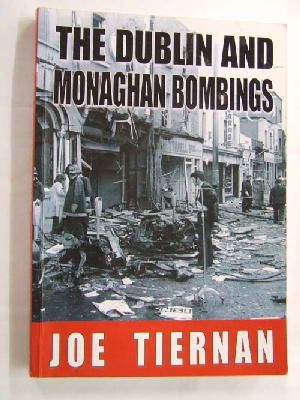
ON THIS DATE (20TH JANUARY) 48 YEARS AGO : SACKVILLE PLACE IN DUBLIN BOMBED BY LOYALISTS. FOR THE SECOND TIME IN SEVEN WEEKS.A photograph from the scene of the loyalist bombing in Dublin on Saturday 20th January 1973 - 48 years ago on this date - in which one man died (29-year-old Scottish born Thomas Douglas, a bus conductor) and 13 people were injured.
'On Saturday 20 January 1973, seven weeks after the December 1972 bombings, a further bomb exploded in Dublin city centre killing one man...unbelievably, the location was once again Sackville Place and the bombers were now beginning to thumb their noses at the security forces...by choosing to bomb the same location twice within seven weeks...the bombing was never claimed by the organisation which carried it out, but no one was in any doubt that loyalists were involved...the bomb, which contained 20 pounds of explosives, was planted in a red Vauxhall Viva car, registration number EOI 1129, which was hijacked in Agnes Street off the Shankill Road in Belfast that morning...'
(from here, and details on the author can be read here.)
Regardless of how active their campaign is in Dublin (or elsewhere in Ireland) or whether they claim responsibility for their actions or not, the fact remains that as long as Westminster continues to maintain a political and military presence in Ireland the loyalists can be 'activated' anytime the British administration feels it would be advantageous to do so. The loyalists and other pro-British elements can only be neutralised when Westminster stops interfering in this country.
'IN THE NAME OF THE LAW...'
Confidence in the Garda Siochana continues to erode as more incidents of questionable Garda 'evidence' emerge. By Sandra Mara. From 'The Magill Annual', 2002.
Michael Peoples, a friend of the McBreartys, received a series of blackmail phone calls alleging he had murdered Richie Barron. A male caller demanded £6,000 for his silence. After the first call, Peoples taped the caller and passed the tapes to the gardai. Four of those calls were traced to the home of William Doherty, while another call was traced to a garda's house.
William Doherty denied making the calls, saying it was not his voice on the tape. A notebook belonging to the garda, containing notes on the Barron case, was also found in Doherty's home in September 1997. Again, Doherty denied any knowledge of the notebook and claimed it was planted in his house in an effort to scapegoat the garda.
William Doherty "informed" the gardai that Noel John McBride, a youth known to the gardai, might have information on the death of Richie Barron. The gardai obtained a statement from McBride implicating several local people and, on foot of this statement, Frank McBrearty Snr and Jnr, Michael Peoples and Roisin and Mark McConnell were arrested. McBride's statement said that on the night in question he saw McBrearty Jnr and McConnell walk away from the crime scene but he was later to retract this statement, alleging duress. He further alleges that in November 1996, William Doherty brought him to the house of a local garda, and that two other gardai were present... (MORE LATER.)
ON THIS DATE (20TH JANUARY) 98 YEARS AGO : 11 IRA PRISONERS PULLED FROM THEIR CELLS AND EXECUTED BY FREE STATERS.
On this date - 20th January - in 1923, Free State forces removed 11 of the IRA prisoners ('Irregulars') they were holding and executed each one of them. Sixteen months previous to executing those men, Leinster House politicians had signalled their intent to do so in order to secure their own positions in the new Free State, declaring that those IRA men were fighting against what they described as 'a legitimate Irish authority..' About one year before that awful day, those Free State executioners would have fought on the same side, in the fight against Westminster, as those they executed on that Saturday, 20th January 1923.
Five Anti-Treaty I.R.A. men were executed by firing squad, at about 8am that day, in Custume Barracks, Athlone, County Westmeath : Thomas Hughes, from Bogginfin, Athlone, who was Lieutenant Commandant, 'Officer Commanding Munitions', Western Division I.R.A. He had served as Captain with the 3rd Engineers Dublin Brigade and was also 'Officer Commanding Munitions' in Athlone. Michael Walsh, born in Derrymore, County Galway. He was Vice-Commandant, 2nd Battalion No. 1 Brigade, Western Division. Herbert Collins, a native of Kickeen, Headford, County Galway, who was captured at Currahan and charged with being in possession of arms and ammunition. Stephen Joyce, a native of Derrymore, Caherlistrane, County Galway and Martin Burke, a native of Caherlistrane, County Galway - he was Officer Commanding, Active Service Unit Number 3 Brigade, Western Division.
Four of the IRA men ('Irregulars/Anti-Treaty Army') - Michael Brosnan of Rathenny, Tralee, County Kerry, John Clifford of Mountlake Caherciveen, County Kerry, James Daly from Knock, Killarney, County Kerry and James Hanlon of Causeway, Tralee, County Kerry - were executed at Ballymullen Barracks, Tralee, Kerry : they were 'found guilty' of being in possession of arms and ammunition under the 'Emergency Powers Act' but local opinion was that the four men were put to death because of on-going attacks on the railway system in the Kerry area.
Two I.R.A. men were executed at Limerick Jail : Commandant Cornelius 'Con' McMahon, Limerick, and fellow Limerick man Volunteer Patrick Hennessy. Both men were charged with the destruction of Ardsollus railway station in County Clare on the 14th of January 1923 and were 'found guilty' of same and of being in possession of guns and ammunition. Patrick Hennessy was secretary of Clare County Gaelic Athletic Association and a member of the county team. Con McMahon had served a term in prison in Limerick Jail in 1920.
Also, for the record, between 17th November 1922 and 2nd May 1923, seventy-seven Irish republican prisoners were removed from their prison cells and shot dead by order of the Free State administration. In this post we name those 77 men and list where each man was executed and the date of same. We do so in the hope that these men will not be forgotten :
1922-
James Fisher, Dublin, November 17th.
Peter Cassidy, Dublin, November 17th.
Richard Twohig, Dublin , November 17th.
John Gaffney, Dublin, November 17th.
Erskine Childers, Dublin, November 24th.
Joseph Spooner, Dublin, November 30th.
Patrick Farrelly, Dublin, November 30th.
John Murphy, Dublin, November 30th.
Rory O Connor, Dublin, December 8th.
Liam Mellows, Dublin, December 8th.
Joseph McKelvey, Dublin, December 8th.
Richard Barrett, Dublin, December 8th.
Stephen White, Dublin, December 19th.
Joseph Johnston, Dublin, December 19th.
Patrick Mangan, Dublin, December 19th.
Patrick Nolan, Dublin, December 19th.
Brian Moore, Dublin, December 19th.
James O'Connor, Dublin, December 19th.
Patrick Bagnel, Dublin, December 19th.
John Phelan, Kilkenny, December 29th.
John Murphy, Kilkenny, December 29th.
1923-
Leo Dowling, Dublin, January 8th.
Sylvester Heaney, Dublin, January 8th.
Laurence Sheeky, Dublin, January 8th.
Anthony O'Reilly, Dublin, January 8th.
Terence Brady, Dublin, January 8th.
Thomas McKeown, Louth, January 13th.
John McNulty, Louth, January 13th.
Thomas Murray, Louth, January 13th.
Frederick Burke, Tipperary, January 15th.
Patrick Russell, Tipperary, January 15th.
Martin O'Shea, Tipperary, January 15th.
Patrick McNamara, Tipperary, January 15th.
James Lillis, Carlow, January 15th.
James Daly, Kerry, January 20th.
John Clifford, Kerry, January 20th.
Michael Brosnan, Kerry, January 20th.
James Hanlon, Kerry, January 20th.
Cornelius McMahon, Limerick, January 20th.
Patrick Hennesy, Limerick, January 20th.
Thomas Hughes, Westmeath, January 20th.
Michael Walsh, Westmeath, January 20th.
Herbert Collins, Westmeath, January 20th.
Stephen Joyce, Westmeath, January 20th.
Martin Bourke, Westmeath, January 20th.
James Melia, Louth, January 22nd.
Thomas Lennon, Louth, January 22nd.
Joseph Ferguson, Louth, January 22nd.
Michael Fitzgerald, Waterford, January 25th.
Patrick O'Reilly, Offaly, January 26th.
Patrick Cunningham, Offaly, January 26th.
Willie Conroy, Offaly, January 26th.
Colum Kelly, Offaly, January 26th.
Patrick Geraghty, Laoise, January 27th.
Joseph Byrne, Laoise, January 27th.
Thomas Gibson, Laoise, February 26th.
James O'Rourke, Dublin, March 13th.
William Healy, Cork, March 13th.
James Parle, Wexford, March 13th.
Patrick Hogan, Wexford, March 13th.
John Creane, Wexford, March 13th.
Séan Larkin, Donegal, March 14th.
Tim O'Sullivan, Donegal, March 14th.
Daniel Enright, Donegal, March 14th.
Charles Daly, Donegal, March 14th.
James O'Malley, Galway, April 11th.
Francis Cunnane, Galway, April 11th.
Michael Monaghan, Galway, April 11th.
John Newell, Galway, April 11th.
John McGuire, Galway, April 11th.
Martin Moylan, Galway, April 11th.
Richard Hatheway, Kerry, April 25th.
James McEnery, Kerry, April 25th.
Edward Greaney, Kerry, April 25th.
Patrick Mahoney, Clare, April 26th.
Christopher Quinn, Clare, May 02nd.
William Shaughnessy, Clare, May 02nd.
Those 77 men did not take up arms in the belief that they were fighting for the establishment of a morally corrupt so-called 'half-way-house' institution, nor did they do so to assist the British in the 'governance' of one of their 'part' colonies : that which those men and many other men and women fought for remains to be achieved : 'Unfinished Business', if you like. You can help present-day Irish republicans to achieve that aim...
'ANTI-MAU OFFICER LED BRITISH ARMY SEARCH'.
From 'The United Irishman' newspaper, November 1954.
The British Army search for the Omagh raiders was directed by Colonel E. H. W. Grimshaw, Chief of Staff, 'Northern Ireland' District, who served in Kenya until recently with Captain T. M. Troy, officer commanding the raided depot.
Colonel Grimshaw said after the raid - "Troy and I have had plenty of experience rounding up the Mau Mau in Kenya, and we should be able to deal with this lot!" (END of 'Anti-Mau Officer Led British Army Search' ; NEXT -'Licensed To Kill', from the 'United Irishman', March 1955.)
('1169' comment ; you can read about Mr Grimshaw here, if you're that way inclined. He certainly enjoyed his overseas 'adventures' on behalf of his 'Empire', and gave many a 'terrorist' a jolly good pasting. Jolly hockey-sticks, and all that...)
ON THIS DATE (20TH JANUARY) 119 YEARS AGO : "TURN INFORMER OR WE'LL KILL YOU...".
On this date - 20th January - in 1902, a baby boy was born in Dublin who was to capture world support and sympathy while still in his teens : the child's name was Kevin Barry (pictured, left), and he was born into a strong Irish republican family which could trace members of its clan as having been active in 1798 with Wolfe Tone. Kevin Barry, 18 years young, was executed on the 1st November 1920 in Mountjoy Jail, Dublin, and was the first Irish republican to be executed by the British since 1916. At the time of his death his eldest brother Mick was OC of the Volunteers in Tombeigh and his sister, Sheila, was in Cumann na mBan. He was captured while on active service outside the entrance of Monk's bakery in Dublin. Although, as stated, born in Dublin, he spent much of his life at the family home in Tombeigh, Hackettstown, Carlow, and both sides of his family - the Barry's and the Dowling's - came from the Carlow area, and some of his ancestors had fought in 1798. He attended national school in Rathvilly, Carlow, for a few years, before going to Belvedere College in Dublin where he was a medical student.
Kevin Barry's body was not returned to his family for burial ; he was interred within the prison confines of Mountjoy Jail and was the first of what was to become know as 'the Forgotten Ten'. Because Munster and a small part of Leinster was under martial law those executed there were shot as soldiers but, as Dublin was under civilian law, those executed in Mountjoy were hanged. In his 'Sworn Statement' ('written testimony'), Kevin Barry wrote -
"I, Kevin Barry, of 58, South Circular Road, in the County of Dublin, Medical Student, aged 18 years and upwards solemnly and sincerely declare as follows: On the 20th of September, 1920, I was arrested in Upper Church Street by a Sergeant of the 2nd Duke of Wellington's Regiment and was brought under escort to the North Dublin Union, now occupied by military. I was brought into the guard room and searched. I was then moved to the defaulter's room by an escort with a Sergeant-Major, who all belonged to 1st Lancashire Fusiliers. I was then handcuffed. About 15 minutes after I was put into the defaulter's room, two Commissioned Officers of the 1st Lancashire Fusiliers came in. They were accompanied by 3 Sergeants of the same unit. A military policeman who had been in the room since I entered it remained.
One of the officers asked me my name, which I gave. He then asked me for the names of my companions in the raid. I refused to give them. He tried to persuade me to give the names and I persisted in refusing. He then sent a Sergeant for a bayonet. When it was brought in the Sergeant was ordered by this officer to point the bayonet at my stomach. The same questions as to the names and addresses of my companions were repeated with the same results. The Sergeant was then ordered to turn my face to the wall and point the bayonet to my back. The Sergeant then said he would run the bayonet into me if I did not tell. The bayonet was then removed and I was turned round again. This officer then said that if I still persisted in this attitude he would turn me out to the men in the barrack square and he supposed I knew what that meant with the men in their present temper. I said nothing. He ordered the Sergeants to put me face down on the floor and twist my arm. I was pushed down onto the floor after my handcuffs were removed. When I lay on the floor one of the Sergeants knelt on the small of my back, the other two placed one foot each on my back and left shoulder and the man who knelt on me twisted my right arm, holding it by the wrist with one hand while he held my hair with the other to pull back my head. The arm was twisted from the elbow joint. This continued to the best of my knowledge for 5 minutes. It was very painful.
The first officer was standing near my feet and the officer who accompanied him was still present. During the twisting of my arm the first officer continued to question me for the names and addresses of my companions and the names of my Company Commander or any other (IRA) officer I knew. As I still refused to answer these questions I was let up and handcuffed. A civilian came in and he repeated the same questions with the same results. He informed me that if I gave all the information I knew, I could get off. I was then left in the company of the military policeman. The two officers, three sergeants and civilian all left together. I could certainly identify the officer who directed the proceedings and put the questions. I am not sure of the others except the Sergeant with the bayonet.
My arm was medically treated by an officer of the Royal Army Medical Corps attached to the North Dublin Union the following morning and by the prison hospital orderly afterwards for 4 or 5 days. I was visited by the Court Martial Officer last night and he read the confirmation of sentence of death by hanging to be executed on Monday next and I make this solemn declaration conscientiously believing same to be true and by virtue of the Statutory Declarations Act, 1835. Declared and subscribed before me at Mountjoy Prison in the County of the City of Dublin, 28th October, 1920.
(Signed) MYLES KEOGH, a justice of the peace for said County.
KEVIN GERARD BARRY."
Canon John Waters, the prison chaplain, wrote to Kevin Barry's mother with a description of his final moments : "His courage was superhuman and rested I am sure, on his simple goodness and innocence of conscience. You are the mother, my dear Mrs Barry, of one of the bravest and best boys I have ever known, he went to the scaffold with the most perfect bravery, without the slightest faltering, 'til the very last moment of his life..." Incidentally, while speaking to Mrs Barry, Canon Waters opined that young Kevin "...does not seem to realise he is going to die in the morning.." to which she asked what was meant by that comment : the priest replied that Kevin "...is so gay* and light-hearted all the time (but) if he fully realised it he would be overwhelmed.." - Mrs Barry took offence at those words and replied "Canon Waters, I know you are not a Republican. But is it impossible for you to understand that my son is actually proud to die for the Republic?" The wise Canon didn't argue back.
It was on this date - 20th January - 119 years ago, that Kevin Barry was born. (*'Gay' - 'happy', not as it apparently would be interpreted today.)
NEWSFLASH!
EXCLUSIVE!
BREAKING NEWS!
1169 BLOG AGREES A BOOK DEAL (sort of..)!
'The kind assistance of Sharon O' Suillibhan of Dublin, who helps publish the 1169 and Counting blog, which keeps alive valuable articles from the era, was generous with her time and thoughts, keeping me laughing and informed..' - so wrote author Anthony Amore, in relation to his book, 'The Woman Who Stole Vermeer'.
Ah Shucks! Going scarla' here...!
Anthony contacted us a while ago when he was researching info for his 'Woman Who Stole..' book, as we had posted an article or two on our blog which caught his eye ; nothing unusual there, as we get contacted regularly by people looking to verify dates, locations etc and we respond to each contact as quick as we can, even if it's to politely say 'no', if they are looking for information which, shall we say, could be deemed to be 'delicate'.
Anyway - the info that Anto wanted (...and yes - we feel that we know the man good enough by now to confer that honorary Dub moniker on him!) was run-of-the-mill stuff to us which contained dates and locations etc which could be found elsewhere, with a bit of digging, so we helped him as best we could and he was delira and excira* (*...figure that one out for yerselves!) with the wee bit of assistance we gave him.
So much so that the gentleman insisted on re-paying the favour and, with a bit of prodding from meself (!) we settled on a brief mention for the blog in the 'Acknowledgement' section of his book (pictured) as 'payment' enough ; and so it came to pass!
And that, readers, is the 'book deal' involved ; probably not quite what some of ye may have been expecting, and we didn't really(ish!) mean to imply otherwise in our blog, Facebook and Twitter posts in regards to the 'deal', but that's all yer gettin'! And anyway - we're chuffed about it, so there!
And - while I'm blowing trumpets (!) here - during our conversations with the Anto fella, Irish food favourites were discussed and I'm equally as proud to say that my receipes for Irish Stew and Shepherd's Pie were passed, by request, to himself, and were made available to a 10,000-strong membership in a book club!
As me other auld segotia* would say - "Between the famous and the infamous there is but one step, if as much as one."
This is Sharon, signin' off and a-steppin' out for now. To sign autographs, that is..!
Thanks for reading, Sharon.
FROM BLOG TO BOOK!
'Bestselling Author..'?
Ah no, don't think so.
Then again...!
But seriously...no.
We know all about the 'Mighty Oaks' proverb but we're under no such illusion about our book deal. We just happened to be the right people in the right place at the right time, and the main player in our literary rags-to-riches story just happened to like, and appreciate, the cut of our jib. Contact between both parties was initiated, conversations ensued, details and ideas etc exchanged and a happy and successdul outcome, to the liking of all concerned, was arrived at and agreed.
On Wednesday, 20th January 2021, we'll be posting our weekly blog post (it'll be an eight-parter) and that posting will include a few paragraphs on the recent book deal and will give a few links and mention names and details etc to do with same. You'll soon be able to say that you knew us when we hadn't got a pot to... choose...from (!) but don't worry, readers, our new-found fame won't change us ; we still intend to keep livin' the High Life and, in regards to the begging letters, we'll keep sending them!
See y'all on Wednesday next, 20th January.
Just pop-on by, wontcha?
No need for an appointment.
Yet...!
Thanks for reading, Sharon.
ON THIS DATE (6TH JANUARY) 34 YEARS AGO : IRA OTR CAPTURED BY FS SPECIAL BRANCH.
On Easter Sunday morning, 1978, seven Donegal Provo recruits crossed the border to Derry City ; they had been chosen to form the Colour Party for the Easter Commemoration ceremony that afternoon, leading the Easter Parade through the Creggan and Bogside where Dáithí Ó Conaill delivered the oration.
After the event, the Colour Party members went into the Rossville Street flats, stripped off their paramilitary clothes and dark glasses and got into casual clothes. The back road from Creggan to the border had been checked and cleared, they were assured. Some of the seven men wanted to go for a few pints and then take the bus home but, under protest, they all piled into the one car and were driven off. The joint British Army/RUC patrol which intercepted them minutes later already had photographs of all seven men taken from a helicopter during the Easter Parade. IRA membership would be easy to prove.
Two of the seven men detained were from Letterkenny in County Donegal ; Patrick McIntyre of Ard O'Donnell and his colleague, Jim Clarke (pictured). Patrick McIntyre is the fifth of a family of nine, who did his 'Leaving Certificate' (school examination) in 1976 and, after taking a six months AnCo (state work-training) course, started working on a building site in Letterkenny. As a youth, Patrick was, as friends describe him, a 'withdrawn kind of a lad'. His involvement with the IRA was to surprise the entire family. But he had been impressed by the 1916 plaque in Saint Eunan's College, by the sight of Derry refugees taking shelter in Letterkenny, of the (Free State) Army on stand-by near the border, by emotive speeches by politicians and by the 'Arms Trial'. He mixed with Official Sinn Fein members in the early 1970's : they held meetings in a room over a pub in Letterkenny where local issues were discussed. But he always stayed clear of public displays and not a word was said at home.
However - the IRA Colour Party had now been detained by the British 'security forces' and, after 14 months on remand in the North, Patrick McIntyre came before a judge ; he was in deep trouble, as he had signed a statement admitting involvement in the attempted 'murder' of a UDR member ('Ulster[sic] Defence Regiment', a pro-British militia) near Castlederg in County Tyrone, in late 1977. McIntyre refused to recognise the court, was convicted and given a fifteen year jail sentence ; Jim Clarke was also jailed for the Castlederg attack - he got eighteen years. The first part of their detention was spent in Crumlin Road Prison and the two men were then transferred to the Kesh at a time when the campaign for retention of political status was intensifying ; they took part in the Blanket Protest and were still there during the 1981 Hunger-Strike. They were two of the 38 inmates who escaped from the prison in September 1983. Patrick McIntyre managed to stay loose for two days ; cameramen were alerted to film him and another escaper, Joe Corey, being recaptured near Castlewellan, County Down.
Re-captured within two days after the September 1983 jail-break, Patrick McIntyre (pictured) had to wait three years and three months to get a second chance ; with less than six months of his original sentence left, he was due three days 'rehabilitation parole' as Christmas 1986 approached. The prison authorities opposed his release because the trial of the Maze escapers was pending, but McIntyre defeated their objections before the courts. The Provisionals approved his absconding - they believed the recently introduced 'rehabilitation' gimmick was geared to cause divisions in their structures within the prisons. By December 20th, 1986, the RUC were looking for him but he was over the border, in Donegal, getting his hair tinted!
On the twisty main road between Killybegs and Kilcar, in West Donegal, there is a white flat-roofed dwelling in the townland of Cashlings ; some Gardai consider it 'a safe house'. Raymond 'The Rooster' McLaughlin, a well-known IRA activist, was suspected of stopping off there not long before he drowned, accidentally, in a pool, in County Clare, in 1985. Shortly after eight o'clock on the morning of 6th January 1987 - 34 years ago on this date - Aiden Murray and other armed Free State detectives raided the house.
They roused a young man from his sleep - he was wearing pants only and, when asked his name, he hesitated before telling them he was 'Colm McGuire'. He requested to see a doctor and solicitor and refused to answer any further questions. Detective Aiden Murray promptly arrested 'McGuire' on suspicion of being a member of the IRA. The Gardai were back at base in Ballyshannon with their prisoner soon after nine o' clock ; they still had no official identity for him and, in accordance with his wishes, a local solicitor, John Murray, was sent for ; he arrived and, after consulting with the man in the cell, he told gardai during a casual conversation that the prisoner was Patrick McIntyre of Ard O'Donnell, Letterkenny. The gardai say that minutes afterwards they received information which possibly linked McIntyre to a robbery in Ballyshannon before Christmas and that they began questioning him about this crime. By mid-morning the word was out in Donegal : Paddy McIntyre had been collared and the prospect of extradition loomed. By that afternoon, a Belfast solicitor, Pat Finucane, was contacting a colleague in Dublin.
The legal defence was prepared in the tiny rooms over a swop-shop along Ormond Quay, near the Four Courts, in Dublin, where solicitor Anne Rowland, a native of Ballina, County Mayo, set up her own firm. Her penchant is for the cut and thrust of criminal cases. On accepting the McIntyre brief, she immediately sought out barrister Patrick Gageby - they had worked together before ; Evelyn Glenholmes and Gerard Tuite were among those they had represented. Rowland and Gageby immediately agreed that their defence case would focus on the circumstances of McIntyre's arrest and detention. They were told that an extradition application would come before District Justice Liam McMenamin at Ballyshannon District Court on January 7th (1987). Before leaving for County Donegal, Rowland put the state on notice that she would require in court the garda who performed the Section 30 arrest and the Garda Officer who signed the order extending Patrick McIntyre's detention for a second 24 hour period.
About one hundred Sinn Féin protestors had gathered outside the court as Patrick McIntyre was escorted from a prison vehicle ; in the melee, nobody noticed three plainclothes detectives sliding another man past - RUC member Robert Herron. He was needed to identify Patrick McIntyre. As he rose to speak, Sinn Féin members immediately headed for the exits but gardai told them the doors would have to be kept closed. Then, his identity unknown to those outside, the RUC man was discreetly and safely brought past the crowds before the hearing ended. Chief Superintendent Patrick Murphy was in the witness box - a stranger to the area, he had been transferred from Limerick to Letterkenny, in Donegal, on promotion the previous October.
Murphy gave evidence of signing the Section 30 Extension Order for a second 24 hour period. State Solicitor Ciaran McLoughlin asked him nothing further. District Justice McMenamin had no questions, and Defence Counsel Patrick Gageby kept quiet. Chief Superintendent Patrick Murphy left the witness box ; defence counsel Patrick Gageby didn't even attempt to smile ; but he did believe that 'the door had been left ajar'. Early last year Patrick Gageby and Anne Rowland had unsuccessfully appealed the three convictions of County Louth men in the Drumree Post Office murder trial - Garda Frank Hand had been killed in an armed robbery. In the Court of Criminal Appeal, however, Gageby had spotted one sentence and quietly filed it away. He now suggested that Chief Superintendent Murphy had not informed the court of his state of mind when signing the extension order ; it had not been proven that the garda officer had the requisite mental element to justify the detention. State Solicitor Ciaran McLoughlin was quickly on his feet trying to answer the point ; District Justice McMenamin adjourned the hearing to consider this and other legal matters raised.
When the case came before District Justice mcMenamin again in Donegal town on January 14th (1987), he again heard Defence Counsel Patrick Gageby question the validity of the Section 30 extension ; but Judge McMenamin dismissed the arguments and granted the extradition order. An appeal was immediately lodged in the High Court.
McIntyre's case was becoming something of a cause celebre ; on March 10th (1987), when Leinster House met to elect a leader ('Taoiseach'), Independent Donegal Leinster House member, Neil Blaney (pictured), demanded that the extradition arrangements between Britain and Ireland "be repealed so that in the interim a young county man of mine, by name McIntyre, be not extradited." But when the case came before Mr Justice Gannon in the High Court in May 1987, Defence Counsel Patrick Gageby had further 'ammunition' - as well as the ruling in the McShane, McPhilips, Eccles (Drumree) case which included this phrase in relation to the person issuing extension orders -"is bona fide suspected by him of being involved in the offence for which he was arrested."
Gageby had the additional support of a Supreme Court ruling of April 3rd (1987) which confirmed that a Chief Superintendent must give evidence of his suspicions when he is issuing an extension order ; it is not sufficient to confirm that he issues the order, he must say why. Patrick McEntee SC had been added to the defence team - McIntyre's supporters were confident of victory. On the afternoon of 7th May 1987, Patrick McIntyre was freed, courtesy of a legal loophole which has since been closed ; the Provisionals had a motorbike waiting outside the courtroom and he was driven off at high speed and was within seconds in city centre traffic. Garda had eighteen further warrants in relation to Patrick McIntyre ; his extradition was still being sought by the British, but he was then on the run.
OTR Patrick McIntyre net with a journalist in a nondescript suburban room. His physical appearance has not altered since the Donegal court hearings - maybe he is a little less fidgety, but he speaks in a soft voice which frequently quivers. The sentiments are resolute. He was sleeping when the gardai came to the house in south Donegal, he says : "I gave the surname of the people who own the house but they didn't believe me. They said I was Patrick McIntyre." Yet the evidence given by gardai in court suggested that the prisoner was not positively identified until solicitor John Murray named him in Ballyshannon garda station. It was also stated that the detectives went to Kilcar after a 'tip-off' that an armed man or men had been seen in the area. It appears the gardai were not aware they would find Patrick McIntyre in the house. It has not been possible to establish whether they knew him by sight ; they seem to have 'struck lucky' - and then got the procedure wrong. As Patrick McIntyre says - "The situation I'm in now prevents me from walking around in this country. I am not wanted for anything in this jurisdiction ; I am being sought for things related to the British administration. If the Birmingham Six were in the 26 Counties now, they could and would be extradited. If the British issue warrants for any person's extradition, the request will come before the Irish courts and the person opposing it must pay his own costs."
The free legal aid scheme does not apply to extradition cases ; costs in the Patrick McIntyre case, expected to run into several thousand pounds, will be paid by Sinn Féin. Asked about his family and his future, Patrick McIntyre stares at the floor - "They let me out for three days to attend my mother's funeral in March. I was told the best I could expect was to go there escorted, in handcuffs, but I fought the case for compassionate bail in the High Court and won. Then there was a rumour that the decision might be appealed by the state and I was thinking about that all the way during the journey from Dublin to Donegal. That was a shattering experience.
I tried to spend the three days with my family. There were thousands of people at the funeral and at the house. It was the first time that we had the family together for a long time, and we had photographs taken. I met a lot of people that I grew up with. Just before I left, my sister gave me a Saint Patrick's Day card that my mother had written, to me, in Saint Luke's Hospital..."
A knock comes to the door - it is time for him to go. What does he intend to do now?, I ask - "Make it third time lucky. Or at least stay out longer than the past two times...", he replies.
'SPLENDID FIGHT.'
From 'The United Irishman' newspaper, June, 1955.
'Letter to the Editor', from The Secretary, Sinn Féin, Glasgow ;
'Congratulations on your splendid fight in the Six Counties. Over 152,000 votes is a great achievement in such a short time and you fought in areas that had been shamefully neglected in the past. Mo ghoirm thú.
Go forward to the fight! Ireland surely could lose no more in battle than is pouring from her into the industrial slums of Britain, there to be lost forever to her, mentally and physically'.
Signed 'Irish Exile'.
(END of 'Splendid Fight'; NEXT - 'In Memoriam', from the same source.)
ON THIS DATE (6TH JANUARY) 81 YEARS AGO : REPRESSIVE FREE STATE LAWS UPDATED.
On the 6th January 1940 - 81 years ago on this date - the then Free State President, Douglas Hyde (pictured) stated that it was his intention to convene his 'Council of State' (this was the first such meeting ever of said body) to discuss a bill he was asked to sign, concerning an amendment to the heavy-handed 'Offences Against the State Act 1939', which would have allowed the Leinster House administration to intern Irish-born citizens in a move said to be necessary in the Free State's fight against the IRA.
It should be noted that those who wanted that power fully intended to use it against men and women that they had fought side-by-side with only twenty years previously.
Two days later (ie on the 8th January 1940) the 'Council' held a meeting in a Free State residence in Dublin's Phoenix Park (behind closed doors, minutes not made public) following which Hyde announced that he was going to refer the proposed amendment/legislation to the Free State 'Supreme Court', stating that he also intended to seek a judgement on the 'Offences Against the State (Amendment) Bill 1940' in its entirety. The 'Supreme Court' replied that, in its opinion, it was within the power and the authority 'of the Oireachtas, consistent with the Constitution, to enact such legislation'. Hyde then signed the necessary paperwork, no doubt having convinced himself that he had done all in his power to prevent further injury to the republicans he would have associated with during his years as a member of the 'Society for the Preservation of the Irish Language', the 'Gaelic League' and the 'Gaelic Journal'.
But easing your conscience isn't the same as cleansing it.
'IN THE NAME OF THE LAW...'
Confidence in the Garda Siochana continues to erode as more incidents of questionable Garda 'evidence' emerge.
By Sandra Mara.
From 'The Magill Annual', 2002.
The Garda 'Witnesses' And The People They Accused :
Garda witnesses against the McBreartys included garda informer, William Doherty, who is well known to the gardai and has a long line of convictions for assault, larceny and other crimes. He was subsequently involved in making allegations that there was a bomb-making factory on the farm of elderly Donegal farmer, Alfie Gallagher and his family.
In 1997, 40 armed gardai and 200 (State) soldiers raided the farm and stayed there for three days and nights. Alfie Gallagher, recovering from a heart by-pass at the time, told 'Magill' - "They tore up over 200 young trees, turned the house upside down, and the helicopter frightened the ewes ; they were pregnant at the time and they ran into barbed wire and did a lot of damage to themselves. Most of them aborted. The raiders wouldn't say what they were looking for. They put a machine-gun in my ribs when I went to feed the stock."
Nothing was found at the Gallagher's farm, and the family are adamant they had never been involved in political or criminal activities. In fact, Mrs Gallagher, a retired teacher, said her father was himself a member of the Garda Siochana. The Gallaghers are currently taking a case against the State. 'Magill' understands that the warrants authorising the search of the Gallaghers' farm have gone missing... (MORE LATER.)
'FELLOW-WORKERS GENEROUS GESTURE.'
From 'The United Irishman' newspaper, November 1954.
Two of the men arrested in connection with the Omagh Raid - Paddy Kearney and Eamon Boyce - are conductors on the CIE buses in Dublin and, immediately on hearing the news of their arrest, workers in the garages to which they were attached decided that they would make regular weekly collections in order to provide for the dependents of the two men. Both Mrs Boyce and Mrs Kearney, the mothers of the lads, are widows, and they greatly appreciate the kind offer of the busmen.
The Republican Aid Committee also wish to express publicly their real appreciation of the wonderful spirit of these workers and the very practical way in which they have come to the help of the dependants, thereby considerably easing the burden on An Cumann Cabrac.
(END of 'Fellow-Workers Generous Gesture' ; NEXT -'Anti-Mau Officer Led British Army Search', from the same source.)
CABHAIR CHRISTMAS SWIM, 2020.
The 44th successive Cabhair Christmas Swim (1976-2020) was held in Dublin on Christmas Day last, albeit in a 'bare bones' format : we sadly and badly missed the usual craic and banter, the flag, banners, the music, the sing-songs, the 'soup', the Christmas crackers, the tables full of 'goodies', the silly hats etc etc, but the main attraction - the swim in the icy waters of the Grand Canal - did take place. And that was the main objective!
The lads and a much-reduced back-up team sampled sea-water for Cabhair on St Stephen's Day in Wexford, for their 10th such sponsored swim ; a very 'Well Done!' to both sets of swimmers, and we know that both groups are hoping and looking forward to getting back to their usual formats this coming December.
Ye all done Cabhair proud - GRMA!
Dublin, 25th December, 2020.
Wexford, 26th December, 2020.
LADIES DAY - PAY ATTENTION, LADS....!
Beannachtaí ar Lá Nollag na mBan!
January 6th is marked by Nollaig na mBan or 'Women's Little Christmas' : in celebration of the feast of the Epiphany in Ireland, January 6th is marked by Nollaig na mBan or 'Women's Little Christmas'. On this day it is the tradition in Ireland for the women to get together and enjoy their own Christmas, while the men folk stay at home and handle all the chores. It is also common for children to buy their mothers and grandmothers presents on this day, though this custom is gradually being overtaken by 'Mothers Day'.
I sometimes think that God, in creating man, somewhat overestimated his ability.(Oscar Wilde)
Happy Nollaig na mBan to all our readers, especially the Ladies!
ON THIS DAY NEXT WEEK (WEDNESDAY 13TH JANUARY 2021).....
...we won't be posting our usual contribution, and probably won't be in a position to post anything at all ; this coming weekend (Saturday/Sunday 9th/10th January 2021) is spoke for already with a 650-ticket raffle to be run for the Dublin Executive of Sinn Féin Poblachtach, work on which begins on the Tuesday before the actual raffle, and the 'autopsy' into same which will take place on Monday evening, 11th, via conference calls, meaning that we will not have the time to post here. But we'll be back, as stated above, on Wednesday, 20th January 2021 and, in the meantime, you might read a few paragraphs from us here. See ye then!
Thanks for reading, Sharon.
ON THIS DATE (23RD DECEMBER) 36 YEARS AGO : RUC DISRUPT REPUBLICAN FUNERAL.
IRA Volunteer Ciarán Fleming (pictured) - 'On Sunday 2nd December 1984, IRA Volunteers Antoine Mac Giolla Bhríghde, from Magherafelt, County Derry and Ciarán Fleming, who had broken out of Long Kesh prison in the Great Escape of 1983, were preparing to mount an operation against crown forces near Drumrush in County Fermanagh when Mac Giolla Bhríghde saw a car parked on the lane which he believed to contain civilians. Approaching the car to tell the occupants to leave the area, undercover SAS members opened fire, hitting him in the side. Cuffed with plastic stays, Mac Giolla Bhríghde was tortured before being summarily executed. His comrades, when later debriefed, reported hearing a single shot, then screaming, and a short time later a further burst of machine gun fire, after which the screaming stopped....' (from here.)
Ciarán Fleming '...drowned in Bannagh River, near Kesh, County Fermanagh (while) escaping from a gun battle between undercover British Army (BA) unit and Irish Republican Army (IRA) unit. His body (was) found in the river on 21st December 1984..' (from here) Ciarán was buried on the 23rd December 1984 - 36 years ago on this date - and his funeral was at the time described as '...the most gratuitously violent RUC attack of the year on any funeral. Many of the RUC had come in full riot gear of helmet, shield and body armour, to show that they were intent on violent disruption. Several times during a tense and exhausting funeral which lasted three full hours, the RUC baton-charged the mourners, which encouraged near-by children, standing on a wall, to throw stones at them in reprisal : the RUC then fired at least four plastic bullets into the funeral cortege, seriously injuring two people. During the afternoon, numerous mourners suffered bloody head wounds and one man was knocked unconscious by the RUC.
Stewards were often forced to halt the proceedings because of this harassment but, despite the RUC's terror, the people stood firm and, in a twilight Bogside, three uniformed IRA Volunteers stepped out of the crowd and paid the IRA's traditional salute to their fallen comrade, as a forest of arms were raised in clenched-fist salute. Finally , thanks to the courage of thousands of nationalists, Volunteer Ciaran Fleming was laid to rest..' (from 'IRIS' magazine, October 1987.)
IRA sources that were contacted at the time by journalist Ed Moloney stated that Ciarán Fleming '...was noted for his hard line militarist republicanism. He is reputed to have backed a plan to form full-time guerrilla units or 'flying columns' based in the Republic, which would carry out four or five large scale attacks in the north a year. This approach was espoused by the militant Provisional IRA East Tyrone Brigade led by Padraig McKearney and Jim Lynagh, who wanted an escalation of the conflict to what they termed "total war". They were opposed by Kevin McKenna, the IRA Chief of Staff and by the republican leadership headed by Gerry Adams, on the grounds that actions on that scale were too big a risk and unsustainable. The IRA leadership wanted a smaller scale campaign of attrition, supplemented by political campaigning by (Provisional) Sinn Féin....' (from here.)
That "political campaigning by Provisional Sinn Féin" has seen that grouping morph into a slightly more-nationalist political party than either of the latter-day Fianna Fáil or SDLP organisations but, true to form, like Fianna Fáil and the SDLP, the Provisional Sinn Féin party has distanced itself (except verbally) from Irish republicanism. It's an easier life, with a salary and a pension, neither of which were available when Adams and company professed to be advocates of change rather than that which they are now (and have been for the last 37 years, at least) ie advocates of British accommodation in Ireland.
'SINN FÉIN VICTORY RALLY...'
From 'The United Irishman' newspaper, June, 1955.
Michael Traynor, Ard Runaidhe, Sinn Féin, said that the Ireland of today with its emigration and unemployment was not the nation visualised by James Connolly, nor did it enjoy the freedom for which he gave his life.
Seán O Riain, on behalf of the Comhairle Ceanntar Sinn Féin Ath Cliath, thanked all those who had helped to provide funds and cars for the election, in particular the Dublin Civil Servants and the employees of CIE, the Irish Bricklayers Society and the residents of Fairview who formed a committee to collect in their area for Tom Mitchell's election fund. Other speakers were Eamon Thomas and Seosamh MacCriostail, Ath Cliath. (END of 'Sinn Féin Victory Rally'. NEXT - 'Splendid Fight', from the same source.)
ON THIS DATE (23RD DECEMBER) 49 YEARS AGO : TED HEATH, BRITISH PM, VISITS IRELAND, CALLS FOR PEACE. BUT IGNORES BRITISH VIOLENCE.
British PM Ted Heath, right, with his friend Jimmy Savile.
On the 23rd December 1971 - 49 years ago on this date - British PM Edward Heath paid a visit to the Occupied Six Counties of north-east Ireland and declared his 'determination to end the violence', making it clear in the process that he was referring to the then IRA campaign to remove the British military and political presence. Five weeks after that visit, his troops let loose with live rounds in the Bogside area of Derry, killing fourteen Irish people and, as a PR exercise, Heath (and his sidekick, Reginald Maudling) set up the 'Widgery Inquiry' into the massacre.
'Lord' Widgery proceeded to exclude the political background to the shootings, a politically motivated decision, as was suggested by the minutes of an extraordinary discussion between Widgery, Edward Heath and the British 'Lord Chancellor', 'Lord' Hailsham, at Downing Street, two days after the massacre, on the evening before the British 'Commons' announcement of Widgery's appointment to conduct the 'inquiry'. Among "..a number of points which I [Edward Heath] thought it right to draw to the Lord Chief Justice's [Widgery] attention (was that) it had to be remembered that we were in Northern Ireland (sic) fighting not just a military war but a propaganda war..." and, indeed, Heath is on record as saying that the Derry Guildhall building would be unsuitable as a venue for tribunal hearings as it "...was on the wrong side of the River Foyle.." (ie - the 'Catholic/Nationalist' side) !
It should be noted that the day before the Bogside massacre (ie on Saturday 29th January 1972) ,
the RUC and the British Army issued the following joint statement : "Experience this year has already shown that attempted marches often end in violence and (this) must have been foreseen by the organisers. Clearly, the responsibility for this violence and the consequences of it must rest fairly and squarely on the shoulders of those who encourage people to break the law. The (British) security forces have a duty to take action against those who set out to break the law..."
Mutinous talk there, from that joint statement because, if they were to do their 'duty', then they would have had to "take action" against themselves and their own political leaders, including Edward Heath. But considering that Heath and his political establishment were pals with the Jimmy Savile's of their world, then it should have been obvious to all that they would have no 'duty' of care or responsibility to 14 dead Irish people.
'IN THE NAME OF THE LAW...'
Confidence in the Garda Siochana continues to erode as more incidents of questionable Garda 'evidence' emerge. By Sandra Mara. From 'The Magill Annual', 2002.
Garda Tina Fowley stated that she thought no more about it "until recently, when concerns about the veracity of the statement of admission had been expressed in the media". Later that evening, a named officer claimed to have a signed confession from Frank McBrearty Junior admitting the killing of Richie Barron. Other gardai in the station were "stunned" - they claim they clearly heard McBrearty Junior protesting his innocence throughout the period. He continues to deny ever having made any such statement.
Garda Tina Fowley also made statements regarding "two distinct sets of notes" relating to the detention of Roisin McConnell on the 4th December, which she says an officer asked her for. She refused, phoned a superior officer at home, and was told to get the original notes out of the office and into the custody of another named officer. Tina Fowley's honesty and courage resulted in her being subjected to harassment from some of her colleagues. She claims her computer was interfered with, she was given little or no work to do, a dead rat was left on her doorstep, and she received threatening letters and phone calls. A colleague said that "what Tina did was not popular with certain people".
Eventually she was forced to leave Letterkenny - on sick leave from the force. She had paid a heavy price for her commitment to honesty and justice, the very qualities we expect from our police officers. Through her solicitor, Damien Tansy, in Sligo, she has issued proceedings against the Garda Commissioner and Attorney General for breach of contract, failing to secure a safe place of work and loss of legitmate expectations... (MORE LATER.)
ON THIS DATE (23RD DECEMBER) 81 YEARS AGO : IRA REMOVE GUNS AND AMMUNITION FROM A FREE STATE FORT.
"Now's here's a proof of Irish sense
Here Irish wit is seen
When nothing's left that's worth defence,
We build a Magazine."(Jonathan Swift)
The Magazine Fort, Phoenix Park, Dublin (pictured) - built in 1735, raided by republicans twice ; in 1916, when thirty members of the Irish Volunteers and Na Fianna Éireann captured the building and took guns and withdrew from the area and again in 1939 - on the 23rd December, 81 years ago on this date - when, at about ten pm on that Saturday night, an IRA man walked up to the Free State sentry who was guarding the locked gate and told him that he had a parcel for his commanding officer. The sentry unlocked the gate only to be faced with a revolver pointed at his head : he was held there as other IRA men entered the Fort and then the hapless State soldier was forced to lead the IRA men to the guardroom where they ordered the Free Staters to surrender, which they promptly did.
13 lorries were then driven into the complex and crates containing Thompson machine guns and ammunition (estimated at 1,084,000 rounds!) were removed from the premises and neither side suffered any casualties. However, State soldiers who were based in the nearby Islandbridge Barracks were perplexed as to the reason why such a heavy volume of truck traffic was entering and leaving the Phoenix Park and they went to investigate : two of the IRA raiders were captured but their comrades made good their escape, complete with that which they came for. However, within a week most of the liberated munitions (including about 850,000 bullets) had been recovered by the Staters : two-and-a-half-tons were seized in Dundalk, County Louth, eight tons recovered in Swords, County Dublin, sixty-six cases of Thompson machine guns and ammunition were seized from an arms dump in South Armagh and 100 crates containing 120,000 bullets recovered in Straffan, County Kildare.
Also, on March 1st, 1940, Jack McNeela and Jack Plunkett - two of the many republicans who were 'lifted' by the Staters following the 'Fort Raid'- were sentenced to two years and eighteen months respectively on a charge of "conspiring to usurp the function of government" by, of all things, operating a 'pirate' radio transmitter. On March 5th, 1940, Tony D'Arcy and Michael Traynor, both arrested during a raid on the Meath Hotel, Parnell Square, Dublin, the previous month, where an IRA meeting was being held to plan an attack in the Six Counties, were sentenced to three months imprisonment for refusing to answer questions. After being sentenced, the four prisoners were transferred to Arbour Hill Prison, Dublin and, on March 27th 1940, they were moved to St Brican's Military Hospital next to the prison. On April 1st that year they were joined there by Tomas MacCurtain and Thomas Grogan, both of whom were still awaiting trial. MacCurtain was charged with shooting dead a Special Branch detective in Cork and Thomas Grogan with taking part in the Magazine Fort raid.
On April 16th, 1940, Tony D'Arcy, a native of Headford, County Galway, died after 52 days on hunger strike ; Jack McNeela, a native of Ballycroy, Westport, County Mayo, died three days later, after 55 days on hunger strike. The fast ended that night when the prisoners were informed that their demands had been met. The hunger strike began on February 25th, 1940, in Mountjoy Jail, Dublin, and resulted in the deaths of two IRA Volunteers.
'CAVAN CEREMONY.'
From 'The United Irishman' newspaper, November 1954.
He had only one message ; it was that any young Irishman worth his salt should know how to use arms in defence of his freedom. This was stated by Mr Tomas MacCurtain, of Cork, when he unveiled a memorial in Cavan to eight soldiers of the IRA who gave their lives during the War of Independence.
The limestone memorial - the work of Mr Leo Broe, Harold's Cross Road, Dublin - represents a Volunteer, and the names inscribed on the granite base are : Captain Thomas Sheridan, Drumcrow ; Staff Captain Joseph McMahon, Kilmaley, County Clare ; Volunteer Seán McEntyre, Laggan ; Staff Captain Michael E. Baxter, Kildoagh ; Volunteer Seán MacCartney, Belfast ; Staff Captain Edward B. Boylan, Corratober ; Captain Andy O' Sullivan, Denbawn, Cavan and Commandant Thomas Fitzpatrick, Cavan Brigade.
A wreath was placed on the monument on behalf of the Memorial Committee by Miss Mary Brady, Chairman, Cavan UDC, and another wreath was laid, inscribed from the 'Thomas McMahon Sinn Féin Club, Kilmaley, County Clare.' Before the ceremony, 200 Cavan IRA veterans, members of Cumann na mBan and a body of young men paraded through the town to the music of the three local bands. The ceremony ended with the playing of the National Anthem. (This report was published in 'The Irish Press' newspaper on the 25th October 1954, and reprinted in 'The United Irishman' newspaper in November 1954.)
(END of 'Cavan Ceremony' ; NEXT - 'Fellow-Workers Generous Gesture', from the same source.)
ON THIS DATE (23RD DECEMBER) 98 YEARS AGO : 'VOICE OF LABOUR' ROARS!
Liam Mellows (pictured) wrote, in his last letter to his mother - "The time is short and much I would like to say must go unsaid. But you will understand in such moments heart speaks to heart. At 3.30 this morning we [Dick Barrett, Rory O’Connor, Joe McKelvey and I] were informed that we were to be "executed as a reprisal"...I go to join Tone and Emmett, the Fenians, Tom Clarke, Connolly, Pearse, Kevin Barry and Childers. My last thoughts will be on God, and Ireland, and you. I had hopes that some day I might rest in some quiet place – beside Grandfather and Grandmother in Castletown (Co. Wexford), not amidst the wordly pomps [sic] of Glasnevin but if it is to be the prison clay, it is all the sweeter for many of our best lie here..." . That was on December 8th, 1922 - he was then executed by a Free State Army firing squad. However, forty-six years after that execution (ie in 1968) more information regarding that deed was made public ; in a letter to the media forty-six years after the execution of Liam Mellows (ie on April 24th, 1968) a Free State Army Captain, Ignatius O'Rourke, who was present at the execution of Liam Mellows and the other three men - Dick Barrett, Rory O'Connor and Joe McKelvey - wrote that, a few minutes before Mellows was shot dead he [Mellows] sent for the prison chaplain, a Father McMahon. Captain O'Rourke wrote that "... a few minutes later...I saw Father McMahon leaving the room [cell]..accompanied by Liam Mellows, with his right arm around Liam's shoulders, and they walked along together leading the group as we all walked to the sandbags. Liam and Father McMahon appeared to be in deep, friendly conversation, with no sign of discord, disagreement or argument, just like two men discussing some point in a friendly fashion. They continued to talk until Father McMahon left Liam in the number one position at the sandbags ..."
Fifteen days after his execution (ie on the 23rd December 1922 - 98 years ago on this date) an article he had written, entitled 'Labour and the Irish Republic' was published in the trade union 'Voice of Labour' newspaper : "Industries will receive encouragement ; employment will increase ; the natural resources of the country tapped ; emigration stopped ; education put on a proper basis, and direct contact with the outside world established. Yet all this, resulting as it would in the country being richer and more prosperous, would not mean that the freedom of Ireland has been attained if the economic system remained unchanged. A political revolution in Ireland, without a co-incident economic revolution, simply means a change of masters - instead of British capitalists waxing rich on the political and economic enslavement of Ireland, as at present, we would have Irish capitalists waxing rich on the political freedom, but continued enslavement, of Ireland. We do not want a change of masters* : it would be foolish, surely, to free Ireland from foreign tyranny today, and less than twenty years hence to have to free it from domestic tyranny*. Therefore, the Irish Republic must have for its foundation the people. It is they who are freeing Ireland, and it is for the people - all the people - that it is being done, not for any section or group.
The Dail Éireann had this clearly in mind when, at its first session, in January 1919,it issued its 'Programme of Democratic Policy' that the soil of Ireland and all that grew upon it and lay under it, as well as all the wealth and wealth-producing processes in the country, should belong to the people. In the last analysis, the fight between the Irish people and the British government is not alone one between two nations : it is more than that - it is a struggle between two systems of civilisation, between the feudal system of England under its present guise of industrialism and the democratic system upon which the old civilisation of Ireland was built. A vestige of that civilisation remains in Ireland today - it is growing, expanding, and the end of foreign rule in Ireland will usher in not alone a new political era in Ireland, but a new economic one as well."
*Unfortunately, as Mellows opined, above, the citizens in this part of Ireland - the so-called 'Free State' - have had 'a change of masters/domestic tyranny' imposed on them, not only by an outside force (Westminster, which established the Leinster House 'parliament') but by a force that they themselves are responsible for - the ballot box. "The foundation, the people", as referenced above by Liam Mellows, are for the most part made of clay and it is a relief that Mellows and his comrades did not live to witness the hypocritical shambles that the political institution on Kildare Street in Dublin, and those voters that time and again 'legitimise' that Free State cess pit, converted his efforts into. Small mercy that the man went to his grave believing that his contribution to the struggle for freedom would help to achieve a proper Irish democracy rather than the 'whats-in-it-for-me' political culture that has hijacked his efforts.
CABHAIR CHRISTMAS SWIM, 2020.
The 44th successive Cabhair Christmas Swim (1976-2020) will be held - in two days time - on Christmas Day, at 12 Noon, at the 3rd Lock of the Grand Canal, in Dublin (opposite the Kelly's/Blackhorse Inn building in Inchicore, Dublin 8), but a 'Plan B' has been put in place by the organisers to take account of the circumstances brought about by the Covid 19 issue.
The Swim will not be going ahead in full 'party'-type mode ie music, dancing, 'soup' for the adults (!), crowds etc ; it will take place in a restrained manner to take account of Covid-enforced social distancing ('Level 3', at the time of writing) and other common-sense guidelines ie just the 'bare bones' - a reduced number of swimmers, one family member with each swimmer, a much-reduced Cabhair Crew on the ground and the public being asked to observe from a safe distance (ie the bridge, or further up the canal), with no foodstuffs, no 'lemonade or soup' (!) , no music etc on site, which should help to prevent a crowd from gathering at the actual Swim spot.
Definitely not the ideal, or usual, manner, for this event, but Covid circumstances have dictated that this is how it must be for 2020. This blog will be represented by one person (usually all three of us are there) and we'll miss the party atmosphere for sure, but we'll wring whatever craic we can out of it, and gladly contribute whatever we can to it. It's for a good Cause - hope to see as many of ye as possible there, on the day. Safely and socially distanced, of course!
We won't be here next Wednesday, 30th December 2020 ; taking a little break over the Christmas, getting our house in order for 2021 and will probably still be cleaning up after the holiday madness! But we'll be back on Wednesday, 6th January 2021 or, if yer that desperate for our company (!), you can catch us on New Years Day at the Dáithí Ó Conaill wreath-laying ceremony in Glasnevin Cemetery, Dublin, at 1pm.
NOLLAIG SHONA DAR LEITHEOIRI!
Ar eagle an dearmaid ....
Ba bhrea an rud e siochain bhuan bunaithe ar an gceart a bheith againn in Eireann. Is i an bronntanas is fearr a d'fheadfaimis a thabhairt duinn fein agus dar gclann.
Coinniodh an ceart agus an tsiochain uainn le breis agus ocht gcead bliain, de bharr ionradh, forghabhail agus miriaradh na Sasanach. Socru ar bith a dheantar in ainm mhuintir na hEireann agus a ghlacann le riail Shasana agus a dhaingnionn an chriochdheighilt, ni thig leis an ceart na an tsiochain bhuann a bhunu.
Ni dheanfaidh se ach la na siochana buaine a chur ar an mhear fhada agus an bhunfhadb a thabhairt do ghluin eile. Tharla se seo cheana nuair a siniodh Conradh 1921 agus cuireadh siar ar mhuintir na hEireann e in ainm na siochana. Is mor ag Sinn Fein Poblachtach Eire a bheith saor agus daonlathach, an cuspoir ceanna a bhi i gceist ag Wolfe Tone agus ag na Poblachtaigh uile anuas go dti 1916 agus an la ata inniu ann.
Rinne a lan fear agus ban croga iobairti mora , thug a mbeatha fiu , ar son na cuise uaisle seo.
CEART. SAOIRSE. DAONLATHAS.
A PEACEFUL CHRISTMAS TO OUR READERS!
Least we forget...
A just and permanent peace in Ireland is most desirable. It is the greatest gift we could give to ourselves and our children. We have been denied justice and peace for more than eight centuries, because of English invasion, occuption and misrule of our country.
Any arrangement which, in the name of the Irish people, accepts English rule and copperfastens Britain's border in this country will not bring justice and lasting peace. It will only postpone the day of permanent peace, handing over the basic problem to another generation.
This happened before when the Treaty of 1921 was signed and was forced on the Irish people in the name of peace. Republican Sinn Féin cherishes the objective of a free, democratic Ireland, as envisaged by Wolfe Tone and all republicans down to 1916 and our own day. Many brave men and women sacrificed a lot, even their lives, for this noble Cause.
JUSTICE. FREEDOM. DEMOCRACY.
Beannachtai na Nollag agus slan go foill anois!
Thanks for reading, Sharon and the 1169 team ; hope to see ye all back here on Wednesday, 6th January, 2021 but, in the meantime, you might read a few paragraphs from us here, if you're that way inclined!


 The execution of Offaly IRA Volunteers Joseph Byrne and Patrick Geraghty : JOSEPH BYRNE, from Cruith, Daingean, and Rochfordbridge native PATRICK GERAGHTY were executed in Portlaoise Jail, by firing squad, on 27th January 1923 - 98 years ago on this date: