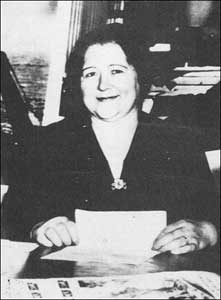
ON THIS DATE (28TH AUGUST) 154 YEARS AGO : EVE OF THE BIRTH OF AN IRISH REVOLUTIONARY.
"If the Germans landed in Ireland, taking it by force of arms, they would have just as much right to it as England...fight for Ireland and be buried in consecrated ground, not dying like those in France, to be thrown into a *bode.." - Tomás Ceannt, speaking at a public meeting in Ballynoe, County Cork, on the 2nd January 1916 (* borehole/hole in the ground).
Tomás Ceannt (Thomas Kent) was born on the 29th August, 1865 - 154 years ago, tomorrow - in Bawnard House, Castlelyons, in Cork, the fourth of seven sons and two daughters, for David and Mary Kent. The Kent family had a long tradition of fighting against social and political injustices : 'His family were squeezed off their land by the British Crown's incremental rate increases. Thomas Kent left for Boston in the United States, but returned to Ireland several years later, owing to illness. Himself and his three brothers became radicalised, and were often jailed for their political activities, chiefly their support for the Land League and their membership of the Irish Volunteers. When the Easter Rising kicked off in April 1916, Tomás Ceannt, then 50 years of age, and his brothers, obeyed Eoin MacNeill's countermanding order and stayed home, Kent having planned to head to Dublin to fight. In a swoop for known republican sympathisers, however, the RIC made a dawn raid on the Kent family home in Castlelyons.
The Ceannts resisted arrest and had a shoot-out with the RIC, which lasted four hours. The RIC's head constable was killed, his face blown off, before the Ceannts surrendered. When they arrested Tomás Ceannt..he was paraded through the town of Fermoy a bit like Jesus Christ. His hands were tied and he had no shoes — he wasn't allowed wear any boots. He was humiliated...his mother was 89 and she was cooling down the guns and supplying her sons with ammunition during the raid. (The RIC) humiliated her as well. She was too old to walk so they put her on a cart with her dying son, the youngest son, Richard. He suffered from his nerves, as they said in those days. He had mental issues...he was terrified when he was arrested and he ran away and was shot in the back. He was dying. He died about a day later from his wounds...' (from here).
Thomas and his brother, William, were charged by the British with 'armed rebellion' - the brother was acquitted, but Thomas was found guilty and sentenced to death. Another brother, David, was 'found guilty' of the same charge and received a death sentence, but this was commuted to five years penal servitude. On the 9th May 1916, Tomás Ceannt was put to death by firing squad and his body was placed in a hole in the ground of Cork Prison, where he lay for 99 years : in 2015, the Free State administration, still attempting to associate themselves with those who fought against British rule, shamefully re-buried that Irish republican in a televised display of pomp and ceremony and it and the 'establishment' it spawned practically crawled over themselves to be seen to be associated with such a man. After their taxpayer-funded meal and drinks, they reverted to condemning those who continue to fight for the freedom of this country. Disgusting behaviour from a disgusting political 'elite'.
'A PLACE WITH THE HEROES...'
From 'The United Irishman' newspaper, December 1954.
Grant me a place with the heroes, Lord,
Who nourished freedom's glow,
When every slave had mourned his chain
and harkened to the foe.
I'd guard it well, had I the soul,
of Lynch or Cathal Brugha ;
No foeman's wiles could dim their zeal,
their guide was Róisín Dubh.
Grant me a place with the heroes, Lord,
Who fell since Thirty-Nine,
Though o'er their graves the slave and foe
to black their names, did join.
Perchance that end will be my lot,
Yet grant it, Lord, to me ;
I'll care not for the foe or slave,
but serve my land and Thee.
Grant me a place with the heroes, Lord,
Who blessed the bygone years,
That I might serve with pulsing blood,
Above youth's hopes and fears.
I'll dance no reels, or drink no toasts,
But strive for liberty,
I'll have no fun, but sword and gun,
'till Erin's soil is free. (By Tomas De Staic)
(END of 'A Place With The Heroes' ; next -'Issued By The Army Council, Óglaigh na hÉireann, November 1954', from the same source.)
ON THIS DATE (28TH AUGUST) 159 YEARS AGO : BRITISH LAND-GRAB IN IRELAND AGAIN DEEMED 'LAWFUL'.
'LANDLORD AND TENANT LAW AMENDMENT ACT, IRELAND 1860.
An Act to consolidate and amend the Law of Landlord and Tenant in Ireland, 28th August 1860. Interpretation of terms :
1. In the construction of this Act the following words and expressions shall have the force and meaning hereby assigned to them, unless there be something in the subject or context repugnant thereto : The word 'person' or 'party' shall extend to and include any body politic, corporate, or collegiate, whether aggregate or sole, and any public company :
The word 'lease' shall mean any instrument in writing, whether under seal or not, containing a contract of tenancy in respect of any lands, in consideration of a rent or return :
The word 'lands' shall include houses, messuages, and tenements of every tenure, whether corporeal or incorporeal :
The word 'acre' shall mean statute acre :
The word 'landlord' shall include the person for the time being entitled in possession to the estate or interest of the original landlord, under any lease or other contract of tenancy, whether the interest of such landlord shall have been acquired by lawful assignment, devise, bequest, or act and operation of law, and whether he has a reversion or not :
The word 'tenant' shall mean the person entitled to any lands under any lease or other contract of tenancy, whether the interest of such tenant shall have been acquired by original contract, lawful assignment, devise, bequest, or act and operation of law :
The expression 'perpetual interest' shall comprehend, in addition to any greater interest, any lease or grant for one or more than one life, with or without a term of years, or for years, whether absolute, or determinable on one or more than one life, with a covenant or agreement by a party competent thereto, in any of such cases, whether contained in the instrument by which such lease or contract is made or in any separate instrument, for the perpetual renewal of such lease or grant :
The word 'rent' shall include any sum or return in the nature of rent, payable or given by way of compensation for the holding of any lands :
The word 'agreement' shall include every covenant, contract, or condition expressed or implied in any lease :
The word 'county' shall extend to and include a city and county, and a riding of a county :
The expression 'chairman' shall mean the chairman of the quarter sessions of the county, and shall extend to and include the recorder of Dublin and of Cork, and the recorder of any borough or town in Ireland under the Municipal Corporations (Ireland) Act, 1840, and their deputies lawfully appointed :
The expression 'clerk of the peace' shall extend to and include the registrar of civil bills for the City of Dublin, and also the acting or deputy clerk of the peace, or registrar or other officer discharging the duties of such clerk of the peace or registrar.
2. In citing this Act it shall be sufficient to use the expression 'The Landlord and Tenant Law Amendment Act, Ireland, 1860...' (from here.)
Twenty million acres of land in Ireland ; 661,931 'tenants' (ie native Irish) in Ireland and 19,284 'landlords' (ie British Planter) in Ireland. If the 'landlord' could get rid of the 'tenants' they could increase the size of 'their' ranches. In the late 1850's, an unscrupulous businessman named John George Adair arrived in the Derryveagh area of County Donegal and, by guile, hook and crook, within one year of being in the area, 'owned' more than ninty square miles of the surrounding countryside. Adair imported black-faced sheep from Scotland and allowed them to wander on 'his' land, as livestock was a more valuable 'commodity' than the natives were.
The British 'landlords' were not alone in thinking that they could do as they wished with 'their' holdings in Ireland ; their bigotry was shared by the political establishment in Westminster and its Vichy-styled political leadership in Ireland. In 1860, the British-appointed Attorney General in Ireland, Richard (Rickard) Deasy, had his 'Act' passed into 'law' in this country - it was known as 'The Landlord and Tenant Law Amendment (Ireland) Act of 1860', but was better known as 'Deasy's Act' and, in short, it removed whatever insignificant amount of protection that the 'tenant' had in relation to their rights and those of the 'landlord' ; it allowed the British 'landlords' a 'free-hand' to do as they choose with 'their' Irish 'tenants'.
This new 'law' allowed the British to set, amend, introduce and/or change any terms which the 'tenant' had with the 'landlord' and defined the contract between both parties as "..deemed to be founded on the express or implied contract of the parties and not upon tenure or service". 'Landlords' were already aware that it was more profitable for them to have livestock on 'their' land rather than the poor 'tenants' who leased the land and were encouraged to shift the Irish off the land, 'legally', knowing that any 'rights' that the evicted family may have had prior to the enactment of the new 'law' no longer existed. The Derryveagh 'landlord', John George Adair, and many others, lost no time in moving against the families living on 'their' estates ; within a few months, evictions were taking place at a recorded level of twenty a week ; Adair had already attempted to have the families on 'his' estate evicted for 'stealing' his Scottish (black-faced) sheep - if the sheep, while wandering free, should end up near a persons cabin, that 'tenant' was accused of stealing the animal!
Adair changed the 'terms and conditions' of the manner in which he 'leased' the land to his existing 'tenants' and did not bother to notify them. Those families were served with eviction notices, and Adair then notified the 'police-force' and requested the British military to accompany the eviction party while it carried-out its 'mandate'. In two days, in April 1861, in Derryveagh, Donegal, Adair and his party of licenced bandits physically removed forty-seven families from their miserable dwellings, burnt the roofs of same and, before the fire was extinguished, levelled the walls. Whole families lived in ditches ; no food, no income, no shelter, no hope.
Adair left such destruction and destitution in his wake that foreign newspapers sent over reporters to follow him , and their words and sketches were sent out world-wide. Irish exiles were furious, and did what they could to help their fellow-countrymen and women back home. In Australia, for instance, a 'Donegal Relief Fund' was established, and paid for most of Adair's victims to re-settle in Australia.
That same British mentality exists to this day, and no amount of 'Treaties' or 'border polls' will solve the problem. A British political and military withdrawal will.
ONE IN FOUR ON LOW PAY...
Colm Keena reports on a new survey on low pay and talks to workers caught in the trap. By Colm Keena.
From 'Magill' Magazine, May 1987.
The number of regular part-time employees rose from 22,600 to 37,600 between 1977 and 1984, and many of these workers are also considered to be low paid. John Blackwell (UCD) defines some 44,000 (46%) of women workers as low paid ; in industry, well over half of all female employees are low paid, and the same is true for women in retail distribution and only slightly less so for women in wholesale distribution.
In any industry where there is a relatively large number of women workers, wage levels are kept down and the 'age-earnings' profile for women - the rate at which earnings increase as the worker passes through their working lives - is slower for women than for men. He also reports that one out of every two school-leavers entering employment works for less than £55 per week. Seven out of every ten workers below the age of 20 are low paid. In supermarkets, take-away restaurants and shops, there is a particularly high concentration of young female workers on low pay - those businesses were the focus of a recent report by RTE's 'Today Tonight' on low pay.
In the restaurants on Dublin's O'Connell Street, 'Magill' magazine has established, the large number of young, part-time workers earn the following rates : McDonalds £1.84 per hour, Burger King £1.55, Pizzaland £1.80 and, in Flanagan's, some workers were getting £10 for a nine-hour shift...
(MORE LATER.)
'STUDENTS HISTORIC DEMONSTRATION'.
From 'The United Irishman' newspaper, January 1955.
In Dublin, on December 11th last (1954), 2,300 students marched through the principal streets pledging support for the republican prisoners in what was undoubtedly the most forceful student demonstration ever staged in this country. Chanting anti-British slogans and singing national songs, the demonstrators marched behind a coffin draped with the Union Jack and borne along on the shoulders of six six-foot, determined, young men, to a mass meeting in O'Connell Street.
As the parade passed the GPO, a youth emerged from the coffin, threw out the British flag on to the roadway and, waving the Tricolour aloft as he stood high in the coffin - still standing tall on the six shoulders - led the mass of students in a mighty cheer for the prisoners. The rally was indeed an inspiring sight and an historic occasion, for it marked the first ever rally of students in support of the republican soldiers.
The most remarkable thing about the demonstration was that it attracted a united front of students, was the most orderly and enthusiastic rally seen in the city for many years and earned the suspicion of press and radio. The latter imposed a virtual publicity curtain and if anything did their best to discredit the students and the demonstration, thus revealing their latent fear of any intrusion by students on national issues. It is understood that subsequent to the meeting, a big number of students enrolled in the republican movement thereby showing their readiness to prove the sincerity of their demonstration in a more positive manner... (MORE LATER.)
Thanks for reading, Sharon.
38TH ANNUAL HUNGER STRIKE COMMEMORATION FOR PEACE WITH JUSTICE : SATURDAY 31ST AUGUST 2019, 3PM, EAST END, BUNDORAN.
On Saturday 31st August 2019, the Bundoran/Ballyshannon H-Block Committee will be holding a rally in Bundoran, Donegal, to commemorate the 38th Anniversary of the 1981 Hunger Strike and in memory of the 22 Irish Republicans that have died on hunger strike between 1917 and 1981 ; those participating have been asked to form-up at 3pm at the East End.
Hunger Strikers.
By Pádraig Ó Tuama.
And there was banging on the bins that night
and many frightened people woke
and noted down the hour.
The clock of hunger-strikers dead is not ignored with ease
and 'please, God, please keep loved ones safe' was then
repeated round and round and round
like rosaries told upon a bead,
or shoes upon the ground of orange walking.
The five demands, the five-year plan
that saw a blanket round a man,
the dirty protest, Thatcher stance,
that gave a new and startling glance
at just how deep a people’s fury goes.
And God knows each single mother’s son
was sick of hunger,
all those younger faces became stripped and old
eyes shrunk back and foreheads cold & bold
with skin that’s limp and paper thin,
barely separating blood and bone from stone.
And some did say 'enough is now enough'
and others said that 'never, never, never will a martyr die,
he’ll smile upon us long from mural’s wall.'
And others said 'what nation’s this?
we’re abandoned on our own —
all this for clothes to warm some dying bones.'
And some said 'that’s a traitor’s talk'
and others bowed their heads and thought that they
would hate to go that way.
Then Bobby Sands was dead
and there was banging on the bin lids on the Falls
echoed through to Shankill gospel halls.
And there was trouble on the street that night
and black flags started hanging while
people started ganging up,
black flags marking out the borders of belonging
the thin black barricade
that’s been around for thirty years
and stayed a fragile point up till today and cries
of how ten mothers' sons all starved and died
when all they ate was hope and pride.
'Hunger Strikers' ; originally published in 'Sorry for your Troubles' (Canterbury Press, 2013).
'A PLACE WITH THE HEROES'.
From 'The United Irishman' newspaper, December 1954.
Grant me a place with the heroes, lord,
Who have gone through strife to Thee,
For Erin's cause, in Erin's name,
To guard or make her free.
I'd take that place, whate'er my lot,
Betwixt the earth and You ;
All pain would be as bliss to me,
Could I, like those, be true.
Grant me a place with the heroes, Lord,
Who fell in Easter fray,
'Mid bayonets flash and firing squad,
At dawn of year and day.
I'd gladly share the battle pangs,
And die as brave Malone ;
Or face the ranks by rising sun,
For hopes of Pearse or Tone.
Grant me a place with the heroes, Lord,
Who kept the flame ablaze,
With august blood, and their sacrifice,
In their strong unbending ways.
I'd cherish death like Treacy's share,
And bless the hand that dealt
the blow, that wrote with Ashe's name,
Mine own, for God and Celt... (MORE LATER.)
ON THIS DATE (21ST AUGUST) 158 YEARS AGO : BIRTH OF A BRITISH PARAMILITARY 'GODFATHER'.
Colonel Frederick Hugh Crawford CBE (pictured), was born on the 21st August, 1861, in Belfast - 158 years ago on this date.
The UVF (pictured, in the early 1900's) was a politically-minded organisation when it was first formed, on the 31st January 1913 by the 'Ulster Unionist Council', with support from the 'Ulster Reform Club', but transformed itself into a drug-fuelled mini-mafia in later years. One of the (original) UVF's better-known leadership figures (apart from 'Sir' George Richardson, a retired British Army general) was Colonel Frederick Hugh Crawford CBE, who viewed himself as a breed apart from others who shared the planet with him - "From these settlers sprang a people, the Ulster-Scot, who have made themselves felt in the history of the British Empire and, in no small measure, in that of the United States of America. I am ashamed to call myself an Irishman. Thank God I am not one. I am an Ulsterman, a very different breed.." (from here).
'His official title read Director of Ordnance of the HQ Staff of the UVF...he had first rate Protestant credentials for he had been one of those who signed the Ulster Covenant in his own blood. He had travelled the world, fought for a time in South Africa and returned to throw himself tirelessly into the fight against Home Rule for Ireland...' (from here). Colonel Frederick was born in Belfast on the 21st August 1861, and died in his 92nd year on the 5th November 1952. His father, James, was a factory owner in Belfast (manufacturing starch, which is said to be good for a stiff upper lip..) but Frederick struck out on his own, becoming an engineer with a shipping firm before taking to a military life, which brought him into the Boer War.
On the night of the 24th April, 1914, Frederick Crawford, the 'Director of Ordnance HQ Staff UVF' (who was cooperating re acquiring arms with, and for, the 'Ulster Unionist Council') and the main instigator in an operation in which over 25,000 guns were successfully smuggled into Ireland, witnessed his plans come to fruition - for at least the previous four years, he and some other members of the 'Ulster Reform Club' had been making serious inquiries about obtaining arms and ammunition to be used, as they saw it, for 'the protection of fellow Ulstermen'. Advertisements had been placed in France, Belgium, Germany and Austrian newspapers seeking to purchase '10,000 second-hand rifles and two million rounds of ammunition..' and, indeed, between August 1913 and September 1914, it is known that Crawford and his colleagues in the UVF/URC/UUC obtained at least three million rounds of .303 ammunition and 500 rifles, including Martini Enfield carbines, Lee Metford rifles, Vetterlis and BSA .22 miniature rifles, all accompanied by their respective bayonets, and six Maxim machine guns, from the Vickers Company in London, for £300 each.
The ads were placed and paid for by a 'H. Matthews, Ulster Reform Club' ; Crawford's middle name was Hugh and his mother's maiden name was Matthews, an action which some members of the Ulster Reform Club objected to, leading to Crawford resigning from that group and describing the objectors as "a hindrance" : he described that period in his life as being "so crowded with excitement and incidents that I can only remember some of them, and not always in the order in which they happened..". Crawford and his UVF/URC/UUC colleagues had ordered some munitions from a company in Hamburg, in Germany, and had paid a hefty deposit up front but, months later, as they had not heard from the company, Crawford was sent there to see what the delay was and discovered that the German boss, who was in Austria while Crawford was in Germany, had informed Westminster about the order and was asked by that institution not to proceed with same - the deposit would not be returned and the deal was off, as far as the company was concerned.
Crawford tracked him down, in Austria, and called him and his company swindlers and was then told of a similar 'deal' involving that arms company regarding Mexican purchasers who also got swindled but, on that occasion, words and bullets were exchanged, the latter from gun barrels! At 60 years of age (in 1921) he was named in the British 'Royal Honours List' as a 'CBE' ('Commander of the Order of the British Empire') and he wrote his memoirs in 1934 at 73 years of age. He died, in his 92nd year, in 1952, and is buried in the City Cemetery in the Falls Road in Belfast. The then British PM, 'Sir' Basil Brooke, described him as "..a fearless fighter in the historic fight to keep Ulster British.." but, whatever about his 'successes on the battlefield', he was apparently less successful in his family life -
"What sort of man was my Father? As a boy and as a man he was never very intelligent. He was an unconscious bully and for that reason unloved by his children. Each in turn left the home as soon as we became adults and were able to do so. The U.V.F rifles - I think about 15,000 - were stored and kept in good condition in a shed in the grounds of Harland and Wolff where I once saw them. For legal reasons they were in my father's name. After the retreat from Dunkirk, Britain was desperately short of arms and wanted to purchase the U.V.F rifles. As you are now aware my father was not a very intelligent person and was a hopeless business man. My father's chartered accountant sent word to him to say that Sir Dawson Bates wanted to meet him about something important. Accordingly, my father went to the accountant's office where his old friend Sir Dawson Bates was waiting for him - "Ah Fred, so glad you've come". The three, my Father, the accountant and Sir Dawson Bates sat down at a table.
There Sir Dawson carefully explained the desperate need Britain had for arms and asked my father, for patriotic reasons, to release the rifles – it would only be a simple matter of signing a prepared document. My father, in the presence of the accountant and Sir Dawson Bates, for patriotic reasons, signed the document without reading it. It conveyed ownership of the rifles from my father to Sir Dawson Bates who sold them to the British Government for, I believe, £2 a barrel. But there was something equally disgusting to discover ; during the Second World War because of a failed eye operation my father became blind whereupon I was appointed his Attorney and in that capacity I had to take over his financial affairs. I was horrified that his bank was about to foreclose which would have meant that he would have been declared a bankrupt. An unholy trio had been cheating him for years ; his estate agent who collected all revenues due to my father was keeping most of it, his chartered accountant was presenting false figures for income tax purposes and all this skulduggery was made legal by the co-operation of his trusted friend, his solicitor.." (from here).
Colonel Frederick Crawford CBE proudly worked for, and aided and abetted, British imperialism, only to be used, abused and cheated by that same system. A lesson (which will no doubt continue to go unheeded) to be learned, even at this late stage, by those who, today, work that imperialist system in this country, north and south.
The 'modern day' UVF, meanwhile, are a self-sustaining criminal outfit, using politics as a disguise for their continued existence - 'Loads of youngsters were recruited...but the only thing these kids are good for is blocking the street. They wouldn't know the difference between Edward Carson and Frank Carson..drug dealers and housebreakers have also been recruited. They are given the option of having their arms broken for anti-social behaviour or joining up...nearly everyone joins up. I know of a few fellas who have been out of work and deliberately allowed to run up tabs in UVF pubs. The UVF comes to them at the end of the month and says "pay up lads". When they cannot they are given the option of a beating or signing up...' (from here.)
Colonel Frederick Hugh Crawford CBE was born on this date - 21st August - in 1861, 158 years ago and, although he's gone, the organisation he helped to establish is still with us but, as stated, it does not now operate to a political agenda.
ONE IN FOUR ON LOW PAY...
Colm Keena reports on a new survey on low pay and talks to workers caught in the trap. By Colm Keena.
From 'Magill' Magazine, May 1987.
A job in the civil service has for long been considered something desirable, yet a large number of those jobs too are actually low paid. John Blackwell (UCD) found 11,000 workers working in such grades as of May 1986 - that is, slightly under one-fifth of all workers in the central civil service. The union representing clerical workers in the civil service, the CPSSU, is currently seeking a 10 per cent or £15 increase ; a survey carried out for the 'Postal and Telecommunications Workers Union' last year found that two-fifths of the union's members , formerly direct employees of the Department of Posts and Telegraphs, had take-home pay of less than £120 per week.
The survey made detailed enquiries into the workers' household circumstances and found that many had difficulty making ends meet, and that over half could not afford to take holidays. The An Post workers are now looking for 'substantial' increases, involving flat rate increases, percentages and 'floors', methods designed specifically for the low paid. These negotiations are now at a 'delicate stage', according to PTWU General Secretary, David Begg.
The indications are that the number of low paid workers in the economy is on the increase ; since 1979, the total number of people working in Ireland has been falling but the number of women working has actually risen. The main areas showing significant increases in the number of women at work are insurance, finance, professional services, public administration and commerce. The proportion of the total workforce receiving low pay has grown in parallel... (MORE LATER.)
ON THIS DATE - 21ST AUGUST - 108 YEARS AGO : WOMEN GET UPPITY!
In Ireland, a few years before the Easter Rising of 1916, it would not be far-fetched at all to state that women were 'doubly oppressed' : by 'the State' (a British institution, at the time [now just a pro-British one!] ) and by, in the main, male society, although not all women accepted that that was the way it should be.
A number of social and cultural organisations had been established by women and for women, including the 'Conservative and Unionist Women's Franchise League', the 'Munster Women's Franchise League', the 'North of Ireland Women's Suffrage Committee', the 'Irish Women's Suffrage Society' and the 'Irishwomen's Suffrage and Local Government Association', most of which worked independently of each other. Two 'troublesome' Irish women, Louie Bennett and Helen Chenevix, thought it would be to the benefit of the overall objective if those separate organisations were to be coordinated into a more effective campaigning body and, on 21st August 1911 - 108 years ago on this date - the 'Irish Women's Suffrage Federation' was formed "..to link together the scattered suffrage societies in Ireland in the effort to obtain the vote as it is, or may be, granted to men (and) to carry on more propaganda and education work throughout Ireland than has hitherto been possible...to form the basis of an association which will continue to exist after enfranchisement, and whose purpose will be to work, through the power of the vote, for the welfare of the country.." .
In that same year,
(1911), the 'Munster Women's Franchise League' was formed in Cork and the 'Irishwomen's Reform League' was established in Dublin. It appears that women, then, were not only more aware of the injustices foisted on them by an unequal and oppressive society, but were more prepared than we are now to do something about it. Time for more drastic action, perhaps...
'IN JAIL FOR IRELAND'.
From 'The United Irishman' newspaper, January 1955.
Cathal Goulding (Dublin) Stafford Prison, 8 years penal servitude (ps),
Seán Stephenson (London) Wormwood Scrubs Prison, 8 years ps,
Manus Canning (Derry) Wormwood Scrubs, 8 years ps,
Joseph Campbell (Newry) Crumlin Road Jail, 5 years ps,
Leo McCormack (Dublin) Crumlin Road, 4 years ps,
J.P. McCallum (Liverpool) Stafford, 6 years ps,
Kevin O'Rourke (Banbridge) Crumlin Road, 5 years ps,
Eamon Boyce (Dublin) Crumlin Road, 12 years ps,
Philip Clarke (Dublin) Crumlin Road, 10 years ps,
Paddy Kearney (Dublin) Crumlin Road, 10 years ps,
Tom Mitchell (Dublin) Crumlin Road, 10 years ps,
John McCabe (Dublin) Crumlin Road, 10 years ps,
Seán O'Callaghan (Cork) Crumlin Road, 10 years ps,
Seán Hegarty (Cork) Crumlin Road, 10 years ps,
Liam Mulcahy (Cork) Crumlin Road, 10 years ps,
Hugh Brady (Lurgan) Crumlin Road, 3 years ps.
(END of 'In Jail For Ireland' ; Next - 'Students Historic Demonstration', from the same source.)
Thanks for reading, Sharon.
BACK FROM 'STAYCATION', NEED A REST FROM IT, BUT NOT GONNA GET ONE!
CRAZY USEFUL TIP NUMBER ONE - DON'T DO IT..
"Don't put pressure on yourself to create the perfect family staycation..we expect those we know best - our children, partners, siblings, parents - to become completely different people. So we assume that the teenagers are going to get up before noon, and get cross when this is not the case. We think that boys who wear black, talk in grunts and are really into heavy metal, in that 13-year-old's rite-of-passage way, are going to be super-interested in seal trips, or that massively self-conscious teenage girls are going to love taking off most of their clothes in public. Or that children who cannot conceive of a world without screens are going to spend two weeks looking around them interestedly and not down at their phones instead.." - India Knight.
..OR AT LEAST DON'T DO IT THE WAY WE DID : 5 supposed-permanent (supposed-)adult minders/posse (the numbers of which fluctuated wildly, depending on who out of the five of us could get away with it at the time), to be assisted by other parents/grandparents during the two-week 'holiday', with what transpired to be between 13 and 19 youths to supervise/look after (/for), find and/or hide from. It was harder, at times, during the two weeks, to find our 'assistants', which led to a few awkward moments when a couple of the missing assistants bumped into some of the missing kids in the near-by town. Those complicated moments always seemed to happen in one of the local pubs..
It was hectic, to put it mildly, but therein lies the craic (in hindsight, that is) - a large gathering of family, friends, neighbours, children and grandchildren, sharing holiday cabins and tents, some wanting to go out 'on the town' when others are only getting 'home' from there, some others not wanting to go with the main party but expressing a new-found interest in nature, wanting to 'explore the woods' or go fishing/climbing (yeah, right..) and some of the older kids wanting to go into the nearest bigger town to go 'shopping' ; what they were looking for wasn't, we expect, sold over a counter.
The weather was kind to us, for the most part, but we had three days of heavy rain over the two weeks, which wasn't bad and, overall, things worked out for all of us, more or less. Us 'minders' took it in turns, two at a time, to get home to Dublin during the 'break' for a breather for two days, which was a welcome diversion, so much so that, rumour has it (!), some of the 'minder teams' were a bit reluctant to leave the peace and quiet of an empty house to return to the fray but were eventually persuaded to do so...!
Anyway - it's done and dusted now, and we left the holiday homes/cabins/garda station cells in Dublin, Wicklow and Meath in much the same condition as we found them (!) and, indeed, we've probably left the staff numbers of the above-mentioned accommodations in a better shape than when we arrived, as we're still trying to locate some of our party!
We got back to Dublin on Sunday just gone (4th August) which allowed us to chillax a bit, as Monday was a Bank Holiday here in this State, but no rest for those who (try to) look after (/for) the wicked (!) : we were immediately jobbed, as expected, to help with the running of a 650-ticket fund-raiser for the Cabhair organisation, which will be held in a venue on the Dublin/Kildare border on Sunday, 11th August, 2019 and we began doing so yesterday Tuesday, 6th August.
Regular readers will know that the 'autopsy' into how the event went is held, as always, on the evening of the day following the event, in a Dublin city centre venue, meaning that we will not have enough time to put one of our regular posts together for Wednesday, 14th August ; we'll be back here on Wednesday, 21st August next with, among other bits and pieces, a story about a highly respected (by his own type, that is..) British Army officer who assisted in the formation of what turned out to be a criminal gang, but who was then conned by a different criminal gang (...the latter being his own type, as well!) out of a small financial fortune, an episode which gave his own family another reason to publicly belittle him. The poor man..(!)
Thanks for reading, and do please check back with us on the 21st August next, thanks again!
Sharon.
'STAYCATION' ONCE AGAIN...
We must be suckers for punishment, 'cause we're doing it again : a few months ago, about 15 of us 'holidayed' in Dublin, Wicklow and Meath - myself and four other young wans were the 'permanent guard' and we were occasionally assisted (!) by the parents of some of the other kids and teenagers that were with us as we near kilt each other in Kilmacanogue, murdered one another in Meath and dumped our sensibilities in Dublin.
And we're doing it all over again this coming Sunday, 21st July 2019, in an 'adventure' that has been two weeks in the making : the same three venues have been booked (the owners of one of which actually said they'd be delighted to have us back, as our party were very pleasant and trouble-free. Obviously confused us with that nice man next door to our cabins, Attila, from Hun, I think he said his name was..). We'll be back in Dublin on Sunday, 4th August (all, most or some of us!) and, providing the '1169' Crew are still on talking terms with one another, we hope to announce our return on Wednesday, 7th August. Although we could very well have something announced about us before then. On the Six O'clock News, maybe...!
Thanks for reading - see ya on the 7th, Sharon.
ON THIS DATE (10TH JULY) 92 YEARS AGO : FREE STATE MINISTER FOR 'JUSTICE' EXECUTED BY THE IRA.
Kevin Christopher O'Higgins (Caoimhghín Críostóir Ó hUigín, pictured) was 23 years young when he joined the Republican Movement in 1915, and proved himself to be a trusted operative and, unfortunately, also proved the truth in the maxim 'put not your trust in princes' ; he supported the 'Treaty of Surrender' in 1921 to the extent that he managed to keep a straight face when he declared, in relation to his support for that treaty - "I have not abandoned any political aspirations to which I have given expression in the past, but in the existing circumstances I advise the people to trust to evolution rather than revolution for their attainment..". But, as expected from such a shabby and false institution as the Free State institution was then, and still is, it was (and is) 'evolution of the self' that O'Higgins and his Free State colleagues were interested in.
When war commenced between Irish republicans and Free Staters in June, 1922, O'Higgins was one of those who signed the paperwork 'authorising' the death sentences on 77 republican POW's (including Rory O'Connor, who had been best man at his wedding) ; O'Higgins and his Leinster House colleagues now considered those they had fought with, against the British, as 'criminals' and were determined to do whatever it took to secure the Free State, as instructed by Westminster. His father was then shot dead by the IRA, and the family home in Stradbally, in County Laois, was burned to the ground.
There was turmoil in the country, North and South, militarily and politically resulting, in 1927, in Free State soldiers been given ever more of a free reign to impose the wishes of their paymasters in Leinster House, with the passing of the gloriously misnamed 'Public Safety Act'. In July 1927 a general election was called in the Free State and Fianna Fail won 44 seats to Cosgrave's 47 : de Valera's policy was not to enter the Free State parliament until the Oath of Allegiance to the British monarch was removed but, in that same month, Kevin O' Higgins was assassinated - on the 10th of July, 1927, 92 years ago on this date - and the Free State government passed a law which would force future Leinster House candidates to swear on their nomination that they would take the 'Oath of Allegiance'. In August 1927, de Valera led the Fianna Fail elected representatives, many of them with revolvers in their pockets, into Leinster House and signed the 'Oath of Allegiance' document. A second general election was held in September 1927 and Fianna Fail increased its vote, winning 57 seats.
The 'Public Safety Act', passed in the Free State assembly by 41 votes to 18 on the 27th of September, 1927, allowed for the State to execute those captured bearing arms against it and permitting State agents 'to punish anyone aiding and abetting attacks on the National (sic) Forces', and/or anyone having possession of arms or explosives 'without the proper authority (or anyone) disobeying an Army General Order'. 'Section 5' of the Act declared that '..every person who is a member of an unlawful association at any time after it has become by virtue of this Act an unlawful association shall be guilty of a misdemeanour and shall be liable on conviction thereof to suffer penal servitude for any term not less than three years and not exceeding five years or imprisonment with or without hard labour for any term not exceeding two years..'.
'Section 28' stated that '..any person found guilty by a special court of the offence under the Firearms Act, 1925 (No. 17 of 1925) of having possession of or using or carrying a firearm without holding a firearm certificate therefor, shall if the offence was committed while this Part of this Act is in force be liable to suffer death or penal servitude for life, or any term of years not less than three years, or to imprisonment with or without hard labour for any term not exceeding two years, and shall be sentenced by such court accordingly..' That 'Act' was a politically and morally corrupt piece of legislation and was enacted by a then, and now, politically and morally corrupt political assembly.
Anyway - Kevin O'Higgins, who once described himself as "..the most conservative-minded revolutionary that ever put through a successful (sic) revolution.." was shot by the IRA on his way to Mass at the Church of the Assumption in Booterstown, Co Dublin, and died in his house about five hours later. The Free State 'intelligence service' was almost certain that he had been shot by Mick Price, the then Director of Intelligence for the IRA. Or Seán Russell. Or Ernie O'Malley, Seán McBride, Éamon de Valera or Frank Aiken but it was revealed, over half-a-century later that, at the same time as O'Higgins was on his way to Mass on that day, three IRA men - Bill Gannon, Archie Doyle and Tim Coughlan - were on their way to a football match when they crossed paths with O'Higgins and took the opportunity to shoot him. This republican militant-turned-Free-Stater who, in his latter years, dismissed the 'Democratic Programme of the First Dáil' (pictured) as consisting of "mostly poetry" - despite having taking up arms and fighting for the implementation of same - was shot dead by the IRA on Sunday, 10th July, 1927 - 92 years ago on this date.
'LEARN FROM OUR ENEMIES' and 'PHYSICAL FARCE MOVEMENT'.
From 'The United Irishman' newspaper, December 1954.
'LEARN FROM OUR ENEMIES' : A member of the 26-county naval unit which has been taking instruction at an English naval base was heard to say - "We'll get the best training in sea warfare." A new twist to John Mitchell's injunction : "Let us learn from our enemies!"
'PHYSICAL FARCE MOVEMENT' : Free State Senator Liam Kelly is the latest 'innocent abroad' to be mesmerised by the Leinster House circus ; at a University College Dublin 'Gaelic Society' debate on November 17th last, he committed the extraordinary blunder of advocating physical force to free Ireland and then condemning the IRA! His reason? Sinn Féin and the IRA will not recognise a twenty-six-county 'government' and constitution and so is, the Senator says, "doomed to failure."
In the same speech, the Senator (so far from the steadying influence of his Pomeroy mountains) admits the twenty-six-county 'government', which gives him £400-odd a year, has abandoned the Occupied Six Counties. Perhaps Senator Kelly thinks the Leinster House betrayal of his own people no reason for not supporting British-approved Leinster House puppet rule? And much as I admire the courage of patriotic-minded individuals, sticks versus stens and stones versus batons is not my idea of a physical force movement to free Ireland. It seems more like a physical farce movement - an army which has been used to prevent warfare against the traditional enemy, an army which has its equipment in the enemy's bases and in the enemy's barracks ; this is no make-believe army, it is the Free State army!
It is an army which has its equipment bought from the enemy, which honours enemy generals and which Leinster House leaders have committed never to fight the age-old enemy, England. Yet General MacEoin said recently that this is the old enemy that twenty-six-county youths and men should join ; an army that knows it is not allowed to fight Ireland's only enemy!
(END of 'LEARN FROM OUR ENEMIES' and 'PHYSICAL FARCE MOVEMENT'; next - 'A Place With The Heroes', by Tomas De Staic, from the same source.)
ON THIS DATE (10TH JULY) 79 YEARS AGO : DEATH SENTENCE ON REPUBLICAN COMMUTED.
Tomás Óg MacCurtain (pictured), a known member of the IRA Executive at the time, and as staunch a republican as his father was, was walking on St. Patrick Street, in Cork city centre, on the 3rd January 1940, when he was jumped-on by a Free State Special Branch detective, John Roche, from Union Quay Barracks ; Roche had apparently made it his mission-in-life to disrupt republicanism, and was known to have been harassing Tomás Óg for the previous few weeks.
A scuffle between the two men ensued and a gun was fired - the Free Stater fell to the ground, wounded, and he died the next day. On the 13th June 1940, the Free State 'Special Criminal Court' sentenced Tomás Óg MacCurtain to death - sentence to be carried out on the 5th July 1940. An application for 'Habeas Corpus' was lodged and the execution was postponed for a week, but the Free State Supreme Court then dismissed the appeal. The whole country was divided over the issue - some demanded that MacCurtain be put to death immediately as a 'sign' from the Fianna Fail administration that they were serious about 'cracking-down' on their former comrades in the IRA, while others demanded that he be released. Finally, on 10th July 1940 - 79 years ago on this date - the Free Staters issued a statement -
'The President, acting on the advice of the government, has commuted the sentence of death on Tomas MacCurtain to penal servitude for life.' Tomás Óg served seven years in prison, and reported back to the IRA when he got out. It has since been alleged that a sister of Cathal Brugha's widow, who was then the Reverend Mother of an Armagh Convent, had intervened on behalf of Tomás Óg to get his death sentence overturned and this, if indeed it did happen, and the fact that his father had actually shouldered a gun alongside many members of the then Fianna Fail administration (before they went Free State, obviously), saved his life. He died in 1994, at 79 years of age.
ONE IN FOUR ON LOW PAY...
Colm Keena reports on a new survey on low pay and talks to workers caught in the trap. By Colm Keena.
From 'Magill' Magazine, May 1987.
John Blackwell points out that Ireland (sic) has a particularly unequal distribution of earnings, compared to other countries. A ranking of 11 western countries, from most to least equal, puts Sweden and Norway at the top, and Ireland at the very bottom, below the United States and Italy.
Whereas most countries show considerable stability in earnings distribution over time, Ireland has undergone some changes in this area in the last two decades - the ratio of lowest decile to average earnings has gone from 62.1 per cent to 55.4 per cent between 1960 and 1979. Data for later years is not available. The flat rate increases included in some 'National Wage Agreements' of the 1970's have apparently not closed the gap, and between 1977 and 1985, Blackwell notes, the marginal tax rate for a married couple 'in low pay' went from 24.4 per cent to 43.5 per
cent.
The report shows that low pay is 'crowded' into some particular sectors of the economy, and that it is also identified with certain age groups and with females more than males. The industrial sectors most affected are textiles, clothing, leather and footwear, all industries with high proportions of women workers - in fact, the only areas of industry with a majority of women workers. The other sectors distinguishing themselves by low pay are wholesale and retail distribution, parts of the public sector, professional services (ie secretarial work) and insurance and banking... (MORE LATER.)
'FOR IRELAND, ON THE HILL'....
From 'The United Irishman' newspaper, January 1955.
'On the flagstone by the fireside,
he struck his ferruled cane,
as if he raised his shining sword
to smite his foe again.
While his heart was throbbing madly,
and afire with every thrill,
was the blood that he'd have gladly shed,
for Ireland, on the Hill.
Alas! He thought, those days are gone,
and Ireland's yet unfree,
the Saxon rag floats in the breeze,
around about Lough Neagh.
But praise to God we've soldiers yet,
brave lads are with us still,
prepared to fight and bravely die,
for Ireland, on the Hill. (END of 'FOR IRELAND, ON THE HILL' : Next - 'In Jail For Ireland', from the same source.)
SOMETIMES 'MULTI-TASKING' IS JUST ONE TASK...
...TOO MUCH!
And it will be, for us, over the next week or so - this Sunday coming (the 14th July) will find the '1169' crew and the raffle team in our usual monthly venue on the Dublin/Kildare border, running a 650-ticket raffle for the Dublin Executive of Sinn Féin Poblachtach ; the work for this event began yesterday, Tuesday 9th July, when the five of us started to track down the ticket sellers and arrange for the delivery/collection of their ticket stubs and cash and, even though the raffle itself is, as stated, to be held on Sunday 14th July, the 'job' is not complete until the following night, when the usual 'raffle autopsy' is held. The time constraints imposed by same will mean that our normal Wednesday post will more than likely not be collated in time for next week (17th July) and it's looking like it will be between that date and the Wednesday following same before we get the time to put a post together.
Or maybe not - but check back here anyway : sure you never know what might catch our fancy between this and then - probably a short post re a(nother) 'staycation' which we might be going on, later this month.
Yippee!
Thanks for reading, Sharon.
ON THIS DATE (3RD JULY) 128 YEARS AGO : BIRTH OF THE IRISH 'MRS HITLER'!
'Bridget Dowling (pictured) was born in Dublin on this day in 1891. She is noteworthy in history because she married the brother of Adolf Hitler. Alois Hitler met Bridget when she was 19 and impressed her by telling her he was a wealthy hotel owner. In fact he was working as a waiter in Dublin, but still managed to win Bridget’s heart. Bridget’s father was against the relationship because Alois had no prospects. In 1910, the young couple ran off to London and got married. Bridget’s father threatened to charge Alois with kidnapping, but finally backed down after Bridget pleaded with him to accept her new husband. The newlyweds settled in Toxteth, Liverpool and had a baby boy, William Patrick Hitler. In 1914, Alois went to Germany to try and become a successful businessman. Bridget refused to travel with him as by now he had become violent towards her and she feared for the safety of her son.
Alois' business plans were immediately disrupted by the outbreak of World War One. He decided to abandon his young family back in England and stay in Germany. Alois married again and was found guilty of bigamy. He was let off when Bridget intervened and the two were divorced. Bridget moved to London and raised her son on her own. She opened her house up to lodgers to make enough money to survive. By the early 1940s, William Hitler was a grown man in his early thirties. He had not seen his father since he was a toddler. However, he saw the potential of cashing in on his surname.
His uncle, Adolf Hitler, was becoming one of the world’s leading figures having become the leading politician in Germany. William and his mother moved to America, where William worked as a public speaker and lecturer on his famous uncle. However, Hitler’s Nazi Germany then started the Second World War, and millions of men were killed at their hands. Bridget and William were now ashamed of their family name and changed it to Stuart-Houston. The mother and son lived out the rest of their lives in America.
Bridget once claimed that Adolf Hitler had lived with her and her husband in Liverpool for a short time in 1912-13. She wrote a book, 'My Brother-in-Law Adolf' that described her relationship with her husband and brother-in-law. Bridget claimed she was the one who advised Hitler to trim the edges of his moustache off, giving him the iconic look we are all familiar with. However, expert historians have rubbished Bridget’s claims that Hitler had ever stayed in England. There is apparent evidence that he was in Vienna at the time Bridget claims he was staying with her and his brother in Liverpool. They accuse Bridget of making the whole story up, in order to sell copies of her book and cash in on her infamous relative.'
A local newspaper here in this part of Dublin ('The Echo' newspaper) published an article, by Donal Bergin, in November, 1999, in relation to Mrs Hitler (!) -
'Adolf Hitler, the monster who tried to wipe out an entire race of people off the face of the earth, had a sister-in-law who was born in Tallaght.
Bridget Elizabeth Dowling..married Hitler’s half-brother Alois (pictured) in London in 1910. He was a waiter and she was a cook in a Dublin hotel where she met him at a staff dance. Though an unfortunate accident of marriage, the convent girl became the sister-in-law of the man who would become Nazi Fuehrer of Germany and later bring the world to its knees.
When she was 17, the young cook eloped to London with Alois who was twice jailed for theft. "Nowadays it is a bit embarrassing to be Mrs Hitler, but the people who know me don’t mind," Bridget Hitler, who was born in Kilnamanagh, once said. The devout Catholic later said: "It seems funny for an obscure little Irish girl like I was to get mixed up in all these International affairs. I was plain Bridget Dowling of Dublin when I met Alois who was a waiter. I was 17 and had just left a convent, and it was very romantic. When I went to the hotel staff dance I met him," she said, long before she claimed to have met the "handsome stranger" at the Dublin Horse Show.
Adolf and Alois shared the same father but had different mothers. Disliked by Adolf, historians state Alois was a hapless good-for-nothing.
Bridget claimed he was a waiter in the Shelbourne Hotel in Dublin, but it is claimed he worked in the old Royal Hibernian Hotel on Dawson Street.
"He fairly won my heart with his sugary talk and foreign ways. My father – rest his soul – was a real Irishman. He would not hear or tell of a wedding to a foreigner. Alois and I used to meet every afternoon in the museum and plan to elope," she said in a prewar interview with the Daily Express in London. Mrs Hitler revealed : "Four months later when Alois had saved enough money, we went to England on the night boat and came to London.
I wrote to my mother and said I would not return until we got permission to marry. She talked my father around and he gave us his consent."
Bridget Elizabeth Dowling married Alois Hitler in Marleybone registry office, London on June 3rd, 1910. She was aged 18 and he was 27.
After the wedding, Bridget recalled she "..took him straight back to Dublin to meet the family, and then we went to Liverpool". She continued : "He got a job in a restaurant as a waiter and then became an agent for a razor firm. Willie, our only child, was born in March 1911. My husband used to talk about his family. He told me of his younger brother, Adolf, who was a dreamy sort of lad and was studying architecture when we were married."
But Alois left her early in 1914 and returned to the continent. Her parents moved to Liverpool around that time, where her father died - "I was in a very poor way when he went to the war (and left me) with three-year-old Willie on my hands. My mother and I did the best we could," she recalled. In the 1930s, her son, William Patrick (pictured), became a car salesman in Nazi Germany after mother and son allegedly tried to blackmail Adolf over his brother's bigamy. After Alois deserted Bridget and their three-year-old son, he bigamously remarried. He escaped jail because Bridget agreed to separation. William Patrick later said his mother felt "very bitter" about many things. He was "sent" to Liverpool to live with his Irish grandparents after Alois left.
While she was born and lived in Tallaght, it is believed Mrs Bridget Hitler-to-be also lived in Clondalkin where her mother's family lived.
William Dowling, a farm labourer from Kilnamanagh, was her father, and her mother was Bridget Reynolds Jnr from Ballymount and, earlier, Kilnamanagh.
Mrs Hitler's parents were conservative Catholics, she has written, while her brother, Thomas J Dowling served in the RAF from 1923 to 1926.
Bridget’s marriage to Hitler’s brother was unspoken of in the area. "That was hidden. The next generation weren’t told much about it," said a source. 'The Echo' has also found that her family probably lived for a few years in a cottage in Cookstown townland, the ruins of which still stand today. The cottage was leased to a man that this reporter believes to have been her father, by Andrew Cullen Tynan, the father of the famous poet Katharine Tynan. Interestingly, the only Irish person who is named in Bridget Hitler’s distrusted memoirs is a 'Mr Tyna', who was described as a neighbour. Bridget claimed in 1941 that hanging would have been too good for her brother-in-law, Adolf, but the French had claimed she was in the payroll of the Nazi’s.
According to a 1938 article unearthed by Patrick Maguire, a Dublin historian, a Paris paper claimed the 'cook' received 300 marks a month from the Nazi's ; It claimed nobody wanted a cook who was Hitler's sister-in-law. She had come a long way since being swept off her feet by the handsome foreigner.
Obviously short of cash, Mrs Hitler made news after she appeared before a London Police court in January 1939 for failing to pay over £9 in rates.
The court accepted her offer to pay within six weeks. She said she was expecting money from Germany, but did not say from whom. The money never appeared - "So there was nothing for it but to take the devil by his tail up the hill and go to court," Mrs Hitler said. A resident since the early 30's of Priory Gardens, Highgate, London, she then said she took in boarders while her son worked in a Berlin brewery. Six months prior to the outbreak of the Second World War in Europe, Mrs Hitler and her son went to America where the authorities quizzed them. She went to work for the British War Relief Society opposite Tiffany’s jewellers on Fifth Avenue in New York in 1941 where she "proudly" wore an 'Aid Britain' brooch.
Bridget's memoirs were discovered, unfinished and halfway through a sentence, in the manuscript division of the New York Public Library in the 1970's. They include a claim that Adolf Hitler stayed in Liverpool in 1912 and 1913. Last year, her daughter-in-law said the memoir "was all made up".
Mrs Hitler's mother could not write when Bridget Elizabeth Dowling was born and she also called herself Eliza and marked her 'X' on the birth cert.
Why she called herself Eliza is a mystery, but there were many other Bridget Dowling namesakes in the nearby districts when she gave birth. Mrs Hitler was the only Bridget Dowling registered born in 1891 whose father's name was William, and her birth cert date matches her gravestone date. Thirty years after her death, Professor of History at the University of South Carolina, Arthur Mitchell, is anxious to hear from any surviving relatives. He said he is co-writing a book on Hitler, and believes relatives may have old personal letters from Mrs Hitler which may be of historical value - "I have no mention of embarrassing the Dowling..I imagine some relatives might tell you to go to hell with that," Professor Mitchell said. And he added: "If she did have any relatives it wouldn't be unusual if she wrote to letters saying 'I was in Germany and met Adolf Hitler’.
Bridget Elizabeth Dowling - Mrs Hitler - was born on this date , 3rd July, 128 years ago (1891). She died on the 18th November, 1969, aged 78, in Long Island, New York. Incidentally, her son, William Patrick, died suddenly in 1987, at 76 years of age. He is buried alongside his mother, but their graves give no clue to their close connection to one of the most evil men of the 20th century.
'WHO RULES IN IRELAND?', 'A COURTESY CALL', 'GUESTS OF THE NATION'.
From 'The United Irishman' newspaper, December 1954.
Who Rules in Ireland? - The resident magistrate at the Civil Court where the men who were charged with attacking the British military barracks in Omagh are being 'tried', cleared the court of the public and pressmen on several occasions "at the behest of the British War Office, the 'Irish Press' newspaper reported. The 'Chambers Twentieth Century Dictionary' definition of the word 'behest' is "command, charge".
Incidentally, why didn't the British-controlled 'National Union of Journalists' protest against the glaringly obvious implication in the magistrate's statement that pressmen were to be removed "in the interests of security"? Can't John Bull trust even his 'Paper Wall' now?
A Courtesy Call - Mr Cosgrave, the 26-County 'Minister for External Affairs', recently paid what newspapers call 'a courtesy call' on England's Premier Churchill ; the Omagh Raid was mentioned, said British reporters - nobody actually said it, but the nicely-rounded impression was left that a reprimanded Cosgrave Junior apologised for such independent spirit in Irishmen.
Guests of the Nation - The jest of the nation at the moment is Mr Ernest Blythe's contention that John Bull's troops are guests of the nation! Mind you, Mr Blythe always was a pretty joker - he had a leading role in 'Free State Follies', the show that, according to newspapers, "displayed an excellent sense of execution.." Yes, indeed. 77 times. (END of 'Who Rules In Ireland', 'A Courtesy Call' and 'Guests of the Nation' ; Next - 'LEARN FROM OUR ENEMIES' and 'PHYSICAL FARCE MOVEMENT', from the same source.)
ONE IN FOUR ON LOW PAY...
Colm Keena reports on a new survey on low pay and talks to workers caught in the trap. By Colm Keena.
From 'Magill' Magazine, May 1987.
In a recent recommendation concerning plastic workers in Longford, however, the Labour Court used the comparison with other employments as a basis for proposing a higher increase to low-paid workers than the company said it could afford or than had emerged from earlier conciliation by the Labour Court.
The 43 workers at the German-owned company, Fondermanns, were being paid £96.22 and were claiming an increase of £14 ; the union claimed the industry rate was £136. The company offered a total of £6.95 in three stages over a year but, at conciliation, it was proposed that the total three-phase increase should be £9. The Labour Court added a further £2 to the final phase, also extending the term of the proposed agreement by three months.
A forthcoming report from the 'Irish Congress of Trade Unions' (ICTU) on low pay in Ireland, carried out by John Blackwell, of UCD, is the first such study and, on the basis of data which he himself considers inadequate, Blackwell concludes that some 73,000 workers earn what he defines as "low pay". He uses a number of methods to define what constitutes 'low pay', for example - the equivalent of the 'Supplementary Welfare Allowance', half of the average male industrial wage, two-thirds of the average male industrial wage, the bottom ten-per-cent of the earnings distribution and/or the lowest 'decile'. It is this latter definition which he uses most frequently and, at mid-1985 prices, this gives an income of £114 per week... (MORE LATER.)
'FOR IRELAND, ON THE HILL'.
From 'The United Irishman' newspaper, January 1955.
'The old man sat beside the fire, and eyed the rising flames,
his mind on nigh forgotten things, recalled familiar names.
Their faces flashed before him,
there were Seánie, Mick, and Bill,
and all who fought so bravely,
for Ireland, on the hill.
The nights they spent together,
beneath the starry skies,
or marching o'er the heather,
with wild hope in their eyes.
He saw them all before him,
the training and the drill,
and battles were re-fought again,
for Ireland, on the hill...
(MORE LATER.)
Thanks for reading, Sharon.