On the 28th May, 1919, the British Prime Minister, a Mr David Llyod George, opened a letter he had just received from a political colleague of his, a Mr Walter Hume Long (pictured, the '1st Viscount Long').
Mr Long expressed his opinion about on-going discussions in Westminster in relation to the pros and cons of declaring the then Sinn Féin organisation to be an illegal entity, and outlawing it.
Mr Long suggested strengthening the 'police force' (sic), the RIC, first, describing that outfit as "incompetent or worn out", especially, he said, the leadership of that grouping.
He specifically referenced the RIC 'Inspector General' (who was appointed in 1916), a Mr 'Sir' Joseph Aloysius Byrne who, he said, "...had lost his nerve and should be replaced.." (by a hardline RIC member from Belfast, a Mr TJ Smith) - Mr Byrne had initiated a policy of compulsory retirement of RIC members whom he considered "unfit for service", which didn't go down well in political or military circles in Westminster as it was precisely the "unfit for service" (ie 'the loose cannon')-types that they wanted to 'police' Ireland!
This issue was discussed between the politicians for a few months and, in early November (1919), the British 'Lord Lieutenant of Ireland', Field Marshal John Denton Pinkstone French ('1st Earl of Ypres, KP, GCB, OM, GCVO, KCMG, PC...' ETC ETC!) wrote to Mr 'Sir' Joseph Aloysius Byrne ordering him to take one month's leave "to rest himself" (Mr French could not actually sack the man, as that would require input from the British Treasury and there was no guarantee that Treasury management would agree with the move).
Mr Byrne assured all and sundry that he was grand (!) and sure he took the few weeks off anyway but, when he returned to work in early December, he found a Mr TJ Smith sitting behind his desk, the locks on which had been changed, as had Mr Byrne's career trajectory!
==========================
GAS LADS...
The massive finds of oil and gas on our western seaboard could ensure Ireland's financial security for generations.
Wealth approximating that of the Arab countries is within our grasp, but the Irish government seems content to sell off our birthright for a handful of votes and a few dollars.
In a special 'Magill' report, Sandra Mara investigates just what we are giving away, and why.
From 'Magill' magazine, March 2002.
Again, no one can blame the oil companies ; they are in the business of making profits and if a government facilitates them in this, they would be failing in their responsibilities to their shareholders not to take advantage of it.
Mike Cunningham is a former director of 'Statoil Exploration (Ireland) Ltd', and has wide experience in off-shore exploration and production and, in particular, the acreage off the western coast of Ireland.
A former chairman of the IOOA's Environmental Committee and former chair of its Labour Relations Committee, Mike Cunningham, now an independent oil and gas consultant, told 'Magill' magazine that no other country in the world has given such favourable terms as Ireland.
Following the 1992 concessions when royalties were abolished and oil and gas companies were given a 100% write-off against development and recovery costs, the tax rate was reduced from 35% to 25%...
(MORE LATER.)
On the night of Saturday, 3rd April 1920, the IRA attacked the RIC barracks in Carbury, County Kildare but, although unsuccessful in their endeavours to destroy the building on the night, they did succeed in destroying the moral of the enemy forces who were housed there.
Between requested transfers and orders from their bosses in Dublin, the barracks was soon abandoned because, now that it was known to be 'of interest' to the IRA, the enemy forces knew that the rebels would be back.
And back they were - on the night of the 28th May/early morning of the 29th, the IRA returned and destroyed the building, making it uninhabitable, as they had done with British and other pro-British outposts in the Kildare area, in Maynooth, Rathangan, Castledermot and Ballinonlert (between Rathangan and Clonbullogue).
Destroying enemy outposts and enemy moral in the one operation - good tactics!
==========================
THE NUMBER'S UP...
How some famous gambling conspiracies came to light.
By Con Houlihan.
From 'Magill' Magazine Annual 2002.
At about the same time, another assault on the bookmakers hit the headlines - the 'Yellow Sam Affair'.
A horse of that name was backed in the betting shops to win a race in Bellewstown, County Meath, a course with no phoneline to the outside world.
There was a public phone a little distance away but it was manned and womanned so that no message could get through ; 'Yellow Sam' trotted up, and the bookies paid up.
The operation had the virtue of simplicity, it was a plot of a different colour, and the man at its centre had spent several years studying for the priesthood (his training wasn't wasted!).
He was a professional ; he didn't do it for the craic.
(END of 'The Number's Up' : NEXT - 'Cash No Excuse For RTE Putting Documentary To Death', from the same source.)
In January 1916, while taking part in an 'Irish Volunteers' revolver practice class, Volunteer Thomas Wilmot was accidentally severely wounded and was brought to Drogheda Memorial Hospital (near the Curragh Camp) but the incident and the hospital visit were not 'officially' recorded, as the British 'authorities' would have shown an interest.
Volunteer Wilmot was attended to by a Dr. Laurence Rowan, who was a medical officer with the Republican Movement, and the rebel was soon back in action, in defence of his country.
He witnessed, in early 1921, the British military opening an internment camp (Rath Camp) for Irish republicans at the Curragh and, indeed, was one of the first Volunteers to see that dreadful structure from the inside - on the 28th May that year he was 'arrested' by the Crown Forces and imprisoned there.
Volunteer Wilmot was released (as were all the republican internees) in December (1921) after the 'Treaty of Surrender' was signed by Michael Collins and his people and was approached by the Staters to accept an 'Officer Commission' from them and, like all good Irishmen and women, refused the offer and continued his work on behalf of the Republican Movement.
Incidentally, Volunteer Thomas Wilmot was also a member of the GAA, the Gaelic League and the ITGWU, as were his near-neighbours Mr Matthew Cardiff and Mr John Lee, who were 'arrested' with him by the British on the same date (28th May 1921) and held in Rath Camp.
And on their way to detain the above-mentioned three Irishmen, the Crown Forces would have more than likely took timber planks from Rath Camp and loaded them into their trucks, as that material was required to drive over the trenches that the IRA had dug into roads in the Kildare area, to impede their ability to travel in and around the county.
Also, on the 28th, telegraph poles were knocked down in the Gormanstown and Kilcullen areas, presenting enemy forces as targets as they attempted to remove the blockages ; indeed, according to ascertained British Military records, in the four weeks ending May 28th (1921), 76 of their operatives were killed, and 106 wounded.
Those records were later adjusted to show that, between the beginning of May that year and the middle of July, 114 RIC members and 48 British Army soldiers were shot dead in Ireland.
While the IRA were blocking roads in Kildare on the 28th, eight armed IRA Volunteers in Cork were knocking on the front door of the Fitzgerald house in the Ballysheehan area of Mallow, County Cork.
When the door was opened, two brothers - Thomas and Henry* - were told they had been tasked with 'trenching a road' and were instructed to leave now with the IRA ASU, which they did.
The two brothers didn't know it then, but the IRA Intelligence Department had linked them with the near-capture of Volunteer Thomas Hunter, from Castletownroche, near Fermoy, in County Cork, that same month, after which Henry Fitzgerald had somehow acquired £75 to purchase a horse and a car.
The bodies of both men were found shortly afterwards near the Cork village of Killavullen ; they had been executed as spies.
(* Henry Fitzgerald was an ex-member of the British Army 'Royal Fusiliers' Battalion, Service Number 102762)
On that same date (the 28th May 1921), other Cork Volunteers (attached to the 'Flying Column' of the 3rd Cork Brigade IRA, pictured) maintained the ambush position they had secured on the 27th, which covered about 360 meters (four hundred yards in total) outside the village of Gloundaw (between Dunmanway and Drimoleague) on high ground, all of whom were armed with rifles.
It had been arranged that Volunteers from the Drimoleague Company would ambush the RIC in that village, in order to draw the British Auxiliaries and other military/paramilitary enemy forces out from Dunmanway and into the IRA ambush position, but no reinforcements were sent to aid their RIC colleagues.
The ambush squad withdrew from the area on the evening of the 28th.
The body of "a weak-minded drifter", a Mr Daniel McCarthy, was found near the Post Office in the Cork village of Ovens on the 28th ; he had been shot nine times and a notice was pinned to his body -
'Spies And Informers Beware.
IRA.'
Mr McCarthy had been observed, more than once, conversing with British military figures in the town of Ballincollig and, when 'arrested' by the RIC on a misdemeanour charge, was placed in detention with IRA prisoners in Ballincollig British Army Barracks.
The IRA POW's spent about three weeks in his company, in detention, before sending out word to their comrades that he was not to be trusted and, upon his release, he was arrested near the Lee Cinema in Patrick Street in Cork by Volunteers attached to the 3rd Battalion of the Cork No. 1 Brigade.
He was taken in a horse and cart to the village of Kilumney and handed over to Volunteers Leo Murphy, Dick Murphy and others, held and questioned for a few weeks and then taken from there to the village of Ovens where he was shot dead.
On the same date that Mr McCarthy's body was found in Cork, the IRA in Dublin staged an attack at the corner of Saint Stephens Green and Cuffe Street on two British military Crossely Tender trucks which were transporting enemy troops (attached to 'C Company').
An IRA Volunteer, Leonard Fox, was captured in Saint Stephen's Green and a civilian, a Mr Joseph Miller, was wounded in the ensuing gun battle ; he died from his wounds on the 3rd June.
RIP Joseph Miller.
Back in Cork, on the 28th, Volunteer Diarmuid Hurley (pictured), Officer Commanding of the Active Service Unit attached to the Cork Number 1 Brigade, was shot dead in the townland of Carrigogna by the RIC "while trying to escape".
Volunteer Hurley was buried secretly by his comrades the next day in a tomb at North Churchtown Cemetery, about two miles east of Middleton, on the highway to Youghal, in County Cork.
RIP Volunteer Diarmuid Hurley.
On the same day that enemy forces executed Volunteer Hurley, an elderly Irish woman, a Mrs Mary Foley (aged in her late seventies), was shot dead by a foreign soldier in Waterford, about 80 miles (130km) away.
"A woman named Mrs Foley, aged nearly 80, was shot at Carriglea, near Dungarvan, by a man in a military or police lorry while she was gathering sticks by the riverside ; whether an inquiry has been held; and what reason is given for the killing of this woman...whether he is aware that a woman named Mrs. Foley, aged nearly 80, was shot at Carriglea, near Dungarvan, by a man in a military or police lorry while she was gathering sticks by the riverside ; whether an inquiry has been held ; and what reason is given for the killing of this inoffensive woman...?"
(From here.)
Mrs Mary Foley and two of her grandchildren were gathering firewood by the side of a river on the 28th May 1921 when a passing British military patrol opened fire on them.
The poor woman died shortly afterwards from her wounds but, thankfully, the children were not injured.
The inscription on Mrs Foley's memorial stone reads -
"Saighdúirí Sasana do lámaidh í agus í ag bailiúghadh brosna."
("English soldiers murdered her while she was gathering firewood.")
"The deceased was arrested while on Volunteer duty in May, 1921, and was ill treated, was sentenced to six months hard labour by Courtmartial while in Prison in Spike Island, health was neglected..."
The deceased mentioned above is Volunteer/Scout William Creedon, from Sleaveen West, Macroom, in County Cork.
Volunteer/Scout Creedon had been tasked by 'A Company' of the Macroom Battalion of the Cork Number 1 Brigade to monitor a bridge near the farm where he worked as a labourer, as the IRA were aware that at least two British soldiers would regularly meet-up with their girlfriends on the bridge, and the IRA also wanted to meet-up with the two armed thugs.
The British soldiers, however - living on their nerves, as usual - noticed William Creedon's presence and they 'arrested' him on the 28th May (1921) and forced him back to their base in Macroom Castle, where they battered him to the extent that his abdomen started swelling.
It might have been awkward for them had Volunteer/Scout Creedon died in their custody, so they transferred him to Spike Island Internment Camp, where his condition further deteriorated, prompting his removal to Cork Military Hospital in Victoria Barracks, where he died on the 2nd July 1921.
RIP Volunteer/Scout William Creedon.
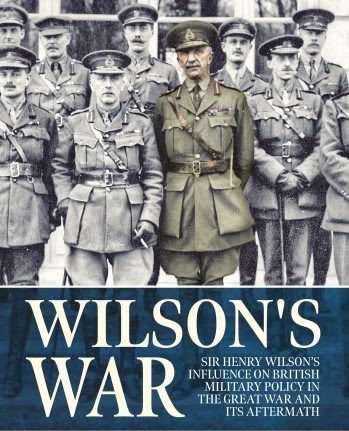
"The Frocks are, I verily believe, going to allow me to send over all the troops that I have got in England to Ireland..."
- a note gleefully written by 'Sir' Henry Wilson (pictured), the British Army military commander in Ireland (and political advisor to Westminster), to the British military attaché in Paris, on the 28th May, 1921.
It took him about six weeks to organise it, but between the 14th June and the 7th July, 17 battalions of British troops were sent to Ireland bringing the number of British troops in this country to 60,000.
And today, 28th May 2025, there are at least 1,500 (acknowledged) British Army soldiers in our six north-eastern counties, assisting pro-British 'police forces' the RUC/PSNI and the Free State AGS, State army, politicians and judiciary to enforce and uphold the British claim of political and military jurisdictional control over those six Irish counties.
Ireland unfree shall never be at peace.
==========================
DEATH IN THE MEDITERRANEAN...
Desmond Boomer, a Belfast engineer working in the Libyan oil-fields, disappeared seven years ago.
Officially, the plane on which he was a passenger crashed as a result of mechanical failure and pilot error.
But is that the real story?
Or were the Irishman and his fellow passengers unwitting victims of the shady war between Islamic fundamentalism and Mossad, Israel's intelligence network?
A special 'Magill' investigation by Don Mullan, author of 'Eyewitness Bloody Sunday'.
From 'Magill' magazine, January 2003.
Desmond Boomer was en route home to Belfast for his Christmas holidays when he disappeared.
There are three possible explanations -
Firstly, that the light aircraft, which had experienced serious mechanical difficulties on its outbound flight from Malta, was irresponsibly flown into a raging Mediterranean storm by its experienced pilot and crashed off the coast of Tunisia, that Desmond Boomer and his travelling companions were abducted by Islamic fundamentalists and may still be alive or - and this possible explanation cannot be easily dismissed - all five passengers were in the wrong place at the wrong time when Islamic fundamentalists arrived to exact revenge on a marked man, the pilot, Carmelo Bartolo...
(MORE LATER.)
In late May 1922 - after the Treaty of Surrender had been signed, and with the approval of Michael Collins, the chief signatory of that foul document - 55 Free State Army troops and 31 IRA Volunteer soldiers joined forces and 'put it up' to Westminster (and to the politicians in Leinster House) by 'occupying', as the British claimed to see it, two towns which straddled the border between the Free State and the Occupied Six Counties.
The 'incident' became know as 'The Battle of Pettigo And Belleek', which are the two towns referenced, and it's notable as the last time that both the Free State Army and IRA forces fought alongside each other against the invasive British military and political presence in Ireland.
The rebels held out for about two weeks against a better armed and supported enemy force, comprising military might and a vichy-type 'local civilian committee', and marked the first occasion since the signing of the Treaty Of Surrender when part of the so-called 'Free State' was occupied - without the consent of Leinster House - by an external power.
Today, 103 years later, Free State politicians are again occupied - financially, morally and spiritually - this time by a 'Woke' mindset favouring the EU, the WHO and the WEF, but with their own consent.
However, we digress : you can read more about this 'Irish military invasion of Ireland' here...
Meanwhile, about 100 miles (160 km) down the road in Dublin, on the 28th May (1922), the IRA caught up with an RIC member, a Mr William Leech, whose name had being brought to their attention in relation to the killings in Limerick of nationalist/republican political figures.
The RIC man's routine showed that he walked, with his girlfriend, down what was then Great Brunswick Street (now Pearse Street) in Dublin, towards Westland Row Railway Station, between 10pm and 10.30pm, on a Sunday and, on the last Sunday in May, 1922, he took his last walk along that route ; the IRA shot him dead.
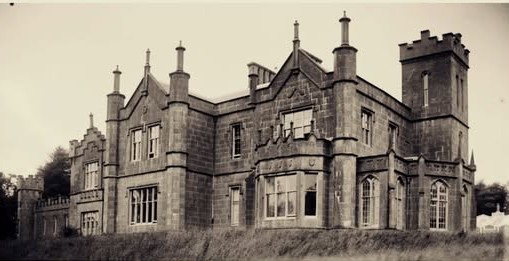
On the 28th May, 1922, sixty-four members of the pro-British 'Special Constabulary' organisation found themselves under military siege by the IRA in their base at Magheramenagh Castle (pictured) near Belleek, in County Fermanagh.
Reinforcements were begged for by the trapped Crown Forces and a convoy of five Crossley Tender trucks, carrying 'A Specials', from the town of Garrison, in County Tyrone, was dispatched to their location.
As the convoy was passing through the town of Belleek, on the Donegal-Tyrone border, it was ambushed by the IRA and at least one 'A Special' paramilitary, a Mr Albert Thomas Rickerby, was shot dead during the gun battle, which lasted several hours.
The 'A Special' reinforcements then withdrew from the area, skedaddling back to their base, and their 'house arrested' (!) comrades in the castle loaded themselves on to a few boats and legged it (!) to Boa Island in Lough Erne.
While sheltering from the nasty rebels on Boa Island, about 100 'Special' reinforcements arrived to keep them company, least they should feel lonely and dejected...
On the same date that pro-British forces were comforting each other on Boa Island, a Mr James Kelly and his wife, Honoria, were standing outside their house in the village of Sonnagh, near Charlestown, in County Mayo, having a heated discussion about politics with their neighbour, a Mr Michael McIntyre, the son of an anti-Treaty County Councillor, a Mr John McIntyre.
Mr McIntyre aimed his shotgun at the couple and fired, hitting Mrs Kelly in the face, neck and chest.
The poor woman died within fifteen minutes.
RIP Mrs Honoria Kelly.
==========================
"The dumping of arms does not mean that the usefulness of the IRA is past, or release any member of it from his duty to his country.
On the contrary, it is clearly our duty to maintain the Army Organisation intact.
Discipline must be maintained, reports returned, and officers must do their utmost to safeguard their men and get them back to their civilian work.
No man must leave Ireland unless ordered by GHQ to do so..."
-Mr Francis Thomas Aiken (pictured), the new IRA Chief of Staff (and a republican-gamekeeper-turned-Free State-poacher) in a memo he released to IRA Officers on the 28th May, 1923.
Three years after he wrote those words, he assisted in the foundation of the anti-republican 'Fianna Fáil' grouping ; so much for his 'duty to Irish republicanism...'
==========================
Thanks for reading - and have ya noticed that we're heading for 2 million hits?!
Sure you knew us when we had nuthin'...!
Sharon and the team.
On the 15th January, 1921, an IRA Volunteer, Seán Kavanagh, from Tralee, in County Kerry (a republican-gamekeeper-turned-Free State-poacher) was having a bite to eat in the 'Royal Exchange Hotel' in Dublin (having arrived there by train, from Newbridge in County Kildare) when he was accosted by a Black and Tan 'soldier' and two British Army Auxiliaries, all armed.
They had recognised him on the street, in the Kingsbridge area, and followed him at a distance, before closing in on him.
Seán worked for the Movement in the Intelligence Department, with Michael Collins and others, and knew that he was a wanted man ; he had been 'in hiding/on the run', and was billeted in various locations between Dublin and Kildare.
His work also included carrying messages from around Ireland and abroad which he would pass-on to Michael Collins himself, at an arranged time, in Vaughan's Hotel on Parnell Square West in Dublin, every Saturday and, when he was 'arrested' by the Crown Forces on the 15th, he had three such messages on him, which had been passed to him earlier that day in Sallins Train Station in County Kildare.
Seán was charged with... "..having in his possession a seditious document namely a report headed Óglaigh na hÉireann containing statements relating to road cutting and another relating to the affairs of the Irish Volunteers, an unlawful association..."
He was taken to Dublin Castle where he was interrogated ('questioned, hair pulled, body blows') for about two hours, but he gave them nothing. He was removed from the Castle and brought to Kilmainham Jail where he was 'processed', then taken to Mountjoy Jail (he was hand-cuffed to Rory O'Connor) where he was locked-up for one year.
His interrogators, Major William Lorraine 'Tiny' King, commanding officer of 'F Company' ADRIC (who was later to be charged by his own people for certain killings), and (the sadistic) Captain Jocelyn Lee 'Hoppy' Hardy misinterpreted one of the messages to read that Michael Collins would be attending 'The Royal Exchange Hotel' that night at 8pm for a meeting, so they 'tooled up' with armed soldiers and forced Seán Kavanagh to stand in the doorway of the hotel, setting a trap, they thought, for Michael Collins and whoever else might be with him.
However, 8pm came and went - but nothing happened.
The meeting was set for 8pm that evening, the 15th January 1921 - in Vaughan's Hotel, not in the 'Royal Exchange'!
But, early in 1922, IRA Volunteer Seán Kavanagh switched his allegiance from the Republic to the Free State and by August of that year he had been promoted to the rank of 'Commandant'.
He was given governorship of the Hare Park camp on the Curragh (a holding centre for prisoners waiting to be court-martialled) and, about two years later, he resigned from the Free State Army to begin a 'career' in the State Prison Service, commencing his future State service as the Deputy Governor of Mountjoy Jail then, eventually, as the Governor of that institution, a position he held for 28 years.
His duties in that job included the detention of many of his former comrades and overseeing the executions of some of them.
He died in 1984, at 87 years of age, and is buried in Deansgrange Cemetery, in Dublin.
We wonder if he ever thought back to that doorway...
GAS LADS.
The massive finds of oil and gas on our western seaboard could ensure Ireland's financial security for generations.
Wealth approximating that of the Arab countries is within our grasp, but the Irish government seems content to sell off our birthright for a handful of votes and a few dollars.
In a special 'Magill' report, Sandra Mara investigates just what we are giving away, and why.
From 'Magill' magazine, March 2002.
Ireland, by conservative estimates, contains thousands of oil and gas-bearing zones in her 65,000 square kilometres of water.
In recent years, the Marathon Oil company has discovered large quantities of natural gas in the Celtic Sea and, more recently, the indications are that the Corrib North gas fields off the shores of North Mayo look set to produce massively lucrative gas finds.
In the current economic climate, Ireland is expected to suffer a downturn in employment figures, with a corresponding drop in tax revenue and increased inflation.
The discovery of massive natural resources of gas within our territorial waters should be a Godsend - something that will ensure our fiscal security, creating jobs and revenue for the foreseeable future.
Such resources have been a guarantee of success for countries like Norway and those of the Middle East which, before the discovery of oil, were bereft of any real income-generating industries.
Now, like them, we have won the oil and gas lottery - only to find we've thrown away the winning ticket.
A loss of unimaginable proportions to Ireland for generations to come...
(MORE LATER.)
On the 15th January, 1920, elections to borough and urban district councils in Ireland were held using, for the first time, the 'Proportional Representation' voting system (which was mandated by the 'Local Government (Ireland) Act of 1919'), whereby seats are won based on the proportion of votes each candidate receives ; all votes cast (except for 'spoiled votes') contribute to the result and are effectively used to help elect (one of) the candidates.
The then Sinn Féin organisation, other nationalist candidates and The Labour Party, between them, obtained control of 172 out of 206 councils, and the number of Unionist councillors dropped from 52 to 29.
Nowadays, it's a case of "It is enough that the people know there was an election. The people who cast the votes decide nothing. The people who count the votes decide everything..."
==========================
BUTCHERS APRON ON A FORCED PARADE.
"...they gathered in the main street, in front of the Moy Hotel, a number of most respectable citizens and men who were whole-heartedly Sinn Féiners.
Pat and Michael Beirne, John Moylett, Martin Corcoran, Dominick Molloy and Michael Moylett.
After handcuffing them, the Auxiliaries tied the Tricolour to the last prisoner (John Moylett), trailing it in the mud of the streets and, with an itinerant musician marching in front, took them to the Market Cross where the prisoners were beaten and kicked to their knees in an effort to make them kiss a Union Jack placed on the roadway.
They refused and were kicked and beaten and ultimately allowed to go free..."
- the words of George Hewson, a local pharmacist in Ballina recalling, in 1957, the incident he witnessed in January 1921.
On the 15th January 1921, 'The Irish Independent' and 'The Freeman's Journal' newspapers reported that, on the 14th... '...Crown Forces arrested five prominent merchants and made them parade through the streets carrying the Union Jack with one trailing the Republican flag on the ground. Before they were released they had to kneel and kiss the Union flag while at the same time the Republican flag was burned...'
On the 17th January, 'The Irish Independent' carried a report from the Auxiliaries that the men were not arrested but "were merely asked to come to the Auxiliary headquarters, and that when desired to carry the Union Jacks through the town they did not object..."
This group of armed British thugs had only arrived in Ballina, County Mayo, on the 12th of January, and had taken over two hotels ('The Imperial' and 'The Moy') as their Headquarters, flying their Butchers Apron flag from both, and wanted to stamp their 'authority' on the town.
During their 'parade' through the town, the six Irishmen were repeatedly punched in the side with revolvers by the English thugs who walked beside them, while other armed Auxies accompanied them in two motor vehicles, one at the front and one at the back.
When the 'parade' reached a place known as Tyler's Cross, the six men were put on their knees and made to kiss the foreigner's flag as the Irish Tricolour was burned beside them and they were then, at gunpoint, told to sing 'God Save the King'.
They were then brought back to the Auxie 'Headquarters' and lectured on 'loyality' and, before they were released, were told that if there was any retaliation their businesses "would go up and you'll go down".
The local newspaper, 'The Western People', no doubt in fear for its staff and premises, did not report on the issue at the time, but one of its reporters, a Mr Tom Hennigan, gave the details to reporters in Dublin and, as stated above, two reports were published on the 15th January ('The Ballina Herald' reported on the matter on the 2nd February 1922, and 'The Western People' ran a story about it on the 4th February 1922.)
The English perpetrators were annoyed that their deed was headline news and claimed that the details were incorrect and there had been no element of coercion involved!
A year later (ie in January 1922), five of the men were awarded £100 and the sixth, Mr Michael Beirne, was awarded £200.
But nothing could have compensated them for the humiliation they suffered at the hands of the Crown.
On the 15th January, 1921, the British Army sealed off the Church Street/Capel Street area of Dublin City Centre and began a search of every premises in that location.
They seemingly 'arrested' some of the people who objected to them doing what they were doing, but no Volunteers were located and no weapons were found.
They packed-up and went back to base on the 17th.
==========================
On Friday, 31st December, 1920, the IRA planted an explosive device consisting of 30 pounds of gelignite and gun cotton, encased in a wooden box, against the door of the occupied RIC/Black and Tan barracks (pictured) in the town of Kilbrittain, in County Cork.
The plan was to storm the barracks after the front doors were blown off their hinges, but the device failed to explode and the operation was called off.
On the 15th January, 1921, the IRA returned (with Volunteer Jackie O'Neill in command) with another explosive device (weighing about a half-hundred weight/4 stone!) and tried again - seven Volunteers, carrying revolvers, were to enter first, closely followed by about a dozen Volunteers with rifles and fixed bayonets.
Volunteer Dinny Manning placed the device but it, too, failed to explode and, frustrated about the failure, Volunteer Manning is reported to have... "..stood out in the middle of the street and shouted to the Crown Forces inside 'If you hand me out a pencil and paper I'll write down my name for you..' "
Those inside the barracks (IRA Intelligence indicated that at least 12 armed men were in the building) started sending up Verey lights and throwing out small bombs to drive the IRA away.
Once again, the operation was called off and the IRA withdrew.
==========================
On the 15th January, 1921, Michael Collins replied to a letter he had received on the 13th from Éamon de Valera, in connection with the up-coming elections (due to be held in May) and the 'northern parliament' itself, Stormont.
Mr Collins opined that Sinn Féin would hopefully win at least a dozen seats, that the populations of counties Fermanagh, Tyrone and Derry would have more allegiance to Dublin rather than London and that town and rural county councils will continue to be worked on to declare their support for the (32-County) Dáil.
Sinn Féin only won six seats, for a variety of reasons - of the nineteen Sinn Féin candidates (excluding Queen’s University), eight were in prison or interned and seven were 'on the run', which meant that they were not visible on election platforms and were represented by proxy,
nationalist/republican voters were intimidated by loyalists, Sinn Féin organisers were arrested, republican literature was confiscated by anti-republican elements and there was a lack of nationalist/republican organisations in some parts of the electoral area.
Today, 104 years after those elections, Ireland remains partitioned and some so-called 'republican' elements are comfortable, politically and financially with, and because, of that...
==========================
On the 15th January, 1921, Gerald Oswald Pring (34), from Main Street, Midleton, in County Cork, and his brother and sister, were walking past a shop on the Western Road in Cork when two British Army Crossley Tender lorries drove past them.
When the lorries drove on about 100 yards away from them, a shot was fired and Mr Gerald Pring collapsed onto the footpath. He had been shot just below his left eye and died within minutes.
During an investigation, a British Army Officer stated that his men... "...might have had drink (on them) but were all perfectly sober, otherwise they would not be allowed out on patrol. Men on lorries sit with their fingers on the triggers, which is the only safe thing at present.
It was possible, but not probable, that a shot would go off accidentally..."
Bizarrely, Gerald's sister, Mary Ellen, in a claim for compensation, later stated that her dead brother "was an officer of the crown and was killed in the course of an attack on British Crown Forces by members of the IRA..." (?!).
==========================
THE FORGOTTEN PEOPLE...
Emigration from Ireland to the United States continued throughout the 1990's, although the reasons were no longer so bluntly economic.
Now, in the wake of September 11th, the US authorities have been granted increased powers to investigate legal status, and Irish illegal emigrants are more vulnerable than ever before.
By Mairead Carey.
From 'Magill Annual', 2002.
Bruce Morrison says -
"People have scruples. Even if they intend getting married, they don't want to do it for a green card.
My advice is that they should start paying more attention to these things because the horror stories are more likely to increase in this climate.
You are going to see the guy with the good job and the family having it all wrenched apart because he got a speeding ticket."
He is surprised that the Irish community has not been organised in recent years in campaigning for green cards for the undocumented.
"There has been no concerted effort by the Irish community to take advantage of other initiatives aimed at helping other countries.
They could have been extended to help the Irish, but there wasn't any organisation campaigning for it."
The last initiative was the 'Walsh Visas', which were aimed at helping young people in the North of Ireland and in the border counties train in the US for three years...
(MORE LATER.)
From the 14th to the 19th of January, 1922, ten IRA POW's were released from prison by the British and by their proxies in the Free State -
Volunteer Jack Mitchell, Caragh Road, Naas, was freed after fifteen months imprisonment in Gloucester Jail in England. He was greeted home by the 'Naas Workingmen's Band' and a large gathering which included a local company of Volunteers, Republican Police and Na Fianna Éireann, who played music, sang and danced as tar barrels blazed all around the area.
Volunteer Richard O'Brien (released from Mountjoy Jail in Dublin) and Volunteer Arthur Doran (Canterbury Prison, England) were lifted high by the Staff Officers and other Volunteers from the 3rd Battalion IRA, hundreds of members of the public and the local band.
Volunteers Michael Smyth, William Jones and Matthew Cardiff, from Athgarvan, in County Kildare, were welcomed home by family, friends and the local branch of the ITGWU trade union.
A huge 'Welcome Home!' party greeted Volunteers Fintan Brennan and Hugh E. McNally in Monasterevin, County Kildare, on their return home from Parkhurst Prison in England - bonfires were lit, tourchlights were lit from them and carried on the streets and the local fife and drum band played republican songs.
Volunteers Patrick Duffy (from Gurteenoona, Monasterevin, County Kildare) Michael Duffy (Kilgowan) and Michael Carpenter all had parties held in their honour.
==========================
On the 7th January, 1922, the 'Treaty of Surrender' was agreed to and accepted by 64 to 57 votes in Dáil Éireann (up to that point, a 32-County body) and on the 14th of that month a 'Provisional Government' (ie a Free State administration) was formed to administer the handover from British rule in the 26-County area to the Staters.
Therefore today, the 15th, is the 103rd anniversary of the first full day of business for that corrupt and ill-begotten institution.
Nothing to celebrate.
==========================
WESTMINSTER-ORGANISED PAEDOPHILE RING IN IRELAND.
On the 3rd April, 1980, three staff members of the Kincora Boys Home in Belfast were charged with acts of gross indecency.
Serious allegations were made that elements of the British security forces, civil servants and a number of loyalists had been involved in the abuse of young boys at the home.
One of those sentenced was William McGrath, the leader of a loyalist paramilitary group called Tara.
On the 15th January 1982 - 43 years ago on this date - the then 'Secretary of State for Northern Ireland (sic)', a Mr James Michael Leathes Prior, announced the setting up of a 'Committee of Inquiry' into the sexual abuse of children who lived in the Kincora institution.
John Dunlop McKeague (pictured), who had been a prominent Loyalist activist, and an 'activist' in other areas, too, was shot dead by the 'Irish National Liberation Army' (INLA) in his shop on the Albertbridge Road, Belfast, on the 29th January, 1982.
That he survived as long as he did is testament to his colleagues in the War Office in Westminster, who only 'threw him to the wolves' when they feared he was about to do the same to them.
'Loyalists have harboured within their ranks some of the most notorious deviants in Northern Ireland's (sic) history.
These include John McKeague, who led the Red Hand Commando terror group for a short time in the early Seventies. British military intelligence was aware of McKeague's taste for young boys and used it to blackmail him into becoming an informer...he was aware through his links with other loyalist paedophiles, particularly the Orangeman William McGrath, of the child abuse going on at Kincora's boys' home in east Belfast.
In 1982 McKeague was about to go public about the role of British intelligence in blackmailing paedophiles like McGrath, Kincora's housemaster, when he was shot dead by the INLA...when McGrath's regime of abuse became public, he was allowed to retire to the outskirts of loyalist east Belfast.
None of the loyalist paramilitary groups took any action against him...' (from here.)
'In a British intelligence document called 'Folio 4782/9/76 LB', McKeague was supposedly the mastermind of the Protestant Unionist plot to launch a coup d'état in Northern Ireland (sic).
A key aide of Paisley was being blackmailed over personal problems which caused him to be depressed causing his wife to have a nervous breakdown...using Paisley's aide there was active recruitment to a new loyalist paramilitary force among former members of the B Specials. Rather than being under DUP authority the group would be under the control of McKeague himself.
The DUP aide met with the UDA who were also to take part in the coup and the meeting was tape recorded secretly so to blackmail the DUP if they contemplated pulling out. At the time Paisley and the DUP were organizing a strike with other unionists and loyalists under the 'United Unionist Action Council' umbrella.
McKeague was good friends with William McGrath who was a fellow rapist and sex abuser of young boys at Kincora.
McGrath, a preacher who once accompanied Paisley to meet Chichester Clark in 1969 to form a 'People's Militia', was the founder of Tara, a bizarre group of British Israelites who recruited many young loyalists who believed in an Armageddon uprising by the Catholic population...' (from here.)
The Westminster 'establishment' and its political camp followers, including its 'royal family', in England and elsewhere, is overflowing with perverts and misfits who use insider knowledge against one another for political advantage ; in Ireland, and its other colonies, the British political 'top table' use such information to organise 'murder gangs' to carry-out politically-based killings.
John McKeague, an evil individual, was 'encouraged' in that manner and was protected by Westminster until he became too hot to handle.
His 'licence' was withdrawn on the 29th January, 1982...
"Patrick had a dugout in a bank on the commonage, covered with scraws, about 300 yards from his house. During his years on the run, whenever things got hot, Pat would go there and lie low for a while..." (from here.)
In December, 1922, four IRA Volunteers - Frederick Burke (from Borrisoleigh, County Tipperary), Martin O'Shea (from Carrinagreena, Borrisoleigh), Patrick Russell (from Summerhill, Borrisoleigh) and Patrick McNamara (from Nenagh, County Tipperary) - were 'arrested' by Free State forces for "illegal possession of arms" ('bearing arms against the State...')
On the 15th January, 1923, those four political prisoners were taken by the Staters into the grounds of Roscrea Castle in Tipperary and shot dead.
A fifth political prisoner, James Lillis (from Bagnalstown, in County Carlow) was executed that same day by the Free State Army : in total, in that month of January (1923), 34 Irish republican prisoners were executed by the Staters in towns throughout their new 'Free State' - Dundalk, Roscrea, Carlow, Birr, Portlaoise, Limerick, Tralee, Roscrea and Athlone.
Indeed, the then Leinster House 'Minister for Justice', a Mr Kevin Christopher O'Higgins, had issued instructions that such killings should be carried out in every county in the State in order "to maximise their impact".
The new Westminster-spawned State administration was "asserting its authority", and republicans asserted back...
RIP to those brave soldiers of the Republic.
==========================
On the 15th January, 1923, a Mr Lionel George Curtis (pictured), a military and political 'fixer-upper' for Westminster, wrote a letter to his colleague, a Mr George William Tallents (ex-Lord Mayor of Westminster) in which he praised the new Free State administration for... "..having crossed the rubicon. Definitely ranked themselves on the side of the constitutional governments by opening fire on their old comrades..."
We can picture the two of them, brandy and cigars in hand, going 'Har! Har!'.
Also, in a letter he wrote in September that year to a Mr Antrobus, another British political 'fixer-upper', Laughing Lionel wrote -
"Our friends heads (ie the Free State administration) are, of course, pretty full at the moment, but this would soon change once they realised that their position in the world counted for little apart from their position in the British Commonwealth of Nations..."
And they were right to sneer at the Staters, and they still are - right, and sneering, that is - but they are still Toffboy Brit bastards for doing so, and the Staters are wannabe-Toffboy Irish Gobshites for putting themselves in a position where the other Toffboys can sneer at them.
==========================
POLITICAL LIFESTYLES IN IRELAND...
His lavish lifestyle was funded by wealthy admirers.
Time after time, his debts were taken care of by friendly businessmen.
In exchange for giving people access to government leaders, he cheerfully lined his own pockets.
From 'Magill' Magazine, January 2003.
To which the only sensible answer is - what does he expect people to write about instead?
Since his election in June, after all, Enda Kenny has mainly busied himself with a series of media interviews, each more vacuous than the last.
The nadir was reached during the week after Christmas, when Enda Kenny dropped the following bombshells in the course of an exclusive chat with 'The Irish Independent' -
'Fine Gael will take up defined positions on the issues that matter. It will campaign on a whole range of issues.
It stands for a fairer Ireland where work opportunities exist. It is forward-looking and has a strong social conscience. If it sits down and does nothing it will face extinction...'
Well, they do say that every journey begins with a small step but, really, Enda, does it have to be this small...?
(MORE LATER.)
On the 15th January, 1986, a Mr Victor Foster (18), a building contractor and part-time member of 'B-Company', 6th Battalion, of the 'Ulster Defence Regiment', got into his Opel Kadett car outside his house in Gamble Park, Castlederg, County Tyrone, and drove off.
The car blew up, killing him instantly ; the IRA had fitted an under-car bomb to it.
Mr Foster was given a full UDR funeral, and was buried at Drumclamph Church of Ireland, at nearby Crewe Bridge.
Incidentally, British Army soldiers in Ireland referred to the UDR/UDA/RUC and other suchlike armed anti-republican gangs as 'native levies', a term for 'local troops' raised in, and for, suppression of "the Colonies".
'The enemy of my enemy is not necessarily my friend...'
==========================
A FOUR-DAY INQUIRY TO FIND THE OBVIOUS!
On the 15th January, 1916, 'The Down Recorder' newspaper carried the following report -
'RIC CONSTABLE EARLY RECEIVES AN UNFAVOURABLE RECORD.
There has just been promulgated the finding in a constabulary inquiry by District-Inspector Loch, president, and District-Inspector Sheridan, into disciplinary charges, numbering no fewer than 220, and affecting Sergeant Hamill, Kirkcubbin, and six constables.
The inquiry extended over four days.
Sergeant Hamill was found not guilty of the 78 charges preferred against him and, in turn, Constables Clarke, Leader, M’Cole, Morrison, and Mullarkey were exonerated.
Constable Early, who was found guilty of committing a minor assault upon Constable M’Cole, admitted 64 charges.
He received an unfavourable record...'
'An unfavourable record'.
That'll learn him...
But, seriously, there was no need at all for a four-day inquiry to see if the words "unfavourable record" should be attached to the RIC...
We won't be posting any content next Wednesday, 22nd January 2025, as we're heading off 'down the country' to family members to begin and help with the shopping spree for Communion outfits etc, book a hotel for the little Princesses (if we can find one without 'asylum seekers/refugees/migrants' in it) for a two-day stay for them and a four-day stay for us.
And yes - we could organise most of that on-line, but there's no craic in that and, besides, it's an outing with some of my brothers and sisters, an opportunity never to be missed!
We'll be back 'on air' on Wednesday, 29th January 2025 with, among other bits and pieces, a few paragraphs about so-called 'Hate Speech' legislation in Ireland in the 18th Century!
Thanks for dropping in - appreciated.
See yis on the 29th - GRMA!
Sharon and the team.