Wednesday, April 09, 2014

ON SOCIAL WELFARE? EAT CAKE AT A ROYAL BANQUET !

By Peadar O'Donnell ; first published in January 1963.

From Tipperary I wandered into Limerick and on into Kerry where Mick Halissey of Cahirciveen was responsive to the campaign in 'An Phoblacht'. Johnny O'Connor of Farmersbridge gathered a houseful of people to meet me , and I think he must have mischievously selected every hard-headed Sinn Féiner within fifty miles of him, for I felt that every word I said hopped back into my face. But it was a great night, as any gathering must be, built around that great-hearted man. I had a good many 'Phoblacht' outposts throughout Cork, but I think I did only one public meeting there, and that was at Kinsale - it was arranged by Robert Beechinor , and I shared the platform with Martin Corry TD (sic) and Tom Mullins, who is now Secretary to Fianna Fáil.

Wexford formed a very good committee with Myles Dillon and a young man named Whitty as the driving force within it. It arose defensively around Matt Kent and it could have grown into something really worthwhile , had I been able to give more attention to it. I did a few meetings in Wicklow but I found it difficult to see much of any committee that didn't lie along the road from Dublin to Galway or Dublin to Donegal through Sligo. Movements only develop when conditions ripen in their favour. By the end of the 1920's the world economic crisis had made itself felt so sharply in Ireland as an agricultural crisis that middle and even bigger farmers found the current annuity an embarrassment, and suddenly our movement became self-propelled. They took no open stand, but just defaulted and waited to see what would happen. Moore noticed this trend before I did ; he gathered long lists of defaulters - I think it likely he had some friend in the Land Commission that helped him - and he grouped the defaulters by size of holding.

"This is becoming a runaway" , Moore told me, "the government will have to get out of its way." And sure enough while the courts were being invoked widely for decrees, the decrees were not being enforced. The burden of arrears was being passed on with less and less fuss to the local rates and by now voices arose in every county council in our favour. I was even able to report, in 'An Phoblacht' , denunciation of land annuities by Sinn Féin TD's (sic) and , like a great shelter belt around our movement, lay the ever-sharpening conflict between government forces and the IRA. Anything could happen. (MORE LATER).


THE ANATOMY OF AN AFTERNOON : THE STORY OF THE GIBRALTAR KILLINGS........

By Michael O'Higgins and John Waters. From 'Magill Magazine' , October 1988.

Victor and Sheila Adams were two British holidaymakers who had spent the day across the border in Spain. As they walked back into Gibraltar they heard the noise of a police siren just as they reached the footbridge a short distance from the Shell station. Almost immediately they heard two blasts which Victor thought were firecrackers. In between those two bursts he saw an orange object flying in his direction. Instinctively - he couldn't say how - he knew it was a bullet. It struck him in the stomach, slightly grazing and bruising him (he suffered no serious injury). He shouted to his wife "It's for real" and they took cover. The next they knew there were a lot of people about. Neither he nor his wife saw anybody being shot.

Mrs Carmen Proetta was standing by the window of her apartment in Rodney House, to the right of and behind the Shell petrol station. She was filling the sink to wash the dishes when she heard a police siren and looked out of the window. A police car was coming to a halt opposite the Shell station. The siren had stopped but the blue light was still on ; the four doors of the car opened simultaneously and four men got out. Three of them were in civilian clothing, the fourth wore a police uniform. They jumped over the barrier and at least two of them were armed, she thought. She saw a man and a woman on the path. The woman was carrying a shoulder bag and a plastic carrier bag. They turned around and raised their hands in the air, palms facing outwards. She heard a shot and the woman fell to the ground. The man made a movement as if to grab her but he too went down. There was a fusillade of shots.

Then she saw another man she hadn't noticed before - he had a gun pointed downwards. There were more shots, no smoke or fire, just the sound of shots. She saw a gush of blood coming up over the low wall of the Shell station. She heard no warning shout being given at any time. Maxie Proetta, husband of Carmen Proetta, said that at around 3.40pm he had heard a police siren and looked out his kitchen window. He saw a police car stopped at the traffic lights and two men, one on the road and the other behind the board of the Shell petrol station. Then he saw a couple, a man and a woman, at the petrol station - they had stopped and were looking back. He saw the man on the road pull something out of his jacket and at that point the doors of the police car opened and three men in civilian clothes and one man in uniform got out. At least two of them seemed to have guns in their hands. Then he heard a shot, saw the man on the road pointing something and the girl on the path raise her hands in front of her face "as if to protect herself". The man beside the woman made a move as if to grab her, then there were more shots. He saw the man behind the board with his arms stretched out as though firing. Both the man and the woman had now fallen and the two men were still, he thought, firing at the bodies on the ground. By this time his wife had joined him at the window and when she saw the shots being fired at the bodies on the ground she said : "Lo estan rematando...." ("They're finishing them off..."). (MORE LATER).


MICHEÁL MARTIN TAKES THE (WRONG) BOUNDARY COMMISSION TO TASK.(Part 3)

"Gerrymandering" , Mr. Martin called it : "It is the biggest attempt to manipulate election boundaries in the 35 years since Fianna Fail introduced independent Boundary Commissions...." (from here) , adding "....we saw that straight away when the terms of reference were published,that skewing was going on....".

However, a more important 'skewing' by a Boundary Commission has been ignored by Mr. Martin and his party and, indeed, by the administration and the so-called 'opposition' in Leinster House - the 'Boundary Commission' established under 'Article 12' of the 1921 'Treaty of Surrender', which was tasked with 'determining the boundaries between the newly-partitioned 6 and 26-county 'states' ' , the deliberations of which caused a mutiny within British forces in Ireland!

Austen Chamberlain , the then British Chancellor of the Exchequer , was adamant that an Oath should be taken , so the soon-to-be Free Staters put forward the following form of words to the British - " I ....... , do solemnly swear true faith and allegiance to the Constitution of the Irish Free State , to the Treaty of the Association and to recognise the King of Great Britain as Head of the Associated States" but this wasn't a big enough 'climb-down' to suit the Brits ; they insisted that their form of words would have to be used - "I ....... , do solemnly swear true faith and allegiance to the Constitution of the Irish Free State as by law established and that I will be faithful to His Majesty King George V , his heirs and successors by law , in virture of the common citizenship of Ireland with Great Britain and her adherence to and membership of the group of nations forming the British Commonwealth of Nations."

This was 'a bridge too far' for the Irish ; further disagreement ensued between them and the British negotiating team over this 'Oath of Allegiance' and , finally , in exasperation , one of those from the Irish side , George Gavan Duffy (who, later [on 21st December 1921], stated : "I do not love this Treaty now any more than I loved it when I signed it, but I do not think that that ...is an adequate motive for rejection to point out that some of us signed the Treaty under duress, nor to say that this Treaty will not lead to permanent peace. It is necessary before you reject the Treaty to go further than that and to produce to the people of Ireland a rational alternative. My heart is with those who are against the Treaty, but my reason is against them, because I can see no rational alternative") could take no more - he stood up at the negotiating table and made a short statement to the British - "Our difficulty is to come into the Empire , looking at all that has happened in the past..."

With that , Austen Chamberlain is reported to have leapt to his feet and shouted "That ends it !" ; negotiations closed down. That was around early/mid October 1921 - 'feelers' were put out by both camps and the talking started again, and continued until Monday 5th December 1921 when the then British Prime Minister, Lloyd George , announced to the Irish side that he had written two letters , one of which would now be sent to his people in Ireland ; one letter told of a peaceful outcome to the negotiations , the other told of a breakdown in the negotiations - Lloyd George stated that if he sent the latter one "... it is war, and war within three days. Which letter am I to send?"

That 'war letter' meeting took place on the afternoon of Monday 5th December 1921 ; at around 7pm that same evening, the Irish team left that Downing Street meeting to discuss the matter between themselves and returned to Downing Street later that night. At ten minutes past two on the morning of Tuesday 6th December 1921, Michael Collins and his team accepted 'dominion status' and an Oath which gave "allegiance" to the Irish Free State and "fidelity" to the British Crown - the Treaty was signed (....and within six months a Civil War was raging in Ireland, between the British-supported Free Staters and the Irish Republicans who did not accept that 'Treaty'...). The 'Boundary Commission' body was to be Chaired by a South African judge, who was known to be friendly to the British establishment.... (MORE LATER).


ON THIS DATE (9TH APRIL) 33 YEARS AGO : BOBBY SANDS ELECTED.

On 9th April 1981, (P)IRA POW Bobby Sands was elected as an abstentionist member in a Leinster House (Free State 'parliament') election, after being nominated to contest the seat by Dáithí Ó Conaill, the then vice president of the then Sinn Féin organisation. Bobby Sands was, as far as Irish republicans are concerned, a 'Teachta Dála' (TD) who was elected to take a seat in a 32-county Irish parliament, unlike the Free State representatives who sit in an institution in Kildare Street in Dublin today and claim to be 'TD's in an Irish parliament' and, indeed, Bobby's motives and those of Dáithí and the other then Sinn Féin Ard Chomhairle members who nominated him to contest the election were pure, unlike the motives of the self-serving time-keepers who sit in that Kildare Street premises : the motives of the former involved a principled unwillingness to allow themselves and the struggle they were part of to be criminalised and to highlight to the world that they were fighting a political struggle against Westminster and its allies in this country.

Bobby Sands was sentenced to 14 years imprisonment for his alleged part in a fire-bombing campaign which, as part of an economic war against the British presence in Ireland, targeted business premises (in this instance, the Balmoral Furniture Company) with the intention of making it financially unviable for Britain to maintain its grip on that part of Ireland, a fact which present-day Provisional Sinn Féin members seek to ignore or gloss over when referencing the so-called 'ineffectual/grubby deeds' of those who continue that struggle today. On the 9th April , 1981, Bobby Sands was elected by 30,492 of those that voted in the Fermanagh/South Tyrone district, prompting, years later, this thesis from a republican leader : "Contrary to allegations made in the news media, there was not a straight line from the election of Bobby Sands in 1981 to the Stormont Agreement of 1998. Rather was the line from March, April and May 1981 to the same months in 1998 disfigured and distorted by an internal power-struggle for the leadership of Sinn Féin accompanied and followed by deceit and artifice as the ideals of Bobby Sands were steadily perverted and a section of the then powerful revolutionary Republican Movement turned into a constitutional party....." (from here) . Bobby Sands, 9th March 1954 – 5th May 1981. RIP.


ON SOCIAL WELFARE? EAT CAKE AT A ROYAL BANQUET, DINE FOR IRELAND!

The 'Peter and Martin Show' - coming soon to a social welfare office/royal banquet gig near you!

Could there be any greater social contrast issue between deciding how much to cut from a social welfare budget whilst, at practically the same time, trying to learn to curtsy and updating your table manners in preparation to play your part in the normalisation propaganda process (or the 'peace and equality process', as those who are quite prepared to live with and/or ignore the British political and military presence in Ireland call it!) by attending a 'royal banquet'?

This blog can EXCLUSIVELY REVEAL!!! that Mr McGuinness will be enlarging his arse on 'Block H' , row J118 and will be expected to know that ".....the term 'fit for a queen' is more than a cliché. It is a standard upheld with British perfection and pride. Despite having a household staff of 1,200, the Queen herself is actively involved in the banquet preparation. She chooses the menu and decides on the seating plan. The banquet tables are set with the same precision that one would expect after seeing the Changing of the Guards. Napkins are measured so that they are spaced precisely 17 inches apart....' and will not be frisked on his way in. However, he will be searched on his way out, as the host has expressed concerns that any man capable of turning his back on his own expressed beliefs is capable of anything, and especially so when it comes to keeping an eye on the 'family silver'. All 30 pieces of them.

Martin McGuinness, pictured just before his 'Queens Banquet' feast, Tuesday 8th April 2014. He doesn't need a bib, as he been taking the soup now for decades but, even so, still dribbles a wee bit if in the company of other establishment figures!

And, in yet another EXCLUSIVE!!! we can reveal that Mr McGuinness has decided to return the favour of an 'invite' to his host, his queen and, on 5th May next, the pair of them, at Martin's request, will lay a wreath in honour of all 22 Irish hunger strikers , the Role of Honour will be read by Enda Kenny and Bertie Ahern will deliver the main oration, in which the words 'historic new era/dispensation....totality of relationship....mature cordial recollection relationship...' and 'just resting in my account...' will be employed and which Mr McGuinness and the others will agree with. This move had led to some disquiet in Provisional Sinn Féin circles but this was soon circumvented by the PSF leadership when representatives of those discontents in the rank and file were assured that 'the leadership knew what they were doing....part of the overall 'Brits Out' strategy.....we will lead you to the republic..' and they returned to their homesteads to pass the message on to their fellow rebels. Baaaa.


CHELSEA , CABHAIR AND A TALE OF THREE 'CITYS'!

This coming Sunday (13th April 2014), as Liverpool take on Manchester City, Swansea City have it out with Chelsea and Sheffield United go up against Hull City (not forgetting that a fairly important hurling match will take place between Wexford and the Dubs and, I'm told, a 'double-header' takes place, too (?)!) , the CABHAIR organisation will be holding a 650-ticket raffle in a sports-themed hotel on the Dublin/Kildare border , a venue which always attracts dozens of completely mad fans who are very generous to us raffle workers in that they support our endeavours wholeheartedly and even forgive us for sometimes causing a distraction as we go about our business. I'll post the results here as soon as I can (as a good few of our readers purchase tickets and some manage to make it to the premises on the day) but can't promise that that will be before this day week. Those that attend would be aware as to why that is....!


A BRITISH 'QUEEN' AND FREE-STATER FREE ZONE....

If you want to avoid hypocritical Free Staters and not be seen in the company of an English 'queen' this Easter, then you couldn't do much better than going here on Easter Sunday and here the following day. The only 'banquet' on offer will be for the heart, the spirit and the mind!

Thanks for reading, Sharon.


Wednesday, April 02, 2014

IRELAND 2ND APRIL 1925 : FREE STATE FORCES AMALGAMATE.

By Peadar O'Donnell ; first published in January 1963.

The letter said that Dr. Fogarty's father was known among his own people as 'Tear-'em-Down Fogarty' , as big a blackguard of a bailiff as was ever in North Tipperary. I said no man should blame such a man's son for telling people to pay rent, but we had a right to warn him not to dress up as a bishop when he had in mind to speak as his father's son. I hadn't the slightest idea, nor have I to this day, whether there was a word of truth in a letter that came to me so opportunely, but I felt that a bishop who flung so much falsehood at others deserved whatever came to him from somebody hitting back at him in the name of all he hurt.

I finished my speech and went on my way. That same afternoon I held a small conference at Nenagh, men gathered to meet me by my great, good friend, John Cooney of Ballyphillip, and because it was a small gathering and wore a republican face, I, very stupidly, blathered crudely about that morning's meeting - as I might have done with a group by Cooney's fireside and, for that matter, as I did in 'An Phoblacht' without shock to anybody.

A man walked out of the Nenagh conference and he went straight around to one of the local priests who stormed into the papers with a version of me that heightened the red glow around my name. No harm to me in that, but this noise brought sadness to a home, for it chanced that there was a man at the Nenagh conference whose son was a student at Maynooth College, and because the father made no protest against my attack on Dr. Fogarty, his Lordship withdrew whatever sanction it is that governs a student's tenure at the College, so that the boy had to leave. He volunteered for the foreign missions to be ordained. I met him in exile, and he heart-sick for home. There is terrible cruelty in a blow like that, struck at an innocent, unprotected lad in the climate of a place like Maynooth College. (MORE LATER).


THE ANATOMY OF AN AFTERNOON : THE STORY OF THE GIBRALTAR KILLINGS........

By Michael O'Higgins and John Waters. From 'Magill Magazine' , October 1988.

Stephen Bullock and his wife and child were nearing the junction of Smith Dorrien and Winston Churchill Avenues. Stephen saw the police car which had been stopped at the zebra crossing pull out of the line of traffic and drive down Winston Churchill Avenue with its siren on. Simultaneously he heard a burst of gunfire but couldn't say whether the siren or the gunfire came first , but thought the shots came a split second after the siren. He looked in the direction the shots had come from, towards the Shell petrol station, and saw a man being shot at from a distance of four feet. The man was reeling backwards with his hands raised over his shoulders. The man shooting at him was standing on the road, just off the pavement , and appeared to be facing straight-on and firing very rapidly.

The man being shot fell to the ground and Stephen Bullock could not say if the shooting continued once he had done so, he did not see a second man firing nor did he see a woman being shot. He redirected his attention to the two men with guns he had seen standing at the junction and they, too , he told the inquest, had been watching the incident. When the shooting had finished the two men began to run towards the entrance to the Landport Tunnel. Mr Bullock was adamant under cross examination that the car with its siren on had not reached the petrol station by the time the shooting started. Mr Bullock's wife account corroborated his but was less specific in relation to the whereabouts of the car when the shooting started.

Douglas and Josie Celecia live in the apartment block directly across the road from the Shell station, and were planning to go out for a walk. Douglas had just come in from work and was chatting to a neighbour whose apartment was towards the back of the building. Josie was standing at her bedroom window and saw a man and a women walking towards the Shell station. In her statement afterwards she was able to describe accurately what they were wearing and also said that each of them was carrying a motorbike helmet, one red, the other black. Those helmets were seen on the wall beside the bodies in a video of the aftermath shown on Thames Television's 'Death on the Rock'. Gibraltar special branch Officers 'Q' and 'R' claimed at the inquest that the helmets belonged to them - each of them having gone to the scene on a motorbike. Mrs Celecia's gaze moved momentarily away towards the children's playground to the left of the Shell station. All of a sudden she heard two loud bangs from across the road and when she looked back both the man and the woman were lying on the ground. The man was against the wall and the woman at his feet at the edge of the pavement. There was a man standing close to the bodies with his hands clasped together, pointing downwards. She heard another burst of gunfire totalling four or five shots. (MORE LATER).


MICHEÁL MARTIN TAKES THE (WRONG) BOUNDARY COMMISSION TO TASK.(Part 2)

"Gerrymandering" , Mr. Martin called it : "It is the biggest attempt to manipulate election boundaries in the 35 years since Fianna Fail introduced independent Boundary Commissions...." (from here) , adding "....we saw that straight away when the terms of reference were published,that skewing was going on....".

However, a more important 'skewing' by a Boundary Commission has been ignored by Mr. Martin and his party and, indeed, by the administration and the so-called 'opposition' in Leinster House - the 'Boundary Commission' established under 'Article 12' of the 1921 'Treaty of Surrender', which was tasked with 'determining the boundaries between the newly-partitioned 6 and 26-county 'states' ' , the deliberations of which caused a mutiny within British forces in Ireland!

(....... voices were raised at a meeting to discuss the Boundary Commission , held on 2nd February 1922 ; the meeting broke down abruptly with no agreement reached . However , the Unionists claimed that the meeting was a success from their point of view , while Michael Collins [speaking for the Free Staters] claimed that that same meeting was a success for them .......)

The (pro-British) Unionists were told that the Boundary Commission was established only to ease the passage of the 1921 Treaty of Surrender amongst hesitant (soon-to-be , at the time) Free Staters who , in turn , were told by the Brits (and by Collins and other Free State leaders) that the Boundary Commission would eventually conclude that two or three of the (British partitioned and occupied) Six Counties would be 'returned' to the Free State thereby making the remaining (British occupied) counties unviable for Westminster to maintain , financially and militarily. Indeed , the whole episode is somewhat reminisent , in this scribblers mind anyway , of Gerry Adams and the 'T.U.A.S.' document , which was issued (on behalf of the Provo leadership) during one of the many 'discussions' (in 1994 / 1995) with the Brits and the Free Staters : those latter two groups were told by Adams that the PIRA-approved 'T.U.A.S.' method meant seeking a United Ireland by a 'Totally Un-Armed Strategy' , whereas Adams' own cannon fodder , the PIRA volunteers , were assured that 'T.U.A.S.' stood for 'Tactial Use of Armed Struggle' ! Adams and his colleagues in the Provo leadership had learned well from their tete-a-tetes with their pay-masters !

When (pro-Brit) Stormont 'Prime Minister' , 'Sir' James Craig , heard of Michael Collins' boast
(ie "We'll get back almost half of the Six Counties ..." ) he 'lost the head' - Westminster was told "... there will be bloodshed and chaos .." Craig stated that if the Boundary Commission "were to make anything more than the very minutest change in our boundary , the inevitable result of that would be bloodshed and chaos of the worst description . I will never give in to any re-arrangement of the boundary that leaves our Ulster (sic) area less than it is under the Government of Ireland Act."

Westminster could see a situation developing in which they might have to use force against one side or the other - ie against the Unionists to make them accept the ruling of the Boundary Commission , or against the Free Staters in the Leinster House 'parliament' in Dublin , to make them accept that the Boundary Commission was just a 'talking shop' ; and , mindful of the fact that the Brits have no friends , only interests , it suited Westminster , this time, to support the Unionists. Winston Churchill , the then British 'Colonial Secretary to Ireland' , stated that the possibility of the Boundary Commission "reducing" what he called "Northern Ireland (sic) to its preponderatingly Orange (ie Unionist) areas (is) an extreme and absurd supposition , far beyond what those who signed the [1921] Treaty meant..." and Austen Chamberlain , the then British Chancellor of the Exchequer , went even further in his desire to appease the Unionists - he 'reminded' the Unionists that they had , in effect , control of the "impartial Chairperson" of the Boundary Commission ! Indeed , it was the same Mr. Chamberlain who , during the Treaty of Surrender negotiations with the (then) Irish Republican side insisted that they (the Irish) should take an " Oath of Allegiance to the (British) Crown ..." as part of the 1921 Treaty of Surrender! (MORE LATER).


"NO OBSTACLE IN HIS WAY...."

'Republican socialist' and ex-PIRA leader Martin McGuinness and the man who got his job (pictured here, about to withdraw some of his taxpayer-funded salary of €5208 a week!) are apparently to dine with their 'queen' at an official British state lunch. No doubt humble pie will not be on the menu....

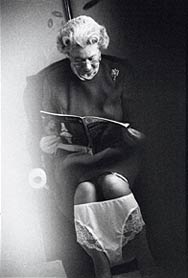
Higgins and his political cousin, McGuinness, pictured here in the company of their political parents. The two Irish working-class heros sure do look delighted with themselves to be in such company. Especially Higgins. Either that or he can't find his way to the toilet.

The pair of them (the Irish spongers, that is, not the British ones) will be 'treated' to a banquet, a speech at the Palace of Westminster and a few cucumber sandwiches afterwards in Downing Street with Brit PM David Cameron and media attention is sure to focus on the 'Irish rebel' McGuinness as he once again cosies up to the representation of that which he once fought against. And so obvious is it that the man will have no issue in doing that, that even an anti-Irish newspaper can confidently predict that there is "...no obstacle in his way.." to prevent him from performing a curtsy in recognition of her place in the pecking order of the world he now inhabits. Conscience 'no obstacle' , of course.

Back when he still had some (verbal) balls, this idiot claimed that he would lead those who placed their trust in him "to the Republic".He obviously meant 'Commonwealth'.


ON THIS DATE (2ND APRIL) 89 YEARS AGO : AN AMALGAMATED FREE STATE FORCE IS BORN.

'An Garda Síochána' - protecting the State and its business interests since 1925 (such as Shell, this pic...)

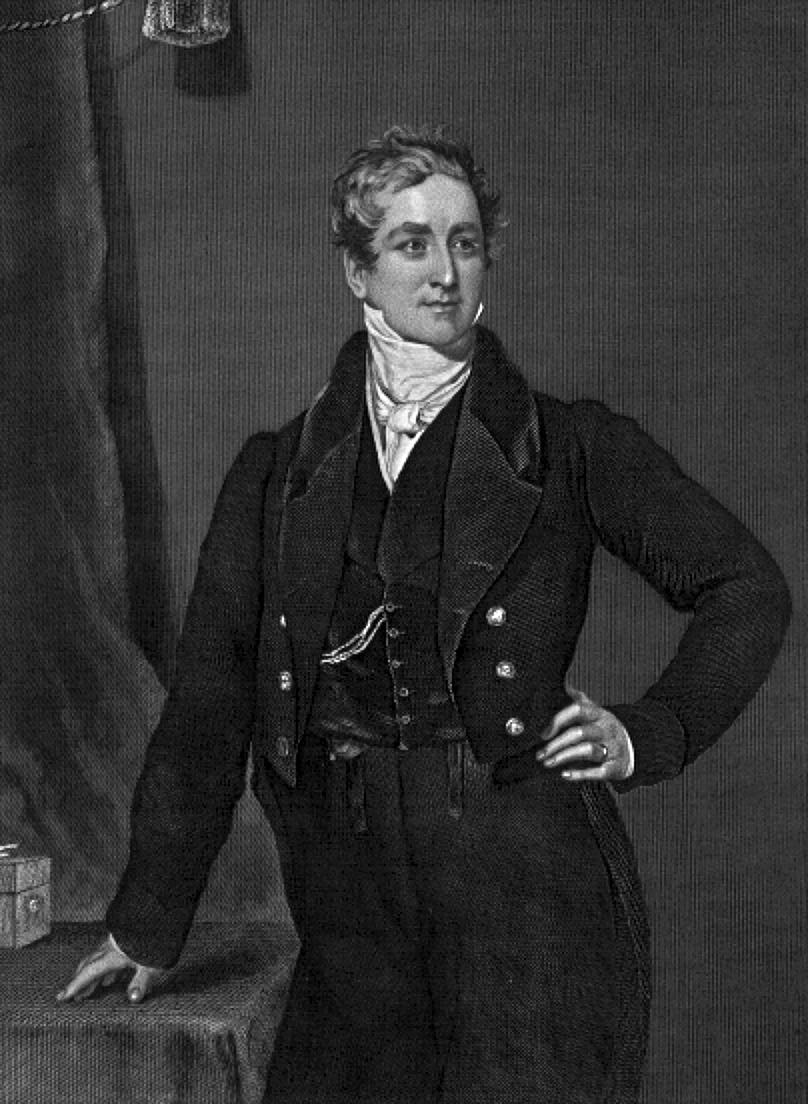
Officially, the 'safeguarding' of streets, marts and the local citizens seems to have been put on a regular footing in Ireland in 1786, in Dublin, when a body of men were assembled under the banner 'Dublin Police'. This grouping was replaced in 1814 by Westminster, when an Irish 'Peace Preservation Force' was announced by the then 'Chief Secretary for Ireland' , Robert Peel , to be replaced six years later by a more organised body, the 'County Constabulary' , which was organised on a regional basis and shared a common uniform.

Fourteen years later, the 'County Constabulary' was replaced by two organisations, the 'Irish Constabulary' and the 'Dublin Metropolitan Police' (DMP) : the former was re-named the 'Royal Irish Constabulary' (RIC) (which recorded 11,000 members in about 1,600 barracks in the year 1900) and was officially dissolved in 1922 (but not mentally or morally,as far as its members and supporters are concerned) and the latter , the 'DMP', merged with the 'Civic Guard' (renamed in 1923 as 'Garda Síochána na hÉireann') in 1925 and the amalgamated force was named 'An Garda Síochána' on 2nd April 1925 : 'On and from the commencement of this Act the Dublin Metropolitan Police and the Gárda Síochána shall be amalgamated and form one force (which force is in this Act referred to as the amalgamated force), and it shall thenceforward be lawful for the Executive Council to train, equip, pay, and maintain such amalgamated force as a police force in Saorstát Eireann. The amalgamated force shall be called and known as the Gárda Síochána.....'

As far as Irish republicans are concerned, there is little, if any, actual difference between the above-mentioned 'police forces' as they are all tainted either directly by a foreign government or by that foreign government's proxy in this country, north or south of Britain's imposed border. In short, both the RUC/PSNI and An Gárda Síochána seek to preserve the political status quo and, as such, they are of no benefit to those of us who campaign and work , politically, for a just society in this country. Robert Peel and his ilk would be proud of both groups.


SAVE THE WHALES....AND OTHER 'FISH'!

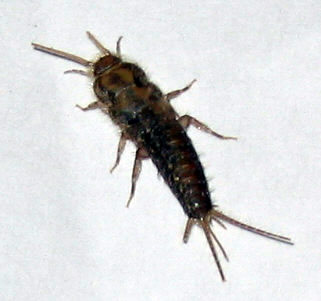
Families of silverfish (pictured, left) are under direct threat from an infestation of the dreaded rucpsni rodent that has outbred them and commandeered their habitat. The rodent , well known for making your skin crawl and giving you a bad taste in your mouth, is rentless in its objective to either directly control an area it has no legitimate business being in and/or working hand-in-glove with its rodent cousins to make an area so uncomfortable that decent life forms refuse to have anything to do with it. Rucpsni are considered household pests, due to their consumption and destruction of property. However, although they are responsible for the contamination of the body politic and other types of damage, they do not transmit disease, for the most part, that is, although they have left silverfish, and people, bloodied , broken but unbowed. More here.


AN 'APRIL FOOL' JOKE*. AND ALL-YEAR ROUND JOKERS. (*OR MAYBE NOT.....?)


"Sure we can say whatever we want to, Peter. No-one's listening, and even if someone does hear us, we can gag them!"

This has to be an 'April Fool' joke, although it is no doubt high on any career politicians wishlist : "Peter Robinson and Martin McGuinness’s department has argued that it should be allowed to withhold information if releasing it might cost the First Minister and Deputy First Minister votes......(they) argued specifically that disclosure of the requested information...could prejudice ministers' electoral prospects.." Even as a newspaper April 1st skit, the sentiment expressed would find favour with any professional politician as it would permit them to censor any bad news which could cost them votes and would ensure that only 'good news' stories could be publicised untill, eventually , we end up in George Orwell territory. More about this political joke (?) here.

Thanks for reading, Sharon.


Wednesday, March 26, 2014

1922 - IRA IGNORE POLITICAL DECREE : CIVIL WAR THREE MONTHS AWAY....

By Peadar O'Donnell ; first published in January 1963.

It was a harmless enough bit of tomfoolery. The people knew it was nonsense. I could have ignored it, but I was more than a little 'touched' whenever any of the bishops who signed the pastoral of 1922 began poking at republicans with his crozier in my presence. I headed for Clare to have a go at his Lordship with as little scruple in my use of weapons as I considered his Lordship to observe in 1922-23. 'An Phoblacht' carried a report of the meeting and I could check my memory of it if there was any need, but there is not.

It was an after-Mass chapelgate meeting , and it was not just that I was angry ; things this man said when we were helpless in jail, words that in the opinion of many of us sprouted wayside murders were in my mind that day and I was determined to flay him on behalf of us all. I went about it carefully, invoking all my gifts as a speaker. I set out to demonstrate that I was kin to my audience in background, experience and ideas , that we are a stock apart, us tough, mountain folk who live in the Fenian tradition in a pattern of behaviour that has survived among us from faroff days. And I told a story.

It was of a man of my countryside who took a different course from me at the moment of challenge in 1922 and how I grumbled and gurned and blamed him for what he did, a man to go back on himself in the full view of his neighbours. But my Uncle Johnnie explained it - it was all simple and clear to him : " It does not surprise me, for let me tell you, there was enough ignorance in that man's father to poison seven generations ." The audience and I were at our ease together and I went deeper into talk of the countryside memory of the breeds of men and especially how any shortcomings in relation to the land struggles of the past left a scar. It was no strain on the people to listen to me and then, with speed and firmness, I came closer to this question of the strange attitude of their bishop. I said there was an excuse for him, for it was in him to be on the bailiff's side, that I had a letter from a man in his district and I would read it for them, and I did..... (MORE LATER).


THE ANATOMY OF AN AFTERNOON : THE STORY OF THE GIBRALTAR KILLINGS........

By Michael O'Higgins and John Waters. From 'Magill Magazine' , October 1988.

When Officer 'P' arrived at Winston Churchill Avenue, he stood at the bus stop just north of the Shell petrol station and looked back and saw the three IRA members stopped at the junction, talking. They were on the Smith Dorrien side of the road but they then crossed and split up - Seán Savage disappeared from Officer 'P's sight but the others began walking in his direction and he started to walk up the road towards them. Juat as Daniel McCann and Mairead Farrell reached the petrol station , a police car in the vicinity sounded its siren. Officer 'P' thought that McCann and Farrell were startled by this , and at this point he was within fifteen feet of them. Soldiers 'A' and 'B' were about seven feet behind them. Officer 'P' saw McCann looking over his shoulder and then Soldiers 'A' and 'B' drew their weapons. Officer 'P' says he heard one of the soldiers shout "Stop, police" or "Police, stop" - or "words to that effect". Farrell and McCann turned inwards towards each other and McCann's hands went to his chest in a sudden movement and Farrell went for her bag. "They became hyperactive...." , he would tell the inquest, ".... their movements, their expressions, changed. They started eyeballing, their eyes were going everywhere." Officer 'P' drew his own weapon and adopted a combat position behind the end wall of the Shell sttion. Farrell's body jerked in the air and fell to the ground , then McCann fell, his head hitting the concrete, his legs splayed over the lower part of Farrell's body. They had both been shot in the back.

Officer 'Q' , also of the Gibraltar special branch, had responded to the same call as Officer 'P' and had driven to Winston Churchill Avenue on a motorbike. He was at the far side of the road from the Shell station and the account he gave the inquest of what he saw was precisely the same in practically every detail as that given by Officer 'P'. He too heard either 'A' or 'B' shout "Police, stop" or "Stop, police" - "or words to that effect". He also described the movement of Farrell and McCann as that of "turning inward" towards each other. He denied in cross examination that there had been any collusion between Officer 'P' and himself. (MORE LATER).


MICHEÁL MARTIN TAKES THE (WRONG) BOUNDARY COMMISSION TO TASK.

"Gerrymandering" , Mr. Martin called it : "It is the biggest attempt to manipulate election boundaries in the 35 years since Fianna Fail introduced independent Boundary Commissions...." (from here) , adding "....we saw that straight away when the terms of reference were published,that skewing was going on....".

However, a more important 'skewing' by a Boundary Commission has been ignored by Mr. Martin and his party and, indeed, by the administration and the so-called 'opposition' in Leinster House - the 'Boundary Commission' established under 'Article 12' of the 1921 'Treaty of Surrender', which was tasked with 'determining the boundaries between the newly-partitioned 6 and 26-county 'states' ' , the deliberations of which caused a mutiny within British forces in Ireland!

Those who favoured the Six County 'Ulster'(sic) remaining as "part of the United Kingdom" were outraged - the British Administration in the Six Counties , which operated from Stormont , dis-agreed with the 'terms of reference' of the Boundary Commission , which were "....to determine in accordance with the wishes of the inhabitants so far as may be compatible with economic and geographic conditions , the boundaries between Northern Ireland (sic) and the rest of Ireland ...." , and this was then 'tweaked' to prevent any of the Administrations (ie Dublin , Stormont or Westminster) from giving 'privileges to , or imposing disabilities on , anyone because of religion ....' . This Boundary Commission was to consist of three members , one from each Administration : Dublin , Stormont and Westminster. The representative from the last-mentioned institution was to be the Chairperson of the Boundary Commission and , because of this and its circumscribed 'terms of reference' it was a 'toothless' body but , even so , the Unionists were incensed - the (pro-British) Stormont 'Prime Minister' , 'Sir' James Craig (a 'landowner' and shareholder in the family whiskey business , 'Dunvilles Distillery') wrote to the British Prime Minister , Lloyd George , on 14th December 1921 , completely rejecting any notion of a Boundary Commission as said body might judge that two of the six partitioned Counties , Fermanagh and Tyrone, "... might be lost to the North.." due to a strong 'headcount' of Republicans/Nationalists in those two counties.

Lloyd George defended the Boundary Commission , saying - "There is no doubt , certainly since the Act of 1920 (ie the so-called 'Government of Ireland Act'-two 'Home Rule Parliaments' for Ireland) that the majority of the people of the two counties prefer being with their Southern neighbours to being in the Northern parliament. Take it either by constituency or by poor law union or , if you like , by counting heads , and you will find that the majority in these two counties prefer to be with their Southern neighbours. If Ulster (sic) is to remain a separate community, you can only by means of coercion keep them there and , although I am against the coercion of Ulster (sic) ,I do not believe in it coercing other units."

That set 'the cat among the pigeons': the Unionist leadership were outraged at Lloyd Georges' comments , no doubt seeing them as Westminster preparing to 'wash its hands' of the 'troublesome Irish' or at least sending a signal (to the Free Staters) that it was of a mind to do so : the brother of the Stormont 'Prime Minister' was first with a reply to that statement by Lloyd George and , in his reply , he spoke of a "matter of life and death" and challenged the authority of Westminster to do as it apparently intended to do : "Our Northern area will be so cut-up and mutilated that we shall no longer be masters in our own house. The decision of that Commission may be a matter of life and death to us. I submit to the Prime Minister that he had no right to do that and that he was in honour-bound not to allow such a Commission to appear in this document by the promise he had given to the Prime Minister of Northern Ireland." The Stormont 'Minister for Education', British 'Lord' Londonderry, the 'Marquis of Londonderry' (a 'landowner', who was also involved with coal-mines [as an owner , not a worker!] in Durham , England : he was later to become 'Leader' of the British 'House of Lords') stated (in the 'House of Lords') - "All that I would say now is that it may be necessary for the government of Northern Ireland (sic) to refuse to nominate a representative on the proposed Boundary Commission and that, if by its findings any part of the territory transferred to us under the Act of 1920 is placed under the Free State , we may have to consider very carefully and very anxiously the measures which we shall have to adopt , as a government , for the purpose of assisting Loyalists whom your Commission may propose to transfer to the Free State but who may wish to remain with us , with Great Britain and the Empire."

On 2nd February 1922, a meeting was held between Michael Collins and the Stormont 'Prime Minister' , 'Sir' James Craig. Voices were raised over the issue/structure/terms of reference of the Boundary Commission, and the meeting ended abruptly over the matter. However, 'spin' and 'PR'(media manipulation) was immediately employed by both sides- at a press conference following that failed meeting, 'Sir' James Craig (Stormont 'PM') claimed that the British Prime Minister, Lloyd George, had assured him that the Boundary Commission "... would deal only with minor rectifications of the boundary ..." ; in effect, that the Boundary Commission was a useless 'talking-shop' which had only been set-up to help the Free Staters to 'sell' the 'six County idea' to other Free Staters. However, Michael Collins claimed that he had left that same meeting with a promise, from the Brits, "... of almost half of Northern Ireland (sic) including the counties of Fermanagh and Tyrone, large parts of Antrim and Down, Derry City, Enniskillen and Newry." ! Obviously , both men could not have been right ; it is straightforward to state that the Boundary Commission was a 'sweetener', if you like, to be used by both sides to convince their respective 'flock' that the Brits were really on their side..... (MORE LATER).


"A BODY OF GUN-WOMEN...."

Bridie O’Mullane, pictured here in her mid-20's, spoke about the shock that "a body of gun-women" caused, but she herself was later to shock others by calling for support for de Valera!

A young Sligo girl, Bridie O'Mullane, joined the then four-years old Cumann na mBan organisation in 1918 when she was 23 years of age and proved to be such a valuable asset that she was soon promoted to the position of Secretary and, within a year, was on the Executive Committee as an official organiser, a role which involved her travelling throughout the 32 counties , which brought her to the attention of the British : she was imprisoned in 1919 for her republican activities but, on release, went straight back to her work for Cumann na mBan, but was a 'marked woman' as far as Westminster was concerned and was practically hunted from town to town by the RIC and other British agents. She spoke out against the Treaty of Surrender in 1921 and within weeks of the start of the campaign against that sell-out, she was appointed as 'Director of Publicity (Propaganda)' for the republican forces.

Bridie and other Cumann na mBan members established an office in Clare Street, in Dublin, from where a weekly newspaper , 'The War Bulletin' , was published, which contributed to her being arrested by the Free Staters in late 1922 and imprisoned in Kilmainham Jail, where she was elected as the 'Commanding Officer' of 'A Wing'. She was released in late 1923 and added to her republican workload by becoming an advocate for Irish republican POW's.

Her POW work led to her being arrested again in 1926 and, the following year, she resigned from Cumann na mBan and caused consternation in republican circles when , using her Cumann na mBan identification, she publicly called for support for de Valera! She then concentrated on writing a history of the Cumann na mBan organisation and assisting in the day-to-day running of the 'Women's Prisoners' Defence League' and, in 1939, she helped to establish the 'Irish Red Cross'. Bridie O'Mullane (aka Bridget Josephine ,Bridie or Bride Mullane) died in 1967 , age 72, and is buried in the Republican Plot in Glasnevin Cemetary in Dublin. More information about the women of Cumann na mBan can be obtained by following this link.


ON THIS DATE (26th March) 92 YEARS AGO.

An anti-Treaty IRA Column , 1922.

92 years ago on this date , the IRA ignored an 'instruction' from politicians in Leinster House and went ahead with an army convention in the Mansion House, in Dublin. Forty-nine Brigades of the IRA were represented by approximately 220 delegates and it was unanimously agreed that the IRA's allegiance was to the Irish Republic and not to the Leinster House institution. An agreed resolution declared that "....the IRA shall be maintained as the Army of the Irish Republic under an Executive appointed by the Convention....to guard the honour and maintain the independence of the Irish Republic..." and that the IRA would "...place its services at the disposal of an established republican government which faithfully upholds the above objects..." A civil war was to erupt three months later : more here.


A 'LEGION' OF NEW (?) FOLLOWERS......

This is pretty standard stuff now from members of this Irish 'republican' party and 'one should not be surprised' at the depths they will go to 'atone' for their past , when they spoke and acted against the British presence and all things associated with same but, even now, this late in the game for them, it does sometimes surprise , but not shock.

The "work" that Máirtín Ó Muilleoir wants to acknowledge includes "....providing care and support to serving members of the Armed Forces, veterans of all ages and their families......the Royal British Legion is the UK's leading Service charity......we work with politicians to improve the lives of the Armed Forces community and have been campaigning on their behalf since 1921.....the Royal British Legion helps the whole Armed Forces community through welfare, companionship and representation as well as being the Nation's custodian of Remembrance....." (from here) and when you consider the fact that those same armed forces continue to enforce a jurisdictional claim by Westminster over six Irish counties it should shock to hear any Irishman praise them. But, like the Stoops before them, they, too, will be discarded by the British when it suits the latter to do so ie after they have been used by Westminster to turn potential republicans into meek nationalists. Nothing we haven't seen before in our history but then, as now, it may slow us down but it won't stop us!

Thanks for reading, Sharon.


Wednesday, March 19, 2014

IRELAND 1920 : IRISH CORONER RETURNS A VERDICT OF "WILLFUL MURDER AGAINST DAVID LLOYD GEORGE, PRIME MINISTER OF ENGLAND."

By Peadar O'Donnell ; first published in January 1963.

We had been invited to speak in support of a resolution already passed by Clare County Council - we could not change the resolution and the Cumann na nGael TD (sic) stayed away because he could not support it. De Valera listened in on the exchange between Barrett and me and laughed. He had taken a shot and it missed and that was all about it ; contrary to the popular notion of him, de Valera had a good sense of mischief. In his speech that day he wandered, even rambled , over the whole national scene, but he never once mentioned the word 'bailiff'. I addressed myself to that part of the resolution, and Clare farmers were a good audience for it.

A crowd of us went back to the local hotel and it did not greatly interest me to learn that plain-clothes guards had stationed themselves outside ; detention, even arrest, was a small matter now. But somebody must have concerned himself on my behalf, for I was told to go down to the hall and wait until a two-seater motorcar pulled up at the door. I was to dive into it, and I did as I was bid and found myself with Father Tom Burke, parish priest - or was it Administrator? - of Lahinch. Few "communists" have been so well served by so many priests!

The Bishop of Killaloe, Most Reverend Dr. Fogarty, took alarm at the campaign against land annuities in his diocese - he was a simple, holy man, who was especially simple in his hates, of which he had one great one : the devil, and equally with him all those other wicked spirits who wandered through Ireland for the ruin of souls - the republicans. To win a place in the city state of his hate, he must identify you as a devil - de Valera was a great devil but I was only a shadow on his heels. By myself I might have got by unnoticed , but not now. Dr Fogarty alerted his diocese and for the better protection of his flock he put a new question into the catechism : is it a sin not to pay land annuities? Children for Confirmation were warned that the answer must be spoken clearly - it is a sin not to pay land annuities.... (MORE LATER).


THE ANATOMY OF AN AFTERNOON : THE STORY OF THE GIBRALTAR KILLINGS........

By Michael O'Higgins and John Waters. From 'Magill Magazine' , October 1988.

Officer 'K' , a member of the security forces and of the surveillance team, had been in the car park of the Laguna Estate, beside the Shell petrol station. There was a hedge, about seven or eight feet high, separating the car park from Winston Churchill Avenue. He heard over the radio that the three IRA members were headed in his direction and the first he saw of them was a glimpse of Mairead Farrell and Daniel McCann through the hedge as they walked northwards. As they emerged at the end of the hedge he got a full view of them , talking and laughing as they walked along. Then Soldiers 'A' and 'B' came into his view, roughly twenty feet behind the two. Then he heard a police siren, south of his position, and within a second or so either Soldier 'A' or 'B' shouted a warning , which sounded like "Police! Stop!" McCann and Farrell turned and both Soldiers 'A' and 'B' fired. At this point the soldiers were roughly six or seven feet behind.

He thought that the soldiers pulled their pistols out just after the police siren went off , and this distracted him so he did not see them pulling their weapons. No shots , as far as he could recall at the inquest, were fired at the two while they were on the ground. Officer 'K' walked fifteen to twenty paces southwards before hearing some shots coming from the direction in which he was headed.

Officer 'L' , standing at the corner of Smith Dorrien Avenue, heard a police siren and, within a couple of seconds, the sound of gunfire from the petrol station. She saw Mairead Farrell and Daniel McCann fall and within seconds she heard more gunfire and dropped to the ground. She didn't see Seán Savage or Soldiers 'C' and 'D' , or Officer 'H' . When the firing stopped she got up and walked away. Officer 'P' , of the Gibraltar special branch, who had been tailing Seán Savage earlier in the day, had come back on duty after a break and heard on the radio that the IRA ASU had been spotted heading down Smith Dorrien Avenue. He immediately stopped a German-registered Mercedes, showed the driver his identification and asked him to drive to Winston Churchill Avenue. (MORE LATER).


94 YEARS AGO ON THIS DATE (19TH MARCH)....

...an Irish republican Lord Mayor, elected on the 31st January 1920 - the first Irish republican to hold that position - was assassinated by the British at his home in Thomas Davis Street in Blackpool , Cork (between midnight 19th March 1920 and the next day ,which was his 36th birthday). He was buried in the Republican Plot in St. Finbarr's Cemetery in Cork on Monday 22nd March.

"We find that the late Alderman MacCurtain, Lord Mayor of Cork, died from shock and hemorrhage caused by bullet wounds, and that he was willfully murdered under circumstances of the most callous brutality, and that the murder was organised and carried out by the Royal Irish Constabulary, officially directed by the British Government, and we return a verdict of willful murder against David Lloyd George, Prime Minister of England; Lord French, Lord Lieutenant of Ireland; Ian McPherson, late Chief Secretary of Ireland; Acting Inspector General Smith, of the Royal Irish Constabulary; Divisional Inspector Clayton of the Royal Irish Constabulary; District Inspector Swanzy and some unknown members of the Royal Irish Constabulary. We strongly condemn the system at present in vogue of carrying out raids at unreasonable hours. We tender to Mrs. MacCurtain and family our sincerest sympathy. We extend to the citizens of Cork our sympathy in the loss they have sustained by the death of one so eminently capable of directing their civic administration" - the unanimous verdict of the inquest into the murder of Alderman Tomás MacCurtain, Lord Mayor of Cork and considered by many to be the 'inventor' of the 'Flying Column' tactic, as read out on 17th April 1920 by Coroner James J. McCabe. Sixty-four 'policemen' were questioned at the inquest, along with two British military operatives and thirty-one civilians.

His killers, dressed in 'civvies' and speaking with pronounced English accents, were RIC members tasked with the 'job' by their political bosses. And, just two months shy of twenty years later - in January 1940 - those same (British and Free State) political bosses were still after the MacCurtain family : on the 3rd January 1940 , Tomás MacCurtain Junior (Tomas Óg) was jumped-on at the end of St. Patrick Street in Cork city centre by Free State Branch men , one of whom - Detective Garda Roche - had been harassing him for weeks. During the melee, Roche received a gunshot wound from which he died the next day. On 13th June 1940 , the Free State 'Special Criminal Court' sentenced Tomas Óg MacCurtain to death ,sentence to be carried-out on 5th July 1940. An application for Habeas Corpus was lodged and the execution was postponed for a week , but the Free State Supreme Court then dismissed the appeal.

The whole country was divided over the issue - some demanded that MacCurtain be put to death immediately as a 'sign' from the Fianna Fail administration that they were serious about 'cracking-down' on their former comrades in the IRA , while others demanded that he be released. Finally , on 10th July 1940 , the Free Staters issued a statement - "The President , acting on the advice of the government , has commuted the sentence of death on Tomás MacCurtain to penal servitude for life..." It has since been alleged that a sister of Cathal Brugha's widow had intervened on behalf of Tomas Óg MacCurtain to get his death sentence overturned ; the women in question ,who was then the Reverend Mother of an Armagh Convent, had requested that her 'boss', Cardinal MacRory, should 'speak to' Eamon de Valera about the case. This , if indeed it did happen , and the fact that Tomas Óg's father had actually shouldered a gun alongside many members of the then Fianna Fail administration (before they went Free State, obviously) , saved his life. Tomás Óg (1915–1994) continued to be a leading republican and member of the IRA Executive (whose main purpose was to elect the Chief of Staff of the IRA) and was released after seven years.


ON THIS DATE (19TH MARCH) 93 YEARS AGO.

Commandant General Tom Barry , IRA, photographed in (April?) 1921.

In the early hours of Saturday , 19th March 1921, under the command of Tom Barry, from Kerry (the son of an RIC officer who had retired to become a shopkeeper), and Liam Deasy (who, within less than two years afterwards, signed a Free State 'pledge' in exchange for his life) , the West Cork Flying Column of the IRA turned the tables on a British Army and RIC column at Crossbarry, situated about twelve miles south-west of Cork city, despite being outnumbered ten-to-one.

During the hour-long firefight, in which 104 IRA Volunteers (each carrying approximately 40 rounds of ammunition) successfully fought their way out of a 'pincer'-type movement by about 1,200 enemy troops, consisting of British soldiers from the Hampshire and Essex Regiments , Black and Tans and RIC men, three IRA men were killed in action (Peter Monahan, Jeremiah O'Leary and Con Daly) and three others were wounded. Reports varied in relation to British casualties but it seems certain that at least ten of their soldiers were killed and three wounded (more here).

In an interview he gave a number of years later, Tom Barry recalled how "....about two hours had elapsed since the opening of the fight. We were in possession of the countryside, no British were visible and our task was completed. The whole Column was drawn up in line of sections and told they had done well...." and they had indeed 'done well', only to witness, within months, their efforts (ab)used by those who yearned for a political career, which they were given by Westminster in return for their surrender. But, thankfully, although still outnumbered, a republican force still exists to this day.


NA FIANNA ÉIREANN TO PARADE IN DUBLIN ON EASTER MONDAY , 21ST APRIL 2014.

Members of Na Fianna Éireann, pictured at the GPO in Dublin on Easter Monday 2010.

The Sean Healy Sluagh of Na Fianna Éireann, Dublin, will be holding a wreath laying ceremony in Glasnevin Cemetery for Sean Healy on Easter Monday, 21st April, 2014. Fergal Moore (Monaghan) will Chair the event and Dublin Fian Jamie Mullen will lay a wreath and deliver the oration. Those attending are requested to assemble at Doyles Corner in Phibsboro , at 1pm. Immediately following this commemoration, the procession will march from Glasnevin to the Garden of Remembrance from where, at 1.45pm, they will join the RSF parade to the GPO for the Easter Commemoration. Also, please note that on Easter Sunday this year, Republican Sinn Féin will hold its annual Deansgrange Easter Commemoration at 1pm : those attending are asked to assemble at Deansgrange Cemetery gates at 12.45pm.


"OUR POLICE SERVICE" ON THE STREETS OF NYC IN THE ST. PATRICKS DAY PARADE!

OBAMA : "No, Martin, it's not enough that you should not only endorse British rule in Ireland and play your part in administering it. If you want to step further into John Hume's shoes, then you'll have to further endorse the British security services starting , this year, with their police service. Then, next year....."

One good thing to come out of the RUC/PSNI marching in the New York St. Patricks Day parade, as far as Irish republicans are concerned, anyway, was the fact that it further exposed the Provisional Sinn Féin party as the mixture of Workers Party/SDLP that they are. Unbelievable as it sounds and affront to political common sense that it is, there are still those amongst us who consider Adams to be the leader of 'an Irish republican movement' , a 'master strategist' who is still (?) working to achieve his stated objective - that of a British withdrawal from Ireland. And, without a doubt, even when the man publicly abandons his stated objections to British political interference in Ireland, there will still be those who, with a wink and a nudge, will tell you that it's all part of his 'master plan' !

And these comments , from the 'Twitter' page of each of them , will fit in nicely with that charade....


....as their supporters will tell you that it's all part of the 'Provo master plan/long war strategy' and, should those supporters eventually be expelled from their party for questioning the political direction they are going in they will be easily reassured by the leadership that that, too , is all for show, just another piece of the plan. And they'll believe it! Finally , on the subject of 'police' in New York, we came across this pic , which was taken in New York this week -

- and we would like to know why two NYC policemen were posing with tourists in Central Park while members of a criminal gang not only walked the streets of that city but were afforded an official escort to do so....!


OBAMA 'PUTIN' HIS FOOT IN IT......!

A little light relief regarding the escalating situation in Ukraine , and it's a welcome relief : if I have to listen one more time to all the players involved voice 'concern' for 'the freedom of small nations...an infringement of national sovereignty....a minority dictating to a majority...' etc etc - knowing as I do that all those voicing such 'concern' (the EU, Washington, Dublin and especially the British!) are aware of , but totally ignore, the fact that those same 'concerns' could and should be directed at Westminster in relation to its occupation of our six north-eastern counties - then I'll 'cry rivers' myself! As far as I'm concerned, all those involved have interests at heart, not concern, friendship or a sense of fair play. The political muppets in Leinster House are such an unprincipled soft touch that they will slovenly follow either Brussels or Washington's lead in relation to foreign policy and are more delighted with themselves than usual , this time, as Brussels and Washington are at one in this instance in relation to 'the land-grab in Ukraine'. Just, please, don't remind those politicians on Dublin of the land-grab ninty miles up the road from them!

Thanks for reading, Sharon.


Monday, March 17, 2014

St. PATRICKS DAY (1858) AND THE STRUGGLE FOR IRISH FREEDOM.

ST. PATRICKS DAY 1858 AND THE IRISH STRUGGLE FOR FREEDOM.

Joseph Denieffe (left) , one of the founders of the 'Irish Republican Brotherhood'.

Born in Kilkenny City in 1833 , Joseph Denieffe grew up to become a tailor by trade ; still in his early teens , he witnessed Daniel O'Connell's campaign for the 'Repeal of the Act of Union' and would have been just ten years young when approximately one million people assembled at what was known in its day as a "Monster Meeting" at the Royal Hill of Tara in County Meath on 15th August 1843. The young Joseph Denieffe would have heard , on that day , the speech delivered to that vast crowd by Daniel O'Connell, who stated - "We are at Tara of the Kings - the spot from which emanated the social power , the legal authority , the right to dominion over the furthest extremes of the land . The strength and majority of the national movement was never exhibited so imposingly as at this great meeting. The numbers exceed any that ever before congregated in Ireland in peace or war. It is a sight not grand alone but appalling - not exciting merely pride but fear. Step by step we are approaching the great goal of Repeal of the Union , but it is at length with the strides of a giant."

Imagine the scene as a ten-years-young child must have seen it : shoulder-to-shoulder with people packed together as far as a child could see ; one-million people , defiantly cheering and clapping at a lone figure on a wooden platform as he shook his fist and shouted rebelliously in the direction of Westminster. It was a day that was to have a life-long effect on young Joseph Denieffe , and thousands of other young boys and girls , and men and women. When he was twelve years young , Joseph Denieffe would have witnessed the 'Great Hunger' (1845 - 1849) when an estimated one million people died on the land and another one million people emigrated in 'coffin ships'. He would have noticed how Daniel O'Connell and the other career politicians did not suffer, how the Church leaders would bless the dead and pray for the dying before retiring to their big house for a meal, after which they would sleep contently in a warm bed. And a million people died around them.

Others noticed that injustice,too. William Smith O'Brien, a follower of Daniel O'Connell's , was one of the many who had grown impatient ; he helped to establish the 'Young Ireland' group, with the intention of organising an armed rising against the British. Joseph Denieffe joined the 'Young Ireland' group in 1847 (the year of its formation) - he was fourteen years young. He worked with William Smith O'Brien (who , as an 'English Gentleman', was an unusual Irish Rebel - he had been educated at Harrow , had a fine English accent and actually sat in Westminster Parliament for a good few years!) and others for the following four years when , at eighteen years of age(in 1851), the economics of the day dictated emigration.He ended up in New York , and contacted a number of Irish Fenians in that city, including John O'Mahony and Michael Doheny. When he was twenty-two years young in 1855, he assisted in the establishment of an Irish Republican group in America - the ' Emmet Monument Association ' - which sought to raise an army to force England out of Ireland. The 'Emmet Monument Association' decided to send Joseph Denieffe back to Ireland to organise a branch of the 'Emmet Monument Association' there ; by 1856 , a small , active branch of the Association was up and running in County Kilkenny. Its membership included such well-known Irish Rebels as Thomas Clark Luby, Peter Langan and Philip Grey. On hearing of the establishment of the 'Emmet Monument Association' in Ireland and America , another Irish Rebel, James Stephens, returned to Ireland.

James Stephens had taken part in military action against the British in 1848, with William Smith O'Brien , in the town of Ballingarry in Tipperary , and had fled to Paris to escape an English jail sentence, or worse. He returned to Ireland and , by 1857, had set-up a branch of the Emmet Monument Association in Dublin. The leadership of the Emmet Monument Association in America , John O'Mahony and Michael Doheny, then sent one of their most trusted men - Owen Considine - to Ireland to assist in organising a fighting-force in the country. In December 1857 , Joseph Denieffe returned to America on a fund-raising mission ; he stayed there until about March in 1858 and , having raised eighty pounds - a good sum of money in those days - he came back to Ireland. On St Patricks Day that year (17th March , 1858) , Joseph Denieffe made his next move.

Joseph Denieffe , Thomas Clark Luby and James Stephens met, as arranged , on St. Patricks Day in 1858 ; the three Irish Rebels then founded the 'Irish Republican Brotherhood' , a military organisation whose aim was to overthrow British mis-rule in Ireland. The following day , Joseph Denieffe returned to America to continue his fund-raising activities - but political trouble was brewing in America , too. Talk , and fear , of a civil war was everywhere. To make matters worse for Joseph Denieffe's fund-raising efforts , James Stephens and John O'Mahony had fallen-out over the direction that armed resistence to the English was going. America was now home to literally millions of Irish men and women who had been forced to leave Ireland because of British interference and the Great Hunger yet , as far as James Stephens was concerned , John O'Mahony and the American leadership had failed to harness the support amongst the Irish for an armed campaign against the British.

James Stephens accused John O'Mahony and his people in America of being "....Irish tinsel patriots (who make) speeches of bayonets , gala days and jolly nights , banners and sashes , bunkum and filibustering , responding in glowing language to glowing toasts on Irish National Independence over beakers of fizzling champagne....." . It was in the middle of the above turmoil that Joseph Denieffe found himself in America in the early 1860's . Fund-raising in those circumstances was not possible , but he stayed in that country , perhaps hoping that , when things settled down .....

Joseph Denieffe never 'lost the faith'; he was now living in Chicago and was in his early thirtys. He continued his work for Irish Freedom , even though the immediate momentum had been lost. He stayed in America , spreading the word and building contacts for the Irish Republican cause. In 1904, at seventy-one years of age , he wrote a number of articles for the New York newspaper , 'The Gael' ; those articles were later published as a book , entitled 'A Personal Narrative of the Irish Revolutionary Brotherhood' (link here) ,and is a fantastic read for those interested in the history of the on-going struggle for full Irish freedom.

At 77 years of age , Joseph Denieffe died in Chicago , on 20th April, 1910. He gave sixty-three years of his life to the Irish cause ,working for the most part either in the background or underground, never seeking the limelight. He is not as well-known as he should be but , like all true Irish Republicans , his objective was to promote and further the Irish cause , not himself.

"This land of mine , the old man said ,

will be alive when we are dead.

My fathers words still ring divine -

"God Bless this lovely land of mine."

Thanks for reading, Sharon.