THE REAL IRA....
"We will not disband." Although on a permanent cease-fire, the RIRA say they will not be disbanding and would dump rather than surrender any weapons. By Liz Walsh. From 'Magill' magazine, October 1998.
According to security sources, some of those questioned are suspected of involvement in a stolen car ring that supplied vehicles to the RIRA which were then used to transport explosives. Some of those arrested, however, are described as RIRA activists , including a former PIRA member suspected of being involved in several PIRA bombings who was arrested in Monaghan in mid-September. Security sources say a number of files are being prepared for the DPP.
The permanent ceasefire declared by the RIRA means that all the main paramilitary groups except one - the Continuity IRA - have called off their respective military campaigns. On September 8th, the CIRA said it was refusing to go on ceasefire : this group is thought to be numerically small, and is strongest around Fermanagh. Its last known attack was the bombing of the River Club in Enniskillen in January last. One of its most devastating attacks was in Markethill in 1997, where a CIRA explosion caused £2 million worth of damage to property.
Although details of the CIRA weapons arsenal are scarce, security sources believe the organisation has established a weapons supply from the US, which yielded a number of MAC 10 rifles and a small number of Uzi sub-machine guns. Although the security forces do not believe it has the capacity to mount a sustained campaign, they fear the CIRA will launch sporadic paramilitary attacks, similar to Markethill. Some gardai believe that RIRA members will join the CIRA following the collapse of the RIRA, but republican sources say this is unlikely as the two organisations are at one on the issue of sovereignty, but differ on the question of the Irish State, which the CIRA refused to recognise.
[END of 'THE REAL IRA' : next - 'THE PRICE OF PEACE' (Ronald Reagan in Ireland) - from 'Magill' magazine, May 1987]
THE IRA.THE NEW IRA IS YOUNGER, MORE RADICAL AND HAS SEEN LITTLE OF LIFE OTHER THAN VIOLENCE..... By Ed Moloney. From 'Magill' magazine, September 1980.
THE WAR OF ATTRITION.
With the depressing prospect of a 'long war' in front of them, what then keeps the IRA going? Prime among the motives for continuing the campaign is the hope that in the harsh economic climate of the 1980's the cost of the North to the British will get so high that they will be forced into looking for a way out. There's no doubt that the cost of shoring up a degenerating economy in the North combined with the damage caused by the Provisional's campaign and the cost of the security and prison services has become increasingly burdensome for the British. Last year's subvention to the North from Westminster - which is the money the British have to find to make up the difference between income from taxes and public spending in the North - was equivalent to the five year refund demanded from the EEC budget by Margaret Thatcher.
The true cost of the Provisional's campaign can never be established, but the available figures show a depressingly upward trend for the British. Another factor prominent in IRA thinking is the belief that the longer the war goes on the more of an embarrassment Northern Ireland will become internationally. This is especially so in the United States but also in Europe, where left wing leaders of the IRA believe it will cause increased pressure on the British to arrange a long term solution capable of providing stability and security, for profitable foreign investments in Ireland.
IRA leaders also believe that the longer the war continues, the greater the chances of another Loyalist reaction. Although the IRA could start a terrible and bloody civil war in the North with a dozen or so well placed bombs, it hasn't done so and will not do so. It would certainly be the loser anyway. But the IRA has applied steady pressure on the Loyalist community mainly through the shooting of part-time and ex-UDR soldiers. In this respect the possible reaction of Loyalist leaders like Ian Paisley, is particularly important. One independent observer and confidant of IRA leaders put it this way: "They hope that by shooting Protestants in the security forces they'll cause Ian Paisley to have another brainstorm and start another Loyalist strike. The hope then is that Thatcher, The Iron Lady, wouldn't do a Harold Wilson, but give the Loyalists an ultimatum. In which case it's all up for grabs!" Paisley, by that reckoning, is one enemy the Provos would prefer to keep alive..... (MORE LATER).
ON THIS DATE (4TH FEBRUARY) 147 YEARS AGO - *CONFUSED PATRIOT BORN.
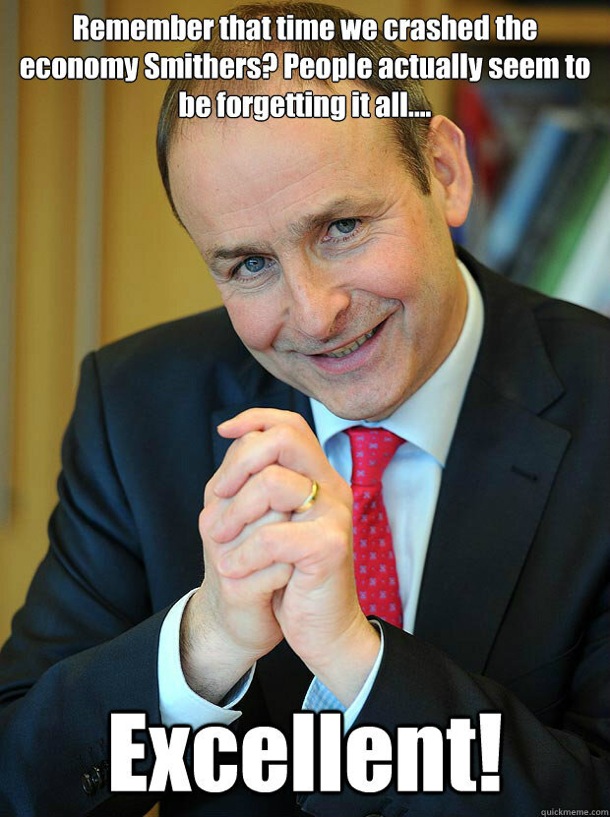
(* "The founding meeting of my party was chaired by Constance Markievicz...." - Micheál Martin, current leader of Fianna Fáil : from here.)
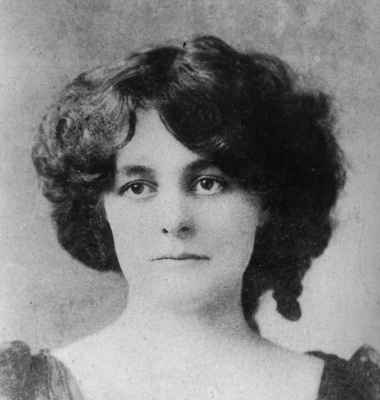
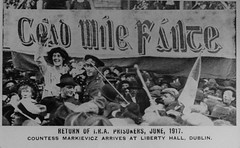
'Return of IRA prisoners, June 1917 : Countess Markievicz arrives at Liberty Hall, Dublin.'
Constance Georgina Gore-Booth was born in Buckingham Gate, London (the first of five children), on the 4th of February 1868, in what was then considered to be a 'high class' family - her father, Henry (the 'Fifth Baronet of Sligo') was a landowner and businessman, and her mother, Georgina (who died in January 1927, the same year as her daughter, Constance) , had her own connections to British 'high society', as she was the granddaughter of the 'Earl of Scarborough'. Constance was raised on the family estate at Lissadell, in Sligo and, at 19 years of age, was 'presented' to Britain's 'Queen' Victoria , as was the custom in those days within her social group.
It was when she was in Paris to further her education (at the Julian School) in the late 1890's that she met a Polish 'Count', Casimir Dunin-Markievicz - he was already married at the time, but his wife died in 1899, and he and Constance got married in 1900. They had one child together, Maeve Allys (who was raised by her grandmother, as her own mother, Constance, was heavily involved in politics) , who was born in Lissadell in 1901 and, two years later, the family moved to Dublin (prompting George Russell (AE) to comment "...the Gore-Booth girl who married the Polish Count with the unspellable name is going to settle near Dublin...we might get the materials for revolt..")
Her interest in social issues brought her into contact with Irish republicans and others who were agitating for change in society and, to her credit, she remained steadfast to her republican beliefs ("...the old idea that a woman can only serve her nation through her home is gone....now is the time, on you the responsibility rests. It may be as a leader, it may be as a humble follower, perhaps in a political party, perhaps in a party of your own, but it is there...so many of you, the young women of Ireland, are distinguishing yourselves every day and coming more and more to the front...we [older people] look to you with great hopes and a great confidence that in your gradual emancipation you are bringing fresh ideas, fresh energies...women, from having until very recently stood so far removed from all politics, should be able to formulate a much clearer and more incisive view of the political situation than men...you will go out into the world and get elected on to as many public bodies as possible..." -
Constance Markievicz, in a speech she gave to the Irish Women's Franchise League in 1915) and was one of only two female officers that bore arms during the 1916 rising, for which she was sentenced to death, a sentence later commuted to life imprisonment, but was released in June 1917.
In 1918 she was the first woman to be elected to the English 'House of Commons', but she never took her seat - instead, with other elected republicans, she helped to establish the First Dáil and served as 'Labour Minister' in that proud institution. She opposed the Treaty of Surrender and played an active part in the struggle against the British-imposed 'parliament' that followed. However, she joined de Valera and others and assisted with the formation of the 'Fianna Fáil' party, which was founded on the 23rd of March , 1926 and, the following year, she was elected as a Fianna Fáil candidate to the then-new Leinster House Free State parliament - but never took her seat, this time due to illness : she suffered from peritonitis , and the treatment she received for same was administered too late - she died, at 59 years of age, as a member of Fianna Fáil, in a Dublin hospital at 1.25am on the 15th of July, 1927.
ON THIS DATE (4TH FEBRUARY) 94 YEARS AGO : DUBLIN-BORN UVF LEADER RESIGNS HIS POLITICAL POSITION.
Edward Carson, born in Dublin in 1854, died in Kent, England, in 1935, age 81.
Edward Carson was born in Dublin in 1854,and was educated at Portarlington School, Trinity College, and King's Inns. He died at 8am on the 22nd October 1935 on the Isle of Thanet in Kent, England. His beloved empire had conveyed the title of 'Right Honourable The Lord Carson KC PC' on him , a prefix he was delighted to take with him to his grave. He was virulently anti-(Irish) republican, and never hesitated to encourage others to despise those he considered to be of a 'lower class' - "We must proclaim today clearly that, come what will and be the consequences what they may, we in Ulster will tolerate no Sinn Féin - no Sinn Féin organisation, no Sinn Féin methods. But we tell you (the British Government) this : that if, having offered you our help, you are yourselves unable to protect us from the machinations of Sinn Féin, and you won't take our help ; well then, we tell you that we will take the matter into our own hands. We will reorganise, as we feel bound to do in our own defence, throughout the province, the Ulster Volunteers. And those are not mere words. I hate words without action..." - the 'not mere words' of then soon-to-be paramilitary leader Edward Carson ('Lord Carson of Duncairn') at an 'Orange' rally in Finaghy, Belfast, County Antrim.
Carson was a staunch supporter of the Irish (pro-British) Unionists and, at 38 years young, was elected as a Unionist MP (to Westminster) for Dublin University and, again at that same age, was appointed (British) 'Solicitor General for Ireland'. He served as the 'Solicitor General for England' from 1900 to 1905. He was also an Irish barrister, a judge and politician, and the leader Of 'The Irish Unionist Alliance' and 'Ulster Unionist Party'. At 57 years of age (in 1911*) he was elected leader of the 'Ulster Unionist Council' (UUC) and helped to establish the 'Ulster Volunteer Force' (UVF), a pro-British militia (*he wrote to his friend James Craig re his UUC leadership that he intended "....to satisfy himself that the people really mean to resist. I am not for a game of bluff and, unless men are prepared to make great sacrifices which they clearly understand, the talk of resistance is useless...") . On the 3rd of September 1914, in an address he delivered in Belfast to the 'UUC', he stated - "England's difficulty is not Ulster's opportunity. However we are treated, and however others act, let us act rightly. We do not seek to purchase terms by selling our patriotism...." (A lesson there, without doubt, for all the gombeens that inhabit the Leinster House institution!)
From 1915 to 1916 he served as the British Attorney General, and was appointed as the 'First Lord of the Admiralty' in 1916 (until 1917) and was a member of Lloyd George's War Cabinet from 1917 to 1918. Westminster thought so highly of him that they offered him an even bigger 'prize' - that of the 'Premiership' of the new Six County 'State' - but he refused, and retired from public life and resigned as *leader of the Ulster Unionist Party on the 4th February 1921, at 67 years of age (* he was replaced by James Craig) . Carson had held that position since 1910 , when he was elected to lead the 'Irish Unionist Party' - he was then appointed a 'Lord of Appeal in Ordinary' [law lord], entering the 'House of Lords' on the 24th May that year. In June 1935, at 81 years of age, Carson contracted bronchial pneumonia but, even though he recovered some good health within weeks, a few months later his strength weakened again and he died on the 22nd of October, 1935.
CLONDALKIN / LUCAN DOUBLE-WATER-TAX PROTEST, SATURDAY 31ST JANUARY 2015.
On a freezing but dry early Saturday afternoon, the 31st January last, three different groups converged in Balgaddy Park (pictured, left, and below) in Clondalkin , Dublin, to hold a protest against the forced imposition of a second, more direct level of taxation on household water. Two of the three groups had left their meeting point, at opposite ends of Clondalkin, at about 11.30am as had the third group, from near-by Lucan, and the couple of hundred people present assembled in the park for a brief rally, before heading into Dublin city center for the main protest.
The rally was addressed by members of political organisations (including Republican Sinn Féin) and by those with no particular political affiliation, all with one issue in mind - their outright objection to been told by Leinster House that they must pay twice for the one service. As we said on this blog last week , in 1997 the political administration in Leinster House added 2% to VAT on goods for sale and 5% to road tax and VRT to fund a water supply throughout the State, a point made by both placards on display in Balgaddy Park and by those speaking at the microphone, all of whom reiterated the point that they would object to paying twice for any one service/utility. The hundreds of people that made it their business to make a stand against this unjust and unwanted double-tax on that Saturday in Balgaddy Park are to be commended for the position they hold and for challenging the pro-double-water-tax politicians and their friends in the media who are attempting to brand those brave people as 'trouble-making dissidents'. We are 'dissidents' in that we dissent from their attempts to practically criminalise us for objecting to paying twice for any one service and we will continue to do so!
DRAW AN INQUISITION !
At this point in time it's not likely that we will be posting our usual blog post next Wednesday (11th February) as the coming weekend is already 'spoke' for with preparation for, and the actual raffle itself, on Saturday 7th and Sunday 8th, followed by the usual 'inquisition' on Monday night in Dublin city centre. The preparation work for this Cabhair raffle , a 650-ticket affair, actually began yesterday (Tuesday 3rd February) when reminder notifications were texted and/or emailed to all sellers and arrangements made, where required, to assist with the return/collection of the ticket stubs belonging to the sellers involved. Each ticket is individually accounted for and its number recorded before the raffle and again after same, regardless of whether it is a winning ticket or not. Also, arrangements have to be made with the hotel and followed up on and other arrangements have to be put in place to collect the raffle team and to get them home afterwards - meaning, for me, anyway, any 'blog time' I might have had has already been spoken for. So it's looking like it will be Wednesday 18th February next before we put 'pen to paper' here again. But our absence is for a good cause...!
Thanks for reading, Sharon.
THE REAL IRA....
"We will not disband." Although on a permanent cease-fire, the RIRA say they will not be disbanding and would dump rather than surrender any weapons. By Liz Walsh. From 'Magill' magazine, October 1998.
The 32-County Sovereignty Committee , whose views coincide with that of the RIRA, plan to go ahead with its challenge through the United Nations later this year to Britain's right to sovereignty in Ireland. They are also planning to publish the second edition of its paper, 'The Sovereign Nation', and is still attempting to raise funds in the United States. Gardai expect the new anti-terrorist laws to effectively remove whatever vestiges of support that still exist for the RIRA. Immediately after the Omagh bombing, a number of middleranking activists withdrew support from the organisation, although the hard core was more or less intact. Below the middle ranks, there existed a layer of supporters who supplied logistical back up, such as the provision of lands for storing or making weapons, providing vehicles, safe houses and so on.
Under the new legislation, lands or property used for paramilitary activities can be confiscated - a security source stated that he would "......envisage that very few supporters will risk having their lands or property taken from them, or face long periods in jail." At the time of going to press, more than 20 people have been arrested on both sides of the border in the Omagh investigation and in the south, the investigation appears to be similar to the Veronica Guerin murder inquiry, whereby detectives on peripheral suspects initially and slowly built up a case against the main suspects.
On September 22nd, 12 people , including four brothers, were arrested in co-ordinated arrests in South Armagh and Castleblayney in Monaghan - some of those in the south were detained for an extended period under the terms of the new legislation. It is the third time that the amended 'Offences Against the State Act' has been used since it became law. A cache of weapons, including AK47 rifles , were also discovered by gardai in a wall at Magoney Bridge in Monaghan, but it is not yet known if the arms belonged to the RIRA or the Provisionals.... (MORE LATER).
THE IRA.THE NEW IRA IS YOUNGER, MORE RADICAL AND HAS SEEN LITTLE OF LIFE OTHER THAN VIOLENCE..... By Ed Moloney. From 'Magill' magazine, September 1980.
Although the re-organisation has undoubtedly revitalised the Provos, the most significant aspect of that development is that it demonstrated for the first time since the start of the IRA's bloody campaign that the initiative in security matters was now with the British.
In 1970, 1971 and 1973, the Provisionals had toyed with the concept of cells, or active service units ; in 1973 they actually formed a number of such units with 40 men in Andersonstown in West Belfast. But those changes, if they had come about, would have been voluntary. The latest re-organisation was a matter of survival to them. The re-organisation has also made the IRA a more 'efficient' killing organisation, but it has necessitated a drastic reduction in the numbers of active service volunteers in their ranks. A joint RUC/British Army assessment last winter put the IRA's strength throughout the North at around the 300 mark, with perhaps as many as 3 ,000 active sympathisers providing safe houses, refuges, transport, etc.
To put that into proper context, the strength of the 1st Battalion of the Belfast Brigade in 1972 was 300, with the same in reserve ; the total strength of the IRA in that year was between 1,500 and 2,000. Instead of growing as guerrilla armies have to if ultimate victory is to be realised, the Provisionals are actually declining in strength. Another principal, if rarely admitted reason for switching to a long war of attrition strategy is that support for widescale IRA activity has declined significantly in recent years. The war-weariness and pessimism evident in the Nationalist areas of the North is also reflected in the attitudes of many in the movement itself, who see little to be gained by continuing the fight. But that sort of thinking is less true of the new IRA. They are the younger, more radical types who have seen little of life other than violence, dawn raids, interrogations, rioting, shooting and bombing. They have taken over the mantle of militant Republicanism from the men of the 'forties', 'fifties' and 'sixties' and are increasingly impatient with what many of them see as conservative political and military elements in the old Dublin leadership. And the IRA they have created is much more ruthless and doesn't need mass popular support..... (MORE LATER).
'BLOODY SUNDAY' PICKET, GPO, DUBLIN, SATURDAY 31ST JANUARY 2015.
Derry massacre to be remembered at the GPO in Dublin on Saturday 31st January 2015.
After a peaceful Civil Rights march on January 30, 1972 - from Creggan to Free Derry Corner - units of the British army Parachute Regiment opened fire with automatic rifles and shot dead 13 unarmed civilians, injuring many more. It was later revealed that some days prior to the massacre, the British soldiers involved had been briefed to "...shoot to kill.." at the march.
"This Sunday became known as 'Bloody Sunday' and bloody it was. It was quite unnecessary. It strikes me that the (British) army ran amok that day and shot without thinking of what they were doing.They were shooting innocent people. They may have been taking part in a parade which was banned, but that did not justify the troops coming in and firing live rounds indiscriminately. I would say without reservations that it was sheer unadulterated murder. It was murder, gentlemen...." -the words of British Major Hubert O'Neill, Derry City Coroner, at the conclusion of the inquests on the 13 people killed by the British Army on that day.
On Saturday, 31st January 2015, RSF will hold its annual 'Bloody Sunday' picket on the traffic isle facing the GPO in Dublin, at 12 Noon, to mark the 43rd anniversary of this massacre. All genuine republicans welcome!
TWO SIDES TO A COIN (EVEN IF IT IS VALUED AT $17 BILLION!).
The death on Thursday 22nd January last of 'king' Abdullah Bin Abdulaziz Al-Saud ('The Custodian of the Two Holy Mosques') witnessed the Irish Tricolour being flown at half mast, "as a mark of respect", on buildings controlled by the political administration in this State : that a so-called 'republic' should seek to 'officially' honour any so-called 'royal' is in itself wrong and exposes that 'republic' as the sham we Irish republicans know it to be, but to seek to honour a person with such a track record only compounds the mistake. The 'king' apparently 'done the State some service' (as another wannabe 'royal' put it) but his good deeds were masked, in my opinion, by decadent deeds which outweighed them : public beheadings, the sentencing of Raif Badawi to a thousand lashes and ten years in prison for being critical of the state, and other 'critics' finding themselves imprisoned or otherwise silenced, not forgetting the many legal injunctions served on those who inquired about building non-Islamic places of worship.
Obviously, if you're a multi-billionaire with control over/connections to oil fields and have friends in high places as a result of your good fortune then issues of morality need not apply to you. And corrupt politicians, having recognised themselves in you, will proudly fly a flag at half mast in your honour.
DOUBLE PROTEST OVER DOUBLE TAX....
On Saturday, 31st January 2015, an anti double-water tax protest will be held in the area of Dublin where I live (Clondalkin) and this, as with previous such protests, will be supported by Clondalkin-based members and supporters of RSF. The sheer size of this area (estimated 50,000 population) would mean that it would practically be a day's outing for those living at one end of it to get to the other end and with this in mind, it was decided to have two assembly points for the protest - St. Bernadette's School in Quarryvale (north end of the constituency : leaving from there at 11.45am and marching to Balgaddy Park) and the County Council offices near the Village (south end of the constituency : leaving from there at 11.30am and marching to Balgaddy Park).
The Clondalkin protest has been timed to allow participants to travel into Dublin city centre where a major anti double-water tax protest will be held that afternoon - those attending same from the south side of Dublin (ie Clondalkin, Tallaght, Lucan, Ballyfermot etc) are asked to assemble at Heuston Station and those from the north side of Dublin will assemble at Connolly Station. Both groups will leave their assembly points at 2pm , with one group heading for the north quays and the other group heading for the south quays , thus effectively shutting down Dublin city centre. It should be noted, even at this late stage in the campaign, that we are not looking for 'free water' or indeed 'free' anything - we are prepared to pay our way but we will not pay twice for any one service : in 1997 , the political administration in Leinster House added 2% to VAT on goods for sale and 5% to road tax and VRT to fund a water supply throughout the State. If one or other Department in or associated with Leinster House wants us to pay twice for a service, then let them campaign first for us to be paid twice for our work and double-up on the welfare allowances given to those who can't get a job. Then , I'm sure, their demand that we pay twice can be properly discussed. Until then - see you on the protests!
ON THIS DATE (28TH JANUARY) 76 YEARS AGO : 'A TERRIBLE BEAUTY' DIES.
On the 28th January, 1939 - his 74th year on Earth - William Butler Yeats, born in Sandymount in Dublin, died in a boarding house on the French Riviera. He is buried in Drumcliff, in Sligo. Although he was 'very close' to Maud Gonne (and she to him) they never married, despite repeated requests from Yeats for them to do so, and probably just as well - Yeats was somewhat of a ladies man and, indeed, his eyes strayed on more than one occasion to Iseut Gonne, Maud's daughter.
He attempted to express support for rebellion in Ireland but his feelings towards same weren't heartfelt , as he was more at ease in so-called 'aristocratic' circles, a point he expressed in one of his poems, 'Man and the Echo' -
'I lie awake night after night
And never get the answers right.
Did that play of mine send out
Certain men the English shot?
Did words of mine put too great strain
On that woman’s reeling brain?
Could my spoken words have checked
That whereby a house was wrecked?
And all seems evil until I
Sleepless would lay down and die.'
This gifted man of many contradictions , who loved and loathed not only the Easter Rising itself, but the men and women behind it and, indeed, the objective of the fight, is forever linked to same in our history, as it should be.
ON THIS DATE (28TH JANUARY) 8 YEARS AGO : IRISH NATIONALIST PARTY ENDORSES BRITISH 'POLICE FORCE' IN IRELAND.
Martin McGuinness (pictured, left) leaving the PSF 'Special Ard Fheis' on the 28th January 2007 at which he and his colleagues agreed to endorse, support and work alongside a British paramilitary 'police force' in Ireland.
Martin and his colleagues had more-or-less announced their intention to integrate with Leinster House and Westminster twenty-one years previous to the year in which they held their 'Special Ard Fheis' but knew then that they had to thread softly and encourage some within their party and affiliated organisations to stay on board by drip-feeding the bitter medicine of State recognition and cooperation to them. The 'peace project' was of no use to the British and the Staters unless a majority of those ex-republicans agreed to convert to constitutional nationalism and Gerry and Martin and the PSF Ard Chomhairle were aware of that fact. Plus, that time gap allowed them to 'flush out' those from within their ranks who showed any genuine reluctance to accept the 'stepping stones' path (...or, as Michael Collins tried to sell the same half-way house notion - "In my opinion it gives us freedom, not the ultimate freedom that all nations desire, but the freedom to achieve it...") and transformed what was a revolutionary republican movement into a Fianna Fáil/SDLP-type 'light' so-called 'republican' political party, with the appearance of having more 'political teeth' than the other aforementioned parties it now shared common ground with.
This new nationalist-minded political party attracted disaffected members and supporters of Fianna Fáil , the SDLP and the Workers Party and other anti-republican elements who saw the opportunity to build a political career and at the same time project an image of themselves as having 'a whiff of sulphur' about them, as they sang rebel songs and winked and nudged their way from table to table at party conferences. It is a cause of wry amusement to Irish republicans today to note that any indication of a 'whiff of sulphur/wink-nudge' activity from members/supporters of the Provisional Sinn Féin party now would not only secure their dismissal from that party but could very well give rise to an arrest warrant being issued for them on foot of said information about them having been handed over to the RUC/PSNI by their own (ex-)party leadership. Oh what a tangled web we weave.....!
Thanks for reading, Sharon.
THE REAL IRA....
"We will not disband." Although on a permanent cease-fire, the RIRA say they will not be disbanding and would dump rather than surrender any weapons. By Liz Walsh. From 'Magill' magazine, October 1998.
The security forces are not certain as to what extent the RIRA is armed but, according to republican sources, the organisation had started to accumulate weapons in advance of the 1997 split in the Provsional IRA that led to the formation of the RIRA, which also has the capacity to manufacture home made explosives and mortars.
"We saw it coming way back, when the Provos had begun to move from ideological republicanism towards a strategic republicanism, and we made our own arrangements. Before Omagh, we were making serious headway into the Provisionals' ranks. Volunteers were beginning to see they were led up a cul de sac by the leadership. We were the IRA. Omagh gave the Provisionals a lifeline and it allowed them to steady their ranks," a RIRA source said.
In the weeks after Omagh, members of the Provisional IRA visited up to 60 members of the RIRA and the Sovereignty Committee ; the PIRA 'visitors' were unmasked and for the most part were known to their erstwhile comrades and they gave the RIRA members two weeks to disband their organisation. "There was an implicit threat of violence if we did not disband. While all this was going on, the Provo leadership was inside Stormont preaching peace. We will not be disbanding. We accept we will have prisoners to look after and we plan to keep the military structure for the foreseeable future," said the RIRA source. Asked if he was over optimistic, given the sweeping powers of the new legislation about to be used against them, he said - "Repression has never decreased support for republicanism. It adds to it." (MORE LATER).
THE IRA.THE NEW IRA IS YOUNGER, MORE RADICAL AND HAS SEEN LITTLE OF LIFE OTHER THAN VIOLENCE..... By Ed Moloney. From 'Magill' magazine, September 1980.
The IRA of the 1980's which resulted from the re-think was no longer the victorious 'people's army' of the early 1970's which would push the British into Belfast Lough, but a small, highly organised band of politically dedicated terrorists (sic) and guerrillas prepared to fight for years. One current Irish Republican Army Council member summed up the new strategy in the following way - "The IRA has the ability to force the British out but by that I don't mean militarily. But we can make Ireland so unpopular an issue they will be forced to leave. Even at the lowest level the IRA has the capability to be a major de-stabilising force and we're prepared for the long haul- 30, 40 or even 50 years if necessary." In late 1976 the IRA's General Headquarters Staff established a 'think tank' which was to examine ways of implementing this new thinking and to report back directly to the Provisional's Army Council. The 'think tank' itself was dominated by two Northern radicals, both former IRA Brigade commanders recently released from jail.
In early 1977 it reported back to the Army Council and recommended that the IRA should be split in two - one part was to be responsible for fighting the war and was to consist in the main of a new 4 or 5 person 'cell' or active service unit and the old British Army-style organisation of companies, battalions and brigades were to be largely scrapped. The cells were to be responsible in the first instance to local IRA commands or brigades but ultimately to a new 'Northern Command' which would replace GHQ as the main IRA co-ordinating body.
The other IRA, the 'open' IRA, was to fight the political war - they were mainly IRA men and women well known to the authorities who would pass in to a new 'Civil and Military Administration' , and would be responsible for 'policing' the republican communities and for pushing Sinn Féin in a radical direction. To the acute embarrassment of the Provisionals that GHQ 'think-tank' report was captured by the Dublin Special Branch in December 1977 when the then Chief of Staff, Seamus Twomey, was re-arrested. That day was an especially good one for the Special Branch, as they also arrested Seamus McCollum, the man at the centre of an ambitious scheme to smuggle in an arm's consignment from the Middle East. Earlier that month Belgian customs officials had discovered nearly six tons of Russian and French-made automatic rifles and machine pistols as well as Bren guns , explosives , mortars , rockets , rocket launchers and ammunition hidden in electrical transformers on board the MV Towerstream which had just docked from Cyprus. The 'transformers' were addressed to a 'front company' in Dublin established months earlier by Seamus McCollum. The trace back led to McCollum's Dun Laoighaire , Dublin , flat and Special Branch surveillance netted an 'added bonus' in the form of Seamus Twomey , who had brazenly eluded capture since his dramatic helicopter escape from Mountjoy Prison in 1973.... (MORE LATER).
ON THIS DATE (21ST JANUARY) IN IRISH HISTORY 96 YEARS AGO....
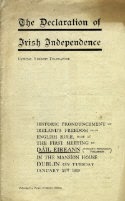
...an Chéad Dáil Éireann (the First Dáil) convened in Dublin's Mansion House. Cathal Brugha was elected as 'Acting President' in place of Eamonn de Valera, who was at that time still in a British jail - he had contested a seat in the 14th December 1918 election for the Falls constituency of Belfast but lost to local 'United Irish League' leader, Joe Devlin, by 8,488 votes to 3,245.
All those elected in Ireland in that 1918 election were invited to the Mansion House for that first meeting but the Unionist MP's refused, as did those elected under the banner of a so-called 'United Irish League'(UIL) - the parliamentary nationalists (ie John Redmond's men). In the Mansion House that day, 37 of the 73 Sinn Fein TD's (referred to as 'MP's' in Westminster) made a 'Declaration of Independence' (the remaining 36 Sinn Fein TD's were still in British jails) - "We, the elected representatives of the ancient Irish people in National Parliament assembled, do, in the name of the Irish nation, ratify the establishment of the Irish Republic and pledge ourselves and our people to make this declaration effective by every means at our command...we ordain that the elected representatives of the Irish people alone have power to make laws binding on the people of Ireland and that the Irish Parliament is the only parliament to which that people will give its allegiance. We solemnly declare foreign government in Ireland to be an invasion of our national right which we will never tolerate and we demand the evacuation of our country by the English garrison ..."
On that same day (21st January 1919) , two RIC men were shot dead in Soloheadbeg in County Tipperary by the IRA ; the cartload of gelignite they were guarding was the target, but they wouldn't hand it over without a fight. They lost. That IRA unit was led by Dan Breen and Seán Treacy, who had acted without approval from Michael Collins (military) or Eamonn de Valera (political); Dan Breen was called on to account for his IRA Unit's actions on that day by his own leadership, and said that he explained to them that the target that day was the cartload of gelignite, not the RIC men who were guarding it. He later told his comrades -
"If we were to have waited for orders from Headquarters or Dáil Éireann, nothing would ever have happened. We had had enough of being pushed around and getting our men imprisoned while we remained inactive. It was high time that we did a bit of the pushing. We considered that this business of getting in and out of jail was leading us nowhere."
The response to the shooting of the two RIC men was mixed ; Michael Collins stated - "The sooner fighting is forced and a general state of disorder created throughout the country, the better it will be for the country. Ireland is likely to get more out of a general state of disorder than from a continuance of the situation as it now stands."
Dan Breen himself wrote - "The clergy, the public and the press had unanimously condemned our action. At this time, scarce a word would be heard in our defence. Our former friends shunned us. Even from the Irish Volunteers, who were now known as the Irish Republican Army, we got no support.......we took the action deliberately, having thought over the matter and talked it over between us. Treacy had stated to me that the only way of starting a war was to kill someone, and we wanted to start a war, so we intended to kill some of the police whom we looked upon as the foremost and most important branch of the enemy forces. The only regret that we had following the ambush was that there were only two policemen in it, instead of the six we had expected..."
The only query any Irish republican could have with the above comment would be a correction regarding who 'started the war' - not the men and women in the Mansion House, or Dan Breen or Seán Treacy, but those in Westminster and Whitehall in London who to this day - 96 years after the above-mentioned events - persist in interfering in Irish affairs.
IN TOUCH WITH MY PEOPLE. SO TO SPEAK.....
'Collins? Lennon and McCartney? Anthem? Well....that's just a phrase I use..'
And here's a genuine 'phrase' from Mr. Kenny, an ex-school teacher - "It was great to see some people contacting us, saying, 'Well, I’m not sure whether it was a mistake or not, but I seem to have got extra money in this last payment'...."
That false boast from Enda Kenny, insinuating that he's so close to 'his people' that they actually ring him up to discuss what they perceive to be an over-payment of wages with him clearly gives an indication that people like him (ie over-paid professional career politicians) inhabit a 'middle Earth'-type fairytale society where they live 'amongst their people' who casually chat to them about issues like that. For starters, if the likes of Kenny were to discover that you have "extra money" to play with, they'd tax you on it, as someone has to pay for their way through this world, as they themselves are not capable of earning an honest living.
JONATHAN'S GOGARTY MOMENT!
'A Sinn Fein TD (sic) revealed his brother is homeless and recovering from drug addiction during a heated debate in the Dail (sic) today..... Jonathan O'Brien said his brother could not afford to pay for his own accommodation because of rent caps and was forced to stay in hostels where people are openly taking drugs - "I have a brother who is homeless. He is a recovering heroin addict who cannot get accommodation because of the cap on rent allowance....he has been forced to go back into a hostel where drug taking happens in front of him." Labour TD (sic) Eric Byrne responded by asking Mr O’Brien: "Why does his good family not take him home?" Mr O'Brien hit back at Mr Byrne saying: "Shut your mouth"..... (from here.)
This is the relevant section of that discussion -
'Deputy Eric Byrne (Lab): Why does his good family not take him home?
Deputy Jonathan O’Brien (PSF): Shut your mouth.
Deputy Derek Keating (FG): A Leas-Cheann Comhairle, that is completely out of order.
Deputy Pádraig Mac Lochlainn (PSF): Deputies should have a bit of common decency.
Deputy Derek Keating: It is completely out of order for Deputy O’Brien to tell another Deputy to shut his mouth.
Deputy Eric Byrne: What would one expect from Sinn Féin?
Deputy Derek Keating: He should withdraw the remark and apologise.
Deputy Pádraig Mac Lochlainn: In the circumstances, Members should have a bit of common decency and cop themselves on. The Deputy is the first one to run to the television. He should cop himself on....'
That PSF rep was first elected to Leinster House four years ago and must have been aware that you invite ridicule if you personalise issues in that institution, especially in the manner in which he did (ie 'My brother...') as your 'opponents' spend their time in there looking for a 'chink in your armour' with which they believe they can 'expose' you as incompetent and at the same time 'prove' how capable and quick-witted they are. O'Brien certainly didn't improve on his 'shut your mouth' remark by later describing that same Leinster House member as a "dickhead" , thus leaving himself open for more ridicule.
He would have served himself better by pointing out that 'the dickhead that should shut his mouth' has 30 years involvement in various drugs task forces yet doesn't seem to be aware that home treatment is not a temporary or proper solution to the issue being discussed.
Result : Dickheads - 2 / Common Sense - 0.
LEO IS A HOMOSEXUAL. FOR NOW, ANYWAY........
...but, homosexual or not, he's still incompetent at his job, and has attempted to defend his record and that of the political administration he is a member of in relation to hospital overcrowding, declaring that the State health 'service' was much worse when Fianna Fáil and the Greens were in charge. When (not 'if') the hospital crisis gets worse in this State, we can expect Leo to try and divert attention away from same by declaring that he is no longer a homosexual, is not incompetent at his job, to defend his record and that of the political administration he is a member of in relation to hospital overcrowding and to declare that the State health 'service' was much worse when Fianna Fáil and the Greens were in charge. Considering that Christine Lagarde can not only get away with the utter bullshit she deposited on our shores last Monday (19th January 2015) ('...the Irish are the true heroes and good performers of Europe..') but be lauded for it in the media here, who can blame Leo and his colleagues in Leinster House for being patronising towards, and taking advantage of, the gullibility of the people in this State? Sure he'd be a bigger fool not to do it!
Thanks for reading, Sharon.
THE REAL IRA....
"We will not disband." Although on a permanent cease-fire, the RIRA say they will not be disbanding and would dump rather than surrender any weapons. By Liz Walsh. From 'Magill' magazine, October 1998.
The RIRA source claimed that ongoing indirect negotiations between the Irish government (sic) and the RIRA , through intermediary Fr Alec Reid, would inevitably have brought about a cease-fire. The negotiations began earlier this year and also involve Martin Mansergh, the Taoiseach's adviser on the North. There was a lull immediately after Omagh but 'Magill' was told that negotiations resumed some 10 days after the bombing and included face to face meetings between Fr Reid and senior members of the RIRA.
"Omagh brought the cease-fire forward, but it would have come eventually. We had to take into account that the majority of people voted for the Good Friday Agreement * , even though we believe that republicans were deceived by the Provisionals as to what exactly they were voting for. But the Irish people voted for peace and they didn't get it. And we bear responsibility for that **. All these things were factored into the decision to call a permanent end to the military campaign. If, by some miracle, the Stormont Agreement works , if for example unionism moves from fascism towards a democratic politics, and sectarianism decreases, then that would be a positive move forward. But if the Agreement comes crashing down around the Provisionals in the future - which we believe it will - then it's possible there will be a return to armed struggle. History tells us that is what will happen. Whether this organisation will be involved though is doubtful," the RIRA source said.
The source is emphatic that the RIRA will not surrender its arms "...under any circumstances. The IRA constitution forbids it. If it comes to that, we will dump arms, we will never surrender them.."(* '1169' comment - not so : 43.97% of those entitled to vote in this State on Friday 22nd May 1998 did not bother to do so and 19% of those in the Six Counties who were entitled to a vote on that Treaty ['Agreement'] did not bother to do so either, which is why it is not correct to claim that "the majority of people voted for it"// ** It's the British government that bear that responsibility, not Irish republicans.) (MORE LATER).
THE IRA.THE NEW IRA IS YOUNGER, MORE RADICAL AND HAS SEEN LITTLE OF LIFE OTHER THAN VIOLENCE..... By Ed Moloney. From 'Magill' magazine, September 1980.
The result of the re-think was two fundamental changes in policy : the first was the concept of 'the long war' which was first outlined by Jimmy Drumm, ironically one of those intimately involved in the secret ceasefire talks with the British government. That concept was articulated by him at Bodenstown in June 1977 as was the second major change - a political change, which involved pushing the IRA and its political wing, Sinn Féin, in a radical direction and to involvement in trade union, poverty, housing and unemployment issues , that which Sinn Féin President, Ruairí Ó Brádaigh now calls "occupying ground vacated by the Sticks (Official Sinn Féin)".
That particular move has been far from as successful or complete as its architects planned and has caused the greatest tensions within the Republican Movement since the Official/Provisional split of 1970. The fact that it has been at all successful rests entirely on the fact that those responsible for the military re-birth of the IRA were also those backing the advocates of radicalism. In republican politics the sword has always been mightier than the pen and this time in the IRA's history both sword and pen were pointing in the same direction. (MORE LATER).
SHANNON AIRPORT TO BE OUR 'CHARLIE HEBDO'?
"...US use of Shannon Airport makes Ireland a target.....Ireland is a legitimate target for attack because of its decision to allow American planes refuel at Shannon Airport on their way to bombing Muslim
countries.....in the eyes of al-Qaeda and others, it is a place which is being used to aid and abet the war... the Irish claim that it is neutral is not something which has been bought by Muslims around the world....." (from here.)
Much as I don't like admitting it, the speaker has a point - there is no doubt, unfortunately, but that the 'military allowances' gifted to the US war effort (albeit a 'resource war') by the State administration here, for short-term monetary gain for a few, is viewed by some, not in euro and cents 'value', but blood and tears 'expenditure'. The US , as a country, has not got enough resources in its own territory to sustain itself comfortably and, like many other nations, faces two options - reduce its consumption or obtain more of the resources it uses and its political leadership finds it easier to do the latter. But there is still a 'price' to be paid and, because of the abuse of the facilities at Shannon Airport, the Leinster House administration has placed a price on our heads. Indeed, one of those very political parties - the Labour Party, which currently 'governs' this State alongside the Fine Gael party - actively campaigned (when in 'opposition') against the misuse of Shannon Airport -
- but, as expected, has ignored the opportunity it now has to do something about that misuse. In the 'Charlie Hebdo'-world we live in, that party and those like it may have actually signed our death warrant.
'PEACEKEEPERS' WANTED : NO EXPERIENCE NECESSARY....
'While the British army is one of the best equipped and most experienced in the world in combat operations, it does not have the Irish Army’s (sic) experience in peacekeeping. One of the motivating factors behind the agreement is to provide the British with access to the peacekeeping expertise of the Irish (sic) defence forces....' (from here.)
Well! That's certainly news to Irish republicans - that the British Army 'does not have experience in peacekeeping'! And it's bound to be news, too, for all the following countries ,states and regions in which Westminster claimed it was 'keeping the peace' in (listed alphabetically, for your convenience) : Aden, Antigua and Barbuda, Australia, Bahamas, Bangladesh, Barbados, Belize, Botswana, Brunei Darussalam, Cameroon, Canada, Cyprus, Dominica, Egypt, Falklands, Fiji Islands, Gambia, Ghana, Grenada, Guyana, Hong Kong, Ireland, India, Jamaica, Kenya, Kiribati, Lesotho, Malawi, Malaysia, Maldives, Malta, Mauritius, Mozambique, Namibia, Nauru, New Zealand, Nigeria, Palestine, Pakistan, Papua New Guinea, St.Kitts and Nevis, St.Lucia, St.Vincent and the Grenadines, Seychelles, Sierra Leone, Singapore, Solomon Islands, South Africa, Sri Lanka, Swaziland, Tanzania, Tonga, Trinidad and Tobago, Tuvalu, Uganda, United States, Vanuatu, Western Samoa and Zambia.
We think that's the full list, but if there are any omissions please contact the 'Peacekeeping Head Office' in Whitehall, London, and, while you're talking to them, you could take the opportunity to remind them that Britain has 'kept the peace' more than any other state since the Roman Empire, and since its defence against the Spanish Armada in the 16th century, it has had no occasion to 'keep the peace' (ie fight a war of defence) . All its 'peace keeping duties' since then have been ones of choice. The world just wouldn't be the same without them. Literally.
TOO BUSY TO BE BUSY HERE THIS WEEK!
I should have mentioned it in our last post, but I was too busy to do so! We have a smaller-than-usual offering today because our weekend was taken up with the monthly 650-ticket raffle for the Movement on the Dublin/Kildare border on Sunday last (11th January) which took Friday evening and most of Saturday to prepare for and on Monday evening last the usual raffle 'autopsy' was held in Dublin city centre. And, although like all women , I can multitask even I have my limits!
But we did manage to keep on the good side of eight people - the prize winners : our bus driver, Anto, sold the winning ticket (080, €200) to a Mr. William Langan and even though Willie himself wasn't physically present we heard how delighted he was when Anto rang him to give him the good news! Our second winner, Dubliner Jack Morris, won €100 on ticket 497, which he purchased about ten minutes before the raffle started from the top table where we were - and sent the four of us over a drink to celebrate and a tenner for five tickets for the February raffle (...we hope you win first prize next month, Jack - dinner and drinkies on you!). Anto B , one of our regular ticket sellers, scored twice at the raffle - he sold the third prize winning ticket to Sióbhan (564, €40) and the sixth prize to Micko (555, €20) but no one bought him a drink, never mind a dinner!
The fourth prize (€20) was again a ticket (368) sold from our table on the day itself and the prize was won by a delighted Waterford woman Vicki H who, after she calmed down ("God sake, woman - it's only 20 quid...." !) picked stub number 593 (€20) from the drum for the fifth prize, which was claimed by a local man, Martin (from Kildare) . The second-last prize , €20 (stub 394), went (again) to Waterford, another lovely lady from the south-east ; Sandy, who pulled out the last prize (€20) which was won by Alfie L , from Mullingar, on stub 274.
It was, as usual, worth all the preparations and the rushing around even though it can sometimes feel that it's not worth it (like when it comes to having to refuse sales because there are no more tickets left!) but we wouldn't change the actual format of the event, nor the location, nor the people we do it for or with. And experience tells us that the next eleven raffles (up to Christmas 2015!)will be just as hectic for us and equally just as profitable for the Movement. Bring it on...!
Thanks for reading, Sharon.
THE REAL IRA.
"We will not disband." Although on a permanent cease-fire, the RIRA say they will not be disbanding and would dump rather than surrender any weapons. By Liz Walsh. From 'Magill' magazine, October 1998.
The Real IRA, the organisation responsible for the Omagh bombing, said it will not disband and will attempt to remain a cohesive group, senior RIRA sources have said. Despite this, they say the permanent ceasefire called on the 8th September 1998 will remain intact. The fall out from the Omagh bomb, which killed 29 people , had a catastrophic effect on the RIRA, a senior RIRA source acknowledged. Speaking two weeks after the ceasefire announcement, the source said Omagh, and the public revulsion that followed, was the main reason for declaring an end to the RIRA's seven month military campaign. The RIRA and senior gardai rejected continued speculation that the anti-terrorist laws enacted after Omagh would not be enforced against the group, in return for a complete cessation.
The ceasefire declaration followed a meeting of the RIRA's Army Council in Louth, at which the six members present voted unanimously for a permanent cessation. The six included the south Armagh man who is the chief suspect behind the bomb, the RIRA leader and activists from Cork and Dublin and, according to senior garda sources, the RIRA leader and a prominent activist from Cork had reservations about the ceasefire up to two days before the vote. This, they said, was one of the reasons for the three-week gap between the announcement of a suspension of the armed campaign on the 18th August 1998 and the permanent cessation on the 8th September 1998.
"There was a debate and there were conflicting views about the way forward, but we knew realistically that there was nothing to be gained by continuing the use of armed force after Omagh"* , the RIRA source acknowledged, but the minority within the RIRA opposed to a total ceasefire argued that it was necessary to maintain some form of physical force tradition following the Stormont Agreement - "But for a military campaign to continue, it must have an attainable goal. After Omagh, there was none" **, the RIRA source said.
(*Such a pity that the British political administration didn't feel like that after any of its many atrocities in this country and elsewhere / **"the goal" remains, and it is still "attainable", and that position 'can never be extinguished except by the destruction of the Irish people...') (MORE LATER).
THE IRA.THE NEW IRA IS YOUNGER, MORE RADICAL AND HAS SEEN LITTLE OF LIFE OTHER THAN VIOLENCE..... By Ed Moloney. From 'Magill' magazine, September 1980.
Two factors led to the reorganisation of the IRA - the most important was the success of the RUC arresting and extracting confessions from IRA Volunteers and leaders. Between 1976 and 1977 when the interrogators of Castlereagh and elsewhere were working overtime, over 2,500 people, mostly Provisionals, were convicted of murder, attempted murder and arms and explosives offences. Such was the success of the 'criminalisation policy', as it was called, that the then British Secretary of State, Roy Mason, and his security chiefs at one time thought they had actually pulled it off and defeated the IRA - "We were almost defeated," admits one present Provo leader.
The second important factor was the effect of the post-Feakle ceasefire and peace talks of 1975/76 on the thinking of leading Provisional strategists. That ceasefire brought certain short term gains for the IRA - 'incident centres' to monitor British Army infringements of the ceasefire were set up and talks were held between Provisional leaders and British civil servants at which the carrot of British withdrawal was dangled tantalisingly over Provo noses. But the ceasefire also created major long term problems for the Provos , as it provoked a bloody loyalist backlash which tied up IRA resources and questioned long-held republican assumptions about the loyalist community.
It also gained the British Army and RUC time to recover from the trauma of 1974 and to collect vital intelligence on an increasingly open and careless IRA and it allowed the British to formulate a radical change in security policy of which the present H Blocks and Castlereagh were part. With hindsight the IRA was the net loser from the 1975/76 ceasefire and the subject itself remains a major and bitter bone of contention within the Republican Movement. "Disastrous" , is how one member of the current Provisional IRA Army Council describes it , "a running sore" , according to another IRA leader. The ceasefire forced on the Provisionals a major political, military and strategic re-think of which the 1977 military re-organisation was an integral part. It also paved the way for a change in the leadership of the IRA - the present 7-person Army Council is dominated by Northern 'hawks' and radicals who vow never to speak to the British again except from a position of absolute strength. (MORE LATER).
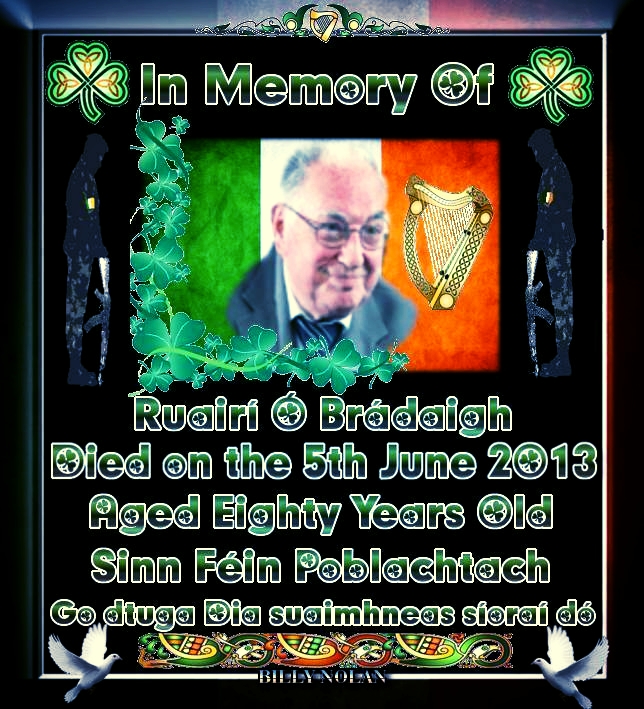
"ONE DEFINITION OF IRISH FREEDOM, ONE STRAIGHT AND TRUE PATH...."
1932: Born in Longford.
1950: Joined Sinn Féin.
1951: Joined the Irish Republican Army.
1955: OC Arborfield arms raid.
1956: 2nd OC Teeling Column, South Fermanagh.
1957: Elected in Longford-Westmeath Sinn Féin TD to All-Ireland parliament.
1958: Escaped with Dáithí Ó Conaill from Curragh Camp.
1958-9 and 1960-62: IRA Chief of Staff.
1966: Republican candidate in Fermanagh-South Tyrone.
1970-83: President of Sinn Féin.
1987 to date: President of Republican Sinn Féin.
2009-2013: Patron of Republican Sinn Féin.
Married to Patsy, six children: Mait, Ruairí Óg, Conor, Deirdre, Ethne, Colm, grandchildren and great-grandchild. He was a secondary teacher by profession.
"Speaking at the graveside of O’Donovan Rossa, Pearse restated the principles which had fired the
soul and intellect of O'Donovan Rossa and restated the determination of his generation to take up the torch of freedom from Rossa and his generation: "I propose to you then that, here by the grave of this unrepentant Fenian, we renew our baptismal vows; that, here by the grave of this unconquered and unconquerable man, we ask of God, each one for himself, such unshakable purpose, such high and gallant courage, such unbreakable strength of soul as belonged to O’Donovan Rossa. Deliberately here we avow ourselves, as he avowed himself in the dock, Irishmen of one allegiance only. We of the Irish Volunteers, and you others who are associated with us in to-day’s task and duty, are bound together and must stand together henceforth in brotherly union for the achievement of the freedom of Ireland. And we know only one definition of freedom: it is Tone’s definition, it is Mitchel’s definition, it is Rossa’s definition. Let no man blaspheme the cause that the dead generations of Ireland served by giving it any other nme and definition than their name and their definition."
"For Ruairí Ó Brádaigh there too was but one definition of Irish freedom. For him there was but one straight and true path leading to the All-Ireland Republic of Easter Week. We come here to mourn the loss of Ruairí but we also come to celebrate his long and rich life. It was a life marked by unselfish devotion to the cause of Irish freedom. It was a life set apart by his sense of duty, honour and the intellectual rigour that he brought to the Republican Movement. Indeed often would Ruairí quote these lines from Louisa May Alcott, which are inscribed on the headstone of the tireless champion of Republican prisoners and the working class Charlotte Despard: "I slept, and dreamed that life was beauty; I woke, and found that life was duty." Coupled with all of this was Ruairí’s deep humanity. He was a man whose empathy and compassion for the downtrodden and oppressed knew no boundaries of race or creed......" (From here.)
On Saturday fortnight, the 17th January 2015, Volume 1 (1970-1986) of the selected writings and speeches of Ruairí Ó Brádaigh will be launched in the 'Teacher's Club', 36 Parnell Square West, Dublin city centre, at 2pm. Places are limited, and those intending to attend are advised to telephone RSF Head Office in Dublin (01-8729747) beforehand to ensure a seat.
A 'COMEDY SITCOM' ABOUT NOTHING.....
....BECAUSE IT NEVER HAPPENED.
There was no 'famine' in Ireland, but there was a potato blight which decimated one food source - the potato - but plenty of other foodstuffs (cereals, wheat, beef and pork, to name some of the alternative foods which were available but not obtainable for the 'ordinary' family) were in abundance, but there was still 1,225,000 deaths due to An Gorta Mór (the 'Great Hunger'/so-called 'famine'), 4,185,000 who were forced to emigrate and 3,668,000 who were evicted from the hovels which the 'landlord' allowed them to build on 'his' land. As George Bernard Shaw explained (in 'Man and Superman', 1903) - "The Famine? No, the starvation. When a country is full o' food, and exporting it, there can be no famine. Me father was starved dead; and I was starved out to America in me mother's arms. English rule drove me and mine out of Ireland...." .
Now, apparently, a British television station, 'Channel 4', has decided to commission a 'comedy programme' based on An Gorta Mór, saying that "..brilliant humor can come out of times of terrible hardship....it’s not unusual for sitcoms to exist against backdrops that are full of adversity and hardship....". I'll believe that when they put their money where there foul mouth is and produce a 'comedy programme' about the death of their 'Princess' Diana. And, while they're at it, maybe they could hire someone (a German, perhaps?) to maintain the memorials they, the British administration, erected in her memory. The Brits themselves, it seems, couldn't be bothered. Potato juice, I'm told, would do the job nicely for them.
ON THIS DATE (7TH JANUARY) 93 YEARS AGO : ROUSING ANTI-TREATY SPEECH DELIVERED IN DÁIL ÉIREANN.
Henry James "Harry" Boland (27th April 1887 – 2nd August 1922). "I rise to speak against this Treaty because, in my opinion, it denies a recognition of the Irish nation..I object to it on the ground of principle, and my chief objection is because I am asked to surrender the title of Irishman and accept the title of West Briton....I object because this Treaty denies the sovereignty of the Irish nation, and I stand by the principles I have always held — that the Irish people are by right a free people.
I object to this Treaty because it is the very negation of all that for which we have fought. It is the first time in the history of our country that a body of representative Irishmen has ever suggested that the sovereignty of this nation should be signed away.....we secured a mandate from the Irish people because we put for the first time before the people of Ireland a definite issue ; we promised that if elected we would combat the will, and deny the right of England in this country, and after four years of hard work we have succeeded in bringing Ireland to the proud position she occupied on the fifth December last. The fight was made primarily here in Ireland ; but I want to say that the fight that was made in Ireland was also reflected throughout the world ; and we — because we had a definite object — had the sympathy of liberty-loving people everywhere....I have taken one oath to the Republic and I will keep it. If I voted for that document I would work the Treaty, and I would keep my solemn word and treat as a rebel any man who would rise out against it. If I could in conscience vote for that Treaty I would do so, and if I did I would do all in my power to enforce that Treaty ; because, so sure as the honour of this nation is committed by its signature to this Treaty, so surely is Ireland dead. We are asked to commit suicide and I cannot do it....." (7th January, 1922,from here.)
It is generally considered that Harry Boland was the first man to be 'unofficially executed' by a Michael Collins-controlled Free State death squad on the evening of Sunday 30th July/early Monday morning 31st July 1922 and, following that shooting, in the Grand Hotel in Skerries, Dublin, the State gunmen issued this statement (on Monday 31st July 1922) - "Early this morning a small party of troops entered the Grand Hotel to place Mr. H.Boland T.D., under arrest. Mr. Boland had been actively engaged in the irregular campaign. When accosted in his bedroom he made an unsuccessful attempt to seize a gun from one of the troops and then rushed out to the door. After firing two shots at random and calling on Mr. Boland to halt, it was found necessary to fire a third shot to prevent an escape. Mr. Boland was wounded and removed to hospital. A man giving his name as John J.Murphy with residence at 3 Castlewood Avenue, Ranelagh,Dublin, who was found with Mr. Boland, was taken prisoner. Subsequently he was identified as Joseph Griffin* , an active irregular, belonging to Dublin." (*'1169' Comment - Joe Griffin was an IRA operative within the Movement's Intelligence Department.) One of the Free State troops present at the time stated afterwards - "Mr.Boland was wanted and we went to the hotel and two or three of us entered his room. He was in bed. We wakened him and he got up out of bed and partly dressed himself. He had no gun.
Suddenly he turned and rushed to tackle one of our fellows for his gun. A shot was fired over his head to desist but he continued to struggle and almost had the gun when a second shot was fired and Mr.Boland was wounded."
The bullet entered his right side near the ribs, passed through his body and came out through his left side causing very serious injuries.
A photograph of the actual bullet which killed Harry Boland....
...and his funeral service, Glasnevin Cemetery, Dublin.
Although unarmed at that moment, as admitted by his executioners, caught by surprise and outnumbered (a "small party" of Free State troops were in the room at the time) the Staters attempted to present the execution of Harry Boland as 'a killing in self-defence' ie 'he attempted to jump us and then tried to flee...'. They had learned well from their British colleagues. Harry Boland died from his wounds on the 2nd August 1922, in St. Vincents Hospital, Dublin and, as he lay waiting for death, he told family members that the Stater who shot him had been imprisoned with him in Lewes Prison, in England, but he refused to put a name to him. The funeral expenses were taken care of by the Cumann na Poblachta organisation.
'Boland's mix of animal charm, gregariousness, wit and a dash of ruthlessness made him an influential and formidable character. Though not an intellectual in his manner he was a clear thinker, a forceful orator and a graceful writer....' (from here.) Thankfully, there are those like him who continue to this day to work for the Movement....
STREWTH, SHEILA , IT'S EVEN MORE LAWLESS THAN THE OUTBACK!
Dr Tony O'Connell MBBS (Hons), FANZCA, FCICM, FCHSM (Hon) GAICD. All of which secured him a job here with the HSE (an organisation that "has failed to deliver", according to a 26-County 'government' party) , on a weekly wage of €3125. Which should buy him a business-class flight home...!)
(OR - FARE THEE WELL , ANTO, SURE WE HARDLY KNEW YA...)
He came here (after being headhunted), no doubt with great hopes, from a position as Director-General of the Queensland public health system in Australia where he managed 182 hospitals, a budget of €8 billion, over 80,000 staff and 35 years experience in the business (and it is , unfortunately, a 'business' , rather than that which it should be - a vocation). His first position here was as the CEO of the 'Dublin North East Hospitals' group (in March 2014) and he progressed from there to the job of 'National (sic) Director for Acute Hospitals' (an appointment re which questions were asked at the time in relation to the appointment process involved) which also secured him a seat on the 'HSE Directorate' body.
Anto's problem, I imagine, is that he expected the HSE organisation to be run on broadly similar lines to its equivalent in Australia , where value for money is required , and not just in print, where being responsible for your actions is a foregone conclusion, and not just something that is promised by the incoming State health minister at election time and where competency in and efficiency at your job is something that employees pride themselves on and are not simply words used by management to pad out the end-of-year report. But we soon put him right on those fancy notions. And - at the risk of being generous - I'll hazard a guess that the man still has his self-respect and a sense of professional honesty about him, so much so that his conscience wouldn't permit him to remain in a €3125-a-week job which, because of the nature of the beast (the HSE), he knew he couldn't 'tame'. And unlike the charlatans here (who cling on to their positions as if to dear life, slobbering, bullshitting and lying through their teeth until their pension becomes due) he done the honourable thing - resigned - having realised that the health service in this State is broke and can't be fixed. That would be because the State itself is broke and can't be fixed. This is no 'country' for old or honest people.
"ONE COULD BE IN TROUBLE, DARLING.....
...MINE ARE BIGGER THAN YOURS."
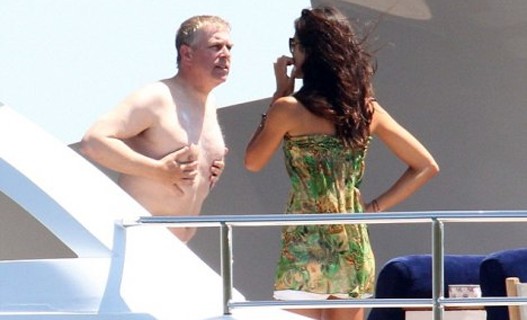
As expected, the 'royal toadies' have begun their campaign of 'character rehabilitation' in relation to one of their favourite icons - 'Prince Andrew is the Queen's darling who has always dodged blame : Editor-in-chief of Majesty magazine Ingrid Seward says Prince Andrew was always a mischief maker - Prince Andrew was forever making mischief as a child, but he was always a favourite with the Queen....conventional discipline didn’t work with him and he could be very naughty indeed....on one occasion the Queen sent her page running up to the nursery demanding to know where Andrew was – which was when nanny Mabel Anderson found the little Prince had hidden the memo asking her to bring him downstairs to meet Her Majesty’s luncheon guests....' Ho! Ho! The little rascal, eh....
That 'little rascal' has, apparently, grown to be an even bigger one, if media reports are to be believed : '(Britain's) Prince Andrew took part in an orgy with underage girls on his tycoon pal's private Caribbean island, a woman has sensationally claimed....Jane Doe #3 was forced to have sexual relations with this prince when she was a minor in three separate locations: in London (at Ghislaine Maxwell’s apartment), New York, and on Epstein's private island in the US Virgin Islands (in an orgy with numerous other underaged girls)....' . But, really, it's a 'move-along-nothing to-see-here' moment regarding that man and his family, as the 'underage sex' scenario would seem to be the lesser of all their associated evils : 'In court it was found that the so called pillars of society running the home, were guilty of the ritual sexual abuse of defenceless young boys in their care, whom they exploited and sold to their VIP clientelle....Lord Mountbatten was rumoured to have been linked to the abuse network.....in their world and exclusive social circles it is ok for rich perverts to sexuallly and physically abuse the children of the poor....'(from here).
And, whereas poor Fergie probably never considered the act of "selling access" to be interpreted in soooo many ways, it was, seemingly, so interpreted by her ex-in-laws : 'The Queen Mother's favourite servant was William Tallon, who died of Aids...(he)had an underground passage leading from his room to the Queen Mother's room....(and used it) to smuggle controversial guests in to see her.....the author Anthony Summers (co-author of Honeypot) has alleged that photographs removed from the home of Stephen Ward showed a likeness of Prince Philip alongside various naked girls....after Stephen Ward was murdered, reportedly by MI5, the portraits that he had made, of the Duke of Edinburgh and others, were removed from an art gallery and made to disappear....the man who removed the portraits is said to be Sir Anthony Blunt, who worked for both MI5 and Soviet intelligence. Blunt told his friends that he was the illegitimate child of King George V, by his mother, Hilda Blunt....'
'Orders from London and representatives of the Queen...' are also said to be involved in an incident that occurred when '...ten indigent children of the Canadian Kamloops Indian Residential School went on a picnic on 10th Oct 1964 with Queen Elizabeth and Prince Philip and did not return....' , all of which, when compared with Andrew's apparent follies highlight him as not yet being in the same 'camp' as the clan he is associated with. But, one presumes, it's early yet.....
AND FINALLY - TWO ISSUES RELATED IN A ROUNDABOUT WAY.....
In the 19th century in Ireland, one of the many small farmers (who attempted to eke out a meagre 'living' for his family from a half an acre of rough land) , Nicholas Clooney, Kilkenny, was one of many who were continually harassed by their British 'landlord' and his agents into vacating their small rented holding, as the land was of more value to the foreign 'owner' if sold en bloc rather than in a piecemeal fashion. The harassment extended to physically preventing any work or maintenance being done in or to the half-acre area and destroying the tools with which same could be done.
Court records from the time show that it was not unusual for those small farmers to be prosecuted for trying to tend to their land on a Sunday and this type of harassment and other uncalled for victimisation eventually had the desired affect - the small peasant farmers left their near-worthless rented holding to die on the roads, die in the workhouses - or emigrate. Nicholas Clooney was thrown off his 'farm', at 18 years of age, in 1847, after his 'landlord' found out that he was not going to make a profit from the young man as he only had £2 and 2 shillings to his name. He managed to get to Kentucky, in America, where he was to become the great-great-grandfather of actor George Clooney! (More here.)
The 'roundabout relation' to the above Clooney piece is that resistance to 'English ways and English laws' is still on-going in Ireland, as the British parliament in Westminster claims jurisdiction over part of this country - our six north-eastern counties. RSF are not financed by the Clooneys of this world, nor do they expect to be, but they do need finance to continue the struggle and your help would be appreciated - contact details are on the above link. Even £2 and 2 shillings would help!
Thanks for reading, Sharon.






.JPG)