ON THIS DATE (18TH NOVEMBER) 100 YEARS AGO : IRA GO SHOPPING FOR AIRPLANE PARTS...
On the 18th November 1920 - 100 years ago on this date - an aeroplane made an emergency landing in a field near Punches Quarry in Cratloe, County Clare, and word quickly spread in the area that the craft was fitted-out with a machine gun. The British 'authorities' heard about the incident, as did the local IRA unit, and the former ordered their man in the area, 2nd Lieutenant MH Last, to organise a platoon from 'C' Company, 'Oxon and Bucks' (the 'Oxfordshire and Buckinghamshire Light Infantry' regiment) and get to the site to guard the wreck, which they did and, in an act of bravado (given the times that were in it!) the British forces apparently posted no sentries and built and lit a large fire to make themselves comfortable.
The IRA, too, had arrived on site and a gun battle ensued -
'1920 Nov 18. A platoon from "C" Company, 1st Battalion of the Ox and Bucks were guarding the crashed RAF plane near Punches Quarry, Cratloe area. They were under the command of 2nd Lieutenant M.H.Last. A group of I.R.A. volunters led by Joe Clancy (Brigade Training Officer East Clare Brigade) had seen the plane come down and got togather an attacking group from IRA men hiding out at Hogans house in Cratloe. Their objective was to capture the aeroplane's machine gun. After dusk Clancy and his group climbed to the top of Punches Quarry and opened fire at 17.30 on the unsuspecting Ox and Bucks troops who were grouped round a large bonfire that they had lit to keep themselves warm. The IRA said that there were no sentries posted...'- more here.
Meanwhile, the republican PR Department had been busy, too...!
'THE WEST'S AWAKE.'
From 'The United Irishman' newspaper, June, 1955.
A series of after-Mass meetings were held throughout County Galway on Sunday, 29th May last, in support of the Sinn Féin candidates for the local government elections. The speakers at all meetings received an enthusiastic welcome and there is good reason to believe that the two candidates selected, Paddy Ruane, Carranmore, and Martin Kelly, Ballygar, will be elected. The sales of 'The United Irishman' in County Galway have risen from 4,000 in April to 7,700 in May ; Galway is surely giving a lead to Ireland!
A feature of the Sinn Féin campaign in Galway as in all other parts of Ireland is the enthusiasm and energy of Sinn Féin workers. All who are anxious to help in the County Galway campaign should write at once to the candidates or the Head Office, 3 Lower Abbey Street.
(END of 'The West's Awake' ; NEXT - 'Fianna Éireann Ard Fheis', from the same source.)
ON THIS DATE (18TH NOVEMBER) 100 YEARS AGO : BRITISH REPRISAL KILLINGS IN CORK.
On the 17th November 1920, a 46-year-old Kerry-born RIC Sergeant, James O'Donoghue, who had 22 years 'service' in that particular 'police force' and was about to be promoted to Head Constable, was shot dead in White Street in Cork city by three IRA men (Charlie O'Brien, Willie Joe O'Brien and Justin O'Connor) , who were standing in a gateway, waiting for a target that never showed. The IRA unit were about to leave the area when they were spotted by O'Donoghue, who had just left his home at Tower Street, in full uniform, to make his way to the RIC barracks at Tuckey Street, about a half-mile of a walk from his house. According to reports of the incident, the RIC man "came upon" the IRA men and he was shot dead as a result.
The next day - the 18th November (1920), 100 years ago on this date - a gang of masked men, believed to be RIC and/or Black and Tans from the Tuckey Street barracks, forced their way in to the O'Brien house, looking for Charlie and Willie Joe ; they shot Charlie, leaving him for dead, and then shot his brother-in-law, Eugene O'Connell, who died at the scene. The British execution gang then broke into the near-by home of Patrick Hanley and shot him dead, and then turned their guns on his friend, Stephen Coleman, severely wounding him, and a James Coleman was also attacked by the gang and shot dead. An IRA investigation into how the IRA unit had been exposed led the organisation to believe that informers had been at work and three men were shot dead as a result - John Sherlock, 'Din-Din' O'Riordan and Eddie Hawkins (whose father, Dan, was seriously wounded in that action).
Incidentally, a week after they killed the RIC man, the Cork Command IRA officially apologised in writing to his family and let it be known that they were 'furious' that their Volunteers had taken it on themselves to carry-out that operation. No such apology was issued by the RIC or the Black and Tans.
'IN THE NAME OF THE LAW...'
Confidence in the Garda Siochana continues to erode as more incidents of questionable Garda 'evidence' emerge.
By Sandra Mara.
From 'The Magill Annual', 2002.
Initially thought to have been a road accident, Richie Barron's death became the focus of a murder investigation with the McBreartys and their extended family the main subjects of garda attention. The DPP refused to prosecute, but the McBreartys, their family members and staff continued to be the subject of garda attention ; Martin Giblin SC claims that between late 1996 and 1998, some 190 summonses were issued in what is alleged to be part of a harassment campaign by gardai following Richie Barron's death.
Some of the summonses were issued on foot of statements by garda informers, in respect of after-hours drinking and related matters in the McBreartys pub, 'The Parting Glass', and 'Frankies Niteclub' in Raphoe. These 'witnesses' - garda informers who gave evidence in court - have since been discredited and are themselves facing charges. All 190 summonses were subsequently withdrawn, but in prosecuting the summonses, garda gave evidence at Letterkenny District Court on a number of occasions, and it is in these circumstances that the High Court application to compel the Commissioner to investigate allegations of perjury by the five gardai arose.
A Garda Divisional Circular dated 20th March 1998 from the Detective Superintendent at Letterkenny, and addressed to "each Sergeant, each member/unit/office Letterkenny District" was circulated and signed by Superintendent Kevin Lennon. Entitled 'Campaign to discredit gardai in Donegal Division', it stated - 'The attached is communicated for the information of all members. You will instruct compliance with the terms of this document or briefings of units, sections etc. You will ensure that these instructions are carried into effect..." (MORE LATER.)
ON THIS DATE (18TH NOVEMBER) 147 YEARS AGO : 'HOME RULE' ISSUE INTENSIFIES.
'ISAAC BUTT (1813-1879) POLITICIAN, BARRISTER AND PHILOSOPHER (pictured).
Isaac Butt was born in Glenfin, Donegal, on the 6th September 1813. His father, The Reverend Robert Butt, became Rector of St. Mary's Church of Ireland, Stranorlar in 1814 so Isaac spent his childhood years in Stranorlar. His mother's maiden name was Berkeley Cox and she claimed descendency from the O'Donnells. When Isaac was aged twelve he went as a boarder to the Royal School Raphoe and at the age of fifteen entered Trinity College Dublin.
He trained as a barrister and became a member of both the Irish Bar and the English Bar. He was a conservative lawyer but after the famine ('1169' comment - it was an attempted genocide) in the 1840s became increasingly liberal. In 1852 he became Tory MP at Westminster representing Youghal, Co. Cork and in 1869 he founded the Tenant League to renew the demand for tenant rights. He was a noted orator who spoke fervently for justice, tolerance, compassion and freedom. He always defended the poor and the oppressed.
He started the Home Rule Movement in 1870 and in 1871 was elected MP for Limerick, running on a Home Rule ticket. He founded a political party called The Home Rule Party in 1873. By the mid 1870s Butt's health was failing and he was losing control of his party to a section of its members who wished to adopt a much more aggressive approach than he was willing to accept. In 1879 he suffered a stroke from which he failed to recover and died on the 5th May in Clonskeagh, Dublin. He was replaced by William Shaw who was succeeded by Charles Stewart Parnell in 1880. Isaac Butt became known as "The Father of Home Rule in Ireland". At his express wish he is buried in a corner of Stranorlar Church of Ireland cemetery, beneath a tree where he used to sit and dream as a boy.' (from here.)
On the 18th November, 1873 - 147 years ago on this date - a three-day conference was convened in Dublin to discuss the issue of 'home rule' for Ireland. The conference had been organised, in the main, by Isaac Butt's then 3-year-old 'Home Government Association', and was attended by various individuals and small localised groups who shared an interest in that subject. Isaac Butt was a well-known Dublin barrister who was apparently viewed with some suspicion by 'his own type' - Protestants - as he was a pillar of the Tory society in Ireland before recognising the ills of that creed and converting, politically, to the 'other side of the house' - Irish nationalism, a 'half way house', if even that - then and now - between British imperialism and Irish republicanism ie Isaac Butt and those like him made it clear that they were simply agitating for an improved position for Ireland within the 'British empire', as opposed to Irish republicans who were demanding then, and now, a British military and political withdrawal from Ireland.
Over that three-day period the gathering agreed to establish a new organisation, to be known as 'The Home Rule League',and the minutes from the conference make for interesting reading as they highlight/expose the request for the political 'half way house', mentioned above - 'At twelve o'clock, on the motion of George Bryan, M.R, seconded by Hon. Charles Ffrench, M.P., the Chair was taken by William Shaw, M.R.
On the motion of the Rev. P. Lavelle, seconded by Laurence Waldron, D.L., the following gentlemen were appointed Honorary Secretaries : — John O.Blunden, Philip Callan M.P, W.J.O'Neill Daunt, ER King Harman and Alfred Webb. ER King Harman read the requisition convening the Conference, as follows : —
We, the undersigned feel bound to declare our conviction that it is necessary to the peace and prosperity of Ireland, and would be conducive to the strength and stability of the United Kingdom, that the right of domestic legislation on all Irish affairs should be restored to our country and that it is desirable that Irishmen should unite to obtain that restoration upon the following principles : To obtain for our countiy the right and privilege of managing our own affairs, by a Parliament assembled in Ireland, composed of her Majesty the Sovereign, and the Lords and Commons of Ireland.
To secure for that Parliament, under a Federal arrangement, the right of legislating for, and regulating all matters relating to the internal affairs of Ireland, and control over Irish resources and revenues, subject to the obligation of contributing our just proportion of the Imperial expenditure. To leave to an Imperial Parliament the power of dealing with all questions affecting the Imperial Crown and Government, legislation regarding the Colonies and other dependencies of the Crown, the relations of the United Empire with Foreign States, and all matters appertaining to the defence and the stability of the Empire at large...' (from here.)
The militant 'Irish Republican Brotherhood' (IRB) was watching those developments with interest and it was decided that Patrick Egan and three other members of the IRB Supreme Council - John O'Connor Power, Joseph Biggar and John Barry - would join the 'Home Rule League' with the intention of 'steering' that group in the direction of the IRB. Other members of the IRB were encouraged to join the 'League' as well, and a time-scale was set in which to completely infiltrate the 'League' - three years. However, that decision to infiltrate Isaac Butt's organisation was to backfire on the Irish Republican Brotherhood : the 'three-year' period of infiltration ended in 1876 and in August 1877 the IRB Supreme Council held a meeting at which a resolution condemning the over-involvement in politics (ie political motions etc rather than military action) of IRB members was discussed ; after heated arguments, the resolution was agreed and passed by the IRB Council, but not everyone accepted that decision and Patrick Egan, John O'Connor Power, Joseph Biggar and John Barry refused to accept the decision and all four men resigned from the IRB.
Charles Stewart Parnell was elected as leader of the 'Home Rule League' in 1880 and it became a more organised body - two years later, Parnell renamed it the 'Irish Parliamentary Party' and the rest, as they say, is history (with an interesting tangent along the way) !
'BRITISH GARRISONS AND THE BAN.'
From 'The United Irishman' newspaper, November 1954.
At the weekly ceilidhe in Halla Mhuire, Glenn Colm Kille, on 20th October last, run under GAA auspices, the Club Secretary, Séan Heaney, who acted as 'Fear a Tíghe', thanked all present for their patronage.
Foreign games, he said, were *banned in the GAA because they were the popular outdoor pastime for the British garrisons here in Ireland, and I can well assure you that ceilidhe dancing, such as we have here tonight, was definitely not the popular indoor pastime of the garrisons. No, not likely!
On Sunday night, 17th October 1954, an attack on Omagh Military Barracks by armed men proves that there is yet in our country British garrisons ; our heartiest congratulations to those brave Irish boys who had the courage and daring to face the might of one of her Majesty's strongholds in our country!
(*A ban which, in our opinion, should never have been lifted. Bad enough that the invader is here, politically and militarily, without allowing him/her to participate, mingle and eavesdrop on us on the playing field.)
(END of 'British Garrisons And The Ban' ; NEXT - 'Kerry Honours Her Patriot Dead', from the same source.)
ON THIS DATE (18TH NOVEMBER) 100 YEARS AGO : 'HANSARD' TRANSCRIPT OF DEBATE ON CAPTURE OF FOUR ENGLISH OFFICERS IN CORK BY "REBELS".
HANSARD 1803–2005 - 1920s - 1920 - November 1920 - 18 November 1920 - Commons Sitting - IRELAND.
OFFICERS CAPTURED.
HC Deb 18 November 1920 vol 134 cc2072-4
Mr. PENNEFATHER (by Private Notice) asked the Secretary of State for War whether he had any information to impart relating to the four officers taken by force out of a train at Waterfall, County Cork, the day before yesterday, and carried off in rebel motor cars, and whether, in view of this further proof of the assistance to crime afforded by privately-owned motor cars, the Government would at once prohibit their use in the disturbed areas?
Mr. DEVLIN : "What is a "rebel motor car"?
The SECRETARY of STATE for WAR (Mr. Churchill): "The only information which I have at present is that two Education Officers, Captain M. H. W. Green, Lincolnshire Regiment, and Captain S. Chambers, Liverpool Regiment, and an officer of the Royal Engineers, Lieut. W. Spalding Watts, were captured by the rebels. I understand that Captain Green and Lieutenant Watts might have been witnesses of a murder of a police sergeant and that Captain Chambers was the principal witness against Father O'Donnell, who was arrested in October, 1919, for seditious speeches. Presumably, these are the reasons why they were kidnapped, but I do not know the circumstances of their capture. With regard to the last part of the hon. Member's question, I think ample powers already exist under the Restoration of Order in Ireland Regulations. Certain restrictions regarding the use of motor vehicles are already in force, and I understand that further drastic restrictions will come into operation on 1st December."
Mr. TERRELL : "Have these officers been released?"
Mr.CHURCHILL : "No."
Mr. DEVLIN : "The right hon. Gentleman brings in the trial, and the statement that Father O'Donnell was arrested for seditious language. For what reason ho dons (sic - 'he done'?) that, I do not know. Will he state that the court-martial acquitted him of that charge?"
Mr. CHURCHILL : "I did not attach importance to that. I have given the answer specially framed for me in answer to this question."
Mr. DEVLIN : "Who framed it for you?"
Mr. CHURCHILL "I had no communication whatever with the hon. Member (Mr. Pennefather), and there is no ulterior design behind the framing of the answer." (From here.)
We also found the following information in relation to this incident :
Capt M H W Green - removed and shot. Capt S Chambers - removed and shot. Lt W S Watts - removed and shot...
there were 4 officers in mufti in a 3rd class compartment travelling from Cork (they thought it less conspicuous to travel 3rd class). There were 10 people in the compartment. The officers were en route to Bere Island. The soldiers were Lt R R Goode (inspector of Army Schools), Capt Reedy R.E., Chambers and Green. The train stopped at Waterfall, 6 miles from Cork. 3 armed civilians entered their compartment. Looking at Chambers one of these armed men said "That is one of them" and looking at Green said "That is the other". Chambers and Green were then marched out with their hands up and were last seen at the bridge over the railway....In 'The Year of Disappearances' (link here) the author makes a case for mistaken identity, for the Green the IRA wanted being George Edward Green, and not MHW Green...Watts had decided to travel First Class and was by himself. Reedy only realised Watts was missing when the train got to Kinsale Junction and he could not find Watts...Goode added to his statement that he knew that Chambers had been responsible for the arrest of Father O'Donnell (Chaplin to the Australian Forces) in Oct 1919 for seditious language....Goode also said that Chambers and Green had the previous week been witnesses to the murder of 2 RIC constables at Ballybrack in the course of a railway journey...Goode believed that Green was carrying an automatic pistol, but believed that the others were unarmed...1921 Nov 29- The IRA confirm that the men were executed, but details of their burial place did not emerge... (from here) and these British Army documents also make for interesting reading.
The lesson, whether it should have been learned in 1920 (if not centuries earlier!) or will be learned even at this late stage by those who think they have secured their political future and that of this Free State, is a simple one : 'Ireland unfree shall never be at peace'.
CABHAIR CHRISTMAS SWIM, 2020.
The 44th successive Cabhair Christmas Swim (1976-2020) will, as usual, be held on Christmas Day at 12 Noon at the 3rd Lock of the Grand Canal, in Dublin (opposite the Kelly's/Blackhorse Inn building in Inchicore, Dublin 8), but a 'Plan B' has been put in place by the organisers to take account of the circumstances brought about by the Covid 19 issue.
There are, as stated in early October on this blog, two possible scenarios regarding this event : it either goes ahead in full 'party'-type mode ie music, dancing, 'soup' for the adults (!), crowds etc etc, presuming that, by the 25th December 2020, Covid will have been dealth with or it takes place in a restrained manner to take account of Covid-enforced social distancing and other common-sense guidelines ie just the 'bare bones' - a reduced number of swimmers, one family member with each swimmer, a much-reduced Cabhair Crew on the ground and the public being asked to observe from a safe distance, with no foodstuffs, no 'lemonade or soup' (!) , no music etc on site.
What is certain, however, is that, for the 44th successive year, the Swim will be going ahead, in one format or the other!
Thanks for reading - Sharon and the '1169' team.
You working from home? Still going into the job? Working at all? Lost the job because of the Covid lockdowns? Behind with the rent/mortgage? Trying to decide between paying the ESB bill or putting food on the table? No doubt you'll be delighted to know that those in Leinster House you voted for have no such concerns, thanks to your support for them. We hope you'll remember that when next they come seeking your support at the next election.
ON THIS DATE (4TH NOVEMBER) 19 YEARS AGO : BRITISH PARAMILITARIES CHANGE NAME AND UNIFORM.
On the 10th October, 1969, 'The Hunt Report' recommended that the RUC (which had been formed on the 5th April 1922) should be changed into an unarmed force, that the 'B Specials' (the 'Ulster Special Constabulary') should be disbanded and a new reserve force be established, to be known as the 'Ulster Defence Regiment'. The RUC name was given to the then-existing RIC force on the 1st June 1922 in an attempted sleight-of-hand manoeuvre to present an existing pro-British paramilitary force as a 'new entity' and that 'new entity' - the RUC - was, in turn, amalgamated into the 'new' PSNI on the 4th November 2001 - 19 years ago on this date.
This was another tweaking of the name and uniform of a paramilitary outfit (and they've done it again!), as the 'police force' in that part of Ireland are still administered by Westminster and are as anti-republican as they were when they bore the 'RIC' name, and maintain the same structure and objective as when they were known by that latter name.
The more gullible in Leinster House and elsewhere among us (although they are well salaried to be so or, at least, to give the impression that they are that gullible) profess themselves convinced that a new day has dawned, ignoring the fact that the shadow in the room is caused by an elephant that they themselves have encouraged.
'BRITISH OCCUPATION CHALLENGED...'
From 'The United Irishman' newspaper, June, 1955.
However, the electors of Mid-Ulster and Fermanagh-South Tyrone realised quite clearly that no matter what English law says or does, a vote for Philip Clarke and Tom Mitchell was a vote for the unity and freedom of Ireland and an end to British rule in Ireland. Although no other Sinn Féin representatives were elected in the other constituencies, the electors voted with the same clear realisation - that a vote for Sinn Féin was a vote for a united and free Ireland.
The political situation in the North of Ireland has for many years been confused by a general classification of all Catholics as 'nationalists' and all Protestants as 'unionists'. This has been demonstrated to be false in this election ; we interpet 'nationalist' to mean one who believes in the freedom and unity of the nation and separated from English influence and control, and 'unionist' to mean one who believes in Ireland remaining subject to English power and control and domination by the English Parliament at Westminster. Previous elections in the North of Ireland have been contested on a purely sectarian issue - Catholic versus Protestant. The 'status quo' was never seriously challenged and the 'castle catholics' could with safety vote for the 'nationalist' candidate. The issue in this election was really serious - England's 'right' to rule in Ireland was challenged and only the brave and the Irish voted for Ireland.
It now remains for the people in the 26 Counties to follow the lead given by the North : *vote Sinn Féin at every opportunity, organise branches of Sinn Féin in every area in Ireland*. A united people cannot be defeated. (* '1169' comment - if you "vote/organise" for that grouping now, you will be doing so to benefit an organisation that has accepted/works with the Free State and Westminster administrations in Ireland, and will be prolonging the British military and political presence in this country and/or shoring-up the capitalist political situation that exists here.)
(END of 'British Occupation Challenged' ; NEXT - 'The West's Awake', from the same source.)
ON THIS DATE (4TH NOVEMBER) 46 YEARS AGO : JUDITH THERESA WARD WAS 'CONVICTED ON ALL COUNTS' IN AN 'UNPROFESSIONAL TRIAL'.
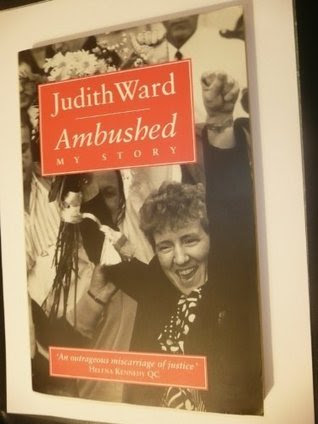
Judith Ward (pictured), an 'IRA activist', was arraigned on the 3rd October 1974 at Wakefield Crown Court, West Yorkshire, England, on an indictment containing 15 counts : Count 1: causing an explosion likely to endanger life or property on the 10th September 1973, at Euston Station, Count 2: a similar count relating to the explosion on the motorcoach on the M62 on the 4th February 1974, Counts 3-14: twelve counts of murder relating to each of the persons killed in the explosion on the motorcoach and Count 15: causing an explosion as before on February 12, 1974, at the National Defence College at Latimer.
She pleaded "not guilty" to all counts but, on the 4th November 1974 - 46 years ago on this date - she was convicted on all counts, by a majority of 10 to two on Count 1 and unanimously on all the others. She was sentenced to five years' imprisonment on Count 1, 20 years' imprisonment concurrently on Count 2, life imprisonment for the murder Counts 3-14 and to 10 years on Count 15, to be served consecutively to the 20 years on Count 2, making a determinate sentence of 30 years.
It took eighteen years of campaigning to have her conviction quashed, which it was on the 11th May 1992 and it transpired that she had changed her 'confession' several times and that the police and the prosecution selected various parts of each 'confession' to assemble a version which they felt comfortable with! One of the main pieces of forensic evidence against her was the alleged presence of traces of nitroglycerine on her hands, in her caravan and in her bag. Thin layer chromatography and the Griess test were used to establish the presence of nitroglycerine but later evidence showed that positive results using these methods could be obtained with materials innocently picked up from, for instance, shoe polish, and that several of the forensic scientists involved had either withheld evidence or exaggerated its importance.
Her book, 'Ambushed - My Story' makes for interesting reading and allows the reader to draw comparisons with the injustices suffered by the Maguire Seven, the Birmingham Six and the Guildford Four ; a total of 18 innocent people, including Judith Ward (13 men, 3 women and two children) who, between them, spent a total of 216 years in prison. Anne Maguire, a mother of 5 children, was menstruating heavily and denied all toiletries for a week, and was beaten senseless and Carol Richardson, who didn't even know she was pregnant, miscarried in Brixton Prison days after her arrest. Pat O'Neill, who had minutes before entered the Maguires house to arrange for a baby-sitter when the police arrived, was told by a cop to swear that he saw a big cardboard box on Maguires table or else he would be done, but he refused to lie - he served eleven years. On his release, he found his marriage was broken beyond repair and that his six children had left the family home.
How many more Irish children will have to 'leave the family home' before the British eventually give a date for their political and military withdrawal from Ireland, because the situation as it now (and still) exists here is that their very presence continues to be objected to by Irish republicans and continues to give rise to unrest. And, if our history is to be used as a yardstick, that will always be the case.
'IN THE NAME OF THE LAW.'
Confidence in the Garda Siochana continues to erode as more incidents of questionable Garda 'evidence' emerge. By Sandra Mara. From 'The Magill Annual', 2002.
As Pat Byrne's tenure as Garda Commissioner draws to a close, he could be forgiven for wishing he could fast-forward his retirement and hand over the poisoned chalice, particularly in the light of Abbeylara, allegations of garda corruption in Donegal, the Dean Lyons affair and numerous other 'occasions of sin' for the guardians of law and order in Ireland (sic).
In the latest round of events, the legal team acting for Donegal publican Frank McBrearty and his family (which now numbers five barristers and two solicitors) secured leave from the High Court to take an action designed to compel the Garda Commissioner to fully investigate allegations of perjury by five of his officers in District Court proceedings against the McBreartys between December 1998 and April 1999.
Martin Giblin SC, for the McBrearty family, instructed by Ken Smyth of Binchy's Solicitors, told Mr Justice O'Neill that his clients were the subject of intense garda attention following the death of Raphoe man Richie Barron in 1996. Mr Barron was found by two local men on a roadway close to his home in the early hours of 14th October 1996 ; seriously injured and lying in a pool of blood, Mr Barron was taken to hospital by ambulance but subsequently died from his injuries... (MORE LATER.)
'RETURN TO SINN FÉIN.'
From 'The United Irishman' newspaper, November 1954.
A plea for a return to Sinn Féin principles of self-reliance was made at the Irish Club in Eaton Square last night by Professor John Busteed, who lectured on the future of Ireland.
Suggesting that emigration should be regarded as a test of the efficiency of the national economy (sic), Professor Busteed said that, on present figures, out of every 1,000 boys aged 14 now, 350 would have left the country in twenty years, and out of every 1,000 girls, 390 would have left.
That was a phenomenon that existed nowhere else in the world ; Denmark, for instance, had three times the national (sic) income of Ireland and had no emigration problem. When the Free State was set up there were 1,220,000 at work, of whom over half were employed in agriculture. Today the total was 1,200,000, and the number engaged in agriculture had declined from 650,000 to 480,000. (From an 'Irish Independent' London letter, 27-9-1954.)
(END of 'Return to Sinn Féin' ; NEXT - 'British Garrisons And The Ban', from the same source.)
'ROLLING STONES' (/'STROLLIN' BONES!') WRONG - TIME IS NOT ON OUR SIDE....
...we won't be posting our usual contribution, and probably won't be in a position to post anything at all, next Wednesday, 11th November 2020. This coming weekend (Saturday/Sunday 7th/8th) is spoke for already with a 650-ticket raffle to be run for the Dublin Executive of Sinn Féin Poblachtach in a different venue than usual, due to the Covid 19 issue, and in a slightly different format.
But, closed venues and social distancing etc or not, work on this gig began yesterday, Tuesday 3rd November 2020, and the paperwork 'autopsy' into it will be held on Monday, 9th, so - between the three of us - we're booked up solid with our 'pay-the-bills/day-job' work and the work on the raffle, and Ard Fheis paperwork, even though the Ard Fheis itself has been defered. Then it's straight on to the December 2020 Cabhair raffle and the Cabhair Christmas Day Swim and loads of other stuff which one committee or another will no doubt be looking to have done!
But it's all for a good Cause and we don't mind helping out. Check back here for us on Wednesday 18th November 2020 ; sure you'd never know what it is that we'll be givin' out about!
Thanks for reading - Sharon and the '1169' team.
...and we're still in 'Lockdown 2' in this State, but most citizens are less compliant than they were during the first 'Lockdown' and, in our opinion, with good reason ; State politicians grant themselves exemptions from Covid rules for golf society/business meetings and for attending other such business/political meetings in the State and abroad but insist that the rest of us comply! They provide faulty PPE and declare that clothes are not essential items (!), resulting in State 'officialdom' losing more of whatever 'authority' it had left. And they continue to pay themselves their full salary while offering the rest of us a State payment which is, for most people, inadequate to meet their needs. There is general unrest and resentment here as a result, and that unrest and resentment is growing...
ON THIS DATE (28TH OCTOBER) 44 YEARS AGO : IRISH REPUBLICAN LEADER ASSASSINATED BY PRO-BRITISH DEATH SQUAD.
"We must take no steps backward, our steps must be onward, for if we don't, the martyrs that died for you, for me, for this country, will haunt us forever" - Máire Drumm, (pictured).
On the 28th October 1976 - 44 years ago on this date - the then Sinn Féin Vice President, Máire Drumm, was shot dead in her hospital bed by a pro-British loyalist death squad. She was born in the townland of Killeen, South Armagh, on the 22nd October 1919 to a staunchly republican family (the McAteer's) and her mother had been active in the Tan War and the Civil War.
In 1940, Máire joined Sinn Féin in Dublin but, in 1942, she moved to Belfast, which became her adopted city, and she continued her republican activities. Every weekend, she would carry food parcels to the republican prisoners in Crumlin Road Jail and it was here that she met Jimmy Drumm, who she married in 1946. When the IRA renewed the armed struggle in the late 1950s, Jimmy was again interned without trial from 1957 to 1961, and Máire became more actively involved in the civil rights movements of the 1960s. She worked tirelessly to rehouse the thousands of nationalists forced from their homes by unionist/loyalist pogroms.

In 1972, she became Vice President of the then Sinn Féin organisation and, due to her dedication and the dedication of her family to the republican struggle, they were continuously harassed by the RUC, British Army and by loyalist paramilitaries.
The British Army even constructed an observation post facing their home in Andersonstown and, at one point, her husband and son were interned at the same time. Her husband, Jimmy, became known as the most jailed republican in the Six Counties and Máire herself was also jailed twice for 'seditious' speeches, once along with her daughter.
In 1976, at only 57 years of age, her eyesight began to fail and she was admitted for a cataract operation to the Mater Hospital, Belfast. On the 28th October 1976, as Máire lay in her hospital bed, loyalist killers wearing doctors white coats walked into her room and shot her dead. Máire Drumm, freedom fighter and voice of the people, was buried in Milltown Cemetery.
'BRITISH OCCUPATION CHALLENGED'.
From 'The United Irishman' newspaper, June, 1955.
In spite of attempts by the unionists, the 'nationalists' and the so-called 'national press' to misrepresent the policy of Sinn Féin, the republicans and the separatists in the north rallied to the cause of Irish freedom and unity and elected two representatives to the republican parliament of the 32 Counties. The results are a striking vindication of Pearse's dictum that "the great, silent suffering mass of the Irish people are always ready to assert their right to freedom. The people have never failed Ireland. Always it has been the leaders who have failed the people."
On nomination day, the unionists tried to stampede the electors by declaring that votes cast for Mitchell and Clarke would be thrown away - that they would be completely discounted and the unionist candidate elected, but the republican electors were not deceived nor intimidated by the unionist tactics. Now that the smoke and fire of battle has cleared away, the unionists are regretting their rash threat and cannot decide what to do.
The legal position was made quite clear by the lobby correspondent of the London 'Observer' newspaper on Sunday 29th May, 1955, three days after the election : "Several Sinn Féin candidates were elected in 1918 although they were in prison, but no attempt was made to unseat them, and there has been no change in the law since then..."
(MORE LATER.)
ON THIS DATE (28TH OCTOBER) 169 YEARS AGO : 'REBEL' MP AND BARRISTER (AND PLEDGE-BREAKER) EXPOSED.
It's practically impossible to write about William Keogh (pictured) without mentioning his pledge-breaking colleague and fellow charlatan, John Sadleir. Both men were born into difficult times, but so were many others and not all of them resorted to being 'snake oil' sales people, the path chosen by Keogh and Sadleir.
Their 19th century Ireland was one in which approximately six-and-a-half million people 'lived' in, which was a rise in population of about three-and-a-quarter million since the introduction of the potato into the country in the middle of the 18th Century (ie 1760, population of approximately three-and-a-quarter million ; 1815 - population of approximately six-and-a-half million).
With the potato being in itself highly nutritional and a good basis for an adequate diet, as well as being a prolific crop, the poor were able to get better use from what little land they had and use their land to support more people, which led to an increase in the population. Also, the potato needed less land than, for instance, grain, and allowed the farmer to grow other crop elsewhere which he could then sell. Unfortunately for the Irish 'peasant' farmer (as the British described us) , this 'good fortune' was noticed by the British 'landlords' and rents were increased at the same period that land was scarce (due to the population increase) - the 'rent' for a 'holding' quadrupled between 1760 and 1815, so the 'holding' (ie small farm) was sub-let, usually to the farmers sons, so that the 'rent owed' for that patch of soil could be shared by the family.
However, the Irish spirit was strong, and the British 'landlords' and their agents did not have it all their own way. The so-called 'lower-ranks', the 'wretched people', those who wore 'the mark of slavery', had organised themselves as best they could ; secret, underground oath-bound societies fought back - the Whiteboys, Oakboys, Moonlighters, the Defenders and the Steelboys : fences belonging to British 'landlords' were ripped-up, the 'masters' cattle were taken, his haystacks and crop removed, his 'Big House' attacked and, when possible, levelled and burnt, and he himself, and his minions, put to death when the opportunity presented itself to do so. It was into this 'melting-pot of madness' that a child was born in County Tipperary in 1815 - John Sadleir.
At the time that John Sadleir (pictured) was growing-up, a man named George Henry Moore (who was connected to, and supported by, the Catholic Church Hierarchy) was organising a 'pressure-group' which was to be called the 'Irish Brigade' to lobby Westminster on behalf of the Catholic Church, its members, and its 'flock' - John Sadleir joined the 'Irish Brigade' lobby-group and became a prominent member of it, as did about twenty liberal-minded British MP's, including William Keogh. When John Sadleir was 36 years of age (in 1851) the British administration introduced the 'Ecclesiastical Titles Bill' (on 6th February 1851) making it 'illegal' for any Catholic prelate (ie priest, arch-bishop, bishop etc) to be that which the Vatican claimed him to be - that is, under the 'Ecclesiastical Titles Bill', it was deemed to be 'a crime' to be described as the 'parish priest of XXX', 'arch-bishop of XXX', 'bishop of XXX' etc - in short, the assumption of titles by Roman catholic priests was outlawed by Westminster : the British wanted to curb the activities and influence of the catholic church, but this 'law' was not always followed-up (ie enforced) on the ground (what we in Ireland would call 'an Irish solution to an Irish problem').
However, enforced or not, the 'Titles Bill' was vehemently opposed by John Sadleir and William Keogh and 'The Irish Brigade' (who were by now known by the nick-name of 'The Popes Brass Band', such was their support for the catholic hierarchy) and others, too, were opposed to the 'Bill' - a group known as the 'Tenant Right League', which had been founded in 1850 by 'Young Ireland' Movement leaders Charles Gavan Duffy and Frederick Lucas (to secure better conditions for those that worked the land) also campaigned against 'The Ecclesiastical Titles Bill' : the 'Tenant Right League' was formed in City Assembly House in William Street in Dublin in August 1850, after a four-day conference which was attended by a right mix of people - magistrates, 'landlords', tenants themselves, priests (of both Catholic and Presbyterian persuasion) and newspaper journalists and editors. In his own constituency, where he was entertained to a public banquet on the 28th October, 1851 - 169 years ago on this date - William Keogh declared, in the presence of Archbishop McHale : "I will not support any party which does not make it the first ingredient of their political existence to repeal the Ecclesiastical Titles Act..." and again, in Cork, on the 8th March, 1852, he declared : "So help me God, no matter who the Minister may be, no matter who the party in power may be, I will support neither that minister nor that party unless he comes into power prepared to carry the measures which universal popular Ireland demands..." As the British themselves are fond of saying - 'Fine words butter no parsnips'.
In 1852, 'The Irish Brigade' and 'The Tenant Right League' joined forces to get the 'Ecclesiastical Titles Bill' revoked and, in July that year (1852) the new grouping came together as 'The Independent Irish Party', which declared that "legislative independence is the clear, eternal and inalienable right of this country, and that no settlement of the affairs of Ireland can be permanent until that right is recognised and established...(we will) take the most prompt and effective measures for the protection of the lives and interests of the Irish people, and the attainment of their natural rights..." John Sadleir and William Keogh, two of the more prominent MP's in 'The Independent Irish Party' (of which there were about forty, as the new 'IIP' was joined by Irish MP's in Westminster) , like all the other 'IIP' representatives, took a pledge not to accept any Office in a Westminster administration or to co-operate with same until, among other things, the 'Ecclesiastical Titles Bill' was done away with ; however, the British had seen developments like this elsewhere in their 'empire' and were preparing to manoeuvre things in their own favour.
The new 'Independent Irish Party' was flexing its muscle ; as William Keogh (a barrister and MP for Athlone) put it - "I will not support any party which does not make it the first ingredient of their political existence to repeal the Ecclesiastical Titles Bill. So help me God ..." By this stage, Charles Gavan Duffy had been elected as an 'Independent Irish Party' MP to Westminster, representing the New Ross area of Wexford. The 'IIP', with forty members elected to Westminster, did actually hold the balance of power in 'Lord' Derby's Tory-led government in Westminster and so pressed their claims with that administration regarding the 'Titles Bill' and other matters pertaining to Ireland - but they got no satisfaction from 'Lord' Derby or any of his Ministers, so the 'IIP' 'pulled the plug' and the British government of the day collapsed.

'Lord' Aberdeen offered John Sadleir IIP MP the position of 'Lord of The Treasury' in the new British administration, and also 'threw a bone' to the other dog, William Keogh IIP MP - that of the Office of British Solicitor-General for Ireland and, despite already having their parsnips well buttered, both men took the offer, and the Catholic Church, subservient as ever to the British, when push came to shove, supported them for doing so! This tore not only the 'Independent Irish Party' asunder (although it did manage to 'hobble' on for another few years, disintegrating along the way) until finally it disbanded in 1858, but it also disappointed Charles Gavan Duffy IIP MP, one of the more prominent members of the party, so much so that, in October 1855, he emigrated to Australia in despair.

Despite success at the polls, and having the 'ear' of the political bosses and the 'respect' of the British 'establishment' and good, favourable media coverage, being well-dressed, well-spoken and well-paid, if you lose your political principles, you're finished - draw your own conclusions....
'IS IT TIME TO ASK QUESTIONS OF THE LEGAL PROFESSION...?'
By John Drennan.
From 'The Magill Annual', 2002.
The law exists to protect us but, as with the moral law of the Church, those who devote their lives to it should be under its closest scrutiny, precisely because they are more empowered by it than anyone else in our society.
It is time that journalism and politics started asking difficult questions of the legal profession. For starters, we can look into the scandal of the family courts, and then go on to ask who benefits the most from our relatively new-found public tribunal culture. Only then will we even begin to redress the balance of power between the people and the courts.
(END of 'Is It Time To Ask Questions Of The Legal Profession?' ; NEXT - 'In The Name Of The Law', from the same source.)
'THE REPUBLICAN POSITION ; STATEMENT ISSUED BY ÓGLAIGH NA H-ÉIREANN AND SINN FÉIN...'
From 'The United Irishman' newspaper, November 1954.
"A Chara,
The following statement has been released for publication. Please publish it in full or not at all...
Those who think in terms of a compromise with the leadership of Fianna Uladh must also realise that when they seek to get an alignment with the latest arrival of the splinter parties they are seeking that which is tantamount to an alignment with either Clann na Poblachta or Fianna Fail, both of which, for their own separate ends, foster and promote the growth of Fianna Uladh, whose advent can only distract our people further.
Its continued existence can but serve to create further dissensions and its leaders appear to do all in their power to retard and obstruct the advance of the Republican Movement.
Issued by the Army Council, Óglaigh na hÉireann, and the Standing Committee, Sinn Féin."
(END of 'The Republican Position ; Statement Issued By Óglaigh na hÉireann and Sinn Féin'. NEXT - 'Return To Sinn Féin', from the same source.)
Thanks for reading - Sharon and the '1169' team. Are you still with us, out there? Hard to know just where we are, in this State, in relation to the health and safety of the citizens of this State, as 'regulated' by Leinster House, that is : we think, as it's a Wednesday, we're somewhere between level 3.5 and level 5 of the 'lockdown'. Not sure. And it could change tomorrow. Or maybe not. Sure we'll see how it goes...
ON THIS DATE (21ST OCTOBER) 141 YEARS AGO : 'FAIR RENT, FIXITY OF TENURE, FREEDOM OF SALE'.
On the 21st October 1879- 141 years ago on this date- a meeting of concerned individuals was held in the Imperial Hotel in Castlebar, County Mayo, to discuss issues in relation to 'landlordism' and the manner in which that subject impacted on those who worked on small land holdings on which they paid 'rent', an issue which other groups, such as tenants' rights organisations and groups who, confined by a small membership, agitated on land issues in their own locality, had voiced concern about.
Those present agreed to announce themselves as the 'Irish National Land League' (which, at its peak, had 200,000 active members) and Charles Stewart Parnell (who, at 33 years of age, had been an elected member of parliament for the previous four years) was elected president of the new group, with Andrew Kettle, Michael Davitt, and Thomas Brennan being appointed as honorary secretaries.
The leadership had 'form' in that each had made a name for themselves as campaigners on social issues of the day and were, as such, 'known' to the British authorities ; for instance, Michael Davitt, who was born into poverty in Straide, Mayo, on the 25th of March, 1846 - at the time of the attempted genocide - was the second of five children, and was only four years of age when his family were evicted from their home over rent owed and his father, Martin, was left with no choice but to travel to England to look for a job. Martin's wife, Sabina, and their five children, were given temporary accommodation by the local priest in Straide. The family were eventually reunited, in England, where young Michael attended school for a few years. His family were struggling, financially, so he obtained work, aged 9, as a labourer (he told his boss he was 13 years old and got the job - working from 6am to 6pm, with a ninty-minute break and a wage of 2s.6d a week) but within weeks he had secured a 'better' job, operating a spinning machine but, at only 11 years of age, his right arm got entangled in the machinery and had to be amputated.


Seán Stephenson, London (Wormwood Scrubbs), 8 years penal servitude.
Manus Canning, Derry (Wormwood Scrubs), 8 years penal servitude.
Joseph Campbell, Newry (Crumlin Road), 5 years penal servitude.
Leo McCormack, Dublin (Crumlin Road), 4 years penal servitude.
JP McCallum, Liverpool (Stafford), 6 years penal servitude.
Kevin O' Rourke, Banbridge (Crumlin Road), 5 years penal servitude.
Eamon Boyce, Dublin (Crumlin Road), 12 years penal servitude.
Philip Clarke, Dublin (Crumlin Road), 10 years penal servitude.
Paddy Kearney, Dublin (Crumlin Road), 10 years penal servitude.
Tom Mitchell, Dublin (Crumlin Road), 10 years penal servitude.
John McCabe, Dublin (Crumlin Road), 10 years penal servitude.
Seán O'Callaghan, Cork (Crumlin Road), 10 years penal servitude.
Seán Hegarty, Cork (Crumlin Road), 10 years penal servitude.
Liam Mulcahy, Cork (Crumlin Road), 10 years penal servitude.
Hugh Brady, Lurgan (Crumlin Road), 3 years penal servitude.
(END of 'In Jail For Ireland' ; Next - 'British Occupation Challenged', from the same source.)
ON THIS DATE (21ST OCTOBER) 217 YEARS AGO : HANGED AND BEHEADED BY THE BRITISH.
'By Downpatrick goal I was bound to fare
on a day I'll remember, feth;
for when I came to the prison square
the people were waitin' in hundreds there
an' you wouldn't hear stir nor breath!
For the sodgers were standing, grim an' tall,
round a scaffold built there foment the wall,
an' a man stepped out for death!' (from here.)
Thomas Paliser Russell (pictured) was born in Cork, to an Anglican family (his father was a British Army Officer), on the 21st of November, 1767 and, at just 16 years of age, he joined the British Army and fought under the Butchers Apron in India for about five years, but resigned because of '...the disgust and indignation which filled him on witnessing the extortions, the cruelties, the usurpations and brutalities which were carried out and sanctioned by the government under which he served..' and he returned to Ireland. In the late 1780's he schooled himself in science, philosophy and politics.
In 1791, at 24 years of age, Thomas Russell and a group of like-minded individuals - Protestants, Anglicans and Presbyterians - held a public meeting in Belfast, out of which was formed 'The Belfast Society of United Irishmen' (the organisation became a secret society three years later), and one of his colleagues, Sam McTier, was elected as 'President of the Society'. Also present were Theobald Wolfe Tone (who gave Robert Simms his nickname, 'Tanner'), William Sinclair, Henry Joy McCracken, Samuel Neilson, Henry Haslett, Gilbert McIlveen, William Simms (Robert's brother), Thomas McCabe, Thomas Pearce and Samuel McTier, among others.
He and his comrades set about organising a militant resistance to the English political and military presence in Ireland and his actions brought him to the attention of Westminster and, in 1796, at 29 years of age, he was 'arrested' and imprisoned in Dublin before being transported to Fort George, near Inverness, in Scotland, where he was held until 1802 (forcing him to miss the 1798 Rising).
He took a leadership role in the 1803 Rising and was again imprisoned by the English for same, this time in Downpatrick Jail ; he was 'tried for High Treason', found 'guilty', hanged and then beheaded at the gate of that prison on the 21st October, 1803 - 217 years ago on this date. He was 36 years of age. His last words were "I forgive my persecutors. I die in peace with all mankind, and I hope for mercy through the merits of my Redeemer Jesus Christ." His body lies in Downpatrick Churchyard.
'Into our townlan' on a night of snow,
rode a man from God knows where...'
'IS IT TIME TO ASK QUESTIONS OF THE LEGAL PROFESSION...?'
By John Drennan. From 'The Magill Annual', 2002.
After all, it is much easier to follow legal advice than to make tough decisions oneself, especially when those decisions pose a difficult choice between social morality and tempting political expediency.
If your lawyer makes the nasty choice for you, it's always possible to point the finger later on. This is why politicians and their legal advisors have such a cosy and mutually beneficial relationship. Meanwhile, within the media, the tentacles of the law library have stretched to the point where journalists are now experiencing the curious phenomenon of having incontrovertible facts excised from articles on the grounds that these are 'libellous'. In the ideal discourse of legal ethics, these laws are needed to protect the widows mute and the defenceless chimney sweep but, unfortunately, here in the real world, Ireland's smothering libel laws attract a great deal more Beverley Cooper-Flynns to the Four Courts than they do chagrined chimney sweeps.
Overwhelmingly male? Devotees of an impenetrable scholastic language which is used to exclude the outside world? The preserve of one class? Defenders of the powerful and the wealthy against the voiceless masses? Censors of a free press? Feared by politicians and worryingly unaccountable? These descriptions were all, at one point in modern Irish history, levelled at another large Irish institution whose day has now passed but, in our inimitable way in this State, we are happy to live unquestioningly under the template set up by the new secular 'church' of the legal profession... (MORE LATER.)
'THE REPUBLICAN POSITION ; STATEMENT ISSUED BY ÓGLAIGH NA H-ÉIREANN AND SINN FÉIN...'
From 'The United Irishman' newspaper, November 1954.
"A Chara,
The following statement has been released for publication. Please publish it in full or not at all...
It is of equal importance that there shall be common agreement on the means to be used, the strategy to be employed and the opportunities to be availed of to drive the British out. If political leaders came to agreement on these fundamentals there would be a headlong rush of them back into the ranks of the Republican Movement.
To select any one of the political splinter parties and claim it has some greater merit or that the measure of its national content is greater than some or all of the others is mere pretence. It does not require a very close analysis to reveal the fact that, in matters affecting the artificial division of the national territory or, indeed, on questions affecting the welfare of the nation, there is little if any difference between the parties.
In some cases, such as the 'Anti-Partition League' and the 'Anti-Partition Association' where, ostensibly at least, an effort was made to achieve unity with or amongst political leaders, the effort was fore-doomed to failure simply because of the political manoeuvering for kudos and control by party adherents within these organisations. It must be realised, therefore, that the Republican Movement cannot be aligned with leaders who designedly ascend the political rostrum to gratify personal ambitions or to vent personal spleens in preference to rendering service in the field of national endeavour..." (MORE LATER.)
Thanks for reading - Sharon and the '1169' team. Hope you are as 'safe' as you (hopefully!) have been and that you can make sense of the confusing 'advice/rules and regulations' being dumped on State citizens by the 'experts' in, and associated with, Leinster House. 'Cause their left hand doesn't appear to know what their right hand is doing.