Monday, October 15, 2007

THEY ARE HELD IN BELFAST JAIL .......

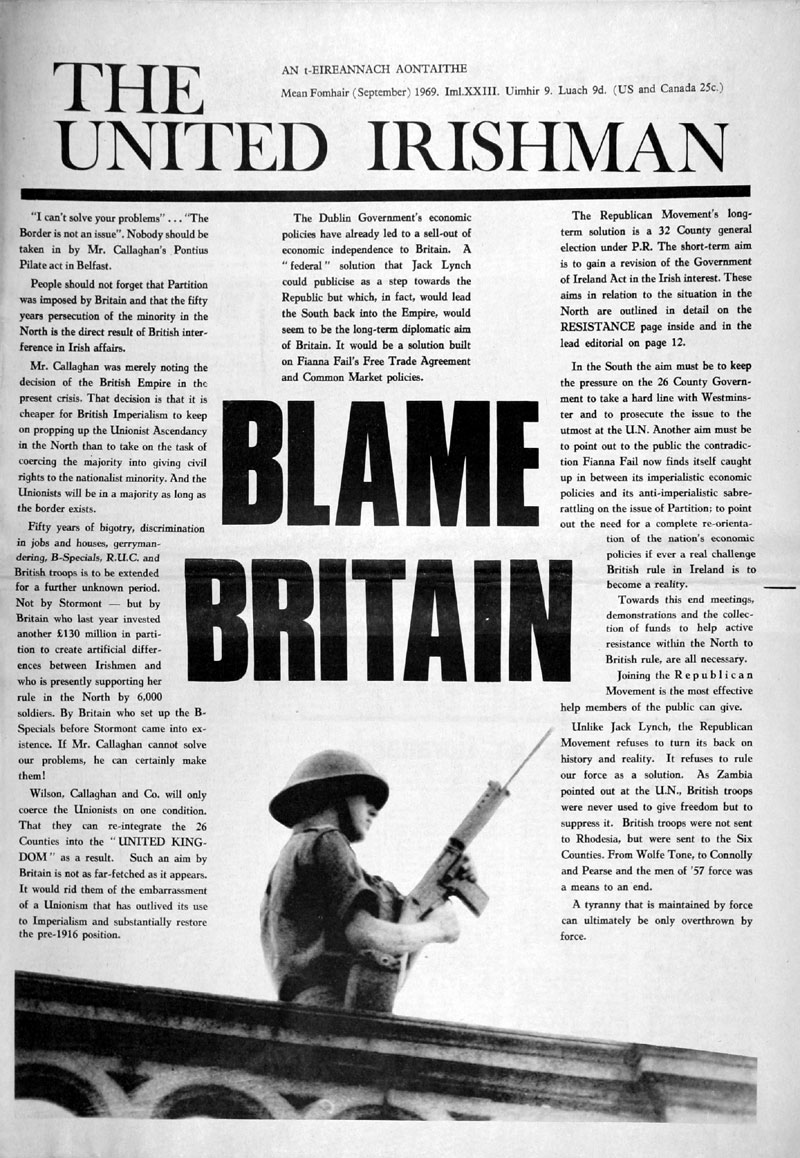
From 'The United Irishman' newspaper, January 1958 .

DETAINED FOR POSSIBLE TRIAL :

J. Carville , Lurgan , County Armagh .
D. Casey , Coalisland , County Tyrone .
C. Grimes , Coalisland .
J. McGorry , Mountjoy , Dungannon , County Tyrone .
K. Mallon , Coalisland .
Seán O' Neill , Coalisland .
Seán Devlin , Coalisland .
Paddy O' Neill , Coalisland .
F. Talbot , Coalisland .
D. Devlin , Coalisland .
J. O' Donnell , Coalisland .
P. O' Neill , Coalisland .
D. McAlinden , Derryloughlin , Coalisland , County Tyrone .


[END of 'They Are Held In Belfast Jail']
(Next : O'Donovan Rossa , by Brian Na Banban. - from the same source)


ECONOMY IN CRISIS - An Historical Perspective.......

By any standards the economy of Ireland , North and South , can be described as being in a sorry mess with crisis , recession and imminent bankruptcy the most constant themes of economic discussion , intermittently over the last decade and ceaselessly in the last three years . In this article , Peter Graham surveys the factors which have produced this economy , and the historical role of foreign and native Irish capital.

From 'IRIS' magazine , November 1982.

The Second World War, inevitably , and even more than any other British foreign war , had its effects on the Irish economy : fuel and raw materials , necessary to be imported for any real industrial advance , were almost impossible to attain but , at the same time , the total necessity of self-sufficiency forced the introduction of compulsory tillage for crop production on the farms .

In the economic world of widespread destruction and scarcity after the war , it could have been boom-time for the Free State economy , with a ready market for its agricultural produce , and a chance fior its manufacturing industries to quickly expand but , once more , there was scarcely any growth during this period because of the refusal of private Irish capital to invest .

Massive increases in subventions to farmers in the post-war period , far from encouraging tillage , saw surpluses in such subsidised crops as wheat and sugar beet , scarcities in other crops and the return to cattle as the Free State's main economic prop . Much the same was happening in relation to the industrial scene in the State.......
(MORE LATER).


PRISONERS RIGHTS - the mark of a civilised society .......

From 'Fourthwrite' magazine, Autumn 2003.
By Siobhan O'Dwyer.

The families of Irish Republican prisoners are also subjected to fear and humiliation every time they visit Maghaberry Gaol as they are singled out for 'special attention' from the sniffer dog to force them to take closed visits , which are usually refused ; parcels , books , papers for the prisoners are often 'mislaid' or take weeks to arrive and the families must share the visiting areas and the waiting rooms with known loyalist paramilitaries .

Visits are often cancelled after the visitors have arrived at the prison , often having travelled long distances with young children . Republican prisoners have agreed to undergo drug tests in order to prevent their family members and in particular the children , having to undergo the humiliating and frightening experience of being faced with this large sniffer dog .

By refusing , the Prison Service has shown that they are not interested in facilitating proper family contact for prisoners but only in enforcing a degrading regime . This hostile treatment can be related to the 'New World Order'.......
(MORE LATER).


Saturday, October 13, 2007

LEST WE FORGET...

Thomas Ashe, Kerry, 5 days, 25 September 1917 (force fed by tube , died as a result).
Terrence McSweeny, Cork, 74 days, 25 October 1920.
Michael Fitzgerald, Cork, 67 days, 17 October 1920.
Joseph Murphy, Cork, 76 days , 25 October 1920 .
Joe Witty, Wexford , 2 September 1923.
Dennis Barry, Cork, 34 days, 20 November 1923.
Andy O Sullivan , Cork, 40 days, 22 November 1923.
Tony Darcy, Galway, 52 days, 16 April 1940.
Jack 'Sean' McNeela, Mayo, 55 days, 19 April 1940.
Sean McCaughey, Tyrone ,22 days, 11 May 1946 (hunger and thirst Strike).
Michael Gaughan, Mayo , 64 days, 3 June 1974.
Frank Stagg, Mayo , 62 days, 12 February 1976.
Bobby Sands, Belfast , 66 days, 5 May 1981.
Frank Hughes , Bellaghy (Derry), 59 days, 12 May 1981.
Raymond McCreesh , South Armagh , 61 days, 21 May 1981.
Patsy O Hara , Derry , 61 days, 21 May 1981.
Joe McDonnell , Belfast , 61 days, 8 July 1981.
Martin Hurson , Tyrone , 46 days, 13 July 1981.
Kevin Lynch, Dungiven ( Derry) ,71 days, 1 August 1981.
Kieran Doherty , Belfast , 73 days, 2 August 1981.
Tom McIlwee , Bellaghy (Derry) , 62 days, 8 August 1981.
Micky Devine , Derry , 60 days, 20 August 1981.


"Dear Christ! the very prison walls
Suddenly seemed to reel,
And the sky above my head became
Like a casque of scorching steel;
And, though I was a soul in pain,
My pain I could not feel."

('The Ballad of Reading Gaol', by Oscar Wilde, written after his release from Reading prison on 19 May 1897.)


Friday, October 12, 2007

THEY ARE HELD IN BELFAST JAIL .......

From 'The United Irishman' newspaper, January 1958 .

DETAINED FOR POSSIBLE TRIAL :

J. Campbell , Belfast , County Antrim .
M.P. Cassidy , Maghera , County Derry .
H. Cassidy , Maghera .
J. Cassidy , Maghera .
R. J. Cunningham , Newry , County Down .
P. Smith , Newry .
S. Maguire , Belfast .
I. McGovern , Dungannon , County Tyrone .
L. Lavery , Cookstown , County Tyrone .
M. McLoughlin , Dundalk , County Louth .
J. F. Lee , County Fermanagh .
P. Brewster , County Fermanagh .
F. Carey , County Fermanagh .
J. McEvoy , Lurgan , County Armagh .
E. Matthews , South Armagh .

(MORE LATER).


ECONOMY IN CRISIS - An Historical Perspective.......

By any standards the economy of Ireland , North and South , can be described as being in a sorry mess with crisis , recession and imminent bankruptcy the most constant themes of economic discussion , intermittently over the last decade and ceaselessly in the last three years . In this article , Peter Graham surveys the factors which have produced this economy , and the historical role of foreign and native Irish capital.

From 'IRIS' magazine , November 1982.

Efforts to control foreign food imports , guarantee farm prices and divert ever-increasing amounts of public money into agriculture did not have the effect of stimulating development but , rather , because of the ability of big farmers to profit from these schemes , had the effect of transforming wealth to them at the expense of the small farmers .

The protectionism of Free State government economic policy , which continued right up until the late 1950's , did not get any major response from Irish capital : rather than risk his money in creating industry , the wealthy Irishman invested in Britain . The high interest rates guaranteed by the Free State government for scarce investment money became another burden on public spending , as under-financed industries rose and soon collapsed .

What small industries did grow behind the tariff walls were geared to the small home market , while the resultant high costs made any foray into the export market wholly unrealistic . The Second World war , too , left its mark.......
(MORE LATER).


PRISONERS RIGHTS - the mark of a civilised society .

From 'Fourthwrite' magazine, Autumn 2003.
By Siobhan O'Dwyer.

Republican prisoners in Maghaberry Gaol are in the sixth week of a dirty protest as part of their campaign for segregation from Loyalist prisoners and for political status. The very words 'dirty protest' and 'political status' invoke bitter and sad memories of the late 1970's and early 1980's .

However , the republican prisoners and their families today are facing a very different set of political circumstances than pertained then - that of the political and military defeat of 'mainstream republicanism' ('1169...' Comment - ....by which the author means the Provisional organisation) . The prisoners are faced with a situation where they are sharing wings and landings with loyalist prisoners , which has led to a number of incidents of republican prisoners being beaten , scalded and having their food tampered with . A number of death threats have been made against them .

The Stormont Prison Service continue to deny that the prisoners are subjected to beatings or have anything to fear but their words mean nothing , as they also denied the brutal treatment meted out to the Blanket Men. The setting up of a Commission to 'look into the situation in Maghaberry Prison' , while welcome , does not fill me with any confidence that Britain has any real interest in resolving the situation......
(MORE LATER).


Wednesday, October 10, 2007

THEY ARE HELD IN BELFAST JAIL .......

From 'The United Irishman' newspaper, January 1958 .

DETAINED FOR POSSIBLE TRIAL :

F. Cullen , Coalisland , County Tyrone .
J. Cullen , Coalisland .
P. McGee , Belfast .
L. McKinney , Derry City .
T. McCool , Derry City .
W. Robinson , Tyrone .
P.J. McGorry , Mountjoy , County Tyrone .
J. Robinson , Mountjoy .
F. T. Donnelly , Armagh .
K. Carson , Enniskillen , County Fermanagh .
F. Goodwin , Enniskillen .
E. Goodwin , Enniskillen .
D. Cox , Enniskillen .
E. Mulholland , Lurgan , County Armagh .
E. Murphy , Dublin .
P. Gillespie , Magherafelt , County Derry .
J. Kavanagh , Belfast .
P. Kavanagh , Belfast .

(MORE LATER).


ECONOMY IN CRISIS - An Historical Perspective.......

By any standards the economy of Ireland , North and South , can be described as being in a sorry mess with crisis , recession and imminent bankruptcy the most constant themes of economic discussion , intermittently over the last decade and ceaselessly in the last three years . In this article , Peter Graham surveys the factors which have produced this economy , and the historical role of foreign and native Irish capital.

From 'IRIS' magazine , November 1982.

Far from putting into practice the self-sufficiency of Arthur Griffith's Sinn Fein doctrines , with the logical attempt to create industrial capitalism behind tariff walls , fed by the rural hinterland , the new Free State government concentrated its limited economic stimulation on increasing the cattle and diary export trade which was the foreign money earner . Food , demanding tillage for its production , continued to be imported .

The nettle of import tariffs to foster home capital-inspired industry was left to the de Valera government to grasp , and grasp it he immediately did : once again , the national issue becomes entangled in the Irish economy with the introduction of tariffs becoming embroiled in the withholding of land annuities from Britain, and the economic war which ensued .

In the six years until its settlement , the economic war damaged mainly the agricultural cattle trade but also , by impoverishing the rural population , it reduced the home market for developing industries . Nevertheless , even this pressure from an economic nationalist campaign did not see the switch from cattle to tillage which was necessary for the attainable self-sufficiency in food ......
(MORE LATER).


DIVIS FLATS : Building Towards A Demolition Campaign .......
Divis Flats , at the bottom of the Falls Road in West Belfast , have acquired a reputation for 'trouble' - of all kinds - and social deprivation ever since they were built in the 1960's . They have also endured some of the severest British repression meted out during the past 14 years , and replied with some of the fiercest resistance . Local resident and community activist Jim Faulkner examines the new resurgence of morale in the flats complex and the prospects it faces in its biggest battle yet - for total demolition .
From 'IRIS' magazine , November 1983 .

There is a need now for a new demolition campaign led by Divis residents themselves : the first task of the campaign must be to confront the Stormont administration on its policy for Divis , and to use the Sinn Fein public representatives , whom Divis people helped to elect , to apply whatever political pressure is at their disposal if that administration refuses to agree to further demolition .

Surveys have indictated that half the people want to stay where they are - but in houses , not flats , and that the other half might be prepared to move if there was somewhere to move to . What this means is that the demand for new building at Poleglass and elsewhere in West Belfast is of as much concern to the people of Divis as it is for other West Belfast nationalists .

There is certainly a need for Divis Residents' Association to co-ordinate its campaign with other groups , such as the newly-formed West Belfast Housing Action Group which is currently campaigning for better housing throughout the West Belfast area . There is , then , great hope for the future of Divis , and it is up to the people of Divis themselves to transform this hope into reality which decent two-storey houses can offer them and their children - in a future community of a new Pound Loney.

[END OF ' DIVIS FLATS : Building Towards A Demolition Campaign']
(NEXT : 'Prisoners Rights - The Mark Of A Civilised Society' , from 2003.)


Monday, October 08, 2007

THEY ARE HELD IN BELFAST JAIL .......

From 'The United Irishman' newspaper, January 1958 .

HELD WITHOUT CHARGE OR TRIAL :

H. O' Neill , 9 California Street , Belfast .
P.E. Davey , 8 Upton Street , Belfast .
J.J. Martin , 11 Kildare Street , Belfast .
J. Sullivan , 13 Ward Street , Belfast .
James McParland , 63 Ballymurphy Road , Belfast .
Séan McParland , 63 Ballymurphy Road , Belfast .
G. Maguire , 50 Alexandra Street West , Belfast .
Dominic Adams , 8 Varna Street , Belfast .
James Drumm , 12 Glassmullin Gardens , Belfast .
S. Gibson , 127 McDonnel Street , Belfast .
Séan McNally , 14 Glenview Street , Belfast .
Jimmy Steele , 20 Clondara Street , Belfast .
P.J. Larkin , 126 Ardilea Street , Belfast .
Frank Maguire , Main Street , Lisnaskea , County Fermanagh .
M. O' Reilly , Coa , Ballinamallard , County Fermanagh .
Leo McCormack , Dublin
(After four years sentence) .
G. Higginbotham , Dublin .

(Next : a list of those 'Detained For Possible Trial')
(MORE LATER).


ECONOMY IN CRISIS - An Historical Perspective.......

By any standards the economy of Ireland , North and South , can be described as being in a sorry mess with crisis , recession and imminent bankruptcy the most constant themes of economic discussion , intermittently over the last decade and ceaselessly in the last three years . In this article , Peter Graham surveys the factors which have produced this economy , and the historical role of foreign and native Irish capital.

From 'IRIS' magazine , November 1982.

Once in power , the attention of the 'new ruling class' was not merely concentrated on the oppression of republican militarists : in 1923 the wages of a wide range of workers , from dockers to manufacturing employees , were cut to levels below those of the pre-1913 lock-out . In the North , the new unionist administration followed suit .

The trade union movement throughout Ireland was effectively attacked to the extent that , within five years of the establishment of the two partitionist states , its membership was reduced by one third , social welfare considerations were given the minimal attention and social conditions in general enforced a solution to unemployment in the thousands who emigrated throughout the 1920's .

The world depression of 1929 saw a major slump in the North of Ireland's export industries , particularly the biggest ship-building and linen firms . The Free State situation was not as seriously affected initially , being agriculture-based , and prices generally holding up . But the agricultural economy itself had remained stagnant since the foundation of the Free State (and was to remain so for decades) .......
(MORE LATER).


DIVIS FLATS : Building Towards A Demolition Campaign .......
Divis Flats , at the bottom of the Falls Road in West Belfast , have acquired a reputation for 'trouble' - of all kinds - and social deprivation ever since they were built in the 1960's . They have also endured some of the severest British repression meted out during the past 14 years , and replied with some of the fiercest resistance . Local resident and community activist Jim Faulkner examines the new resurgence of morale in the flats complex and the prospects it faces in its biggest battle yet - for total demolition .
From 'IRIS' magazine , November 1983 .

The 'street-party' success of the Divis Residents' Association was short-lived , its main problem being that it failed to attract the active participation of a representative cross-section of the Divis community and focussed largely on the personality and leadership of Fr. Pat Buckley himself , and when he was transferred to another parish early this year (1983) the Divis Residents' Association became very much a shepherdless flock .

The activities engaged in by the Association in its heyday were essentially geared towards a restoration of morale but had no lasting effect , and its AGM in the autumn of 1982 attracted only a handful of Fr. Buckley's helpers .

However , developments outlined in this article which have taken place since the elections augur well for the group's future , with this year's AGM approaching and the likelihood of a more broadly-based committee of residents being elected.......
(MORE LATER).


Saturday, October 06, 2007


INJUSTICE :
" While these pages were passing through the press, a circumstance has occurred which so clearly illustrates the position of the Irish priest, that I cannot avoid mentioning it. A gentleman has purchased some property, and his first act is to give his three tenants notice to quit. The unfortunate men have no resource but to obey the cruel mandate, and to turn out upon the world homeless and penniless. They cannot go to law, for the law would be against them. They are not in a position to appeal to public opinion, for they are only farmers. The parish priest is their only resource and their only friend. He appeals to the feelings of their new landlord in a most courteous letter, in which he represents the cruel sufferings these three families must endure. The landlord replies that he has bought the land as a "commercial speculation," and of course he has a right to do whatever he considers most for his advantage; but offers to allow the tenants to remain if they consent to pay double their former rent—a rent which would be double the real value of the land. Such cases are constantly occurring, and are constantly exposed by priests; and we have known more than one instance in which fear of such exposure has obtained justice. A few of them are mentioned from time to time in the Irish local papers. The majority of cases are entirely unknown, except to the persons concerned; but they are remembered by the poor sufferers and their friends. I believe, if the people of England were aware of one-half of these ejectments, and the sufferings they cause, they would rise up as a body and demand justice for Ireland and the Irish; they would marvel at the patience with which what to them would be so intolerable has been borne so long...."
(From here)


It was those that organised , supported and/or otherwise made possible such acts of barbarism that people like the late Dan Keating fought against : his fight has inspired others to follow in his footsteps . The crimes committed by the British on this isle will guarantee as many 'Dan Keatings' as it takes to resolve the issue of British interference in Irish affairs . And that issue can only be resolved by the British withdrawing politically and militarily from these shores . Even if it takes another 838 years...


Friday, October 05, 2007

THEY ARE HELD IN BELFAST JAIL .......

From 'The United Irishman' newspaper, January 1958 .

HELD WITHOUT CHARGE OR TRIAL :

M. McBurney , 56 Durham Street , Belfast .
M. Murray , 14 Beechfield Street , Belfast .
T. McGrogan , 40 Commedogh Drive , Belfast .
L. McParland , 63 Ballymurphy Road , Belfast .
Art Rox , 23 Kilroad Street , Belfast .
Séan O' Cearnaigh , 26 Pound Street , Belfast .
J. Madill , 31 Oakman Street , Belfast .
John McNeill , Glendun , County Antrim .
J. Dullaghan , 4 Clyde Street , Belfast .
P. Doyle , 45 White Rock Crescent , Belfast
(Interned after three months sentence) .
G. Robinson , 23 Vulcan Street , Belfast .
K. O' Kane , 45 Princes Park , Whiteabbey , Belfast .
W. Kennedy , 24 Balaclava Street , Whiteabbey , Belfast .
G. McCotter , 27 Upton Street , Belfast .

(MORE LATER).


ECONOMY IN CRISIS - An Historical Perspective.......

By any standards the economy of Ireland , North and South , can be described as being in a sorry mess with crisis , recession and imminent bankruptcy the most constant themes of economic discussion , intermittently over the last decade and ceaselessly in the last three years . In this article , Peter Graham surveys the factors which have produced this economy , and the historical role of foreign and native Irish capital.

From 'IRIS' magazine , November 1982.

In arriving at the two partitionist states it was more the independent power of Irish nationalism , rather than economic forces , which were at work . Although the early twentieth century had seen , under James Larkin and James Connolly, a major upsurge of trade union membership and working-class militancy in the 1913 lock-out, it was the middle-class (which had condemned the 1916 Rising) which speedily re-assessed the force of nationalism .

So that by 1918 middle-class influence had already infiltrated into a Sinn Fein which , within three years , would sell-out the Republic for the Treaty , whilst labour had to accept that it must wait and stand out of the political arena .

For the Irish capitalist class in the 26-Counties , the establishment of the Free State in 1922 achieved its aims . The victims on the republican side in the Civil War were overwhelmingly the small farmers , agricultural labourers and city workers , fighting on for a Republic which embraced the socialist principles of James Connolly, Padraig Pearse and Liam Mellows- not necessarily a politically-conscious struggle , but one which intuitively recognised that the Republic must mean the wealth of Ireland for the people of Ireland.......
(MORE LATER).


DIVIS FLATS : Building Towards A Demolition Campaign .......
Divis Flats , at the bottom of the Falls Road in West Belfast , have acquired a reputation for 'trouble' - of all kinds - and social deprivation ever since they were built in the 1960's . They have also endured some of the severest British repression meted out during the past 14 years , and replied with some of the fiercest resistance . Local resident and community activist Jim Faulkner examines the new resurgence of morale in the flats complex and the prospects it faces in its biggest battle yet - for total demolition .
From 'IRIS' magazine , November 1983 .

The Divis Residents Association was set up towards the end of the 1981 hunger-strike by Father Pat Buckley, a curate of St Peter's parish , and with the assistance of some local women organised a successful 'clean-up campaign' to repair the environmental devastation of that riotous summer .

The new Association restored relationships with the Housing Executive which had been curtailed by its more militant predecessor , the Divis Demolition Committee, and met the Tory housing minister at Stormont , David Mitchell, to discuss total demolition . Mitchell praised the Association for their efforts but made no firm commitment to any additional demolition over and above the two blocks - Whitehall and Farset - already scheduled to be knocked down because of their proximity to the new Westlink motorway .

In August 1982 Fr Pat Buckley's residents' association organised a festival in Divis Flats to restore community morale - and it too was a great success , with games and open-air concerts which woke everyone up and brought neighbours out to socialise in a way which had not been seen since the high-rise complex replaced the old terraced streets of the Pound Loney neighbourhood in the 1960's . But that 'success' was short-lived.......
(MORE LATER).


Thursday, October 04, 2007

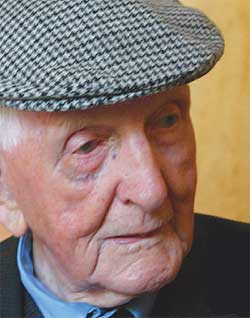
DAN KEATING : January 2, 1902 - October 2, 2007.

UPDATE: Removal tonight (THURSDAY 4th OCTOBER) at seven thirty from Tralee Nursing Home to Kiltalla Church (four miles past Castlemaine).
Funeral mass tomorrow
(FRIDAY 5th OCTOBER) at twelve noon.


DAN Keating was born in 1902 in the townland of Ballygamboon, Castlemaine, Co Kerry. In 1917, Dan went to work in Tralee at Jerry McSweeney's Grocery, Bar and Bakery. Jerry McSweeney's uncle, Richard Laide, was shot in the attack on Gortalea barracks which was the first barracks to be attacked in Ireland.
Dan joined the Fianna in Tralee in 1918 and about two years later he joined the Irish Republican Army. Others to join at that time were Gerry Moyles, Donnchadh Donoghue, Tommy Vale, John Riordan (Kerry All-Ireland footballer), Jerry O'Connor (better known as "Uncy"), Matt Moroney and Paddy and Billy Griffin.

In the meantime Dan met a soldier who used to frequent the bar where he worked and during conversations procured a rifle from him. This was then handed over to Johnny O'Connor of the Farmers' Bridge unit. Dan was later to join this unit which included men of the calibre of Johnny Duggan, Johnny O'Connor, Timmy Galvin, Moss Galvin, Jack Corkery, Jim Ryle, Mick Hogan and Jamesy Whiston. This unit was very active from 1920 to 1924 and many of its members took part in the Headford ambush which claimed the lives of approximately 20 British soldiers. Volunteers Danny Allman and Jimmy Baily also lost their lives at Headford.
Dan took part in the ambush at Castlemaine in which eight RIC and Black-and-Tans were killed. Gerry Moyles was severely injured in this encounter. The last ambush in Kerry took place in Castleisland on the night before the Truce and Dan also participated in this. Four RIC members were killed in this action and Volunteers Jack Shanahan, Jack Prenderville, John McMahon and John Flynn also lost their lives.


In 1922 Dan was transferred to a unit in Tralee which was commanded by Tommy Barton of Ballyroe when they occupied Ballymullen barracks for a period of three months. Dan took part in the attack on Listowel barracks, now occupied by the Free Staters, in which one Free Stater was shot dead.
In Limerick, Dan, along with comrades from Kerry, fought the Free State troops over a period of ten days. Republican Volunteers Patrick Foran, Charlie O'Hanlon and Tom McLoughlin lost their lives there, Dan was then sent to Tipperary to instruct Gerry Moyles to return to Kilmallock but on the way they were surrounded by Free Staters. After a battle at Two Mile Bridge Dan and his comrades were taken prisoner and held in Thurles barracks for two days before being conveyed to Portlaoise jail where he was held for six months. This was to be the first of many times Dan was interned by the Free State.
During this period in Portlaoise the jail was burned and Volunteer Paddy Hickey from Dublin was shot dead. Dan was then transferred to the Curragh Internment Camp and was held there until March 1923. A Free State soldier named Bergin from Nenagh, who became friendly with the Republican prisoners and acted as a courier to Republicans on the outside, was executed by the Staters.

Dan was charged with possession of a shotgun in 1930 and was issued a summons but did not attend court and was fined £1. In the true Republican tradition he refused to pay and was sent to Limerick and held for one week. During a court case in Tralee involving Johnny O'Connor and Mick Kennedy, in which they refused to recognise the court, their supporters in the courthouse cheered loudly and when things died down the judge ordered Dan Keating to be brought up before him and gave him three months for contempt. Dan was jailed in Cork with Johnny O'Connor but after a hunger strike by Johnny both were released after three weeks.

The next time Dan was interned was after O'Duffy's visit to Tralee; he was sentenced to six months in Arbour Hill. Dan was later captured in Carrigans in Clonmel by a policeman who had previously arrested him in Tralee and was taken first to Thurles and from there to the Curragh where he was held for three years and six months. In this period the camp was the camp was burned and Barney Casey from Longford was shot dead.
Dan was also on active service in England during the early 1940s.

Dan returned to work in Dublin and operated as a barman in the Eagle House, James Street, the Cornet and the Kilmardenny public houses.
Dan's other great interest was Gaelic games, and indeed between football and hurling he has attended more than 140 All-Ireland senior finals including replays, which must be a record in itself. When Dan retired he returned to Kerry in 1978 and resided at Ballygamboon, Castlemaine.

In 2004 Dan Keating replaced George Harrison of Mayo and New York as the fourth Patron of Sinn Féin Poblachtach since 1986, following in the footsteps of such illustrious Republicans ad Comdt-General Tom Maguire and Michael Flannery of Tipperary and New York.

During his long, healthy and adventurous lifetime Dan has seen many splits and deviations from Republican principles, but he remained loyal and true to the end.

Dan Keating died in Tralee on October 2, 2007, after a short illness.

I measc Laochra na nGael go raibh sé .
(From here )
The authors of this blog have met Dan on many an occasion at various republican functions over the years : we have had the honour and the pleasure to sit-in on and partake in some of the many conversations with the man. His wit and historical wisdom and knowledge will be sorely missed , but his comrades will ensure that those attributes are passed-on as best we can to future generations.
Slán go fóill , A Chara.


Wednesday, October 03, 2007

THEY ARE HELD IN BELFAST JAIL .......

From 'The United Irishman' newspaper, January 1958 .

HELD WITHOUT CHARGE OR TRIAL :

D. Morgan , 65 Cullingtree Road , Belfast , County Antrim .
J. Jameson , 2 Cullingtree Road , Belfast .
B. McLoughlin , 28 Irwin Street , Belfast .
Joe Donnelly , 16 Osman Street , Belfast .
P.L. Martin , 27 Rochville Street , Belfast .
R. McKnight , 32 McAuley Street , Belfast .
A. Murray , 13 Saint James' Gardens , Belfast .
I. Bell , 15 Upton Cottages , Belfast .
D. Toner , 8 Emily Place , Belfast .
E. O' Neill , 16 Seaforte Street , Belfast .
J. Cahill , 60 Divis Street , Belfast .
F. Cahill , 60 Divis Street , Belfast .
Sammy O' Hanlon , 1 Annalle Street , Belfast .
A. McMillen , 17 Venice Street , Belfast .
D. McAlinden , 37 Kenard Avenue , Belfast .
B. O' Reilly , 34 Linden Street , Belfast .
J. McGuirk , 37 Institution Place , Belfast .
L. McGuirk , 37 Institution Place , Belfast .
C. P. Martin , 36 Commedagh Drive , Belfast .
T. Heenan , 17 Violet Street , Belfast .
W. McKee , 89 McDonnell Street , Belfast .
F. Card , 6 Kane Street , Belfast .

(MORE LATER).


ECONOMY IN CRISIS - An Historical Perspective.......

By any standards the economy of Ireland , North and South , can be described as being in a sorry mess with crisis , recession and imminent bankruptcy the most constant themes of economic discussion , intermittently over the last decade and ceaselessly in the last three years . In this article , Peter Graham surveys the factors which have produced this economy , and the historical role of foreign and native Irish capital.

From 'IRIS' magazine , November 1982.

At the same time , the extension of the welfare state from Britain into the North of Ireland held the lid on its enormous social deprivation , and further distanced comparisons between it and the 26 Counties for at least three decades .

Still , the Six Counties' position as the 'outermost region' of the so-called 'United Kingdom' economy left it increasingly weaker in relation to 'other' regions , with unemployment rates always substantially up on Britain's and economic growth lagging far behind , its ailments largely ignored by a preoccupied Westminster .

The explosion of civil unrest in the late 1960's , developing into a renewed war of national liberation ('1169...' Comment - ...which is what it is to some of us, whilst others [including the SDLP and this shower] seek only better treatment from the British crown) , has since scared off much investment capital from the North , such as it was , and has left British public spending as the temporary 'growth industry' . Even this though has been increasingly cut back in the three years of Margaret Thatcher's monetarism.......
(MORE LATER).


DIVIS FLATS : Building Towards A Demolition Campaign .......
Divis Flats , at the bottom of the Falls Road in West Belfast , have acquired a reputation for 'trouble' - of all kinds - and social deprivation ever since they were built in the 1960's . They have also endured some of the severest British repression meted out during the past 14 years , and replied with some of the fiercest resistance . Local resident and community activist Jim Faulkner examines the new resurgence of morale in the flats complex and the prospects it faces in its biggest battle yet - for total demolition .
From 'IRIS' magazine , November 1983 .

A similar preoccupation with their 'image' had prompted the Housing Executive to replace a broken pane of glass in the front door of the Valliday family's flat (which the family had been asking for all year) immediately after young Kevin Valliday was killed in an INLA bombing tragedy in September 1982- knowing that TV cameras would soon be around .

Divis Flats' agonising housing and environmental conditions have forced sixty-four per cent of householders surveyed to apply for a transfer out of the flats . About fifty per cent want to be rehoused within the Divis area , twenty per cent would be prepared to move to other estates in Nationalist West Belfast and the remaining thirty per cent would be prepared to move outside the Divis area but would want to remain within the lower Falls area .

If these statistics accurately reflect the preferences of Divis residents , they are an important guide to the future planning strategies of the Divis Residents' Association, which has the task of taking action on behalf of local people to secure the demolition of the flats.......
(MORE LATER).


Tuesday, October 02, 2007

DAN KEATING , IRISH REPUBLICAN : January 2nd 1902 - October 2nd 2007 .


" Anybody can make history . Only a great man can write it."
(Oscar Wilde)

Dan Keating made history , and helped write and record it. A principled Irish Republican from his teenage years to his last breath , Dan never gave up on the Cause and was a beacon of strength to all he came into contact with . Over his many years of involvement in this Struggle , he could have taken the easy way out many times but his commitment to righting a wrong would never allow for that . His passing will leave a huge gap in the hearts of his many friends and comrades.

Go raibh suaimhneas síoraí dá anam uasail .


CROMWELL,WEXFORD - 2nd OCTOBER 1649 :


'Cromwell arrived at Wexford on the 2nd of October 1649 with about 6000 men, 8 heavy siege guns and 2 mortars. On the 6th of October, Cromwell concentrated his force on the heights overlooking the southern end of the town.....the destruction of Wexford was so severe that it could not be used either as a port or as winter quarters for the Parliamentarian forces. One Parliamentarian source therefore described the sack as "incommodius to ourselves". Cromwell reported that the remaining civilians had "run off" and asked for soldiers to be sent from England to re-populate the town and re-open its port.....'
(From here)

The Curse Of Cromwell by William Butler Yeats.

'You ask what - I have found, and far and wide I go:
Nothing but Cromwell's house and Cromwell's murderous crew,
The lovers and the dancers are beaten into the clay,
And the tall men and the swordsmen and the horsemen, where are they?
And there is an old beggar wandering in his pride - -
His fathers served their fathers before Christ was crucified.
O what of that, O what of that,
What is there left to say?

All neighbourly content and easy talk are gone,
But there's no good complaining, for money's rant is on.
He that's mounting up must on his neighbour mount,
And we and all the Muses are things of no account.
They have schooling of their own, but I pass their schooling by,
What can they know that we know that know the time to die?
O what of that, O what of that,
What is there left to say?

But there's another knowledge that my heart destroys,
As the fox in the old fable destroyed the Spartan boy's
Because it proves that things both can and cannot be;
That the swordsmen and the ladies can still keep company,
Can pay the poet for a verse and hear the fiddle sound,
That I am still their servant though all are underground.
O what of that, O what of that,
What is there left to say?

I came on a great house in the middle of the night,
Its open lighted doorway and its windows all alight,
And all my friends were there and made me welcome too;
But I woke in an old ruin that the winds howled through;
And when I pay attention I must out and walk
Among the dogs and horses that understand my talk.
O what of that, O what of that,
What is there left to say? '


Cromwell's dead and gone , but the bastard seeds he and his like have planted live on , in our native gombeen men and women and in the actions and deeds of their foreign counterparts...


Monday, October 01, 2007

BELFAST JAIL/ ECONOMY IN CRISIS/ DIVIS FLATS .

THEY ARE HELD IN BELFAST JAIL .......

From 'The United Irishman' newspaper, January 1958 .

HELD WITHOUT CHARGE OR TRIAL :

Matt Loy , 66 Linenhall Square , Newry , County Down (interned after five months sentence) .
Dominic Loy , 66 Linenhall Square , Newry .
R.J. Fitzpatrick , Newry
(interned after five months sentence) .
J.F. Moore , Newry
(interned after five months sentence) .
Gerry Mulligan , 8 O' Neill Avenue , Newry .
James Morgan , 34 Lower Water Street , Newry .
Jack Moore , Dromalane , Newry .
James Savage , John Martin's Garden , Newry .
Pat Murtagh , Jerret's Pass , Newry .
Liam O' Neill , 60 Norfolk Street , Belfast , County Antrim .
Sean McKearney , 209 Mount Pottinger Road , Belfast .
Adam McIllhatton , 34 Forest Street , Belfast .
Paul Carlton , Ashton Street , Belfast .
Liam McMillan , 40 Ton Street , Belfast .
B. Boswell , 5 New Andrew Street , Belfast .
William Kelly , 12 Adela Street , Belfast .

(MORE LATER).


ECONOMY IN CRISIS - An Historical Perspective.......

By any standards the economy of Ireland , North and South , can be described as being in a sorry mess with crisis , recession and imminent bankruptcy the most constant themes of economic discussion , intermittently over the last decade and ceaselessly in the last three years . In this article , Peter Graham surveys the factors which have produced this economy , and the historical role of foreign and native Irish capital.

From 'IRIS' magazine , November 1982.

As an alternative to investment in home industries , the far easier attractions of the lucrative London stock market drew capital out of Ireland , and the acquired wealth of the prosperous native followed the rack-rented spoils of the absentee landlord .

As the banks grew up and spread like wildfire throughout the towns of Ireland in the nineteenth century , picking up the small deposits of the lowly , they too concentrated not on investing in Irish industrial development but rather in Britain ; this country was starved of its necessary capital and so we became , and have remained to the present day , an economic peculiarity in normal colonial and neo-colonial relationships , in exporting capital to the dominant country rather than being the recipient of capital for exploitative development .

Whatever capital was attracted to Ireland from Britain was generally concentrated in the north-east , which , up until recently , looked more stable and attractive for investment than other areas of the country . From 1922 then , the Six Counties continued and maintained its industrialisation , controlling by sectarian divisions the class conflict that might otherwise have arisen , particularly during the depression of the 1930's. During the Second World War, the British link gave the North's industries , particularly ship-building , an enormous boost which continued prosperity for its owners into the post-war 1950's.......
(MORE LATER).


DIVIS FLATS : Building Towards A Demolition Campaign .......
Divis Flats , at the bottom of the Falls Road in West Belfast , have acquired a reputation for 'trouble' - of all kinds - and social deprivation ever since they were built in the 1960's . They have also endured some of the severest British repression meted out during the past 14 years , and replied with some of the fiercest resistance . Local resident and community activist Jim Faulkner examines the new resurgence of morale in the flats complex and the prospects it faces in its biggest battle yet - for total demolition .
From 'IRIS' magazine , November 1983 .

In November 1982 , a woman and her 2-year-old son were trapped in a lift in Divis Flats for one-and-a-half hours ; the child became hysterical and his mother had to climb through the roof of the lift to summon help - for days after the incident the child suffered from convulsions , vomiting and nightmares .

Twenty-eight per cent of households have a family member who has been injured , including broken limbs , as a result of accidents on broken staircases or holes in the pavements and balcony walkways . In one tragedy in February this year (1983) , 4-year-old Jimmy McGivern from Cullingtree Walk in the Divis complex was drowned after falling into an open sewer near his home , while playing at the site of the multi-million-pound Westlink motorway then under construction .

Farrans, the British construction company building the motorway , were fined only a few hundred pounds for criminal neglect in leaving the sewer uncovered . On the morning of young Jimmy's funeral , the Housing Executive despatched their cleaning staff to the balcony where he had lived - knowing that television cameras would be there - and the balcony area was made spotless . But the balcony directly above - Cullingtree Row - had not been swept for three days and stayed littetred with rubbish . Another death led to a pane of glass being replaced.......
(MORE LATER).


Saturday, September 29, 2007


MISSED OPPORTUNITIES...


On this weekend (Saturday 29th and Sunday 30th September) in 1979, Pope John Paul II ,the spiritual head of the Catholic Church, became the first Pope to visit Ireland . Those half-hoping that such an influential person might use the occasion to highlight the many injustices inflicted by Westminster on the Irish were to be disappointed : instead , we got the opposite - a pro-establishment , pro-Westminster/Free State and anti-Republican rant , during which , in an address to the Irish nation ,the man said - ""On my knees I beg you to turn away from the paths of violence and return to the ways of peace."

No mention of the British military and political presence on the island ; no reference to the (continuing) claim of British jurisdiction over six Irish counties ; not a word about "the paths of violence" which lead to Number 10 Downing Street: condemnation , only , for those attempting to resist the foreign occupation . What a wasted opportunity !

However , we salute those who wear a similar collar and are not afraid to 'speak' up - "Sometimes, I'm jealous of the Palestinians. They have one enemy, the Israelis.... The Israelis are stealing Palestinian land and the Palestinians are resisting it and so they fight..."
And so do we....


Friday, September 28, 2007

THEY ARE HELD IN BELFAST JAIL .......

From 'The United Irishman' newspaper, January 1958 .

HELD WITHOUT CHARGE OR TRIAL :

William Robinson , Mountjoy , Dungannon , County Tyrone .
Pat Devlin , 6 Arlit , Clonhybracken , Dungannon .
Paddy McGorry , Mountjoy , Dungannon .
John McAliskey , Derryloughan , Coalisland , Tyrone .
Patrick Quinn , Aidain , Coagh , Cookstown , Tyrone .
T. J. Quinn , Mooretown , Cookstown , Tyrone .
Gerry O' Neill , Ardboe , Dungannon .
Patrick Corey , Coalisland , Tyrone .
Brendan Foley , 8 Charlemont Street , Dungannon .
Eamonn Devlin , 22 Charlemont Street , Dungannon .
Patrick Devlin , 22 Charlemont Street , Dungannon .
Barney Young , Ballinderry Bridge , Cookstown .
Charles McGlinchy , Strabane , County Tyrone .
John Duffy , 54 O' Neill Avenue , Newry , County Down .
Vincent McCormack , Newry .
Joseph Campbell , 31 Castle Street , Newry
(interned after a five year sentence) .
(MORE LATER).


ECONOMY IN CRISIS - An Historical Perspective.......

By any standards the economy of Ireland , North and South , can be described as being in a sorry mess with crisis , recession and imminent bankruptcy the most constant themes of economic discussion , intermittently over the last decade and ceaselessly in the last three years . In this article , Peter Graham surveys the factors which have produced this economy , and the historical role of foreign and native Irish capital.

From 'IRIS' magazine , November 1982.

The native Irish capitalist , and indeed the foreign capitalist that is based in Ireland - a 'landed man of substance' , who could have been expected to cause the industrial revolution to occur throughout Ireland , was by no means missing from the scene : even before the removal of the Penal Laws due to O' Connell's 'Catholic Emancipation Bill' in 1829, Irish Catholic merchants were prospering in supplying Irish agricultural produce to English cities which were growing as they industrialised , and also taking advantage of the need for that produce due to the French wars .

Much of the economic barriers to Catholic prosperity had already been breached by necessity , for the simple reason that the very small minority of wealthy English Proteatant landowners wanted to deal in land and other commodities with those Irish Catholic tenants who had prospered relatively and possessed wealth .

The propulsion behind Catholic Emancipation was not therefore so much economic as social and political ; rather than become industrialists , the native wealthy Irish were singularly obsessed with the status of obtaining access to education , the professions and politics , which were all opened to them by the ending of the Penal Laws . This social phenomenon was itself of course a result of the English ascendancy's social system in Ireland , yet it was so powerful as to divert the economic logic of the growth in native wealth.......
(MORE LATER).


DIVIS FLATS : Building Towards A Demolition Campaign .......
Divis Flats , at the bottom of the Falls Road in West Belfast , have acquired a reputation for 'trouble' - of all kinds - and social deprivation ever since they were built in the 1960's . They have also endured some of the severest British repression meted out during the past 14 years , and replied with some of the fiercest resistance . Local resident and community activist Jim Faulkner examines the new resurgence of morale in the flats complex and the prospects it faces in its biggest battle yet - for total demolition .
From 'IRIS' magazine , November 1983 .

The British Army observation post on top of Divis Tower , which has a commanding view of the flats complex and of the Falls Road as far as the Royal Victoria Hospital (where there is another British Army observation post) is an obscenity that emphasises the reality of Divis as , in effect , an open prison , with the 'inhabitants' under continual surveillance .

Surveys have shown that about half of the flats have serious dampness , especially in the bedrooms , and that in sixty per cent of those damp flats personal belongings such as clothing , bedding , carpets and furniture have been damaged by mould and blackening , and fifty-seven per cent of affected households felt that some of the family had health problems such as bronchitis and asthma , as a result of sleeping in damp conditions over a long period .

The health profile of the area generally is no better than that of the Moyard area , another flats complex in nationalist West Belfast , where there have been recent cases of polio . Divis Flats , for its part , has a number of families affected by tuberculosis , dysentery and other contagious diseases . The rats in and around the complex are bigger than the cats and the dogs are afraid to go near them . There are only three passenger lifts to service the 12 blocks of flats and they are constantly breaking down.......
(MORE LATER).


Thursday, September 27, 2007


A pamphlet has just been published on this very subject, by the Very Rev. P. Malone, P.P., V.F., of Belmullet, co. Mayo, and in this he says: "I have seen the son, standing upon the deck of the emigrant ship, divest himself of his only coat, and place it upon his father's shoulders, saying, 'Father, take you this; I will soon earn the price of a coat in the land I am going to.' "

Such instances, which might be recorded by the hundred, and the amount of money sent to Ireland by emigrants for the support of aged parents, and to pay the passage out of younger members of the family, are the best refutation of the old falsehood that Irishmen are either idle or improvident.....
(From here)

We are endeavoring to re-build an Island nation which will be proud to remember its past , and determined to ensure that that island nation will be free of the savagery inflicted on it over the centuries . Your assistance would be appreciated....
Go raibh máith agat.


Wednesday, September 26, 2007

THEY ARE HELD IN BELFAST JAIL .......

From 'The United Irishman' newspaper, January 1958 .

HELD WITHOUT CHARGE OR TRIAL :

James O' Connor , Cullion , Desertmartin , Derry .
Bernard Cassidy , Slaughtneil , Maghera , Derry .
J.J. Cassidy , Halfgain , Maghera , Derry .
D. Cassidy , Halfgain , Maghera , Derry .
Charles Young , Ballinderry , Cookstown , County Tyrone .
P. McLean , B. A. , Altamuskin , Omagh , Tyrone .
Gerald O' Docherty , Ballycolman Avenue , Strabane , Tyrone .
Brendan McNamee , Sixmilecross , Tyrone .
Frank McLoughlin , Ballyfatton , Sion Mills , Tyrone .
Seán Loughran , 21 Drumglass , Dungannon , Tyrone .
Joe McCallion , 8 Melmount Villas , Strabane .
Mick O' Kane , Bridge Street , Strabane .
Thomas O' Connor , Tullydonnell , Dungannon .
Brendan Mallon , Coagh , Cookstown , Tyrone .
Mick Kelly , Coagh , Cookstown .
Liam Lavery , Coagh , Cookstown .
J.F. Carr , Ballygittle , Stewartstown , Tyrone .

(MORE LATER).


ECONOMY IN CRISIS - An Historical Perspective.......

By any standards the economy of Ireland , North and South , can be described as being in a sorry mess with crisis , recession and imminent bankruptcy the most constant themes of economic discussion , intermittently over the last decade and ceaselessly in the last three years . In this article , Peter Graham surveys the factors which have produced this economy , and the historical role of foreign and native Irish capital.

From 'IRIS' magazine , November 1982.

An industrial revolution in Ireland confined itself therefore largely to the north-east , where the necessity of maintaining political control by sectarianism strangled the ideological revolution which was experienced elsewhere in Europe by reason of that economic development .

Conversely , the southern unindustrialised part of the country was very receptive to these new ideological concepts of freedom - there were of course some industries established down the east coast , mainly in Dublin and Cork , but in the main the rest of Ireland lay non-industrialised and economically under-developed , dependent on its agricultural economy other than perhaps for its main exceptions of brewing and distilling . Politically , Britain obviously had much responsibility for this failure to industrialise in Ireland .

Certainly the Act Of Union, at the beginning of the key period of the nineteenth century , left Ireland an open economy , linked closely to Britain and drastically subservient to her economically . But the fact remains that those industries already mentioned - linen , ship-building , brewing and distilling - did prosper and no satisfactory reasons why others could not , would seem to be apparent.......
(MORE LATER).


DIVIS FLATS : Building Towards A Demolition Campaign .......
Divis Flats , at the bottom of the Falls Road in West Belfast , have acquired a reputation for 'trouble' - of all kinds - and social deprivation ever since they were built in the 1960's . They have also endured some of the severest British repression meted out during the past 14 years , and replied with some of the fiercest resistance . Local resident and community activist Jim Faulkner examines the new resurgence of morale in the flats complex and the prospects it faces in its biggest battle yet - for total demolition .
From 'IRIS' magazine , November 1983 .

The inevitable consequence for those on supplementary benefits is high debt , with the NIHE and the NIES routinely using the Payment For Debt Act to deduct arrears at source from unemployment benefits . In some of these cases , a family with , say , three children is left after deductions with less than £30 a week to feed and cloth themselves .

Both Sinn Fein and the locally-backed 'Welfare Rights' project have been trying over the last year to tackle these problems by providing support and getting people to understand how the system works and how to take on the bureaucratic agencies that run those schemes and , to this end , a 'Benefit Take-Up Campaign' was launched in Divis Flats recently , on similar lines to a recent campaign in the Ballymurphy area which netted over £100,000 for people in that area .

Financially the Divis Flats campaign has already been a success , but additionally it has helped people to fight for what is theirs of right and not to regard it as a sort of 'charity' . However , the biggest problem in Divis is the flats themselves - they simply aren't fit to live in . In surveys carried out in the area since 1981 by a local study group , an overwhelming 96 per cent of householders stated that they didn't wish to continue living in Divis . 2,000 people live on top of each other in 12 blocks totalling 700 flats and a further 100 flats in the tower block . Then there's the British Army observation post on top of that tower block.......
(MORE LATER).


Tuesday, September 25, 2007


THE DESTRUCTION OF IRISH TRADE
The early Irish were famous for their excellence in arts and crafts, especially for their wonderful work in metals, bronze, silver and gold. By the beginning of the 14th century trading ships were constantly sailing between Ireland and the leading ports of the Continent.

COMPETITION WITH ENGLAND
This commerce was a threat to English merchants who tried to discourage such trade. They brought pressure on their government, which passed a law in 1494 that prohibited the Irish from exporting any industrial product, unless it was shipped through an English port, with an English permit after paying English fees. However, England was not able to enforce the law. By 1548 British merchants were using armed vessels to attack and plunder trading ships travelling between Ireland and the Continent(unofficial piracy).

ENGLISH MEN, ENGLISH SHIPS, ENGLISH CREWS, ENGLISH PORTS AND IRISH GOODS
In 1571 Queen Elizabeth ordered that no cloth or stuff made in Ireland could be exported, even to England, except by English men in Ireland. The act was amended in 1663 to prohibit the use of all foreign-going ships, except those that were built in England, mastered and three-fourths manned by English, and cleared from English ports. The return cargoes had to be unloaded in England. Ireland's shipbuilding industry was thus destroyed and her trade with the Continent wiped out.

TRADE WITH THE COLONIES
Ireland then began a lucrative trade with the Colonies. That was "cured" in 1670 by a new law which forbade Ireland to export to the colonies "anything except horses, servants, and victuals." England followed with a decree that no Colonial products could be landed in Ireland until they had first landed in England and paid all English rates and duties.

Ireland was forbidden to engage in trade with the colonies and plantations of the New World if it involved sugar, tobacco, cotton, wool, rice, and numerous other items. The only item left for Ireland to import was rum. The English wanted to help English rum makers in the West Indies at the expense of Irish farmers and distillers.


IRISH WOOL TRADE CURTAILED, THEN DESTROYED
When the Irish were forbidden to export their sheep, they began a thriving trade in wool. In 1634 The Lord Lieutenant of Ireland, Lord Stafford, wrote to King Charles I: "All wisdom advises us to keep this (Irish) kingdom as much subordinate and dependent on England as possible; and, holding them from manufacture of wool (which unless otherwise directed, I shall by all means discourage), and then enforcing them to fetch their cloth from England, how can they depart from us without nakedness and beggary?"

In 1660 even the export of wool from Ireland to England was forbidden. Other English laws prohibited all exports of Irish wool in any form. In 1673, Sir William Temple advised that the Irish would act wisely by giving up the manufacture of wool even for home use, because "it tended to interfere prejudicially with the English woolen trade."

George II sent three warships and eight other armed vessels to cruise off the coast of Ireland to seize all vessels carrying woolens from Ireland. "So ended the fairest promise that Ireland had ever known of becoming a prosperous and a happy country."

LINEN TRADE REPRESSED
Irish linen manufacturing met with the same fate when the Irish were forbidden to export their product to all other countries except England. A thirty percent duty was levied in England, effectively prohibiting the trade. English manufacturers, on the other hand, were granted a bounty for all linen exports.

BEEF, PORK, BUTTER AND CHEESE
In 1665 Irish cattle were no longer welcome in England, so the Irish began killing them and exporting the meat. King Charles II declared that the importation of cattle, sheep, swine and beef from Ireland was henceforth a common nuisance, and forbidden. Pork and bacon were soon prohibited, followed by butter and cheese.

SILK AND TOBACCO
In the middle of the 18th century, Ireland began developing a silk weaving industry. Britain imposed a heavy duty on Irish silk, but British manufactured silk was admitted to Ireland duty-free. Ireland attempted to develop her tobacco industry, but that too was prohibited.

FISH
In 1819 England withdrew the subsidy for Irish fisheries and increased the subsidies to British fishermen - with the result that Ireland's possession of one of the longest coastlines in Europe, still left it with one of the most miserable fisheries.

GLASS
Late in the 18th century the Irish became known for their manufacture of glass. George II forbade the Irish to export glass to any country whatsoever under penalty of forfeiting ship, cargo and ten shillings per pound weight.

THE RESULT
By 1839, a French visitor to Ireland, Gustave de Beaumont, was able to write:

"In all countries, more or less, paupers may be discovered; but an entire nation of paupers is what was never seen until it was shown in Ireland. To explain the social condition of such a country, it would be only necessary to recount its miseries and its sufferings; the history of the poor is the history of Ireland."

CONCLUSION

From the 15th through the 19th centuries, successive English monarchies and governments enacted laws designed to suppress and destroy Irish manufacturing and trade. These repressive Acts, coupled with the Penal Laws, reduced the Irish people to "nakedness and beggary" in a very direct and purposeful way. The destitute Irish then stood at the very brink of the bottomless pit. When the potato blight struck in 1845, it was but time for the final push.....
(From here)

We are no longer bitter to the point of distraction , nor do we seek 'revenge' .
But we continue to demand Justice .

The 1169 Team.


Monday, September 24, 2007

THEY ARE HELD IN BELFAST JAIL .......

From 'The United Irishman' newspaper, January 1958 .

Held Without Charge Or Trial :

Séan Ramsey , 12 Artillery Street , Derry City .
Patrick Molloy , Mahera , County Derry .
David Ramsey , 41 Central Drive , Derry City .
Séan Gallagher , 4 Cedar Street , Derry City .
Brendan McHarry , Crebarkeley , Dungiven , County Derry .
John McCloskey , Cluntygeeragh , Dungiven .
John F. McCloskey , Cluntygeeragh , Dungiven .
Kevin McGill , Crebarkeley , Dungiven .
Jack Hegarty , Draperstown , County Derry .
John McCusker , Kerley , Maghera , County Derry .
Frank Donnelly , Falgatraney , Maghera , County Derry .
Patrick L. Docherty , 134 Taobh an Portaigh , Derry City .
James S. Devlin , Ballyneil , Hoop , Moneymore , Derry .

(MORE LATER).


ECONOMY IN CRISIS - An Historical Perspective.......

By any standards the economy of Ireland , North and South , can be described as being in a sorry mess with crisis , recession and imminent bankruptcy the most constant themes of economic discussion , intermittently over the last decade and ceaselessly in the last three years . In this article , Peter Graham surveys the factors which have produced this economy , and the historical role of foreign and native Irish capital.

From 'IRIS' magazine , November 1982.

Notwithstanding all the foreign influence and interference , there was emerging in Ireland a native land-owning class , which has remained and strengthened its stranglehold on the agricultural economy up to the present day .

The agricultural situation in the north-east of Ireland was of course different - the plantations of vast areas of land there with Protestant settlers made those settlers essential, politically , to their landlords , and thus in a far stronger tenure position than the native Irish tenants further south . This 'security' among northern Protestant farmers by the mid-eighteenth century made it unnecessary for them to espouse the separatist cause as a tool for extracting economic benefit .

The resulting weakness of the north-eastern landlords in their inability to over-exploit or drive off their tenants , also saw the intensified industrial development of the north-east as landlords strove to increase their income by diversification into investment , ultimately into the linen and ship-building industries on which that region's prosperity became based . To insure his political position , the northern industrialist made sure that those who worked in his factories were Protestants . This was not a distinction which saved those workers from any of the hardships of capitalist exploitation of their labour but , stimulated by organised sectarianism , it did keep them aware of their 'advantage' over the Catholics of the same 'class'.......
(MORE LATER).


DIVIS FLATS : Building Towards A Demolition Campaign .......
Divis Flats , at the bottom of the Falls Road in West Belfast , have acquired a reputation for 'trouble' - of all kinds - and social deprivation ever since they were built in the 1960's . They have also endured some of the severest British repression meted out during the past 14 years , and replied with some of the fiercest resistance . Local resident and community activist Jim Faulkner examines the new resurgence of morale in the flats complex and the prospects it faces in its biggest battle yet - for total demolition .
From 'IRIS' magazine , November 1983 .

The Divis Youth And Cultural Development Group provides a place for young people to meet , play pool , listen to music and discuss their future . It is an important development where one-third of the 2,000 population is under 16 years of age . The Divis Education Project, which was formed about three years ago by social and community workers to tackle truancy (or 'beaking' as it is known locally) , has formed a new committee with more local involvement and set up a craft workshop for unemployed teenagers - with facilities for making harps and other ornaments as well as practical household goods and furniture .

The workshop has attracted so much interest among the huge numbers of young unemployed that people have had to be turned away for lack of space and financial resources , and a fundraising drive has been undertaken to expand facilities over the nect couple of years . The project has also set up a library in Divis Flats , including books in Irish to reflect the great interest in the language locally . Two Irish language classes a week are held at the Education Project's school ('Crazy Joe's') and the local Sinn Fein cumann also holds classes there .

Sinn Fein has opened an advice centre in the Flats (where its Belfast housing department is based) where voluntary workers deal with the array of day-to-day social , housing , benefits and Brit/RUC harassment problems faced by the local people , over eighty per cent of whom are in receipt of some degree of state benefits , while over sixty per cent of the working population is unemployed . Debt to the 'Housing Executive' and to the electricity service is a major worry for people ; the exorbitant cost and inefficiency of the old , gas central heating means that residents use electric heaters and 'Supersers' to heat living-rooms and bedrooms , with some families facing quarterly electricity bills of £150 to £200 , money they haven't got.......
(MORE LATER).