Monday, February 11, 2008

"...young babies and adults , some ninety years of age.."

"Plunket carried out his biggest evictions in November 1860. During the preceding days large numbers of police were drafted into the area. Troops came from the surrounding towns and a company of the 24th Infantry from the Curragh. The local police did not take part. The people were terrified and the scenes of the helplessness and defeat and sadness were indescribable. Such troop movement had never been seen in the area. The eviction process lasted for three days.
On the first day a large eviction force under the command of Col. Knox, the Mayo High Sheriff, proceeded from Cappaduff bridge to begin the grizzly task. The houses were razed to the ground by the crowbar brigade and then handed over to Plunkett's men. Fr Lavelle and the tenants looked on helplessly and made no resistance -- they just accepted the finality of it all. Tenants on adjoining estates were warned not to interfere in any way such as providing shelter or solace to the evicted, so the unfortunates, some as old as ninety years and young babies, had to fend for themselves on the mountainside on a cold, wet November's night.... "

(From here)


"The work of undermining the population is going on stealthily, but steadily. Each succeeding day witnesses its devastation - more terrible than the simoon and more deadly than the plague. We do not say that there exists a conspiracy to uproot the 'mere Irish'; but we do aver, that the fearful system of wholesale ejectment, of which we daily hear, and which we daily behold, is a mockery of the eternal laws of God - a flagrant outrage of the principles of nature. Whole districts are cleared. Not a roof-tree is to be seen where the happy cottage of the labourer or the snug homestead of the farmer at no distant day cheered the landscape. The ditch side, the dripping rain, the cold sleet are the covering of the wretched outcast the moment the cabin is tumbled over him; for who dare give shelter of protection from 'the pelting or the pitiless storm?' Who has the temerity to afford him the ordinary rites of hospitality, when the warrant has been signed for his extinction... ? "
(From 'The Tipperary Vindicator' newspaper , 1844-1849, as quoted here)


"During the famous, or rather infamous, Partry evictions, an old man of eighty and a woman of seventy-four were amongst the number of those who suffered for their ancient faith. They were driven from the home which their parents and grandfathers had occupied, in a pitiless storm of sleet and snow. The aged woman utters some slight complaint; but her noble-hearted aged husband consoles her with this answer: "The sufferings and death of Jesus Christ were bitterer still." Sixty-nine souls were cast out of doors that day. Well might the Times newspaper say: "These evictions are a hideous scandal; and the bishop should rather die than be guilty of such a crime." Yet, who can count up all the evictions, massacres, tortures, and punishments which this people has endured...?"
(From here)
The root cause of the above barbarity is still militarily and politically represented on this isle . Some of the surviving generations of the above victims are determined that the evils which were inflicted on us will not be visited - or , indeed , even have the potential to be visited - on future generations . You can help...


Sunday, February 10, 2008

BOOT-BOYS FOR THE 'UNION' .....


Former British soldier gets 3 years’ jail for urinating on dying woman.

'A man who urinated on a disabled woman and sprayed her with shaving foam as she lay dying in the street was jailed for three years yesterday.
Anthony Anderson, 27, Hartlepool, was sentenced for outraging public decency when he degraded 50-year-old Christine Lakinski, who had collapsed in July this year.
Teesside Crown Court heard how Anderson, a former soldier, was celebrating his 27th birthday on the day he degraded his victim. She had been visiting friends and was walking home with some laminate flooring when she collapsed, striking her head as she fell.
She was spotted by a girlfriend of one of Anderson’s friends and a group gathered around her body. Anderson kicked her on the foot, then poured a bowl of water over her prone body, but she did not respond. Anderson then told his friends he was going to urinate on the woman as one of them filmed it on his mobile phone. In an ordeal lasting around 30 minutes Anderson also used shaving foam from a can to further degrade his victim.
Outside court, Ms Lakinski’s family read a statement, which said:
“We would like to thank the judge for his decision to jail Anthony Anderson.
We hope that prison will give him time to reflect on his disgusting actions as well as the opportunity to look at his conscience.
We remain totally shocked that anyone could behave in such an appalling way.”


Anderson was with his friends Scott Clement and Simon Whitehead when the humiliation took place, the court heard. The group left her motionless on the pavement and no-one thought to ring an ambulance until they had got ready to go nightclubbing, some 20 minutes later. Paramedics arrived about an hour after she collapsed, and found no sign of life. A postmortem revealed she died from pancreatic failure. Police traced the 999 call to Mr Clement and Anderson was arrested that night in a nightclub.'
(From here.)

A not unusual example of the calibre and mentality of British 'peace-keepers' that have 'served their country' , and not only on these shores . Not only are they unfit for any other job , but they are unfit to belong to the human race. May that poor woman Rest In Peace .


Friday, February 08, 2008

NOT WELCOME!


"Republicans throughout Ireland are strongly opposed to the impending visit by British Queen Elizabeth, who is also the British head of State, and will protest at this extravagant display of pomp and wealth.

But not alone for these reasons. Queen Elizabeth saw fit to award an OBE to Colonel Derek Wilford, Officer Commanding the Parachute Regiment on Bloody Sunday in Derry when they shot dead 14 unarmed civilians. Not exactly an inspiring role model for women? It matters not a whit that some of those armed forces are leaving Irish soil because their place will be taken by MI5 who are deeply embedded here.

There remains one huge obstacle to reconciliation between us and Britain and that obstacle is Partition. Part of the process of putting the past behind us and moving forward would be the removal of the illegal and unjust border that divides our country and our people. Have the courage Elizabeth Windsor and begin the process of handing back what has never belonged to you - the Six northeastern Counties. That would indeed be called a 'historic event'.

It has nothing to do with maturity on our part that we should welcome the Queen of England to our shores, rather it is the same slavish attitude that has always existed in Ireland. Being an occupied and colonised people for so long can make us willing participants in our own domination.

We reject the fraudulent claims of the English Queen to be 'Queen of Northern Ireland' ".

-statement from Cathleen Knowles McGuirk, Vice-President Republican Sinn Féin , June 26 last year , and still relevant now.
The Dublin Executive of Republican Sinn Fein intends to protest the visit of this English queen by holding a peaceful picket at the GPO in O'Connell Street in Dublin on the day of her visit . All welcome!
"There is always more brass than brains in an aristocracy."
- Oscar Wilde.


Wednesday, February 06, 2008

THE CATHOLIC HIERARCHY - PROPPING-UP THE ORANGE STATE........

At a press briefing on May 3rd, 1983, Bishop Cathal Daly declared that a vote for Sinn Fein was 'a wasted vote' , and that people should think seriously before risking being seen as 'supporting violence' . As polling day approached , the rising crescendo of calls from Bishop Daly and other members of the Catholic hierarchy became increasingly explicit in their support for the SDLP. Against the background of this intervention into the arena of nationalist party politics , Patricia Collins sketches the role played by the leadership of the Catholic Church over the past fourteen years against nationalist resistance .
From 'IRIS' magazine , July 1983.

Bishop Cahal Daly stated - " The armalite and the ballot box cannot be carried together ." ('1169...' Comment : Not so much that they "cannot be carried together" as that sections of those who were involved in this struggle and attempted to do so were quickly overcome by how easier (and financially rewarding) political life was when one joined the constitutionalists full time and deserted the revolutionary path.) Bishop Daly had turned his back on centuries of history and in particular on Irish history between 1918-21 . An IRA statement calling on the Bishop to spell out whether he believed the British presence in the North was morally good , was left unanswered .

Eventually , after more attacks on the Republican Movement , culminating in remarks at the funeral of Judge William Doyle in January 1983 , Bishop Cahal Daly summed up the Catholic hierarchy's political stance on 'violence' and the 'legitmacy of the Northern Ireland state' , in a major speech delivered in St Anne's Cathedral , Belfast , on March 22nd , 1983 . Misquoting the philosopher Karl von Clausewitz about war being the pursuit of political aims through other means ( according to Bishop Daly he said that war is 'diplomacy conducted by other means') the Bishop attempted to prove that since 'war' and 'politics' are - contrary to Clausewitz's view - different in nature , a group such as the Republican Movement *, which upholds the right to take up arms against a foreign occupation , cannot "...honestly and credibly claim to be a political movement.." ('1169..' Comment * not to be confused with the group which left the Movement in 1986 and registered itself as a 'political party' with Leinster House shortly afterwards.)

This intellectual balderdash was a poor attempt , in the words of the song , to 'brand Ireland's fight 800 years of crime' . But the bishop was to sink even lower : after saying that "...nationalists must acknowledge that the Stormont regime had notable successes and achievements to its credit .. " , Bishop Daly went on to openly justify the UDR , RUC and the legitmacy of the six-county state in his infamous St Anne's Speech.......
(MORE LATER).


BALLYMURPHY INTERVIEW.
From 'IRIS' magazine , July/August 1982.

William (64) and Anne Stone (55) have been living in their Ballymurphy home since 1954 , and have nine children - five daughters and four sons - aged between 14 and 35 . The eldest son , 26-year-old Liam , has been in the cages of Long Kesh Prison since 1976 .

By Ballymurphy standards , the Stone family have been relatively fortunate in one respect , with William in constant employment . Anne , too , had a part-time job at night in a restaurant , and has been actively involved in the Ballymurphy Tenants' Association since its beginnings . Anne was asked what it was like moving in to the Ballymurphy area : " We were allocated a house in Ballymurphy in 1954 . We lived with our parents at that stage on the Upper Crumlin Road with our four daughters . Just where 'Ballymurphy' was I didn't know . We arrived , and the house was in a deplorable state ."

Asked what were the facilities like at the time , Anne replied - " When we arrived in 1954 we hadn't a school , we had one shop for 600 houses , no bus services . We had nothing . A band of us got together to improve things . We organised voluntary subscriptions , jumble sales , ballots , bus runs - the lot . Ballymurphy was flung up , 600 houses , and it was supposed to have been built for young people with young families ! " Anne was asked about the early days spent getting things organised , and what she witnessed during the 'Civil Rights Riots' . And she was asked about her imprisoned son , Liam.......
(MORE LATER).


REPUBLICAN MOURNERS DEFEAT RUC.......
Between December 1983 and May 1987 , over 25 republican or nationalist funerals were systematically attacked by the RUC as a matter of deliberate British policy . The objective was to drive mourners off the streets so that later Britain could claim dwindling support for republicanism as 'evidenced' by the small numbers attending IRA funerals . As Jane Plunkett reports , the opposite happened . More and more people came out to defend the remains of republican dead , the RUC were exposed as being as brutal and sectarian as ever , and these two factors , combined with damaging international news coverage , eventually forced the British government to reverse its policy of attacking republican funerals .
From 'IRIS' magazine , October 1987.

In March , 1987 , the (P)IRA issued a statement listing 25 funerals since December 1983 at which mourners had been harassed , threatened or physically attacked by the RUC . The (P)IRA statement described British 'Law and Order' Minister Nicholas Scott's words - " Even in war , people are allowed to bury their dead in peace and dignity..." - as "...the height of hypocrisy , coming from the architect of ghoulishness.." , and stated - " The (P)IRA agrees that people should have the right to bury their dead in peace , and operations such as today's * will not recur if the RUC respects nationalist and republican dead." ( * On Friday , March 13th , 1987 , the (P)IRA exploded a bomb at Roselawn Cemetery gates , one hour before an RUC man was to be buried in that cemetery.)

Despite the ritual establishment 'hoo-hah' of condemnation , it was clear that the (P)IRA action at Roselawn accurately reflected the deep anger of many nationalists . It was this anger and the determined and courageous resistance shown by the mourners and bereaved families at three subsequent funerals which finally forced the RUC to retreat .

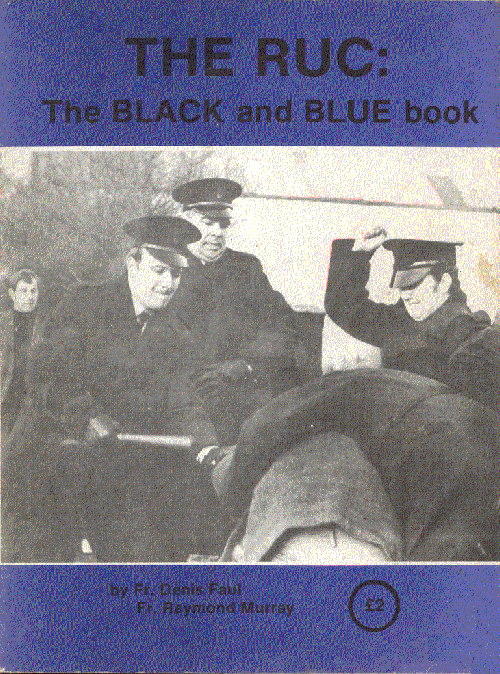
Initially , the RUC ignored the (P)IRA's warning : the funeral of Derry (P)IRA Volunteer Gerard Logue on March 24th , 1987 , was delayed for two hours by RUC efforts to hijack the coffin . The RUC went to the extent of seizing the keys of the hearse and threatening to drive it themselves . The mourners were squeezed together by the RUC , and then they were brutally batoned by them . The atmosphere throughout was extremely tense , but the determination of the anguished Logue family and of the 3,000 mourners held out , forcing the RUC eventually to back off . But still , the British forces of 'law and order' would not completely abandod their ghoulish policy.......
(MORE LATER).


Monday, February 04, 2008

" DESTROY THE BOATS...!"

'Robert FitzStephen landed at Bannow, near Waterford, in May, 1169, with an army of three hundred archers, thirty knights, and sixty men-at-arms. A second detachment arrived the next day, headed by Maurice de Prendergast, a Welsh gentleman, with ten knights and sixty archers. Dermod at once assembled his men, and joined his allies. He could only muster five hundred followers; but with their united forces, such as they were, the outlawed king and the needy adventurers laid siege to the city of Wexford. The brave inhabitants of this mercantile town at once set forth to meet them; but, fearing the result if attacked in open field by well-disciplined troops, they fired the suburbs, and entrenched themselves in the town. Next morning the assaulting party prepared for a renewal of hostilities, but the clergy of Wexford advised an effort for peace: terms of capitulation were negotiated, and Dermod was obliged to pardon, when he would probably have preferred to massacre. It is said that FitzStephen burned his little fleet, to show his followers that they must conquer or die. Two cantreds of land, comprising the present baronies of Forth and Bargy, were bestowed on him: and thus was established the first English colony in Ireland.....'
(From Here)

Victims of the Great Hunger...
'The Times' editorial of September 30, 1845, warned; "In England the two main meals of a working man's day now consists of potatoes." England's potato-dependence was as excessive as Ireland's. Grossly over-populated relative to its food supply, England faced famine unless it could import vast amounts of alternative food. But it didn't take merely Ireland's surplus food; or enough Irish food to save England. It took more; for profit and to exterminate the people of Ireland. British Queen Victoria's economist, Nassau Senior, expressed his fear that existing policies "...will not kill more than one million Irish in 1848 and that will scarcely be enough to do much good." When an eye-witness urged a stop to the genocide-in-progress, Trevelyan replied: "We must not complain of what we really want to obtain." Trevelyan insisted that all reports of starvation were exaggerated, until 1847. He then declared it ended and refused entry to the American food relief ship Sorciére. Thomas Carlyle, influential British essayist, wrote; "Ireland is like a half-starved rat that crosses the path of an elephant. What must the elephant do? Squelch it - by heavens - squelch it." 'Total Annihilation' suggested The Times leader of September 2, 1846; and in 1848 its editorialists crowed "A Celt will soon be as rare on the banks of the Shannon as the red man on the banks of Manhattan..."

PLEASE HELP US TO GET A TRUE RESOLUTION TO THE PROBLEM OF BRITISH INTERFERENCE IN IRISH AFFAIRS .
Thank You ,
Sharon.


Thursday, January 31, 2008

JANUARY 2008 : (C)IRA TRIBUTE TO DAN KEATING .

In an action that Dan himself would have appreciated , armed Irish Republican Volunteers paid a fitting tribute to life-long Irish Republican Dan Keating, who died at the grand age of 105 on October 2nd ,2007. As stated before , the authors of this blog met Dan on many an occasion and always found the man inspirational. His loss to Irish Republicanism is still being felt , but the legacy he left with us is closely nurtured and will be passed-on to future generations .
Ni seoinini sinn go leir!
(Dan's history and a tribute to the man can be read here and here.)


Wednesday, January 30, 2008

(Unrelated Comment : Once again, we have 'got our foot in the door' : thanks to whoever it was 'out there' who put us forward for nomination - much appreciated ! Now we have to find a 'Blog Awards Judge' to bribe . Or a couple of them....!)

THE CATHOLIC HIERARCHY - PROPPING-UP THE ORANGE STATE........

At a press briefing on May 3rd, 1983, Bishop Cathal Daly declared that a vote for Sinn Fein was 'a wasted vote' , and that people should think seriously before risking being seen as 'supporting violence' . As polling day approached , the rising crescendo of calls from Bishop Daly and other members of the Catholic hierarchy became increasingly explicit in their support for the SDLP. Against the background of this intervention into the arena of nationalist party politics , Patricia Collins sketches the role played by the leadership of the Catholic Church over the past fourteen years against nationalist resistance .
From 'IRIS' magazine , July 1983.

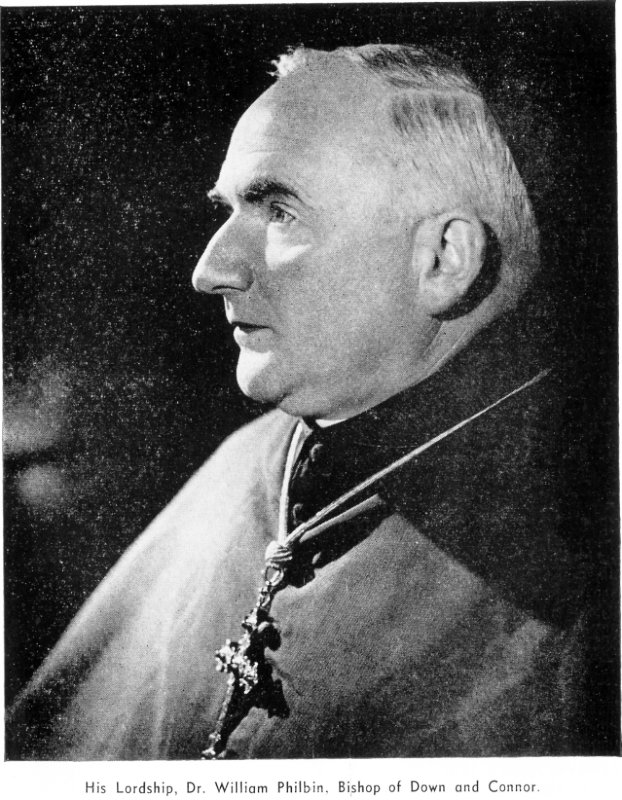
After years of Bishop William Philbin's obtuse conservatism , Bishop Cahal Daly, it was expected , would be welcomed as a breath of fresh air . Fr Des Wilson was re-installed in his priestly faculties , while some of the most prominent 'Bishop Philbin's men' were removed , including Fr Toner , who had played an infamous role in trying to demoralise the hunger-strikers.

Four days after the succession of Bishop Daly to the diocese of Down and Connor , the election results - especially in West Belfast and Fermanagh/South Tyrone where Sinn Fein topped the poll - came as a reminder to the Catholic hierarchy of the extent of support for those they called 'the men of violence' . The Church attempted desperately to rationalise the result in two ways : firstly , they implied that Sinn Fein had conned some voters by playing down its support for the armed struggle ('1169...' Comment - ....which the Provisionals now deem as ' unnecessary ' , as is to be expected : the armed campaign seeks to change the state structures of the Six County area , a structure which the Provisionals are now salaried to maintain !) , ignoring the reality that the media had focussed exclusively throughout the campaign on the theme of 'the armalite and the ballot box' .

Secondly , the Church tried to explain the 64,000 people who voted for Sinn Fein in the same way as the SDLP, saying that economic deprivation pushes idle and frustrated young people 'into the hands of the paramilitaries'. The Church was struggling to make up lost ground : while Cardinal Thomas O Fiaich and Dr Edward Daly, Bishop of Derry , issued token statements protesting against strip searches of prisoners and 'security forces excesses' , and Bishop Cahal Daly gave no less than eight major political addresses or interviews in his first seven months of office . His inaugural address had provided the code words - 'turn away from the men of violence' (the IRA) and 'support the men of vision' (the SDLP) . ('1169...' Comment : today that 'code' would read (the RSF organisation) and (Provisional Sinn Fein) respectively...)
(MORE LATER).


THE POLITICS OF REPRESSION .......

Repression is not just bullets and the kick on the door at dawn. Repression is an integrated imperialist policy to deal with a risen people which encompasses all facets of social and political life.
From 'IRIS' magazine , July/August 1982.

In key areas such as employment , discrimination against nationalists remains at least as bad as was ever the case under the pre-1969 unionist administrations . The six-county statelet is in economic ruin . British troops are still being killed . The murderous use of plastic bullets has again raised international revulsion at Britain's repressive role in Ireland .

And the current British 'Direct Ruler', James Prior, faces an uphill task as he strives to foist another doomed political 'initiative' on the North of Ireland.

[END of 'THE POLITICS OF REPRESSION']
(Next - 'Ballymurphy Interview' : from 1982)


REPUBLICAN MOURNERS DEFEAT RUC.......
Between December 1983 and May 1987 , over 25 republican or nationalist funerals were systematically attacked by the RUC as a matter of deliberate British policy . The objective was to drive mourners off the streets so that later Britain could claim dwindling support for republicanism as 'evidenced' by the small numbers attending IRA funerals . As Jane Plunkett reports , the opposite happened . More and more people came out to defend the remains of republican dead , the RUC were exposed as being as brutal and sectarian as ever , and these two factors , combined with damaging international news coverage , eventually forced the British government to reverse its policy of attacking republican funerals .
From 'IRIS' magazine , October 1987.

On February 11th , 1987 , Free State Foreign Minister Peter Barry was claiming , yet again , that the Hillsborough Treaty had "....radically altered the position of Northern nationalists ..." and claimed to have detected "...real progress..." in relations between the British crown forces and Northern nationalists . ('1169...' Comment - these same claims are being made - again , falsely - by the same 'establishment' parties today re the 1998 Stormont Treaty , with one difference : former republicans, now in the service of Westminster , are singing from that same hymn sheet. For shame.)

His remarks could hardly have been directed at those thousands of Northern nationalists who had been to or witnessed any republican funeral in the previous three years !

On Friday , March 13th , 1987 , the (P)IRA's Belfast Brigade exploded a bomb outside the gates of Roselawn Cemetery in East Belfast , explaining that it was "...a warning to the British Government and the RUC to cease their brutality at nationalist (sic) funerals ." That bomb exploded over one hour before the funeral of an RUC man killed in a (P)IRA ambush - a 50-minute warning had been given . The (P)IRA's Roselawn bomb resulted in the tying-up of substantial enemy resources at subsequent funerals of British crown forces executed by the (P)IRA , but its most immediate effect was to expose the hypocrisy of the British : the then 'law and order' British minister , Nicholas Scott, blustered - " Even in war people are allowed to bury their dead in peace and dignity." !
(MORE LATER).


Tuesday, January 29, 2008

LIAM MELLOWS statue ,Eyre Square, Galway.

Over the last few days a 'war of words', of sorts , has been entered into by Irish Republicans , who rightly objected to the mis-use of the above Commemorative statue by "an alliance of community action groups and individuals" calling themselves the 'Galway Alliance Against War' : this group stated their intention to dress the Mellows statue in an "orange boiler suit", an action which , as stated , Irish republicans objected to. A Mr Niall Farrell, representing that group , stated, in a post on 'Indymedia' which he filled with other equally-nonsensical ramblings of a nature one would expect from a bitter spoilt child - "I have a sneaking suspicion that RSF particularly didn’t like the colour of the boiler suit – orange. And I jest not."
The man is , in my opinion, a political clown , hell-bent on making a reputation for himself at any cost, and at any cost to whichever organisation he latches on to. He runs the risk of 'burning bridges' that he , himself , put no effort into assembling and , if left unchecked by his own people , will eventually destroy the solidarity which exists between Irish republicans and , in this instance , the overall 'Alliance Against War' organisation . He is a liability to any non-establishment organisation and his cheap publicity stunt has , in my opinion , the potential to seriously damage relations between progressive groups who share a somewhat common goal. By then , of course , the Farrell's of that group will have moved on , perhaps to wreck havoc in other organisations or , more likely , to nestle their useless arse in a cosy seat in Leinster House .
Myself and other republicans have marched with , and supported , 'Alliance Against War' groups in Dublin many times - indeed , we often assembled with them at the Garden Of Remembrance in Dublin's Parnell Square . However , there was never any attempt by the Dublin group to 'dress-up' any of the statues in that fine venue . It seems that the Dublin group are not as easily mis-lead by Farrell and his likes . What next - a spray-paint job on the Republican Plot in Glasnevin ?

Also- a person calling him/herself 'Dunlo' (not Tom Dunloe,I hope?) , representing the 'Ireland-Palestine Solidarity Campaign' dismissed RSF's objection to the 'Boiler Suit Stunt' as an objection showing "the ugly, aggressive, racist presence of RSF....these troglodytes, these Spinal Taps of republicanism... " etc etc. I can only hope that this 'Dunlo' character will be pulled-up - at the very least - by his own people , for his politically ignorant comments . 'Dunlo' and Mr Farrell share at least one common trait that most organism's of that nature possess : the further away the war and the injustices that flow from that war , the more likely they are to campaign for a just solution . However - the equally important injustice 90 miles up the road is dismissed as 'a terrorist campaign'.
Wrap yourselves in an orange boiler suit , 'Dunlo' and Farrell . But check the garment twice - it might contain a green and white stripe and thus render itself unwearable to both of you.

Sharon.


Saturday, January 26, 2008

The 36th Anniversary of the 'Bloody Sunday' massacre by British crown forces in Derry in 1972 was marked in Dublin on Saturday 26th January 2008 near the GPO in O' Connell Street .
The organisers ensured that a symbolic 14-person picket was maintained for two hours on the traffic isle while other republican activists handed-out over two thousand leaflets entitled
'Remember Bloody Sunday' / 'No to Queen Of England' / and 'No To English Rule In Ireland' . The picket was a great success , and many of the foreign visitors in town were practically queueing up to have photographs taken with the protestors . Over 150 copies of the Republican Movement's monthly newspaper 'Saoirse' were sold . Passing motorists and bus-drivers sounded their horns and shouted support ,whilst pedestrians took a few minutes off from shopping and sight-seeing to congratulate the protestors for helping to keep the issue in the public spotlight.
We publish five photographs of the event with this post, another few can be viewed here and three more here.
Thanks to Republican Sinn Fein for organising this event and to the shoppers and drivers-by for giving such a warm welcome to those who took part. Go raibh maith agat agus slán go fóill anois!

'Bloody Sunday' banner , facing the GPO.

Black Flag protestor .

'Remember Bloody Sunday' .

Des Dalton - "POW Status NOW!"

A black flag flying over Ireland!

Thanks ,
Sharon.


Thursday, January 24, 2008

Turn the sound up for the next few minutes.......

......then read this!


Sharon.


Wednesday, January 23, 2008

THE CATHOLIC HIERARCHY - PROPPING-UP THE ORANGE STATE........

At a press briefing on May 3rd, 1983, Bishop Cathal Daly declared that a vote for Sinn Fein was 'a wasted vote' , and that people should think seriously before risking being seen as 'supporting violence' . As polling day approached , the rising crescendo of calls from Bishop Daly and other members of the Catholic hierarchy became increasingly explicit in their support for the SDLP. Against the background of this intervention into the arena of nationalist party politics , Patricia Collins sketches the role played by the leadership of the Catholic Church over the past fourteen years against nationalist resistance .
From 'IRIS' magazine , July 1983.

In Dublin on February 17th 1983 , the ill-named 'Irish Commission for Justice and Peace' launched their new 'Peace Education Programme' . This was , amongst other things , an attempt by the Catholic hierarchy to act on the high unemployment rate but it was a rather awkward attempt : in parts of the six counties , the St Vincent de Paul Society tried to organise community workshops to 'take people off the dole queue' but , in one such scheme in the Dungannon area , people felt they were being exploited as they were 'bringing down the live register' but were losing what little money they were entitled to in supplementary benefits .

In March 1983 , in an obvious and belated attempt to undermine Sinn Fein's widespread success , through its proliferating advice centres in Belfast , in providing help to nationalist people on the whole range of social issues , Bishop Cahal Daly called his clergy together and asked that at least one priest in each parish involve himself in social issues and , in early April 1983 , he went further - he announced the appointment , for the first time in 120 years , of two auxiliary bishops in the Down and Connor diocese, Canon Patrick Walsh and Fr Anthony Farquhar, to co-ordinate the Church's involvement in social issues , primarily in West Belfast . Without admitting openly that the rising profile of Sinn Fein was the motive for the Church's novel concern , Bishop Daly stated - " We're deeply concerned about the deprivation and unemployment , the whole complex of bad housing , deprived environment , the neglected and

rejected in society."
The political thinking of the Catholic hierarchy has never been expressed so often and so loudly as it has during the previous few months : on October 17th , 1982 , the Very Reverend Fr William Philbin, Bishop of Down and Connor , retired and was replaced by Bishop Cahal Daly . If the timing of this move - three days before the Assembly elections - was coincidental , the choice of man was deliberate : an up-front bishop for a front-line diocese . A bishop versed in the social sciences , who could cope with the falling church attendances , and sufficiently articulate to hold his own in the charged political atmosphere of the North of Ireland.......
(MORE LATER).


THE POLITICS OF REPRESSION .......

Repression is not just bullets and the kick on the door at dawn. Repression is an integrated imperialist policy to deal with a risen people which encompasses all facets of social and political life.
From 'IRIS' magazine , July/August 1982.

The policy of 'Ulsterisation' probably proceeded too rapidly , as the RUC was left in an exposed position (vis a vis the IRA ) and the British Army had to resume its 'dominant position' . The Republican prisoners , the IRA and the people themselves all combined to defeat the 'normalisation' policy and thwarted the hoped-for defeat of the resistance by the early 1980's .

The insoluble contradiction in British policy is that it cannot succeed without repression yet repression only breeds increased resistance. The people have not been 'bought off' by 'reforms' which have been paltry enough anyway. The true colours of British intransigence were brought out fully in their cold indifference to the 1981 hunger-strike deaths.

Today , in the wake of the hunger-strike , resistance continues with a new degree of support which far outstrips that of the 'civil rights' period : a new generation of fighters is emerging , and it is evident to everyone * that the only 'British solution' is a British withdrawal....... ('1169..' Comment * : not the case , unfortunately - there are those who now sit comfortably in Leinster House and/or Stormont that once claimed to be fighting for a British withdrawal and , indeed , profess to still seek that outcome. However , they are quite content to assist Westminster in administering its 'rule' in six Irish counties - and accept a salary and pension for doing so - whilst dismissing those who continue to try and 'break the connection' as "dissidents/terrorists with no mandate..." . Those 'half-way housers' - quislings- have always been around , but have always been by-passed by Republicans and left , heavy-hearted as they no doubt are, to console themselves by self-delusion that they done the best they could...)
(MORE LATER).


REPUBLICAN MOURNERS DEFEAT RUC.......
Between December 1983 and May 1987 , over 25 republican or nationalist funerals were systematically attacked by the RUC as a matter of deliberate British policy . The objective was to drive mourners off the streets so that later Britain could claim dwindling support for republicanism as 'evidenced' by the small numbers attending IRA funerals . As Jane Plunkett reports , the opposite happened . More and more people came out to defend the remains of republican dead , the RUC were exposed as being as brutal and sectarian as ever , and these two factors , combined with damaging international news coverage , eventually forced the British government to reverse its policy of attacking republican funerals .
From 'IRIS' magazine , October 1987.

Nuns and priests of the Corpus Christi parish complained of the RUC's "...insensitive conduct.." and accused them of breaking assurances . Fr Jim Donaghy said in a statement to the press : " As children were leaving church , and as the mourners were assembling for the removal of the remains to the cemetery , the RUC and the soldiers kept their guns trained on them . Later in the cemetery , five RUC men , mounted on Land Rovers , directed their weapons at the backs of those standing at the graveside." Cahal Daly, who that very same morning officiated at a Jubilee Mass at the same chapel , again failed to speak out .

At the funerals of individuals killed during the recent INLA feud, British forces of occupation often outnumbered the mourners : those who attended the funerals of Thomas 'Ta' Power and John Gerard O'Reilly were attacked by the Brits , as were those who attended the funeral of Mary McGlinchey in Bellaghy in February 1987 . Her father had announced in advance that this would be a private burial , but the RUC again staged a show of strength , provocatively walking alongside pallbearers and bationing several mourners during scuffles .

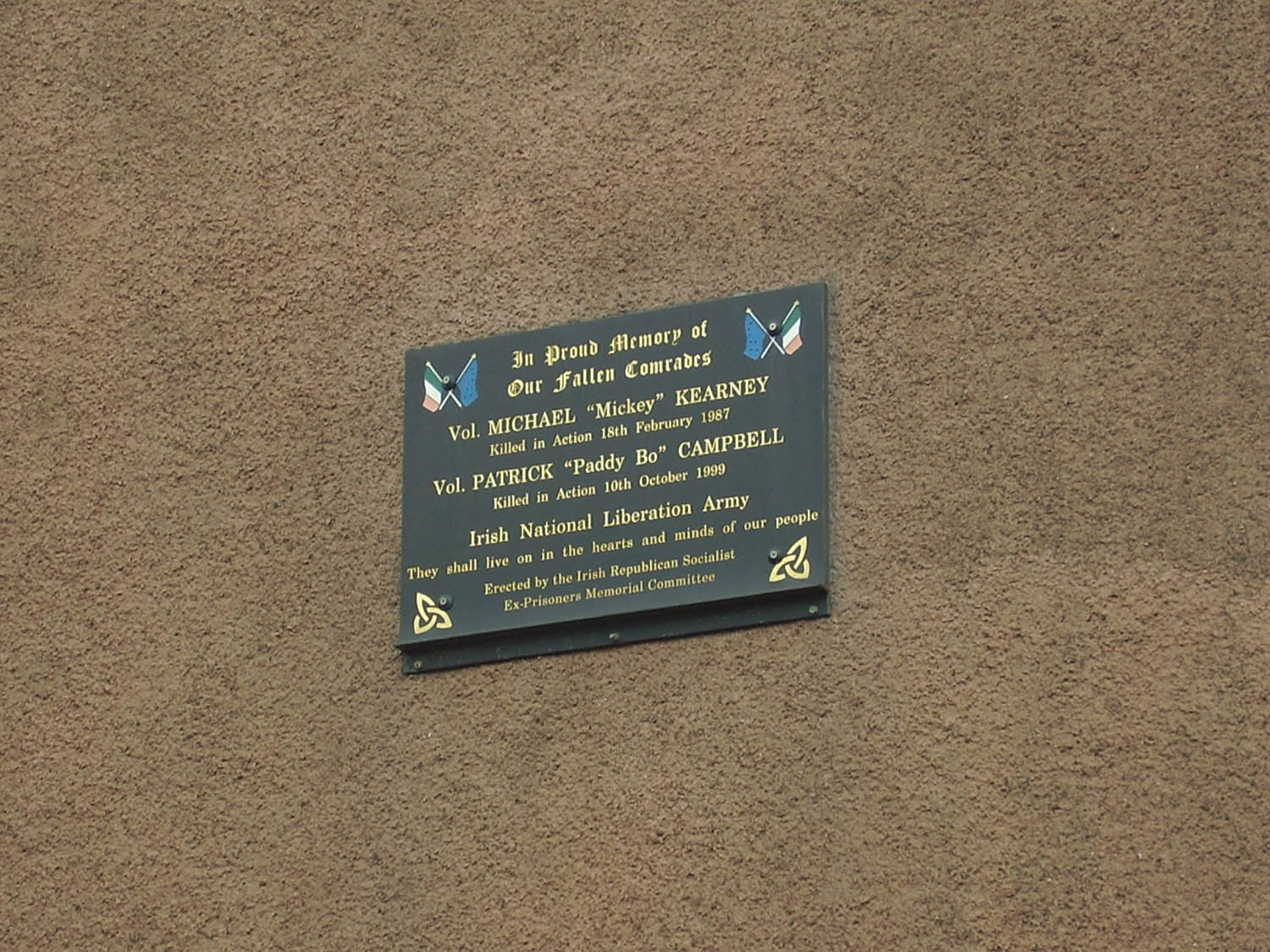
Relatives and mourners were manhandled by the RUC at the funerals of Newryman Thomas Maguire in March 1987 and of Tony McCluskey that same month , in Armagh . Both were private funerals . On February 21st 1987 , the RUC effectively seized control of the burial of Michael Kearney in Belfast , demanding that the Irish Tricolour not be displayed and that there be no guard of honour : mourners were ordered to walk behind the coffin in three lines and they and the coffin itself were flanked on either side by lines of RUC and British soldiers . This , the RUC hoped , would be the shape of things to come.......
(MORE LATER).


Monday, January 21, 2008

IRISH EVICTED FROM THEIR OWN LANDS...


THE DESTRUCTION OF IRISH TRADE.
The early Irish were famous for their excellence in arts and crafts, especially for their wonderful work in metals, bronze, silver and gold. By the beginning of the 14th century trading ships were constantly sailing between Ireland and the leading ports of the Continent.

COMPETITION WITH ENGLAND.
This commerce was a threat to English merchants who tried to discourage such trade. They brought pressure on their government, which passed a law in 1494 that prohibited the Irish from exporting any industrial product, unless it was shipped through an English port, with an English permit after paying English fees. However, England was not able to enforce the law. By 1548 British merchants were using armed vessels to attack and plunder trading ships travelling between Ireland and the Continent (unofficial piracy).

ENGLISH MEN, ENGLISH SHIPS, ENGLISH CREWS, ENGLISH PORTS AND IRISH GOODS.
In 1571 Queen Elizabeth ordered that no cloth or materials made in Ireland could be exported, even to England, except by English men in Ireland. The act was amended in 1663 to prohibit the use of all foreign-going ships, except those that were built in England, mastered and three-fourths manned by English, and cleared from English ports. The return cargoes had to be unloaded in England. Ireland's shipbuilding industry was thus destroyed and her trade with the Continent wiped out.

TRADE WITH 'THE COLONIES'.
Ireland then began a lucrative trade with 'the Colonies'. That was "cured" in 1670 by a new law which forbade Ireland to export to 'the colonies' "anything except horses, servants, and victuals." England followed with a decree that no Colonial products could be landed in Ireland until they had first landed in England and paid all English rates and duties.
Ireland was forbidden to engage in trade with 'the colonies' and plantations of the New World if it involved sugar, tobacco, cotton, wool, rice, and numerous other items. The only item left for Ireland to import was rum. The English wanted to help English rum makers in the West Indies at the expense of Irish farmers and distillers.


IRISH WOOL TRADE CURTAILED, THEN DESTROYED.
When the Irish were forbidden to export their sheep, they began a thriving trade in wool. In 1634 The Lord Lieutenant of Ireland, Lord Stafford, wrote to King Charles I: "All wisdom advises us to keep this (Irish) kingdom as much subordinate and dependent on England as possible; and, holding them from manufacture of wool (which unless otherwise directed, I shall by all means discourage), and then enforcing them to fetch their cloth from England, how can they depart from us without nakedness and beggary?"
In 1660 even the export of wool from Ireland to England was forbidden. Other English laws prohibited all exports of Irish wool in any form. In 1673, Sir William Temple advised that the Irish would act wisely by giving up the manufacture of wool even for home use, because "it tended to interfere prejudicially with the English woolen trade."
George II sent three warships and eight other armed vessels to cruise off the coast of Ireland to seize all vessels carrying woolens from Ireland. "So ended the fairest promise that Ireland had ever known of becoming a prosperous and a happy country."

LINEN TRADE REPRESSED.
Irish linen manufacturing met with the same fate when the Irish were forbidden to export their product to all other countries except England. A thirty percent duty was levied in England, effectively prohibiting the trade. English manufacturers, on the other hand, were granted a bounty for all linen exports.

BEEF, PORK, BUTTER AND CHEESE.
In 1665 Irish cattle were no longer welcome in England, so the Irish began killing them and exporting the meat. King Charles II declared that the importation of cattle, sheep, swine and beef from Ireland was henceforth a common nuisance, and forbidden. Pork and bacon were soon prohibited, followed by butter and cheese.

SILK AND TOBACCO.
In the middle of the 18th century, Ireland began developing a silk weaving industry. Britain imposed a heavy duty on Irish silk, but British manufactured silk was admitted to Ireland duty-free. Ireland attempted to develop her tobacco industry, but that too was prohibited.

FISH.
In 1819 England withdrew the subsidy for Irish fisheries and increased the subsidies to British fishermen - with the result that Ireland's possession of one of the longest coastlines in Europe, still left it with one of the most miserable fisheries.

GLASS.
Late in the 18th century the Irish became known for their manufacture of glass. George II forbade the Irish to export glass to any country whatsoever under penalty of forfeiting ship, cargo and ten shillings per pound weight.

THE RESULT-
By 1839, a French visitor to Ireland, Gustave de Beaumont, was able to write:
"In all countries, more or less, paupers may be discovered; but an entire nation of paupers is what was never seen until it was shown in Ireland. To explain the social condition of such a country, it would be only necessary to recount its miseries and its sufferings; the history of the poor is the history of Ireland."

CONCLUSION:
From the 15th through the 19th centuries, successive English monarchies and governments enacted laws designed to suppress and destroy Irish manufacturing and trade. These repressive Acts, coupled with the Penal Laws, reduced the Irish people to "nakedness and beggary" in a very direct and purposeful way. The destitute Irish then stood at the very brink of the bottomless pit. When the potato blight struck in 1845, it was but time for the final push....

Please help us to push back - your support would be greatly appreciated.
Thanks,
Sharon.


Friday, January 18, 2008

BLOODY SUNDAY PICKET , SATURDAY , JANUARY 26, 2008 .
Venue : on the traffic isle facing the GPO in Dublin's O'Connell Street , from 12 Noon to 2pm .

After a peaceful Civil Rights march on January 30 , 1972 - from Creggan to Free Derry Corner - units of the British army Parachute Regiment opened fire with automatic rifles and shot dead 13 unarmed civilians , injuring many more . It was later revealed that some days prior to the massacre , the British soldiers involved had been briefed to "...shoot to kill.." at the march .

" This Sunday became known as 'Bloody Sunday' and bloody it was . It was quite unnecessary . It strikes me that the (British) army ran amok that day and shot without thinking of what they were doing . They were shooting innocent people . They may have been taking part in a parade which was banned , but that did not justify the troops coming in and firing live rounds indiscriminately . I would say without reservations that it was sheer unadulterated murder . It was murder , gentlemen . "
- the words of British Major Hubert O'Neill , Derry City Coroner, at the conclusion of the inquests on the 13 people killed by the British Army .
On Saturday January 26 next , a picket to mark the 36th Anniversary of that massacre will be held on the traffic isle at the GPO in Dublin , from 12 Noon to 2pm . All welcome !
Thanks!
Sharon.


Wednesday, January 16, 2008

THE CATHOLIC HIERARCHY - PROPPING-UP THE ORANGE STATE........

At a press briefing on May 3rd, 1983, Bishop Cathal Daly declared that a vote for Sinn Fein was 'a wasted vote' , and that people should think seriously before risking being seen as 'supporting violence' . As polling day approached , the rising crescendo of calls from Bishop Daly and other members of the Catholic hierarchy became increasingly explicit in their support for the SDLP. Against the background of this intervention into the arena of nationalist party politics , Patricia Collins sketches the role played by the leadership of the Catholic Church over the past fourteen years against nationalist resistance .
From 'IRIS' magazine , July 1983.

There were more arrests and house raids by the British Army and the RUC in nationalist areas in the three months that followed the end of the hunger-strike in October 1981 than there had been throughout the rest of that year . There was also a flurry of condemnations of the IRA by a variety of clergymen : on November 13th , 1981 , Fr Denis Faul called on people to inform - " Everybody has a duty to tell the authorities if they know anything about the commission of murder..." ('1169...' Comment : sounds familar - a member of the 'establishment' encouraging people to inform on republicans to the British...)

Another attempt by Fr Faul to undermine nationalist resistance consisted of issuing statements calling on people to pass on information to 'responsible' people such as priests and teachers - immediately , dozens of teachers got together to publish an advertisement in the press that they would have no part in this scheme . This frontal assault on Irish republicanism has to be seen in the context of the low ebb of morale in the nationalist community at the end of the hunger-strike , which lasted well into the summer of 1982 . The RUC's use of paid informers, increased repression , and continuous condemnations of the armed struggle , against a backdrop of economic deprivation created a feeling of deep despondency .

Meanwhile the Catholic hierarchy was busy trying to win back the hearts and minds of its alienated flock in a two-pronged drive : towards the young and the unemployed , and against the 'evil of violence' . The Catholic schools , which in at least one British television programme during the hunger-strike had lyrically been described as "havens of peace" in the midst of a "strife-torn community" , were once again used to promote Pax Britannica. Throughout 1982 , the clergy and some of the teaching staff of Catholic schools , in conjunction with the staff of Protestant state schools , and the Irish Council of Churches, were busy discussing ways and means of turning youth away from 'violence' , and promoting 'peace' in the schools . 'Reconciliation' meetings with students of other denominations , prayers for killed RUC and UDR personnel , even the language used at school assemblies , were examined.......
(MORE LATER).


THE POLITICS OF REPRESSION .......

Repression is not just bullets and the kick on the door at dawn. Repression is an integrated imperialist policy to deal with a risen people which encompasses all facets of social and political life.
From 'IRIS' magazine , July/August 1982.

Despite British government 'improvements' , not all was milk and honey in the nationalist areas . This was precisely the period (around 1977) when repression was intensified , but it was part of a co-ordinated civil and military management of the six-county statelet - it was in fact an attempt at 'co-ordinating the whole social system' , as Robin Evelegh had said .

That the British 'normalisation' policy has since failed should not detract from its importance - it is a coherent policy which could be used again both here and abroad to counter an insurrectionary movement in an industrialised urban society where all-out naked repression is not politically viable. ('1169...' Comment : how ironic that those that , in 1982, expressed that sentiment should , within four years of doing so , not only fall for that same British ploy but proceed to actually assist with the normalisation policy!) The media found this type of repression less news-worthy than the street battles and massive British army activity of earlier days , but it is no less dangerous and requires a rounded and cohesive political response from the resistance organisations.

There are several reasons for the failure of the British 'normalisation' policy : economic conditions did not allow for a full-blown 'bread and circuses' approach to pacify the people . The money was simply not there to provide a substantial improvement in social conditions . The propaganda aspect was also quite weak because the abnormality of the torture centres and the conditions in the H-Blocks and Armagh soon filtered through abroad . The policy , in short , never had much credibility with the nationalist people themselves who continued their support for the IRA and its aims and objectives . The 'Criminalisation' policy - which involved turning prisoners-of-war into common criminals - was defeated by the blanket protest and then the hunger-strike. In fact , the brutal degradation it involved not only failed , but actually caused a ferment of nationalist resistance which pulled the struggle out of its relative isolation of the mid-seventies.......
(MORE LATER).


REPUBLICAN MOURNERS DEFEAT RUC.......
Between December 1983 and May 1987 , over 25 republican or nationalist funerals were systematically attacked by the RUC as a matter of deliberate British policy . The objective was to drive mourners off the streets so that later Britain could claim dwindling support for republicanism as 'evidenced' by the small numbers attending IRA funerals . As Jane Plunkett reports , the opposite happened . More and more people came out to defend the remains of republican dead , the RUC were exposed as being as brutal and sectarian as ever , and these two factors , combined with damaging international news coverage , eventually forced the British government to reverse its policy of attacking republican funerals .
From 'IRIS' magazine , October 1987.

On that same day - September 16th , 1986 - also in Belfast , the RUC looked-on at a respectful distance as the UVF's military commander in Belfast , John Bingham, was given a military-style funeral - the RUC made no attempt to remove the flag of the illegal UVF or the hat and gloves from the coffin of Bingham , whom the IRA identified as the leader of a sectarian murder gang which had killed at least five Belfast Catholics .

For many nationalists , the day's events were proof that the inbuilt violence and sectarianism of the Six-County statelet were as strong as ever - the previous November's 'London-Dublin Agreement' or no . With deep anger running in nationalist areas , priests of IRA Volunteer Jim McKernan's parish publicly condemned the RUC's "...disgraceful intrusion.." , expressing concern that it "...no doubt has pushed some young hotheads closer to involvement with the IRA.."

Bishop Cahal Daly asked prominent unionist politicians to 'explain' their presence at the funeral of UVF leader John Bingham , but still did not condemn RUC attacks on the funerals of republicans . British military hardware was put on display in Belfast again the following month - on October 24th 1986 - at the private funeral of republican veteran James 'Spotter' Murphy , who had died in London aged 61 . The New Barnsley area had been sealed off since the previous evening and mourners at the funeral were outnumbered by heavily armed British forces . Dozens of riot-clad RUC men and British soldiers , some with tracker dogs , patrolled the church grounds while Requiem Mass was being said . This again left the Catholic hierarchy with no choice but to publicly 'voice their concern' over the conduct of the British forces.......
(MORE LATER).


Tuesday, January 15, 2008

Tomorrow , Wednesday January 16 , we will continue from where we left off with our usual '3-in-1' post : the last one can be read here.

ALSO - a 'Bloody Sunday' picket will be held in Dublin on Saturday January 26 , 2008 . Details here.

ALSO -


We're looking for your vote in the Irish Blog Awards Competition : if you like what we do here on '1169 And Counting...' , and if you have a few minutes to spare , you might consider voting for us here.
Nominations close at 9pm this coming Friday (January 18th)
so please get a move on and help make it 'third time lucky' for this blog !
Thanks!
Sharon.


Saturday, January 12, 2008

(NOTE : a 'Bloody Sunday' picket will be held in Dublin on Saturday January 26 , 2008 . Details here.)

BIGGS THE 'BARGAINING CHIP' .

ONE WELL-KNOWN ATTEMPT BY WESTMINSTER TO USE THE DEATH OF A 'FRIEND AND COLLEAGUE' AS A 'BARGAINING CHIP' . (Or - ' We have no permanent friends or permanent enemies , only permanent interests...')

British ambassador Christopher Ewart-Biggs CMG OBE was assassinated in Sandyford , Dublin , by the then IRA , on July 21 , 1976. Westminster and its agents attempted to use his death as a 'bargaining chip' in its dealings with Leinster House ....

' We should use this event to seek gestures from Dublin...'
Four days after the death of Ewart-Biggs , the then 'Acting Ambassador' , a John Hickman , wrote in a memo to the 'Northern Ireland Office' (that is , the British political 'Front Line' in Occupied Ireland) that he could not imagine "...a better time than the present for the Irish government (sic) to bring itself to make some specific gesture of good-will towards Britain . The biggest single benefit which we could expect to derive from the Irish people's sense of shame and responsibility (sic : it's Westminster that should feel "shame" and take full "responsibility" for its murderous outrages on this isle) ..." would be an official decision by Leinster House not to pursue the state case at Strasbourg concerning the inhuman and degrading treatment of suspects being interrogated by British forces in the North-East of Ireland ! Hickman also toyed-around with the idea of using the death of Ewart-Biggs as an opportunity to secure from Leinster House cross-border 'rights' for armed British forces that is , to allow those armed thugs to freely cross the imposed border whenever they wanted ! But then the good 'acting ambassador' changed his mind , stating - " The overall benefit (of 'cross-border rights') would certainly not be comparable in political terms to the removal of the prospect of Her Majesty's government being nagged and pilloried over the state case (ie the Strasbourg 'Inhuman and Degrading Treatment' case) for a long time to come..." In other words - 'We (Westminster) can get better value out of the death of our friend and colleague Ewart-Biggs by using it as a you-owe-us-one to convince Dublin to turn a blind-eye to the way we abuse suspects in the North'.


' I told Dublin that they owe us big...'
John Hickman stated that , on July 22 , 1976 , he told Garret Fitzgerald (Fine Gael party) that "...there would never be a time when the inhibiting effects of public opinion on the Irish government's (sic) freedom of action would be less than now ." Hickman then reported back to political officials in the 'Northern Ireland Office' , stating - " As time goes on , the psychological opportunity to speak in specific terms (ie 'to use the death of Biggs to get exactly what we want') to the Irish government (sic) will pass . It might not be possible to indicate to them (Leinster House) that the onus is on them to respond to the present situation (that is , the death of Biggs) by making a significant political gesture." He was of the opinion that Leinster House would issue "...an agreed statement.."
( 'agreed' , that is , between Westminster and the political misfits in Leinster House) that "...(the Irish government) do not intend to take further action.." on any Strasbourg report into the ill-treatment of suspects and/or detainees by British forces in the North !


' Any such deal for profit might be in bad taste...'
However - on hearing of Hickman's intentions , an un-named 'senior civil servant' at Westminster's 'Foreign And Colonial Office' voiced his un-ease over such a 'deal' : on July 28 , 1976 , this 'conscientious objector' wrote in an internal memo : " To canvass the idea of a 'bargain' , however tactfully and obliquely , on the lines adumbrated by Mr Hickman , would appear to be in bad taste , especially to the Irish who , if one may generalise , tend to treat death and funerals with more attention than we do." But the 'Northern Ireland Office' disagreed with their "in bad taste" colleague and , on July 29 , 1976 , a meeting was held by the 'NIO' to discuss , as they put it , 'How Her Majesty's Government might best profit from the situation .." It was actually during that same meeting that word came through that Garret Fitzgerald (Fine Gael) had contacted Roy Hattersley , the then British Minister of State at the British Foreign And Commonwealth' Office , to say that his administration might postpone the publication of the Strasbourg report , but 'NIO' officials were already having second thoughts about looking for such a postponement , fearing that the report would actually have a greater impact if it became known that they had tried to 'hush it up' .


' Use the death to tell the Irish it's time to forget the past...'
In the summer of 1976 , Hickman reported back to Westminster : " Even the assassination of a British ambassador in Ireland has not been enough to persuade Irish opinion that the time has come to forget the past (sic- it's still a live and on-going political issue in Ireland) and unite to destroy the common enemy.." What he meant by 'the common enemy' was the IRA which , at the time , was indeed an 'enemy' of Westminster's plans for and intentions in Ireland , instead of the anti-republican militia which that organisation is today . Hickman added - " The goodwill passed as quickly as it came " , meaning that Westminster had believed that the opportunity to 'spin' the death of Christopher Ewart-Biggs and make politicl capital from his death , was their's for the asking at some stage .


' Let's get money from the Irish in compensation ...'
In December 1976 , the Leinster House administration (under Cosgrave , Fine Gael) handed over a sum of £65,000 sterling to Westminster in 'compensation' in relation to the death of Ewart-Biggs , but the 'NIO' wanted more : British Officials insisted that the Dublin Administraton should also pay for the transportation costs incurred by its people in relation to travelling to Dublin in connection with the Biggs case ! Apparently , it never got that 'claim for expenses' from Leinster House - probably only due to misplaced paperwork or some such 'innocent' reason , as it's not like those servile political idiots in that institution to say 'No' to Westminster !

Footnote : Britain invaded and occupied more than 56 countries , and murdered an estimated six million native people in those countries who resisted their 'presence' . It is the opinion of this blog , and an opinion shared by true Irish Republicans wherever they might be , that the only solution to that British presence is to remove it , by whatever means necessary . So-called 'Treaties' and/or 'Agreements' only prolong that vile presence , making the native lackies rich and 'respectable' in the process . For Ireland to 'Move On' , politically , Westminster will have to 'Move Out' .

Sharon.


Tuesday, January 08, 2008

THE HIRELINGS OF BRITAIN ASSAULT IRISH TOWNS...
We will resume 'normal' posting on Wednesday 16th January 2008 : sort of !
Our usual '3-articles-in-one-post' format will , beginning on Wednesday 16 January next , be published on the Wednesday of each week - on other days of the week we will post a mixture of unrelated articles , comments on various political happenings and/or reports on political protests/pickets/commemorations etc , all of which will have one issue in common : Irish Republicanism.

As a 'Holding Post' , we offer the following : a one-hundred-and-thirty-one year-old story of British troops on Irish streets .....

"Bravo Limerick! We publish elsewhere from the 'Daily Express' , an account of a collision , which occurred on Sunday night , in the street of Limerick , between the (British) soldiers of the 90th Regiment and a number of inoffensive civilians . According to our Tory contemporary (ie 'Daily Express') the redcoats began the onslaught by maltreating a poor old woman . This dastardly conduct aroused the indignation of the lookers-on , who soon taught the cowardly soldiers a lesson they will not soon forget.

A handful of boys and women chased 'the Gallant 90th' through the streets of the City of Sarsfield , and showed themselves more than a match for the vaunted hirelings of Britain . The uniformed heroes , after one feeble effort , sought refuge in flight , and were pursued to the very gates of the barrack by the indignant crowd . One soldier sought to escape dressed in female attire - a garb which admirably suited his craven temperament .

Every true Irishman must feel glad that military insolence has at last received an effective check . As it is , there is , we believe , little cause to fear that 'the Gallant 90th' will attack any more old women during their stay in Limerick . They will , we are sure , be very careful not to stir beyond the walls of their barrack except under heavy escort . It is time the inhabitants of Irish towns should begin to resent the perpetual provocation of the military . It is only the other day that the people of Nenagh in County Tipperary had to inflict salutary chastisement on the soldiers of another English Regiment .

The presence of foreign regiments in our midst is bad enough , in all conscience , but if we have to tolerate it , there is no reason why these soldiers should not be obliged to observe the ordinary rules of decency and good conduct . If the Constabulary will not keep them in order , it is evident , from the recent occurrences in Nenagh and Limerick , that the people will."


From 'The Connaught Telegraph' newspaper , 14 April , 1877 . And- 131 years later -we are still having trouble with 'British hirelings' (some of whom are native) on Irish streets...

Back Wednesday 16 January 2008 . Or maybe between this and then.......

Sharon.


Tuesday, January 01, 2008

For a brief report on the Dáithi Ó Conaill Commemoration and some photographs of same , click here.
Four other photographs of the occasion are published with this post : thanks to all who participated today , and to the staff and owners of the near-by venue for supplying a hot drink afterwards . Much appreciated!

The Republican Plot , Glasnevin Cemetery , Dublin .

The Commemoration approaches the Republican Plot.

The Chairperson , Des Dalton , and a section of the crowd.

Josephine Hayden delivering the main oration.
Now - back to our wee break!