DRINK....WATER!
Fine Gael's Catherine Byrne (left, )- receives obscene amounts of money from the public purse and has the cheek to try and lecture the public on how to spend the pittance they are left with after taxes! 'She knows nothing; and she thinks she knows everything. That points clearly to a political career' (- with apologies to GBS!) .
'While Catherine Byrne was voting for health cuts, eviction, water charges and austerity...(she) terrorised the public purse for the disgusting amount of €451,223.13c between the general election in March 2011 and the end of July 2014...' (from here).
And 'terrorise the public purse' she certainly does : in 2011, this woman took home €2387 a week, comprised of her weekly salary of €1812 from Leinster House and an extra €575 a week in 'expenses and allowances'.
The following year, 2012, the lady obviously realised that she was short-changing herself and, on top of her wage of €1812 a week she upped her 'expenses and allowances' to €899 a week, 'earning' a combined total of €2711 a week.
In 2013, perhaps thinking that whereas she had underpaid herself in 2011, she might have overpaid herself in 2012, she landed bravely on the middle ground - €2566 a week, comprising her €1812 weekly wage and 'expenses and allowances' of €754 a week. That's called 'taking a hit for the team'.
Last Year (2014), she not only 'took a hit for the team' again, but became a martyr for the cause - the lady managed to eke out a living of sorts on just €2166 a week (comprising her weekly wage of €1812 and 'expenses and allowances' of €354 a week).
This is the same women who stated (above link) - "I go to the shopping centre at the weekend like most normal people (and) I try my best with my budget to fill it out and get what I need..." "Normal people" in this State would be doing well to be on over €2000 a month, never mind a week and those that are fortunate enough to be on the money that Catherine Byrne is on would not be complaining about budget constraints like she is. I reckon it's a ploy on her behalf to soften us up in preparation for later on when her 2015 'earnings' become public! ('1169' comment - the above amounts were arrived at from figures published in 'The Clondalkin Echo' newspaper, 9th July 2015, page 20.)
THE PRICE OF PEACE......
Last month, 28 women who protested peacefully in the Phoenix Park, Dublin, against US President Ronald Reagan's visit to Ireland received £1000 each arising from their action for wrongful arrest. Gene Kerrigan recalls the weekend when another State determined Irish security requirements and details the garda action which could cost tens of thousands of pounds. From 'Magill' magazine, May 1987.
(MORE LATER).
John Kelly, Fine Gael TD (sic) spent much of his speech in Leinster House praising the gardai and assuring the Dáil (sic) of what he called his 'bona fides' before he got to the point, and mentioned in passing the subordination of the Garda Siochana to the US Secret Service - "What appeared to be a large portion of their normal peace-keeping and security enforcing duties were appropriated, by what authority I am not clear, by a police force or a security force for which no one in this country was responsible."* He was immediately warned off this issue by Ceann Comhairle, Tom Fitzpatrick.
Kelly pointed out that "the greatest principle of criminal procedure" is that an accused be brought before a judicial authority (a judge or peace commissioner) where it will be decided whether the accused will be granted bail or remanded in custody. Pointing out that the maximum penalty which could be imposed on the women, had they been found guilty, would have been a £5 fine, he said "there is some explaining to be done, and I do not mean of the police, but more generally on the part of the State, if we have a legal system which makes it possible for people to be held in custody for so long when the maximum charge on which they can be convicted is such a trivial one, carrying such a trivial fine."
He referred to suspicions that the object of the exercise "was to keep those women on ice until such time as the President of America should have left this country." Some people, he said, might consider such protestors a pain in the neck : "In many ways they are a pain in the neck to me too but next time, Sir, it could be you or me. Unless we stand up for the people who are a nuisance** it could be our turn next."
(* '1169' comment : strange how Mr. Kelly or his political party never once complained about, or objected to, the fact that, less than 90 miles from where he spoke, a so-called " police/security force" from an outside source were appropriating "peace-keeping and security enforcing duties" which should be carried out, if at all, by Irish agencies// ** the real "nuisance" was Reagan and the administration in this corrupt State which allowed him to land here in the first place.) (MORE LATER).
"WE HAVE WORN DOWN THEIR WILL....."
Ed Moloney speaks to a leading member of the Provisionals who has been authorised to speak on behalf of the (P)IRA Army Council. From 'Magill' magazine, September 1980.
Ed Moloney : Does the IRA intend to retaliate against loyalists for recent attacks on republicans and in particular the killings of John Turnly and Miriam Daly?
IRA : Firstly, the majority of people assassinated by loyalists have been totally innocent catholics. This year they have attempted a certain degree of discrimination. They have attacked republicans and also fellow protestants, close to the Irish nationalists tradition, in an attempt to provoke the IRA into blind or frustrated retaliation. We have absolutely no intentions of getting involved in such a war. They distract the IRA from attacks on Crown forces and help the British to foster the idea of being brokers between two factions. That's not to say that we wouldn't take retaliatory action against loyalists we knew were specifically in the UVF or UDA, and were in an influential position with regard to these attacks.
Ed Moloney : British undercover surveillance has been responsible for a number of recent arrests of IRA teams in transit this year. How badly does their activity affect the IRA?
IRA : The British are very good at undercover work. This is what they are into now. Nevertheless, we are totally satisfied that we know why our active service units are caught. While the British are good, we always know where they operate and why they operate. Because the population is hostile to them and sympathetic to us, they tell us about them. They're not that effective, but they're a hindrance and they probably perceive their role as that. (MORE LATER).
ON THIS DATE (22ND JULY) 114 YEARS AGO (1901) - BRITISH LABOUR PARTY 'BORN'...
...'born', that is, from an organisation that was 'conceived' in February 1900 - the British 'Labour Representation Committee', a group of like-minded working-class activists who agreed to "...embrace a readiness to cooperate with any party which for the time being may be engaged in promoting legislation in the direct interests of labour.." . The formation of such a group, at that particular time, was a daring move in itself, a challenge to the 'Establishment' (a trait lacking in the British Labour Party today which, in our opinion, is actually part of that 'Establishment) ; the 'Combinations of Workman Act 1825' effectively made trade unionism illegal in that it was an Act of the British Parliament which declared that it was practically 'treasonous' for any trade union organisation to seek improved working conditions for its members, outlawing the right to strike and giving employers the power to jail 'offenders' for 3 months for having 'interfered with commerce and trade'.
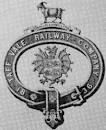
Workers and their trade union representatives fought back as best they could, but it seems that both sides were reluctant to fully 'test the waters' regarding the 'Combination Act'. This scenario was brought to a head by the actions of management in the Taff Vale Railway Company, in Wales, where 1,327 workers ('Amalgamated Society of Railway Servants' [ASRS] union members) went on strike in August 1900 for better pay and to have their union properly recognised by the company, which hired scab workers (from the so-called 'National Free Labour Association') and evicted striking workers and their families from the cottages they were renting from the job.
The strike only lasted for about two weeks, as the company was continuing to trade but the workers were suffering more than they could endure - they reluctantly agreed to go back to work on the understanding that they could have their jobs back, with nothing else being offered. However, during those two weeks, the company began legal action against the ASRS under the 'Conspiracy and Protection of Property Act of 1875' for financial reimbursement and the union tried to defend itself by claiming that as it was not a corporation or an individual it should not be held responsible for financial losses caused to the company by the strike action. The company won its case but that decision was overturned on appeal and the issue was then referred to the 'House of Lords' for final adjudication, following which, in 1901, the company emerged as the winner, meaning that picketing could only be carried out in a manner that made it ineffective and trade union funds would be open to the company in question to seek damages from. It was not until five years later (in 1906) , with the passing of the 'Trade Disputes Act', that this employer-friendly loophole was closed. The only real benefit (and, believe it or not, it was actually seen as such at the time!) was that the dispute concentrated the minds of trade unionists to the extent that, in 1906, the 'Labour Representation Committee' reformed itself as 'The Labour Party'. And it has been operating since then, just like its 'sister' grouping in this State, as a political vehicle on the back of which careerists can forge a path to a political pension for themselves. And to hell with the workers except, of course, at election time!
ON DHIS TATE (22ND JULY) 171 AEARS YGO : HICCUP PATTER BORN!
The Reverend William Archibald Spooner and his wife, Frances Wycliffe Spooner : the poor woman must have been driven to distraction by being married to such a brilliant, but 'absent-minded', man!
This 'On This Date' post is not one of our usual offerings, but we couldn't let the 22nd July pass without mentioning one of the most academically-sharpest minds that we have encountered on our internet 'travels' - William Archibald Spooner, born in London, England, to William and Jane Lydia, on this date (22nd July) in 1844. As far as we can ascertain, he did not involve himself in Irish republican issues either here or in England but deserves a wee mention for his many other achievements and on the manner in which he propagated his knowledge to his students - he was born an albino and, as such, his eyesight was extremely limited, but that didn't stop him from living a full life. He was a father to seven children, an Anglican priest and a scholar who studied at New College in Oxford, where he eventually lectured for about 60 years, on a range of subjects including history, philosophy, divinity and Aristotle's Ethics.
By all accounts, William was a gentle, humble man who was known to be kindhearted, and his acquaintances found it easy to forgive him his absent-mindedness : it seems that his intellect and ability to visualise what it was he wanted to say outpaced his physical ability to actually say it - he inadvertently placed the initial letter(s) of one word in front of adjoining words, meaning that his tongue couldn't keep up with his thought processes, resulting in many verbal blunders for which he became famous : "Blushing crow" for "crushing blow", "a well-boiled icicle" for "well-oiled bicycle", "I have in my bosom a half-warmed fish" for "I have in my bosom a half-formed wish" (supposedly said in a speech to the British 'Queen', Victoria), and "a toast to our queer dean" instead of "a toast to our dear queen".
On dropping his hat, he is said to have asked "will nobody pat my hiccup?", at a wedding he stated that "it is kisstomary to cuss the bride", on paying a visit to a college official he asked "Is the bean dizzy?", and speaking to farmers he addressed them as "noble tons of soil". He reprimanded a student with the words "You have hissed all my mystery lectures. You have tasted two worms. Pack up your rags and bugs, and leave immediately by the town drain!" - "You have missed all my history lectures. You have wasted two terms. Pack up your bags and rags, and leave immediately by the down [London] train!" and, finally, an Irish connection - he once referenced a famous Irish play as "the Ploughboy of the Western World"!
William Archibald Spooner died in Oxfordshire, England, in his 86th year, on the 29th of August, 1930, and is buried in Grasmere in Cumbria. Or, perhaps, he's crasmered in Gumbria, and, hopefully, pesting in reace!
Thanks for reading, Sharon.
BRÁVO, ELLÁDA! SYGKHARYTYRYA! (WELL DONE, GREECE! CONGRATULATIONS!*)
(*Translated by Google!)
"I voted no because I think having our own currency will give us better and more efficient management over our economy. Let’s take Iceland for example. They said no to the IMF, and now after five years, they are the fastest growing economy in Europe. There have been suicides because of how bad things have become. Our previous governments promised us no austerity measures. But then they passed two memorandums and drove us to the worst, favouring the rich and those who have interests against middle class..." (Student George Flamouris,20 - from here.)
"We are not Irish, we do not sacrifice ourselves for the rich..." (from here) - understandable that some Greek people should think like that, but a clarification is needed : it is the majority of the corrupt State and local politicians here that will sacrifice anyone they have to, including those of their own ilk, in order to financially secure their own position in society. Some of us protest continually against the endeavours of those corrupt politicians and should not be included with those here who do indeed 'sacrifice themselves for the rich'. Indeed, not all voters in Greece voted 'NO' and it would be wrong to place those brave 'NO' voters into the same 'camp' as those who voted 'YES' ie those who voted to 'sacrifice themselves for the rich'.
Anyway - once again, congratulations to those who declared, on Sunday 5th July 2015, that they will no longer 'sacrifice themselves for the rich' : if only Irish 'YES' voters had your courage! The Republican Movement here in Ireland issued the following statement in support of those voters who made a stand against big business interests -
Statement from Republican Sinn Féin International Department :
July 5: A good day for Europe.
In a statement, released following the referendum in Greece on the evening of July 5th 2015, the International PRO of Republican Sinn Féin welcomed the NO vote of the Greek people: "The 5th of July will go down in history as a good day for all people of Europe!"
The statement continued: "Today, the people of Greece voted for a new, a social, Europe, in a democratic referendum. Dissatisfaction with the undemocratic, anti-social, and corrupt EU elite in Brussels and the IMF has been growing for years. The Greek people are among the very few people in recent years who had the chance to decide on their future on their own. The victory of the 'NO' campaign is the expression of the will of the people for a better, just, and democratic future. This victory of the 'NO' campaign in Greece can pave the way for a better future for all people of Europe.
Republican Sinn Féin welcomes the decision of the Greek people. We as Irish Republicans are of the opinion that only a complete break with the anti-democratic EU and the establishment of an association of free nations based on the values of prosperity, democracy, justice, solidarity, peace, and equality of all people in Europe will provide a peaceful and prosperous future for us, the people of Europe and the coming generations," the statement of the International PRO of Republican Sinn Féin concluded.
Críoch/Ends.
For confirmation: PRO, Republican Sinn Féin International Department, international@rsf.ie
Sinn Féin Poblachtach / Republican Sinn Féin
r-phoist: saoirse@iol.ie / international@rsf.ie
fón: +353 (0) 1 8729747
223 Sráid Pharnell, Baile Átha Cliath 1 / 223 Parnell Street, Dublin 1.
BRÁVO, ELLÁDA! SYGKHARYTYRYA!
THE PRICE OF PEACE......
Last month, 28 women who protested peacefully in the Phoenix Park, Dublin, against US President Ronald Reagan's visit to Ireland received £1000 each arising from their action for wrongful arrest. Gene Kerrigan recalls the weekend when another State determined Irish security requirements and details the garda action which could cost tens of thousands of pounds. From 'Magill' magazine, May 1987.
Pat Kenny and the TV crew set out to go to the commentary position but were stopped by a US Secret Service agent : Kenny explained that there were only twenty minutes to airtime and it would be highly embarrassing to everyone if TV screens remained blank during the president's departure, to which the US agent replied- "I have my orders." Pat Kenny's 'Foreign Affairs' friend saw what was happening and intervened, but to no avail. The gardai were sent for, but no dice. The US agent had his orders, he said, from his superior out there on the tarmac.
Stephen Fanning, head of the Special Branch, told the US agent to let Pat Kenny and his TV crew pass through. "I have my orders" , said the agent. Eventually, however, Fanning ordered that the RTE people be let through "on my authority". President Reagan flew out to London at 3.30pm and, back at the District Court, the women were still being processed. They were all released by 4pm.
IN A LEGAL SHADOW.
Over three weeks later - on the 28th June - John Kelly TD (sic) , Fine Gael, raised, in an adjournment debate in the Dáil (sic) , the matter of the Phoenix Park arrests because, on the 19th June, the women had appeared in court to find that the case against them had been dropped - the gardai were offering no evidence.... (MORE LATER).
IRISH REPUBLICAN P.O.W. PICKET , GPO, DUBLIN :
A picket will be held at the GPO in Dublin on Saturday 11th July 2015, from 12.45pm to 1.45pm, in support of republican prisoners. All genuine activists welcome!
"WE HAVE WORN DOWN THEIR WILL....."
Ed Moloney speaks to a leading member of the Provisionals who has been authorised to speak on behalf of the (P)IRA Army Council. From 'Magill' magazine, September 1980.
Ed Moloney : What effect did the appointment of Sir Maurice Oldfield as security co-ordinator have on the IRA ?
IRA : Well there was a feeling of expectancy whenever Oldfield was appointed ; after all, this was what Thatcher offered after the massive demoralisation on British forces of Warrenpoint and the execution of Mountbatten. Some of us thought internment might come in but instead they produced Oldfield at the time, and we know this, he said that he would have the IRA beaten within six months. Now he's gone without any success except the much lauded detente between the RUC and British Army.
Ed Moloney : What are the reasons for attacks on UDR and ex-UDR men, when most Protestants in the North view those attacks as sectarian?
IRA : In the RUC Constabular gazette of June 1979, they admitted that the UDR and RUC Reserve were the eyes and ears of the Crown forces in the North. We don't shoot anyone because of their religious beliefs. There have even been a few Catholics in the UDR killed by the IRA - there was one killed by a landmine at Castlewellan this year. We have given notice to UDR men that if they contact us and assure us they are no longer members of the UDR we will not touch them. The problem has been because of the difficulties the UDR has in recruiting members because of declining morale - the turnover has been so high and occasionally our intelligence has been mistaken and we have shot by mistake former members. In rural areas, it is the UDR and RUC, not so much the British Army, which is repressing people, so our attacks on them will continue. But nobody can show there is a sectarian pattern to our attacks on the UDR. (MORE LATER).
PAT CANNON COMMEMORATION, DUBLIN, WEDNESDAY 15TH JULY 2015.
Patrick Cannon from Dublin and Peter McElchar from Donegal (pictured, left) : both of these IRA Volunteers will be commemorated in Dublin on Wednesday 15th July 2015. Born in Dublin on November 28th 1955 - one of a family of seven (three girls and four boys) - Pat Cannon and his family lived in Edenmore, on the northside of the city. He was a fitter/welder by trade , and was only 20 years of age when he died.
SINN FÉIN ELECTION MANIFESTO, WESTMINSTER ELECTIONS, 1955 :
In the Election of 1918 the Irish People, by an overwhelming majority repudiated the claims of England and her parliament to rule them and they established the Irish Republic which was proclaimed in arms in 1916. The Republican Government and State then established were later overthrown by England and the nation was partitioned into two statelets. The cardinal objective of the Irish People is the restoration of the Republic thus unlawfully subverted.
The resurgent confidence of Irish men and women in their own strength and ability to achieve the full freedom of their country and the right of its citizens to live in peace, prosperity and happiness has enabled Sinn Féin to contest all 12 seats in this Election and give an opportunity to our people in the Six Counties to vote for Ireland, separate and free. Sinn Féin candidates are pledged to sit only in a republican Parliament for all Ireland. Apart altogether from the futility of the procedure, sending representatives to an alien legislature is in effect attempting to give it semblance of authority to legislate for and govern the people of North-East Ulster. Sinn Féin candidates seek the votes of the electorate and the support of the Irish people as the representatives of the Republican Movement now on the onward march towards achievement of the National ideal - the enthronement of the Sovereign Irish Republic.
The winning of seats in these elections will not be regarded by Sinn Féin as an end in itself, nor will the results, whatever they be, effect in any way the determination of republicans to forge ahead towards their objective. Neither will the number of votes recorded for the republican candidates be looked upon as something in the nature of a plebiscite affecting in any way the right of Ireland to full and complete freedom. That right is inalienable and non-judicable and must never be put in issue through referendum of a section of population nor of the people of the country at large. Through the medium of the election machinery, Sinn Féin aims at providing an opportunity for the electorate, in all constituencies, and for the people of the country to renew their allegiance to Ireland, and by their support of the republican candidates demonstrate to England and to the world the right of an ancient and historic nation to its complete and absolute freedom and independence.
Sinn Féin has been charged with disruptionist tactics. The aim of Sinn Féin today as always is to secure unity of thought, purpose and deed in the achievement of separate nationhood. Bigotry, persecution and sectarianism have no place in the Sinn Féin programme. Republican policy has ever been to secure civil and religious freedom for the Irish Nation and the individual citizens. Ireland and all its resources belongs to the Irish people. Sinn Féin will, with the consent of the Irish people, organise and develop the resources of the nation for the benefit of its citizens irrespective of class or creed. The continued occupation of Ireland by England makes such development impossible, since England has succeeded in making effective in Ireland the Imperial dictum of 'Divide and Conquer' thereby impoverishing not only the Irish people but the material resources of the country as well. Sinn Féin appeals to all Irishmen to forget all past dissension's and to demonstrate by their support of the Sinn Féin candidates their opposition to English occupation and their determination to achieve National Independence. Published by Sinn Féin Northern Election Committee, Divis Street, Belfast and printed by the Cromac Printery, Belfast.
The big news of that 1955 election was Sinn Féin's two seats and its 23.6% of the vote. Sinn Féin's two successful candidates in Mid-Ulster and Fermanagh and South Tyrone had been imprisoned for their part in the raid on Omagh. Philip Clarke and Thomas Mitchell were the successful Sinn Féin candidates for Fermanagh and South Tyrone and Mid Ulster respectively. However as they were serving prison sentences they were deemed ineligible to serve in the House of Commons. In that same year - 1955 - a child was born in Dublin on November 28th : he was one of a family of seven (three girls and four boys) and his name was Pat Cannon. He and his family lived in Edenmore, on the northside of Dublin city and he became a fitter/welder by trade. He joined the IRA whilst still a teenager and soon became a trusted member of that organisation....
Republicanism in Ireland in 1976 , the year Pat Cannon died :
March 31st - 'Sallins Train Robbery': A large quantity of money is stolen from a CIE train at Sallins, County Kildare.
July 15th - Four prisoners escape when bombs explode in the Special Criminal Court, Dublin.
July 21st - Christopher Ewart-Biggs, UK ambassador, and a civil servant, Judith Cooke, are killed by a landmine at Sandyford, Co.Dublin.
September 23rd - Free State President Cearbhall Ó Dálaigh, consults with the Free State Council of State for four hours on whether to refer the 'Emergency Powers Legislation' to the Free State Supreme Court.
October 22th - Free State President Cearbhall Ó Dálaigh resigns following the 'thundering disgrace' remark from the Free State Minister for Defence, Paddy Donegan.
12th February - Frank Stagg, Provisional Irish Republican Army hunger striker for 62 days , dies in Wakefield Prison (he was born in 1942).
In July 1976 - 5 months shy of his 21st birthday - IRA Volunteer Pat Cannon and his comrade Peter McElchar from Donegal , set out in a car in which they were transporting an explosive device. They crossed the border from Donegal into Tyrone and were approaching the town of Castlederg when the device exploded prematurely. Peter McElchar was killed instantly and Patrick Cannon was gravely injured. He was taken to Tyrone County Hospital in Omagh. He was being transferred to a hospital in Belfast when he died...
The 39th Anniversary of these two men will be marked by Republican Sinn Féin in a commemoration which will be held in Dublin on Wednesday 15th July 2015 at 6.30pm in the old Balgriffin Cemetery, near the Malahide Road. Those attending by bus from Dublin are advised to get the number 42 from Talbot Street and get off near Campions Pub on the Malahide Road. The assembly point is at the cemetery gates at 6.30pm. All genuine republicans welcome!
ON THIS DATE (8TH JULY) 34 YEARS AGO : DEATH OF OUR 17TH HUNGER-STRIKER.
IRA Volunteer Joe McDonnell - died on the 8th July 1981 after 61 days on hunger-strike.
The fourth IRA Volunteer to join the hunger-strike for political status was Joe McDonnell, a thirty-year-old married man with two children, from the Lenadoon housing estate in West Belfast. A well-known and very popular man in the greater Andersonstown area he grew up in, he had a reputation as a quiet and deep-thinking individual, with a gentle, happy go-lucky personality, who had, nevertheless, a great sense of humour, was always laughing and playing practical jokes, and who, although withdrawn at times, had the ability to make friends easily.
As an active republican before his capture in October 1976, Joe was regarded by his comrades as a cool and efficient Volunteer who did what he had to do and never talked about it afterwards. Something of a rarity within the Republican Movement, in that outside of military briefings and operational duty he was never seen around with other known or suspected Volunteers, he was nevertheless a good friend of the late Bobby Sands, with whom he was captured while on active service duty. Although he didn't volunteer for the earlier hunger strike in 1980, it was the intense disappointment brought about by British duplicity following the end of that hunger strike and the bitterness and anger that duplicity produced among all the blanket men that prompted Joe to put forward his name the next time round.
And it was predictable, as well as fitting, when his friend and comrade Bobby Sands met with death on the sixty-sixth day of his hunger strike, that Joe McDonnell should volunteer to take Bobby's place and continue that fight. His determination and resolve in that course of action can be gauged by the fact that never once, following his sentencing to fourteen years imprisonment in 1977, did he put on the prison uniform to take a visit, seeing his wife and family only after he commenced his hunger-strike. The story of Joe McDonnell is of a highly-aware republican soldier whose involvement stemmed initially from the personal repression and harassment he and his family suffered at the hands of the British occupation forces, but which then deepened - through continuing repression - to a mature commitment to oppose an occupation that denied his country freedom and attempted to criminalise its people. It was that commitment which he held more dear than his own life.
Joe McDonnell was born on September 14th 1951, the fifth of eight children, into the family home in Slate Street in Belfast's Lower Falls. His father, Robert, a steel erector, and his mother, Eileen (whose maiden name is Straney) , both came from the Lower Falls themselves, and they married in St. Peter's church there, in 1941, living first with Robert's sister and her husband in Colinward Street, off the Springfield Road, before moving into their own home in Slate Street, where the family were all born. A ninth child, Bernadette, was a particular favourite of Joe's, before her death from a kidney illness at the early age of three : "Joseph practically reared Bernadette", recalls his mother, "he was always with the child, carrying her around. He was about ten at the time. He even used to play marleys with her on his shoulders."
Bernadette's death, a sad blow to the family, was deeply felt by her young brother Joe. Joe and his then girlfriend, Goretti, who also comes from Andersonstown, married in St.Agnes' chapel in 1970, and moved in to live with Goretti's sister and her family in Horn Drive in Lower Lenadoon. At that time, however, they were one of only two nationalist households in what was then a predominantly loyalist street, and, after repeated instances of verbal intimidation, in the middle of the night, a loyalist mob - in full view of a nearby British Army post, and with the blessing of the raving Reverend Robert Bradford, who stood by - broke down the doors and wrecked the houses, forcing the two families to leave. The McDonnells went to live with Goretti's mother for a while, but eventually got the chance to squat in a house being vacated in Lenadoon Avenue. Internment had been introduced shortly before, and in 1972 the British army struck with a 4.00 a.m. raid ; Joe was dragged from the house, hit in the eye with a rifle butt and bundled into a British Army jeep. Their house was searched and wrecked. Joe was taken to the prison ship Maidstone and later on to Long Kesh internment camp where he was held for several months. Goretti recalls that early morning as a "horrific" experience which altered both their lives. One minute they had everything, the next minute nothing.
On his release Joe joined the IRA's Belfast Brigade, operating at first in the 1st Battalion's 'A' Company which covered the Rosnareen end of Andersonstown, and later being absorbed into the 'cell' structure increasingly adopted by the IRA. Both during his first period of internment, and his second, longer, internment in 1973, as well as the periods when he was free, the McDonnell's home in Lenadoon was a constant target for British army raids, during which the house would often be torn apart, photos torn up and confiscated and letters from Joe (previously read by the prison censor) re-read by infantile British soldiers, and Goretti herself arrested. In between periods of internment, and before his capture, Joe resumed his trade as an upholsterer which he had followed since leaving school at the age of fifteen. He loved the job, never missing a day through illness, and made both the furniture for his own home as well as for many of the bars and clubs in the surrounding area. His job enabled him to take the family for regular holidays - he took a strong interest in his children, Bernadette, aged ten and Joseph, aged nine, teaching them both to swim, and forever playing football with young Joseph on the small green outside their home - but Joe was a real 'homer' and always longed to be back in his native Belfast ; part of that attraction stemmed obviously from his responsibility to his republican involvement. An active Volunteer throughout the Greater Andersonstown area, Joe was considered a first-class operator who didn't show much fear. Generally quiet and serious while on an operation, whether an ambush or a bombing mission, Joe's humour occasionally shone through. Driving one time to an intended target in the Lenadoon area with a carload of Volunteers, smoke began to appear in the car. Not realising that it was simply escaping exhaust fumes, and thinking it came from the bags containing a number of bombs, a degree of alarm began to break out in the car, but Joe only advised his comrades, drily, not to bother about it: "They'll go off soon enough."
Outside of active service, Joe mixed mostly with people he knew from work, never flaunting his republican beliefs or his involvement, to such an extent that it led some republicans to believe he had not reported back to the IRA on his second release from internment. The British, however, persecuted him and his family continually, with frequent house raids and street arrests. He could rarely leave the house without being stopped for P-checking, or held up for an hour at a roadblock if he had somewhere to go. A few months before his capture, irate British soldiers at a roadblock warned him that they would 'get' him, and they did - his capture took place in October 1976 following a firebomb attack on the Balmoral Furnishing Company in Upper Dunmurray Lane, near the Twinbrook estate in West Belfast.
The IRA had reconnoitred the store, noting the extravagantly-priced furniture it sold, and had selected it as an economic target. The plan was to petrol bomb the premises and then to lay explosive charges to spread the flames. The Twinbrook active service unit led by Bobby Sands was at that time in the process of being built up, and were assisted consequently in this operation by experienced republican Volunteers from the adjoining Andersonstown area, including Joe McDonnell. Unfortunately, following the attack, which successfully destroyed the furnishing company, the escape route of some of the Volunteers involved was blocked by a car placed across the road. During an ensuing shoot-out with the British Army and the RUC, two republicans, Seamus Martin and Gabriel Corbett, were wounded, and four others, Bobby Sands, Joe McDonnell, Seamus Finucane and Sean Lavery, were arrested in a car not far away. Three IRA Volunteers managed to escape safely from the area. A single revolver was found in the car, and at the men's subsequent trial in September 1977 all four received fourteen-year sentences for possession when they refused to recognise the court. Rough treatment during their interrogation in Castlereagh failed to make any of the four sign a statement, and the RUC were thus unable to charge the men with involvement in the attack on the furnishing company despite their proximity to it at the time of their arrest.
From the day he was sentenced Joe refused to put on the prison uniform to take a visit, so adamant was he that he would not be criminalised. He kept in touch instead, with his wife and family, by means of daily smuggled 'communications', written with smuggled-in biro refills on prison issue toilet paper and smuggled out via other blanket men who were taking visits. Incarcerated in H5-Block, Joe acted as 'scorcher' (an anglicised form of the Irish word 'scairt', to shout) shouting the sceal, or news from his block to the adjoining one about a hundred yards away. Frequently this is the only way that news from outside can be communicated from one H-Block to the blanket men in another H-Block. It illustrates well the feeling of bitter determination prevailing in the H-Blocks that Joe McDonnell, who did not volunteer for the hunger strike in 1980 because, he said, "I have too much to live for", should have become so frustrated and angered by British perfidy as to embark on hunger strike on Sunday, May 9th, 1981.
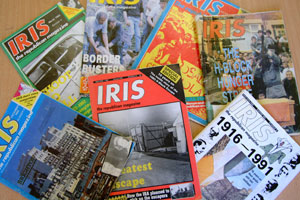
In June 1981, Joe was a candidate during the Free State general election, in the Sligo/Leitrim constituency, in which he narrowly missed election by 315 votes. All the family were actively involved in campaigning for him, and despite the disappointment at the result both they and Joe himself were pleased at the impact which the H-Block issue had on the election, and in Sligo/Leitrim itself. Adults cried when the video film on the hunger strike was shown, his family recall, and they cried again when Joe was eliminated from the electoral count. At 5.11 a.m., on July 8th 1981, Joe McDonnell, who - believeably, for those who know his wife Goretti, his children Bernadette and Joseph and his family - "had too much to live for" died after sixty one days of agonising hunger strike, rather than be criminalised. (From 'IRIS' magazine, Volume 1, No. 2, November 1981.)
BORN ON THIS DATE (8TH JULY) 245 YEARS AGO : A REVOLUTIONARY WOMAN WHO WAS OVERSHADOWED BY HER BROTHER.
Mary Anne McCracken (left) was born on this date (8th July) in 1770 and, at 21 years of age, she became an active campaigner for social reform and a supporter of revolutionary republicanism, abiding interests she maintained for the following 76 years.
She was born in High Street, Belfast, one of six children ; her father, John, was a ship's captain and her mother, Ann Joy, was a successful business woman with interests in the 'Newsletter' newspaper, a paper mill and the cotton industry. As a child, Mary Anne took an avid interest in world affairs and was especially well-briefed about the American War of Independence - it was this interest that encouraged her and her sister-in-law, Rose Ann McCracken, to join the Society of United Irishmen soon after its formation in Belfast in October 1791. Indeed, following the battle of Antrim in June 1798 and the collapse of the Rising in the North, Mary arranged safe passage for her brother, Henry Joy, on a ship bound for North America, but he was arrested as he was about to board the ship and imprisoned in Carrickfergus Jail, County Antrim, and from there he was transferred to Belfast Jail. Mary was present at his court-martial, and comforted him in his cell as he awaited execution. She accompanied him to the scaffold, and didn't hesitate when expected to look after Henry Joy's daughter, Maria Bodel. Five years later, just as she had seen her brother make the supreme sacrifice for liberty, she was to again witness another loved one, Thomas Russell, meet the same end at Downpatrick Jail in 1803. She withdrew from radical politics following Russell's execution and joined forces with English prison reformer Elizabeth Fry, to form a 'ladies committee' to demand better conditions in Belfast's workhouse.
She was a member of the ladies committee of the poorhouse, secretary of the Belfast Charitable Society (between 1832 and 1851) and president of the 'Committee of the Ladies' Industrial School for the Relief of Irish Destitution', which assisted victims of an Gorta Mór. She was also an outspoken opponent of slavery and campaigned to abolish the employment of small boys as 'climbing boys', who were young boys used by chimney sweeps as helpers, and won improvements for poor house women in the clothing trade and in children's education - she helped develop the idea of an infants school which flourished for a brief period. She was bitterly opposed to slavery and she fought hard for better conditions for other children who worked in factories. During the early 1840's she assisted Dr Richard R.Madden, the historian of the United Irishmen, with detailed accounts of the lives of her brother and Thomas Russell.
In her last years she saw the republican principles for which she had fought and for which those she had loved had died, once again being widely espoused throughout Ireland by the Fenian movement. Mary Anne McCracken died on July 24th, 1866, in her 97th year, and deserves to be remembered as much as her brother, Henry Joy McCracken.
GONNA BE A POST-FREE ZONE...
..ON WEDNESDAY 15TH JULY 2015 -
- but not because myself and the girlfriends will be in New York on holiday, unfortunately! If only. The reason is mundane, compared to the NYC reason I'd much prefer to be writing about : am busy helping to put a 650-ticket raffle together for the Dublin Executive of Republican Sinn Féin and, although it's not actually going to be held until Sunday 12th July, myself and the raffle crew are already 'marching' (!) throughout Leinster (and beyond) organising the collection of the ticket stubs and, highly organised and all as we are, the distribution of hundreds of tickets for the August 2015 raffle!
And, as if that wasn't enough to be getting on with , preparations for the raffle begin four days before the actual event is held and finish, 'officially', on the Monday night following the Sunday raffle, at a meeting to discuss how things went and how things could be improved etc ("give us an extra 150 tickets to sell, for God's sake...!") so, overall, I'll be 'down', timewise - including the weekend of the raffle - about five days, part of which I would otherwise have spent helping to put this blog together. And there you have it - we'll be back here on Wednesday 22nd July 2015, all going well. Unless, of course, the dollar/euro exchange rate improves (it's a lousy $1.10c to the euro, as I write) in which case in my next blog post (in late August sometime!) I'll be reminiscing about how much I already miss that wonderful, mad, smelly, gritty and noisey city!
But much more likely that I'll be posting here on Wednesday 15th July next. Check back and prove me wrong. And I hope you do!
Thanks for reading, Sharon.
YOU ARE 1066!
Bobby Sands (Roibeard Gearóid Ó Seachnasaigh), 27 years young when he died on the 5th of May 1981, after sixty-six days on hunger strike.
"...they all glare at me , and then begin to shout at me : "I am a Sir, I am a Sir, you will conform, conform, conform". They all grab me and start to beat and kick me while screaming : "You will conform, you will conform in H-Block 5". I awake, shouting and rolling on a filthy mattress on the floor. "Where am I?". "Are you alright?", asks my cell-mate. "Where am I?" "You are in your cell, you must've been having a nightmare," he says.
Our cell door opens and a black uniformed figure stands there, "Food", he says. "What was that, Mister?" I ask. "You call me Sir. You're in the H-Blocks now! You're in H-Block 5. Don't forget it, 1066..." - Bobby Sands, from an article entitled 'I am Sir, you are 1066', which was first published 37 years ago on this date (1st July, 1978) :
'I must have died last night, because when I awoke this morning I was in hell. I don't really know how I got here. I don't think I've done anything to deserve being here. But I am here, and I am suffering terribly. I think I am in some sort of tomb. I can not see, as everywhere is in total darkness. I have no clothes on, except some sort of rag around my waist. The floor of my tomb is covered in a wet mushy substance, the source or nature of which I don't know. There is a revolting stench lingering in the darkness and the air is warm, heavy and humid. There is something soft and damp lying in the corner, which seems to be some sort of bedding to lie upon. I can hear heavy booming noises echoing all around me like thunder. Somehow it reminds me of heavy doors closing. I check the four walls of my tomb; there appears to be some sort of a door in one of the walls. I can't understand my being here. What, I wonder. will become of me? I know I am a human being, although I'm naked and bearded. I can think and breathe. Am I in hell or some sort of limbo? I can hear heavy footsteps approaching. They stop quite near to me. There is someone or something nearby. I can hear it moving and breathing. It is watching me. More noise directly outside my tomb, a rattle of metal against metal. A square form of light begins to materialise. revealing an entrance as a door swings open. A figure stands in the grey dim light of the doorway. It is a human figure, dressed in what appears to be some sort of black uniform.
It stands scrutinising me in silence for several seconds, before letting out a terrifying yell that sends shivers through my body. "I am Sir." The words echo around my tomb. "I am Sir" it bellows again. "I am Sir, you are 1066." The door slams shut with a loud explosive boom, killing the dim light where the entrance had been. Still afraid to move, I stand in the total darkness. What is 1066, I think? Obviously it is me, but I can think, speak, smell and touch. I have all my senses, therefore I am not a number, I am not 1066. I am human, I am not a number, I am not 1066. Who, or what, is a 'Sir'? It frightened me. It was evil. I sensed its hatred of me, its eagerness to dominate me, and its potential violent nature. Oh, what will become of me? I remember I once hid a family. Where are they now? Will I ever see or hear of them again?
It's watching me. Once more the door opens. The dim light gives off an illumination, revealing the black uniformed figure at the doorway. "I am Sir", it says, "here is your food, 1066." A bowl is thrust into my hands as the door slams. Before the light dies I catch a glimpse of the floor. It is covered in filth and rubbish. There are several maggots clinging to my legs. The walls are covered with a mass of fat bloated flies. Once again I am terror-stricken. I pace the floor, aghast at my surroundings. The bowl in my hand is cold, it contains some sort of porridge or gruel. The smell from it revolts me. I set it down on the floor. Pacing the floor in total darkness, I become engulfed with depression and despair. I wish I was dead. "But I am dead." I say aloud I can't even kill myself.
A breeze, I feel a breeze coming from the wall behind me. Feeling about, I touch a piece of cloth. I tug it and it falls. A light of great intensity hits my eyes, temporarily blinding me. My tomb becomes illuminated with light, revealing a window divided with concrete bars. Stepping closer, thousands of lights of every size and colour appear in my view. These lights are perched upon mountains of barbed wire that glitter and sparkle on the black horizon. Another step forward, and stiII looking straight ahead, a small building looms up in front of me, displaying a dozen or so windows all of which are brightly lit up. Several naked figures appear at the windows. The building is thirty yards away. I can see that all the figures are bearded, they all seem to be fairly young, but all their faces are pale and haggard. They are young men, but have old men's faces. Am I gazing at death? These figures keep staring out at nothing, or pacing to and fro. Footsteps again! I turn, apprehension again gripping me, to await my door being opened. My new-found curiosity having diminished, I fall deeper into the depths of depression and despair. The thought of what lies on the other side of that door tortures me. The door swings open, and several black uniformed figures stand there, surrounding a very small, fat, evil-looking person who evidently is their leader. They all glare at me, and then begin to shout at me: "I am a Sir, I am a Sir.
You will conform." They all grab me and start to beat and kick me while screaming "You will conform, you will conform in H-Block 5." I awake, shouting and rolling on a filthy mattress on the floor. Where am I? "Are you alright?" asks my cell mate. Where am I? "You are in your cell, you must've been having a nightmare," he says. Our cell door opens and a black uniformed figure stands there "Food," he says. "What was that, Mister?" I ask. "You call me Sir. You're in the H·Blocks now. You're in H·Block 5. Don't forget it, 1066..."
The sectarian realities of ghetto life materialised early in Bobby's life when at the age of ten his family were forced to move home owing to loyalist intimidation... (and that was in 1962, before 'the Troubles' started, according to the 'official' version of our history). Bobby recalled his mother speaking of the troubled times which occurred during her childhood ; "Although I never really understood what internment was or who the 'Specials' were, I grew to regard them as symbols of evil". Of this time Bobby himself later wrote: "I was only a working-class boy from a nationalist ghetto, but it is repression that creates the revolutionary spirit of freedom. I shall not settle until I achieve liberation of my country, until Ireland becomes a sovereign, independent socialist republic..." (from here.)
Bobby Sands joined the PIRA in 1972, at 18 years young, and was arrested that same year and charged with possession of four handguns which were found in the house that he was staying in. He was convicted in April 1973 and sentenced to five years but was released in April 1976, returning immediately to active service for the PIRA. In October that year, the Balmoral Furniture Company in Dunmurray was attacked (an economic target) but as the (P)IRA men left the scene there was a gun battle with the RUC. Leaving behind two wounded, Seamus Martin and Gabriel Corbett, the remaining four (Sands, Joe McDonnell, Seamus Finucane, and Sean Lavery) tried to escape in a car, but were arrested. One of the revolvers used in the attack was found in the car. In 1977 the four were sentenced to 14 years in the Maze (Long Kesh) for possession of the revolver. They were not charged with explosive offences.
REMEMBERING BOBBY SANDS.
Things are loud and getting louder
so I don't have a lot to say
if I did you wouldn't hear me
so what's the use anyway
go fight your war and hide your whore
I'm sure Jesus understands
leave me in my own head
where I'm remembering Bobby Sands
Washington fought the British
they put him on a bill
an Irishman does the same
and special forces shoot to kill
while Amerikay looks the other way
among those who know firsthand
the price of freedom is tears and blood
and remembering Bobby Sands
the price of freedom is tears and blood
and remembering Bobby Sands
When a soldier lays down his life
so his comrades can be free
is it not us who forced his hand
by ignoring tyranny?
when men sit by and let others die
the killing will expand
so I'd like to take a moment here
to remember Bobby Sands
Tonight I'll tuck my children into bed
under liberty's flame
and soldiers will go off to kill
so ordered in my name
how do I sleep with a price so steep
and a government so bland
maybe it's time to hit my knees
and remember Bobby Sands.
Bobby Sands was born in Rathcoole, North Belfast, in 1954. He 'celebrated' his 27th birthday on the ninth day of his sixty-six-day hunger strike. He died on the 5th May 1981, the thirteenth Irish republican hunger-striker to die since 1917, and will always be remembered by Irish republicans.
THE PRICE OF PEACE......
Last month, 28 women who protested peacefully in the Phoenix Park, Dublin, against US President Ronald Reagan's visit to Ireland received £1000 each arising from their action for wrongful arrest. Gene Kerrigan recalls the weekend when another State determined Irish security requirements and details the garda action which could cost tens of thousands of pounds. From 'Magill' magazine, May 1987.
In the cells of the Bridewell, Mary Phelan was being taken out of her cell as were Nina Quigley, Phillipa Robinson, Toni Ryan, Sue Russell, Scotlyn Sabean and Catriona Ni Shiacuis. "...thank you again for this great honour..", said Ronald Reagan, "...and God bless you all." Then, at 12.50pm, he went to lunch with President Hillery at the US Ambassador's residence in the Phoenix Park from where he spoke again of human liberty, to which President Hillery replied - "Ireland shares with the United States a profound respect for the rights of the individual."
"I HAVE MY ORDERS." The woman were kept waiting for about two hours before being brought up to District Court Number Four at 2.30pm ; they were bedraggled and exhausted, and were brought up in batches and formally charged , and were remanded on £10 bail for two weeks. The mysterious 'edict' which had incarcerated them had still not been produced.
While this was happening President Reagan had been taken to Dublin airport and Pat Kenny was doing the RTE commentary on Reagan's departure. Kenny chatted to a friend from his college days who was now working in the Department of Foreign Affairs and he (Kenny) had seen the US Secret Service agents clearing journalists from the concourse in Shannon and had seen gardai standing by as the Americans directed security. But it wasn't like that at all, said Kenny's friend from 'Foreign Affairs' ; the gardai were in charge and the Americans were under garda orders! (MORE LATER).
KNOWN FOR RESIGNING FROM HIS RESIGNATIONS!
This hasn't made the same headlines that it would have made a few years ago, and not just because it's not seen as such a big deal nowadays - as it seems to happen every other Tuesday - but the politician in question this time, (ex-)Dublin North Inner City PSF councillor Jonathan Dowdall, is known for , as stated in our headline , 'resigning from his resignations'.
Jonathan now claims that "...bullying is allowed go on in certain parts of (Provisional) Sinn Fein...there were numerous attacks on myself from a certain element within [the party], and there were attacks on my team members...I reported them, team members of mine reported them, and nothing happened...I was given a mandate by the people to represent them in the area and at the end of the day I couldn’t continue to represent them because of what I was subjected to – it was getting really nasty at the end....I could no longer stand over and watch certain attacks from certain elements within the party..."
However, a PSF spokesperson has denied the claims made by Jonathan Dowdall, saying that there is no problem with bullying in the party and that "a robust mechanism" exists to prevent same from surfacing. So - whether you believe the company director is correct or Aengus knows better then just don't forget that paper doesn't refuse ink....!
"WE HAVE WORN DOWN THEIR WILL....."
Ed Moloney speaks to a leading member of the Provisionals who has been authorised to speak on behalf of the (P)IRA Army Council. From 'Magill' magazine, September 1980.
Ed Moloney : Have the tough security policies of Charlie Haughey contributed to those, 'circumstances forced on you'?
IRA : No. The majority of our operations are carried out by personnel who live within the Six Counties. Belfast, for instance, is the spearhead of our campaign. People there don't run back across the Border. The Volunteers who set up road blocks in Carrickmore last October didn't run back across the Border. Our people are based in the North and our attacks occur there. What is happening is that Charles Haughey, without the sanction of the Irish people, is spending over £80 million of their money making sure that attacks from his side of the Border on occupation forces are inhibited.
These occupation forces infringe the sovereignty of the 26 Counties, these are the people who have fired across the border and killed people, these are the people who go over in plain clothes and are blocking off border areas, hindering the farming communities there. The 1000 troops and Garda Special Task Force are there on the Border to suppress the people and to collaborate with the Brits. But that is not the reason for the lower level of operations this year. (MORE LATER).
ON THIS DATE (1ST JULY) 45 YEARS AGO : 'MY COUNTRY FOR A SCOTCH...'!
Reginald Maudling (pictured, left) the British 'Home Secretary for Northern Ireland' at the time, didn't enjoy his visit here on the 1st July 1970...
On Tuesday, June 30th, 1970, the British puppet-'parliament' at Stormont, in Belfast,passed into 'law' the 'Criminal Justice (Temporary Provisions) Act' which, among other injustices, decreed that a mandatory prison sentence of six months be imposed on anyone found guilty of rioting. Two days before that 'law' was signed into being (ie on Sunday June 28th) about 500 nationalist workers at the Harland and Wolff shipyard were violently rounded-up by their unionist/loyalist co-workers and told to leave the job or face the consequences. Protests, pickets and marches were held on that Sunday and also on the following day (Monday 29th) over the forced Harland and Wolff expulsions and, coincidentally, (!) a new 'anti-rioting law' was introduced within hours.
On Wednesday, 1st July 1970, Reginald Maudling, 'Secretary of State for the Colonies', flew in from England on a visit to Belfast to assure British subjects that the 'mammy parliament' in Westminster was prepared to 'protect' them from the nasty nationalists. However, Maudling obviously felt that he himself needed 'protection' (or something stronger!) because, on Wednesday 1st July 1970, as he was boarding a plane to take him back to what he considered 'the mainland', he is reported to have declared - "For God’s sake bring me a large Scotch. What a bloody awful country!"
The cheek of the man - to use one Irish city , Belfast, as a yardstick for the whole of Ireland. A mistake, to be sure, that is often made in relation to, say, politicians : just because one of them is said to be 'dodgy' doesn't necessarily mean that they all are!
ON THIS DATE (1ST JULY) 148 YEARS AGO : 'MEAGHER OF THE SWORD'* DIES ON THE MISSOURI RIVER.
Born on the 3rd August 1823, died (in mysterious circumstances) on the 1st July, 1867 :'Does the world even have heroes like Ireland's Thomas Francis Meagher anymore? After fighting for Irish independence ("I know of no country that has won its independence by accident") ,then condemned to death, pardoned and exiled, Thomas Francis Meagher escaped to America,where he became a leader of the Irish community and commanded the Irish Brigade during the Civil War. General Meagher’s men fought valiantly at some of the most famous battles of the Civil War, including Antietam, Fredericksburg and Chancellorsville. After the war, Meagher served as Acting Governor of the Montana Territory. In 1867, Meagher disappeared on the Missouri River ; his body was never found...' (from here.) (*"Abhor the sword - stigmatize the sword? No, for in the passes of the Tyrol it cut to pieces the banner of the Bavarian, and, through those cragged passes, struck a path to fame for the peasant insurrections of Innsbruck! Abhor the sword - stigmatize the sword? No, for at its blow a giant nation started from the waters of the Atlantic, and by its redeeming magic, and in the quiverings of its crimsoned light, the crippled colony sprang into the attitude of a proud Republic - prosperous, limitless, and invincible! Abhor the sword - stigmatize the sword? No, for it swept the Dutch marauders out of the fine old towns of Belgium - scourged them back to their own phlegmatic swamps - and knocked their flag and sceptre, their laws and bayonets, into the sluggish water of the Scheldt.")
Thomas Francis Meagher was born in Waterford City (near the Commins/Granville Hotel) on August 3rd, 1823, into a financially-comfortable family ; his father was a wealthy merchant who, having made his money, entered politics, a route which the young Thomas was to follow. At 20 years young, he decided to challenge British misrule in Ireland and, at 23 years of age (in 1846), he became one of the leaders of the 'Young Ireland' Movement. He was only 25 years of age when he sat down with the Government of the Second French Republic to seek support for an uprising in Ireland. At 29 years 'old', he wrote what is perhaps his best known work - 'Speeches on the Legislative Independence of Ireland', of which six editions were published. He unveiled an Irish flag (which he had based on the French Tricolour) in his native city, Waterford, on the 7th March 1848, outside the Wolfe Tone Confederate Club and, on the 15th April that same year, on Abbey Street, in Dublin, he presented the flag to Irish citizens on behalf of himself and the 'Young Ireland' movement, with the following words : "I trust that the old country will not refuse this symbol of a new life from one of her youngest children. I need not explain its meaning. The quick and passionate intellect of the generation now springing into arms will catch it at a glance. The white in the centre signifies a lasting truce between the 'orange' and the 'green' and I trust that beneath its folds, the hands of the Irish protestant and the Irish catholic may be clasped in generous and heroic brotherhood..."
He was arrested by the British for his part in the 1848 Rising, accused of 'high treason' and sentenced to death ('...to be hanged, drawn and disemboweled..') but, while he was awaiting execution in Richmond Jail, this was changed by 'Royal Command' to transportation for life. Before he was deported, he spoke in Slievenamon, Tipperary, to a crowd estimated at 50,000 strong, about the country and the flag he was leaving behind - "Daniel O'Connell preached a cause that we are bound to see out. He used to say 'I may not see what I have labored for, I am an old man ,my arm is withered, no epitaph of victory may mark my grave, but I see a young generation with redder blood in their veins, and they will do the work.' Therefore it is that I ambition to decorate these hills with the flag of my country...."
In July 1849, at only 26 years of age, he was transported from Dun Laoghaire on the S.S.Swift to Tasmania, where he was considered, and rightly so, to be a political prisoner (a 'Ticket of Leave' inmate) which meant he could build his own 'cell' on a designated piece of land that he could farm provided he donated an agreed number of hours each week for State use. In early 1852, Thomas Francis Meagher escaped and made his way to New Haven, in Connecticut, in America, and travelled from there to a hero's welcome in New York. This fine orator, newspaper writer, lawyer, revolutionary, Irish POW, soldier in the American civil war and acting Governor of Montana died (in mysterious circumstances - he drowned after 'falling off' a Missouri River steamboat) on the 1st of July 1867 at 44 years of age. Asked about his 'crimes', he replied - "Judged by the law of England, I know this 'crime' entails upon me the penalty of death ; but the history of Ireland explains that 'crime' and justifies it." This brave man dedicated twenty-four of his forty-four years on this earth to challenging British misrule in Ireland and, while it can be said without doubt that Thomas Francis Meagher did his best, a 'crime' remains to be resolved.
Thanks for reading, Sharon.
THE PRICE OF PEACE......
Last month, 28 women who protested peacefully in the Phoenix Park, Dublin, against US President Ronald Reagan's visit to Ireland received £1000 each arising from their action for wrongful arrest. Gene Kerrigan recalls the weekend when another State determined Irish security requirements and details the garda action which could cost tens of thousands of pounds. From 'Magill' magazine, May 1987.
Ronald Reagan talked to the politicians in Leinster House about "...your nation's historic regard for personal freedom..." and, at that precise moment - just after noon - the women prisoners in the Bridewell were being taken from their cells to a large underground room, under the courts - Ann Barr, Lucia Bergmann, Elaine Bradley, Anne Browne, Mary Chance... "...freedom.." , said Ronald Reagan, "...is the flagship and flashfire of the future. Its spark ignites the deepest and noblest aspirations of the human soul."
Monica Corish left her cell, and Anne Claffey, Agnes Deegan, Mary Duffy, Orla Ni Eirli and Miriam Fitzsimons... "...the conditions on which God hath given liberty to man is eternal vigilance.." , said Ronald Reagan, quoting John Philpot Curran, "...we must not hesitate to express our dream of freedom. We must not be reluctant to enunciate the crucial distinctions between right and wrong..." Sister Frances, a nun from 'Sisters For Justice', left her cell, as did Marese Hegarty, Marion Howe, Aileen Jones, Mary Killian, Sheila McCarthy, Aileen McQuillan, Sofia Maher, Ludy Methorsg and Jane Morgan...
"...let us not take the counsel of our fears. Let us instead offer the world a politics of hope, a forward strategy for freedom.." Petra Breatnach was brought from Cabra to join the women in the big room at the Bridewell. She had been detained for about 45 hours already. Mary Kay Mullen was brought from her cell, Caroline O' Connor and Monica O'Connor, Catherine O'Reilly and Ruth O'Rourke... "...those old verities, those truths of the heart - human freedom under God - are on the march everywhere in the world. All across the world oday - in the shipyards of Gdansk, the hills of Nicaragua, the rice paddies of Kampuchea, the mountains of Afghanistan - the cry again is 'liberty'..." (MORE LATER).
"WE HAVE WORN DOWN THEIR WILL....."
Ed Moloney speaks to a leading member of the Provisionals who has been authorised to speak on behalf of the (P)IRA Army Council. From 'Magill' magazine, September 1980.
Ed Moloney : There has been a considerable reduction in IRA activity in 1980 compared with the two previous years. What is the reason for that lull?
IRA : First of all, we're not at all dismayed by what we have achieved this year. We have to maintain a certain level of armed activity to effect political change within the Six Counties, to make "political progress" impossible. We have effectively done that this year. For example the Atkins' proposals are getting nowhere and the SDLP, who have risen to power on the back of our armed struggle, and the Loyalists, have mutually incongruous political manifestos which we have helped to temper on both sides, although saying that the Loyalists are inherently sectarian anyway.
The other aspect of our armed struggle is to affect the morale of the British Army and to create an impact on the British people. We have not managed to match last year's performance this year. That is because circumstances have been forced upon us and there have been some material problems. But we are totally confident that we can overcome these short term problems. The British are sliding into their 1977 mistake of predicting our defeat. They're fighting a statistical war, we're not. We're fighting a political war.
The Brits are saying the Provos are beaten, operations are down, there's less poundage of explosives used, four soldiers less have died this year etc. That's a false confidence and that's OK with us because we will wreck it when we choose to. (MORE LATER).
ON THIS DATE (24TH JUNE) 94 YEARS AGO : 'LET'S LIVE IN NEIGHBOURLY HARMONY WITH EACH OTHER. ON MY TERMS AND CONDITIONS...'
British Prime Minister David Lloyd George (left) and Eamonn De Valera, the then President of the Irish Republic, sketched in June 1921 - on the 24th of that month, Lloyd George sent the following letter to de Valera :
Sir,
The British Government are deeply anxious that, so far as they can assure it, the King’s appeal for reconciliation in Ireland shall not have been made in vain. Rather than allow yet another opportunity of settlement in Ireland to be cast aside, they felt it incumbent upon them to make a final appeal, in the spirit of the King’s words, for a conference between themselves and the representatives of Southern and Northern Ireland, I write, therefore, to convey the following invitation to you as the chosen leader of the great majority in Southern Ireland, and to Sir James Craig, the Premier of Northern Ireland:
(1) That you should attend a conference here in London, in company with Sir James Craig, to explore to the utmost the possibility of a settlement.
(2) That you should bring with you for the purpose any colleagues whom you may select. The Government will, of course, give a safe conduct to all who may be chosen to participate in the conference.
We make this invitation with a fervent desire to end the ruinous conflict which has for centuries divided Ireland and embittered the relations of the peoples of these two islands, who ought to live in neighbourly harmony with each other, and whose co-operation would mean so much not only to the Empire but to humanity.
We wish that no endeavour should be lacking on our part to realise the King’s prayer, and we ask you to meet us, as we will meet you, in the spirit of conciliation for which His Majesty appealed.
I am, Sir, Your obedient servant,
D. Lloyd George.
The 'tone' and context of that letter must have set off alarm bells as far as the Irish republicans are concerned ; "..the King’s appeal for reconciliation in Ireland...rather than allow yet another opportunity of settlement in Ireland to be cast aside...(we) make a final appeal...explore to the utmost the possibility of a settlement...a fervent desire to end the ruinous conflict which has for centuries divided Ireland...(we) ought to live in neighbourly harmony with each other...in the spirit of conciliation.." - it reads like a letter sent by a 'neutral outsider' to one of two combatants, pleading for peace, rather than that what it was, which was a letter from the aggressor to those that he is aggressing. Par for the course, as far as that man was concerned - on Monday, 22nd December 1919, his 'Bill for the Better Government of Ireland' (known here simply as 'The Partition Bill') was read to the British Parliament and was passed into British law in 1920, but did not come into force until May 1921. Not by any means the beginning of our 'troubles' with Westminster, but a definite continuance of same. Indeed, one of his own son's said of him - "Father was sick of the Irish Republicans. He was quite willing to let them have what they seemed determined to have ; an impoverished semi-peasant country with their peat fires and undrained bogs and dreams of glory seen in a fine mist of alcohol..." and, speaking of alcohol, was it possible that 'By George' was completely sober when,
on Monday 5th December 1921, he announced to the Irish side (during the 'Treaty of Surrender' discussions) that he had written two letters, one of which would now be sent to his people in Ireland ; one letter told of a peaceful outcome to the negotiations, the other told of a breakdown in the negotiations - Lloyd George stated that if he sent the latter one "...it is war, and war within three days. Which letter am I to send?" British 'negotiations/negotiators' at their best!
Anyway : the reply sent to Lloyd George (from de Valera, on the 8th July 1921) was, by contrast, not 'loaded/spiked' like that which it was in reply to and, in my opinion, could have been more 'direct' in leaving Lloyd George and his staff in no doubt but that Irish republicans considered themselves the defenders in the war and rejected the implication in the British letter that Westminster was a concerned 'neutral outsider' in the conflict :
Sir,
The desire you express on the part of the British Government to end the centuries of conflict between the peoples of these two islands, and to establish relations of neighbourly harmony, is the genuine desire of the people of Ireland.
I have consulted with my colleagues and secured the views of the representatives of the minority of our Nation in regard to the invitation you have sent me.
In reply, I desire to say that I am ready to meet and discuss with you on what bases (sic) such a Conference as that proposed can reasonably hope to achieve the object desired.
I am, Sir,
Faithfully yours,
Eamon de Valera.
However : on Monday, 11th July 1921, a truce came into effect, hostilities ceased and, on the 6th December 1921, a (shaky) 'stepping stone' (which gave those using same the means by which they could sign their own death warrants) of a treaty (the 'Treaty of Surrender') was signed in London and today, 94 years later, the issue remains unsolved. But it's early yet....
IRA SPLIT LEADS TO DELEGATION OF AUTHORITY.
Tom Maguire (pictured, left): born 28th March 1892, died 5th July 1993, 101 years old at the time of his death.
Tom Maguire is one of the many Irish Republican men and women that the Republican Movement was, is and always will be, guided by : 'When the majority of (P)IRA and (P)Sinn Féin decided to abandon abstentionism in the 1969/70 split, Ruairí Ó Brádaigh and Dáithí Ó Conaill sought and secured Maguire's recognition of the Provisional IRA as the legitimate successor to the 1938 Army Council. Of the seven 1938 signatories, Maguire was the only one still alive. Likewise in the aftermath of the 1986 split in the Republican Movement, Maguire signed a statement in 1986....(which) was issued posthumously in 1996: he conferred this legitimacy on the Army Council of the Continuity IRA (who provided a firing party at Maguire's funeral in 1993).....' (from here.)
In a statement on the 8th December 1938, the surviving members of the Second Dáil announced the following : "Dáil Éireann, in consequence of armed opposition ordered and sustained by England, and the defection of elected representatives of the people over the period since the Republican Proclamation of Easter 1916 was ratified, three years later, by the newly inaugurated Government of the Irish Republic, hereby delegate the authority reposed in us to the Army Council, in the spirit of the decision taken by Dáil Éireann in the spring of 1921, and later endorsed by the Second Dáil. In thus transferring the trust of which it has been our privilege to be the custodians of for twenty years, we earnestly exhort all citizens and friends of the Irish Republic at home and abroad to dissociate themselves openly and absolutely from England's unending aggression's and we urge on them to disregard England's recurring war scares, remembering that our ancient and insular nation, bounded entirely by the seas, has infinitely less reason to become involved in the conflicts now so much threatened than have the neutral small nations lying between England and the Power she desires to overthrow.
Confident, in delegating this sacred trust to the Army of the Republic that, in their every action towards its consummation, they will be inspired by the high ideals and the chivalry of our martyred comrades, we, as Executive Council of Dáil Éireann, Government of the Republic, append our names : Sean O Ceallaigh (Ceann Comhairle), George Count Plunkett, Professor William Stockley, Mary Mac Swiney, Brian O hUiginn, Tom Maguire, Cathal O Murchadha."
In December, 1969, following a split in the Republican Movement over the issue of the recognition of and participation in the Partition and Westminster parliaments, Thomas Maguire, as the sole surviving member of the Executive of the Second Dáil Éireann, recognised the Provisional Army Council, which remained true to the Irish Republic as the lawful Army of the Thirty-two County Irish Republic. In a statement dated 31st December, 1969, Thomas Maguire said: An IRA convention, held in December 1969, by a majority of the delegates attending, passed a resolution removing all embargoes on political participation in parliament from the Constitution and Rules of the IRA....in 1986 there was another split in the Republican Movement and again it was over the issue of recognition of the 26 County State...on the 25th of July 1987 Thomas Maguire issued another statement declaring the Continuity IRA as the lawful Army of the 32-County Irish Republic...(more here.)
This republican strategist will be remembered on Sunday 5th July 2015 - those attending are asked to assemble at Cross Cemetery, Mayo, at 9pm. "The Irish Republic proclaimed in arms in Easter week 1916 and established by the democratic majority vote of the people in the General Election of 1918, has been defended by Irish Republicans for several generations. Many have laid down their lives in that defence. Many others have suffered imprisonment and torture. I am confident that the cause so nobly served will yet triumph" - IRA Comdt. General Tom Maguire.
(P)SINN FÉIN 'TD' DECLARES THAT MCGUINNESS 'WRONG TO MEET BRITISH QUEEN'.
"Sinn Féin opposes the proposed state visit of the Queen of England, Commander-in-Chief of the British armed forces until there is complete withdrawal of the British military and the British administration from Ireland. And until there is justice and truth for victims of collusion, no official welcome should be accorded to any officer of the British armed forces of any rank...it is totally unacceptable that the Taoiseach is, on the one hand, welcoming and preparing for a visit to Ireland by the Queen of England, while on the other hand he refuses to pursue the British Prime Minister and the British government on the issue of collusion..."
Martin McGuinness welcomed and shook hands with the same British 'queen' referred to by Pearse Doherty, but McGuinness refused to take Doherty's advice ie he (McGuinness) didn't take that opportunity to pursue or indeed even raise "the issue of collusion" with the woman. Where is Pearse Doherty's statement re same? Or his statement condemning (P)Sinn Féin Mayor of Cashel, Councillor Michael Browne, for meeting and shaking hands with the same British 'queen' ("I just said to her 'Welcome to Cashel, Your Majesty, and I hope you enjoy your stay' ") [from here] ?
To clarify the issue - and before readers start 'googling' with search terms like 'revolt in Provo Sinn Féin over British Queen' (as if!!) - it should be noted that the above statement was issued by Pearse Doherty on the 24th June 2010 : five years ago on this date! Perhaps on the 24th June 2020 , Pearse will issue a statement (from Westminster!) condemning Martin McGuinness (who will be in the British 'House of Lords' by then, no doubt) for having met that British 'queen'...!
THIS REPUBLICANISM THING SURE HAS OPENED MY EYES, UP YA BOYO YA, FECKIN' LANGER....
"I’m finding it tough....you know you have to maybe get your hair done a bit more often, maybe put a bit more into make-up and a bit more into clothing than you would normally put. From that side of it, it can be expensive...." - the words of Provisional Sinn Féin Leinster House member for Cork East, Sandra McLellan, who is in the news again, but this time for a different type of 'blusher'.
As an elected member in Leinster House, Sandra is paid €1930 a week, of which (it is claimed) her party takes €1222, leaving her with a weekly wage of only (!) €708. On top of that, she receives €104 a week in 'expenses', giving her a combined total of only (!) €812 a week to try and not just survive on, but to buy cosmetics and matching outfits out of, too. No wonder the poor girl is "finding it tough..."!
Indeed, that is more than likely why she is apparently unsure if she has paid (or will pay?) her water tax 'bill' - she simply hasn't got the money. Sandra would break your melt, as they say in Cork....
ON THIS DATE (24TH JUNE) IN....
..1316 - at the Siege of Carrickfergus Castle by the Bruce army during a parley the castle defenders seized 30 Scots. The Laud Annals reports that 8 of these were killed and eaten....(from here.)
..1374 - a sudden outbreak of St. John's Dance causes people in the streets of Aachen, Germany, to experience hallucinations and begin to jump and twitch uncontrollably until they collapse from exhaustion....the populace danced wildly through the streets, screaming of visions and hallucinations, and even continued to writhe and twist after they were too exhausted to stand. The dancing mania quickly spread throughout Europe...it involved groups of people, sometimes thousands at a time, who danced uncontrollably and bizarrely. Men, women, and children would dance through the streets of towns or cities, sometimes foaming at the mouth until they collapsed from fatigue...in the eyes of the church, those suffering from St. John's Dance were possessed by the devil... (from here and, no doubt, 'in the eyes' of the dancers, the church and/or most of its representatives could be said to be 'possessed by the devil'.)
..1754 - death of Robin Downes. Thomas Waite writes: "Yesterday morning Robin Downes, member for Kildare, was found in his parlour in his house in Dawson Street with a sword run through his body. There are hopes of his recovery. He himself says...that he received the wound in a fair duel...but the general opinion seems to be that he transfixed himself, though no one pretends to assign the reason. My Lord Kildare is come to town in vast agitation at this accident. The election for a burgess at Athy comes on next Monday, and Robin was one of his Lordship's most powerful advocates at the late bustle in that town. Rumour has given Downes Commissioner Bourke or Wat Weldon for an antagonist, but I believe quite without reason..." (see 'Thomas Waite to the Same', here.)
Thanks for reading, Sharon.