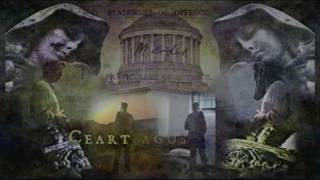
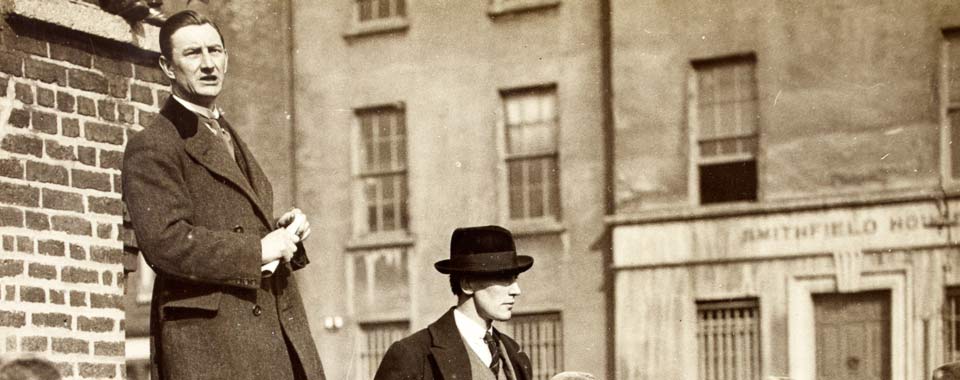
ON SATURDAY 23RD APRIL 2016 IN DUBLIN : REPUBLICANS TO MARCH FROM PARNELL SQUARE TO THE GPO.
MacDonagh and MacBride
And Connolly and Pearse
Now and in time to be,
Wherever green is worn,
Are changed, changed utterly:
A terrible beauty is born. (from here.) Republican Sinn Féin will hold its National Commemoration to mark the 100th anniversary of the 1916 Rising. Those attending are requested to assemble at the Garden of Remembrance at 1.45pm, and the parade will leave for the GPO at 2pm.
RSF Head Office will distribute 2,000 items of printed material (sample of same, pictured, left) on the day, between the Ambassador exhibition hall/event centre and O'Connell Bridge. Those printed items have been assembled into 500 'packs' of four, and will be handed out, free of charge, on a 'first-up-best-dressed' basis and all genuine republicans are welcome to attend this 100th anniversary commemoration!
PROSE AND CONS.
By prisoners from E1 Landing, Portlaoise Prison, 1999.
ACKNOWLEDGMENTS :
Grateful thanks to the following for their help, support, assistance and encouragement, and all those who helped with the typing and word processing over the past few months. Many thanks to Cian Sharkhin, the editor of the book, Mr Bill Donoghue, Governor, Portlaoise, Mr Seán Wynne, supervising teacher, the education unit in Portlaoise Prison and the education staff, especially Zack, Helena and Jane. Education officers Bill Carroll and Dave McDonald, Rita Kelly, writer, print unit, Arbour Hill.
First Print : November 1999, reprinted March 2000, illustrations by D O'Hare, Zack and Natasha. Photograph selection : Eamonn Kelly and Harry Melia.
THE WINDOW PAIN.
My cell has a window, a small barred window
its form is rigid, confining, constant
it defines my being
its shards pierce my soul
each steel piece, a rod of fear
a bar of hate
I huddle in the gloom
and acknowledge the dark of my pain.
My cell has a window, a small barred window
through it I see freedom
I feel the sun's warmth, the soft summer breeze,
I hear birds sing,
the children's laughter and play
from the school yard
I hear the train, steel on steel,
pulsing and pulling
through the deep trees, the green fields
past the houses, over the bridge
down by the pathways.
Each spaced gap a ray of excitement
a moment of longings
a glimpse of beauty
and I know I can't be contained.
Dermot Griffin.
GROWING UP IN LONG KESH...
SIN SCÉAL EILE.
By Jim McCann (Jean's son). For Alex Crowe, RIP - "No Probablum". Glandore Publishing, 1999.
Biographical Note : Jim McCann is a community worker from the Upper Springfield area in West Belfast. Although born in the Short Strand, he was reared in the Loney area of the Falls Road. He comes from a large family (average weight about 22 stone!). He works with Tús Nua (a support group for republican ex-prisoners in the Upper Springfield), part of the Upper Springfield Development Trust. He is also a committee member of the 'Frank Cahill Resource Centre', one of the founders of 'Bunscoil an tSléibhe Dhuibh', the local Irish language primary school and Naiscoil Bharr A'Chluanaí, one of the local Irish language nursery schools.
His first publication last year by Glandore was 'And the Gates Flew Open : the Burning of Long Kesh'. He hopes to retire on the profits of his books. Fat chance!
"MY FINGER CAME OFF...."
I asked Dede what he would be doing with his Lev Yashin goalkeepers gloves and I agreed with the doctor's prognosis that Dede's answer of what I could do with his Lev Yashin goalkeeper's gloves would prove both a medical and surgical impossibility. Although, if Dede had got a grip on me, I dare say he would have had a go at it.
Looking back at it now - the whole tragic episode - I don't blame or hold any animosity towards Dede for costing me the 'Man of the Match' award. I have learned that life is too short to harbour any thoughts of revenge or retribution and, as I have already stated, I suppose Dede thought that it was important at the time. I forgive him.
(*Author's Note : I have consulted both the Oxford English Dictionary and the De Bhaldraithe Irish dictionary, as the word processor I am using does not recognise the verb 'ambuled' ('to be rushed to hospital'). Amazingly, when I searched the Oxford-English dictionary all I could find was the noun 'ambulance' (from the same root) but no reference to the verb 'ambuled'. The Oxford-English dictionary people and scrabblers, please note! More surprisingly, on looking through the Irish dictionary under the present tense of the free-verb, 'Otharcharrtar' ('is rushed to hospital') it wasn't there, either. Dochreidte!)
(Next [from the same source] - "Thank You, Boys, Thank You". Part One.)
EXPLOSIVE QUESTIONS....
'Magill' magazine has unearthed new information which raises a grim but important question : were explosives from within this Republic used in the Dublin and Monaghan bombings? It is a question which, bizarrely, also encompasses the controversial Dónal de Róiste case. By Don Mullan, author of the book 'The Dublin and Monaghan Bombings'.From 'Magill' magazine, February 2003.
THE CLONAGH AFFAIR.
On 1st April 1974, Captain Patrick Walshe was assigned responsibility for guarding the 'Irish Industrial Explosives Factory' at Clonagh, County Meath and, from the moment he set foot in Clonagh, he was alarmed at the lack of security around the factory, which was handling hundreds of tons of high explosive material. He immediately feared the potential consequences of this, if the explosives were to be stolen by outsiders sympathetic to the IRA's bombing campaign in the North.
Walshe's concerns were such that he immediately began to document the security flaws at Clonagh and report them to his army superiors. During a 10-month duty assignment at the factory he prepared and submitted 32 detailed reports, including high quality photographs, highlighting the resultant easy access to Clonagh for anyone who might wish to avail of its deadly stockpile. He felt the need to deliver so many reports because of what he considered a carefree attitude being adopted by people in authority, including politicians of the day, who were made aware of the situation.
Walshe says he was particularly alarmed when the Dublin and Monaghan bombs exploded on the 17th May 1974, murdering 33 civilians, and feared it was an act of retaliation by the British for the lack of security at Clonagh. British military intelligence has long been suspected of colluding with the UVF to carry out the synchronised attack. Responding to a question about the attacks on Dublin and Monaghan in Peter Taylor's 1999 BBC documentary 'Loyalists' , David Ervine of the 'Progressive Unionist Party' chillingly described them as a way of "returning the serve".
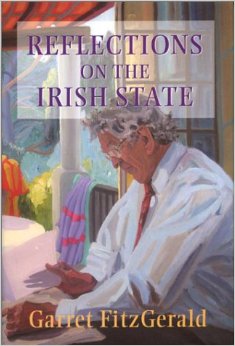
In recent months information has surfaced which has lent weight to Patrick Walshe's fears and, indeed, his suspicions that Clonagh was a supply source for the IRA bombing campaign in the North was confirmed prior to Christmas 2002 by former Taoiseach Dr Garrett Fitzgerald in his new book, 'Reflections on the Irish State', in which he makes the following statement : "I particularly recall how furious I was in the mid-1970's at the discovery that the British Army in Northern Ireland (sic) had known for 18 months that explosives being used by the IRA were being stolen from a particular explosives factory in our state but had not told us about this, apparently because they preferred to use this leakage as a propaganda weapon against us than to save lives in Northern Ireland (sic) by stopping it." (MORE LATER.)[NOTE - see our 'EXCLUSIVE!' piece, below...]
ON THIS DATE (20TH APRIL) 106 YEARS AGO - IRISH REPUBLICAN DIES AFTER 63 YEARS OF SERVICE TO REPUBLICANISM.
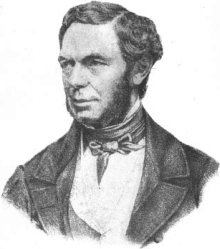
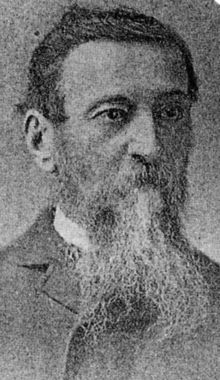
Joseph Denieffe (pictured,left), was born in Kilkenny City in 1833 and died, 77 years later, in Chicago, America, after 63 years of service in the Cause of Irish republicanism.
Joseph Denieffe grew up to become a tailor by trade and, while in his early teens, witnessed Daniel O'Connell's campaign for the 'Repeal of the Act of Union' and would have been just ten years young when approximately one million people assembled at what was known in its day as a 'Monster Meeting' at the Royal Hill of Tara in County Meath on 15th August 1843. He would have heard, on that day, the speech delivered to that vast crowd by Daniel O'Connell, who stated - "We are at Tara of the Kings - the spot from which emanated the social power, the legal authority, the right to dominion over the furthest extremes of the land. The strength and majority of the national movement was never exhibited so imposingly as at this great meeting. The numbers exceed any that ever before congregated in Ireland in peace or war. It is a sight not grand alone but appalling - not exciting merely pride, but fear. Step by step we are approaching the great goal of Repeal of the Union, but it is at length with the strides of a giant..."
Imagine the scene as a ten-years-young child must have seen it : shoulder-to-shoulder with people packed together as far as a child could see ; one million people, defiantly cheering and clapping at a lone figure on a wooden platform as he shook his fist and shouted rebelliously in the direction of Westminster. It was a day that was to have a life-long effect on young Joseph Denieffe, and thousands of other young boys and girls, and men and women. When he was twelve years young, Joseph Denieffe would have witnessed the 'Great Hunger' ('An Gorta Mór', 1845-1852) when an estimated one million people died on the land and another one million people emigrated in 'coffin ships', and he would have noticed how Daniel O'Connell and the other career politicians did not suffer, how the Church leaders would bless the dead and pray for the dying before retiring to their big house for a meal, after which they would sleep contently in a warm bed as a million people died around them. Others, too, noticed that injustice - William Smith O'Brien, a follower of Daniel O'Connell's, was one of the many who had grown impatient ; he helped to establish the 'Young Ireland' group, with the intention of organising an armed rising against the British.
Joseph Denieffe joined the 'Young Ireland' group in 1847 (the year of its formation) - he was fourteen years young. He worked with William Smith O'Brien (who, as an 'English Gentleman', was an unusual Irish rebel - he had been educated at Harrow, had a fine English accent and actually sat in Westminster Parliament for a good few years!) and others for the following four years when, at eighteen years of age (in 1851) , the economics of the day dictated emigration. He ended up in New York, and contacted a number of Irish Fenians in that city - John O'Mahony and Michael Doheny and, at only twenty-two years of age (in 1855), he assisted in the establishment of an Irish republican group in America - the 'Emmet Monument Association' - which sought to raise an army to force England out of Ireland. That group decided to send Joseph Denieffe back to Ireland to organise a branch of the organisation there and, by 1856, a small but active branch of the Association was up and running in County Kilkenny. Its membership included such well-known Irish rebels as Thomas Clarke Luby, Peter Langan and Philip Gray.
On hearing of the establishment of the 'Emmet Monument Association' in Ireland and America, another Irish rebel , James Stephens, returned to Ireland as he was interested in the objectives of the new group - Stephens himself had taken part in military action against the British in 1848, with William Smith O'Brien , in the town of Ballingarry in Tipperary, and had fled to Paris to escape an English jail sentence, or worse. By 1857, he had established a branch of the 'Emmet Monument Association' in Dublin.
The leadership of the Association in America - John O'Mahony and Michael Doheny - then sent one of their most trusted men, Owen Considine, to Ireland to assist in organising a fighting force in the country. In December 1857, Joseph Denieffe returned to America on a fundraising mission ; he stayed there until about March in 1858 and, having raised eighty pounds - a good sum of money in those days - he came back to Ireland. On St Patricks Day that year (17th March, 1858) , Joseph Denieffe made his next move - he met with Thomas Clark Luby and James Stephens, as arranged, on that St. Patricks Day in 1858 and the three men then founded the 'Irish Republican Brotherhood', a military organisation whose aim was to overthrow British mis-rule in Ireland. The following day, Joseph Denieffe returned to America to continue his fund-raising activities - but political trouble was brewing in America, too. Talk, and fear, of a civil war was everywhere. To make matters worse for his fund-raising efforts, James Stephens and John O'Mahony had fallen out over the direction that armed resistance to the British was going. America was now home to literally millions of Irish men and women who had been forced to leave Ireland because of British interference and the effect An Gorta Mór had on them yet, as far as James Stephens was concerned, John O'Mahony and the American leadership had failed to harness enough support amongst the Irish for an armed campaign against the British.
James Stephens accused John O'Mahony and his people in America of being "Irish tinsel patriots (who make) speeches of bayonets, gala days and jolly nights, banners and sashes, bunkum and filibustering, responding in glowing language to glowing toasts on Irish national independence over beakers of fizzling champagne..." and it was in the middle of the above turmoil that Joseph Denieffe found himself in America in the early 1860's. Fund-raising in those circumstances was not possible, but he stayed in that country, perhaps hoping that, when things settled down, he could carry-on with his task. He never 'lost the faith' - he was now living in Chicago and was in his early-thirties. He continued his work for Irish freedom and, even though the immediate momentum had been lost, he stayed in America, spreading the word and building contacts for the Irish republican cause. In 1904, at seventy-one years of age, he wrote a number of articles for the New York newspaper 'The Gael' ; those articles were later published as a book, entitled - 'A Personal Narrative of the Irish Revolutionary Brotherhood', and is a fantastic read for those interested in the history of the on-going struggle for full Irish freedom.
At 77 years of age, Joseph Denieffe died in Chicago, on the 20th April, 1910 - 106 years ago on this date - having proudly given sixty-three years of his life to the Irish cause, working for the most part either in the background or underground, never seeking the limelight. He is not as well-known as he should be but, like all true Irish republicans, his objective was to promote and further the Irish cause, not himself.
This land of mine, the old man said,
will be alive when we are dead,
my fathers words still ring divine - "God Bless this lovely land of mine."
EXCLUSIVE! JOHN BRUTON ON BRITISH ARMY DRESS ETIQUETTE!
Yes, seriously - John Bruton has gone public on his knowledge of British Army dress etiquette and one must say he sounds pretty peeved about it! But first - my own claim to fame which, incidentally, happens to be in a 'shared space' with the aforementioned Mr. Bruton (shudder!).
On Sunday, 10th April last, the 'Sunday Times' newspaper published an article on page 4 entitled 'De Róiste dismissal case hits impasse as he rejects review' and, in a comment on same, I emailed them the following... 'Dear Sir/Madam,
A chara,
In connection with Justine McCarthy's article on 10th April last ('De Róiste dismissal case hits impasse as he rejects review', page 4) your readers may be interested to know that an article from 2003, by Don Mullan, entitled 'Explosive Questions' (published in 'Magill' magazine, February 2003) regarding that same issue, is currently being posted on the Irish history and politics blog '1169 And Counting'. The many finer details in the Mullan piece set the stage expertly for those interested in the de Róiste case and would be of interest to your readers.
Go raibh maith agat,
Sharon O Suillibhan, Clondalkin, Dublin 22.'
...and they published most of it on Sunday 17th April 2016, meaning that the price of my autographs just doubled!
In that same issue of the 'Sunday Times' (17th April 2016), in the 'You Say' column of their 'Culture' magazine, a John Bruton (!) had a letter published in which he 'tut-tutted' television programme makers for their carelessness in how they present British Army etiquette in their work -
- but that couldn't possibly be the 'John Bruton' we know who, as a proud Irishman, would never offer 'jolly hockeysticks' to the British 'royal family' or its military, surely. Could it...?
Thanks for reading, Sharon.
...JOHN BRUTON EXPRESSES DISAPPOINTMENT OVER SLOPPY BRITISH ARMY DRESS CODE!
Marching from the GOR to the GOP with 500 'packs' to spare....a barred window, but no containment....not quite finger-less gloves for this republican prisoner...an act of retaliation by the British?....this Irish republican died at 77 years of age having given 63 years of his life to Irish republicanism...and don't miss our EXCLUSIVE! regarding John Bruton and his expressed disappointment with those who do not observe British Army dress code!
Check back with us on Wednesday, 20th April 2016...
Thanks for dropping by!
Sharon.
SATURDAY 23RD APRIL 2016 IN DUBLIN :
Flying out the folds of Freedom's Flag - the orange, white and green. (From here.)
You will see men (and women!) like those mentioned above, in Dublin, 'flying out the folds' on Saturday, 23rd April 2016, at the GPO in O'Connell Street, as Republican Sinn Féin holds its National Commemoration to mark the 100th anniversary of the 1916 Rising. Those attending are requested to assemble at the Garden of Remembrance at 1.45pm, and the parade will leave for the GPO at 2pm. All genuine republicans welcome!
PROSE AND CONS.
By prisoners from E1 Landing, Portlaoise Prison, 1999.
ACKNOWLEDGMENTS :
Grateful thanks to the following for their help, support, assistance and encouragement, and all those who helped with the typing and word processing over the past few months. Many thanks to Cian Sharkhin, the editor of the book, Mr Bill Donoghue, Governor, Portlaoise, Mr Seán Wynne, supervising teacher, the education unit in Portlaoise Prison and the education staff, especially Zack, Helena and Jane. Education officers Bill Carroll and Dave McDonald, Rita Kelly, writer, print unit, Arbour Hill.
First Print : November 1999, reprinted March 2000, illustrations by D O'Hare, Zack and Natasha. Photograph selection : Eamonn Kelly and Harry Melia.
THE WIND SONG.
Lying in my cell
rain falls hard on my window
I hear the wind trashing
the yard.
Against my window, the walls, the fence,
struggling for freedom
back and forth as it blows.
Within my four walls
I hear the wind, wild and calling
it cries out to me
sighing and blowing
swirling to and fro
a newspaper gets ripped
against the wall
the rain falls constant.
Gurgle, gurgle, down the drain
a can rolls and bobs
across the yard
and the wind cries out
it's angry song.
Dermot Griffin.
JUST ANOTHER BRICK IN THE WALL...
..laid by well-practised 'brickies'!
"..the names of those who died on the rebel side should not share a commemorative plaque or monument of any kind with those who on behalf of British rule summarily abused and executed them..." (from here.)
A travesty of a monument in Glasnevin Cemetery was officially 'opened' by Free State representatives last Sunday (3rd April 2016) and, as expected, those officiating at same could not realise that honouring the men and women of 1916 and those that fought against them (ie the forces of the Crown) on the same monument is indecent and should be viewed in the same light as, for instance, British citizens would view their politicians wanting to use their Cenotaph to commemorate German soldiers, or German politicians insisting that prison guards be honoured on the same plaque that lists their victims at the entrance to Auschwitz.
This 'memorial wall' scenario exposes how politically confused this State is in relation to acknowledging (the on-going) British political and military interference in this country but it also highlights the embarrassing position that pro-State 'revolutionary socialists' have placed themselves in : the Glasnevin wall was to be 'officially opened', as stated, on Sunday 3rd April last by the Dublin 'Lord Major', Provisional Sinn Féin Councillor Críona Ní Dhálaigh , an issue which apparently caused some unease within her party (more than likely because those who expressed unease didn't get an invite!) which prompted one of her party colleagues to voice his objection about the 'job' she was about to do at the Glasnevin wall which, it seems, ensured that the 'Lady Lord Mayor' suddenly found something else to do.
Poor Críona - it's obviously the case that only party elders are allowed mingle with all that 'proper' (British) society can offer!
EXPLOSIVE QUESTIONS....
'Magill' magazine has unearthed new information which raises a grim but important question : were explosives from within this Republic used in the Dublin and Monaghan bombings? It is a question which, bizarrely, also encompasses the controversial Dónal de Róiste case. By Don Mullan, author of the book 'The Dublin and Monaghan Bombings'.
From 'Magill' magazine, February 2003.
THE McCRANN REPORT.
What particularly upset the retired commandant was Oonah McCrann's omitting to interview either himself or Dónal de Róiste as part of her review, despite their availability. He was also concerned by her failure to report that one officer had sole control over, and carried out, their individual interrogations. This officer also had sole editorial control over the reporting of their answers to the Irish Army's top brass. It was the Army's responsibility to interpret the interviewer's memos and reports for the Fianna Fail cabinet and President de Valera, who ultimately ended Dónal de Róiste's military career.
At the time, the interrogating officer, Commandant Gerry O'Sullivan, was a staff officer at Irish Army Intelligence Headquarters, and was later elevated to Army Chief of Staff. Recalling his interrogation, four months prior to the release of the McCrann Report, Patrick Walshe said : "In April 1969 I was ordered to Intelligence HQ in Parkgate, Dublin, where I then realised that Dónal de Róiste was in difficulty, but I was unclear why. Commandant Gerry O'Sullivan solely questioned me on three different occasions over a two-week period. I wasn't given a statement to review and sign."
Walshe is particularly appalled at the unfounded innuendo that Dónal de Róiste knowingly associated with subversives, and questions why de Róiste was 'retired' and he (Walshe) wasn't, given that both men frequented the same public establishments and associated with the same people. What makes former Commandant Patrick Walshe such a powerful and credible advocate for the cause of Dónal de Róiste is his handling of an unrelated matter. It concerns what one senior officer described as "the greatest scandal in the history of the Irish State..." (MORE LATER.)
GROWING UP IN LONG KESH...
SIN SCÉAL EILE.
By Jim McCann (Jean's son). For Alex Crowe, RIP - "No Probablum". Glandore Publishing, 1999.
Biographical Note : Jim McCann is a community worker from the Upper Springfield area in West Belfast. Although born in the Short Strand, he was reared in the Loney area of the Falls Road. He comes from a large family (average weight about 22 stone!). He works with Tús Nua (a support group for republican ex-prisoners in the Upper Springfield), part of the Upper Springfield Development Trust. He is also a committee member of the 'Frank Cahill Resource Centre', one of the founders of 'Bunscoil an tSléibhe Dhuibh', the local Irish language primary school and Naiscoil Bharr A'Chluanaí, one of the local Irish language nursery schools.
His first publication last year by Glandore was 'And the Gates Flew Open : the Burning of Long Kesh'. He hopes to retire on the profits of his books. Fat chance!
"MY FINGER CAME OFF...."
We were running out of time to save the finger.No one else standing there volunteered to retrieve the missing digit. "Listen, lads," I said, "if I can get Dede and his finger over to the hospital, they might be able to re-unite them.." But no one moved a muscle to help. No good Samaritans here. "Right, I yelled, "give Ivor a shout for me." When Ivor arrived he could see both the finger and the problem immediately, and he acted decisively : "Quick, one of you, he shouted, "get a brush and and shovel." "Ivor, Jesus Christ," I said, "do you want to contaminate the finger?" "Well I'm not lifting it!" he said.
At this point, a friend of mine from Lurgan called 'Jack the Giant' retrieved the ex-ringholder and squeezed it out to me through the wire. I wrapped the finger up in my handkerchief which I had only used five times, maybe six, tops and, with Dede in hand (!), albeit missing a finger, we ambuled * as quickly as our legs would carry us to the prison hospital. On running into the hospital in an effort to save time I shouted "Is there a doctor in the place?" "No!" , the medical orderly responded immediately. He was highly trained in giving out painkillers and sticking on plasters and, on seeing Dede's missing finger, or not seeing it as the case may be, he asked "What seems to be the problem?" "Well, this is only an educated guess, mind you," I said, "but we think that he's lost one of his fingers. What do you think?" I asked sarcastically, of the scundered orderly. "Jesus, never seen anything like that before," he said.
Unfortunately for Dede, re-uniting his finger to his hand was proving not only beyond the orderly's skills, but when I placed the finger in the orderly's hand he winced and dropped it on to the dirty floor of the 'operating theatre'. It took a real (we are told) doctor a full hour and a half to rush the three miles from Lisburn to Long Kesh. He agreed with my diagnosis of the situation - Dede was a finger short. As the doctor rummaged in his toolbox for a hacksaw to finish the job and cut off the exposed bone of the finger, I pleaded with him not to amputate without first exploring every avenue known to medical science in an attempt to save Dede's finger. I asked the doctor if he had any experience with micro-surgery and he told me that it was academic as it wasn't the little finger that was missing but the one next to it and I couldn't argue with his logic. But, after all, we had the dissected skin of the finger, which was virtually intact - even the ring was still there. I then glanced around the 'surgery' and noticed that a small white box about 12 inches square with a small red cross on it was hanging askew on a hilti-nail on the wall. Then I helped the doctor to look for his hacksaw... (MORE LATER.)
SHOT DEAD FOR REFUSING TO SING 'GOD SAVE THE KING'.
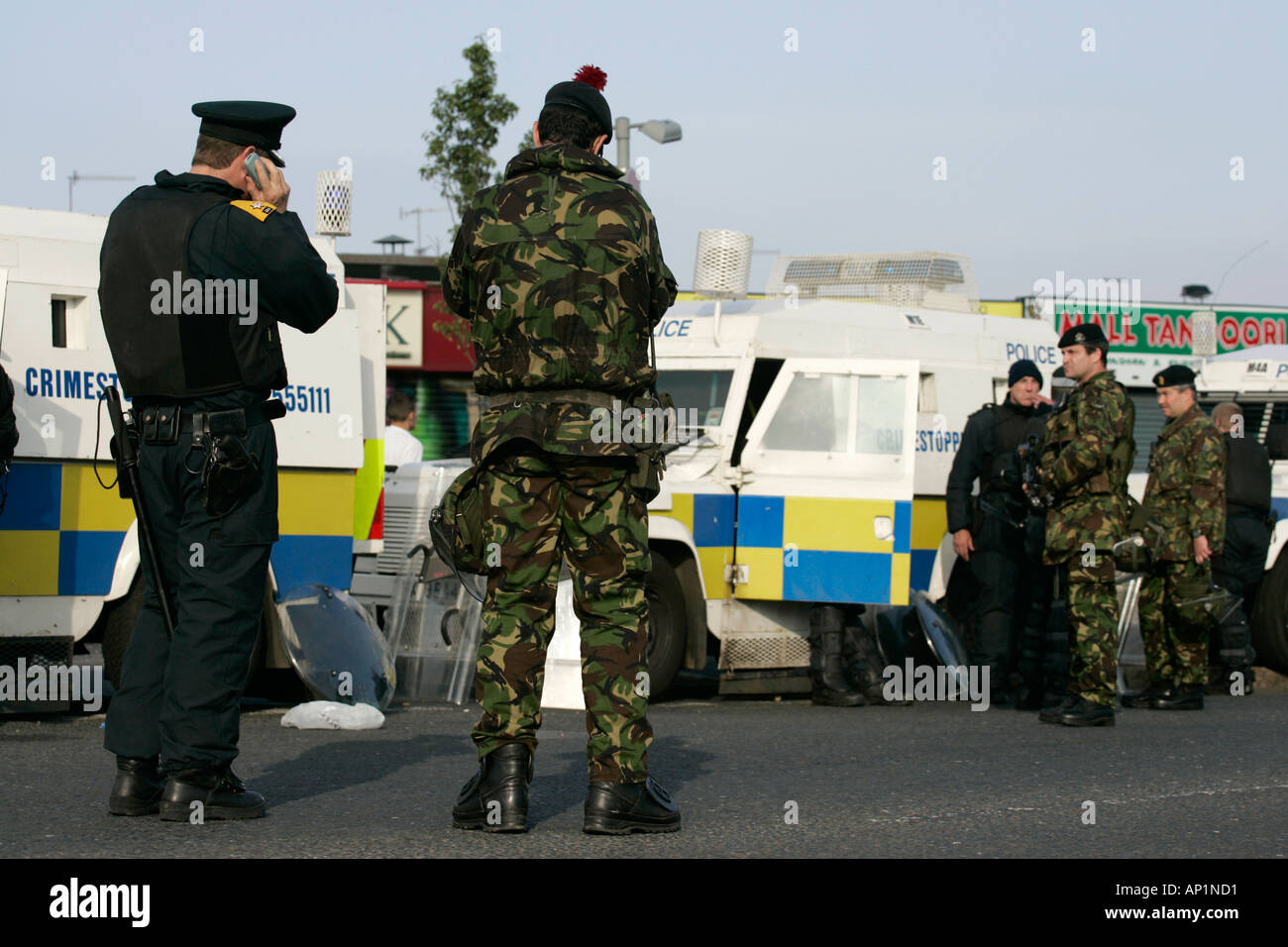
The RIC and the Black and Tans (pictured, left), representatives of 'British justice' in Ireland in the 1920's who, incidentally, are still here, albeit with different uniforms (and transportation!).
On the 6th of April, 1921 - 95 years ago on this date - two IRA men, Patrick Conroy and James Monds, who were friends and neighbours - were pulled out of their homes in Tarmon, County Roscommon, by an RIC/Black and Tan raiding party and executed - 'James Monds was a local Protestant farmer who fell victim to England's tyranny in April 1921. At that time in Roscommon, as across Ireland, the Black and Tans, the RIC and the Auxiliaries were running rampant. The most infamous deeds of the forces of the Crown are known to all. The sack of Balbriggan, the burning of Cork, the murder of MacCurtain in Cork and Father Griffin in Galway are but a few. The so called 'Castlerea Murder Gang' consisted of British soldiers, RIC and Black and Tans. They would act on information provided by informers and raid local houses late at night looking for their victims. The gang would arrive at the door with blackened faces and shine a light in the face of a suspect who would be identified by the informer. If the unfortunate person was wanted by the British he would be taken away and shot or beaten to death as was the case with Volunteer Pat Conroy who was murdered the same night as James Monds.
James was a Volunteer of the Irish Republican Army and had been involved in land agitation. It is known that he refused to sing 'God Save The King' in church which may have singled him out as a Republican or 'Shinner' to those loyal to the Crown. He was taken from his house on the night of the 6th of April 1921 and his bullet riddled body was found the next day. The 'Murder Gang' extracted no information from him regarding local Volunteers and they killed him despite him having 6 children...' (from here.)
It later transpired that the British troops raided the home of James Monds looking to remove his 17-year-old son, but the father pleaded with them to take him instead, and leave his son out of it. They did, which is about the only act of 'kindness' any republican could hope for, from a British mercenary. The next morning, the riddled body of James Monds was located at the end of the road. Incidentally, the man in charge of that particular British murder gang, RIC Sergeant James King (pictured here, at his funeral service) was infamous as a well-known thug in uniform in Ireland and then became famous as the last member of the RIC to be killed during the War of Independence - "On the morning of the 11th of July (1921) Thomas Crawley was waiting. Sergeant King of the RIC was the principal man in the murder gang that was organised in the RIC in Castlereagh and was responsible for a number of killings around the area. He was badly wanted by us. On the morning of the Truce, the 11th July 1921, we made a final effort to get this man. Between 10a.m. and 11a.m. on that morning we proceeded into the town on this mission...we went into a shop to get a drink of lemonade and when only a few minutes there Sergeant King came out of his own house on the opposite side of the street and proceeded to get on his cycle as if to go to the barracks. We left the shop. Ned Campion and I let him have it. He died immediately. Although the truce took effect at 12 o' clock on that day, the enemy chased us until about 6pm that evening. We finally escaped them, however, by adopting the role of shepherds gathering up sheep..." (from here.)
King was struck in the chest by at least two of his attackers bullets and despite receiving prompt medical attention died at approximately 10.30am – less than two hours before the ceasefire was due to begin. Local IRA men later recounted how King and his gang burst into the Vaughan family home at Cloonsuck, County Roscommon, on the 22nd June 1921, catching three IRA men unaware : the three republicans made a run for it, but two of them - Ned Shanahan and John Vaughan - were shot dead. The third IRA man, Martin Ganly, was captured and, during the search of the house, King battered (the deceased) John Vaughan's mother unconscious with his rifle butt and stopped on his way out of the house and shot the family's dog dead. A nasty and vindictive piece of work by all accounts, 'relatives' of whom wear a similar uniform today, in this country.
ON THIS DAY NEXT WEEK (WEDNESDAY 13TH APRIL 2016).....
...we won't be posting our usual contribution, and probably won't be in a position to post anything at all until the following Wednesday ; this coming weekend (Saturday/Sunday 9th/10th April 2016) is spoke for already with a 650-ticket raffle to be run for the Cabhair group in a venue on the Dublin/Kildare border (work on which begins on the Tuesday before the actual raffle) and the 'autopsy' into same which will take place on Monday evening, 11th, in Dublin, meaning that we will not have the time to post here. But we'll be back, as stated above, on Wednesday 20th April 2016, providing Easter and raffles leave us alone!
Thanks for reading, Sharon.
THIS 'KING' WAS SHOT IN THE CHEST TWICE BY THE IRA...
Flying out the folds of Freedom's Flag...four walls in Portlaoise Prison...Glasnevin - another brick in the wall...knowingly associating with subversives but not questioned re same...this 'doctor' couldn't find his hacksaw...justice enacted on the morning of the Truce, 11th July 1921...
Thanks for the visit - check back with us on Wednesday 6th April 2016 for the above!
Sharon.
EASTER MONDAY (28TH MARCH) 2016 IN DUBLIN.
'Here's to the men who, Easter Week, in the glorious year '16,
flying out the folds of Freedom's Flag - the orange, white and green.
Here's to the men who, fighting, fell, and here's to the men who died,
at dawnlight pale, in Kilmainham Jail, with the martyrs smile of pride.' (From here.) You will see men (and women!) like those mentioned above, in Dublin, on Easter Monday, 28th March 2016, at the Easter commemoration at the GPO in O'Connell Street. Those attending are requested to assemble at the Garden of Remembrance at 2pm for the parade to the GPO. Also, a brief mention for the following Easter commemorations, which are being held in areas that are not too far from Dublin city centre - EASTER SATURDAY, MARCH 26TH, 2016:
KILDARE - Assemble at Republican Plot, St Corban's Cemetery, Naas, Co Kildare at 12 noon. CARLOW - Assemble at Republican Plot, Carlow Cemetery at 2pm.
EASTER SUNDAY, MARCH 27TH, 2016:
CRUMLIN, DUBLIN - Laying of wreath and the reading of the Proclamation at the Eamon Ceannt Monument, Sundrive Park, Crumlin at 12 noon. DEANSGRANGE, DUBLIN - Assemble at gates of Deansgrange Cemetery, Dun Laoghaire at 1pm for parade to the Republican Plot.
BEING REMEMBERED ON A MEMORIAL WITH YOUR MURDERER.
"..the names of those who died on the rebel side should not share a commemorative plaque or monument of any kind with those who on behalf of British rule summarily abused and executed them..." (from here.)Words fail me. Almost. The political establishment in this State should really do now that which they should have done in 1916 - apologise to Westminster and offer financial repatriation to those whose teat they have never left since 'birth'. They are so divested of moral reference points in relation to what was being sought here in 1916 that they feel more empathy towards the British forces than they do to the men and women of the Rising that they falsely claim lineage from. Not so much 'take it down from the mast' as don't even handle it in the first place, as you will surely infect it with the burden you carry - a strain of self-loathing which, if you had a conscience, would leave you too ashamed to get up in the morning. But you haven't, and it doesn't.
PROSE AND CONS.
By prisoners from E1 Landing, Portlaoise Prison, 1999.
ACKNOWLEDGMENTS :
Grateful thanks to the following for their help, support, assistance and encouragement, and all those who helped with the typing and word processing over the past few months. Many thanks to Cian Sharkhin, the editor of the book, Mr Bill Donoghue, Governor, Portlaoise, Mr Seán Wynne, supervising teacher, the education unit in Portlaoise Prison and the education staff, especially Zack, Helena and Jane. Education officers Bill Carroll and Dave McDonald, Rita Kelly, writer, print unit, Arbour Hill.
First Print : November 1999, reprinted March 2000, illustrations by D O'Hare, Zack and Natasha. Photograph selection : Eamonn Kelly and Harry Melia.
JOURNEY.
Sometimes I think we're on a journey
searching for some meaning to it all
always reaching out to find that something
some kind of answer or a call
But I've seen that deep curiosity
come out and sparkle up your mind
and I've seen those eyes fill with wonder
as you were taken by surprise.
So we take this tide of life
and fight the rocks and shallows of this world
as we're swept along thru' the sands of time
the stars will always burn
for our journey.
And you were filled with compassion
for what those years have brought to you
and you did open like a butterfly
as you emerged from your cocoon
and there was a voice now inside you
which you recognised as your own
as you strolled deeper into this world
you knew you were not alone.
So we take this tide of life
and fight the rocks and shallows of this world
as we're swept along thru' the sands of time
the stars will always burn
for our journey.
Now we're oceans in this mystery
and its truth is closer too
'cause you got a glow deep inside me
and I got a glow inside of you
and in this beauty of simplicity
deep in our hearts we beat as one
and I'm touched by the wonder of each moment
to know our lives have just begun.
So we take this tide of life
and fight the rocks and shallows of this world
as we're swept along thru' the sands of time
the stars will always burn
for our journey.
Dermot Griffin.
EXPLOSIVE QUESTIONS....
'Magill' magazine has unearthed new information which raises a grim but important question : were explosives from within this Republic used in the Dublin and Monaghan bombings? It is a question which, bizarrely, also encompasses the controversial Dónal de Róiste case. By Don Mullan, author of the book 'The Dublin and Monaghan Bombings'.From 'Magill' magazine, February 2003.
THE McCRANN REPORT.
At the time of Dónal de Róiste's undoing, Patrick Walsh held the rank of captain. Both men were questioned by a superior officer during the period and, in an interview with this journalist on 7th May 2002, Patrick Walshe said - "I have always believed that information taken from me at the interrogations was misconstrued and resulted in injustice being done to Dónal." When the Judge Advocate General, Oonah McCrann, completed her review of army files related to de Róiste's 'retirement' on 17th September 2002, Walshe's suspicions seemed to be confirmed. He says he felt physically sick when he saw the extent to which his interrogation had been interpreted in a way which helped to destroy the promising military career of his best friend.
On page 10 of the McCrann Report the Judge Advocate General refers to a document on de Róiste's files concerning his relationship with an alleged subversive whom she chose to refer to as 'Mr X', despite the fact that his name was already in the public domain - Padraig Dwyer. She writes - "The document notes that Captain Walshe was interviewed and while he could not recollect ever having met Mr X with ex-Lieutenant Roche he did remember ex-Lieutenant Roche discuss with another friend Mr X's involvement with the Gardai in Ballyfermot in October 1968. Captain Walshe also recollected ex-Lieutenant Donal Roche telling him that Mr X had been at the car auction in Clancy Barracks and that he was sure that he was seen with Mr X by 'S branch man.' "
In a sworn affidavit, dated 17th December 2002, Patrick Walshe states - "I did not make any such statement during my interrogation. My recollection of this matter is definite." (MORE LATER.)
GROWING UP IN LONG KESH...
SIN SCÉAL EILE.
By Jim McCann (Jean's son). For Alex Crowe, RIP - "No Probablum". Glandore Publishing, 1999.
Biographical Note : Jim McCann is a community worker from the Upper Springfield area in West Belfast. Although born in the Short Strand, he was reared in the Loney area of the Falls Road. He comes from a large family (average weight about 22 stone!). He works with Tús Nua (a support group for republican ex-prisoners in the Upper Springfield), part of the Upper Springfield Development Trust. He is also a committee member of the 'Frank Cahill Resource Centre', one of the founders of 'Bunscoil an tSléibhe Dhuibh', the local Irish language primary school and Naiscoil Bharr A'Chluanaí, one of the local Irish language nursery schools.
His first publication last year by Glandore was 'And the Gates Flew Open : the Burning of Long Kesh'. He hopes to retire on the profits of his books. Fat chance!
"MY FINGER CAME OFF...."
I caught a glimpse of his hand as I sped past him and, right enough, his finger was missing. "Right, Dede," I said, "give me a minute..." This might seem a bit cruel, but I reasoned in that split second that Dede had at least nine fingers left and the 'Man of the Match' award was still very much to be decided upon and was now between Barnes and myself, as usual. But Dede's interruption was enough to put me off my run. "Christ sake, Dede, could you not have waited a minute? You could see I was on a run there..." By this time Dede had actually fainted and couldn't sense my sense of frustration with him. I put my disappointment behind me and rushed to his aid.
When we eventually revived him, we found out that his finger really was missing, so I suppose his interruption seemed important enough to him. "Where is it?" I enquired. "It fell into Cage 9", he muttered. "How did that happen", I asked. "I was getting a leg-up at the wire to put an ounce of tobacco into the cage when I lost my balance and as I fell back the ring on my finger caught on the razor wire and whipped the finger off."
I ran down down to Cage 9 and a crowd of fellows were standing around the errant finger as it lay on the ground in the cage. "Hand me that up," I said to Sess, a big guy from Ballymurphy, who looked the most sensible of the throng of rubber neckers. "Fuck off", said Sess. "I'm not touching that thing, it's all gooey." Sess was the image of Paul McCartney and had his hair done the same way as McCartney and wore the same clothes as McCartney and played the lead guitar like McCartney played the bass guitar - badly. He once had an audition to join a group called 'The Donnelly Trio', who were the resident band in the Nail Bomb Sports and Leisure Shebeen (a quaint rustic drinking den) in Lady Street in Belfast but, unfortunately, while they had all the equipment - amps, loudspeakers etc, all of it second hand - their electricity had been turned off some weeks previous to his audition, thereby ruining any chance Sess had of impressing all six members of the group assembled there. (MORE LATER.)
ON THIS DATE (23RD MARCH) 170 YEARS AGO : BRITISH HOUSE OF 'LORDS' MEMBER ACKNOWLEDGES THEIR 'DISGRACEFUL CONDUCT IN IRELAND'.
On the 23rd March, 1846 - 170 years ago on this date - a member of the British House of 'Lords', Henry George Grey, the 3rd Earl Grey (pictured, left) stood up in that institution and delivered his 'Ireland is our Disgrace' speech : "The evils of that unhappy country are not accidental, not temporary, but chronic and habitual. The state of Ireland is one which is notorious. We know the ordinary condition of that country to be one both of lawlessness and wretchedness. It is so described by every competent authority.
There is not an intelligent foreigner coming to our shores, who turns his attention to the state of Ireland, but who bears back with him such a description.
Ireland is the one weak place in the solid fabric of British power—Ireland is the one deep (I had almost said ineffaceable) blot upon the brightness of British honour. Ireland is our disgrace. It is the reproach, the standing disgrace, of this country, that Ireland remains in the condition she is. It is so regarded throughout the whole civilized world. To ourselves we may palliate it if we will, and disguise the truth; but we cannot conceal it from others. There is not, as I have said, a foreigner — no matter whence he comes, be it from France, Russia, Germany, or America — there is no native of any foreign country different as their forms of government may be, who visits Ireland, and who on his return does not congratulate himself that he sees nothing comparable with the condition of that country at home.
If such be the state of things, how then does it arise, and what is its cause? My Lords, it is only by misgovernment that such evils could have been produced: the mere fact that Ireland is in so deplorable and wretched a condition saves whole volumes of argument, and is of itself a complete and irrefutable proof of the misgovernment to which she has been subjected."
The words of what must be, to date - and in relation to Ireland, anyway, whatever about his other dealings - the last honest politician in Westminster, and a man who wasn't just 'an ordinary backbencher' and, as such, was listened to more so than a 'seat-filler' would be : he came up through the 'ranks' as 'Viscount Howick' before obtaining his title as a 'Lord' and was under-secretary for the British 'colonies' for three years following which he was under-secretary in the British Home Office. He was the British 'secretary of war' for five years and, as a 'Lord', he became the effective leader of the Whig Party and was given the top job in the British 'Colonial Office'.
Perhaps the fact that he was one of fifteen children opened his mind to 'thinking outside the box' in relation to the (on-going) crimes committed by his fellow politicians in Ireland! An honest politician, in that regard, anyway, none of whom are now to be found in Westminster, or Stormont, or Leinster House, for that matter, as those institutions are now packed to the rafters with self-serving political misfits who consider, verbally and/or by deed, that what they call 'the Irish question' was finally solved in 1998 when the Stormont Treaty was implemented. Hopefully it won't take all concerned another 847 years before they realise that that isn't the case.
ON THIS DATE (23RD MARCH) 169 YEARS AGO : THE DISPOSSESSED ASSIST THE DISPOSSESSED.
Alex Pentek's 'Kindred Spirits' structure (pictured, left) , located in Bailic Park in Midleton, County Cork, consists of nine 20-foot stainless steel eagle feathers and represents "...the Choctaw's help to Ireland.." during An Gorta Mór : "By creating an empty bowl symbolic of the Great Irish Famine (sic) formed from the seemingly fragile and rounded shaped eagle feathers used in Choctaw ceremonial dress, it is my aim to communicate the tenderness and warmth of the Choctaw Nation who provided food to the hungry when they themselves were still recovering from their own tragic recent past", stated the artist.
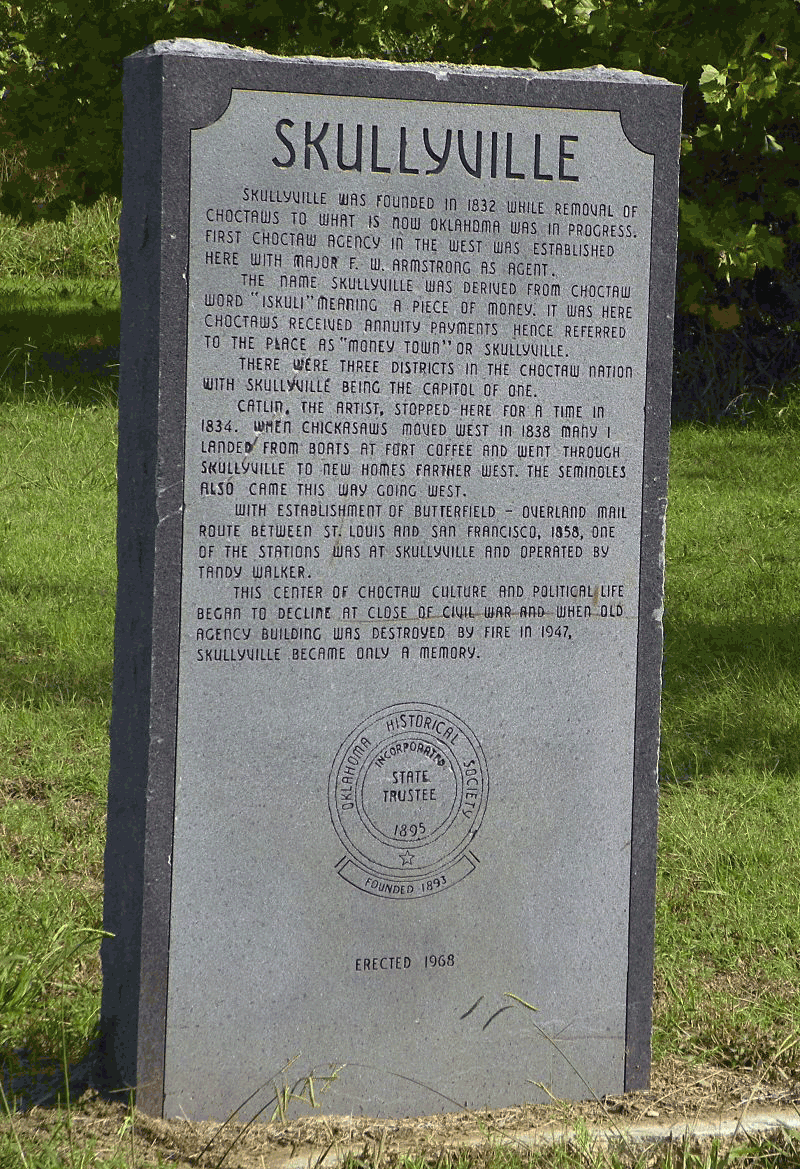
On the 23rd March, 1847 - 169 years ago on this date - the Choctaw Indians assembled in Scullyville, Oklahoma and, despite being politically dispossessed victims themselves, they collected about $170 (equivalent to about $70,000 today) which they forwarded to Ireland. Their donation was remarkable because they had suffered terrible hardships themselves in the years before An Gorta Mór as they were evicted from their native lands of Alabama, Louisiana and Mississippi just 16 years earlier and were forced to walk 500 miles to their new 'home' of Oklahoma, which the American government had chosen for them. The walk became known as the 'Trail of Tears' due to the suffering endured by the tribes during the enforced exodus. Many perished before completing the journey - indeed, of the 21,000 Choctaws who started the journey, more than half perished from exposure, malnutrition and disease before they reached their new 'home'.
Ironically, one of those in charge of the eviction was Andrew Jackson, the son of Irish immigrants who, on the 4th March 1829, in an attempt to 'sell' the idea that the native Indians would be getting a good deal in 'moving'off their land, stated - "It will be my sincere and constant desire to observe toward the Indian tribes within our limits a just and liberal policy, and to give that humane and considerate attention to their rights and their wants which is consistent with the habits of our Government and the feelings of our people..." but the same man showed his true colours two years later when he stated - "It is pleasing to reflect that results so beneficial, not only to the States immediately concerned, but to the harmony of the Union, will have been accomplished by measures equally advantageous to the Indians. What the native savages become when surrounded by a dense population and by mixing with the whites may be seen in the miserable remnants of a few Eastern tribes, deprived of political and civil rights, forbidden to make contracts, and subjected to guardians, dragging out a wretched existence, without excitement, without hope, and almost without thought..." He dismissed them as the so-called 'bed blockers' of their day, or worse.
To the Andrew Jackson's of this world we say 'shame on you', and to the brave and decent Choctaw's and those like them we say 'Yokoke' !
ON THIS DATE (23RD MARCH) 90 YEARS AGO : A TERRIBLE GLUTEI IS BORN.
It was on this date - 23rd March - in 1926 that political opportunists attempted to hoodwink an Irish revolutionary movement into supporting constitutional politics and, when they failed in their attempt, they abandoned republicanism and established a 'catch-all' political party populated, then and now, by 'wide boys' who figured they were entitled to a cushy career in politics : 'In response to the signing of the Boundary Agreement (see 'Micheál Martin/Gerrymandering' piece, here) between Great Britain and Ireland in December 1925, an extraordinary meeting of Sinn Féin was held in March 1926 to discuss the future of the party. Failing to get an agreement*, Eamon de Valera resigned as leader of Sinn Féin and took rapid steps to establish a new national movement.." (*"an agreement", that is, to [as stated above] abandon republicanism and 'become politically respectable', as some would have it) (from here) and this - 'Fianna Fáil was founded on 23 March 1926 when a group of Dail deputies led by Eamonn De Valera split from Sinn Féin. This happened because De Valera's motion calling for elected members be allowed to take their seats in the Dáil, if and when the controversial Oath of Allegiance was removed, failed to pass at the Sinn Féin Ard Fheis..' (from here.)
Incidentally, the same issue (re becoming a constitutional political party) was pushed to the surface once more in 1986 by, again, those who desired to be (bought and) paid politicians which, among other happenings, prompted IRA Commandant General Tom Maguire (who, incidentally, was born on what is Easter Monday this year - the 28th March - in 1892, and died in his 101st year, in 1993) to issue the following statement :
The above is in answer to that age-old question - 'What's the difference between Fianna Fáil and Provisional Sinn Féin?' Answer : 60 years!
ON THIS DATE (23RD MARCH) 82 YEARS AGO : THREE IRISH REPUBLICANS, THREE MONTHS IN JAIL, THREE WORDS - "ENTER INTO RECOGNISANCES".
(Picture [left] from here.) On the 23rd March 1934 - 82 years ago on this date - Richie Goss and two others, James Finnigan and Matt McCrystal, were sentenced to three months in jail because they refused to "enter into recognisances" ie 'explain their whereabouts' on the night of 'the McGrory incident...'
Ireland 1915 ; The 'Irish Volunteer' Movement had split ; approximately 170,000 men stayed with John Redmond and fought with England in the belief that to do so would guarantee a form of 'Home Rule' for Ireland - but about 10,000 men broke away as they had no faith in Redmond's plan. Months earlier, British 'Sir' George Richardson had taken command of the Ulster Volunteer Force (a pro-British militia) and had landed about 25,000 rifles and two-and-a-half million rounds of ammunition at Larne in County Antrim - when the British Government in Westminster attempted to move against the UVF (as they had no control over them them), British Army Officers mutinied in objection. Meanwhile, elsewhere in Ireland, other forces were recruiting : Irish republicans were re-grouping ; the 'Irish Citizen Army' was recruiting for Volunteers, as was Sinn Féin, the 'Irish Republican Brotherhood' and John Redmond's 'United Irish League'. There was turmoil in the country.
A child was born into the above circumstances in Dundalk, in County Louth. He was child number three in the family, and one more was to be born after him. This third child in the Goss family, Richard, went to a local school and, like others in the Goss neighborhood, tried to get work locally when he was finished his schooling - he was successful, and got a job in Rasson's Shoe Factory in Dundalk. The troubled times he lived in got his attention and, at 18 years young (in 1933), Richie Goss joined the North Louth Battalion of the IRA , and trained in the use of explosives. At that time in the then 12-years-partitioned Ireland, the anti-Catholic bigots of the then two-year-old 'Ulster Protestant League' were in full swing ; nationalists all over the Six Counties were being hammered. British political leaders were voicing support for the Unionists - indeed , 'Sir' Basil Brooke actually boasted that he "had not a Roman Catholic about my own place" and the then British Stormont Minister for Labour, a Mr. J. M. Andrews, spoke out about what he termed "a foul smear" - that of "another allegation made against the (British) government, which is untrue : that, out of 31 porters at Stormont, 28 are Roman Catholic. I have investigated the matter and I have found that there are 30 Protestants and only one Roman Catholic, there only temporarily." The British Loyalists, too, in the form of the Orange Order, were putting pressure on the Nationalists in the Six Counties - the then 'Grand Master' of the anti-Nationalist 'Orange Order', a (British Senator) 'Sir' Joseph Davison, stated - "When will the Protestant employers of Northern Ireland (sic) recognise their duty to their Protestant brothers and sisters and employ them to the exclusion of Roman Catholics? It is time Protestant employers realised that whenever a Roman Catholic is brought into their employment it means one Protestant vote less. It is our duty to pass the word along - Protestants employ Protestants."
That was the sentiment of those times - the blatant sectarianism that existed, and which Richie Goss, amongst others, hoped to bring to an end. He was 18 years young, an IRA member and learning to use explosives - in early 1934, at 19 years of age, he was picked-up by the Free State Special Branch (political police) and asked to account for his movements ; he refused, and was brought before a Free State Military Tribunal and sentenced to three months in prison. The prison sentence was related, according to the 'Court', to what became known as 'The McGrory Incident' : in Dundalk, County Louth, on 9th January 1934, a debt-collector (who was also said to be a member of the right-wing 'Blueshirt'[Fine Gael] party) was held-up by armed men and his bag of cash was taken. In making inquiries in the area about the robbery, the Free State Gardaí (police) were assisted by a local man, a Mr. Joseph McGrory, from Chapel Street, Dundalk and two IRA men were jailed as a result of the evidence given by McGrory. On the night of 11th February 1934, a bomb was thrown through the front window of the McGrory house ; the explosion killed Joseph McGrory's wife.
On the 23rd March 1934 - 82 years ago on this date - Richie Goss and two others, James Finnigan and Matt McCrystal, were sentenced to three months in jail because they refused to "enter into recognisances" ie 'explain
their whereabouts' on the night of the McGrory incident. Then, in early July 1935, four IRA men were arrested and charged with the death of Mrs McGrory - Richie Goss, Eamon Coffey, Thomas Walsh and Bernard Murphy, all from Dundalk. The Free Staters had received information from an informer that five men were responsible for 'the McGrory Incident' - the four men named above, and one other - James Finnigan. However, Finnigan was already in jail again, this time serving fifteen months for possession of weapons. The informer was Matt McCrystal, an IRA man and, on his evidence, the first-ever 'murder trial' before a Free State Military Tribunal went ahead. But it was not successful : on the 20th July 1935, after a five-day hearing, all the accused were acquitted.
Richie Goss was ordered to go to Dublin by Sean Russell, the then IRA Chief of Staff, in early 1938, as his expertise in explosives was needed to prepare for the up-coming bombing campaign in England and, within months, he was in England, helping to organise IRA Units, safe-houses etc for the campaign ; he was arrested in Liverpool in May 1939 for refusing to account for £20 in his possession(!) and was sentenced to seven-days in Walton Jail and, when released, he reported back to the IRA in London. About two months later he returned to Ireland but was unlucky enough to be grabbed by the Free Staters in their round-up of known and suspected IRA members and supporters.
On the 2nd September 1939, the Leinster House Administration had issued a statement saying that, because of "the armed conflict now taking place in Europe, a national (sic) emergency exists affecting the vital interests of the State" and, the following day (3rd September 1939), the 'Emergency Powers Bill' was enacted (ie to all intent and purpose - 'martial law'). Days later (on the 8th September 1939) a new Free State Minister for 'Justice' was appointed - the ferociously anti-republican Gerald Boland. All known or suspected Irish Republicans were rounded-up, but a republican-minded lawyer, Sean MacBride (whose parents had fought alongside the IRA) supported the republican prisoners and, on the 1st December 1939, due to a 'habeas corpus' application, Richie Goss and fifty-two other Republican prisoners were released from Mountjoy Jail and all reported back to their IRA Unit's and continued the fight - Richie Goss was promoted to the position of Divisional Officer Commanding of the North-Leinster/South Ulster IRA. In July 1941, Richie Goss was staying in the house of a family named Casey in Longford when it was surrounded by Free State troops and Gardai ; a shoot-out ended in the capture of the then twenty-six years young Richie Goss and the wounding of a Free State Army Lieutenant, resulting in a charge of attempted murder against Goss. A Free State Military Tribunal returned a 'guilty' verdict on Richie Goss and he was sentenced to death. That was in July 1941 ; on the 8th August 1941, Richie Goss was taken, under armed guard, from Mountjoy Jail in Dublin and was put in the back of a truck, in which he was forced to sit on his own coffin on the journey from Dublin to Portlaoise Jail. On the 9th August 1941, Richie Goss, 26 years young, was shot dead by a Free State firing squad and buried in Portlaoise Prison yard. In September 1948 - seven years after his execution - his remains were released and re-interred in Dowdallshill Cemetery in Dundalk, County Louth.
A well-known Irish republican of the time (and still remembered by the Movement to this day) Brian O'Higgins, wrote in the 1950 edition of 'The Wolfe Tone Annual' -
"On September 18th 1948, the bodies of Patrick McGrath, Thomas Harte, George Plant, Richard Goss, Maurice O'Neill and Charles Kerins were disinterred in prison yards and given to their comrades and relatives for re-burial among their own. These men were condemned to death and put to death as criminals, as outlaws, as enemies of Ireland. Today, that judgement and verdict is reversed, even by those who were and are their opponents, and they are acknowledged to be what we have always claimed them to have been - true comrades of Tone, of Emmet, of Mitchel, of the Fenians, and of all the heroic dead of our own day and generation. There was no bitterness in their hearts towards any man or group of men, no meanness in their minds, no pettiness or brutality in their actions. They were, and are, worthy to rank with the greatest and noblest of our dead, and the younger men we salute and pray for and do homage to today are worthy to be their comrades. The only shame to be thought of in connection with those republicans is that Irishmen slew them and slandered them, as Irishmen had slain and slandered the men of 1922, for the 'crime' of being faithful soldiers of the Republic of Ireland. Let us remember that shame only as an incentive to action and conduct that will make recurrence of it impossible ever again. Wolfe Tone built his plan for true independence
on the resistance tradition of all the centuries from the beginning of the conquest to his own day, and these men who were his faithful followers, knew no plan but his would ever end English domination in Ireland.
Those who would make all Ireland free must follow in his and their footsteps or fail. Men talk foolishly today, as they and others have talked for many futile years, of 'declaring' the Republic of Ireland. There is no need to declare it. Wolfe Tone and Robert Emmet founded it and made it known to the world.
Daniel O'Connell reviled and repudiated it, but John Mitchel and Fintan Lalor stood beneath its banner and gave it their allegiance. The Fenians made it articulate and preserved it through two generations until the men and women of 1916 proclaimed it in arms. The whole people of Ireland accepted it a few years later, giving it the most
unanimous vote that has ever been cast in this country, and it was established and declared on January 21st, 1919. It has never been dis-established since, but it has been suppressed by falsehood and by force, and it is suppressed at this moment. Against that force and falsehood, against that unjust and unlawful suppression, the men we honour today - Patrick McGrath, Thomas Harte, George Plant, Richard Goss, Maurice O'Neill and Charles Kerins - did battle unto death. Their blood cries out for only one vengenance - the restoration of the suppressed Republic of Ireland." - Brian O'Higgins, as quoted in 'The Wolfe Tone Annual', 1950, speaking about the remains of the six Irish rebels which were handed-over to their comrades and relatives on the 18th September 1948, an event in which today's date - the 23rd March - had an unfortunate part to play.
BETWEEN NOW AND EASTER MONDAY 28TH MARCH 2016, WE WON'T BE GATHERING MOSS, TIME IS ON OUR BACK AND WON'T BE ON OUR SIDE!
Between now and Easter weekend, we are helping to prepare and distribute leaflet packs in relation to Easter commemorations being held in the Leinster area and, on Easter Saturday (26th March) we will be in Kildare and then Carlow helping to distribute same and then, on Sunday (27th), we'll be back in Dublin to do much the same job in the Crumlin and Deansgrange areas before, finally, repeating the exercise in Dublin city centre on Easter Monday, 28th March. Then we'll go for a meal and a few drinks!
Our workload won't allow us time to put a blog post together for Wednesday, 30th March 2016, and it will be Wednesday, 6th April 2016, before we can do so, and one of the occurences we will be mentioning then is in connection with an IRA man who lost his life to British forces partly because he wouldn't sing the British national anthem...
Check back with us then - Wednesday, 6th April 2016.
Thanks for reading, Sharon.
FREE STATERS AND 1916 - DIVESTED OF MORAL REFERENCE POINTS.
An extra finger in Cage 9, Long Kesh (pictured, left)...Kilmainham Jail at dawn, with the martyrs looking on...fighting the rocks and shallows of this world, from Portlaoise Prison....Ex-Free State army member claims statement falsified...a 'black-and-white' admission of guilt re mistreating the Irish...1847 - the dispossessed assist the dispossessed...Ireland, 1926 - arse-muscles get organised and sh1t on the rest of us!...3 men, 3 words and 3 months in jail... ..see this blog, Wednesday 23rd March 2016.
Thanks for dropping by, Sharon.
ON THIS DATE (9TH MARCH) 62 YEARS AGO : IRISH REPUBLICAN ICON BORN.
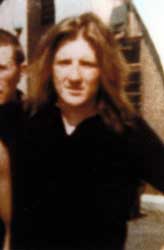
Bobby Sands (pictured, left) - born on this date (9th March) 62 years ago (1954).
Bobby Sands was born on the 9th March 1954 - 62 years ago on this date - in Belfast and, on the 9th April 1981, he was elected as 'an abstentionist member of parliament' (having received 30,492 votes) after being nominated to contest a seat by Dáithí Ó Conaill, the then vice president of the then Sinn Féin organisation. Bobby Sands was, as far as Irish republicans are concerned, a 'Teachta Dála' (TD) who was elected to take a seat in a 32-county Irish parliament, unlike the Free State representatives who sit in an institution in Kildare Street in Dublin today and claim to be 'TD's in an Irish parliament' and, indeed, Bobby's motives and those of Dáithí and the other then Sinn Féin Ard Chomhairle members who nominated him to contest the election were pure, unlike the motives of the self-serving time-keepers who sit in that Kildare Street premises : the motives of the former involved a principled unwillingness to allow themselves and the struggle they were part of to be criminalised and to highlight to the world that they were fighting a political struggle against Westminster and its allies in this country. Others, however, are not as principled when it comes to issues of this magnitude.
Bobby Sands was sentenced to 14 years imprisonment for his alleged part in a fire-bombing campaign which, as part of an economic war against the British presence in Ireland, targeted business premises (in this instance, the Balmoral Furniture Company) with the intention of making it financially unviable for Britain to maintain its grip on that part of Ireland, a fact which present-day Provisional Sinn Féin members seek to ignore or gloss over when referencing the so-called 'ineffectual/grubby deeds' of those who continue that struggle today. On the 9th April, 1981, Bobby Sands was elected by 30,492 of those that voted in the Fermanagh/South Tyrone district, prompting, years later, this thesis from a republican leader : "Contrary to allegations made in the news media, there was not a straight line from the election of Bobby Sands in 1981 to the Stormont Agreement of 1998. Rather was the line from March, April and May 1981 to the same months in 1998 disfigured and distorted by an internal power-struggle for the leadership of Sinn Féin accompanied and followed by deceit and artifice as the ideals of Bobby Sands were steadily perverted and a section of the then powerful revolutionary Republican Movement turned into a constitutional party..." (from here).
Bobby died in Long Kesh Prison on the 66th day of his hunger-strike on the 5th May, 1981, at 27 years of age and, on Thursday 5th May 2016, a black flag vigil will be held in his memory on the traffic isle facing the GPO in O' Connell Street, Dublin city centre, from 4pm to 5.30pm. And a picket to show support for republican prisoners will be held this Saturday (12th March) at the same location, from 12.45pm to 1.45pm. All genuine republicans welcome!
PROSE AND CONS.
By prisoners from E1 Landing, Portlaoise Prison, 1999.
ACKNOWLEDGMENTS :
Grateful thanks to the following for their help, support, assistance and encouragement, and all those who helped with the typing and word processing over the past few months. Many thanks to Cian Sharkhin, the editor of the book, Mr Bill Donoghue, Governor, Portlaoise, Mr Seán Wynne, supervising teacher, the education unit in Portlaoise Prison and the education staff, especially Zack, Helena and Jane. Education officers Bill Carroll and Dave McDonald, Rita Kelly, writer, print unit, Arbour Hill.
First Print : November 1999, reprinted March 2000, illustrations by D O'Hare, Zack and Natasha. Photograph selection : Eamonn Kelly and Harry Melia.
MEMORIES.
Isabella I love you
more than you'll ever know
I really really felt this love
the morning I had to go
Although you won't remember
and were probably too young to see
the first night I set eyes on you
you meant the world to me
Then you seemed to grow and grow
and never seemed to stop
I realised this one morning
as you were climbing from your cot
Your first love was a rabbit
it's funny you couldn't see
he was shaking and afraid of you
behind the Christmas tree
The reason why he felt like this
he was never on the ground
instead you held him in your arms
and always upside down
He was also a little terror
which could not be left alone
'cause if you took your eyes off him
you'd be left without the phone
All these lovely memories of you
are not on any shelf
they're locked deep within my heart
and the key I keep myself.
Jason Flynn.
EXPLOSIVE QUESTIONS.
'Magill' magazine has unearthed new information which raises a grim but important question : were explosives from within this Republic used in the Dublin and Monaghan bombings? It is a question which, bizarrely, also encompasses the controversial Dónal de Róiste case. By Don Mullan, author of the book 'The Dublin and Monaghan Bombings'.From 'Magill' magazine, February 2003.
PART ONE : THE PANDORA'S BOX.
Who was it in 1997 who saw the potential of Dónal de Róiste's controversial 1969 'retirement' from the Irish Army* (ie the Free State army) as a stake to destroy the heart of his sister Adi Roche's presidential campaign? Whoever it was has only succeeded in opening up a Pandora's Box and the ramifications have yet to be fully realised. A former Irish Army* commandant, Patrick Walshe, a soldier with an unblemished record who served both the Irish state and the United Nations with distinction, has his suspicions about the source of the leak - "The details of Donal's case would have been known to very few at the time of its introduction in the presidential race. I believe the information had to come from an army or ex-army source," he told 'Magill'.
Walshe is a key player in the Dónal de Róiste saga : his allegations may ultimately force the Irish state to admit that a terrible wrong was done to de Róiste. Walshe was ex-Lieutenant de Róiste's best friend in the army : both men loved traditional Irish music and travelled the length and breadth of the country during their free time to participate in various sessions.
The notion of a friendship between Walshe and anyone who associated with republican subversives - the contentious allegation levelled against, and denied by, de Róiste - is extraordinarily unlikely, for reasons that will soon be explained... (MORE LATER.)
GROWING UP IN LONG KESH...
SIN SCÉAL EILE.
By Jim McCann (Jean's son). For Alex Crowe, RIP - "No Probablum". Glandore Publishing, 1999.
Biographical Note : Jim McCann is a community worker from the Upper Springfield area in West Belfast. Although born in the Short Strand, he was reared in the Loney area of the Falls Road. He comes from a large family (average weight about 22 stone!). He works with Tús Nua (a support group for republican ex-prisoners in the Upper Springfield), part of the Upper Springfield Development Trust. He is also a committee member of the 'Frank Cahill Resource Centre', one of the founders of 'Bunscoil an tSléibhe Dhuibh', the local Irish language primary school and Naiscoil Bharr A'Chluanaí, one of the local Irish language nursery schools.
His first publication last year by Glandore was 'And the Gates Flew Open : the Burning of Long Kesh'. He hopes to retire on the profits of his books. Fat chance!
"MY FINGER CAME OFF."
It was one of my finest hours. I had already scored a hat trick, the first in my long but not too illustrious career. My first goal was a volley-cum-tap-in from a distance of two feet. I had run round the keeper and was delighted to find Barnes' volley just about to enter the net and, seizing the opportunity, I smashed the ball into the empty net, to my great delight and Joe Barnes' disgust. "McCann, ye bastard, that was my goal...", he yelled.
"Joe, I couldn't take a chance on it, after all we're only winning 13-nil," , I replied. The annoying thing was he had already scored nine goals and was trying to claim 'my' goal. I shrugged off his pettiness and assumed my position, hiding behind the opposition's goalkeeper. Offside can be so subjective. My next two goals couldn't have been more different, while remaining fundamentally basic. I can't remember much about my second - when the ball rebounded off the back of my head into the net, I was nearly knocked out by the force of it!
My third was put through the keeper's leg (Barnes was the master of this, if nothing else!) and I tapped it in from behind the keeper again. One person's instinctive striker is another person's poaching bastard. It was well into the second half when it happened : personally it couldn't have came at a worse moment for me as I was on my first ever mazy run with the ball. My head, eye and brain co-ordination were as one , I was floating down the wing, the sun was on my back and the wind was blowing through the fantastic head of hair that I possessed at that time. I beat one man - it was only Bobby Darling, and anyone who knows Bobby will understand the significance of this. And also people who watch 'The Simpson's' , especially Homer. But it was comprehensive.
Dede McTasney came running up to me. "Hold on, Dede, you're not playing...," I shrieked at him. "MY FINGER CAME OFF...!", he screamed... (MORE LATER.)
ON THIS DATE (9TH MARCH) 95 YEARS AGO : IRA MAN WHO REFUSED THE OPPORTUNITY TO ESCAPE WAS DECLARED 'GUILTY' BY HIS BRITISH CAPTORS AND THEN EXECUTED.
IRA Volunteer Patrick Moran (pictured, left):"I don't want to let down the witnesses who gave evidence for me..."
- the words of Patrick Moran, Adjutant of D Company Irish Volunteers, 2nd Battalion (Dublin), to his comrades Ernie O'Malley (who had passed himself off to the British as 'Bernard Stewart') and Frank Teeling as they were about to walk to freedom through a gate in Kilmainham Jail in Dublin, which they had forced open, on the 14th of February 1921. Patrick Moran believed he would be found innocent at his 'trial' and saw no reason why he should take the opportunity to escape.
He was a 'dangerous man', as far as Westminster was concerned, and had been imprisoned in Dublin Castle on the 7th of January 1921 and charged with the 'murder' of two British Army/paramilitary gang members, Ames and Bennett, after been mistakenly identified as having been involved in the shooting dead of both men - Lieutenant Peter Ashmun Ames and British Army Lieutenant George Bennett (both of whom were in command of 'The Cairo Gang') on the 21st of November 1920 at 38 Upper Mount Street in Dublin. Patrick Moran stayed behind on the night of the prison break ,refusing to take part in same, having encouraged Simon Donnelly to go in his place, a decision which was was to cost Patrick Moran his life.
On the 15th of February 1921, he was put on 'trial' (during which sixteen people and an RIC man verified he was elsewhere!) but was, as expected, found 'guilty' and, three days later - on the 18th of February 1921 - he was transferred to Mountjoy Jail, Dublin. On Wednesday, 9th of March 1921 - 95 years ago on this date - Patrick Moran was sentenced to death and he was executed by hanging five days later, on Monday, the 14th of March. He had defended the integrity of his country in Jacob's Factory Garrison during Easter week in 1916, where he served under Thomas MacDonagh, and had been imprisoned at Knutsford and Woorwood Scrubs in England, and in Frongoch Internment Camp in Wales. He was one of 'The Forgotten Ten' in that he, and his nine comrades, were 'forgotten' by the State but have always been remembered by the Republican Movement.
Finally, the planning and execution of the escape itself is worthy of a few paragraphs : On the 11th February 1921, Frank Teeling and Ernie O'Malley were joined in Kilmainham Jail by Simon Donnelly, who was taken into their confidence and told of the up-coming plan of escape. The peep-holes in the cell doors were three inches in diameter and, if one of the men could get his arm through it, it would be possible to open the door from the outside ; the plan then was to make their way to the yard, as the men had noticed that the door leading from the prison to the yard was usually left closed-over, but not locked, and then cross the yard to a large iron gate on the west side of the jail, cut the bolt on it and escape. A 'Plan B' had been made in case the bolt cutter should fail - IRA Volunteers from 'F' Company, Fourth Battalion, Dublin Brigade, would take up positions outside the prison wall with a rope ladder and, awaiting an agreed signal, throw in the rope attached to the ladder, so that the prisoners could haul the ladder over to their side of the wall.
Oscar Traynor (on the left, in this photograph), IRA Dublin Brigade O/C, had secured a bolt cutter and that, along with two revolvers, were packaged and smuggled into the prison by a friendly British soldier. The prisoners were not sure that the bolt cutter would be up to the job but were determined to carry out the escape plan, as Frank Teeling was in line for execution ; on the night of February 13th, 1921, the three men made their way to the outer prison gate but, as the handles of the bolt cutter were incorrectly fitted, they were unable to cut the bolt. They went to 'Plan B', and gave the signal for their comrades on the other side of the prison wall to throw in the rope attached to the ladder - the rope jammed on top of the wall and snapped when the men outside attempted to pull it back to them. The three prisoners had no alternative but to return to their cells. The following day, the British soldier who was in on the plan repaired/adjusted the handles on the bolt cutter and, that night, at 6.30pm, the three prisoners decided to make another escape attempt.
The three Irish republican prisoners again made their way down to the gate and, this time, the bolt cutter worked. They used butter and grease, which they saved from their meals, to help ease the remaining portion of the corroded bolt out from its latch and two of the men got their revolvers at the ready as the third man pulled on the heavy door which creaked open sluggishly on its rusty hinges and the three men walked out! Simon Donnelly had tried to persuade Patrick Moran to join them, but Moran - who was not involved in shooting Ames or Bennett, and had what he considered the perfect alibi for that night - refused to leave the prison except by the front gate as a free man. Patrick Moran paid with his life for relying on British justice : as stated above, on Wednesday, 9th of March 1921 - 95 years ago on this date - Patrick Moran was sentenced to death and he was executed by hanging five days later, on Monday, the 14th of March. Not the first innocent man to be put to death by the British, and not the last Irish person to be punished by them in revenge.
A "WORM WITH LEGS" WHO ROARED LIKE A LION!
Adam Smith (pictured, left), the 'Father of Economics'. He was born in Scotland (on a date unknown) and baptised there on the 16th June 1723, and is perhaps best known for his work entitled 'The Wealth of Nations' (which he wanted to call 'An Inquiry Into the Nature and Causes of the Wealth of Nations').
It was on this date, the 9th March, 240 years ago (in 1776) that the above-mentioned book was published. He lived in late 18th Century Edinburgh, and was shunned completely by society ; he was known to ramble around in a trance, not properly dressed, and was of a very nervous disposition (ie he 'twitched' constantly) and spoke loudly to himself. His appearance was said to be that like a "worm with legs". He never married and lived all his life with his mother. While ostracised by the establishment of the day, he certainly had their measure - "People of the same trade seldom meet together even for merriment and diversion but the conversation always ends in a conspiracy against the public" and was wary of politicians : "There is no art that one government sooner learns from another than that of draining money from the pockets of the people."
A far-sighted man, in our opinion, mentally ahead of those that considered themselves the superior class. Just thought we'd give him a quick mention!
ON THIS DATE (9TH MARCH) 109 YEARS AGO : DUBLIN WITNESSES 'THE RISING OF THE MOON'.
On the 9th March, 1907, a play entitled 'The Rising of the Moon', by Isabella Augusta Persse Gregory (Lady Gregory, pictured, left) premiered in Dublin in the Abbey Theatre, and was also produced by that venue. The cast included W G Fay, J M Kerrigan, J A O'Rourke and Arthur Sinclair : 'On a moonlit night at an Irish wharf by the sea, three Irish policemen in the service of the occupying English government pasted up wanted posters for a clever escaped political criminal. Convinced that the escaped rebel might creep to the water's edge to be rescued by sea, they all hoped to capture him for the hundred-pound reward and perhaps even a promotion. The Sergeant sent his two younger assistants with the only lantern to post more leaflets around town while, uneasily, he kept watch at the water's edge. A man in rags tried to slip past the Sergeant, explaining that he merely wanted to sell some songs to incoming sailors...' (from here.)
The lady author was born in Roxborough House, near Loughrea in County Galway, and was schooled at home by a nanny, Mary Sheridan, who obviously passed-on her interest in Irish history to her pupil. At 28 years young, Isabella married 'Sir' William Henry Gregory, who 'owned' a large estate at Coole Park, near Gort, in County Galway, thus conveying on her the title 'Lady' : as a 'Lady of Leisure' who now found herself in the 'Big House' she availed of the large library and, when not reading, accompanied her husband on business trips throughout the world. Her education, the library and her foreign travels sparked within her a love of the written word and she
quickly became a published author.
Her husband died when she was 41 years of age but she continued to live in 'the Big House', where her interest in all things Irish was nurtured, to the point that she practically converted the house into a 'retreat' for those who, like her, were smitten by Ireland and its troubled history - Edmund John Millington Synge, William Butler Yeats (and his brother, Jack, a well-known painter) , George Bernard Shaw (who described her as "the greatest living Irishwoman") and Sean O' Casey were amongst those who visited regularly and, indeed, she was believed to have had romantic connections with the poet Wilfrid Blunt and a New York lawyer, John Quinn.
Despite her privileged lifestyle (or, indeed, perhaps due to it, as it afforded her the time to 'look within her soul') Isabella Augusta Persse Gregory, who had a regular 'audience' with the 'Upper Class' of the day, loudly declared to all and sundry that it was "..impossible to study Irish history without getting a dislike and distrust of England..". A 'poacher-turned-gamekeeper', if you like but, unusual in our history, one who 'turned' the right way. She died in that 'Big House' on the 22nd May 1932, at 80 years of age, and is fondly remembered by those of us who share her convictions and agree with her "impossible to study..." declaration. The academic Mary Colum said of her - "With all her faults and snobbery, she was a great woman, a real leader, one of those who woke up Ireland from the somnolence and lassitude it was too prone to fall into. It is very doubtful that Yeats could have produced as much work as he did without her help. It is almost certain that, but for Lady Gregory, the Irish national theatre would have remained a dream, or ended in being that failure that so many hopeful undertakings in Ireland became."
Isabella Augusta Persse Gregory : 15th March 1852 - 22nd May 1932.
ON THIS DAY NEXT WEEK (WEDNESDAY 16TH MARCH 2016).....
...we won't be posting our usual contribution, and probably won't be in a position to post anything at all until the following Wednesday ; this coming weekend (Saturday/Sunday 12th/13th March 2016) is spoke for already with a 650-ticket raffle to be run for the Dublin Executive of Sinn Féin Poblachtach in a venue on the Dublin/Kildare border (work on which begins on the Tuesday before the actual raffle) and the 'autopsy' into same which will take place on Monday evening, 14th, in Dublin, meaning that we will not have the time to post here. But we'll be back, as stated above, on Wednesday 23rd March 2016, with an 'ON THIS DATE...' piece concerning a Blueshirt debt collector, a Dundalk tout and two IRA men...see ye then!
Thanks for reading, Sharon.
14 YEARS FOR NOT FOLLOWING THE PRESCRIBED 'STRAIGHT LINE'.
This young boy didn't follow the 'straight line' that the political establishment wanted...
Heard about the Blueshirt debt collector, a Dundalk tout and two IRA men...? // this woman had everything going for her but her hatred of injustice prevented her from benefiting from her good fortune...// this powerhouse of a man rambled about the place in a trance, couldn't dress himself properly, looked very uncomfortable with and within himself and shouted at himself constantly - but his political thesis amazed those who weren't good enough to mock him...// this IRA man thought the British were out for justice but soon discovered it was revenge they wanted...// Bobby Sands - no straight line to Stormont...
Check in with us again on Wednesday 9th March 2016.
Thanks, Sharon.