ON THIS DATE (8TH MARCH) 75 YEARS AGO : DEATH OF AN UNYIELDING OPPONENT OF THE FREE STATE.
On March 27th, 1872, a baby girl was born in London, was moved to County Cork and reared and educated there, at Queens College : that baby was Mary MacSwiney (pictured, left), who grew up to be an uncompromising republican and one of the most outstanding republican personalities of the 1920's and 1930's.
The young Mary MacSwiney trained as a teacher and returned to London for work until a suitable post was available in Dublin. A supporter of the suffragette movement, she joined the 'Munster Womens Franchise League' (MWFL) in 1908 and, during the following years, campaigned for the franchise to be extended to women. She left the 'MWFL' in 1914 as a result of that organisations support for Britain in the first 'World War'. After its formation in April 1914, Mary MacSwiney joined Cumann na mBan and was later appointed to its Executive Committee ; at the same time, she was a member of a number of other nationalist organisations, including the Gaelic League.
After the 1916 Rising, she was arrested and imprisoned, and was dismissed from her teaching post ; after her release some months later, she founded a school, 'St Ita's', modelled on Padraig Pearse's school, St Enda's. Her sister Eithne and her brother Terence were also involved in the setting-up of the school. In 1917, Mary MacSwiney joined Sinn Féin, following the adoption by the party of a more republican separatist policy. Following the death of her brother Terence, who died on hunger-strike in October 1920 (at the height of the Tan War) Mary MacSwiney visited America and gave evidence before the 'American Commission on Conditions in Ireland' regarding the campaign of terror being waged against all sections of the nationalist population by the British forces of occupation.
Elections to the Second Dáil were held in May 1921, and Mary MacSwiney was elected a TD for Cork ; in December that year she spoke in opposition to the Treaty which she described as "the grossest act of betrayal that Ireland ever endured" and stated that if the Treaty was passed she would use her influence as a teacher to spread rebellion against the proposed Free State. In the Civil War that followed, Mary MacSwiney was a formidable and unyielding opponent of the Free State and made no secret of her support for the republican side. She was imprisoned for a brief period in July 1922, following the surrender of the Four Courts garrison in Dublin. Returning to Cork after her release, she virtually ran the republican headquarters in the city, but had to leave Cork in a hurry as the Free Staters were looking for her.
She was arrested in Dublin on November 4th that year (1922) and was imprisoned in Mountjoy Jail - she immediately went on hunger-strike for release and was eventually freed on the 25th day of her fast, due to the huge international publicity her case received. She was elected to the Executive of Cumann na mBan in 1926 and, in October that same year, was also elected as Vice-President of Sinn Féin, at that organisations Ard Fheis, which was held six months after the split with de Valera. Along with other prominent republicans, including Brian O'Higgins, she resigned from the party in 1934 over the decision of Sinn Féin to allow members to receive IRA pensions from the new Fianna Fail administration (there can be no doubt of how she would react to the salaries, offices, perks and holiday-homes that the Adams Family are in receipt of, and not only from the Free State..)
Mary MacSwiney was one of the last surviving loyal members of the Second Dáil who transferred their authority to the Army Council of the IRA in December 1938, an authority which still resides in the Republican Movement. She supported the IRA bombing campaign in England but poor health prevented her from playing her usual active part in the Movement. Mary MacSwiney died on the 8th of March, 1942, at seventy years of age - 75 years ago, on this date - thirty-four years of which she devoted to socialism and republicanism. The MacSwiney name will live on as part of the Irish struggle.
PROSE AND CONS.
By prisoners from E1 Landing, Portlaoise Prison, 1999.
ACKNOWLEDGMENTS :
Grateful thanks to the following for their help, support, assistance and encouragement, and all those who helped with the typing and word processing over the past few months. Many thanks to Cian Sharkhin, the editor of the book, Mr Bill Donoghue, Governor, Portlaoise, Mr Seán Wynne, supervising teacher, the education unit in Portlaoise Prison and the education staff, especially Zack, Helena and Jane. Education officers Bill Carroll and Dave McDonald, Rita Kelly, writer, print unit, Arbour Hill.
First Print : November 1999, reprinted March 2000, illustrations by D O'Hare, Zack and Natasha. Photograph selection : Eamonn Kelly and Harry Melia.
CANDLENIGHT. (By M O'Callaghan.)
Flickering shades
intensive gaze
harmonious and hyponotic
candle flame.
Changing colours
peaceful pondering
warm and nice
totally destructive.
(Next - 'In Memory Of Daddy', by D O'H.)
ON THIS DATE (8TH MARCH) 51 YEARS AGO : PILLAR OF SOCIETY LOOSES HIS STANDING...
In 1808, Trinity College in Dublin donated £100 towards the building of Nelsons Pillar, and Arthur Guinness and Sons gave £25. The total cost of the Pillar was £6856, 8 shillings and 3 pence (including the railings around it..) and it (and the railings!) were 'part-removed' on Tuesday, 8th March, 1966 - 51 years ago on this date - without 'permission' from Trinity College, Guinness, Leinster House or Westminster!
The structure was erected in the then Sackville Street (named after the then British 'Lord' Lieutenant of Ireland, Lionel Cranfield Sackville aka the 'Duke of Dorset') in 1808, in honour of British Admiral 'Lord' Nelson's "victories at sea". The column was about 120 feet high and Nelson's statue (designed by Cork sculptor Thomas Kirk) stood 13 feet tall on top of it. At about 1.30am on the morning of Tuesday, 8th March 1966, an explosion blew the top part of the column asunder and what was left of Nelson landed on the ground, as did hundreds of tons of (other!) rubble. The IRA was suspected of involvement, but quickly distanced itself from the job, declaring that they were more interested in removing actual British imperialism from Ireland rather than just the symbols of it - the 'Saor Éire' group let it be known that its activists were responsible, that the codename for the operation was 'Operation Humpty Dumpty' and that, a day or two beforehand, they had left a device on site which failed to detonate and was retrieved, repaired and left back on Monday night, the 7th March 1966.
The front page of the Irish Times on the 8th March 1966 read : 'The top of Nelson Pillar, in O'Connell street, Dublin, was blown off by a tremendous explosion at 1.32 o'clock this morning and the Nelson statue and tons of rubble poured down into the roadway. By a miracle, nobody was injured, though there were a number of people in the area at the time...', which could be said to be probably the first time that Nelson's arrival in an area didn't hurt anyone. The two-headed, one-armed and one-eyed Nelson '..understood the need to annihilate the enemy..he led the fleet into harm's way, picking out the enemy flagship as his target, leaving it a crippled hulk and the enemy fleet a leaderless mob..after that his followers could complete the task..no one ever argued that he was a paragon of matchless virtue (but) for 200 years his reputation has been besmirched with accusations of infidelity..yes, Nelson had his faults (his vanity, love of applause and vulnerability to flattery)..' (from here) was given a headache by Irish republican Seán Ó Brádaigh, and others, in the 1950's, when an attempt was made to melt the head of the statue and de Valera is said to have asked the 'Irish Press' newspaper to run with a front-page headline declaring 'British Admiral Leaves Dublin By Air' !
'Grey brick upon brick
Declamatory bronze
On somber pedestals
O'Connell, Grattan, Moore
And the brewery tugs and the swans
On the balustraded stream
And the bare bones of a fanlight
Over a hungry door
And the air soft on the cheek
And porter running from the taps
With a head of yellow cream
And Nelson on his pillar
Watching his world collapse' (from here.)
RICOCHETS OF HISTORY...
At the end of a year in which *IRA decommissioning has been met with widespread euphoria, Phil Mac Giolla Bháin takes a stubborn look at the facts and concludes that the celebration party may be a little premature. From the 'Magill Annual 2002' (*PIRA).
The Dublin boat had been taken off. Our usual route was not available, so the two of us travelled through Larne to Belfast. We approached Belfast mid-morning. I had never seen a grown man terrified before. The coach driver was shaking. I was only 13, a boy. We did make it to Dublin, where we took the train to Westport.
A man came to the house to reassure my grandmother. Her question was simple - "John Joe, do they have the guns?" "Aah they do, Julia. They have plenty..." he soothed her. Guns were important in this seriously respectable middle-class Mayo household. There is a basic question in relation to stability and social justice that can be asked of any society - do ordinary decent people want to band together and arm themselves against the forces of the State? In Sweden or France they do not, but in Chechnya and Colombia they do.
A reasonably encapsulating social history of the Irish people could be written covering the last 200 years focusing solely on the native population's desire to arm itself. Where ordinary people feel the need to acquire the sinews of war, then whatever else the society is , it isn't normal and it won't be stable. It is forty years since the IRA's last campaign was ended in a 'Dump Arms' order. (MORE LATER).
ON THIS DATE (8TH MARCH) 44 YEARS AGO : IRA ATTACK OLD BAILEY, LONDON.
On Thursday, 8th March 1973 - 44 years ago on this date - at about 3pm, a 300lb IRA car bomb exploded outside the 'Central Criminal Court of England and Wales' (the 'Old Bailey', situated on a site once occupied by the old Newgate Prison). One man, Fred Milton, 60, who worked as a caretaker in a near-by office block, Hillgate House, had suffered a heart attack before the explosion, and the poor man died about two hours after same - and at least 215 people were injured.
Two other car bombs, which were apparently timed to explode at the same time, were defused, and it later emerged that New Scotland Yard, a British Army recruiting office in Westminster and a British government building in Whitehall were all targeted by that IRA ASU, for the same reason as the Old Bailey was - the common link was that all were representative of the British state, reminiscent of earlier such actions in England by Irish republicans - for instance, in the late 1930's, installations such as electricity, water and transport infrastructure were targeted in London, Manchester and Birmingham, not to mention the Fenian dynamite campaign in Victorian Britain.
However ; back to the 1973 attack - the following is taken from 'Iris Magazine', August 1984 : 'In March 1973, seven men and three women, including Marion and Dolours Price, had been charged in London with the Old Bailey and Whitehall bombings. After being sentenced to life imprisonment, the Price sisters embarked on a hunger-strike for repatriation. Their hunger-strike was to last 206 days, during which they were force-fed in horrific conditions. In support of the Price sisters the women in Armagh Jail started having a token 24-hour hunger-strike every Friday. Those prisoners on remand would also use the opportunity of court appearances to make speeches from the dock about their comrades on hunger-strike.
The Price sisters were finally transferred to Armagh Jail on March 18th 1975 - their transfer had been announced much sooner and the Armagh women prisoners didn't expect them on that day. As Teresa Holland put it - "We had been practising for weeks, with flags, uniforms, the lot, and they hadn't come. And then suddenly there they were! So we got out the flags and the uniforms and had another parade just for them. They were lost, they couldn't believe their eyes. Everybody felt brilliant and, for a full week, every time they went into someone's cell, the girl in that cell would make them a big feed. It actually took them a long time to settle in, with all the fuss!"
And, unfortunately, that whole scenario could yet be repeated due to the fact that Westminster continues to claim political and military jurisdictional control over six Irish counties, and enforces that 'claim' regardless of the consequences involved.
GROWING UP IN LONG KESH...
SIN SCÉAL EILE.
By Jim McCann (Jean's son). For Alex Crowe, RIP - "No Probablum". Glandore Publishing, 1999.
Biographical Note : Jim McCann is a community worker from the Upper Springfield area in West Belfast. Although born in the Short Strand, he was reared in the Loney area of the Falls Road. He comes from a large family (average weight about 22 stone!). He works with Tús Nua (a support group for republican ex-prisoners in the Upper Springfield), part of the Upper Springfield Development Trust. He is also a committee member of the 'Frank Cahill Resource Centre', one of the founders of 'Bunscoil an tSléibhe Dhuibh', the local Irish language primary school and Naiscoil Bharr A'Chluanaí, one of the local Irish language nursery schools.
His first publication last year by Glandore was 'And the Gates Flew Open : the Burning of Long Kesh'. He hopes to retire on the profits of his books. Fat chance!
PSYCHOLOGICAL WARFARE (does my head in...)
We were constantly clambering over the top of the huts, running laps of the Cage and jumping over obstacles and landing on foam-rubber mattresses that you were sleeping on at night. It was a laugh. At the end of the day the Staff just decided to utilise the inherent hatred we had for British soldiers and screws alike.
At about 9.30pm we could hear a noise coming from the Internee end of the Camp. It got louder and louder still. It wasn't long before we recognised the sound of thousands of pairs of jack-boots marching up the road towards Cage 22, to oppress us. "First Section, fall in," shouted the Training Officer of our section. "Our job is to protect the gate."
A voice from the back that sounded like mine shouted "Give them the gate and maybe they'll go away". The Training Officer had a 'I-wish-I-could' -look on his face and said "Fall in. No messing about in the ranks." The first maybe 50 British soldiers who came up the road were all medics. These were closely followed by about 1,500 to 2,000 regular soldiers, and they thronged around the gate of Cage 22 and Cage 7. They could hardly move because of the confined space they were in.
The fifteen men of the First Section stood at the gate, ready for anything but prepared for nothing. We were about a foot away from the British soldiers, separated only by a culture and a bit of wire-mesh. A comrade from North Belfast, let's call him 'Norman Stanley Bowler', walked up to the front of the First Section and said- "Right lads, when this gate opens us fifteen will all concentrate on getting this bastard here...", pointing out a soldier right in front of us. We all filed past this soldier, staring at him."This one here, Norman?" , asked Honky. "That's the one," answered Norman, and said, loudly, "No matter what comes or goes, we will all attack this one here..." (MORE LATER).
AND YOU CAN QUOTE ME ON THIS.....because, next Wednesday, 15th March 2017, we won't have 'a comment' to post here : we're still as opinionated as ever (!) but just not gonna have the time to express it on the blog!On Sunday, 12th March next, we'll be in our usual spot in a fine hotel on the Dublin/Kildare border, doing our usual thing - putting the finishing touches to a 650-ticket raffle, organised by the the Dublin Executive of RSF, and then holding the actual raffle itself, preparations for which began on Tuesday last, 7th March, and will conclude on Monday evening, 13th, with an 'autopsy' into how the event went. But we'll be back here on the following Wednesday, 22nd. As opinionated as ever!
Thanks for reading, Sharon.
ON THIS DATE (1ST MARCH) 20 YEARS AGO : A NON-SLEEPING EGG CURRIE SPEAKS...
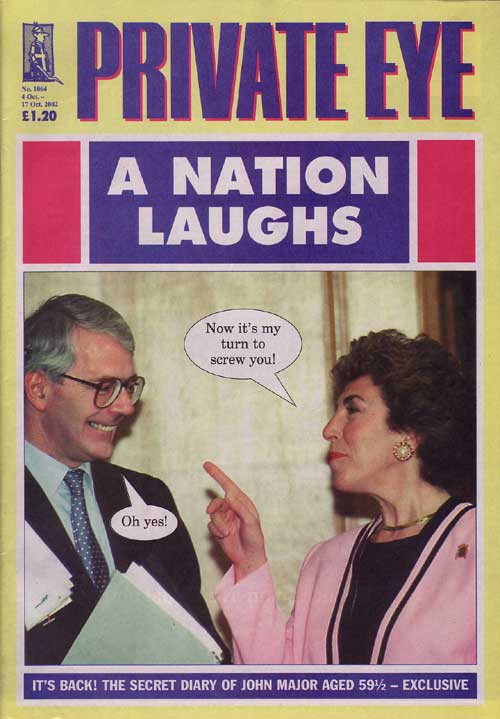
"We didn't sleep.." - the reply given by Tory politician Edwina Currie to a 'Twitter' user who stated she had slept with John Major. In the same year that she had put all her eggs in one basket, she was named as runner-up to Margaret Thatcher in BBC Radio 4's 'Women of the Year' poll but it is for her snide remark about the Irish that she is best remembered for here : she was quoted in 'The Sun' newspaper on the 1st March 1997 - 20 years ago on this date - giving her views on Irish people - "They're so intelligent, the Irish. Give them an education and they can do anything. I remember the first time I met an Irish accountant. I laughed because I couldn't believe it : an Irish accountant...!"
Oh but we're good with figures, Edwina : 1+1+6+9 = 848 and 26+6 = 1. And you can count on that.
PROSE AND CONS.
By prisoners from E1 Landing, Portlaoise Prison, 1999.
ACKNOWLEDGMENTS :
Grateful thanks to the following for their help, support, assistance and encouragement, and all those who helped with the typing and word processing over the past few months. Many thanks to Cian Sharkhin, the editor of the book, Mr Bill Donoghue, Governor, Portlaoise, Mr Seán Wynne, supervising teacher, the education unit in Portlaoise Prison and the education staff, especially Zack, Helena and Jane. Education officers Bill Carroll and Dave McDonald, Rita Kelly, writer, print unit, Arbour Hill.
First Print : November 1999, reprinted March 2000, illustrations by D O'Hare, Zack and Natasha. Photograph selection : Eamonn Kelly and Harry Melia.
CALMING THE STORM. (By M O'Callaghan.)
I hear the wind
feel the storm
walked with raindrops
just this morn
solitary silence
within the confines
my mind's alert
listens intently
fired up now
named her place
Eireann's Isle
today she's graced
momentarily though it seems
clouds of darkness
beseeching me
drifting slowly
listless sleep.
(Next - 'Candlelight', by M. O'Callaghan.)
ON THIS DATE (1ST MARCH) 52 YEARS AGO : IRISH PATRIOT RE-INTERRED IN GLASNEVIN CEMETERY, DUBLIN.
Pictured, left - Roger Casement's body being re-interred (on Monday, 1st March 1965 - 52 years ago on this date) in the Republican Plot in Glasnevin Cemetery, Dublin, having been released by the British from Pentonville Prison in Islington, North London.
He was born on the 1st September, 1864, in Sandycove, County Dublin, the son of Captain Roger Casement of the 3rd Dragoon Guards of the British Army and Anne Jephson from Mallow, County Cork. His mother had him secretly baptised in her own religion, Roman Catholic, but he was raised in the Protestant faith of his father. As both his parents died young, Roger was taken in by an uncle, near Ballycastle, County Antrim, and educated as a boarder at the diocesan school in Ballymena.
From 1895 onwards he held consular appointments at various locations in Africa, including Boma in the Congo (1904) where, for the British Foreign Office, he investigated Belgian human rights abuses of the indigenous people. Later, in Peru, he was commissioned to undertake a report on the reported abuse of workers in the rubber industry in the Putumayo basin, which earned him a knighthood after his findings were published as a parliamentary paper (1911). He had been a member of the Gaelic League and became increasingly radicalised by the opposition of the Ulster unionists to Home Rule from 1912 onwards and wrote nationalist articles under the pseudonym 'Seán Bhean Bhocht'.
He rarely receives a mention when it comes to the writers and poets of 1916 ("Of unmatched skill to lead by pathways rife/With danger and dark doubt, where slander's knife/Gleamed ever bare to wound, yet over all/He pressed triumphant on-lo, thus to fall" - 'Parnell', by Roger Casement) yet his reports from the Putumayo and from the Congo show a writer of great talent. His descriptions of the horrendous brutality inflicted on innocent and perfectly peaceful native inhabitants was enough to force a change of policy with regard to the treatment of workers and slaves on the rubber plantations. Casement wrote in 1911 that "..the robbery of Ireland since the Union has been so colossal, carried out on such a scale, that if the true account current between the two countries were ever submitted to any impartial tribunal, England would be clapped in jail..". For his part in trying to stop that robbery he was convicted of treason by the British and sentenced to death after a three-day 'trial' (held at the Old Bailey in London between the 26th and the 29th of June 1916, where he was prosecuted by 'Sir' Edward Carson, the Orange Order bigot).
His speech from the dock is not as appreciated as it should be - "With all respect I assert this Court is to me, an Irishman, not a jury of my peers to try me in this vital issue for it is patent to every man of conscience that I have a right, an indefeasible right, if tried at all, under this Statute of high treason, to be tried in Ireland, before an Irish Court and by an Irish jury. This Court, this jury, the public opinion of this country, England, cannot but be prejudiced in varying degree against me, most of all in time of war. I did not land in England; I landed in Ireland. It was to Ireland I came; to Ireland I wanted to come; and the last place I desired to land in was England. But for the Attorney General of England there is only "England"— there is no Ireland, there is only the law of England — no right of Ireland; the liberty of Ireland and of the Irish is to be judged by the power of England. Yet for me, the Irish outlaw, there is a land of Ireland, a right of Ireland, and a charter for all Irishmen to appeal to, in the last resort, a charter that even the very statutes of England itself cannot deprive us of — nay, more, a charter that Englishmen themselves assert as the fundamental bond of law that connects the two kingdoms.." (...more here).
I say that Roger Casement
did what he had to do.
He died upon the gallows,
but that is nothing new.
Afraid they might be beaten
before the bench of Time,
they turned a trick by forgery
and blackened his good name.
A perjurer stood ready
to prove their forgery true;
they gave it out to all the world,
and that is something new.
For Spring Rice had to whisper it,
being their Ambassador,
and then the speakers got it
and writers by the score.
Come Tom and Dick, come all the troop
that cried it far and wide,
come from the forger and his desk,
desert the perjurer's side.
Come speak your bit in public
that some amends be made
to this most gallant gentleman
that is in quicklime laid. (From here.)
Roger Casement was sentenced to "death by rope" on the 29th June 1916 and was executed by the British on the 3rd of August that year in London, England. On the 1st March 1965 - 52 years ago on this date - his remains were re-interred in the Republican Plot of Glasnevin Cemetery, Dublin.
RICOCHETS OF HISTORY.
At the end of a year in which *IRA decommissioning has been met with widespread euphoria, Phil Mac Giolla Bháin takes a stubborn look at the facts and concludes that the celebration party may be a little premature. From the 'Magill Annual 2002' (*PIRA).
The IRA's guns have been a central theme of my life. I grew up listening to how they were acquired and why they had to be used. My Westmeath grandfather was apprenticed out to Westport to a man who would teach him tailoring. There he met my grandmother, a Derrig.
The Derrigs were 'out' in 1916 and ran the IRA in West Mayo after they came back from Frongoch. By that time my grandfather had inherited his father's job as a guard on the train from Westport to Dublin. Passing through martial law areas freely, he took dispatches encrypted by his young wife all the way to the general headquarters of the IRA, to 'Mick'. Back in the west, he ran an entire underground communications system and, in 1935, the '(State) Bureau of Military History' asked him how many volunteers he lost : his disdainful reply to the Free State clerk was - "Lost men? We never lost a dispatch..." He also had a gun, and he never lost that either. Guns, he deemed, were the necessary tools with which to accomplish an important national task.
Mayo's guns went up to the border the year before I was born. I sat as a boy in his widow's front room in James Street, Westport, listening to the events of August 1971 and I knew what the man on the radio was on about, as my mother and I had just taken a coach through Belfast on Monday 9th August 1971. She had thought that Monday would be quieter... (MORE LATER).
ON THIS DATE (1ST MARCH) 36 YEARS AGO : BOBBY SANDS BEGAN HIS HUNGER STRIKE IN LONG KESH PRISON.
The 1981 hunger strike was the culmination of a five-year protest during this on-going struggle by Irish republican prisoners ; a 'blanket protest' began in 1976 when the British government withdrew 'Special Category Status' for political prisoners and, in 1978, after a number of attacks on prisoners leaving their cells to 'slop out', the protest escalated into the 'dirty protest', where prisoners refused to leave their cells to wash and covered the walls of their cells with excrement. In 1980, seven prisoners participated in the first hunger strike, which ended after 53 days then, on Sunday, 1st March 1981 - 36 years ago on this date - (P)IRA POW Bobby Sands began his hunger strike.
He received widespread media attention for his protest and more so when, on the 9th April 1981, he was elected as an abstentionist member in a Leinster House (Free State 'parliament') election, after being nominated to contest the seat by Dáithí Ó Conaill, the then vice president of the then Sinn Féin organisation. Bobby Sands was, as far as Irish republicans are concerned, a 'Teachta Dála' (TD) who was elected to take a seat in a 32-county Irish parliament, unlike the Free State representatives who sit in an institution in Kildare Street in Dublin today and claim to be 'TD's in an Irish parliament' and, indeed, Bobby's motives and those of Dáithí and the other then Sinn Féin Ard Chomhairle members who nominated him to contest the election were pure, unlike the motives of the self-serving time-keepers who sit in that Kildare Street premises today : the motives of the former involved a principled unwillingness to allow themselves and the struggle they were part of to be criminalised and to highlight to the world that they were fighting a political struggle against Westminster and its allies in this country.
Bobby Sands was sentenced to 14 years imprisonment for his alleged part in a fire-bombing campaign which, as part of an economic war against the British presence in Ireland, targeted business premises (in this instance, the Balmoral Furniture Company) with the intention of making it financially unviable for Britain to maintain its grip on that part of Ireland, a fact which present-day Provisional Sinn Féin and other Leinster House members seek to ignore or gloss over when referencing the so-called 'ineffectual/grubby deeds' of those who continue that struggle today.
On the 9th April , 1981, Bobby Sands was elected by 30,492 of those that voted in the Fermanagh/South Tyrone district, prompting, years later, this thesis from a republican leader : "Contrary to allegations made in the news media, there was not a straight line from the election of Bobby Sands in 1981 to the Stormont Agreement of 1998. Rather was the line from March, April and May 1981 to the same months in 1998 disfigured and distorted by an internal power-struggle for the leadership of Sinn Féin accompanied and followed by deceit and artifice as the ideals of Bobby Sands were steadily perverted and a section of the then powerful revolutionary Republican Movement turned into a constitutional party.." (from here). Bobby Sands, 9th March 1954 – 5th May 1981. RIP.
GROWING UP IN LONG KESH...
SIN SCÉAL EILE.
By Jim McCann (Jean's son). For Alex Crowe, RIP - "No Probablum". Glandore Publishing, 1999.
Biographical Note : Jim McCann is a community worker from the Upper Springfield area in West Belfast. Although born in the Short Strand, he was reared in the Loney area of the Falls Road. He comes from a large family (average weight about 22 stone!). He works with Tús Nua (a support group for republican ex-prisoners in the Upper Springfield), part of the Upper Springfield Development Trust. He is also a committee member of the 'Frank Cahill Resource Centre', one of the founders of 'Bunscoil an tSléibhe Dhuibh', the local Irish language primary school and Naiscoil Bharr A'Chluanaí, one of the local Irish language nursery schools.
His first publication last year by Glandore was 'And the Gates Flew Open : the Burning of Long Kesh'. He hopes to retire on the profits of his books. Fat chance!
PSYCHOLOGICAL WARFARE (does my head in...)
Inside our 'survival bags' was our equipment ie Mars Bar, boiled sweets, tobacco and cigarette papers (whether you smoked or not!), plasters, a lace with a knot in it for garrotting people and stuff, a box of matches, an apple and a piece of charcoal. This was for either blackening your face in case of night survival or for gunshot wounds etc, and we had to carry the 'survival kits' at all times except for visits.
In order to ensure that we would be ready to survive at a moment's notice, the cage staff would carry out spot checks (we were dependent on a friendly member of the staff giving us a warning about an impending spot check). This would give us a chance to steal someone's Brandy Balls or Big Kelly's Turkish Delight to replenish our missing, presumed eaten, 'survival equipment'.
Anyone who had the misfortune to be missing any item out of his 'survival kit' could find himself cleaning toilets for a week or brushing the compound but, thankfully, we managed to survive it! The months before had seen us organised into different sections - we had section leaders and section Training Officer (T.O.), and their task was to whip us into an effective fighting force. The entire cage became an assault course - the canteen had blankets put over the windows and the light bulbs were removed. You couldn't see anything at all. Your eyes couldn't become used to the dark. There was absolutely no light. Tables and chairs were set up as barriers that had to be got over, under or gone round... (MORE LATER).
ON THIS DATE (1ST MARCH) 169 YEARS AGO : 'STARVATION FEVER' ARTICLE PUBLISHED.
An article entitled 'Starvation Fever of 1847' was published in the 'Dublin Medical Press' periodical on this date - 1st March - 169 years ago (1848). The author was a Dr. Daniel Donovan, Skibbereen, Cork, and that article helped to focus world attention on the 'Great Hunger' that was obliterating the Irish people at that time-
'Dr. Donovan...emerges as one of the most heroic figures of An Gorta Mór...a bold and successful surgeon, an oculist and a general practitioner, a talented and prolific author and a champion of the oppressed and destitute Irish people..(he) was unambitious and unselfish and chose to remain in Skibbereen where patients came to consult him not only from other parts of Ireland but from England and Scotland, some even taking
the long Atlantic crossing from America..' (from here).
In the article, Dr. Donovan wrote "Although the fever which committed such frightful ravages during the entire of 1847 has in a great degree subsided, yet we cannot, I fear, hope that the enemy is altogether subdued, more particularly as want and misery (to an extreme degree) are likely to be the lot of the majority of our population for the ensuing spring and summer; and the privations of the poor, as regards food (and) clothes seemed last year to generate that epidemic which, like the rod of Aaron, has swallowed up the memory of its predecessors, and compared with which the pestilence of 1741 (proverbially known as the 'year of slaughter') scarcely deserves notice.

Golden corn for the stranger.
What sow ye?
Human corpses that wait for the avenger.
Fainting forms, hunger-stricken, what see you in the offing?
Stately ships to bear our food away, amid the stranger's scoffing.
They guard our masters' granaries from the thin hands of the poor.
Pale mothers, wherefore weeping?
Would to God that we were dead.
Our children swoon before us, and we cannot give them bread ...we are wretches, famished, scorned, human tools to build your pride,
But God will yet take vengeance for the souls for whom Christ died.
Now is your hour of pleasure
bask ye in the world's caress;
But our whitening bones against ye will rise as witnesses,
From the cabins and the ditches, in their charred, uncoffin'd masses,
For the Angel of the Trumpet will know them as he passes.
A ghastly, spectral army, before the great God we'll stand,
And arraign ye as our murderers, the spoilers of our land.
That good woman sums-up the despair and anger felt then, and still felt to this day. As it should be.
Thanks for reading, Sharon.
ON THIS DATE (22ND FEBRUARY) 28 YEARS AGO : MISPLACED 'PRIDE'...
..and, unfortunately, the potential for more of same remains.
An unusual piece for us, given the point of view of this blog and the point of view of the man featured in the article, but the dates coincide (ie this being the 22nd February) plus it is in relation to the 'Irish issue' and, as stated, the potential for it to happen again remains in place, unfortunately, because Westminster continues to claim political jurisdiction over a part of Ireland, and enforces that claim militarily.
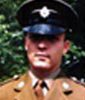
A member of the British 'Royal Corps of Transport', Lance Corporal Norman James Duncan (27) (pictured, above), was shot dead on the 22nd February 1989 - 28 years ago on this date - when a British Army military bus was waiting to clear a road junction. The driver, Lance Corporal Duncan, was driving from Ebrington B.A. Barracks in Derry to a near-by primary school to collect the children of his comrades when '...a man jumped out of a nearby car, walked over to the bus and fired 15 shots at the driver, hitting him six times in the head and abdomen...' (from here.)
This shooting was well reported on at the time (as, indeed, was only proper) - 'Lance Corporal Norman Duncan (27) was shot dead by an IRA Unit as he drove from Ebrington Barracks in Derry to the nearby Ebrington Primary School to collect the children of British soldiers in a school bus. He was a native of Craigellanchie in Scotland...married with 3 children and a soldier with the Royal Corps of Transport holding the rank of Lance-Corporal, (he) was driving a minibus from Ebrington Barracks to Ebrington Primary School to collect children when he was shot by the IRA in Londonderry's Bond Street. Duncan left Ebrington barracks at 1:40PM to collect the children of soldiers. As the minibus slowed at a junction, a car pulled up alongside and a gunman got out, walked over to the bus and fired at least 15 shots at the driver. Duncan was hit in the head and upper body 6 times and died almost immediately. A witness told the inquest that he saw the soldier "bouncing about inside the minibus". Duncan was due to leave Northern Ireland in 4 weeks time. A police spokesman said that (he) was very popular with his superiors and other soldiers and added: "He was a quiet man by nature but was always willing to help his colleagues regardless of the additional hours it meant working". After the attack, the (British) army carried out a review on its arrangements for carrying school children to and from local schools. LEST WE FORGET!' (From here.)
'The 170-seat parish church in the Speyside village of Craigellachie was packed for the funeral service yesterday of Lance-Corporal Norman Duncan, who was shot dead in Northern Ireland last week while driving a
minibus to collect Army children from a primary school in Londonerry. Lance-Corporal Duncan, 27, was a driver with the Royal Corps of Transport. He was buried with full military honours at Aberlour Cemetery. He was a married man with three children, and had been due to leave the Army in June...' (from here.)
'ROYAL CORPS OF TRANSPORT : DUNCAN - Lance-Corporal Norman J. - 22nd February 1989 - Aged 27. Shot when driving a minibus to collect children from Ebrington Primary School in Londonderry. From Banffshire, Scotland.' (From here.)
There are other such tributes etc here and here, for example but, regardless, Westminster continues to place its military personnel in harm's way in Ireland (and elsewhere) all in the 'name of Empire'. Perhaps when they leave the EU, they might hold a referendum on 'leaving' the 'elsewhere' countries, too. For the sake of their own people, if nothing else.
PROSE AND CONS.
By prisoners from E1 Landing, Portlaoise Prison, 1999.
ACKNOWLEDGMENTS :
Grateful thanks to the following for their help, support, assistance and encouragement, and all those who helped with the typing and word processing over the past few months. Many thanks to Cian Sharkhin, the editor of the book, Mr Bill Donoghue, Governor, Portlaoise, Mr Seán Wynne, supervising teacher, the education unit in Portlaoise Prison and the education staff, especially Zack, Helena and Jane. Education officers Bill Carroll and Dave McDonald, Rita Kelly, writer, print unit, Arbour Hill.
First Print : November 1999, reprinted March 2000, illustrations by D O'Hare, Zack and Natasha. Photograph selection : Eamonn Kelly and Harry Melia.
THE SYSTEM. (By Harry Melia.)
Tried to break my spirit
tried to take my pride
deep down inside
the hatred I could not hide.
Got me as a kid
they're to blame for what I did.
Pulls the strings
tried to make people dance
can one get a chance?
Builds you up
gives you a name
sets you up
makes you a shame.
(Next - 'Calming the Storm', by M. O'Callaghan.)
TRADE UNIONS AND CAPITALISM IN IRELAND....
The role of the trade union movement in Ireland in relation to the continued imperialist occupation of the North and to the foreign multi-national domination of the Irish economy - both north and south - remains an area of confusion for many people. John Doyle examines the economic policy of the 'Irish Congress of Trade Unions' (ICTU) and the general failure of the official Labour movement to advance the cause of the Irish working class, except in terms of extremely limited gains. From 'Iris' magazine, November 1982.
By mimicking the 'left' of the Labour Party, the Workers Party have made temporary gains in the Free State, though they have become increasingly redundant in the North. Yet, despite their greater efficiency and comprehensiveness of policy, they are no nearer James Connolly than the Labour Party.
THE WAY FORWARD.
The political and social crisis inside and outside the trade union movement requires as a base line that republicans and all genuine progressives come together in a sort of economic broad front to head the new political direction forward.
Just as socialists must play their full part in the liberation struggle, so republicans must orientate themselves seriously into urgent work on the trade unions, now. (Provisional) Sinn Féin can be the catalyst for the building of Connolly's vision, if the effort is made*. (*'1169' comment : "Connolly's vision" did not extend to implementing British rule in one part of Ireland while working, politically, within the confines of Free Statism in another part of Ireland, as anyone with a 'republican vision' will confirm.)
(END of 'Trade Unions And Capitalism In Ireland' : next - 'Ricochets Of History', from 2002).
GROWING UP IN LONG KESH...
SIN SCÉAL EILE.
By Jim McCann (Jean's son). For Alex Crowe, RIP - "No Probablum". Glandore Publishing, 1999.
Biographical Note : Jim McCann is a community worker from the Upper Springfield area in West Belfast. Although born in the Short Strand, he was reared in the Loney area of the Falls Road. He comes from a large family (average weight about 22 stone!). He works with Tús Nua (a support group for republican ex-prisoners in the Upper Springfield), part of the Upper Springfield Development Trust. He is also a committee member of the 'Frank Cahill Resource Centre', one of the founders of 'Bunscoil an tSléibhe Dhuibh', the local Irish language primary school and Naiscoil Bharr A'Chluanaí, one of the local Irish language nursery schools.
His first publication last year by Glandore was 'And the Gates Flew Open : the Burning of Long Kesh'. He hopes to retire on the profits of his books. Fat chance!
PSYCHOLOGICAL WARFARE (does my head in...)
James Young was shouting his catch-phrase : "Stap fightin'..." on Cage 22's radio, storm clouds were-a-gatherin' and I for one wasn't a happy POW. Negotiations broke down at the wire and the screws stormed off. A few minutes later another tobacco tin flew across between Cage 7 and Cage 22 - "Everybody, meeting in the canteen."
Gerry stood out in front of the ranks of men ar sochra (at ease) in the canteen - "We're refusing to lock up," he said. This was part of an ongoing tactic against the screws and their policy of trying to break our spirit and moral, and was designed by us to be more disruptive than destructive, although we were always prepared for both.
The standard day in Long Kesh started at about 6.30am when the huts were unlocked until 9.00pm, as it was at that time that the huts, with us in them, were locked up for the night. We were told to await further orders and dismissed. Our minds raced back to the fire and how most of us were experiencing a déjá vu type thing. The months before we had been receiving training in survival and, to this end, we had been supplied with survival kits, comprising of a cloth bag with a string through the top, which you pulled to tighten. (MORE LATER).
ON THIS DATE (22ND FEBRUARY) 185 YEARS AGO : FIRST INTERMENT IN GLASNEVIN CEMETERY.
'Beneath
Lie The Remains of
MICHAEL
The Beloved Son of MICHAEL CAREY
Of Francis Street
Who Was The First Ever Interred
in This Cemetery
22nd February 1832'(the inscription on Michael Carey's headstone, pictured, left, in Glasnevin Cemetery).
In 1821, in Dublin, a child, Michael Carey, was born in the slums of Francis Street ; his father, Michael, worked as best he could as a scrap metal dealer/labourer, and his mother, Bridget, was a 'stay-at-home' wife. When he was only 11-years-young, Michael fell victim to 'consumption', now known as tuberculosis, and his parents moved him to a 'safer' part of Dublin - Phibsborough - in the hope of giving him a chance to get his strength back to fight the illness, but to no avail - the poor young lad died, and is recorded as being the first person to be buried in the then new (Glasnevin) graveyard (in an area known as Curran's Square, in a graveyard to be later known as 'Prospect Cemetery') on Wednesday 22nd February 1832 - 185 years ago on this date.
Another very sad episode in relation to 'consumption' ('congestion of the lungs/weak action of the heart') and the then new graveyard is that of a William Pope : he buried his three-year-old daughter, Margaret, then, three days later, buried his one-year-old son, Patrick. William and his wife persevered as best they could but tragedy struck again five years later - another son, John, died - he was only one year 'old', too. Four years later, they buried another daughter, Elizabeth - she was only a week old. The father, William, died at 81 years of age, having witnessed almost his entire family die before him. His 'cause of death' was listed as 'old age', but safe to say he died from a broken heart. So sad.
Thanks for reading, Sharon.
ON THIS DATE (8TH FEBRUARY) 170 YEARS AGO : 'THE LIBERATOR' PLEADS - 'ONE IN FOUR WILL DIE UNLESS YOU HELP...'
On the 8th February 1847, the then 72-year-old 'Liberator', Daniel O'Connell (pictured, left) delivered his last speech in the British 'House of Commons' : his words were in connection with the so-called 'Irish famine' (An Gorta Mór) and, in it, he stated - "Ireland is in your hands and in your power. If you do not save her, she cannot save herself. And I solemnly call on you to bear in mind what I am telling you now in advance, something of which I am absolutely certain, that one out of every four of her people will soon die unless you come to her aid..." The use of the term 'famine', in this instance, is a misnomer if ever there was one - 'In the early summer of 1845, on the 11th September of that year, a disease referred to as blight was noted to have attacked the crop in some areas. In that year, one third of the entire crop was destroyed. In 1846, the crop was a total failure. This report came from a Galway priest - "As to the potatoes, they are gone – clean gone. If travelling by night, you would know when a potato field was near by the smell. The fields present a space of withered black stalks..." Though 1847 was free from blight, few seed potatoes had been planted...yet the country was producing plenty of food. As the Irish politician, Charles Duffy wrote: "Ships continue to leave the country, loaded with grain and meat." As food was scarce people would eat anything such as nettles, berries, roots, wildlife, animals, dogs and cats in order to survive...' (from here.)
O'Connell pleaded with Westminster to save the people of Ireland who were being decimated by sickness and disease, caused by a lack of nourishment, and requested that, instead of building roads and other such infrastructure, the money available for same should be used to encourage the Irish to cultivate the soil to plant oats and barley etc, and a 'compromise' (of sorts) was arrived at - cheap Indian corn was brought into Ireland, for the people, sometimes on the same ships that, when unloaded, would then be loaded again with Irish-produced oats and barley - 'cash crops', according to the landlords, for export, not for home consumption!
The imported 'corn' was considered by the Irish to be a type of animal feed, the grain of which was so tough as to cause great pain and, even at that, the amount of it imported was inadequate for the number of people in need.
Daniel O'Connell died, age 72, in Genoa, Italy, 13 weeks after his 8th February speech and, as he requested, his heart was buried in Rome and the remainder of his body was buried in Glasnevin, Dublin. Father Ventura of the Theatine Order delivered the oration, during which he stated - "My body to Ireland – my heart to Rome – my soul to heaven : what bequests, what legacies, are these! What can be imagined at the same time more sublime and more pious than such a testament as this! Ireland is his country – Rome is the church – heaven is God. God, the Church and his country – or, in other words, the glory of God, the liberty of the Church, the happiness of his country are the great ends of all his actions – such the noble objects, the only objects of his charity! He loves his country and therefore he leaves to it his body; he loves still more the Church and hence he bequeaths to it his heart ; and still more he loves God, and therefore confides to Him his soul! Let us profit then, of this great lesson afforded by a man so great – a man who has done such good service to the Church, to his country, and to humanity..." It was on this date - 8th February - 170 years ago that Daniel O'Connell delivered his last speech in the British 'House of Commons'.
PROSE AND CONS.
By prisoners from E1 Landing, Portlaoise Prison, 1999.
ACKNOWLEDGMENTS :
Grateful thanks to the following for their help, support, assistance and encouragement, and all those who helped with the typing and word processing over the past few months. Many thanks to Cian Sharkhin, the editor of the book, Mr Bill Donoghue, Governor, Portlaoise, Mr Seán Wynne, supervising teacher, the education unit in Portlaoise Prison and the education staff, especially Zack, Helena and Jane. Education officers Bill Carroll and Dave McDonald, Rita Kelly, writer, print unit, Arbour Hill.
First Print : November 1999, reprinted March 2000, illustrations by D O'Hare, Zack and Natasha. Photograph selection : Eamonn Kelly and Harry Melia.
THE JOINT. (By Harry Melia.)
Tears in my eyes
I get the skins, a bit of hash
and make a nice skinner
to decorate my lip.
A couple of drags, the mind blows
funny thoughts, laughing to myself,
as a spider looks like a giant monster.
Giggles, a fit of laughter,
screw's eyes looking through the peephole
think I'm mad.
I start to sing
think I'm Tom Jones, belting out
'She's a Lady'
the lads shouting "Belt Up!"
out the windows.
Laughter, more laughter,
the tape plays, I dance
oh so much fun
what a few puffs can do
are you alright?
give us a light.
Mind gone astray
left this prison for another day
beautiful thoughts, so much fun
light another joint
the party's just begun.
(Next - 'The System', by Harry Melia.)
ON THIS DATE (8TH FEBRUARY) 31 YEARS AGO : ONE EPISODE IN THE SECRET HISTORY OF THE CATHOLIC CHURCH...
'A Jury in Abbeville, Louisiana, in the United States, yesterday (ie Friday, 7th February 1986) awarded one million dollars in damages to an eleven-year old boy, who was molested by a priest, Father Gilbert Gauthe (pictured, left) now in jail for sexually abusing three dozen alter boys.
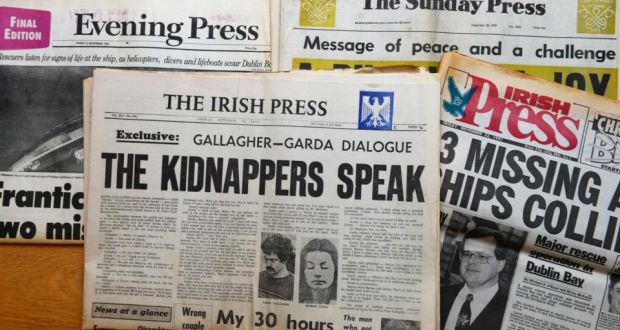
The boy's parents, Glenn and Faye Gastal, refused 'out of court' settlements and sought twelve million dollars in their lawsuit against the Catholic Church because, they said, it harboured the priest even after learning that he was a child molester. The predominantly Catholic jury also awarded the boy's parents 250,000 dollars. The abuse started when the boy was seven years of age. Father Gilbert Gauthe was sentenced to twenty years in prison last October (ie October 1985) after admitting he molested the children at Saint John Parish Church in the community of Esther. The Lafayette Diocese has settled lawsuits with thirteen families against Father Gilbert Gauthe for a reported five-and-a-half million dollars, with not one of those thirteen cases going to trial...' (from 'The Evening Press' newspaper, 8th February 1986 ; thirty-one years ago on this date.)
These are the same self-righteous hypocrites that, at the drop of a Bishop's hat, will - and have - condemned Irish men and women for challenging, and seeking to change, the political and social system in Ireland. A corrupt system which nurtures a corrupt Church.
TRADE UNIONS AND CAPITALISM IN IRELAND....
The role of the trade union movement in Ireland in relation to the continued imperialist occupation of the North and to the foreign multi-national domination of the Irish economy - both north and south - remains an area of confusion for many people. John Doyle examines the economic policy of the 'Irish Congress of Trade Unions' (ICTU) and the general failure of the official Labour movement to advance the cause of the Irish working class, except in terms of extremely limited gains. From 'Iris' magazine, November 1982.
By mimicking the 'left' of the Labour Party, the Workers Party have made temporary gains in the Free State, though they have become increasingly redundant in the North. Yet, despite their greater efficiency and comprehensiveness of policy, they are no nearer James Connolly than the Labour Party.
THE WAY FORWARD.
The alternative to the current disarray within the labour movement, and the lack of socialist perspectives, is not to be found in theoretical tracts or in abusive rhetoric, but in sound agitational work based on the enormous militant potential of grass-roots trade unionists. While capitalism in Ireland is relatively stable, its foundations are uncertain, and the false base of foreign investment will assuredly lead to a political crisis in coming years.
Equally, the terms of IMF reflotation loans will become increasingly harsh, and capitalism's ability to maintain social consenus will falter. In this situation, industrial action alone, and isolated defensive actions by the most militant unions, will not be enough to deal with the situation.
It is only by political action paralleling industrial might that the trade unions will become a genuine force for lasting social change. Naturally, this work will not take place in isolation from the national struggle against imperialism. ('1169...' comment - that "work" should "not take place in isolation from the national struggle against imperialism", but our history proves otherwise : those that have left the republican movement over the years have, on entering Leinster House and/or Stormont [Westminster next?], concentrated their political efforts on 'social change' issues for their own re-election purposes and, occasionally, would pay lip service to "the national struggle against imperialism".) (MORE LATER).
GROWING UP IN LONG KESH...
SIN SCÉAL EILE.
By Jim McCann (Jean's son). For Alex Crowe, RIP - "No Probablum". Glandore Publishing, 1999.
Biographical Note : Jim McCann is a community worker from the Upper Springfield area in West Belfast. Although born in the Short Strand, he was reared in the Loney area of the Falls Road. He comes from a large family (average weight about 22 stone!). He works with Tús Nua (a support group for republican ex-prisoners in the Upper Springfield), part of the Upper Springfield Development Trust. He is also a committee member of the 'Frank Cahill Resource Centre', one of the founders of 'Bunscoil an tSléibhe Dhuibh', the local Irish language primary school and Naiscoil Bharr A'Chluanaí, one of the local Irish language nursery schools.
His first publication last year by Glandore was 'And the Gates Flew Open : the Burning of Long Kesh'. He hopes to retire on the profits of his books. Fat chance!
PSYCHOLOGICAL WARFARE (does my head in...)
We sat down on the chairs that were right up against the wire of the cage at the gate, and it begins : "You filthy swine! You rotter! You are a blackguard, my good man...you carbuncle on the backside of humanity...you filthy rotten scoundrel...you premarital accident...Glasgow Celtic FOREVER...!", we shouted, gratuitously.
"What the fuck's going on here?", asked the Adjutant. "Well, we thought since the really bad abuse wasn't working that we would try a different tack." "Just you do what you're told and stop messing about." The messing about stopped and thank God my mum wasn't there to hear Messrs Barnes, Burns, Wilson, Tolan and her own son abusing the screws.
A halt was called not long later and an assistant governor and a chief screw approached Cage 7, and stood at the wire talking to the IRA officer commanding of the sentenced prisoners. They were very agitated and animated, and threats were being made from both sides. "I'll send the soldiers in," said the assistant governor. "I'll burn the Camp," replied the OC... (MORE LATER).
ON THIS DAY NEXT WEEK (WEDNESDAY 15TH FEBRUARY 2017)...
..we won't be posting our usual contribution, and probably won't be in a position to post anything at all until the following Wednesday (22nd Feb) ; this coming weekend (Saturday/Sunday 11th/12th) is spoke for already with a 650-ticket raffle to be run for the Cabhair group in a venue on the Dublin/Kildare border (work on which begins on the Tuesday before the actual raffle) and the 'autopsy' into same which will take place on Monday evening, 13th, in Dublin, meaning that we will not have the time to post here. But we'll be back, as stated above, on Wednesday 22nd, unless we win the 'big bucks' at the weekend..!
Thanks for reading, Sharon.
ON THIS DATE (1ST FEBRUARY) 139 YEARS AGO : 1916 SIGNATORY BORN.
On the 1st February 1878 - 139 years ago on this date - a child, Thomas, was born in Cloughjordan in Tipperary, into a household which would consist of four sons and two daughters - the parents, Joseph and Mary (Louise Parker) MacDonagh, were both employed as teachers in a near-by school. He went to Rockwell College in Cashel, Tipperary, where he entertained the idea of training for the priesthood but, at 23 years of age, decided instead to follow in his parents footsteps and trained to be a teacher. He obtained employment at St Kieran's College in Kilkenny and, while working there, advanced his interest in Irish culture by joining the local 'Gaelic League' group and was quickly elected to a leadership role with same - '..by 1905 he had left the League and moved on to teach at St Colman’s College, Fermoy, where he also established himself as a published poet. Three years later he moved to a new position, as resident assistant headmaster at St Enda's, Patrick Pearse's school then based in Ranelagh. In 1911, after completing his BA and MA at UCD, he was appointed lecturer in English at the same institution. In 1912 he married Muriel Gifford, sister of Grace, who would later marry Joseph Plunkett in Kilmainham Gaol.
In the years prior to the Rising MacDonagh became active in Irish literary circles and was a co-founder of the Irish Review and, with Plunkett, of the Irish Theatre on Hardwicke Street. MacDonagh was a witness to Bloody Sunday in 1913 and this event appears to have radicalised him so that he moved away from the circles of the literary revival and embraced political activism. He joined the Irish Volunteers in December 1913 and was appointed to the body's governing committee. In 1914 he rejected John Redmond's appeal for the Volunteers to join the fight in the First World War. On 9 September 1914 he attended the secret meeting that agreed to plan for an armed insurrection against British rule. By March 1915 he had been sworn into the ranks of the Irish Republican Brotherhood and was also serving on the central executive of the Irish Volunteers, was director of training for the Volunteers and commandant of the 2nd Battalion of the Dublin Brigade...' (more here.)
At the age of 38, he joined his comrades in challenging a then world power, England, over the injustices which that 'world leader' was inflicting in Ireland and, with six of his comrades, he signed a proclamation in 1916 declaring the right of the people of Ireland to the ownership of Ireland and to the unfettered control of Irish destinies, free of any external political or military interference. He was found guilty by a British court martial that followed the 1916 Rising, and was sentenced to death. He was executed by firing squad on the 3rd May 1916 on the same day as Pearse and Tom Clarke. His friend and fellow poet Francis Ledwidge wrote a poem in his honour after his death (Ledwidge, the 'Poet of the Blackbirds', fought for the British in the 'First World War' and was injured in 1916 - he was recovering from his wounds in hospital when news reached him of the Rising and he let it be known that he felt betrayed by Westminster over its interference in Ireland) -
Lament for Thomas MacDonagh.
He shall not hear the bittern cry
In the wild sky where he is lain
Nor voices of the sweeter birds
Above the wailing of the rain.
Nor shall he know when loud March blows
Thro' slanting snows her fanfare shrill
Blowing to flame the golden cup
Of many an upset daffodil.
And when the dark cow leaves the moor
And pastures poor with greedy weeds
Perhaps he'll hear her low at morn
Lifting her horn in pleasant meads.
In his address to the court martial, Thomas MacDonagh said : "Gentlemen of the court martial, I choose to think you have done your duty according to your lights in sentencing me to death. I thank you for your courtesy. It would not be seemly for me to go to my doom without trying to express, however inadequately, my sense of the high honour I enjoy in being one of those predestined to die in this generation for the cause of Irish freedom. You will, perhaps, understand this sentiment, for it is one to which an Imperial poet of a bygone age bore immortal
testimony : "Tis sweet and glorious to die for one's country." You would all be proud to die for Britain, your Imperial patron, and I am proud and happy to die for Ireland, my glorious fatherland...there is not much left to say. The Proclamation of the Irish Republic has been adduced in evidence against me as one of the signatories. I adhere to every statement in that proclamation. You think it already a dead and buried letter - but it lives, it lives! From minds alive with Ireland's vivid intellect it sprang, in hearts alive with Ireland's mighty love it was conceived. Such documents do not die.
The British occupation of Ireland has never for more than one hundred years been compelled to confront in the field of flight a rising so formidable as that which overwhelming forces have for the moment succeeded in quelling. This rising did not result from accidental circumstances. It came in due recurrent reasons as the necessary outcome of forces that are ever at work. The fierce pulsation of resurgent pride that disclaims servitude may one day cease to throb in the heart of Ireland — but the heart of Ireland will that day be dead. While Ireland lives, the brains and brawn of her manhood will strive to destroy the last vestige of foreign rule in her territory. In this ceaseless struggle there will be, as there must be, an alternate ebb and flow. But let England make no mistake. The generous high-bred youth of Ireland will never fail to answer the call we pass on to them, will never full to blaze forth in the red rage of war to win their country's freedom. Other and tamer methods they will leave to other
and tamer men ; but for themselves they must do or die. It will be said our movement was doomed to failure. It has proved so. Yet it might have been otherwise.
There is always a chance of success for brave men who challenge fortune. That we had such a chance, none know so well as your statesmen and military experts. The mass of the people of Ireland will doubtless lull their consciences to sleep for another generation by the exploded fable that Ireland cannot successfully fight England. We do not propose to represent the mass of the people of Ireland. We stand for the intellect and for immortal soul of Ireland. To Ireland's soul and intellect, the inert mass drugged and degenerated by ages of servitude must in the destined day of resurrection render homage and free service receiving in turn the vivifying impress of a free people. Gentlemen, you have sentenced me to death, and I accept your sentence with joy and pride since it is for Ireland I am to die. I go to join the goodly company of men who died for Ireland, the least of whom is worthier far
than I can claim to be, and that noble band are themselves but a small section of the great, unnumbered company of martyrs, whose Captain is the Christ who died on Calvary. Of every white robed knight of all that goodly company we are the spiritual kin. The forms of heroes flit before my vision, and there is one, the star of whose destiny chimes harmoniously with the swan song of my soul. It is the great Florentine, whose weapon was not the sword, but prayer and preaching ; the seed he sowed fructifies to this day in God's Church. Take me away, and let my blood bedew the sacred soil of Ireland. I die in the certainty that once more the seed will fructify."
Thomas MacDonagh - born 1878, executed by Westminster 1916.
PROSE AND CONS.
By prisoners from E1 Landing, Portlaoise Prison, 1999.
ACKNOWLEDGMENTS :
Grateful thanks to the following for their help, support, assistance and encouragement, and all those who helped with the typing and word processing over the past few months. Many thanks to Cian Sharkhin, the editor of the book, Mr Bill Donoghue, Governor, Portlaoise, Mr Seán Wynne, supervising teacher, the education unit in Portlaoise Prison and the education staff, especially Zack, Helena and Jane. Education officers Bill Carroll and Dave McDonald, Rita Kelly, writer, print unit, Arbour Hill.
First Print : November 1999, reprinted March 2000, illustrations by D O'Hare, Zack and Natasha. Photograph selection : Eamonn Kelly and Harry Melia.
WASTED TIME. (By Harry Melia.)
In the base such peace and quiet
I lie on my bed and my mind
goes back in time.
Seventeen years a lifetime
if only I could start again.
Always on my mind
I'm hand in hand with my wife
all the wonderful times we shared
screw - checking the door
locks my mind again.
I'm in the prison ten years now
Dublin has changed
making me afraid when I think of going home
as the time draws nearer I'm scared
but don't know why.
Never happened me before
If only I could turn back the hands of time
change and everything would be fine
the good times are back
all the love, fun and craic
Wasted time. So much wasted time.
(Next - 'The Joint', by Harry Melia.)
1ST FEBRUARY (ST. BRIGID'S DAY)- THE DAWN OF THE 'CELTIC SPRING'.
St. Brigid's Well, in Clondalkin, Dublin (pictured,left) is a local landmark that is considered to be a 'magic well' of sorts and was, 'back in the day', situated on what was known as 'Brideswell Common', an abandoned piece of land which travellers passed on their way to Kildare. The 'Well' and surrounding land was 'owned' by William Francis Caldbeck Esq., who rented it to a Mr. Ormsby. The 'Commons' area at that time consisted of just two fields with a rough lane dividing them , and a natural spring which the locals named 'St.Brigid's Well' , in honour of St.Brigid who, according to folklore, would baptise so-called 'pagans' in the waters of the Well - and, in return, the locals payed particular homage to her on the 1st February each year : 'the Feast Day of St. Brigid', one of four major 'fire' festivals (known as 'quarter days' in Irish mythology - the other three such 'days' are Beltane, Lughnasadh, and Samhain). St. Brigid was a 'fire goddess', and a perpetual flame burns in her honour at a shrine in Kildare, not too far from the Clondalkin site.
Infants that died before they could be baptised were said to be buried in this immediate area as a lease signed by Caldbeck allowed for burials in a 'ground [area] of 4 perches...' and this and the fact that St. Brigid made regular 'pit stops' there soon ensured that the Well became a 'special place' , the waters of which were said to improve the eyesight of young girls , once their eyes were washed with a wet cloth which was then hung on the nearest tree to dry - as the cloth dried , the eyesight of the girl who had been washed with it improved. Another belief associated with St. Brigid is that of the 'Brigid's Bed', where single females of the area would each make a doll (a 'Brideog') to represent Brigid and dress it with as much colour as they could and then make a bed for the doll to lie in.
On St. Brigid's Eve (31st January), the girls and young women would gather together in one house to stay up all night with the 'Brideog', and are then visited by all the young men of the community who must ask permission to enter the home, and treat them and the doll with respect. We still have girls, young women and young men in this world today, but 'respect' for them is in short supply, it seems...
TRADE UNIONS AND CAPITALISM IN IRELAND....
The role of the trade union movement in Ireland in relation to the continued imperialist occupation of the North and to the foreign multi-national domination of the Irish economy - both north and south - remains an area of confusion for many people. John Doyle examines the economic policy of the 'Irish Congress of Trade Unions' (ICTU) and the general failure of the official Labour movement to advance the cause of the Irish working class, except in terms of extremely limited gains. From 'Iris' magazine, November 1982.
Since the 1930's, the majority of trade unionists in the Free State have supported Fianna Fáil, initially because of its populist policies and 'republican' image, more so today because of traditional voting patterns and Fianna Fáil's residual nationalist image. Equally in the North, partition has inevitably polarised trade unionists along nationalist and unionist lines.
These patterns have not been broken, because of the inadequacy of the Labour Party in the Free State and its rejection of James Connolly's socialism, and also because - it must be said - of republicans' practical (and sometimes political) inability to come properly to grips with social issues over the same period.
Equally, the partitionist and economistic positions of the 'Workers' Party' offer no alternative to the sterile contortions of the Labour Party and their refusal to advance socialist policies. (MORE LATER).
ON THIS DATE (1ST FEBRUARY) 94 YEARS AGO - 'BIG HOUSE ON THE HILL' BURNED DOWN BY THE IRA.
On the 1st February 1923, the IRA burned down what they obviously perceived to be a symbol of 'British landlordism' in County Mayo - 'Moore Hall', which was at the time associated with a Free State 'Senator', Colonel Maurice Moore.
By all accounts, Maurice Moore himself was a 'mixed bag', politically speaking, and the Moore clan themselves had the reputation as 'not the worst' to deal with : a family member from 'the old days', John, fought alongside the 'United Irishmen' in 1798 and was captured by the British and sentenced, by 'Lord' Cornwallis, to deportation and, during 'An Gorta Mór', it is recorded that no one died on 'their' lands from hunger during that period and no evictions took place. The 'Senator Colonel' '..served with the Connacht Rangers in the Boer War and became involved with human right issues (and) is credited by many as the founder of The Irish Volunteers. He was appointed by the First Dáil as envoy to South Africa in 1920 (and) served in the (FS) Seanad from 1923 under both W T Cosgrave and E DeValera where he moved legislation for the return of Irish prisoners in English jails (and) was also deeply involved with the establishment of the co-operative movement in Ireland...' (from here).
Peadar O'Donnell, in his book 'There will be Another Day', touched on a meeting he had with the man : "..Senator Colonel Maurice Moore called at my home with the manuscript of a pamphlet he proposed to publish - 'British Plunder and Irish Blunder', and he hoped that I might use it serially in 'An Phoblacht'. I knew of Colonel Moore's sustained protest in the Free State Senate against the payment of land annuities to Britain, on the ground that the Free State was under no legal obligation to pay them. I did not seek him out, and 'An Phoblacht' took little notice of his speeches. For one thing I held it against him, as I held it against W.B. Yeats , that he allowed himself to be nominated to membership of so mean a body as the Free State Senate (and) for another thing, adventuring as I was beyond the limits of IRA policy in my use of 'An Phoblacht', it would not occur to me to link up with a Free State Senator who could invoke no better argument than British Acts of Parliament.."
However - regarding the burning of 'the Big House on the Hill' : the following letter, from George Moore, was published in 'The Morning Post' newspaper on the 14th February 1923, thirteen days after the fire :

I was sitting in my lodge reading when armed men who where perfect strangers to me came to the door and demanded the keys. I asked what for, and was told that a column was going to be put up for the night. I wanted to go over, but would not be allowed; other armed men were patrolling the road from Annie's Bridge to Murphy's Lodge. I had no option but to give up the keys, and suspecting what was on I pointed out to the leader that the house was not Colonel Moore's property. This had no effect. I sat up all night, hoping that when all would be clear I could save even a portion of the library. At four o'clock I heard four loud explosions. At five I went to the place and found the whole house a seething mass of flames. I at once saw that all was hopeless. A fire brigade would be powerless, so firmly had the flames gripped the entire building.
I could do nothing but stand by and await the end with the same feeling that one has when standing by the open grave of a very dear friend. I do not say this in a 'Uriah Heapish' way, for I really loved that old house. To me it was a modern edition of King Tutankhamen's tomb. At six o'clock the roof fell in with a terrific crash. When the fire died down I got ladders up to the library windows, hoping to save even a few books, but nothing living could enter, so fierce was the heat. When Mr Ruttledge returns I would like to have instructions as to what is to be done. There is several feet of litter on the ground floor. I don't know if it be worth while to remove this – except steel or iron one cannot hope to find anything. In one sense, perhaps, the house had outlived its usefulness, but still it would be a pity even now to let it become a real ruin. If nothing else be done I would suggest building up all the lower windows to prevent people trafficking in and out as they please.
These lines will seem to many too simple to be considered as 'literature' ; the many like ornament. But the simple directness of the lines appeals to me ; I doubt the story could have been better told ; and if they recall to others, as they did to me, Virgil's celebrated words, Sunt laerimae verum ['These are the tears of things'], they will justify their publication.
– Yours, etc., George Moore, 121 Ebury Street, London, S.W.1'
The Moore family may indeed not have been 'the worst in the world' but their unfortunate connection, at that time, to the 'landed gentry', was their downfall on that particular occasion.
GROWING UP IN LONG KESH...
SIN SCÉAL EILE.
By Jim McCann (Jean's son). For Alex Crowe, RIP - "No Probablum". Glandore Publishing, 1999.
Biographical Note : Jim McCann is a community worker from the Upper Springfield area in West Belfast. Although born in the Short Strand, he was reared in the Loney area of the Falls Road. He comes from a large family (average weight about 22 stone!). He works with Tús Nua (a support group for republican ex-prisoners in the Upper Springfield), part of the Upper Springfield Development Trust. He is also a committee member of the 'Frank Cahill Resource Centre', one of the founders of 'Bunscoil an tSléibhe Dhuibh', the local Irish language primary school and Naiscoil Bharr A'Chluanaí, one of the local Irish language nursery schools.
His first publication last year by Glandore was 'And the Gates Flew Open : the Burning of Long Kesh'. He hopes to retire on the profits of his books. Fat chance!
PSYCHOLOGICAL WARFARE (does my head in...)
For the rest of the day we were to take turns sitting at the gate of Cage 22 and the other cages shouting abuse at the screws. I'm talking serious slander here, the mortal sin stuff. We were broken up into sections and allocated a time for when we had to take our place at the gate.
As the canteen staff we were told to take our turn after the evening meal - the canteen staff of Cage 22 at that time could abuse non-stop for Ireland, but don't get me wrong : we could curse like the best of them but this was very demeaning and belittling to us. This was not out of any vestige of respect for the screws, as we had none. This was for ourselves.
We listened to our comrades during the course of the day screaming abuse at the screws. Every swear word you could think of clustered together in sentences, paragraphs and then some. The tirade of abuse lasted a good eight hours and then it was our turn. We protested to Martin who told us orders were orders and that while the Cage staff didn't like it either there was nothing could be done... (MORE LATER).
Thanks for reading, Sharon.