"FOR THE CROWN GIVES FAIR QUARTER..."
'
The United Irishmen's rebellion in Ireland in 1798 was well supported throughout the country and the English were, as in every conflict they started throughout the world, ever eager to 'make an example out of the rebels', to persuade others not to join an existing rebel force or to start such a fightback themselves.
In Ireland that year, the rebels controlled many towns in the county of Kildare and more than held their own against the Crown Forces when the latter attempted to take those towns back under their jurisdiction.
But the English, having practically unlimited resources at their disposal, began to get the upper hand and the rebels were offered (and negotiated) terms of surrender by British Lieutenant General 'Sir' Ralph Dundas, the Commander of the 'Midland District Militia'.
The rebels were to march to the Gibbet Rath area of the Curragh, in Kildare, on the 29th May, surrender their arms and would then be 'allowed' by the English to return to their homes.
Hundreds of armed rebels headed of from the Kildare townlands on the 29th, and arrived at Gibbet Rath that same day, as agreed, only to be met there by a different commanding officer - General Dundas had been "called away" and a General 'Sir' James Duff was now in charge.
General Duff had a reputation for achieving victory at any cost, as had his section of the army (known as 'Roden's Foxhunters', who were headed-up by a 'Viscount Jocelyn') : a number of his men had been injured and killed in the course of the conflict, and he bore a grudge.
And his soldiers did, too, and they had been overheard in late May drunkenly boasting about how they intended to slaughter any rebels who presented themselves at Gibbet Rath on the 29th - and, actually, when the rebels left the towns on the 29th, hundreds of them left the main procession and made their own way out of the area, as they were (rightly, as it transpired) fearful of what awaited them at the surrender/amnesty point.
Those that went to Gibbet Rath to claim their amnesty handed their weapons over to the English, as agreed, but were then surrounded by General 'Sir' James Duff and his soldiers ('Roden's Foxhunters/Light Dragoons', the 'Monasterevan Cavalry', and at least one other militia force).
General Duff addressed his men and, pointing at the hundreds of now-unarmed rebels, instructed them to "Charge! And spare no rebel..."
Over 350 Irish rebels were slaughtered there on that day by the English.
It was reported that in one street alone in Kildare that night (Claregate Street), 85 widows were counted and, within a 10 mile radius of the Curragh, there was hardly a house or cottage that didn't have a father, brother or son killed.
Some of the rebels were buried in Kildangan Cemetery, some were buried in the Grey Abby in Kildare and others in Nurney Cemetery.
('1169' Comment - a 'gibbet' is an English word meaning an upright post with a projecting arm for hanging the bodies of executed men and women, and 'Rath' is an Irish word meaning an ancient circular enclosure or fort surrounded by an earthen wall.)
'Near the edge the Curragh, in the county of Kildare,
Lies land free from blackthorn and gorse,
For 'tis said the Almighty, leaves Gibbet Rath bare,
From a sense of regret and remorse.
Heed the word ye Croppies, take your Musket and Pike,
Lay them down and be off on your way,
For the Crown gives fair quarter, to young and old alike,
On this twenty-ninth morning of May...'
On the 29th May, 1920, the RIC Barracks in the village of Carbury, in County Kildare was attacked by the IRA and destroyed by fire.
That same building and institution had been attacked in April (1920) but the rebels were not successful then, and the RIC deserted it, knowing that it was 'on the radar' for future attention.
Two days before that happened, the RIC Barracks in the town of Ballyduff Lower, in County Waterford, was burned to the ground by the IRA - it had been evacuated by the RIC in 1917, and a baker, Nicholas Hally, moved into it, with his family, but they were moved out before the 27th. The building had to be destroyed before the RIC could move back into it.
Incidentally, by June 1920, 456 RIC Barracks throughout the country had been evacuated, 40 of which were made uninhabitable by the IRA ; over the Easter period alone in 1920, more than 300 of those 456 buildings were put out of operation.
==========================
On the 11th November, 1919, Crown Forces raided the Headquarters of Dáil Éireann at 76 Harcourt Street in Dublin, and anything that wasn't actually nailed down was removed from the premises by them, including dozens of bundles of official Dáil Éireann notepaper.
After a few months, British Intelligence hit on the idea of using the stolen Dáil notepaper for nefarious purposes and, on the 29th May, 1920, the Movement used other channels to issue an 'in-house' warning to all Departments that any orders/requests/instructions etc received on Dáil notepaper was to be verified first before any action was taken.
==========================
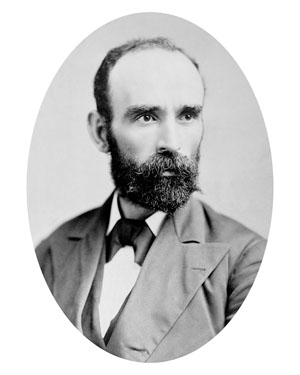
Tenants, renters and local people around the Clogher/Castlebar area of County Mayo were having trouble in, and with, the large estate and lands (640 acres) that were in the possession of a Mr James Fitzgerald-Kenney (pictured, a republican-gamekeeper-turned-Free State-poacher), and let it be known that they needed better rental arrangements and/or, if they grouped together, to purchase the holdings from him, to be divided up fairly between the present tenants, but Mr Fitzgerald-Kenney would have none of it.
A boycott of all dealings with the man was organised, but two of his many employees - a Mr Michael O'Toole and a Mr Martin Ferragher - ignored their neighbours and the boycott, and continued to work for him.
On the 29th May, 1920, when the two 'boycott breakers' finished their days work for Mr James Fitzgerald-Kenney, they went to a local pub, Downey's, in Clogher, for a few pints and, after closing time, were walking home when they were jumped-on by about twenty masked men and beaten up.
Mr O'Toole died that night and his companion, Mr Ferragher, survived until the 17th June, when he died from his wounds.
On the 14th August (1920) five men were 'arrested' by the RIC and brought to 'court' in connection with the incident and two of them - Jeremiah Bourke and Paddy Coleman - were charged with murder and held in Sligo Jail but, on the 7th October that year, both men were released from 'custody' in what has been described as "mysterious Circumstances..."
Mr James Fitzgerald-Kenney died in 1956 in a nursing home in Dublin, and had risen to the top tier of politics in the Free State ; he was 'State Minister for Justice' between 1927 and 1932.
After his death, his 28-room mansion and his lands were sold to a timber company, but the house was destroyed in a fire in 1970. The State Land Commission then took control of the house wreck and the land, and divided it up locally.
==========================
IRA Captain Tom Sheridan (23) (pictured), Drumbrade Company, Ballinagh Battalion, Cavan Brigade, needed extra weapons for his men and, on the 29th May, 1920, he and a few comrades established an ambush position at Kilsallagh, near Ballinagh, County Cavan, to relieve two RIC members of their arms.
When the RIC members arrived they were instructed to surrender but one of them, named Johnson, turned around immediately and opened fire, hitting Captain Sheridan and his brother, Packie.
In the confusion, the RIC escaped and the Volunteers left the scene ; transport was arranged and the wounded IRA men were taken to Dublin ; Captain Sheridan was taken to the Mater Hospital but died there two days later, and his brother was taken to Jervis Street Hospital where he was treated, incognito, for about six weeks.
On release from the hospital, he went 'on the run', as he was now a wanted man.
Incidentally, on the night of the attempted arms procurement operation, the Sheridan family home in Drumcrow was set ablaze by Crown Forces ; Tom and Packie's parents, one sister and two of their brothers were in the house at the time, but all of them managed to escape the blaze.
==========================
ON THIS DATE (29TH MAY) 302 YEARS AGO : BUILT AND 'BURIED' IN LEINSTER HOUSE!
'Kildare House', pictured, (now known as 'Leinster House', and used as an administrative building by Free State political regimes), was built between 1745 and 1748 under the instructions of James Fitzgerald, and against the advice of his colleagues in the 'establishment' of the day.
He was advised by his colleagues that that part of town was 'dangerous and unfashionable' but, so sure was he of his 'standing' within his societal ranks, that he declared that "..wherever I go, fashion will follow me.." ('1169' comment - a statement made for a 'sheep' metaphor, considering that the 'sheep' are still following the inhabitants of that House!)
James Fitzgerald (pictured) was born on this date - 29th May - in 1722, to Robert Fitzgerald (the '19th Earl of Kildare') and 'Lady' Mary Fitzgerald (a daughter of William O'Brien, the '3rd Earl of Inchiquin') and, one presumes, they divided up their time visiting their estates in Waterford and Maynooth, among others, but still managed to find the time to ensure that young Jimmy would become and/or be anointed/appointed to the positions of 1st Duke of Leinster, 20th Earl of Kildare, 1st Marquess of Kildare, 6th Baron Offaly, 1st Earl of Offaly, Viscount Leinster of Taplow and Lord Justice of Ireland (etc!)!
Have to admire their chutzpah and, indeed, their time-management skills, a 'gift' they obviously passed-on to James : at 25 years of age, Jimmy married the 15-years-young 'Lady' Emily Lennox, who was descended from 'King' Charles II and was therefore, obviously (!), a distant fifth cousin of 'King' George III, for it would take some time-management skills to parent the nineteen children that the couple had (Yes! - 19 children ; nine sons and ten daughters!), enough kids, if one were to be cynical about it, to say that the House Staff were kept busy with that task alone!
And James left them to it - he died in Kildare/Leinster House, in 1773, on the 19th of November, at 51 years of age, from 'unspecified causes'.
Exhaustion, probably...!
On the 29th May, 1921, the IRA attacked the Castletownroche RIC barracks in County Cork, resulting in the death of one Black and Tan member and the wounding of one of his colleagues.
There were no rebel casualties.
An IRA Volunteer, Thomas Barry, who later lived in Number 29 Pembroke Road in Ballsbridge, Dublin 4, took part in that operation ; between 1918 and 1919, he served as a Battalion Adjutant in the Cork area.
==========================
On the 29th May, 1921, a Mr John Sullivan-Lynch answered a knock at his halldoor at Castle Cottage, in Carrigrohane, in County Cork.
A number of Volunteers from 'H Company', 1st Battalion, Cork Nunber 1 Brigade, IRA, removed him from the house and drove off with him in their car.
At that time, Mr Sullivan-Lynch worked as a parcel clerk in the local railway station but he was an ex-British soldier, and had done his bit (!) for 'King and Country' with the Connaught Rangers (aka 'The Devil's Own', 2nd and 6th Battalions), the Leinster Regiment (2nd Battalion), and the 'Prince of Wales Leinster Regiment' (Royal Canadians).
He was discharged from the 'Royal Canadians' as 'surplus to requirements' on the 5th March 1919 and, shortly afterwards, got the job at the railway station.
His background was known about in the Carrigrohane area but he was let get on with his new life until a near-neighbour of his, an IRA Volunteer named Patrick O'Sullivan, spotted him repeatedly entering the 'Orderly Room' of the British Army Ballincollig Military Barracks, and mentioned this to two other IRA Volunteers.
The three Volunteers made it their business to keep an eye on him, and again and again he was observed calling in to the 'Orderly Room' ; they notified an IRA Officer, Leo Murphy, who brought the information to the attention of the IRA Brigade leadership.
On the 29th May (1921) he was taken away for questioning in the Aherla area of Cork (IRA Third Battalion area) and, a few days later, handed back to 'H Company'.
He was executed as a spy on the 5th June that year - on the 9th June, his wife was ordered by the IRA to leave County Cork, never to return, and she fled to Belturbet, in County Cavan (she was awarded compensation of £2,650 by the Staters in 1922).
On the 17th July, the IRA's First Southern Division headquarters informed their General Headquarters that... "...John Sullivan-Lynch was executed as a spy on the 5th ult. The sentence was confirmed in the usual way by the Commander. He made a written confession of his guilt before his death..."
==========================
On the 29th May, 1921, as a 12-man patrol of the 'Ulster Special Constabulary' was making its way through Mullaghfad Cross, County Fermanagh(between Fivemiletown and the Monaghan border) gunfire rang out and two of their number - Robert Coulter and James Hall - fall to the ground.
British sources later claimed that Mr Coulter died at the scene, whereas Mr Hall "...was seriously wounded and dragged himself to a nearby house owned by a Sinn Féin member who refused him assistance..". Those sources also claimed that the USC had been ambushed by 40 IRA Volunteers.
Mr Hall also lost his life on that date.
==========================
In late August, 1920, on the eastern outskirts of Cobh, in County Cork, about eight armed IRA Volunteers, under the command of Michael Burke, emerged from around a forge at a quarry, surprising about a dozen armed British soldiers who were casually dismantling a hut once used by their own people.
One of the British soldiers, a Private Joseph Young (of the 'Cameron Highlanders Regiment') was mortally wounded after resisting the Volunteers, who disarmed them, loaded the weaponry into a waiting car and, like it, disappeared into the night.
The blacksmith who owned and operated the forge, John P. O'Connell (59), who was the President of the local (Cobh) GAA club, had nothing to do with the August 1920 arms procurement operation.
But he did own and operate the forge.
On the 29th May, 1921, Mr O'Connell and a friend were walking on the Harbour Row in Cobh, and three British 'Cameron Highlander' soldiers were walking towards them. As they were just about to pass each other, a Captain Gordon Duff, who knew that Mr O'Connell owned the forge, insisted that Mr O'Connell should salute him, but the GAA man refused the 'offer'.
With that, Captain Duff drew his revolver and shot Mr O'Donnell dead.
IRA Officer Michael Leahy stated later that Mr O'Connell.. "...had no part at all in the attack on the Camerons at the quarry. The action of the British officer was obviously done by way of getting his own back for the shame brought on his regiment by the coup brought off by the Cobh Volunteers a year previously..."
==========================
On the 29th May, 1921, as he was entering his lodgings on Anglesea Street in Dublin, a barworker, Patrick Smith, was approached by three men and told to walk with them to Dame Street. As the four men were making their way there, one of them pulled out a revolver and shot Mr Smith dead.
No information is available on Mr Smith's political affiliations, if any.
==========================
'HATE SPEECH' LEGISLATION IN IRELAND IN 1918...
'A WANTED MAN.
Fruitless Police Search in County Kildare.
Naas Meeting and After.
'The police in County Kildare are still in search for Mr. Art O'Connor (pictured) on some charge under the Defence of the Realm Act, but up to the present have not succeeded in tracing him.
Armed with a warrant for the arrest of Mr. O’Connor, in consequence, it is said, of a speech recently delivered by him, a number of police in two motor cars were pulled up at Celbridge police barracks on Friday evening, where they remained for a considerable time. A Sinn Féin meeting was announced to be held in Celbridge that evening, and the presumption is that the police, with whom were the County Inspector and District Inspector, expected Mr. O’Connor would attend the meeting, after which the arrest could be easily effected.
Somehow word got abroad of the object of the constabulary activity, and the police not finding Mr. O’Connor in the town afterwards motored to his residence, Elm Hall, Hazelhatch. There they discovered that Mr. O'Connor was not at home, and having made a search they returned.
It is now stated that while the police were in Celbridge Mr. O'Connor visited the town, and was actually within some yards of those who were inquiring for him, but crossing the Liffey bridge, unseen by them, he reached his home, again getting away from there in a motor before the police searched.
Another Escape...
Mr. O'Connor attended a meeting at Naas, on Sunday, and delivered an address. He was received with much cheering, and, in the course of his speech, declared his allegiance to Ireland and the men who were deprived of their liberty, whose only crime was love of country, and claimed his own God-given right to existence and freedom in his own country.
During his speech several policemen were present, and Mr. Supple, County Inspector, R.I.C., happening to drive past, in a trap, pulled up on seeing Mr. O'Connor and consulted with some of his men, some of whom were observed to ride in different directions in bicycles.
Meanwhile, a double file of Volunteers lined up from the rear of the platform to Church lane, adjoining, and when Mr. O’Connor had finished speaking, and while great cheering again broke out, he stepped off the platform, and, accompanied by half a dozen young men, passed through the file of Volunteers, and walked up the laneway. Here he was awaited by some others, who, it is presumed, conveyed him elsewhere, but he was traced no further.
Searching in Vain...
Meanwhile a diversion was caused by a rush towards the corner of the Protestant Church adjoining, and here an impenetrable screen of men with bicycles opposed a number of policemen who believed that their quarry was behind. Excitement rose high, but no conflict occurred, and a few minutes later found the police search in vain for their man...'
From 'The Freeman's Journal' newspaper, 29th May 1918 ; 'Hate Speech' legislation...
'AN OLD AND UNFAIR CRITICISM...'
From 'The United Irishman' newspaper, April 1955.
While it is one thing to disagree with a person's point of view, and I usually disagree with Aknefton's, yet it is quite another thing to find such a conservative writer historically inaccurate.
It places futher reading of this commentator's work under suspicion, though I do not question that the statement was made in good faith.
To answer it we have only to quote Sceilg's words in 'Stepping Stones', dealing with 1925 and 1926 -
"In accordance with a resolution from the Rathmines Cumann, calling on the Executive Committee to formulate within three months a national, economic and cultural programme, the Standing Committee instantly selected a sub-committee, Father O'Flanagan being Chairman.
I, Secretary, to draft a national programme.
We worked at it assiduously, but Mr de Valera never once showed the slightest interest in it..."
(MORE LATER.)
ON THIS DATE (29TH MAY) 140 YEARS AGO : A "MISUNDERSTANDING" OCCURS BETWEEN OSCAR AND CONSTANCE!
"The proper basis for marriage is a mutual misunderstanding.."
- Oscar Wilde (pictured, with his wife, Constance Lloyd) was born on the 16th of October, 1854, into a middle-class family who lived at Westland Row in Dublin : his father, 'Sir' William Wilde, was a doctor and his mother, who was known to be 'unconventional' for the times that were in it - Jane Francesca Agnes (née Elgee aka 'Lady' Wilde ['Speranza of The Nation']) - was a poet who mixed in artistic and intellectual circles, and was left-leaning in her political beliefs.
The child was christened 'Oscar Fingal O'Flahertie Wills Wilde' : Oscar Wilde.
Oscar was educated in Trinity College in Dublin and then in Magdalen College in Oxford, England, and won a 'double-first' in 'Mods' (one of the hardest examinations ever devised!) and the Newdigate Prize for Poetry but, nonetheless, had to revert to lecturing and freelancing for periodicals to make a living.
However, he persevered and, in his mid-30's, made a name for himself with 'The Happy Prince', followed three years later with 'Lord Arthur Savile's Crime' and, in that same year, 'A House of Pomegranates'.
He then took the world by storm and ensured for himself a place at the top table of literary giants with his works 'Lady Windermere's Fan', 'A Woman of No Importance', 'An Ideal Husband' and 'The Importance of being Earnest'.
But 'life' intervened - being, as Oscar Wilde was, a queer man in the Victorian era brought with it even more dangers than for a heterosexual who 'played the field' : his affair with (and letters to) his boyfriend led to him serving two years in prison, after which he wrote 'The Ballad of Reading Gaol' -
"Dear Christ! the very prison walls
Suddenly seemed to reel,
And the sky above my head became
Like a casque of scorching steel ;
And, though I was a soul in pain,
My pain I could not feel."
('The Ballad of Reading Gaol', by Oscar Wilde, written after his release from Reading prison on the 19th May 1897, at 43 years of age)
He then went into exile and died, three years later, in Paris, on the 30th November 1900 ; he was then sixteen years married to Constance Lloyd (they had that "misunderstanding" on the 29th May, 1884 - 140 years ago, on this date) and, while they were on 'good terms', their marriage was a strained one...
SO, FAREWELL THEN, CELTIC TIGER....
It had to happen, sooner or later.
Most of the pundits and economists were too busy singing the Celtic Tiger's praises to notice, but a few critical observers worried all along about the weaknesses of a boom economy that depended so much on a few companies from one place - the United States.
By Denis O'Hearn.
From 'Magill' Annual 2002.
Even they mostly provided routine things like packaging and printed materials.
If we account for the fact that two-thirds of 'local purchases' in the electronics sector consisted of one foreign company buying parts from another, then TNC's were buying a substantially smaller share of their supplies from Irish firms as the 'Celtic Tiger' developed.
If the idea that foreign companies are 'rooted' in Ireland is a myth then the 'Celtic Tiger' growth strategy has always been vulnerable and, possibly, unsustainable.
For most Irish people, however, the main immediate worry is not what happens to Gateway or Dell ; rather, the main worry is what happens to services and construction, where the jobs were created...
(MORE LATER.)
ON THIS DATE (29TH MAY) 226 YEARS AGO : COMMUNIQUÉ RE FATHER MURPHY OF BOOLAVOGUE ISSUED.
'One of a tenant farmer’s five children, John Murphy (pictured) was born near Ferns in 1753. He was educated at a hedge school and by a local parish priest, Dr. Andrew Cassin SJ, who had a great influence on him. He grew up speaking Irish and English and later learned Spanish, Latin and Greek. A splendid horseman, he excelled in athletics and handball. He was described as "a good-looking man, stout but rather low-sized and well built".
At that time, students for the priesthood were ordained before they went to study at colleges in continental Europe, as seminaries were still forbidden by penal laws in Ireland. John Murphy was ordained by Bishop Sweetman of Ferns before leaving to study at a Dominican college in Seville in southern Spain in 1780. Sweetman was an ardent nationalist who had once been imprisoned in Dublin Castle on a charge of gunrunning.
Returning home five years later, Fr. Murphy was made curate in Kilcormuck, better known as Boolavogue, where he had a thatched chapel. Catholic churches were forbidden in some Wexford parishes by local landlords. He lodged with a tenant farmer and travelled round the parish on horseback.
Bishop Sweetman was meanwhile succeeded by Dr. James Caulfield, who held very different political views. He stated - "Loyalty to the good gracious King George III ; submission to His Majesty’s government ; and observance of the laws are to be a religious and indispensable duty to every Catholic."

A rebel band set the heather blazing and brought the neighbors from far and near
Then Father Murphy from old Kilcormac spurred up the rock with a warning cry
"Arm, arm," he cried, "For I've come to lead you, for Ireland's freedom we'll fight or die..."
BEIR BUA...
The Thread of the Irish Republican Movement from The United Irishmen through to today.
Republicanism in history and today.
Published by the James Connolly/Tommy O'Neill Cumann, Republican Sinn Féin, The Liberties, Dublin.
August 1998.
('1169' comment - 'Beir Bua' translates as 'Grasp Victory' in the English language.)
ROBERT EMMET AND THE IRELAND OF TODAY...
"I think I can speak for the young men of the Volunteers.
So far, they have no programme beyond learning the trade of arms ; a trade which no man of Ireland could learn for over a hundred years past unless he took the English shilling.
It is a good programme ; and we may almost commit the future of Ireland to the keeping of the Volunteers.
I think I can speak for a younger generation still : for some of the young men that are entering the National University, for my own pupils at St. Enda's College, for the boys of the Fianna Eireann.
To the grey-haired men whom I see on this platform, John Devoy and Richard Burke, I bring, then, this message from Ireland that their seed-sowing of forty years ago has not been without its harvest, that there are young men and little boys in Ireland to-day who remember what they taught and who, with God's blessing, will one day take —or make - an opportunity of putting their teaching into practice..."
(MORE LATER.)
FROM 29th MAY 2019 - A FEW WORDS WE WROTE ABOUT MICHAEL DAVITT...
MICHAEL DAVITT TV PROGRAMME, TG4, 9.30PM, WEDNESDAY 29TH MAY 2019.
Michael Davitt was born into poverty in Straide, Mayo, on the 25th of March, 1846 - at the time of the forced hunger/attempted genocide known as 'An Gorta Mór' (more accurately described as an attempted genocide) - was the second of five children, and was only four years of age when his family were evicted from their home over rent owed and his father, Martin, was left with no choice but to travel to England to look for a job.
Martin's wife, Sabina, and their five children, were given temporary accommodation by the local priest in Straide. The family were eventually reunited, in England, where young Michael attended school for a few years. His family were struggling, financially, so he obtained work, aged 9, as a labourer (he told his boss he was 13 years old and got the job - working from 6am to 6pm, with a ninty-minute break and a wage of 2s.6d a week) but within weeks he had secured a 'better' job, operating a spinning machine but, at only 11 years of age, his right arm got entangled in the machinery and had to be amputated.
There was no compensation offered, and no more work, either, for a one-armed machine operator, but he eventually managed to get a job helping the local postmaster. He was sixteen years young at that time, and was curious about his Irish roots and wanted to know more - he learned all he could about Irish history and, at 19 years young, joined the Fenian movement in England. Two years afterwards he became the organising secretary for northern England and Scotland for that organisation and, at 25 years of age, he was arrested in Paddington Station in London after the British had uncovered an IRB operation to import arms. He was sentenced to 15 years imprisonment, on a 'hard labour' ticket, and served seven years in Dartmoor Prison in horrific conditions before being released in 1877, at the age of 31, on December 19th.
Almost immediately, he took on the position as a member of the Supreme Council of the IRB and returned to Ireland in January 1878, to a hero's welcome. At the Castlebar meeting he spoke about the need "...to bring out a reduction of rack-rents..to facilitate the obtaining of the ownership of the soil by the occupiers...the object of the League can be best attained by promoting organisation among the tenant-farmers ; by defending those who may be threatened with eviction for refusing to pay unjust rents ; by facilitating the working of the Bright clauses of the Irish Land Act during the winter ; and by obtaining such reforms in the laws relating to land as will enable every tenant to become owner of his holding by paying a fair rent for a limited number of years..."
The new organisation realised that they would be well advised to seek support from outside of Ireland and, under the slogan 'The Land for the People', Michael Davitt toured America, being introduced in his activities there by John Devoy and, although he did not have official support from the Fenian leadership (some of whom were neutral towards him while others were suspicious and/or hostile of and to him) he obtained constant media attention and secured good support for the objectives of the Land League.
Michael Davitt died at 60 years of age in Elphis Hospital in Dublin on the 30th of May 1906, from blood poisoning - he had a tooth extracted and contracted septicaemia from the operation. His body was taken to the Carmelite Friary in Clarendon Street, Dublin, then by train to Foxford in Mayo and he was buried in Straide Abbey, near where he was born.
'Michael Davitt - Radacach : The story of the land activist'. (...write-up here.)
Thanks for the visit, and for reading!
Sharon and the team.
BROKEN IRELAND...
Broken, damaged, twisted - but still salvageable!
...as was the life of this man who, in the early 1920's, having 'served King and Country' in three different British Army regiments before they removed him from the payroll as being "surplus" (their description - PTSD/'damaged goods', maybe...?), settled in Ireland, got married, got a job with a railway company but...
...couldn't quite give up his old ways and old lifestyle, which brought him to the attention of the rebels.
Which didn't work out well for him.
We're putting the finishing touches to an 18-part post, which will be comin' down the tracks (!) at ya on Wednesday, 29th May 2024.
Serious - deadly - misdirection, misrepresentation and impersonation by the Crown Forces in Ireland in 1919/1920, scab workers confronted by masked men in the 1920's, two brothers on an IRA operation in the 1920's which went wrong, the stark difference between the 'landed gentry' and their 'tenants' in 18th Century Ireland where the latter could barely feed themselves but the former could afford to house, feed and nurture - in this case - 19 children...
Hope to meet y'all back here on Wednesday, 29th May, 2024 - GRMA agus 'Thanks' for your visit now : see ya later.
Sharon and the team!
EXCLUSIVE !! WE NAME THE LOSERS IN THE 7TH JUNE 2024 COUNCIL AND EUROPEAN ELECTIONS...
..YOU!
There are thousands of candidates that would like you to vote for them on the 7th June 2024 to ensure that they stay as financially comfortable as they are, or become ever wealthier, or obtain a position through which they can sell their political soul for the opportunity to become wealthy.
In the council elections alone, the candidates seeking re-election and the wannabes are trying to convince you to gift them one of the seats in councils throughout the State.
The 'winners' will receive a seat in a political institution which purports to represent the views of 'the electorate' but which, in reality, represents the view of the highest bidder.
We (again) name 'the losers', regardless of who 'wins' - YOU, the voters!
Or, at least, those of you who claim your ballot and fill it in in the manner that is expected of you ie the State political establishment expect you to vote for State establishment candidates, regardless of whether those candidates are Irish or not, or whether they are men dressed as women or vice versa.
But there is a way by which you can claim your ballot, fill it in - and exclude yourself from the 'Losers Circle' : by purposely spoiling it if you haven't got the opportunity to vote for a candidate that values our Irishness - our culture, our traditions and our heritage.
With that in mind, a group of concerned citizens (now representing between 350 and 400 voters) in the part of Clondalkin, Dublin, that I live in, got together, informally at first, then in a more structured manner, had a chat and publicly issued a 'Wish List' to any interested candidates.
That 'Wish List' can be read here and, before the election (7th June 2024) I'll let you know how we got on (we have our final [?] meeting on the 5th).
If, however, you do decide or are still determined to tell them all to feck off, write a 'message' on your ballot paper, such as 'NOTA', or something stronger, and place it in the ballot box.
If enough of us do it, it will register with the 'powers-that-be' and, hopefully, force them to recognise that enough of us are not willing to participate in a faulty political system which, among other issues, under false "international obligations", compels us to house, feed and medically treat etc the whole world, and in which morally and politically-bankrupt 'blank canvas' party people do the bidding of their party bosses in the hope that, someday, they, too, will become party bosses.
'Fool me once, shame on you, fool me twice, shame on me' - don't get fooled (again) - vote 'NONE OF THE ABOVE' in the elections on Friday, 7th June, 2024, if you suspect the candidate is only seeking to feather his/her own nest, offering nothing in return : you don't owe anything to those candidates or the foreigners they may be promoting, so give them just that : nothing.
On the 22nd May, 1920 (listed elsewhere as the 16th), following the advice of the British 'Fisher Report', the staff in their main base in Ireland, Dublin Castle, were given a bit of a shakin' and a shufflin' by Westminster!
A Mr John Anderson (pictured), the '1st Viscount Waverley' (!), arrived in Dublin from what he would have regarded as 'the Mainland', to take up his new post as 'Joint Under Secretary', a position he shared with a Mr James MacMahon, a former 'Inspector General' of the RIC.
Mr Anderson was, by all accounts, a cold customer of aloof characteristics, a 'jobsworth', and set to work immediately : he instructed his 'Assistant Under Secretaries' (!), Andrew Cope and Mark Sturgis, to arrange a meeting for him with the then 'Inspector General' of the RIC, a Mr TJ Smith.
The meeting was arranged for that same day and, at it, the new bossman, Mr Anderson, was told in no uncertain terms by Mr Smith that he dreaded each new day because "he was in daily fear either of wholesale resignations or his men running amok.." due to the pressure from the Irish rebels!
A right 'Baptism of Fire' for poor Mr Anderson, who had to report the information back to his bossmen in Westminster.
Had we been around then, Mr Anderson, I'm sure we would have said that we feel your pain...
==========================
In Ballinrobe, in County Mayo, on the 22nd May, 1920, two Irish republicans, Kevin O'Shiel and Art O'Connor, presided over a court case involving a land dispute between, on the one side, a Mr Hyland and a Mr Murphy, who were renting the 'Fountain Hill' farm (on behalf of the Magdalene Asylum in Galway) and, on the other side, nine tenants who were occupying part of the land.
Mr Hyland and Mr Murphy won the case but the tenants refused to accept the court ruling and stayed where they were.
The IRA were sent in to enforce the court ruling and a number of the tenants were arrested and transported to a small island in Lough Corrib, County Galway, an 'open air' (!) prison.
The tenants relented and the court ruling came into effect.
Judge O'Sheil later recalled that particular case, stating that "no event did us, or our courts, more good.." than that judgement, as it secured further recognition for the Republican Courts from the citizens, ensuring that the decisions of the courts were deemed to be acceptable (sometimes reluctantly!) and the Judge, as an acknowledged land arbitration commissioner, settled about another seventy such cases over the following three months or so, with each case being publicised in the newspapers of the day.
==========================
On the 22nd May, 1921, Pope Benedict XV wrote a 'middle-of-the-road' letter in relation to British political and military interference in Irish affairs, in which he stated...
"...we do not see how the bitter strife can profit either of the parties, when property and homes are being ruthlessly and disgracefully laid waste, when villages and farmsteads are being set aflame...when, on both sides, a war resulting in the deaths of unarmed peoples, even of women and children is carried on...the English as well as the Irish (must) calmly consider some means of agreement..."
Westminster was disappointed, to put it mildly, with that statement, as they had been working away in the background to convince the Vatican to condemn the Irish republican struggle, a condemnation which would have carried weight in Ireland.
The British administration viewed the Pope's sentiments as a PR disaster for them, and their 'Foreign Office' all but condemned it, claiming that it placed...
"...His Majesty's Government in exactly the same category as the authors of arson and cold blooded murder..(it puts us) and the murder gang on a footing of equality.."
Irish republicans, however - then and now - were and are of the opinion that it was a lost opportunity by Rome, which should have availed of the situation to completely close down the 'moral right' of any imperialist power to interfere in the political and societal business of any other country.
==========================
On the 22nd May, 1921, IRA Volunteer Patrick O'Brien was on active service with his comrades, re-opening a road trench which had been filled-in by British troops.
There was an explosion, and Volunteer O'Brien died at the scene.
The IRA investigated what had happened and discovered that the British had booby-trapped the trench ; they had place a Mills bomb in the trench, about a foot under the surface, and attached a length of wire from its pin to a rock.
When the rock was lifted, it pulled the pin from its socket and the bomb exploded.
Volunteer O'Brien had been working in America, aware of the on-going struggle in his home country, and decided to return home to live with his mother and join the local IRA Company in Coolcappa, in County Limerick.
The British simply stated, after they mentioned that Coolcappa, in Limerick, was one of the areas that they had recently imposed martial law in, that "Patrick O'Brien's death was due to shock, hemorrhage and exposure, following injuries received by misadventure, probably caused by falling into a trench..."
Westminster spat on Volunteer O'Brien when he was alive, and spat on him again after they killed him.
RIP Volunteer Patrick O'Brien.
==========================
On the 22nd May, 1921, the East Waterford Brigade of the IRA, consisting of three Battalions (over 700 Volunteers) held a meeting at which Brigade Officers passed a vote of no confidence in their Officer Commanding, Paddy Paul (pictured, in New York, in 1970) and elected Michael Power as O/C instead.
However, when they told GHQ in Dublin of the change of O/C, they got no support and Paddy Paul was confirmed as the O/C, as far as Dublin was concerned.
The Volunteers obviously felt uneasy about Paddy Power who, shortly after joining the IRA, was appointed a Company Instructor, then a Battalion Instructor and was quickly advanced again to the position of Brigade Officer Commanding (he was eventually replaced in that position by Volunteer Seán Matthews and, incidentally, Paddy Paul ended his military career as an artillery officer in the Free State Army).
==========================
On the 22nd May, 1921, in the 'British House of Commons' (sic), 'Sir' Hamar Greenwood, '1st Viscount Greenwood' (pictured) repeated, again, his promise to... "...hunt down the murder gang in Ireland and to pluck the last revolver out of the last assassin's hand.."
'Sir' Greenwood died in 1948, at 78 years of age, having never kept that promise.
==========================
On the 22nd May, 1921, at about 11pm, the Athy (County Kildare) Company of the IRA made an unsuccessful attack on the RIC Barracks, which was located in the former British Army Barracks in Barrack Lane, Athy (those enemy forces were last holed-up in White's Castle).
The RIC turned a machine gun on the rebels, who continued to attack for about half an hour, and withdrew with no casualties just as the RIC discharged Verey Pistols into the air, calling for assistance.
==========================
'AN OLD AND UNFAIR CRITICISM.'
From 'The United Irishman' newspaper, April 1955.
I was amazed to read Aknefton's article under the above heading in 'The Irish Times' of 19th March 1955.
It stated -
'Birth of Fianna Fail.
When, around 1927, Eamon de Valera and his lieutenants decided to leave Sinn Féin - because inter alia that organisation did not appear to be sufficiently concerned with the economic wellbeing of the Irish people - they decided to found a new body of their own, Fianna Fáil.
This organisation attracted the normal and natural leadership of the working people, both from the agricultural and industrial communities.
Now, it is interesting to remember that, at an historic Ard Fheis of Fianna Fáil - I believe it was either the first or the second - held in the Rotunda, Dublin, quite a number of resolutions dealing with purely economic problems were moved and discussed.
Some of them were even of an ultra-leftist vintage yet, out of more than 1,000 delegates, roughly one-third of the assembly supported the left approach. In the light of current political affairs, it is important to remember that the Ard Fheis had its quota of clergymen delegates...'
(MORE LATER.)
ON THIS DATE (22ND MAY) 92 YEARS AGO : DEATH OF A 'POACHER-TURNED-GAMEKEEPER' WHO 'TURNED' THE RIGHT WAY.
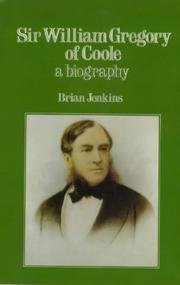
Isabella Augusta Persse Gregory ('Lady Gregory', pictured), was born on the 15th March, 1852 (the youngest daughter of Dudley and Frances Presse), in a 6,000-acre estate (which, incidentally, was mostly destroyed in a fire in 1921) known as Roxborough House, near Loughrea in County Galway, and was schooled at home by a nanny, Mary Sheridan, who obviously passed-on her interest in Irish history to her pupil.
On the 4th March, 1880, at 28 years young, Isabella married 'Sir' William Henry Gregory who was 63 years of age and 'owned' a large estate at Coole Park, near Gort, in County Galway, thus conveying on her the title 'Lady'.
The couple had one son, Robert, born on the 20th May, 1881, who was killed while piloting a warplane during the 'First World War', a death marked by WB Yates in two poems - 'An Irish Airman Foresees His Death' and 'In Memory of Major Robert Gregory'.
As a 'Lady of Leisure' who now found herself in the 'Big House' she availed of the large library and, when not reading, accompanied her husband on business trips throughout the world.
Her education, the library and her foreign travels sparked within her a love of the written word, and she quickly became a published author.
Her husband died when she was 41 years of age but she continued to live in 'the Big House', where her interest in all things Irish was nurtured, to the point that she practically converted the house into a 'retreat' for those who, like her, were smitten by Ireland and its troubled history - Edmund John Millington Synge, William Butler Yeats (and his brother, Jack, a well-known painter), George Bernard Shaw (who described her as "the greatest living Irishwoman") and Sean O'Casey were amongst those who visited regularly and, indeed, she was believed to have had romantic connections with the poet Wilfrid Blunt and a New York lawyer, John Quinn.
Despite her privileged lifestyle or, indeed, perhaps due to it, as it afforded her the time to 'look within her soul', Isabella Augusta Persse Gregory, who had a regular 'audience' with the 'Upper Class' of the day, loudly declared to all and sundry that it was "..impossible to study Irish history without getting a dislike and distrust of England..".
A 'poacher-turned-gamekeeper' but, unusual in our history, one who 'turned' the right way.
She died in that 'Big House' on the 22nd May 1932 - 92 years ago on this date - at 80 years of age, and is fondly remembered by those of us who share her convictions and agree with her "..impossible to study.." declaration.
Incidentally, the 'Big House' scenario still exists in Ireland today, and continues to be a topic of heated conversation, and will hopefully remain so after the British withdraw, politically and militarily, from Ireland.
SO, FAREWELL THEN, CELTIC TIGER....
It had to happen, sooner or later.
Most of the pundits and economists were too busy singing the Celtic Tiger's praises to notice, but a few critical observers worried all along about the weaknesses of a boom economy that depended so much on a few companies from one place - the United States.
By Denis O'Hearn.
From 'Magill' Annual 2002.
If practically all of the economy's profits are concentrated in the foreign sector, what will be left as an investment source if they disinvest from Ireland, as they did in the 1980's?
Economists and politicians have argued that this is unlikely to happen ; they say that the foreign sector is much more 'rooted' in the Irish economy today than it was in the 1980's.
This should make it harder for them to pick up and leave, yet this idea of being 'rooted' may be mistaken. US computer firms are not rooted in Ireland, they are rooted to each other within Ireland.
Dell buys computer parts from other American companies that happen to be in Ireland, but neither of them buys much from local Irish companies ; on the contrary, a 1999 study of 2,667 Irish companies by 'Enterprise Ireland' found that only 174 supplied transnational corporations (TNC's)...
(MORE LATER.)
ON THIS DATE (22ND MAY) 219 YEARS AGO : BIRTH OF A 'YOUNG IRELANDER'.
'TO GENERAL JAMES SHIELDS, UNITED STATES SENATOR, ETC.
DEAR SIR,
In dedicating to you this narrative, I have been influenced by one consideration only. I have no title to your friendship. I cannot claim the most remote affinity with your career in arms. There is nothing connected with this sad fragment of history, either in fact or hope, to suggest any association with your name or achievements. But as my main object is to show that Ireland’s failure was not owing to native recreancy or cowardice, I feel satisfied that of all living men, your position and character will best sustain the sole aim of my present labour and ambition.
In past history, Ireland holds a high place ; but her laurels were won on foreign fields, and the jealous literary ambition which raised adequate monuments to these stormy times denied to her swords the distinction they vindicated for themselves in the hour of combat. The most brilliant, unscrupulous and daring historian of France degraded the niggard praise he accorded them by making it the medium of a false and contemptible sneer. “The Irish soldier,” says Voltaire, “fights bravely everywhere but in his own country.”
Without pausing here to vindicate that country from such ungrateful slander, it is enough to say that you were not placed in the same unhappy position as the illustrious exiles from the last Irish army — soldiers of fortune in the service of a foreign prince. You were a citizen of this free Republic, and a volunteer in its ranks ; it was your country, and you and your compatriots who followed the same standard did no dishonour to those who were bravest among the brave on the best debated fields in Europe.
In the wreck of every hope, all who yet cherish the ambition of realising for Ireland an independent destiny, point to your career as an encouraging augury, if not a complete justification for not despairing of their country. It is because I am among those that I have claimed the honour of inscribing your name on the first page of this, my latest labour in her cause.
I remain, dear Sir,
Very respectfully and sincerely yours,
MICHAEL DOHENY.
New York, Sept. 20, 1849.
'Who was Michael Doheny? For most of us he was the author of the neglected work 'The Felon’s Track'. For some he was the man who fled from the fiasco in Ballingarry in that bad summer of 1848 to walk 150 miles across Munster to little place called Dumanway, where he hoped to raise help in his efforts to escape from Ireland. Some others will know him as the writer of such hyperbolic verses as :
'I’ve tracked for thee the mountain side,
And slept within the brake,
More lonely than the swan that glides,
O’er Lua’s fairy lake...'
And for those with nationalist interests, he will be known as one of the prime movers in the 1840’s Confederacy in Ireland, and later one of the leading founders, in the United States, of the Fenian movement...' (from here.)
The Irish 'dissident', Michael Doheny, was born on this date (22nd May) in 1805 - 219 years ago - near Fethard, in County Tipperary, and became known as a poet and a writer. He was a member of the 'Young Irelanders', and was instrumental in establishing the 'Emmet Monument Association' in America.
After a lifetime in the service of Ireland, he died on the 1st April in 1863, aged 58, in New York, and is buried in Calvary Cemetery, in Maspeth and Woodside, Queens, in New York.
'What fate is thine, unhappy Isle,
When even the trusted few
Would pay thee back with hate and guile,
When most they should be true!
’Twas not my strength or spirit quailed,
Or those who’d die for thee -
Who loved thee truly have not failed,
A cuisle geal mo chroidhe!'
BEIR BUA...
The Thread of the Irish Republican Movement from The United Irishmen through to today.
Republicanism in history and today.
Published by the James Connolly/Tommy O'Neill Cumann, Republican Sinn Féin, The Liberties, Dublin.
August 1998.
('1169' comment - 'Beir Bua' translates as 'Grasp Victory' in the English language.)
ROBERT EMMET AND THE IRELAND OF TODAY...
"The fathers and mothers of Ireland should often tell their children that story of Robert Emmet and that story of Anne Devlin.
To the Irish mothers who hear me I would say that when at night you kiss your children and in your hearts call down a benediction, you could wish for your boys no higher thing than that, should the need come they may be given the strength to make Emmet's sacrifice, and for your girls no greater gift from God than such fidelity as Anne Devlin's.
It is more than a hundred years since these things were suffered ; and they were suffered in vain if nothing of the spirit of Emmet and Anne Devlin survives in the young men and young women of Ireland.
Does anything of that spirit survive?
I think I can speak for my own generation.
I think I can speak for my contemporaries in the Gaelic League, an organisation which has not yet concerned itself with politics, but whose younger spirits are accepting the full national idea and are bringing into the national struggle the passion and the practicalness which marked the early stages of the language movement..."
(MORE LATER.)
ON THIS DATE (22ND MAY) 103 YEARS AGO : LAST KNOWN DAY ON EARTH OF A BRITISH 'RFAIO' IN IRELAND.
'A British Army Officer (2nd Lt Seymour Livingston Vincent) disappeared, presumed killed, in County Cork.
Casualty of the Great War, Captain Vincent served with the Army Educational Corps - he "disappeared at Fermoy", while working for the Intelligence services*, presumed abducted and murdered (sic) by the IRA - body exhumed 1926...originally of the 1/13th London Regiment (Kensingtons) (he) was evacuated from Le Havre on 5th July 1916 suffering from shell shock and shrapnel wounds to the right foot and left arm. He returned to France in May 1917 and served in Salonika with the 82nd Company, Machine Gun Corps. He was was born in 1890 and lived in Loughton, Essex.
He was seconded to the 168th Machine Gun Company on 16th March 1916. He died in strange circumstances in May 1921.
He had been transferred to the 2nd Brigade, RFA, in December 1920 and had been serving at Fermoy in County Cork. He had applied for a transfer to the Army Educational Corps (because) before the war he was a teacher, and had then asked to resign his commission...' (from 'The British Wartimes Project' compilation).
The 22nd May 1921 - 103 years ago on this date - was his last known day on Earth ; he disappeared without trace on the 23rd.
It was not until an anonymous letter was sent to the British Government in June 1924 containing details of the burial of a British officer in Lenihans Bog, Glenville, County Cork, that further investigations took place.
At the time of his disappearance, the Colonel commanding the 16th Infantry Brigade, based at Fermoy, in Cork, basically accused Mr Vincent of lying about his intentions of going on leave but, within a week, another report, regretting several errors in the first, was issued, which noted that he had appeared somewhat disorientated before going on (approved) leave.
The report stated that, five days after he left, three members of the 2nd Brigade of the IRA raided Fermoy Station and broke into the office there, taking various items from Mr Vincents luggage, including a service revolver.
Although the RIC were informed, nothing was ever discovered about his whereabouts.
It is thought that he, and possibly another man, were killed by the IRA and buried at Lenihans Bog.
Mr Vincents body was later re-interred in Glenville Church of Ireland, Glenville, County Cork.
*The IRA found a notebook in Royal Field Artillery Intelligent Officer Vincent's pocket in which he had listed the contact details of locals that were opposed to the struggle for independence - he was gathering intelligence on where 'friendly houses' were located and probably attempting to convince the local 'friendlies' to forward any information in connection with the 'dissidents' on to him.
As a teacher by profession, his was a lesson hard learned.
ON THE 22ND MAY 1922...
...the Red Flag was hoisted and about 100 men fell-in behind it in Naas, County Kildare.
They formed into lines and marched to the Courthouse and the local County Council office, calling for fair play for the unemployed in society and, when they reached the Council office, some of their number entered the building and insisted that a resolution be proposed and passed in support of their requirements, which it was.
Unfortunately, the timing was not the best for them, as other issues were taking centre stage...
==========================
A Mr John McLarnon was working in the Midland Railway Station in Belfast when he was shot dead.
A Mr Charles McMurty was also shot dead on that date, and a Mr George Lawson and a Mr Thomas Boyd were shot dead.
A Mr Jack O'Hare was jumped on by a loyalist gang near the Albert Bridge in Belfast and was then thrown into the River Lagan, in full view of the RIC, who did not intervene.
A Mr James Brady was also shot dead on that same date.
==========================
The Church of Ireland leadership in Ireland were anxious about their members being unfairly targetted in any new Irish Free State and requested a meeting with Michael Collins to discuss the matter.
Mr Collins assured them that the policy of not 'choosing enemies' because of their religious beliefs would continue, adding - "Ireland required the services of all of her sons of every class and creed.."
Except, apparently, those that still wanted the British removed from Ireland, politically and militarily.
==========================
A Mr Joseph Ballantine (52) was in the process of removing furniture from his home in Raphoe, in County Donegal, when he answered a knock at his door.
He opened the door to be met by three men and was shot in the stomach ; he died from his wound.
He was an ex-RIC member.
==========================
On the 7th April, 1922, 'Article 23B of the Special Powers Act' (which, among other British injustice 'laws', allowed for internment in six of our counties) was brought into force and, on the evening of the 22nd May that year and the morning of the 23rd, over 200 nationalist/republican men were 'arrested' by Crown Forces.
Inside of four months, 446 men were interned and an estimated 728 men were detained between May 1922 and the end of 1924.
In what was an opportunistic operation rather than an authorised IRA 'job', a Mr William Twaddell (a draper by profession), a unionist MP for the Woodvale area of Belfast, was assassinated in Garfield Street, off the Royal Avenue.
==========================
Four (Catholic) homes on the Magherafelt side of Desertmartin in County Derry were attacked, with one being burnt to the ground and the others shot-up with some of the occupants receiving injuries.
Days afterwards, nationalists/republicans in the area received letters 'ordering' them to leave the area.
==========================
At a meeting of Free State Army officers, dissatisfaction was expressed with how their army was progressing in the 'Unity Talks' being held between it and the IRA and, such was the level of angst within the Staters, that Free State General Jeremiah Joseph (JJ) 'Ginger' O'Connell tendered his resignation letter on the 23rd, but it was not accepted by his superiors.
Mr O'Connell had had a narrow escape a few months previously, when he was held hostage by the IRA -
'The republicans knew that 'Ginger' was valued by Collins and his renegades - he was one of the few that eagerly conveyed the 'cancel-the-Rising'-order from Eoin MacNeill in 1916 and both Collins and Mulcahy regarded him as a safe pair of hands.
Collins's political and military bosses in London were notified about 'JJ Ginger' being held in republican custody and made it clear to Collins that if he and his Free State colleagues didn't take steps to remove the republicans from the Four Courts, they would...' (From here.)
The Ginger lad (!) survived both the IRA and the Staters, and died on the 19th February, 1944, in the Richmond hospital, in Dublin, having suffered a heart attack.
==========================
Thanks for the visit, and for reading!
Sharon and the team.
Meself and the team are working on a 20-piece blog post for Wednesday, 22nd May 2024, but sure we'll probably have another two or three items to add to it between this and then (...that's 'cause they can't shut me up!)
And, as there are local council/corporation and EU elections due to be held in this State on Friday, 7th June 2024, we'll have a few paragraphs-worth to say about that, including - and this is an EXCLUSIVE!!! - (thanks to our combined experience and connections : ya wha', Shar...?!) we'll be telling you who the winners and losers are!
So check-in with us on Wednesday 22nd and then off with ya to the bookies on Thursday 23rd for a 'sure-thing' bet on the outcome of those elections...!
And we'll have other 'sure-fire winners' for you, too -
During this on-going struggle to remove the British military and political presence from Ireland, the Pope in Rome was asked by the British (who had been priming him) to address a few words to the Irish in regards to them having the cheek (!) to fight back against the British.
Well...he did, but Westminster went into a tail-spin when they heard what he said, and spun (!) into action again with a 'PR/Damage Control' operation to try and cover their own political arses...!
Ireland, 1920's - a road that the IRA had dug a trench across, to impede the progress of the British Forces from moving around the country, was filled-in by British troops and, as they presumed the IRA would open it up again, they weren't content to fill it in with just concrete and rubble...
Ireland, 1920's - the representatives of over 700 IRA Volunteers held a meeting to discuss logistics and an issue with their command structure was raised, discussed and voted on - a change was required and agreed on. But the IRA GHQ in Dublin thought otherwise...
From 1955 - The Irish Republican position on the Fianna Fáil grouping was discussed, especially in relation to how the media were playing with the issue...
From the 1850's - this Lady was born with the proverbial silver spoon in her mouth : wealthy parents, good family 'stock', regular income from 'owning' thousands of acres of land, famous connections and friends...but she wouldn't and didn't hold back when it came to speaking up about the imposed 'tilt' on the 'Scales of Justice'...
...and that's just a few of the pieces we'll be writing about on Wednesday, 22nd May 2024.
So - if for nothing else other than the tips for the bookies - give us a shout on the 22nd.
Thanks for the visit, and for reading : see y'all again, hopefully, mid-week!
Sharon and the team.