EXCLUSIVE !! WE NAME THE LOSERS IN THE 7TH JUNE 2024 COUNCIL AND EUROPEAN ELECTIONS...
..YOU!
There are thousands of candidates that would like you to vote for them on the 7th June 2024 to ensure that they stay as financially comfortable as they are, or become ever wealthier, or obtain a position through which they can sell their political soul for the opportunity to become wealthy.
In the council elections alone, the candidates seeking re-election and the wannabes are trying to convince you to gift them one of the seats in councils throughout the State.
The 'winners' will receive a seat in a political institution which purports to represent the views of 'the electorate' but which, in reality, represents the view of the highest bidder.
We (again) name 'the losers', regardless of who 'wins' - YOU, the voters!
Or, at least, those of you who claim your ballot and fill it in in the manner that is expected of you ie the State political establishment expect you to vote for State establishment candidates, regardless of whether those candidates are Irish or not, or whether they are men dressed as women or vice versa.
But there is a way by which you can claim your ballot, fill it in - and exclude yourself from the 'Losers Circle' : by purposely spoiling it if you haven't got the opportunity to vote for a candidate that values our Irishness - our culture, our traditions and our heritage.
With that in mind, a group of concerned citizens (now representing between 350 and 400 voters) in the part of Clondalkin, Dublin, that I live in, got together, informally at first, then in a more structured manner, had a chat and publicly issued a 'Wish List' to any interested candidates.
That 'Wish List' can be read here and, before the election (7th June 2024) I'll let you know how we got on (we have our final [?] meeting on the 5th).
If, however, you do decide or are still determined to tell them all to feck off, write a 'message' on your ballot paper, such as 'NOTA', or something stronger, and place it in the ballot box.
If enough of us do it, it will register with the 'powers-that-be' and, hopefully, force them to recognise that enough of us are not willing to participate in a faulty political system which, among other issues, under false "international obligations", compels us to house, feed and medically treat etc the whole world, and in which morally and politically-bankrupt 'blank canvas' party people do the bidding of their party bosses in the hope that, someday, they, too, will become party bosses.
'Fool me once, shame on you, fool me twice, shame on me' - don't get fooled (again) - vote 'NONE OF THE ABOVE' in the elections on Friday, 7th June, 2024, if you suspect the candidate is only seeking to feather his/her own nest, offering nothing in return : you don't owe anything to those candidates or the foreigners they may be promoting, so give them just that : nothing.
On the 22nd May, 1920 (listed elsewhere as the 16th), following the advice of the British 'Fisher Report', the staff in their main base in Ireland, Dublin Castle, were given a bit of a shakin' and a shufflin' by Westminster!
A Mr John Anderson (pictured), the '1st Viscount Waverley' (!), arrived in Dublin from what he would have regarded as 'the Mainland', to take up his new post as 'Joint Under Secretary', a position he shared with a Mr James MacMahon, a former 'Inspector General' of the RIC.
Mr Anderson was, by all accounts, a cold customer of aloof characteristics, a 'jobsworth', and set to work immediately : he instructed his 'Assistant Under Secretaries' (!), Andrew Cope and Mark Sturgis, to arrange a meeting for him with the then 'Inspector General' of the RIC, a Mr TJ Smith.
The meeting was arranged for that same day and, at it, the new bossman, Mr Anderson, was told in no uncertain terms by Mr Smith that he dreaded each new day because "he was in daily fear either of wholesale resignations or his men running amok.." due to the pressure from the Irish rebels!
A right 'Baptism of Fire' for poor Mr Anderson, who had to report the information back to his bossmen in Westminster.
Had we been around then, Mr Anderson, I'm sure we would have said that we feel your pain...
==========================
In Ballinrobe, in County Mayo, on the 22nd May, 1920, two Irish republicans, Kevin O'Shiel and Art O'Connor, presided over a court case involving a land dispute between, on the one side, a Mr Hyland and a Mr Murphy, who were renting the 'Fountain Hill' farm (on behalf of the Magdalene Asylum in Galway) and, on the other side, nine tenants who were occupying part of the land.
Mr Hyland and Mr Murphy won the case but the tenants refused to accept the court ruling and stayed where they were.
The IRA were sent in to enforce the court ruling and a number of the tenants were arrested and transported to a small island in Lough Corrib, County Galway, an 'open air' (!) prison.
The tenants relented and the court ruling came into effect.
Judge O'Sheil later recalled that particular case, stating that "no event did us, or our courts, more good.." than that judgement, as it secured further recognition for the Republican Courts from the citizens, ensuring that the decisions of the courts were deemed to be acceptable (sometimes reluctantly!) and the Judge, as an acknowledged land arbitration commissioner, settled about another seventy such cases over the following three months or so, with each case being publicised in the newspapers of the day.
==========================
On the 22nd May, 1921, Pope Benedict XV wrote a 'middle-of-the-road' letter in relation to British political and military interference in Irish affairs, in which he stated...
"...we do not see how the bitter strife can profit either of the parties, when property and homes are being ruthlessly and disgracefully laid waste, when villages and farmsteads are being set aflame...when, on both sides, a war resulting in the deaths of unarmed peoples, even of women and children is carried on...the English as well as the Irish (must) calmly consider some means of agreement..."
Westminster was disappointed, to put it mildly, with that statement, as they had been working away in the background to convince the Vatican to condemn the Irish republican struggle, a condemnation which would have carried weight in Ireland.
The British administration viewed the Pope's sentiments as a PR disaster for them, and their 'Foreign Office' all but condemned it, claiming that it placed...
"...His Majesty's Government in exactly the same category as the authors of arson and cold blooded murder..(it puts us) and the murder gang on a footing of equality.."
Irish republicans, however - then and now - were and are of the opinion that it was a lost opportunity by Rome, which should have availed of the situation to completely close down the 'moral right' of any imperialist power to interfere in the political and societal business of any other country.
==========================
On the 22nd May, 1921, IRA Volunteer Patrick O'Brien was on active service with his comrades, re-opening a road trench which had been filled-in by British troops.
There was an explosion, and Volunteer O'Brien died at the scene.
The IRA investigated what had happened and discovered that the British had booby-trapped the trench ; they had place a Mills bomb in the trench, about a foot under the surface, and attached a length of wire from its pin to a rock.
When the rock was lifted, it pulled the pin from its socket and the bomb exploded.
Volunteer O'Brien had been working in America, aware of the on-going struggle in his home country, and decided to return home to live with his mother and join the local IRA Company in Coolcappa, in County Limerick.
The British simply stated, after they mentioned that Coolcappa, in Limerick, was one of the areas that they had recently imposed martial law in, that "Patrick O'Brien's death was due to shock, hemorrhage and exposure, following injuries received by misadventure, probably caused by falling into a trench..."
Westminster spat on Volunteer O'Brien when he was alive, and spat on him again after they killed him.
RIP Volunteer Patrick O'Brien.
==========================
On the 22nd May, 1921, the East Waterford Brigade of the IRA, consisting of three Battalions (over 700 Volunteers) held a meeting at which Brigade Officers passed a vote of no confidence in their Officer Commanding, Paddy Paul (pictured, in New York, in 1970) and elected Michael Power as O/C instead.
However, when they told GHQ in Dublin of the change of O/C, they got no support and Paddy Paul was confirmed as the O/C, as far as Dublin was concerned.
The Volunteers obviously felt uneasy about Paddy Power who, shortly after joining the IRA, was appointed a Company Instructor, then a Battalion Instructor and was quickly advanced again to the position of Brigade Officer Commanding (he was eventually replaced in that position by Volunteer Seán Matthews and, incidentally, Paddy Paul ended his military career as an artillery officer in the Free State Army).
==========================
On the 22nd May, 1921, in the 'British House of Commons' (sic), 'Sir' Hamar Greenwood, '1st Viscount Greenwood' (pictured) repeated, again, his promise to... "...hunt down the murder gang in Ireland and to pluck the last revolver out of the last assassin's hand.."
'Sir' Greenwood died in 1948, at 78 years of age, having never kept that promise.
==========================
On the 22nd May, 1921, at about 11pm, the Athy (County Kildare) Company of the IRA made an unsuccessful attack on the RIC Barracks, which was located in the former British Army Barracks in Barrack Lane, Athy (those enemy forces were last holed-up in White's Castle).
The RIC turned a machine gun on the rebels, who continued to attack for about half an hour, and withdrew with no casualties just as the RIC discharged Verey Pistols into the air, calling for assistance.
==========================
'AN OLD AND UNFAIR CRITICISM.'
From 'The United Irishman' newspaper, April 1955.
I was amazed to read Aknefton's article under the above heading in 'The Irish Times' of 19th March 1955.
It stated -
'Birth of Fianna Fail.
When, around 1927, Eamon de Valera and his lieutenants decided to leave Sinn Féin - because inter alia that organisation did not appear to be sufficiently concerned with the economic wellbeing of the Irish people - they decided to found a new body of their own, Fianna Fáil.
This organisation attracted the normal and natural leadership of the working people, both from the agricultural and industrial communities.
Now, it is interesting to remember that, at an historic Ard Fheis of Fianna Fáil - I believe it was either the first or the second - held in the Rotunda, Dublin, quite a number of resolutions dealing with purely economic problems were moved and discussed.
Some of them were even of an ultra-leftist vintage yet, out of more than 1,000 delegates, roughly one-third of the assembly supported the left approach. In the light of current political affairs, it is important to remember that the Ard Fheis had its quota of clergymen delegates...'
(MORE LATER.)
ON THIS DATE (22ND MAY) 92 YEARS AGO : DEATH OF A 'POACHER-TURNED-GAMEKEEPER' WHO 'TURNED' THE RIGHT WAY.
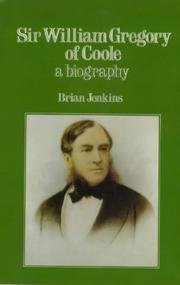
Isabella Augusta Persse Gregory ('Lady Gregory', pictured), was born on the 15th March, 1852 (the youngest daughter of Dudley and Frances Presse), in a 6,000-acre estate (which, incidentally, was mostly destroyed in a fire in 1921) known as Roxborough House, near Loughrea in County Galway, and was schooled at home by a nanny, Mary Sheridan, who obviously passed-on her interest in Irish history to her pupil.
On the 4th March, 1880, at 28 years young, Isabella married 'Sir' William Henry Gregory who was 63 years of age and 'owned' a large estate at Coole Park, near Gort, in County Galway, thus conveying on her the title 'Lady'.
The couple had one son, Robert, born on the 20th May, 1881, who was killed while piloting a warplane during the 'First World War', a death marked by WB Yates in two poems - 'An Irish Airman Foresees His Death' and 'In Memory of Major Robert Gregory'.
As a 'Lady of Leisure' who now found herself in the 'Big House' she availed of the large library and, when not reading, accompanied her husband on business trips throughout the world.
Her education, the library and her foreign travels sparked within her a love of the written word, and she quickly became a published author.
Her husband died when she was 41 years of age but she continued to live in 'the Big House', where her interest in all things Irish was nurtured, to the point that she practically converted the house into a 'retreat' for those who, like her, were smitten by Ireland and its troubled history - Edmund John Millington Synge, William Butler Yeats (and his brother, Jack, a well-known painter), George Bernard Shaw (who described her as "the greatest living Irishwoman") and Sean O'Casey were amongst those who visited regularly and, indeed, she was believed to have had romantic connections with the poet Wilfrid Blunt and a New York lawyer, John Quinn.
Despite her privileged lifestyle or, indeed, perhaps due to it, as it afforded her the time to 'look within her soul', Isabella Augusta Persse Gregory, who had a regular 'audience' with the 'Upper Class' of the day, loudly declared to all and sundry that it was "..impossible to study Irish history without getting a dislike and distrust of England..".
A 'poacher-turned-gamekeeper' but, unusual in our history, one who 'turned' the right way.
She died in that 'Big House' on the 22nd May 1932 - 92 years ago on this date - at 80 years of age, and is fondly remembered by those of us who share her convictions and agree with her "..impossible to study.." declaration.
Incidentally, the 'Big House' scenario still exists in Ireland today, and continues to be a topic of heated conversation, and will hopefully remain so after the British withdraw, politically and militarily, from Ireland.
SO, FAREWELL THEN, CELTIC TIGER....
It had to happen, sooner or later.
Most of the pundits and economists were too busy singing the Celtic Tiger's praises to notice, but a few critical observers worried all along about the weaknesses of a boom economy that depended so much on a few companies from one place - the United States.
By Denis O'Hearn.
From 'Magill' Annual 2002.
If practically all of the economy's profits are concentrated in the foreign sector, what will be left as an investment source if they disinvest from Ireland, as they did in the 1980's?
Economists and politicians have argued that this is unlikely to happen ; they say that the foreign sector is much more 'rooted' in the Irish economy today than it was in the 1980's.
This should make it harder for them to pick up and leave, yet this idea of being 'rooted' may be mistaken. US computer firms are not rooted in Ireland, they are rooted to each other within Ireland.
Dell buys computer parts from other American companies that happen to be in Ireland, but neither of them buys much from local Irish companies ; on the contrary, a 1999 study of 2,667 Irish companies by 'Enterprise Ireland' found that only 174 supplied transnational corporations (TNC's)...
(MORE LATER.)
ON THIS DATE (22ND MAY) 219 YEARS AGO : BIRTH OF A 'YOUNG IRELANDER'.
'TO GENERAL JAMES SHIELDS, UNITED STATES SENATOR, ETC.
DEAR SIR,
In dedicating to you this narrative, I have been influenced by one consideration only. I have no title to your friendship. I cannot claim the most remote affinity with your career in arms. There is nothing connected with this sad fragment of history, either in fact or hope, to suggest any association with your name or achievements. But as my main object is to show that Ireland’s failure was not owing to native recreancy or cowardice, I feel satisfied that of all living men, your position and character will best sustain the sole aim of my present labour and ambition.
In past history, Ireland holds a high place ; but her laurels were won on foreign fields, and the jealous literary ambition which raised adequate monuments to these stormy times denied to her swords the distinction they vindicated for themselves in the hour of combat. The most brilliant, unscrupulous and daring historian of France degraded the niggard praise he accorded them by making it the medium of a false and contemptible sneer. “The Irish soldier,” says Voltaire, “fights bravely everywhere but in his own country.”
Without pausing here to vindicate that country from such ungrateful slander, it is enough to say that you were not placed in the same unhappy position as the illustrious exiles from the last Irish army — soldiers of fortune in the service of a foreign prince. You were a citizen of this free Republic, and a volunteer in its ranks ; it was your country, and you and your compatriots who followed the same standard did no dishonour to those who were bravest among the brave on the best debated fields in Europe.
In the wreck of every hope, all who yet cherish the ambition of realising for Ireland an independent destiny, point to your career as an encouraging augury, if not a complete justification for not despairing of their country. It is because I am among those that I have claimed the honour of inscribing your name on the first page of this, my latest labour in her cause.
I remain, dear Sir,
Very respectfully and sincerely yours,
MICHAEL DOHENY.
New York, Sept. 20, 1849.
'Who was Michael Doheny? For most of us he was the author of the neglected work 'The Felon’s Track'. For some he was the man who fled from the fiasco in Ballingarry in that bad summer of 1848 to walk 150 miles across Munster to little place called Dumanway, where he hoped to raise help in his efforts to escape from Ireland. Some others will know him as the writer of such hyperbolic verses as :
'I’ve tracked for thee the mountain side,
And slept within the brake,
More lonely than the swan that glides,
O’er Lua’s fairy lake...'
And for those with nationalist interests, he will be known as one of the prime movers in the 1840’s Confederacy in Ireland, and later one of the leading founders, in the United States, of the Fenian movement...' (from here.)
The Irish 'dissident', Michael Doheny, was born on this date (22nd May) in 1805 - 219 years ago - near Fethard, in County Tipperary, and became known as a poet and a writer. He was a member of the 'Young Irelanders', and was instrumental in establishing the 'Emmet Monument Association' in America.
After a lifetime in the service of Ireland, he died on the 1st April in 1863, aged 58, in New York, and is buried in Calvary Cemetery, in Maspeth and Woodside, Queens, in New York.
'What fate is thine, unhappy Isle,
When even the trusted few
Would pay thee back with hate and guile,
When most they should be true!
’Twas not my strength or spirit quailed,
Or those who’d die for thee -
Who loved thee truly have not failed,
A cuisle geal mo chroidhe!'
BEIR BUA...
The Thread of the Irish Republican Movement from The United Irishmen through to today.
Republicanism in history and today.
Published by the James Connolly/Tommy O'Neill Cumann, Republican Sinn Féin, The Liberties, Dublin.
August 1998.
('1169' comment - 'Beir Bua' translates as 'Grasp Victory' in the English language.)
ROBERT EMMET AND THE IRELAND OF TODAY...
"The fathers and mothers of Ireland should often tell their children that story of Robert Emmet and that story of Anne Devlin.
To the Irish mothers who hear me I would say that when at night you kiss your children and in your hearts call down a benediction, you could wish for your boys no higher thing than that, should the need come they may be given the strength to make Emmet's sacrifice, and for your girls no greater gift from God than such fidelity as Anne Devlin's.
It is more than a hundred years since these things were suffered ; and they were suffered in vain if nothing of the spirit of Emmet and Anne Devlin survives in the young men and young women of Ireland.
Does anything of that spirit survive?
I think I can speak for my own generation.
I think I can speak for my contemporaries in the Gaelic League, an organisation which has not yet concerned itself with politics, but whose younger spirits are accepting the full national idea and are bringing into the national struggle the passion and the practicalness which marked the early stages of the language movement..."
(MORE LATER.)
ON THIS DATE (22ND MAY) 103 YEARS AGO : LAST KNOWN DAY ON EARTH OF A BRITISH 'RFAIO' IN IRELAND.
'A British Army Officer (2nd Lt Seymour Livingston Vincent) disappeared, presumed killed, in County Cork.
Casualty of the Great War, Captain Vincent served with the Army Educational Corps - he "disappeared at Fermoy", while working for the Intelligence services*, presumed abducted and murdered (sic) by the IRA - body exhumed 1926...originally of the 1/13th London Regiment (Kensingtons) (he) was evacuated from Le Havre on 5th July 1916 suffering from shell shock and shrapnel wounds to the right foot and left arm. He returned to France in May 1917 and served in Salonika with the 82nd Company, Machine Gun Corps. He was was born in 1890 and lived in Loughton, Essex.
He was seconded to the 168th Machine Gun Company on 16th March 1916. He died in strange circumstances in May 1921.
He had been transferred to the 2nd Brigade, RFA, in December 1920 and had been serving at Fermoy in County Cork. He had applied for a transfer to the Army Educational Corps (because) before the war he was a teacher, and had then asked to resign his commission...' (from 'The British Wartimes Project' compilation).
The 22nd May 1921 - 103 years ago on this date - was his last known day on Earth ; he disappeared without trace on the 23rd.
It was not until an anonymous letter was sent to the British Government in June 1924 containing details of the burial of a British officer in Lenihans Bog, Glenville, County Cork, that further investigations took place.
At the time of his disappearance, the Colonel commanding the 16th Infantry Brigade, based at Fermoy, in Cork, basically accused Mr Vincent of lying about his intentions of going on leave but, within a week, another report, regretting several errors in the first, was issued, which noted that he had appeared somewhat disorientated before going on (approved) leave.
The report stated that, five days after he left, three members of the 2nd Brigade of the IRA raided Fermoy Station and broke into the office there, taking various items from Mr Vincents luggage, including a service revolver.
Although the RIC were informed, nothing was ever discovered about his whereabouts.
It is thought that he, and possibly another man, were killed by the IRA and buried at Lenihans Bog.
Mr Vincents body was later re-interred in Glenville Church of Ireland, Glenville, County Cork.
*The IRA found a notebook in Royal Field Artillery Intelligent Officer Vincent's pocket in which he had listed the contact details of locals that were opposed to the struggle for independence - he was gathering intelligence on where 'friendly houses' were located and probably attempting to convince the local 'friendlies' to forward any information in connection with the 'dissidents' on to him.
As a teacher by profession, his was a lesson hard learned.
ON THE 22ND MAY 1922...
...the Red Flag was hoisted and about 100 men fell-in behind it in Naas, County Kildare.
They formed into lines and marched to the Courthouse and the local County Council office, calling for fair play for the unemployed in society and, when they reached the Council office, some of their number entered the building and insisted that a resolution be proposed and passed in support of their requirements, which it was.
Unfortunately, the timing was not the best for them, as other issues were taking centre stage...
==========================
A Mr John McLarnon was working in the Midland Railway Station in Belfast when he was shot dead.
A Mr Charles McMurty was also shot dead on that date, and a Mr George Lawson and a Mr Thomas Boyd were shot dead.
A Mr Jack O'Hare was jumped on by a loyalist gang near the Albert Bridge in Belfast and was then thrown into the River Lagan, in full view of the RIC, who did not intervene.
A Mr James Brady was also shot dead on that same date.
==========================
The Church of Ireland leadership in Ireland were anxious about their members being unfairly targetted in any new Irish Free State and requested a meeting with Michael Collins to discuss the matter.
Mr Collins assured them that the policy of not 'choosing enemies' because of their religious beliefs would continue, adding - "Ireland required the services of all of her sons of every class and creed.."
Except, apparently, those that still wanted the British removed from Ireland, politically and militarily.
==========================
A Mr Joseph Ballantine (52) was in the process of removing furniture from his home in Raphoe, in County Donegal, when he answered a knock at his door.
He opened the door to be met by three men and was shot in the stomach ; he died from his wound.
He was an ex-RIC member.
==========================
On the 7th April, 1922, 'Article 23B of the Special Powers Act' (which, among other British injustice 'laws', allowed for internment in six of our counties) was brought into force and, on the evening of the 22nd May that year and the morning of the 23rd, over 200 nationalist/republican men were 'arrested' by Crown Forces.
Inside of four months, 446 men were interned and an estimated 728 men were detained between May 1922 and the end of 1924.
In what was an opportunistic operation rather than an authorised IRA 'job', a Mr William Twaddell (a draper by profession), a unionist MP for the Woodvale area of Belfast, was assassinated in Garfield Street, off the Royal Avenue.
==========================
Four (Catholic) homes on the Magherafelt side of Desertmartin in County Derry were attacked, with one being burnt to the ground and the others shot-up with some of the occupants receiving injuries.
Days afterwards, nationalists/republicans in the area received letters 'ordering' them to leave the area.
==========================
At a meeting of Free State Army officers, dissatisfaction was expressed with how their army was progressing in the 'Unity Talks' being held between it and the IRA and, such was the level of angst within the Staters, that Free State General Jeremiah Joseph (JJ) 'Ginger' O'Connell tendered his resignation letter on the 23rd, but it was not accepted by his superiors.
Mr O'Connell had had a narrow escape a few months previously, when he was held hostage by the IRA -
'The republicans knew that 'Ginger' was valued by Collins and his renegades - he was one of the few that eagerly conveyed the 'cancel-the-Rising'-order from Eoin MacNeill in 1916 and both Collins and Mulcahy regarded him as a safe pair of hands.
Collins's political and military bosses in London were notified about 'JJ Ginger' being held in republican custody and made it clear to Collins that if he and his Free State colleagues didn't take steps to remove the republicans from the Four Courts, they would...' (From here.)
The Ginger lad (!) survived both the IRA and the Staters, and died on the 19th February, 1944, in the Richmond hospital, in Dublin, having suffered a heart attack.
==========================
Thanks for the visit, and for reading!
Sharon and the team.
Meself and the team are working on a 20-piece blog post for Wednesday, 22nd May 2024, but sure we'll probably have another two or three items to add to it between this and then (...that's 'cause they can't shut me up!)
And, as there are local council/corporation and EU elections due to be held in this State on Friday, 7th June 2024, we'll have a few paragraphs-worth to say about that, including - and this is an EXCLUSIVE!!! - (thanks to our combined experience and connections : ya wha', Shar...?!) we'll be telling you who the winners and losers are!
So check-in with us on Wednesday 22nd and then off with ya to the bookies on Thursday 23rd for a 'sure-thing' bet on the outcome of those elections...!
And we'll have other 'sure-fire winners' for you, too -
During this on-going struggle to remove the British military and political presence from Ireland, the Pope in Rome was asked by the British (who had been priming him) to address a few words to the Irish in regards to them having the cheek (!) to fight back against the British.
Well...he did, but Westminster went into a tail-spin when they heard what he said, and spun (!) into action again with a 'PR/Damage Control' operation to try and cover their own political arses...!
Ireland, 1920's - a road that the IRA had dug a trench across, to impede the progress of the British Forces from moving around the country, was filled-in by British troops and, as they presumed the IRA would open it up again, they weren't content to fill it in with just concrete and rubble...
Ireland, 1920's - the representatives of over 700 IRA Volunteers held a meeting to discuss logistics and an issue with their command structure was raised, discussed and voted on - a change was required and agreed on. But the IRA GHQ in Dublin thought otherwise...
From 1955 - The Irish Republican position on the Fianna Fáil grouping was discussed, especially in relation to how the media were playing with the issue...
From the 1850's - this Lady was born with the proverbial silver spoon in her mouth : wealthy parents, good family 'stock', regular income from 'owning' thousands of acres of land, famous connections and friends...but she wouldn't and didn't hold back when it came to speaking up about the imposed 'tilt' on the 'Scales of Justice'...
...and that's just a few of the pieces we'll be writing about on Wednesday, 22nd May 2024.
So - if for nothing else other than the tips for the bookies - give us a shout on the 22nd.
Thanks for the visit, and for reading : see y'all again, hopefully, mid-week!
Sharon and the team.
Mr Hugh McClean (21), a member of the Black and Tans, from Moray, in Scotland, was billeted in the Cork area and himself and one of his colleagues, a man named Cooke, were keep-fit fanatics and would go for a run regularly in a local wooded area.
On the 15th May, 1921, the two Tans headed-off in mid-afternoon to their usual spot (Morgans/Mayors Wood) for a run but ran into more than they had planned for.
IRA Volunteers from the Skibbereen Battalion, who were based in the Maulbrack area, about two miles distance from the Barony townland in Cork, were waiting on the two Tans and, when they arrived to their position, they shot them.
Mr Cooke, although seriously wounded, survived the attack, but Mr McClean, who was shot in both lungs and was still alive, died from his wounds later that evening, in the Skibbereen Workhouse.
It transpired that Mr McClean had already decided to leave his 'job' and had handed in his notice, effective at the end of that month. His father and his brother were members of the RIC but the brother had also handed in his notice, and both were due to leave at the end of May, 1921.
Mrs McClean, at home in Scotland, had told her husband and two sons that she had received a letter in the post (which had been posted to her from Edinburgh in Scotland) which contained a threat to her family, wrapped in republican literature.
However ; as the IRA Volunteers were leaving the scene of the executions, a local woman, who worked in a nearby shop - Majorie Young (21), from Bridgetown, Skibbereen, Cork - had heard the gunshots and was looking in the direction of the Woods when she seen two IRA men that she recognised leaving from that area.
M/s Young reportedly gave information to the British Crown Forces that those two men were IRA Skibbereen Battalion Adjutant O'Brien and Bantry Company IRA Officer Commanding Ralph Keyes.
The local IRA investigated the affair and came to the conclusion that M/s Young had indeed passed IRA names to the British, thereby "placing their Battalion Officers at risk of a death sentence" and, in their 'Intelligence Papers', listed the young woman as "guilty in the first degree", a reckoning that, had it been a man under investigation, would have marked him for death.
As it was, from what we gleaned from our inquiries, M/s Young was made aware of the IRA investigation into her activities on that day - 15th May 1921 - but it is not listed in the 'IRA Intelligence Reports on Civilians Accused of Giving Information to and Associating with British Forces during War of Independence in Counties Cork, Kerry, Waterford, and Limerick’ 1921, CP/4/40 [Military Archives]' that any action was taken against her.
"AND THE RADIO SAID..."
IRA Volunteer Billy Reid (32) was shot dead by enemy forces on this date - 15th May - 53 years ago.
Volunteer Reid was on active service, defending his country and his people, on that Saturday in 1971, when he was shot dead in Belfast by British soldiers.
On that day in May, 1971, a British Army foot patrol was ambushed in Academy Street in the centre of Belfast by the Third Battalion Belfast Brigade IRA.
One of the Volunteers was wounded and Volunteer Reid told his comrades to take the wounded man to safety, and he would provide cover fire for them to do so. But his weapon jammed and, as he attempted to withdraw, he was shot in the back.
The British Army soldiers then attacked and abused his body.
RIP Volunteer Billy Reid.
1st January 1939 – 15th May 1971.
The 'Paris (Versailles) Peace Conference' was convened on the 18th January, 1919, to discuss possibilities for a permanent peace in Europe (no more 'World Wars') and to open discussions on US President Woodrow Wilson's apparent desire for self-determination and international co-operation between all nations.
Irish nationalists and republicans recognised the Conference as an opportunity to declare to world leaders our case for independence from England and, of course - as expected - Irish unionists and loyalists were not going to allow that case to go unchallenged.
The 'pro-Irish' delegation felt that the 'anti-Irish' side were receiving more favourable results than they were, and issued the following statement -
"We recognise that an agreement could not have been brought about without certain temporary concessions made in regard to the Constitution of the Irish Parliament which we, as democrats and representatives of Labour, regarded with strong dislike.
But we feel so deeply the necessity of setting up a Parliament in Ireland, in which labour amongst other interests may be able to find a place, that we have been willing to subordinate our democratic beliefs to what we conceive to be the highest interests of Ireland..."
So despondent were they that, on the 15th May, 1919, one of the 'pro-Irish' representatives, Joe Devlin, wrote home to his party leader, John Dillon, stating...
"...nothing will come of the (Paris) Peace Conference. The position must inevitably come to a fierce conflict between the government and Sinn Féin, and I am afraid the country is in for a bad time..."
And how right he was, and is - that "bad time" is still with us, as six of our thirty-two counties remain under the jurisdictional control of Westminster.
==========================
'KILLARNEY MEMORIAL UNVEILED.'
From 'The United Irishman' newspaper, April 1955.
On Sunday, March 13th (1955), a memorial was unveiled at Countess Bridge, Killarney, to the memory of four soldiers of the Irish Republican Army who were killed there by Free State forces, by being blown to pieces by a land mine, on March 7th, 1923.
A parade in the charge of DJ Conway, Tralee, and led by the Scartaglin Pipe Band, marched from the Fair Green, Killarney, to the Countess Bridge.
The Memorial was unveiled by Michael Lynch, The Spa, Tralee, who, after reciting a decade of the Rosary, said there was one thing the present generation could do, and that was to achieve the aims for which those four soldiers of the Republic gave their lives.
He appealed to the young men present to join the IRA and to bring the fight for Irish freedom to a successful end in our time.
Wreaths were placed on the Memorial on behalf of the Republican Graves Association, Killarney, and the Killarney Battalion IRA, and an oration was given by JJ Sheehy.
(END of 'Killarney Memorial Unveiled' ; NEXT - 'An Old And Unfair Criticism', from the same source.)
Commandant Niall 'Plunkett' O'Boyle (pictured) from Lackenagh, Burtonport, was an active Volunteer throughout the War of Independence and the Civil War. He was taken prisoner in 1922 and interned in Newbridge Internment Camp.
On October 14th, 1922, he was one of the 148 prisoners that escaped.
He made his way to Dublin, where he continued his campaign against the Free State forces and was appointed to the 3rd Battalion of the Dublin No.2 Brigade, operating mainly in the North West of Wicklow. For six months he operated fearlessly in the mountains between Tallaght and Glenmalure.
On May 15th 1923, two weeks after the call of a ceasefire, Niall O'Boyle's Flying Column was surrounded by Free State forces in the home of the Norton family, Valletmount, in County Wicklow.
The Free State forces opened fire on the house. Niall and his comrades called for the Staters to let Mrs Norton and her daughters out of the house.
He left the house with his hands raised and walked towards Free State officer, Felix McCorley from Belfast. Suddenly McCorley raised his revolver and shot Neil in the eye, and for good measure he shot him again in the head.
After the inquest, his remains were given to a Mrs Lambert of Lachen, Blessington, Co. Wicklow, and he was waked for one night in Manor Kilbride Church before being returned to Donegal.
During this time Mrs Lambert never left the remains until she seen him buried in his native Lackenagh, in Burtonport, in County Donegal.
He was born, on a small farm, at Leac Eineach, near Burtonport, in County Donegal, in 1898.
On the 15th May, 1923, the Plunkett Column of the Dublin No. 2 Brigade IRA was captured at Knocknadruce, Valleymount, in County Wicklow, after the death of its leader, Ned (Niall) Plunkett O'Boyle (25).
In April, 1923, a ceasefire had been agreed between the IRA and the Free Staters but that didn't deter most FSA Units from attempting to settle old scores ; on May 15th, Niall Plunkett O'Boyle and his men were resting in a house in Knocknadruce, owned by the Norton family, when they were surrounded by FSA troops and told to leave the building.
Shouted negotiations were held between both groups, with the Staters threatening to lob hand grenades into the house unless the IRA Volunteers came out.
Plunkett O'Boyle shouted that he was coming out, alone and unarmed, to discuss the terms of surrender ; he exited the house, hands held high above his head, and walked towards the officer in charge of the FSA, Felix McCorley, who moved in on the IRA man and shot him dead.
His body was returned to Donegal where he is buried in Kincasslagh graveyard.
When Ireland called forth her true sons of the heather,
O'Boyle was the foremost to answer the call,
The sons of the Rosses he banded together,
To drive the oppressor from dark Donegal.
"Because I believe these things I will always stick to them ; but I do not want to force any other person to believe as I do. Let everyone be honest with himself and do what he thinks right. It is my duty to tell you what I believe should be done..." - Ned (Niall) Plunkett O'Boyle.
On the 14th, 15th and 16th May, 1920, those members of Dáil Éireann (the 32-County body) whom the British had not managed to imprison, received a note, on official Dáil Éireann-headed notepaper, stating -
"An eye for an eye, a tooth for a tooth. Therefore a life for a life."
On investigation, it was discovered that the notes had been sent by the British 'Cairo Gang' who had obtained the notepaper from raids on republicans they had conducted previously.
However, in November that same year, the IRA all but read out that same note to that gang...
==========================
On the 15th May, 1920, British Army Major General Henry Hugh Tudor (pictured, KCB, CMG ETC ETC!) was appointed by Westminster to the position of 'Police Adviser to the Irish Administration in Dublin Castle' ; in effect, he was placed in command of the RIC, sidelining the RIC 'Inspector General' and other high-ranking members of that grouping, which didn't go down too well with them!
Mr Tudor's appointment was 'recommended' by Mr Churchill himself, who wanted a 'show of strength' in Ireland against the rebels, and Mr Tudor had a deserved name as a 'military hawk' ; he had 'served queen and country' (!) in the Second Boer War (1899-1902) and in the 'First World War' (1914-1918) and survived through it all to die peacefully, at 94 years of age, in 1965, after denying so many others the opportunity to do so.
'For queen and country', of course...
==========================
In mid-May 1920 street riots erupted in Derry, with the IRA and Loyalist gangs, including the RIC, doing battle with each other - the former in an effort to protect the community from the latter.
On the 15th May, Clare-born RIC 'Sergeant' Denis Moroney became the first RIC member to be killed in the city, as a result of the unrest ; he was the first such member to be shot dead in the Province of Ulster.
==========================
"A BULLET IS WAITING FOR DALTON THE SPY..."
In early 1920, an IRA Volunteer in Limerick, James Dalton, an Intelligence Officer for 1st Southern Division IRA (comprising about 450 Volunteers, all ranks), was observed to be visiting the homes of known RIC Intelligence Officers in the early morning, and word of this quickly got back to his IRA comrades.
On hearing the rumours about him that were circulating in republican circles, Volunteer Dalton himself requested an enquiry into the accusations that had been made against him and, following procedure, the enquiry was held.
The verdict reached was that "...there was no guilty or dishonest motive on his part and that the suspicions were unfounded.."
IRA Captain O'Sullivan stated that the 'spy accusations' against Volunteer Dalton "...were due to personal jealousy and animosity between rival factions in the Volunteers in Limerick.."
But...
..on the 15th May, 1920, Volunteer Dalton left his home at around 12 Noon to go to his day job (he worked as a clerk in the Electric Generating Station on Frederick Street/O'Curry Street, in Limerick) and, after work, met his father-in-law, as arranged, in a local pub between 6pm and 7pm that evening. The two men had a quick pint and left each others company to go home to their own houses, both of them in good humour.
Within a couple of hundred yards of his house, and within sight of his thirteen-year old daughter, Kitty (he and his wife, Anne, had seven children), Volunteer James Dalton was surrounded by up to six men and was shot four times (this was the second attempt on his life). He fell to the ground, where he was shot twice more.
A local child, six-year-old Elly Lowe, was hit in her calf by one of the bullets.
The consensus today is that he was not a spy, but questions are still asked to this day if Volunteer Dalton was, perhaps, an IRA double-agent, was he shot dead in an operation carried out by other IRA Volunteers in an unauthorised attack and/or was he the victim of a personal feud within the IRA in Limerick...?
His wife, Anne, received an ex-gratia payment of £500 that year (1920) and a further £700 in 1924 (from the 'Compensation [Personal Injuries] Committee') but was later encouraged to hand that £1,200 back to the State in return for a longer-term offer, which she did - for a 'Widows Allowance' of £90 a year, plus a further £24 a year in respect of each of her 7 children (under 'The Army Pensions Act'), with all those new children payments to run from the 1st April 1922 until each child "came of age" (18?).
The few bob no doubt came in handy, but I'd bet she'd trade it in in a heartbeat to have her husband back.
Finally : the investigating officer in Dáil Éireann (the 32 County body, not the British/Free State-imposed institution that was spawned on Kildare Street in Dublin) issued the following statement in relation to the situation -
'Dáil Éireann Official Verdict in case of Mr James Dalton. The main point was not in dispute that the plaintiff (Mr Dalton) had entered certain premises at 1am and remained there til morning, the fact which had brought suspicion upon him.
Having heard the evidence I was of opinion that the plaintiff had been guilty of a grave indiscretion and error of judgement in acting as he had done, and that his conduct very naturally gave rise to much suspicion.
As against this I was certain of opinion that there had been no guilty or dishonest notice on his part, and that the suspicions in this respect had been unfounded.' (The Dáil investigation was Chaired by Judge Cahir Davitt.)
No arrests were made at the time. No arrests would ever be made...
On the 15th May, 1921, as Michael Hackett (27), from Bagenalstown, in County Carlow, was taking part in a sporting event in Fenagh, in County Leitrim, he was arrested by IRA Volunteers.
He was taken away and questioned about who he was talking to about the Active Service Unit attached to the Carlow Brigade IRA ; IRA enquiries had led to the conclusion that Mr Hackett, an ex-British Army soldier, was one member of a "gang of spies organised and paid by the RIC", who were operating in the Bagenalstown and Borris areas of Carlow, and regularly supplied information on the IRA and pointed out suspects to the RIC and British Army.
Mr Hackett was tried by court martial and found guilty of espionage "which was directly responsible" for the capture of an IRA ASU at Ballymurphy, County Carlow : he was executed by IRA Volunteers from the 4th Battalion IRA on the 1st June, 1921, and buried on the mountainside at Coolnasaughta, Myshall, in Carlow.
His body was later recovered and reburied by the Hackett family.
==========================
15th May 1921, Dublin - A Mr John Congdon and two of his friends were standing at the corner of Dorset Street and Saint Ignatius Road in Dublin, when the area around them exploded.
The IRA had thrown bombs at a passing British Army lorry and the three men were blown off their feet in the explosions ; Mr Congdon died from his wounds three days later.
==========================
15th May 1921, Tipperary - IRA Volunteers Brain Shanahan, Dan Breen, Jim Moloney, Con Moloney, Art Barlow and Ernie O'Malley were waiting outside a church in the village of Bansha, as they knew a group of RIC members were about to leave when the Mass ended.
When they left, the IRA attacked, and RIC member John Nutley (22) was shot in the head and died immediately.
Two of his colleagues, Jeremiah Sullivan and John McLoughlin, were wounded.
==========================
15th May 1921, Kerry - a member of the British Army's 'Royal Fusiliers City of London Regiment', Stephen Goldsmith, was cycling between the two places he rested his head in in Kenmare when he was shot by IRA Volunteers.
He died from his wounds on the 20th May that year.
==========================
RIC member John Ryle (45), from Kilmoyley in North Kerry, was badly injured in an IRA ambush on the 14th and died from his wounds the following day.
==========================
15th May 1921, Galway - RIC 'District Inspector' Cecil Arthur Maurice Blake (36), his wife Eliza, and two British Army officers (Captain Cornwallis and Lieutant William McCreery of the '17th Lancers') had left a party and were almost at the gates of Ballyturin House, near Gort, when they were ambushed by IRA Volunteers from the South West Galway Brigade and all four were shot dead.
A woman who was in the company of the four party-goers, a M/s Lily Margaret Gregory (the widow of Major Robert Gregory of Coole Park and 'Lady' Gregory's daughter-in-law) was not targeted or injured in the attack.
When the RIC arrived to investigate the scene, one of their members, John Kearney, was shot "in controversial circumstances" and died from his wounds on the 21st May.
==========================
15th May 1921, Tipperary - Two RIC members, Joseph Daly (20) and Thomas Gallivan (20) were reported as "missing" not long after they left their barracks, on bicycles, in Silvermines.
They had been arrested by IRA Volunteers from the North Tipperary Brigade (commanded by Billy Spain and Tom Walsh), shot dead and buried in Clooneen bog in the parish of Cloughjordan, as ordered by Brigade Officer Commanding Seán Gaynor.
In 1925, the bodies were exhumed by the IRA and Mr Daly was buried in his homeplace in Enfield, in County Meath.
The remains of Mr Gallivan, a native of Killarney, County Kerry, were buried in an unmarked grave in Ardcroney graveyard, in County Tipperary.
==========================
15th May 1921, Dublin - A Mr Peter Graham was shot dead as a spy at the Golf Links in Killiney, in County Dublin, by IRA Volunteers.
British Army 'insiders' had alerted the IRA that Mr Graham was a paid informer.
He was born in Dun Laoghaire, County Dublin, on the 19th October, 1897, and is buried in Deansgrange Cemetery in Blackrock, County Dublin.
==========================
15th May 1921, Tyrone - an attempted ambush on 'Special Head Constable' Matt Henderson at Eskra, near Dromore in County Tyrone, led to the death of IRA Volunteer Edward McCusker (...some sources list the date as May 14th).
Volunteer McCusker was attached to 'A Company', 2 Battalion, 2 Brigade (Tyrone) IRA, under the command of Michael and James Gallagher.
==========================
15th May 1921, London - A Mr Horace McNeil answered a knock on his house door in Bloemfontein Road, in Shepherd's Bush, London.
Four men questioned him about his links to the Black and Tans in Ireland, he tried to fight them away from his doorstep and close the door on them but was shot in the process.
He died three days later from his wound.
==========================
15th May 1921, Cork - in reprisals for attacks against them by the IRA in mid-May 1921, Crown Forces attached to the 'Cameron Highlanders' killed a labourer, Edward McNamara (19), from Water-Rock, in Cork ; his death certificate stated that he died on the 15th May, 1921, at The Kennels, Midleton, in Cork, of shock and haemorrhage caused by gunshot wounds. Mr McNamara was walking home on the train lines when he was shot.
The 'Camerons' then raided the home of IRA Volunteer Richard Barry and 'arrested' him. The next day his dead body was found on the railway line about a mile on the Midleton side of Carrigtwohill.
==========================
On this date - 15th May, 102 years ago (1922) - the newly-spawned Free State 'Civic Guard' were assembled for 'Morning Parade' in the training depot at Kildare Barracks.
They were standing to attention as their Commissioner, Michael Staines (a republican-gamekeeper-turned-Free State-poacher - he was only about a month in his position at that time and, in September [1922] he was replaced by Eoin O'Duffy) was addressing them when, suddenly, over 1,200 of them broke ranks, ran to the armoury, and took it into their control.
Mr Staines and those that were still loyal to him rushed for shelter but there was no safety to be had 'in-house' so they evacuated the barracks.
The issue, which had been 'bubbling-up' for a while, was that - shamefully, in regards to the former - of the 1,500 'Civic Guard' members, more than 1,400 of them were, between them, ex-IRA Volunteers and/or ex-Free State Army men ; not natural allies (!), by any means, but they were (briefly!) united in their shared dislike for their Officers and military trainers, who were mostly former members of the RIC!
And that in itself was also strange, as the Stater Army practically worked side-by-side with Crown Forces such as the RIC in their campaign against Irish republican forces but objected to taking orders from them now!
Both groups of mutineers objected to the manner in which other new recruits, from an RIC/DMP anti-Irish background, were treated more favourably by the Officers and, after recent promotions within their ranks of five such ex-RIC members, tensions had boiled over.
An ex-IRA man, now a 'Civic Guard' member, Michael Daly (a Clare man) and seven other members, wrote to Commissioner Staines demanding that those recently-promoted five ex-RIC men should be sacked and, at that assembly on the 15th May, Mr Staines ordered those eight members to step forward, which they did - and loud verbal disagreements followed immediately.
Mr Staines, assured of his position within the ranks he believed he presided over (!), called for his men, in a show of support for him, to move to the left - and about 60 members did!
A larger grouping moved in the opposite direction, leaving about another 60 members undecided, stuck-in-the-middle, on the fence ; those stand-stillers (!) were following the lead of a member called Joe Ring (a republican-gamekeeper-turned-Free State-poacher) and, between them they tried to 'restore order, find a compromise' but, eventually, they, too, had to seek shelter...
The mutiny/stand-off lasted for about seven weeks - this all happened during a period when the Staters - a Westminster proxy - were fighting against the IRA.
What happened next?
What did Chief Stater Michael Collins think of it all?
Did poor Mr Staines ever get his mojo back?
Those answers, or none of them, and answers to questions you haven't yet asked, might be found here. Or they might not. But - whatever - we're not bleedin' spoonfeedin' ya anymore...!
On the 15th May, 1922, the nascent Leinster House administration's 'Northern Advisory Committee' held a meeting in the Metropole Hotel in York Street, in Belfast (pictured).
Among others, Cahir Healy, George Murnaghan, Seamus Woods and Frank Crummey were in favour of calling for, and supporting, 'a campaign of destruction within the six counties with the aim of making the rule of the Stormont Administration more expensive and difficult...'
However, when Leinster House got itself established in the Free State and the Staters got a taste for the expensive lifestyles, they completely reversed their position on the O6C to the point that they, too, enforced partition, and still do so to this day.
==========================
A 'General Election' was due to be held in June, 1922, in the 26-County State, and Mr Churchill, in Westminster, was informed by his people in Dublin that Mr Michael Collins and other Free Staters (whom he supported) were in talks with Irish republicans to ensure a conflict-free election for both of the pro and anti 'Treaty of Surrender' sides involved.
A friendly relationship (of sorts!) between the British-supported Free Staters and Irish republicans was not a welcome development for Mr Churchill or his government so, on the 15th May (1922), he sent a letter to Mr Collins in which he denounced any such pact as "an outrage upon democratic principles" ('1169' comment - Oh the irony..!), and told the Staters that the 'pact issue' would be raised at a British Cabinet meeting to be held on the 16th May.
('1169' comment - we don't doubt that Mr Collins and his people would have buckled immediately, having read that letter, and the Staters haven't stopped buckling to the British since then.)
Anyway - the next day (16th May 1922), following the British Cabinet meeting, Mr Churchill let it be known to his Irish Stater chums (!) that he and his Cabinet had "reviewed the Irish situation" and they were of the opinion that 'Ireland was in a state of rapid social disintegration' and that queries had been raised as to whether or not the 'Treaty of Surrender' was being afforded the respect that it should be (!) and stated the fear in Westminster that, 'if British troops were withdrawn, a Republic would be declared..'
Mr Churchill had also expressed the desire 'to retain the English capital (ie Dublin!) and possibly convert it into a 'Pale' once more..'
The British Bulldog Churchill (!) also broadcasted to Dublin that he was suspending the supply of munitions to the Staters "until he was satisfied that they would be used effectively against the Republican party..", and that Mr Collins and his people were going to be summoned...invited (!) to London to be told that there would be no further large issues of arms to them until they showed that they were going to deal with Rory O'Connor and his men in the Four Courts!
And Mr Collins and his Stater Army duly fulfilled their duty to Mr Churchill.
And they haven't stopped doing so since...
==========================
SO, FAREWELL THEN, CELTIC TIGER....
It had to happen, sooner or later.
Most of the pundits and economists were too busy singing the Celtic Tiger's praises to notice, but a few critical observers worried all along about the weaknesses of a boom economy that depended so much on a few companies from one place - the United States.
By Denis O'Hearn.
From 'Magill' Annual 2002.
In other words, foreign software companies are nine times more productive than Irish companies, which are mostly very small and spend little on Research and Development, or training.
This dual economy is unstable in several respects - TNC's are much more likely to take their profits out of the country. In 1983, foreign profit repatriations made up just 3 per cent of Gross Domestic Product but by 1999 they rose to an astounding 40 per cent of GDP!
This drain on the economy requires a constant inflow of investments to offset it.
Even more worrying is the fact that global recession can rapidly cause cutbacks in the foreign sector, as we have seen so dramatically in Gateway's announced closure and Xerox's layoffs...
(MORE LATER.)
BEIR BUA...
The Thread of the Irish Republican Movement from The United Irishmen through to today.
Republicanism in history and today.
Published by the James Connolly/Tommy O'Neill Cumann, Republican Sinn Féin, The Liberties, Dublin.
August 1998.
('1169' comment - 'Beir Bua' translates as 'Grasp Victory' in the English language.)
ROBERT EMMET AND THE IRELAND OF TODAY...
"She would have tended him like a mother could he have tarried there, but his path lay to Kilmashogue, and hers was to be a harder duty.
When Sirr came out with his soldiery she was still keeping her vigil.
"Where is Emmet?"
"I have nothing to tell you."
To all their questions she had but one answer : "I have nothing to say ; I have nothing to tell you."
They swung her up to a cart and half-hanged her several times ; after each half-hanging she was revived and questioned : still the same answer.
They pricked her breast with their bayonets until the blood spurted out in their faces. They dragged her to prison and tortured her for days. Not one word did they extract from that steadfast woman.
And when Emmet was sold, he was sold, not by a woman, but by a man — by the friend that he had trusted — by the counsel that, having sold him, was to go through the ghastly mockery of defending him at the bar..."
(MORE LATER.)
Thanks for the visit, and for reading!
Sharon and the team.
And we're back!
...and we were right about the family gig that kept us out of action last Wednesday : it took the two days before it to properly finalise it, and three days after it to recover from it.
As expected, when ya have two football-team-full of immediate family members to help organise, plus the 'subs', the back-room 'staff' and - of course - the 'fans'!
Anyway - we're working on a 15-part blog post that we should have ready for Wednesday, 15th May 2024, for all you refs and hawkeye's (!) out there to scrutinise, including a few more paragraphs on all of the following -
In the 1920's, two members of the Crown Forces were surrounded in a wooded area by IRA Volunteers and executed but, as they were leaving the scene, the Volunteers were noticed by a local girl who had spoken to the British about what she witnessed. She knew questions were being asked about her and, true enough, a knock came to her door. But...
1900's - a conference, held abroad, was thought to be the perfect venue for Irish republicans to make their case for Irish freedom but, five months into it, they realised that the cards were stacked against them...
1920's - a love-letter (not!), on branded notepaper that the recipient themselves used, was dropped through letterboxes quoting a Biblical verse.
But those that delivered those missives soon had reason to read the words themselves...
1920's - British military and paramilitary 'hawks and doves' in Ireland squawked at each other when the big vulture in Westminster played 'favourites'...
1920's - on this, the second attempt on his life, his attackers were successful. All involved were IRA Volunteers, but the real reason for the attack remains shrouded in half-truths, rumour and/or purposeful misdirection. Or does it...?
So, if you're interested in the full-time results (groan!) for the above, and about another ten pieces, then score with us (groan again...) on Wednesday, 15th May 2024.
And apologises for the above pitch...
Thanks for reading - see ye on Wednesday, 15th May 2024!
Sharon and the team.