ON THIS DATE (24TH MAY) 82 YEARS AGO : 'DRAFT RIOTS' AS WESTMINSTER PUSHES FOR CONSCRIPTION IN IRELAND.
In Ireland, in 1941, conscription was again being discussed in Westminster ; this time for the partitioned six north-eastern counties of Ireland.
It is recorded that, at a meeting between the then 'American Ambassador to Ireland' (sic - the Free State), a Mr. David Gray (who was said to be friendly with the British Ambassador to America, 'Lord' Halifax and Eamonn de Valera, which took place in January 1941, Gray rounded on de Valera "for capitalising on hatred of Great Britain for political reasons and so must take some responsibility for the existing popular state of mind..", by which he meant the Free State policy of so-called 'neutrality' and the then impending strong possibility of conscription by Westminster in the Six Occupied Counties, which de Valera and his State Administration were opposed to.
Grey stated that de Valera "began to talk about his rights. I told him that the only right that he and myself enjoyed was to believe in our religion, and be burned for it if need be. Every other right depended upon force to maintain it, and he was steering a very dangerous course if he thought otherwise.."
Although pro-British in his mindset, Gray recognised the reality of the then existing political situation in Ireland : on the 24th May, 1941 - 82 years ago on this date - he sent a wire-cable (like a 'text message', for our younger readers!) to the American Secretary of State, stating - "Opposition leaders yesterday informed me that conscription without a conscientious objectors escape clause for minority Catholic nationalists will constitute a major irretrievable and probably fatal political blunder at this time and play directly into de Valera's hands with grave possibilities for American interests.
They [the opposition leaders] predict draft riots, the escape of draft dodgers to Southern Ireland who will be acclaimed as hero martyrs by three-quarters of the population and the fomenting of trouble by republicans and fifth columnists.
The clearest-headed leader predicts that de Valera will seize the opportunity to escape from economic and political realities by proclaiming himself the leader of the oppressed minority and with the blessings of the Cardinal will rouse anti-British feeling and call a Holy War. I think it a very likely prediction. All classes of opinion here unite in condemning the move as calamitous.
It appears to be a repetition of the same fatal blunder made during the last war. The weak and failing Ulster [sic] Government is probably seeking to sustain itself by provoking a crisis. Unless Great Britain is prepared from a military point of view to seize the whole country it appears to be madness. So little can be gained and so much lost.
Eighty thousand Irish Volunteers in the British Army will be disaffected, there will be no material number of nationalist conscripts, a government, a popular majority and an army inclined to be friendly to Great Britain rather than to the Axis will become definitely hostile, possibly giving active aid to Germany and most important of all the pro-British opposition will be helpless and the opportunity for dividing the country on the question of the ports will be lost for the duration. The effect on Irish-American opinion at this juncture is not for me to estimate. This is a grave situation."
Shortly afterwards, Churchill wrote -"..the (British) Cabinet is inclined to the view it would be more trouble than it's worth to go through with conscription. No immediate decision will be taken and in the meantime the less made of the affair the better."
As usual, it took the threat of force, or force itself, before the British realised that there would be a consequence to their action.
And it still takes that threat today.
ON THIS DATE (24TH MAY) 100 YEARS AGO : IRA ORDERED TO 'DUMP ARMS'.
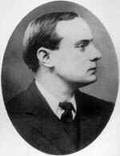
"To All Ranks : Comrades - The arms with which we have fought the enemies of our country are to be dumped. The foreign and domestic enemies of the Republic have for the moment prevailed" - 'Dump Arms' order issued by the then newly-appointed IRA Chief of Staff Frank Aiken (pictured), on Thursday, 24th May 1923 : 100 years ago on this date.
"Further sacrifice on your part would now be in vain and the continuance of the struggle in arms unwise in the national interest. Military victory must be allowed to rest for the moment, with those who have destroyed the Republic. You have saved the nation's honour, preserved the sacred national tradition, and kept open the road of independence" - an echo of the above 'Dump Arms' order to the IRA, issued on the same date [24th May 1923] by Éamon de Valera (pictured).
Yet, three years later, that same man actually joined those "who have destroyed the Republic" when, in March 1926, following an extraordinary meeting of the then Sinn Féin organisation, he resigned as leader and, splitting the Movement, brought others with him in forming (on the 23rd March 1926) "a new national movement" - Fianna Fáil.
He and the other defectors stated that they had no option except to leave the Movement after their Ard Fheis motion calling for elected Sinn Féin members to be allowed to take their seats in the Free State parliament (Leinster House), if and when the controversial 'Oath of Allegiance' was removed, was defeated in a vote.
'He was born in New York on the 14th of October in 1882 to Catherine Coll (a young Irish immigrant from County Limerick) and Juan Vivion DeValera, an immigrant of Spanish origin. Little is known of his early childhood except that his family moved from America in 1885 to Ireland where the young Éamon studied at Blackrock College in Dublin and was largely reared by his Grandmother.
He studied languages and mathematics and was, like Michael Collins, a student of English Rule in Ireland. The early 1900's was a time of the great Gaelic cultural revival in Ireland as literature, drama, sport and the language of the Gaelic nation were all revived. The main spearhead of the revival was The Gaelic League which he joined in 1908. He was greatly influenced by the League and learned the Irish language whilst immersing himself in the Gaelic culture.
The Gaelic League was an obvious recruiting ground for the various revolutionary organisations of the time and it was not long before de Valera became a member of the Irish Republican Brotherhood. He was second in command to Thomas MacDonagh of the Dublin Brigade during the Easter Rising of 1916. The Rising failed and the seven leaders, MacDonagh and Pearse among them, were executed, along with 9 other rebels. de Valera was also sentenced to death as an organiser of the revolt but was to escape the firing squad because of the confusion surrounding his ancestry (the English authorities did not want to risk the execution of an American citizen)..'(from here).
New York-born Éamon de Valera died at 92 years of age in Blackrock, Dublin, in 1975, and was buried in Glasnevin Cemetery in Dublin. His 'Dump Arms' colleague, Frank Aiken, also died in Blackrock, Dublin, eight years after de Valera (1983), aged 85 ; 'From an adolescent farmer to a local Sinn Fein activist and provincial guerrilla leader, and eventually to chief-of-staff of the IRA, Frank Aiken has an early, hidden history. As with so many of his political generation, Aiken's path to politics began amid the violent upheaval of the Irish revolution..' (from here).
On the 20th April 1923, Frank Aiken was elected as Chief of Staff for the IRA and almost had his tenure brought to an end within two days : on the 22nd of that month, Aiken was holed up in a so-called 'safe house' in Castlebellingham in County Louth with the Quinn brothers, Pádraig and Séan.
The three men were part of the leadership of the IRA's 'Fourth Northern Division' (Frank Aiken was commander of that unit, Pádraig was the quartermaster general and Séan was adjutant general) and, as such, were high on the Free Staters 'Most Wanted' list.
The 'safe house' was surrounded (on the 22nd) by Free State forces and a firefight ensued, during which both Quinn brothers were wounded (Séan died from his wounds, and Pádraig was captured) but, in the melee and confusion of the action, Frank Aiken managed to escape. Three short years later, however, he left Sinn Féin and, working alongside (colluding with, to be more apt) Seán Lemass, Gerry Boland and Countess Markievicz, established a political party - Fianna Fail.
The Republican Movement continued its struggle against the British military and political presence in Ireland and found itself having to do battle, too, with Frank Aiken and his fellow Free Staters who, in their attempts to present the Free State as 'a normal society' rather than that which it was (and, indeed, still is today) - a corrupt and bastardised political entity - tried to control the news of the day :
'Censorship was under the charge of the Minister for the Co-ordination of Defensive Measures, Frank Aiken. It was necessary to prevent publication of matter that might undermine the neutrality of the State and to prevent it becoming a clearing house for foreign intelligence, though over the period of the Emergency, the Act started to be used for more party political purposes such as preventing the publication of the numbers of Irish soldiers serving in the United Kingdom armed forces or industrial disputes within the state. In addition, the information made available to Irish people was also carefully controlled...' (from here).
As the Free State 'Minister for the Co-ordination of Defensive Measures' (as he was from 1939 to 1945), Frank Aiken could (and did) 'authorise and provide for the censorship, restriction, control, or partial or complete suspension of communication' - in other words, he propagandised for Free Statism on behalf of Westminster and, as such - like his Fianna Fail/Free State colleagues - was seen as a persona non grata by the IRA.
Indeed, when his old IRA 'boss', Paddy Rankin, died in 1964, Frank Aiken made the journey from Dublin to Newry to attend the funeral and was told in no uncertain terms when he got there that it was an IRA-organised funeral and his presence might not be appreciated by all concerned. It was recorded at the time that, following that conversation, "..Mr Aiken made a quick retreat up the Dublin Road..".
Free Staters, and the Free State entity itself and the mentality that they and it support and represent, has 'dug in', politically, since de Valera and Aiken, among others, nurtured it into life, and its 'retreat' will not be quick but, for the sake of those of us who respect this country, it has to happen.
And the sooner, the better.
'MUTUAL GOODWILL...!'
From 'The United Irishman' newspaper, April 1955.
Surely it is not difficult to understand that if England at any time in the past 800 years wished to demonstrate her goodwill that the first act would have been to withdraw her armed force.
The slave and moral coward will speak of concessions that followed negotiations, but a little reflection will show how almost all 'negotiations' were conducted immediately after or during an armed insurrection and that virtually all concessions were mere bribes to defeat or detract from the physical force movement.
As for any unrequested gifts that England may have offered - Timeo Danaos et Dona Ferentes - we usually paid dearly for them afterwards.
(END of 'Mutual Goodwill' ; NEXT - 'Resurgent Ulster ; Northern Speakers Address Dublin Meeting', from the same source.)
(1) ON THIS DATE (24TH MAY) 102 YEARS AGO : FIRST ELECTION TO A PARTITIONIST ASSEMBLY HELD IN IRELAND.
'The first election to a devolved legislature in Northern Ireland (sic) took place on 24 May 1921*. A record-breaking turnout delivered 40 Unionist seats in the Northern Ireland’s new House of Commons, with Sinn Féin in second place. At a time of political uncertainty, when the future status (or even location) of the Border was not yet established, the election was a crucial moment in the construction of Northern Ireland's (sic) political infrastructure for the next half-century and more...' (from 'The Irish Times' newspaper, here / *under the terms of the British 1920 'Government of Ireland Act' ie two 'Home Rule Parliaments' for Ireland)
And, today - 102 years later - that institution is still there, still funded by Westminster and, as 'he who pays the piper calls the tune', still doing the bidding of the British political establishment.
Irish republicans are abstentionist in relation to the Stormont institution and the Leinster House assembly in Dublin (and the parent body in Westminster), as both of those 'parliaments' were put in place by acts of, and to the advantage of, Westminster.
Neither 'House' can be of any use in regards to Irish reunification, as both accommodate advocates of the continued partition of this country, regardless of what they may say or put in writing ; as with all career politicians, you have to watch what they do as opposed to what they say.
'THOUGH THE HEAVENS MAY FALL...'
From 'Magill' Annual, 2002.
Dr Moira Woods (pictured).
Following the election of a new 'Fitness To Practice Committee', the inquiry eventually began on 4th October 2000 and concluded, after 43 days of hearings, in May of this year. The complainants were later informed that the 'Fitness To Practice Committee' had concluded its deliberations on 27th July, and that a report was being typed up.
In recent weeks, having heard nothing further, the complainant families have written to the Medical Council seeking a time-frame for information concerning the outcome of the deliberations of the 'Fitness to Practice Committee' and sight of the report on the inquiry.
The complainants have been told informally that they will not be informed of the verdict or given information concerning the deliberations of the 'Fitness to Practice Committee', and that they are not entitled to sight of the report.
Dr. Woods, they have been told, will receive a copy of the report...
(MORE LATER.)
(2) ON THIS DATE (MAY 24TH) 102 YEARS AGO : "ALMOST AN IMPOSSIBILITY" TO DEFEAT THE IRA - BRITISH ARMY GENERAL.On the 24th May 1921 - 102 years ago on this date - British Army General 'Sir' Nevil Macready (pictured) wrote a memorandum to the British Cabinet in which he stated that a full military victory against the guerrilla forces of the IRA was almost an impossibility ; he suggested the introduction of total martial law, the suppression of all newspapers, the licensing of all public traffic on the roads, identity cards and the suppression of any Irish republican parliament!
A proper Gentleman, by all accounts...
However, Macready's political masters in Westminster let it be known that, in their opinion, 'such measures were too extreme' ; in reality, however, there was one over-riding reason why such an order would not be issued to General Macready - Westminster was already voicing its opinion, diplomatically, to as wide an audience as it could get to, that the 'behind-the-scenes' talk about a 'Truce' was the 'answer' to the 'Irish Question' : Westminster was not worried about being too harsh on the Irish - if Macready's demands were met, the British 'spin' would be blown apart and questions would be asked as to why such measures were needed when the issue had been, as Westminster was insinuating, practically settled.
Macready's 'wish list', if implemented, would have led to a fresh wave of American support for the IRA, and the British politicians in Westminster knew it.
British 'King' George V, Lloyd George and General Smuts had sent-out 'peace signals' to the IRA and those they perceived to be its political leaders or representatives - among those 'come-hither' advances was this beauty of political hypocrisy, delivered in Belfast on the 22nd June (1921) by British 'King' George V, who was in Belfast to open the new 'Home Rule Parliament' at Stormont -
"I speak from a full heart when I pray that my coming to Ireland ('1169' comment - yes, he was in Belfast, Ireland...!) today may prove to be the first step towards an end of strife among her peoples, whatever their race or creed.
In that hope, I appeal to all Irishmen to pause, to stretch out the hand of forebearance and conciliation, to forgive and forget and to join in making for the land which they love a new era of peace, contentment and goodwill."
Blaming the Irish for the situation, but willing to forgive us for trying to defend ourselves. The 'king' should have stuck to collecting stamps, and more's the pity he wasn't introduced to his doctor sooner than he was...
However - those 'peace signals' bore fruit - a message from Richard Mulcahy, IRA Chief of Staff was circulated to all active personnel - "In view of the conversations now being entered into by our Government with the Government of Great Britain, and in pursuance of mutual conversations, active operations by our forces will be suspended as from noon, Monday, 11 July..."
Then, in London, on the 6th December that year (1921), the 'Treaty of Surrender' was signed, bringing this cursed Free State into being and succeeding only in 'kicking the can down the road' - to this day, Westminster continues to claim jurisdictional control over part of Ireland, a claim enforced politically and militarily.
We have had other 'Treaty's ' since then : 1973 (Sunningdale), 1985 (Hillsborough) and 1998 (Stormont) - and no doubt we will suffer more of them in the future. But until such time as any offered treaty contains a date for British military and political withdrawal from Ireland, it will not 'solve the Irish problem' ; Irish republicans have not endured an 854-years long struggle for freedom only to now say to Westminster, as those in the Free State 'parliament', and system, have said - 'Stay if you want, just treat us better'.
WAITING TO FALL.
If this year sees the end of the 'Age of Tribunals', it won't be a moment too soon.
By John Drennan.
From 'Magill' magazine, January 2003.
A good start for any Irish opposition party seeking popular support - at least up until about four months ago - would have been to issue the crie de couer - 'First kill all the lawyers.'
The 'Moriarty Tribunal' looked as if it had disappeared to the legal equivalent of Tír Na nÓg and the 'Flood Tribunal' appeared to be enjoying the quaint slumber of the lost souls in limbo.
The situation was so grave that some cheeps of dissent were even heard in 'The Irish Times' - now there's a rare sound - though the fretfull noises emanating from Michael McDowell were rather more significant within the new political context - 'Where McDowell goes, Fianna Fail follows'.
Then the miracle occurred ; just as the waves began lapping above the knees of our 'Tribunal Canutes', the tide was swept back by the Flood Tribunal interim report...
(MORE LATER.)
Thanks for the visit, and for reading,
Sharon and the team.
...and we're back (-'ish'!).
We're finishing up, and recovering from, the past few weeks of family madness - the three of us who publish this blog had a right mixture of different events, ranging from Christenings (3), funerals (2), 21st birthday parties (2) and two or three other gigs which ya would have to be over 21 to hear about...!
And then there was my other family - the Girl Gang - who, in between all the above craziness, had our own 'business' to attend to as well (...but even if ya are over 21, yis are still not gonna hear about that!).
Anyway - we'll be back here on Wednesday, 24th May 2023 with, among other pieces (in a 7-part post), the following -
The zeal of an Irish republican turncoat - a republican gamekeeper-turned-Free State-poacher - who shocked even his own people with the political spin he performed...
How this State protects itself - 'The complainants have been told informally that they will not be informed of the verdict or given information concerning the case but the person they have complained about will receive a copy of the report...'
From the 1940's - this US Diplomat contacted a colleague in the Free State political 'Establishment' to insist that State ('official') opposition (!) to taking part in 'foreign wars' was objectionable to him and his administration in Washington, as was the State policy of (so-called) 'neutrality'...
From 100 years ago - 'The Republican Movement continued its struggle against the British military and political presence in Ireland and found itself having to do battle, too, with another enemy who, in their attempts to present the Free State as 'a normal society', were just as vicious in their attempts to destroy the Republic...'
From 1955 - 'Goodwill' from Westminster : 'Timeo Danaos et Dona Ferentes...'
102 years after it was first 'trialed', that British entity in Ireland is still there, still funded by Westminster and, as 'he who pays the piper calls the tune', still doing the bidding of the British political establishment...
Check back with us on Wednesday, 24th May 2023 for all the above and more, 'cause something else might catch our attention between this and then!
Thanks for the visit, and for reading - see ye on Wednesday the 24th May, 2023!
Sharon and the team.
ON THIS DATE (3RD MAY) 107 YEARS AGO : THREE REPUBLICAN DISSIDENTS EXECUTED BY THE BRITISH.
Pictured - Pádraig Pearse, Thomas J Clarke and Thomas MacDonagh.
On the 29th April 1916, a republican 'surrender document' was circulated between the combatants, which read - 'In order to prevent the further slaughter of Dublin civilians and in the hope of saving the lives of our followers now surrounded and hopelessly outnumbered, the members of the Provisional Government present at headquarters have agreed to an unconditional surrender, and the commandants of the various districts in the City and county will order their commands to lay down arms..' -
- the document (above) was signed by, among others, Patrick Pearse and Thomas MacDonagh, and it signalled the end of six days of fighting between approximately 20,000 British troops (including, in their ranks, Irish men) and a volunteer rebel force of about 1,500 Irish men and women (and other nationalities). At about 3.45pm on Saturday, 29th April 1916, the Rising was brought to an end - Pádraig Pearse surrendered to British Brigadier-General Lowe, James Connolly surrendered on behalf of the 'Irish Citizens Army' and Ned Daly surrendered to British Major De Courcy Wheeler.
It is not mentioned as often as it should be, but before the surrender of Ned Daly and his forces, all of whom fought bravely in the North King Street area of Dublin, the British Officer who was in command of that particular engagement, Lieutenant Colonel Henry Taylor of the South Staffordshire Regiment, had lost 11 of his men with a further 28 having being wounded. Following the surrender of Daly and the Dublin 1st Battalion, Taylor - who was to claim later that he was acting under orders from his superior, Brigadier-General William Henry Muir Lowe - ordered his men, who were enraged over having lost so many of their number, to 'flush out' any remaining enemy forces.
Taylor's troops began breaking into local houses and, before their bloodlust was satisfied, they shot and/or bayoneted 15 boys and men to death, all of whom were 'rebel fighters', according to the British. Approximately 590 people died during the six days of the 1916 Rising, of which 374 were civilians (including 38 children, aged 16 or younger), 116 British soldiers, 77 Irish rebel soldiers and 23 members of the British 'police force' which operated in Ireland at that time ('1169' comment - the objective has not yet being obtained, as not one of those rebel/dissident fighters took up arms to 'achieve' a so-called 'Free State' : the aim then, as now, is to secure a Free Ireland).
Padraig Pearse, Tom Clarke and Thomas MacDonagh, three of those in command of the republican dissidents during the Rising, were court-martialed by the British on the 2nd May 1916 and sentenced to death and, the next day - 3rd May 1916, 107 years ago on this date - they were taken to the Stonebreakers' Yard in Kilmainham Jail and, at dawn, were shot dead by a British Army firing squad.
It was these executions that prompted British Prime Minister Herbert Asquith to warn General Maxwell that 'a large number of executions would sow the seeds of lasting trouble in Ireland' - that was the Westminster elite once again missing the point in regards to their 'Irish outpost' : 'lasting trouble in Ireland' is, unfortunately, guaranteed by the fact that it is the British military and political presence here that brings 'trouble', not the manner in which that presence treats its 'subjects'.
Before he was executed, Padraig Pearse stated : "We seem to have lost. We have not lost. To refuse to fight would have been to lose ; to fight is to win. We have kept faith with the past, and handed on a tradition to the future. If you strike us down now, we shall rise again and renew the fight. You cannot conquer Ireland. You cannot extinguish the Irish passion for freedom. If our deed has not been sufficient to win freedom, then our children will win it by a better deed..."
Pádraig Pearse was born in Dublin on the 10th November 1879 to an English father (who worked as a sculptor) and an Irish mother, both of whom encouraged him to learn about and appreciate his roots. At 21 years of age he joined the 'Gaelic League' and his enthusiasm ensured his advancement within that organisation - he was appointed as the editor of their newspaper, 'An Claidheamh Solais' ('The Sword of Light').
Not content with just a newspaper from which to voice his pro-Irish opinion, he founded a school - St. Enda's College in Dublin, at 29 years of age, and structured its curriculum around Irish traditions and culture and tutored in both the Irish and English languages. It was through the League that Pearse met like-minded individuals who also wanted 'to break the connection with England'.
At 35 years of age, in 1914, he was accepted as a member of the supreme council of the 'Irish Republican Brotherhood' (IRB), a militant group that had stated its intention to use force to remove the British military and political presence from Ireland and, during the 1916 Rising - which he was heavily involved in organising - he was in command of the General Post Office (GPO) in Dublin. He was executed at dawn by a British Army firing squad on the 3rd May 1916, in the Stonebreakers' Yard in Kilmainham Jail.

By Pádraig Pearse.
I do not grudge them : Lord, I do not grudge
My two strong sons that I have seen go out
To break their strength and die, they and a few,
In bloody protest for a glorious thing,
They shall be spoken of among their people,
The generations shall remember them,
And call them blessed.
But I will speak their names to my own heart
In the long nights;
The little names that were familiar once
Round my dead hearth.
Lord, thou art hard on mothers :
We suffer in their coming and their going ;
And tho' I grudge them not, I weary, weary
Of the long sorrow. And yet I have my joy :
My sons were faithful, and they fought.


He shall not hear the bittern cry
In the wild sky where he is lain
Nor voices of the sweeter birds
Above the wailing of the rain.
Nor shall he know when loud March blows
Thro' slanting snows her fanfare shrill
Blowing to flame the golden cup
Of many an upset daffodil.
And when the dark cow leaves the moor
And pastures poor with greedy weeds
Perhaps he'll hear her low at morn
Lifting her horn in pleasant meads.
In his address to the court martial, Thomas MacDonagh said : "Gentlemen of the court martial, I choose to think you have done your duty according to your lights in sentencing me to death. I thank you for your courtesy. It would not be seemly for me to go to my doom without trying to express, however inadequately, my sense of the high honour I enjoy in being one of those predestined to die in this generation for the cause of Irish freedom. You will, perhaps, understand this sentiment, for it is one to which an Imperial poet of a bygone age bore immortal testimony : "T'is sweet and glorious to die for one's country."
You would all be proud to die for Britain, your Imperial patron, and I am proud and happy to die for Ireland, my glorious fatherland...there is not much left to say. The Proclamation of the Irish Republic has been adduced in evidence against me as one of the signatories. I adhere to every statement in that proclamation. You think it already a dead and buried letter - but it lives, it lives! From minds alive with Ireland's vivid intellect it sprang, in hearts alive with Ireland's mighty love it was conceived. Such documents do not die.
The British occupation of Ireland has never for more than one hundred years been compelled to confront in the field of flight a rising so formidable as that which overwhelming forces have for the moment succeeded in quelling. This rising did not result from accidental circumstances. It came in due recurrent reasons as the necessary outcome of forces that are ever at work.
The fierce pulsation of resurgent pride that disclaims servitude may one day cease to throb in the heart of Ireland — but the heart of Ireland will that day be dead. While Ireland lives, the brains and brawn of her manhood will strive to destroy the last vestige of foreign rule in her territory. In this ceaseless struggle there will be, as there must be, an alternate ebb and flow. But let England make no mistake. The generous high-bred youth of Ireland will never fail to answer the call we pass on to them, will never full to blaze forth in the red rage of war to win their country's freedom. Other and tamer methods they will leave to other and tamer men ; but for themselves they must do or die. It will be said our movement was doomed to failure. It has proved so. Yet it might have been otherwise.
There is always a chance of success for brave men who challenge fortune. That we had such a chance, none know so well as your statesmen and military experts. The mass of the people of Ireland will doubtless lull their consciences to sleep for another generation by the exploded fable that Ireland cannot successfully fight England. We do not propose to represent the mass of the people of Ireland. We stand for the intellect and for immortal soul of Ireland. To Ireland's soul and intellect, the inert mass drugged and degenerated by ages of servitude must in the destined day of resurrection render homage and free service receiving in turn the vivifying impress of a free people.
Gentlemen, you have sentenced me to death, and I accept your sentence with joy and pride since it is for Ireland I am to die.
I go to join the goodly company of men who died for Ireland, the least of whom is worthier far than I can claim to be, and that noble band are themselves but a small section of the great, unnumbered company of martyrs, whose Captain is the Christ who died on Calvary. Of every white robed knight of all that goodly company we are the spiritual kin.
The forms of heroes flit before my vision, and there is one, the star of whose destiny chimes harmoniously with the swan song of my soul. It is the great Florentine, whose weapon was not the sword, but prayer and preaching ; the seed he sowed fructifies to this day in God's Church. Take me away, and let my blood bedew the sacred soil of Ireland. I die in the certainty that once more the seed will fructify."
Thomas MacDonagh - born on the 1st February 1878, executed by Westminster on the 3rd May 1916 - 107 years ago on this date.
'MUTUAL GOODWILL...!'
From 'The United Irishman' newspaper, April 1955.
In the words of Michael Davitt - "Concessions were never wisely or tactfully made to a cry for justice, but always to the pressure of turmoil or insurrection."
England never had 'goodwill' towards Ireland, and she has none now. The individual or party or group who expect to 'talk' British occupation to death in an atmosphere of 'mutual goodwill' lives in a fool's paradise.
If anyone thinks that England bears any goodwill towards Ireland, then he (sic) had better search the pages of history to find a precedent. The simple fact is that there is no precedent to be found ; instead of goodwill we find ill-will, and how could it be otherwise.
After all, England sent an armed force to conquer Ireland almost 800 years ago, and never once since then has she withdrawn her armed force...
(MORE LATER.)
ON THIS DATE (3RD MAY) 102 YEARS AGO : MAYO MEN ROUT THE BRITISH!
"One is very privileged to speak at the funeral of such a great and good man on this historic occasion. One is also deeply aware of ones lack of qualification to speak..." - Dr. Brian P. Murphy of Glenstal Abbey, historian and author of 'Patrick Pearse and the Lost Republican Ideal', speaking at the funeral of IRA Comdt. General Tom Maguire, who died on the 5th July 1993, at 101 years of age. His family had fought at the Battle of Aughrim in 1691 and another ancestor joined the United Irishmen and fought in 1798.
Tom's own father was in the Fenians, and Tom himself joined the Irish Volunteers shortly after they were formed in 1913. In September 1920 he was appointed O/C of the South Mayo Brigade of the Irish Republican Army. On March 7th 1921 they ambushed a lorry load of British troops, capturing weapons and taking prisoners.
On the 3rd of May 1921 - 102 years ago on this date - 30 men of the South Mayo Brigade of the Irish Republican Army fought against 600 Black and Tans at Tourmakeady. The British losses at that battle were 10 killed with 13 wounded, whereas the Mayo Brigade lost two men that day, their Brigade Adjutant, Michael J. O'Brien and Volunteer Padraig Feeney, who was brother to Tom's future wife, Christina.
Comdt Maguire suffered a gunshot wound to the arm that day while another Volunteer was slightly wounded. The British used aircraft to tackle the IRA Brigade in the aftermath of the ambush and the Maguire family home in Cross, County Mayo, was demolished by the Black and Tans as a reprisal for that attack at Tourmakeady.
On the 19th May 1921 Tom Maguire was elected to the 2nd Dáil Éireann and sometime afterwards was appointed to the rank of Comdt. General of the Second Western Division, IRA, under a commission signed by Cathal Brugha, the All Ireland Minister for Defence. On the 7th January 1922 at the debate on the Treaty of Surrender, Tom remained loyal to the Republic he had pledged his loyalty to by stating "Ní toil" ("I do not agree").
He was captured in Headford by Free Staters late in 1922 and court-martialed in Athlone in January 1923, but was not executed as he thought he would be. On April 11th 1923, while Tom was still incarcerated, his younger brother Seán, along with six others, were executed in Tuam by the Free State. These men we know today as the 'Tuam Martyrs'.
On June 10th Tom escaped along with five others and while on the run was elected by the people of Mayo South in the General Election of August 1923.
In December 1938 Tom, along with the surviving members of the 2nd Dáil, delegated their executive powers of Government to the Army Council of the Irish Republican Army in accordance with the resolution passed at the First Dáil Éireann meeting of March 11th 1921. In 1969 and again in 1986 Tom Maguire's loyalty to the All Ireland Republic was tested by those who thought they could turn stones into bread like the tempter in the desert, by taking seats in Leinster House and Stormont : in 1969 he recognised The Provisional Army Council of the Irish Republican Army as the legitimate successor to the 1938 body.
The Army convention had "neither the right nor the authority to pass a resolution recognising the British and two partition parliaments..", he declared and, again, in 1986 he held true to the Republic by stating "I do not recognise the legitimacy of any army council styling itself the Council of the Irish Republican Army which lends support to any person or organisation styling itself as Sinn Féin and prepared to enter the partition parliament of Leinster House".
In 1987 Comdt. General Tom Maguire declared in a statement of recognition "I hereby declare that the Continuity Army Council are the lawful Executive and Army Council respectively of the Irish Republican Army, and that the governmental authority, delegated in the Proclamation of 1938, now resides in the Continuity Army Council and its lawful successors".
Comdt. General Tom Maguire served Ireland and Ireland alone.
'THOUGH THE HEAVENS MAY FALL...'
From 'Magill' Annual, 2002.
Dr Moira Woods (pictured).
The media were requested to nominate two journalists to report on the inquiry, but it was expressly stipulated that no cameras or taping equipment would be allowed at the hearings.
The 'Eastern Health Board' applied for a judical review and, in April 1998, Mr Justice Barr delivered a lengthy High Court ruling which, while overturning the 'Fitness to Practice Committee's' decision that the hearings should proceed in public, nevertheless cleared the way for the Medical Council to publish the final report on its own inquiry.
"At the conclusion of the inquiry into the complaints made against Dr Woods the committee and the Medical Council may publish their findings thereon but in terms that the anonymity of the children and their parents shall be preserved," Justice Barr stated.
Further delays were incurred by virture of the fact that the incumbent 'Fitness to Practice Committee' decided it would not have enough remaining time in office to proceed with and conclude an inquiry, and that the matter should therefore be left to the incoming Committee to proceed with...
(MORE LATER.)
ON THIS DATE (3RD MAY) 44 YEARS AGO : TYRANT ASCENDS TO THE THRONE.
Margaret Thatcher formed her first government as Prime Minister of the 'United Kingdom' on the 3rd May 1979, after the general election, and proceeded to cause havoc for the working class and the unemployed until she died in April 2013. If you're a Thatcher 'fan' then turn away now. 'Cause we're not.
Not forgetting that even Margaret Thatcher had parents and, therefore, was loved at one time or another by at least those two people and will be missed by at least two others (her children), the air seems cleaner since 2013 and almost all seems to be now right with the world, despite her best efforts to fully foul the planet.
Her arrogance and her misjudged sense of self-worth was plain for all to see in her dealings in her own country with the trade union movement and in this country with, among her other failings, the 1981 Hunger-Strikers ; she despised both organisations and the representatives of same, the former because she realised that 'ordinary Joe Soaps' had to be 'kept down' if her vision of a fully capitalist society was to come to fruition and the latter because such principled fighters for justice were not only alien to her political belief system but courageous people like Bobby Sands and his comrades also threatened her preferred society.
That Margaret Thatcher, the politician, was a complete hypocrite was perhaps best illustrated in November 1989 when, during an interview she gave to BBC Radio 4's 'World At One' programme, in connection with the 'opening up' of East Germany, she brazenly declared : "You cannot stifle or suppress a people's desire for liberty", which, of course, was exactly what she was attempting to do in Ireland, among other countries.
Three years earlier, during the Westland Helicopter Affair, which led to the resignations of then British Defence Secretary Michael Heseltine and Trade Secretary Leon Brittan, British Labour Party MP Thomas Dalyell Loch described Thatcher as "a sustained, brazen deceiver : I say she is a bounder, a liar, a deceiver, a cheat and a crook."
Well qualified, then, to sit in Westminster.
As stated, her two children no doubt still miss her but, with a bit of practice, their aim will get better.
FUNDS AND FINE GAEL'S LEADER...
Michael Lowry has so far been the focus of media attention about Fine Gael fundraising.
But the party's current leader, Enda Kenny (pictured), hosted a £1,000-a-plate dinner two days before the second mobile phone licence was awarded. And other guests say that one of the bidders for that licence was in attendance.
By Mairead Carey.
From 'Magill' magazine, January 2003.
Enda Kenny said that in 1997 he received no donation over £500, and the following year he received £983 from Fine Gael Castlebar, which was paid to local newspapers, according to the declaration he submitted to the Public Office Commission.
In 1999, he got a cheque from the Castlebar branch of the party for £5,843 but, in 2000 and 2001, he had no donations over £500 to declare.
Ivan Doherty was a former general secretary of Fine Gael but joined Enda Kenny as his 'programme manager' when he became minister. He now works in Washington for the 'National Democratic Institute for International Affairs'. When asked about the fundraiser he replied - "I am not going to make any comment on it whatsoever. I refer you to the press office."
When it was suggested that it was an Enda Kenny fundraiser as opposed to a Fine Gael party event, he replied -
"Then I refer you to Enda Kenny."
Enda Kenny declined to comment further prior to making contact with Ivan Doherty.
(END of 'Funds And Fine Gael'S Leader' ; NEXT - 'Waiting To Fall', from the same source.)
Thanks for the visit, and for reading,
Sharon and the team.
We won't be here next Wednesday, 10th May 2023, as we have a big family get-together in the county of Kildare on the 6th, which myself and the Girl Gang and others have been tasked with organising ; we know it's gonna take us a few days to put the gig together, a few days afterwards to recover (!) and a quare bit of travelling but, having done similar a few times before, we know what we're doing!
We'll be back on Wednesday, 24th May 2023 with a seven-part post which, among other bits and pieces, will include a few paragraphs on Westminster's 'forced march' intentions for Ireland, a 'Dump Arms' order from a man who should never have been listened to and an embarrassing admission by a high-ranking British military figure in relation to his country's 'campaign' in Ireland.
Thanks again for dropping by - appreciated. Hope to see ye all back here on the 24th, and sure I'll probably still be moutin' outta me between this and then, about this and tha', on Twitter and Facebook as well!
Sharon.
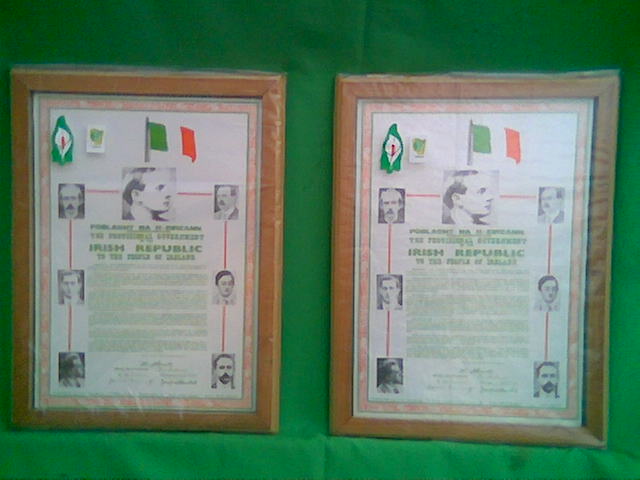
This 'surrender document' signalled the end of six days of fighting between approximately 20,000 British troops (including, in their ranks, Irish men) and a volunteer rebel force of about 1,500 Irish men and women (and other nationalities)...
From 1955 - England having 'goodwill' towards Ireland is a claim with no precedent to be found...
This Irish freedom fighter was captured in Galway by Free Staters late in 1922 and court-martialed in Athlone in January 1923, but was not executed as he thought he would be. In April 1923, while he was still incarcerated, his younger brother, along with six others, were executed in Tuam by the Free Staters...
From 2002 - 'Passing the Buck' : Delays were incurred by virture of the fact that the 'Fitness to Practice Committee' decided it would not have enough remaining time in office to proceed with and conclude an inquiry, and that the matter should therefore be left to the incoming Committee to proceed with...
This political tyrant came to power in mid-1979 and the havoc and mayhem caused by them can still be felt to this day...
Check back with us on Wednesday, 3rd May 2023 for all the above and more, 'cause something might be brought to our attention between this and then!
Thanks for the visit, and for reading - see ye on Wednesday the 3rd May, 2023!
Sharon and the team.
ON THIS DATE (26TH APRIL) 42 YEARS AGO : "TWENTY THOUSAND MARCHERS..."
Mrs. Rosaleen Sands (RIP).
Dear Mum
Dear Mum, I know you’re always there
To help and guide me with all your care,
You nursed and fed me and made me strong
To face the world and all its wrong.
What can I write to you this day
For a line or two would never pay
For care and time you gave to me
Through long hard years unceasingly.
How you found strength I do not know
How you managed I’ll never know,
Struggling and striving without a break
Always there and never late.
You prayed for me and loved me more
How could I ask for anymore
And reared me up to be like you
But I haven’t a heart as kind as you.
A guide to me in times of plight
A princess like a star so bright
For life would never have been the same
If I hadn’t of learned what small things came.
So forgive me Mum just a little more
For not loving you so much before,
For life and love you gave to me
I give my thanks for eternity.
 Bobby Sands (RIP).
'MUTUAL GOODWILL...!'
From 'The United Irishman' newspaper, April 1955.
We are so familiar with the English code of honour (!) that it is no surprise to read that in later years, when Disraeli had become Prime Minister, he wrote the following to the 'Viceroy' of Ireland -
"A portion of the population is attempting to sever the constitutional tie which unites it to Great Britain in the bond which has favoured the power and prosperity of both. It is to be hoped that all men of light and leading will resist this destructive doctrine..."
'Lord' Derby, in October 1881, writing of the Fenian movement, said -
"A few desperate men (sic), applauded by the whole body of the Irish people for their daring, showed England what Irish feeling really was ; made plain to us the depth of a discontent whose existence we had scarcely suspected. It is regrettable that, for the third time in less than a century, agitaetion accompanied by violence should have been shown to be the most effective instrument for redressing whatever Irishmen (sic) may be pleased to consider their wrongs."
Not even the pseudo-freedom we have today was gifted to us by England, or obtained by negotiation and "mutual good will" ; such 'freedom' as we have was wrested from England by force of arms...
(MORE LATER.)
ON THIS DATE (26TH APRIL) 107 YEARS AGO : IRISH PACIFIST EXECUTED BY THE BRITISH.
Francis Sheehy-Skeffington was born on the 23rd December 1878 in Bailieborough, Co Cavan, and was 37 years of age in 1916 when some of those who shared mostly the same social interests as he did and frequented the same venues (Thomas MacDonagh, James Connolly, Countess Markievicz and Joseph Plunkett, for example) organised and took part in an armed uprising against the British. Sheehy-Skeffington would have been sympathetic to their objective but not to their method.
On Easter Monday, 24th April 1916, the Irish republican Proclamation was circulated in Dublin and, in reply, on Tuesday 25th, the British circulated their own 'Proclamation' in Dublin -
' A PROCLAMATION -
Bobby Sands (RIP).
'MUTUAL GOODWILL...!'
From 'The United Irishman' newspaper, April 1955.
We are so familiar with the English code of honour (!) that it is no surprise to read that in later years, when Disraeli had become Prime Minister, he wrote the following to the 'Viceroy' of Ireland -
"A portion of the population is attempting to sever the constitutional tie which unites it to Great Britain in the bond which has favoured the power and prosperity of both. It is to be hoped that all men of light and leading will resist this destructive doctrine..."
'Lord' Derby, in October 1881, writing of the Fenian movement, said -
"A few desperate men (sic), applauded by the whole body of the Irish people for their daring, showed England what Irish feeling really was ; made plain to us the depth of a discontent whose existence we had scarcely suspected. It is regrettable that, for the third time in less than a century, agitaetion accompanied by violence should have been shown to be the most effective instrument for redressing whatever Irishmen (sic) may be pleased to consider their wrongs."
Not even the pseudo-freedom we have today was gifted to us by England, or obtained by negotiation and "mutual good will" ; such 'freedom' as we have was wrested from England by force of arms...
(MORE LATER.)
ON THIS DATE (26TH APRIL) 107 YEARS AGO : IRISH PACIFIST EXECUTED BY THE BRITISH.
Francis Sheehy-Skeffington was born on the 23rd December 1878 in Bailieborough, Co Cavan, and was 37 years of age in 1916 when some of those who shared mostly the same social interests as he did and frequented the same venues (Thomas MacDonagh, James Connolly, Countess Markievicz and Joseph Plunkett, for example) organised and took part in an armed uprising against the British. Sheehy-Skeffington would have been sympathetic to their objective but not to their method.
On Easter Monday, 24th April 1916, the Irish republican Proclamation was circulated in Dublin and, in reply, on Tuesday 25th, the British circulated their own 'Proclamation' in Dublin -
' A PROCLAMATION -
WHEREAS, in the City of Dublin and County of Dublin, certain evil disposed persons and Associations, with the intention of subverting the supremacy of the Crown in Ireland, have committed diverse acts of violence, and have with deadly weapons attacked the forces of the Crown, and have resisted by armed force the lawful authority of His Majesty's Police and Military forces ; and WHEREAS by reason thereof several of His Majesty's liege subjects have been killed and many others severely injured, and much damage to property has been caused ; and WHEREAS such armed resistance to His Majesty's Authority still continues :
NOW WE, Ivor Churchill Baron Wimborne, Lord Lieutenant-General and General Governor of Ireland, by virture of all the powers thereunto enabling us, do hereby proclaim that from and after the date of this Proclamation, and for the period of one month thereafter, unless otherwise ordered, the City of Dublin and County of Dublin are under and subject to Martial Law ; and WE do hereby call on all loyal and well-affected subjects of the Crown to aid in upholding and maintaining the peace of the Realm and the supremacy, and authority of the Crown ; and WE warn all peaceable and law-abiding subjects within such area of the danger of frequenting or being in any place in or in the vicinity of which His Majesty's forces are engaged in the suppression of disorder :
AND WE do hereby enjoin upon such subjects the duty and necessity, so far as practicable, of remaining within their own homes so long as these dangerous conditions prevail ; and WE do hereby proclaim that all persons found carrying arms without lawful authority are liable to be dealt with by virture of this Proclamation.
Given at Dublin,
This 25th day of April, 1916.
WIMBORNE.
GOD SAVE THE KING.'
That British 'Proclamation' was only in circulation for a day when three men were 'arrested' by British forces : Francis Sheehy-Skeffington, Patrick McIntyre and Thomas Dickson.
It was earlier on that same day, Wednesday 26th April 1916, that 1,600 British soldiers from the 'Third Cavalry Brigade', artillery from Athlone and the 176th and 178th Infantry Brigades of the 59th North Midland Division of the British Army were preparing themselves for the march from 'Kingstown' Harbour (Dun Laoighaire) to Dublin city centre.
Tension was high in the city ; Francis Sheehy-Skeffington, a leading writer and well-known pacifist, was in Dublin city centre, on his way home to Rathmines when he tried to help stop looters who were out in force, taking advantage of the disorganised situation in the capital, but he was 'arrested' by British troops from Portobello Barracks, as were two other civilians - Dublin journalists Patrick McIntyre, then editor of the 'Labour' newspaper, 'Searchlight', and Thomas Dickson, then editor of a pro-republican weekly newspaper, 'The Eye-Opener'.
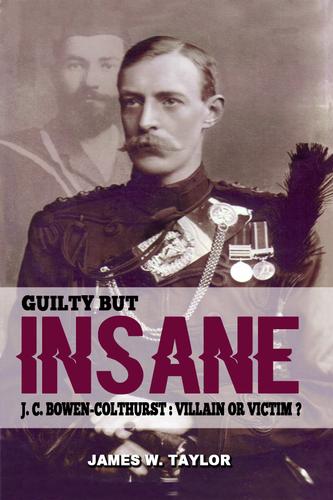
Word circulated on Thursday morning, April 27th, 1916, that the three men had been shot dead in the barrack square by a British Army firing squad, without any 'formal' charges having been brought against any of them. Later , the British Army Captain in charge of the firing squad, a Bowen Colthurst, a member of the 'Royal Irish Rifles', from Dripsey in County Cork, who was a decorated officer who had fought in the Boer War and afterwards served in India, including the 1904 British military incursion into Tibet.
He had been injured while leading a disastrous attack against a German position on the western front in September 1914 and was sent back to Ireland. He was attached to the 3rd Battalion stationed at Portobello Barracks when the 1916 Easter Rising took place. Colthurst was later 'tried' by court-martial regarding the order he issued to the firing squad and was found 'guilty but insane', but a different account re the shooting of the three men was beginning to emerge.
It was during the court-martial of Bowen Colthurst that a different version of the events surrounding the executions of Francis Sheehy Skeffington, Patrick mcIntyre and Thomas Dickson was spoke of - a British Army Officer in Portobello Barracks stated that he heard a number of shots on the Wednesday (April 26th, 1916 - 107 years ago on this date) and went to investigate ; he claimed to have seen three stretchers being carried out of the porch of the guardroom on which were three dead bodies - one of those bodies had a blanket thrown over it and a bowler hat placed across the face and, from either side of the stretcher, an arm hung down, dripping blood.
This (unnamed) British Army Officer claimed that the body with the bowler hat on the face was that of Francis Sheehy Skeffington - the 'witness' stated, apparently in a jovial manner, that the firing party had done its work so badly that a second one had had to be summoned to finish Skeffington off. Were the three men shot dead in the guardroom on the Wednesday night (26th April 1916) by a vengeful British enemy and then, in order to cover-up the deed, were their corpses 'wheeled out' the following day for an 'official' British Army 'execution'..?
The following letter makes for interesting reading in relation to the circumstances surrounding this particular event -
From Henry Lemass
To : Herbert Henry Asquith
13 June 1916
31 PARLIAMENT STREET, DUBLIN,
SIR
As solicitor for Mrs. Sheehy Skeffington - for whose husband's murder, on 26th April, Captain Bowen Colthurst has been adjudged guilty - I have the honour to inquire when the promised Public Inquiry will be held? My client is profoundly dissatisfied with the limited information afforded at the Courtmartial, when the insanity of the accused was suggested. While she abhors the idea that fresh blood should be spilt, my client is equally resolute that the truth should be known, so that the people of the three Kingdoms may determine whether the same measure of justice has been meted out to all parties affected by the rebellion.
That there were circumstances giving rise to anxiety connected with the recent trial will be evident from the following facts : Lieutenant Wylie, K.C. who had prosecuted to conviction other men recently executed, was released from this Courtmartial and an English Counsel, not fully acquainted with the facts or imperfectly instructed, was appointed. Although no plea of inability to plead was entered for the accused, the question of his sanity was raised from the outset.
Yet the manner in which he effected the arrest of the other murdered men (Messrs Dickson and McIntyre) was not proved, nor the process by which he selected them for execution from amongst eight prisoners. Nevertheless, it was within the knowledge of the Military Authorities that Messrs Dickson and McIntyre were taken into custody on the premises of Alderman James Kelly, ex-High Sheriff, by the accused, under the idea that the shop belonged to Alderman Thomas Kelly, a person of wholly different politics.
They also knew that Colthurst threw a bomb into the premises and subsequently "planted" Mr. Dickson's trunk therein to give rise to the suspicion that Mr. Dickson had been harboured by Alderman James Kelly who was also lodged in Portobello Barracks.
Nor was the Court informed that two sisters of Mrs. Skeffington, viz: Mrs Kettle (wife of Lieutenant Kettle), and Mrs, Culhane (widow of a public official lately deceased) called at Portobello Barracks on Friday, 28th April, after the murders, and, on inquiring for their brother, Lieutenant Sheehy, were put under arrest and brought before Captain Colthurst, and that he denied all knowledge of Mr. Skeffington and was perfectly calm and collected in his demeanour and falsehoods.
Similarly, the tribunal was not made aware that on the evening after his examination of these ladies, Captain Colthurst ordered a search of Mrs.Skeffington's house ; that his soldiers first fired into her dwelling, and then, producing a key taken from the body of the murdered man, opened his locked room and removed documents to try to furnish the accused with ex post facto justification for his crime.
The second raid on the widow's house by Colthurst's orders on the following Monday, as well as the fact that one of the soldiers who took part in it was the Sergeant left in charge of Dickson's trunk at Alderman James Kelly's, was also left unmentioned. There was an equally significant silence as to the protests of the murdered men on the morning of their execution, and as to the accused's refusal of spiritual solace to them in their last moments.
The Courtmartial were likewise unaware that Captain Colthurst was allowed to remain at large by his superiors until the 6th May - nearly a fortnight after the murders - while the non-production of Major Sir Francis Vane, his Senior Officer, disabled it from learning that on the 1st may (a week after the murders) the accused was promoted to the charge of the Defence of Portobello Barracks.
His conduct on shooting the lad, Coade, on Rathmines Road previous to the three murders, was not introduced, although Coade's father immediately lodged information at the Barracks.
None of the soldiers who formed the firing party was called to speak as to the nature of the accuseds commands and demeanour, or explain how Mr. Skeffington came to be taken from a locked cell without authority. The added tragedy which led to a second squad of soldiers being called out to fire at the prostrate body of Mr. Skeffington would not have become known (although proved at the private preliminary inquiry) but for the candour of the noble President of the tribunal, Lord Cheylesmore.
As for the attempt to fasten complicity with the rebellion on Mr. Skeffington by the production of a document published previously by Alderman Thomas Kelly (which deceased, as a journalist, kept in his house) - it stands in strange contrast with the silence preserved concerning the innocence of the other slaughtered men and the Court was not even told who or what they were. The admission of this document after Adjutant Morgan, who produced it, had sworn that it was not found on Mr. Skeffington, may have been due to inadvertenance, but the cunning of the untruthful endorsement on it by the accused to the effect that it was found on the body, seemed to call for observation on the issue of sanity, as corroboration of the fact that Captain Colthurst from the date when he knew the murders were discovered, was engaged in the manufacture of evidence to palliate his guilt.
I therefore have to ask that in view of the promised Inquiry you will make arrangements with the Military Authorities to have in attendance thereat, in addition to the witnesses called on behalf of the prosecution at the late Courtmartial, the following persons : 1 — The soldiers under command of Lieutenant Wilson when Mr. Skeffington was marched out of his cell into the street to serve as a hostage. 2 — The soldiers who composed the first and second firing parties. 3 — Lieutenant Colonel McCammond who was in command of the Royal Irish Rifles. 4 — Major Sir Francis Vane, 2nd in Command. 5 — Lieutenant Tooley and Lieutenant Gibbon. 6 — The officers and soldiers who were sent after the murder to search Mrs. Skeffington's residence on two occasions - especially Sergeant Claxton.
Of course, the names, regiment and regimental number of all the proposed witnesses should be supplied to me some days before the Inquiry, unless the Government undertake to call them for examination. I should also be furnished the Notes of the preliminary Inquiry which the Courtmartial were supplied with. In addition I request that all documents, etc., taken from the person of Mr. Skeffington, or seized at his residence, should be returned, and if this is refused that copies should be supplied to me.
I should likewise be afforded an opportunity of examining and taking copies of any reports or entries dealing with the circumstances attending the arrest or execution of Mr. Skeffington, or the searches at his residence. I shall feel obliged by an intimation of an early decision.
I have the honour to be, Sir,
Your obedient Servant
HENRY LEMASS.
To THE RIGHT HON. H. H. ASQUITH, K.C., M.P.,
Prime Minister,
10 Downing Street, London, S.W.'
Francis Sheehy Skeffington : Born 23rd December 1878, Bailieborough, County Cavan ; Died 26th April 1916, 107 years ago on this date, Portobello Barracks, Dublin, aged 37.
ON THIS DATE (26TH APRIL) 278 YEARS AGO : 'LORD' KILLED BY A DRAGO(O)N'S 'STING'.
'Positive and overbearing,
Changeful still and still adhering,
Spiteful, peevish, rude, untoward,
Fierce in tongue, in heart a coward.
Judgement weak and passion strong,
Always various, always wrong.'
"On this date (26th April 1745 - 278 years ago today), John Allen (3rd Viscount Allen), former MP for Carysfort, kills a dragoon in a street brawl : 'His Lordship was at a house in Eustace Street. At twelve in the night, three dragoons making a noise in the street, he threw up the window and threatening them, adding as is not unusual with him a great deal of bad language.
The dragoons returned it. He went out to them loaded with a pistol. At the first snapping of it, it did not fire. This irritated the dragoon who cut his (ie Allen's) fingers with his sword, upon which Lord Allen shot him.' The wound occasions a fever which causes Lord Allen’s death on 25 May..."
Or maybe, perhaps, the '3rd Viscount' did not invite such misfortune onto himself - '..he seems to have been mugged in the centre of Dublin one night in 1745, and although he fought off his attackers - and killed one of them - he received a wound in his hand which became infected and caused his death a month later...he died on 25 May 1745 from an infected wound in the hand received when he was 'insulted in the public streets by some disorderly dragoons' - one of whom he killed - on 26 April 1745..' (from here.)
And this, sourced from 'Google Books' - 'This nobleman being insulted in the public streets by some disorderly dragoons 26 April 1745, received a wound in the hand which occasioned a fever, and caused his death 25 May...'
But, really, whatever about John Allen (the'nobleman') inviting trouble by being verbally aggressive to three 'loud' soldiers (karma that all four participants were birds of a feather!) or whether the three soldiers momentarily forgot they were on home ground and simply behaved as if they were 'on duty' elsewhere in their 'empire', the parties involved caused trouble only too and for themselves, unlike another 'John Allen', featured here, who would attempt to convince you (having himself obviously being convinced by his 'betters') that the 'empire' he served is some sort of benevolent and charitable organisation, rather than the thieving and toxic entity it is.
That last link will permit you to 'View More Comments', and you should - "And I'm sure that many members of the Red Army were "fully dedicated to the well-being and advancement of the people they served" and had a "sense of mission" too..the problem is that ruling over people without their consent (which is what colonialism is a subset of) is wrong. It doesn't matter if you do it for purely "greater good" or paternalistic reasons, it's still wrong...it would be much better for us as a society to really stop lying to ourselves and face the reality of the British Empire.
It committed genocide across the world, stole the natural resources from the countries we claimed as ours, destroyed and laid waste to the cultures of millions of people, raped, pillaged and then in the dog days of empire we pretend we were their (sic) to protect the people from terrorists.."
At least this'John Allen', the 'Funnyman', admits to being a comedian, unlike the other two, and acknowledges that 'his house is a mess' - the other two John Allen's, by virture of their professions, preferred to 'mess up' everybody else's 'house'...
'THOUGH THE HEAVENS MAY FALL...'
From 'Magill' Annual, 2002.
Dr Moira Woods (pictured).
In March 1992, a complaint alleging professional misconduct against Dr Woods was lodged with the Medical Council, the governing body of the medical profession in Ireland (sic).
The complaint made little progress during the lifetime of the then council, and it was not until a new council took office in 1995 that an inquiry was mooted. In January 1996, the families were informed by the Medical Council that there was sufficient prima facie evidence to warrant an inquiry.
In December 1996, the Medical Council's 'Fitness to Practice Committee' met to consider whether the inquiry should be held in public or in private and a majority of the Committee concluded that, with the exception of matters relating to one family, it would be appropriate to proceed by means of a public inquiry.
The names of children and families were to be removed from all documents, and it was ruled that references to them in the course of the inquiry should not allow them to be identified...
(MORE LATER.)
FUNDS AND FINE GAEL'S LEADER...
Michael Lowry has so far been the focus of media attention about Fine Gael fundraising.
But the party's current leader, Enda Kenny (pictured), hosted a £1,000-a-plate dinner two days before the second mobile phone licence was awarded. And other guests say that one of the bidders for that licence was in attendance.
By Mairead Carey.
From 'Magill' magazine, January 2003.
Enda Kenny made it clear from the outset of the latest leadership campaign that he did not support Michael Noonan's view on corporate donations - and overturned the (Fine Gae) ban within months of taking the helm.
Since 1997, the party has had to disclose the identity of donors, which has led to a falling-off in revenue. Fine Gael received no corporate donations last year (2002) as a result of Noonan's ban and received just over €60,000 in 2000 and just over €18,000 in 1999. Because it lost over 20 TD's (sic) in the last election, the party is down some €600,000 in State funding given to the main political parties.
Enda Kenny's own fundraising has never reached the heights it scaled when he was in office...
(MORE LATER.)
Thanks for the visit, and for reading,
Sharon and the team.
In the early 1980's in Ireland, this world-famous Irishman wrote a poem for his mother and became as well-known for his writing skills as he was for his social justice campaigns...
This English 'Lord' somehow or other was shocked in discovering that the Irish didn't much care for the way of life that he and others like him were trying to impose on their 'subjects'...
Dublin, 1916 - the right man was in the wrong place at the wrong time but the British didn't care and, in their haste to make an example of him, they left behind evidence of their wrongdoing and this was discovered by a family member...
In 18th Century Ireland, this drunken British soldier realised that he had brought a sword to a pistol fight, but he caught a lucky break (which was not so lucky for the 'Lord' he was facing...!)
...and two more stories as well.
Check back with us on Wednesday, 26th April 2023 for all the above and possibly even more, if something catches our eye between this and then!
Thanks for the visit, and for reading - see ye on the 26th!
Sharon and the team.