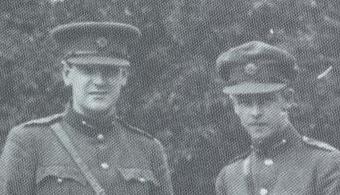
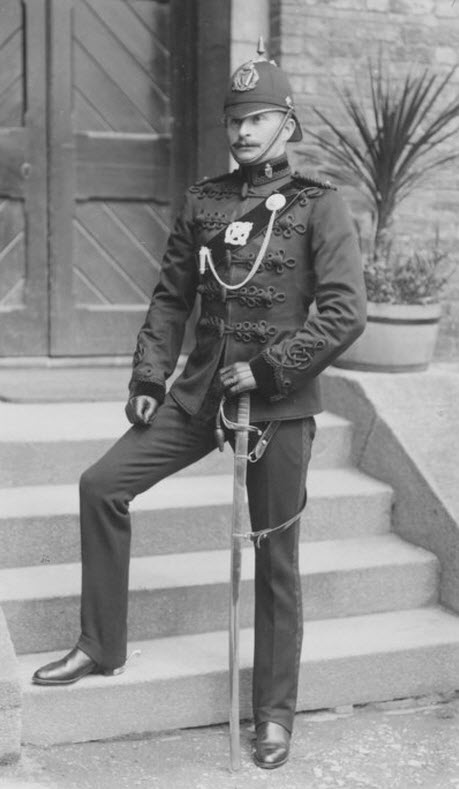
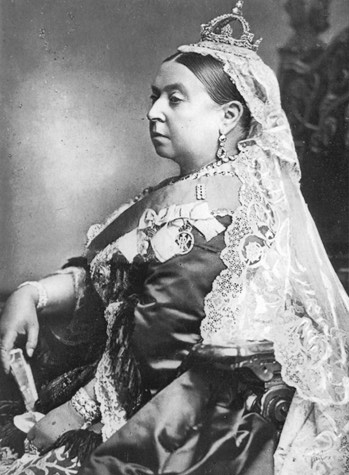
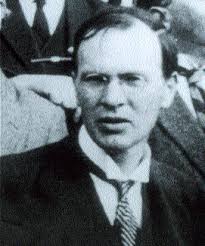
On the 18th December, 1919, Irish and British newspapers reported that, during a Q+A session in the 'House of Commons' in London, which took place the previous day, a Mr Winston Churchill (pictured), the British 'Secretary of State for War and Secretary of State for Air' (!) stated that there was 43,000 British soldiers in Ireland, costing the British taxpayer £860,000 per month.
Those same newspapers rarely mentioned it at the time or later but, between 1919 and the spring of 1921, the unemployment level in Britain rose from 3.9% to over 20% and, in May of 1921, that level actually showed an increase to 23.4%.
That £860,000 could have been put to a worthwhile purpose each month - should have been spent at home on their own social services rather than on maintaining military and political control on a country foreign to them.

On the same day (17th December 1919) that his colleague, Mr Churchill, admitted to wasting £860,000 a month, a British 'Field Marshal', a Mr John French ('Sir John Denton Pinkstone French, 1st Earl of Ypres and Lord Lieutenant of Ireland') wrote the following memo for his diary-
"The Irish are an impulsive and quick-witted, but not a deep-thinking, people.
Their real feeling was never in favour of a Republic, or indeed, of any form of complete separation..."
Mr French was born in Kent, in England, but always considered himself an 'Irishman' due to his family's Anglo-Irish roots in County Roscommon.
He should have thought deeper about it...

As Mr French was feeling his Irishness, an accident occured in the Sinn Féin Hall in an area known as Briosc-Choill ('Briskil') Newtown Forbes, in Clongesh Civil Parish, Barony, County Longford.
IRA Volunteer John Mahon was hit in the accidental discharge of a weapon by a comrade, Volunteer Peter Nolan, and died from his wound.
RIP Volunteer John Mahon.
==========================
61 YEARS AGO THIS MONTH : CHE GUEVARA LANDS IN IRELAND.

On the 14th June 1928, Celia de la Serna y Llosa, from Rosario in Argentina, gave birth to her fifth child, a boy, who her and her husband, Ernesto Guevara Lynch, named as Ernesto Rafael Guevara de la Serna, better known to the world as Che Guevara.
Celia's mother was from Galway and moved to South America where she married into the Guevara family.
Having Irish roots, Guevara visited this country a number of times and it was during one such visit in the early 1960's, to Kilkeel, in British-occupied County Down, that Irish artist Jim Fitzpatrick encountered the man.
The young artist, then a teenager and a student at Gormanstown College, was helping to pay his way through college by working part-time in the Marine Hotel pub in Kilkeel, where his mother was from.
Jim happened to be on the premises on the same morning that Che Guevara and two of his colleagues walked in and ordered glasses of Irish whiskey.
He recognised Guevara immediately and got chatting to him about his Irish roots, and was told by Guevara that he had an Irish grandmother and that her mother, his great-grandmother, a woman named Isabel, was from Galway, and that he had other family connections with the Cork area.
However, now, perhaps, more so than in the 1960's, 'money talks' and local politicians listen : to destroy a Jim Fitzpatrick work of art for such short-term gain is the very mindset that Che Guevara tried to overcome and, unfortunately, there are not enough Che Guevara types left in this world to do that.
GAS LADS...

The massive finds of oil and gas on our western seaboard could ensure Ireland's financial security for generations.
Wealth approximating that of the Arab countries is within our grasp, but the Irish government seems content to sell off our birthright for a handful of votes and a few dollars.
In a special 'Magill' report, Sandra Mara investigates just what we are giving away, and why.
From 'Magill' magazine, March 2002.
For its part, 'Enterprise Energy Ireland' claims that the capital cost of bringing Corrib gas ashore will be in the region of €634 million between 2000 and 2005, with estimated additional costs of €152 million to connect up to the main Galway ring later this year.
While much of this will represent outlay in respect of equipment - which can be off-set against taxation - it states that there will be "a significant number of workers involved, around 500 for two seasons on the off-shore pipeline and terminal, and 1,000 for one season on the pipeline to Galway."
They admit, however, that "..while many of these workers would not be local residents, they will be based in the area during construction.
The local spend generated by these workers will exceed €25 million over two seasons of construction and, in addition, significant sums will be spent on local supplies for the construction sites.
While it is difficult to be precise about how many temporary jobs might be created, it is reasonable to estimate that it could run into hundreds..."
(MORE LATER.)


On the 17th December, 1920, an RIC member, a 'District Inspector' in that grouping, Mr Philip O'Sullivan, met his fiancé, a Miss Moore, at the GPO in O'Connell Street in Dublin, as arranged, and the pair of them went for a ramble down nearby Henry Street.
Days previously, the young lady had been advised to have nothing to do with him, as he was a marked man because of his membership of that paramilitary organisation and because he used his position within that organisation to assist the Black and Tans, but she dismissed that advice.
Volunteer Ned Kelliher had been monitoring Mr O'Sullivan's movements for about a week and had told his comrade, Volunteer Joseph Byrne, that the RIC member would be on Henry Street between 6pm and 7pm on the 17th, with Miss Moore, and Volunteer Byrne and three other Volunteers patrolled the street, looking for him.
When they seen him, they approched and one of the Volunteers shot him in the head ; Miss Moore grabbed the revolver before he could fire a second shot but a second shot was fired into Mr O'Sullivan by one of the other Volunteers.
There was panic in the street, enabling the Volunteers to leave the scene and return safely to base.
The RIC man was rushed to Jervis Street Hospital and died there an hour later.
Two or three hours later, on that same day, about 155km (97 miles) up the road, in Swanlinbar, County Cavan, an RIC 'Sergeant', a Mr Charles Morahan ('Service Number 57996'), left Swanlinbar RIC Barracks on foot patrol with three other RIC members - Mr Peter Shannon ('62069'), Mr John Collins ('60999') and a Mr William Francis Joseph Halligan ('66590').
The four of them were walking towards the Enniskillen Road in the north of the town when shots were fired at them.
RIC member Mr Peter Shannon was hit three times as he ran for cover, which he found behind a low wall, where he died from his wounds.
RIC member Morahan was hit in the head with shotgun pellets, but lived to tell the tale.
The Volunteers, about 20 of them, were attached to the Corlough Battalion, West Cavan Brigade IRA and, at the same time as they were withdrawing from the scene of the ambush, some of their comrades called to the house of another RIC member, a Mr Patrick Mulligan, but left on discovering that he wasn't there.
Other Battalion Volunteers called to the house where RIC member Francis Byrne lived and shot him - he fell to the floor, his wife screamed, the Volunteers left - they returned shortly afterwards to ensure he was dead but his distraught wife went to attack them ; they let her be and left the house.
Mr Byrne survived, living to tell the tale.

"Any war, to be just and lawful, must be backed by a well-grounded hope of success.
What hope of success have you against the mighty forces of the British Empire?
None!
None whatever.
And, if it's unlawful, as it is, every life taken in pursuance of it is murder..."
Catholic Bishop Patrick Finegan, in a statement he released on the 17th December 1920.
Mr Finegan was known, apparently, for his 'piety, scholarship and patriotism' and had, earlier in that same year (summer, 1920, addressing an audience in Cootehill, County Cavan), gone on record for assuring those listening that "..it was true that God forgave even the murderer (sic)...".
Then, as now, Catholic priests with Irish republican leanings existed but - again, then as now - their pastoral letters etc can be (and were) misrepresented and/or outright censored, as mentioned here (see, for instance, the notifications for the 10th and 13th December, 1920, on that link).
The bottom line, however, in our opinion, is to 'put not your trust in princes' : if something is so wrong (such as British military and political interference in Irish affairs and/or the literal and purpose swamping of this State and Country with 'asylum seekers/refugees/migrants/vagrants', for example) then that wrong must be righted, by any means possible.
==========================

THE MONTH UNSPUN...
The stories that hit the headlines.
From Magill magazine, August 2002.
What unionists say they want is positive action from the IRA to advance the peace process, and not statements that they feel are politically motivated.
David Trimble, in particular, has been forceful on this point - issuing an ultimatum to Tony Blair that the Prime Minister must expel Sinn Féin from the Executive if the IRA refuses to abandon all paramilitary activity, Tony Blair, in turn, has said the IRA must abide by strict ceasefire criteria laid down in the past week.
Given that it is difficult to see this happening, the onus could be put back on Tony Blair very quickly...
(MORE LATER.)


On the 17th December, 1921, the pro-British newspaper 'The Belfast Newsletter', in an Editorial on the Treaty of Surrender, described that Treaty as "a betrayal of Ulster(sic)..." but, as the saying goes - 'It's hard to tell who has your back, from who has it long enough just to stab you in it'.
Weeks after that Treaty had come into operation (ie on the 23rd January 1922 ; it was signed and accepted by the Staters on the 6th December 1921 but it only came into full effect and 'formally established' the Irish Free State on the 6th December, 1922, one year later) that same newspaper said that if the Leinster House administration is prepared to take an attitude of goodwill to the Stormont administration "then the Treaty is likely to turn out a blessing to the whole of Ireland..."!
Same as it always was and always will be until the 'Irish Issue' is finally settled : pro-British supporters in Ireland will always warm to anything which has the welcome effect, as they see it, of dividing their opponents.

"The English have made a greater concession than we. They have given up their age-long attempt to dominate us..."
- Michael Collins, in a letter he wrote on the 17th December 1921, to his fiancée, Kitty Kiernan (pictured).
Well - Mr Collins was right about one thing : M/s Kiernan was his fiancée.
"The British broke the Treaty of Limerick, and we'll break this Treaty too when it suits us, when we have our own army..."
When Mr Collins and other turncoats like him assembled their own army, they tasked it with upholding partition and hunting down and executing the brave men and women of the IRA that they had once fought alongside.
Their oath to the Irish Republic - that's what Mr Collins and his ilk 'broke' :
'I, (name), do solemnly swear that I will uphold and defend the Irish Republic and the Government of the Irish Republic which is Dáil Éireann against all enemies both foreign and domestic ; that I will bear true faith and allegiance to the same. That I take this obligation freely without mental reservation or purpose of evasion, so help me, God.'
Instead, the Staters took the following oath -
'I, (name), do solemnly swear true faith and allegiance to the Constitution of the Irish Free State as by law established, and that I will be faithful to H. M. King George V, his heirs and successors by law in virtue of the common citizenship of Ireland with Great Britain and her adherence to and membership of the group of nations forming the British Commonwealth of Nations.'
Don't know if Kitty took the same oath or not, but shame on those who did.
Incidentally, Francis Thomas Aiken, a republican-gamekeeper-turned-Free State-poacher, stated that Eoin O'Duffy, another republican-gamekeeper-turned-Free State-poacher, had told him that the signing of the Treaty (and, therefore, the taking of the 'loyal to the Commonwealth' oath) "was a trick. IRA GHQ had only approved the Treaty in order to get the arms to continue the fight...".
And trick it was - but it was those oath-takers who were being tricked...

On the same day that Mr Michael Collins was whispering sweet nothings (literally) to his Kitty, the Third Session of the Second (Republican) Dáil (Day Four) was in session in Dublin -
"I know perfectly well I have charge of four thousand men. I do not here hesitate to say that number.
But of that four thousand I have a rifle for every fifty. Now that is the position as far as I am concerned and I may add that there is about as much ammunition as would last them about fifty minutes for that one rifle.
Now people talk lightly of when we are going to war. I hold they do not know a damn thing about it.
I hold further the Treaty is called a bird in the hand. I hold that that bird in the hand can be turned to Ireland's interests, not to put or to have only one rifle in the hands of every fifty men but to put one rifle in every man's hand..."
- Séan MacEoin (pictured), yet another republican-gamekeeper-turned Free State-poacher, speaking at that Dáil session.
And Mr MacEoin and his type did indeed "put one rifle in every man's hand", but those rifles were turned against their old comrades, not against the British.

Speaking at that same Dáil session, Mary MacSwiney (pictured), who lived as she died (in 1942) - a true Irish republican - knew that the majority of the public would grasp any straw if they were led to believe that, in doing so, the war would end and a fitting political solution would ensue :
She said that the people were not in a position, a frame of mind, to decide, because they "had been in slavery for 120 years and longer" and that, because they would be unable to decide as a free people, it was up to the members of the Dáil to decide for them, stating - "We cannot compromise but I ask you to vote in the name of the dead to unite against this Treaty and let us take the consequence".
She continued -
"This ratification must go to the people not yet trained out of the slavery which the last 100 years have put into these souls. As to whether the majority of the people would take it, what would the majority in 1916 have taken?
Somebody quoting Pádraig Pearse said 'We have lost this battle but we have saved the soul of the nation', and if you tomorrow ratify this Treaty you would have done the best you could to undo Pádraig Pearse's work and to lose the soul of the nation, for we have to face the fact that our people are only gradually coming out of the slavehood.
It was the minority in 1916 that made 1918 possible ; it was that minority all along that made it possible to have this offer today..."
That was the start of the Dáil debates on the Treaty of Surrender and, just over one year later, the assembly unfortunately voted 64 to 57 to accept the Treaty.
For shame, in our opinion.
On that same date (17th December 1921), about 170km (107 miles) up the road in Belfast, that same issue - the British military and political presence in Ireland - was also causing trouble.
Three men - Mr Walter Pritchard (30), Mr John McMeekin (41) and Mr Edward Brennan (22) - were shot by snipers, and a shopkeeper, a M/s Frances Donnolly(/Donnelly) was shot and wounded by a member of the USC.
The poor woman died from her wound two days later.

"We shall be a free people.
Some say that our freedom is limited, but if we look around and examine the small nations of the world, we will realise that we will have to bow in this wicked world to the forces of might..."
- Mr James Nicholas Dolan (pictured), in one of his pro-Treaty speeches, 17th December 1921.
A republican-gamekeeper-turned-Free State-poacher who knew, like the other wannabe Staters, that Westminster was not willing to move on the question of partition, but could live with that - 'we will be a free people...well..not really..'
As Mr Dolan was being economical with the truth, about 170km (107 miles) up the road in Belfast, some of those that he allegedly supported were facing reality.
An IRA ASU were in the process of carrying out an arms raid in Balmoral Military Camp in Belfast but they were caught by the British soldiers there, and six Volunteers were captured.
As those Irishmen were looking for equipment with which to free Ireland, newspapers reported that Englishmen in the political administration in London had, the previous day, tightened the noose on that desire.
They were voting on the Treaty of Surrender and those Englishmen in the so-called 'British House of Commons' voted 401 to 58 in support of that vile document and their colleagues in the 'House of Lords' voted 166 to 47 in favour.
Voting to decide the fate and fortune of their neighbours...
==========================
DEATH IN THE MEDITERRANEAN...

Desmond Boomer, a Belfast engineer working in the Libyan oil-fields, disappeared seven years ago.
Officially, the plane on which he was a passenger crashed as a result of mechanical failure and pilot error.
But is that the real story?
Or were the Irishman and his fellow passengers unwitting victims of the shady war between Islamic fundamentalism and Mossad, Israel's intelligence network?
A special 'Magill' investigation by Don Mullan, author of 'Eyewitness Bloody Sunday'.
From 'Magill' magazine, January 2003.
Paul Lehman was heard saying to his lawyer "I have no difficulty in answering that", to which his lawyer responded "Okay".
Mr Lehman then said "Yes sir, I believe that to be the case", and he was then asked if he could be certain that the aircraft crashed on the night in question, to which he replied "No sir, I can't say that for sure."
In August, 1999, Dr. Christian Farrugia, a Maltese lawyer, wrote to the chairman of the Maltese Board of Inquiry criticising its failure to properly investigate the disappearance of the aircraft -
"The Board did not manage to procure the very best evidence available (and) opted to rely on incomplete testimony and procedurally defective documentation when other alternative routes existed.
This will impinge on the integrity of the Board's final conclusions..."
(MORE LATER.)


On the 17th December, 1922, thousands of Irish people took to the streets of Dublin to wave goodbye (!) to British soldiers who had been ordered by Westminster to vacate the newly-spawned Irish Free State, as per the Treaty of Surrender stipulation.
The politicians in Westminster were comfortable in doing this because they were handing control of their then newest acquisition from actual British political and military forces to pro-British political and military forces.
The last 3,500 British troops in Dublin marched from their various barracks (including the former British General Headquarters at Parkgate Street and the 'Royal Barracks', now Collins Barracks) to the North Wall area of Dublin Port.
They boarded ships, including the SS Arvonia, and sailed for home, in England.
A British Army Captain, a Mr Henry Robinson, was said to be the very last soldier to board his ship at 3:45pm, on that date, the 17th December 1922.
So here's to you, Mr Robinson, but there are still about 2,000 armed British soldiers in Ireland, in our six north-eastern counties ; hopefully their ship will sail soon...

As Mr Robinson and his grouping were waving goodbye to Dublin, and it to him, I'm sure, about 165km (103 miles) down the road a train was brought to a sudden stop.
Volunteer Captain Thomas Keating was in command of a column of rebels (who were headquartered in the Comeragh Mountains) and they had removed a section of track on the Mallow to Waterford railway line, forcing the train to come to a stop outside the town of Cill Mhíodáin (Kilmeaden/Kilmeadan).
The IRA then boarded it and, as a section of the men removed the mailbags, other rebels removed the passengers.
The mailbags were put carefully to one side, a distance away from the train, and the passengers were told to walk the five mile distance back to the station where they had got on.
The mailbags usually contained information of use to the rebels, and destroying traintrack infrastructure etc disrupted the Stater army and its transport and communication lines.
The train engine, two carriages and the guards van were set on fire and, before the fires had fully caught, the train driver was told to start the engine and drive the train forward, onto the missing track - he refused, was put off the train and a rebel hand done the job instead.
The train derailed, toppled over and burned itself into a state of uselessness.
The rebel fighters returned safely to base.
(RIP Volunteer Captain Thomas Keating.)
==========================
55 YEARS AGO TODAY (17TH DECEMBER 1970) : EVE OF THE FORMATION OF A LOYALIST DEATH-SQUAD.

The 'Ulster Defence Regiment', a pro-British loyalist paramilitary gang, was established by Westminster on the 18th December 1970 and continued to uphold the British writ, as the UDR, until 1992, when they were amalgamated with the 'Royal Irish Rangers' to form the 'Royal Irish Regiment'.
In every country it occupied (...and in every country it continues to either occupy or take an 'interest' in) Britain, like other imperialist forces, recruits a native 'workforce' which it uses to serve its interests.
In the mid-to-late 19th Century in Ireland, for instance, Westminster decreed that the then Irish police force be re-named the 'Royal Irish Constabulary', a move which the then British 'queen', Victoria, was strongly in favour of, as a 'reward' to them in payment for the cruel manner in which they dealt with the Fenian Rising.
In the early 1920's, after Britain had partitioned Ireland, the paramilitary RIC groupings in the Six Counties were re-classified as the 'RUC', 'U' for 'Ulster' ('1169...' comment : sic - Ulster has nine counties , not six) and a new pro-British death squad was also established - the 'USC' (or the 'B Specials', as they were better known) , comprised of native loyalist/unionist supporters, sharing a common hatred of all things Irish.

'The Specials' were left with more or less a free rein by Westminster to 'maintain (English) law and order' in that part of Ireland but they dirtied their own doorstep so often that Westminster, long embarrassed by having to clean up after them so often, produced a report which, basically (much to the disgust of the local 'powers-that-be') , called for their reign to be brought to an end but, by coincidence (!) , a new pro-British murder gang was formed : the UDR.
This latest reincarnation of the RIC/RUC/USC/B Specials (which also 'traded' as the 'UVF') had, by 1992, ran out of doorsteps to dirty and, in that age-old British 'tradition', was 're-launched/re-named' as the 'Royal Irish Regiment' (RIR), on 1st July 1992.
But regardless of what name or uniform Westminster dresses them up as (or in) they will remain what they have always been - mercenary boot-boys in military garb, whether in Ireland or abroad.
And they will continue to meet the same response that their ilk so readily dish out to those that dare challenge the 'might of the British Empire'.


One of the many problems that partitioning Ireland brought for Westminster, God help them, to be sure, was the subject of social welfare payments to, for instance, an unemployed man or woman in England compared to an unemployed man or woman in the British-occupied six north-eastern counties of Ireland.
It was with this in mind that the then British 'Under-Secretary for Ireland', a Mr John Anderson (' 'Sir' John Anderson, 1st Viscount Waverley') wrote to a colleague of his in the British Ministry of Labour on the 17th December, 1924.
Mr Anderson was concerned "that amalgamation of the British and Northern Ireland (sic) unemployment insurance would be an admission that the 'Government of Ireland Act 1920' was unworkable" because, under that Act, the Stormont administration were expected to fund all such social services from the tax they raised in the occupied zone but, the pool being smaller to draw from than the pool in England, a pound-for-pound payment match wasn't possible.

Oh, what a tangled web we weave...!
Unionists were insisting that an unemployed person in, say, Belfast, should be on the same welfare payment as an unemployed person in, say, Bristol, as that person was just as British, they claimed, and should be entitled to the same social payments.
But the smaller kitty wouldn't allow for that.
The issue was verbally pondered over and kicked down the road until March, 1925, when the Stormont 'Prime Minister', a Mr James Craig ('1st Viscount Craigavon PC NI DL' ETC ETC!) wrote to a Mr Churchill, the then 'Chancellor of the British Exchequer' in Westminster, demanding that the funds from which Westminster paid out, for instance, welfare payments, should be amalgamated with the funds which Stormont used for same - and he said he would resign if that was not done.
And, that same month, a Mr John Miller Andrews, the 'Stormont Minister for Labour', wrote to his political pal, a Mr Charles Vane-Tempest-Stewart ('Lord Londonderry, the 7th Marquess of Londonderry'!), telling him -
"The plain truth is that we cannot carry on as a Government here (ie the Occupied Zone in Ireland) unless our working classes enjoy the same social standards as their brother Trade Unionists in Great Britain..."
And t'was in that same month also (March 1925) that Mr Churchill recorded in his diary that the provision of social services depends on a "sufficiently large area and large numbers of trades" (ie a sufficiently big kitty) and that the Six County area, on its own, could obviously not match the kitty in England.
And, lo and behold, also in March, 1925, the Cabinet in London agreed that "on the grounds of equity" Britain should assist Stormont in its "difficulties" with its unemployment insurance fund issue, and authorised Mr Churchill to donate £650,000 to that Stormont fund.

But, again, questions were raised about giving that money as to do so "would be a departure from the spirit, if not the terms, of the Treaty...", as Mr Anderson again put it, and Mr Churchill agreed with him, saying that it would involve a substantial modification of the '1920 Government of Ireland Act' but that might not be such a bad thing, says he - doing so would gave "the southern Irish an object lesson in the value of the British connection...".
Put manners on them, so to speak...
However, it was a hot subject which politicians realised they could loose votes, support, pay and perks over, so they did what they always do, and what they continue to do : pass the buck - a committee of civil servants (not dependant on votes from the public ie 'the permanent government') was formed to deal with the issue!
That committee devised a complex arrangement which essentially gave a major financial underwriting, using British Exchequer funding, of Stormont's unemployment insurance fund (the 'Unemployment Insurance Act 1926 [Ireland]') and they also shortened parliamentary discussion time of the legislation as they were aware that their political bosses "would face a revolt from their own backbenchers who, despite economic hardship throughout Britain, were being told that prudence required continuing reductions in government spending..." yet here they were pumping much-needed money into their 'Irish project'!
A programme about oily, slippery political toads and hucksters comes to mind...
==========================
THE LAST WEEK IN DECEMBER 229 YEARS AGO IN IRELAND...

Bad weather prevented French troops from landing in Bantry Bay , Cork, Ireland in 1796.
Near the end of December in 1796, Wolfe Tone arrived in Bantry Bay, Cork, with French General Hoche and a fleet of thirty-five ships, carrying about 15,000 troops, but fog and other bad weather prevented them from landing.
Some of the ships sank, and a despondent Wolfe Tone recorded the following in his journal at that time -
"This damned fog continues without interruption.
I asked General Cherin what we should do in case they did not rejoin us.
He said that he supposed General Grouchy would take the command with the troops we had with us, which, on examination, we found to amount to about 6,500 men.
The Captain has opened a packet containing instructions for his conduct in case of separation, which order him to cruise for five days off Mizen Head and, at the end of that time, proceed to the mouth of the Shannon, where he is to remain three more, at the end of which time, if he does not see the fleet or receive further orders by a frigate, he is to make the best of his way back to Brest....".
On 21st December, this entry was recorded in his journal -
"There cannot be imagined a situation more provokingly tantalising than mine at this moment, within view, almost within reach of my native land, and uncertain whether I shall ever set foot in it.
We were near enough to toss a biscuit ashore..."
On the 26th, he wrote -
"We have now been six days in Bantry Bay, within 500 yards of the shore, without being able to effect a landing.
All our hopes are now reduced to getting back safely to Brest...".
The French armada was forced, by the weather, to return to France and an opportunity to change the history of this country and, likely enough, the on-going political conflict here, went with it.


In December 1923, the Free State administration enacted a new law which it called 'The Loans and Fund Acts' as part of its strategy to get its foul hands on Irish republican funds.
Under this new law, the Staters assembled a list of those who had contributed to the Republican Loan Fund and contacted them, telling them that it was their intention to repay them with a 40% return on their investment.
But it wasn't the Staters money to make deals over ; it was raised by Irish republicans with a 32-County Ireland in mind, not a 26-County Free State within Ireland and, to rub salt into the wound, the Free State Minister for Finance (who was also the FS Minister for Local Government), a Mr Ernest Blythe (a republican-gamekeeper-turned-Free State-poacher) stated, in Leinster House (on the 13th December 1923)-
"If it had not been for the generosity and faith of the people who subscribed to the Loan, there would be no Free State today..."
Mr Blythe was gaslighting the people - as an ex-republican, he would have been aware that, as we stated above, that money was raised by Irish republicans with a 32-County Ireland in mind, not a 26-County Free State within Ireland.
A legal battle over the proper ownership of that fund continued until the 17th December, 1925, when the Free State Supreme Court ruled against a Mr Stephen O'Mara (pictured, one of the three trustees of the fund) and unanimously upheld the decision of a lower State court that the Free State government had the right to appoint new trustees to the fund (which had about £1,100,000 in its kitty).
But the Staters were still locked out from accessing the money, as the three (original) trustees (Éamon de Valera, Dr Michael Fogarty and Stephen O'Mara) refused and/or neglected to co-operate with the Free State court decision.
The legal tussle continued until, in February 1927, the Free State Supreme Court appointed a Mr William Norman to replace Mr de Valera as one of the three trustees and the Staters finally 'legally' raided the funds held in the Dáil Loan accounts.
Drochrath ort le caoi a bheith ort!
==========================
 UP THE REPUBLIC - OUR DAY WILL COME !
NOLLAIG SHONA DAR LEITHEOIRI !
Ar eagle an dearmaid...
Ba bhrea an rud e siocháin bhuan bunaithe ar an gceart a bheith againn in Éireann. Is i an bronntanas is fearr a d'fheadfaimis a thabhairt duinn fein agus dar gclann.
Coinniodh an ceart agus an tsiocháin uainn le breis agus ocht gcead bliain, de bharr ionradh, forghabhail agus miriaradh na Sasanach. Socrú ar bith a dheantar in ainm mhuintir na hÉireann agus a ghlacann le riail Shasana agus a dhaingnionn an chriochdheighilt, ni thig leis an ceart na an tsiocháin bhuann a bhunu.
Ni dheanfaidh se ach la na siochána buaine a chur ar an mhear fhada agus an bhunfhadb a thabhairt do ghluin eile. Tharla se seo cheana nuair a siniodh Conradh 1921 agus cuireadh siar ar mhuintir na hÉireann e in ainm na siochána.
Éire a bheith saor agus daonlathach, an cuspoir ceanna a bhi i gceist ag Wolfe Tone agus ag na Poblachtaigh uile anuas go dti 1916 agus an la ata inniu ann.
Rinne a lan fear agus ban croga iobairti mora, thug a mbeatha fiu, ar son na cuise uaisle seo.
CEART. SAOIRSE. DAONLATHAS.
A PEACEFUL CHRISTMAS TO OUR READERS!
Least we forget...
A just and permanent peace in Ireland is most desirable. It is the greatest gift we could give to ourselves and our children.
We have been denied justice and peace for more than eight centuries, because of English invasion, occupation and misrule of our country.
Any arrangement which, in the name of the Irish people, accepts English rule and copperfastens the Border will not bring justice and lasting peace. It will only postpone the day of permanent peace, handing over the basic problem to another generation.
This happened before when the Treaty of 1921 was signed and was forced on the Irish people in the name of peace.
Irish republicans cherishes the objective of a free, democratic Ireland, as envisaged by Wolfe Tone and all republicans down to 1916 and our own day. Many brave men and women sacrificed a lot, even their lives, for this noble Cause.
JUSTICE. FREEDOM. DEMOCRACY.
Thanks for the visit, and for reading - it's appreciated by us.
Hope yis all have the craic over the Christmas and New Year, 'cause we're sure gonna... ; )
Sharon and the team.
(We'll be back on Wednesday, 7th January 2026 - now get outta here, will ya ; ya must have parcels to wrap...!)