ON THIS DATE (23RD NOVEMBER) 146 YEARS AGO : BIRTH OF THE BLUFFER BATES.
'Sir' Richard Dawson Bates (pictured) was born in Strandtown, Belfast, on the 23rd November 1876 - 146 years ago on this date - and was a solicitor (in Belfast) by profession.
He was Secretary to the 'Ulster Unionist Council' at 28 years young, and held that position until he was aged 44 (ie from 1905 to 1921). In 1921, he was elected to Stormont and was appointed as the 'Minister of Home Affairs', a position he held for 22 years (from 1921 to 1943).
In 1943, at 66 years of age, he retired to the 'back benches', where he stayed until 1945.
As the British 'Minister of Home Affairs' in the Six County 'parliament', he gave himself unprecedented powers to, for instance, "..outlaw organisations...to detain or intern people indefinitely without charge or trial...(and)...to destroy houses and buildings..", amongst other 'rights'.
He was to become the envy of others with a similar mind-set : some 40 years later (ie in [April] 1963) a Mr. Vorster , then South African 'Minister for Justice', was introducing a new Coercion Bill in the South African Parliament when, no doubt thinking of 'Sir' Bates and his colleagues in Stormont and Westminster, he stated that he "..would be willing to exchange all the legislation of that sort for one clause of the Northern Ireland (sic)
Special Powers Act." Birds of a feather indeed.
'Sir' Richard Dawson Bates was a known bigot, and apparently took it as a compliment when it was said of him in Stormont (by a Senior Civil Servant) - "He has such a prejudice against Catholics that he made it clear to his Permanent Secretary that he did not want his most juvenile clerk or typist, if a Papist (Catholic), assigned for duty to his ministry."
In 1935, however, he seemed to believe that he could treat everyone like dirt, regardless of their religion - on 18th June that year (1935), 'Sir' Bates issued an 'official order' banning all parades, not just those with a republican/nationalist 'flavour' : the Orange Order objected and told Bates and his people that it was their intention to hold a parade on the 23rd June (1935) and that said parade would be going ahead.
Bates was not pleased - it was one thing to trample over the rights of the 'Papists', but the Orange Order were his own people and he expected that they would support him. Bates put his troops on notice, and repeated his 'banning order'. On the 23rd June (1935), the Orange Order took to the streets, as they said they would - and the RUC, and 'Sir' Bates, stood and watched!
At that parade, the then Orange Grand Master, a 'Sir' Joseph Davison, 'put it up' to his friend, 'Sir' Bates - "You may be perfectly certain that on the 12 July the Orangemen will be marching throughout Northern Ireland (sic).
I do not acknowledge the right of any government, Northern or Imperial, to impose conditions as to the celebration."
On the 22nd December 1938, 'Sir' (or 'Master'?) Bates introduced internment for republicans, saying - "The (Stormont) Government decided there was no alternative other than to arrest and intern well-known leaders and prominent members of this illegal organisation (IRA)." No 'backing-down' on that one.
Bates was a 'product' of the times and 'class' he was born into ; he could not help but be arrogant, a trait which was to his advantage when it came to his chosen 'career'. He died in Somerset, England, on the 10th June 1949 at 72 years of age, having been a 'proud Orangeman' for all his adult life.
'TOMÁS MacCURTAIN COMMEMORATION...'
From 'The United Irishman' newspaper, April 1955.
In his oration, Domhnall O Cathain said -
"The names and the fame of deeds of Irishmen (sic) are recorded indelibly in the hearts of their descendents but their slanderers are lost in the mists of oblivion. The present bearers of the light of freedom will be vindicated by posterity and their critics will be relegated to the place of their predecessors.
'Greater love than this no man hath than to lay down his life for his friends' ; Tomás Mac Curtain laid down his life that we might be free - in the flower of his youth, in the tree of his manhood, he was soldier and patriot.
The Treaty of Surrender dissipated all that had been achieved through his efforts and those of his comrades ; the unity of the Irish people was signed away with their freedom and today, 34 years after, there is only one way of re-uniting the Irish people. There is real unity only in the Republican Movement..."
(MORE LATER.)
ON THIS DATE (23RD NOVEMBER) 155 YEARS AGO : THREE IRISH FENIANS EXECUTED BY THE BRITISH.
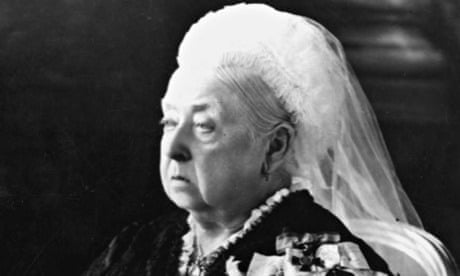
"These Irish are really shocking, abominable people. Not like any other civilised nation..." - the words of Britain's 'Queen' Victoria, on hearing about the 'Manchester Outrage', as she called it.
Her comments were replied to by one of the 'uncivilised Irish' people she was speaking about : "I will die proudly and triumphantly in defence of republican principles and the liberty of an oppressed and enslaved people..." - the words of 18-years-young William Allen, from Bandon, County Cork. The "outrage", as far as the British are concerned, anyway , began on the 11th September that year (1867) (....although, in reality, it began for us Irish in 1169) when, in the early hours of the morning of Wednesday, 11th September 1867, two men were arrested by police in Shudehill, Manchester, on suspicion that they were about to commit a robbery.
The two men were charged under the 'Vagrancy Act' and were detained in police custody, and it was then they were recognised (by fellow Irishmen in British police uniforms) as Colonel Thomas J.Kelly and Captain Timothy Deasy, two known Fenians. Their comrades in Manchester, which was the 'Bandit Country' of its day, vowed to free the two men and, on the 18th of September, 1867, as a prison van carrying the two men (and a 12-years-young boy, plus three female prisoners) was travelling on the Manchester to Salford road, on its way to 'deposit the cargo' in Belle Vue Gaol on the Hyde Road in Gorton, Manchester, accompanied by a team of 12 horse-mounted policemen, it was attacked by about 50 Fenians.
Kelly and Deasy were handcuffed and locked in two separate compartments inside the van, guarded by a police sergeant, a Charles Brett, and, as such, were unable to assist their comrades outside.
The mounted police escort fled the scene on seeing the number of attackers but Brett was obviously unable to do so : the Fenian rescuers were unable to force open the van and advised Brett that it would be for his own good to open the doors and let the prisoners go. Brett refused the offer, and was looking through the keyhole to further assess his situation when one of the rescuers decided to shoot the lock apart - the bullet went through the keyhole and hit Brett in the head, killing him instantly.
One of the female prisoners had the good sense to take the keys from his pocket and hand them out through an air vent to those outside, and Kelly and Deasy were taken to safety.
Twenty-six men were later arrested and tried for playing a part in the rescue, and five of them were detained to stand trial, on 1st November 1867, for their alleged part in what the British called the "Manchester Outrage" : all five were actually sentenced to be hanged, but one was granted clemency and another was 'pardoned' as the evidence against him was found to be perjured.
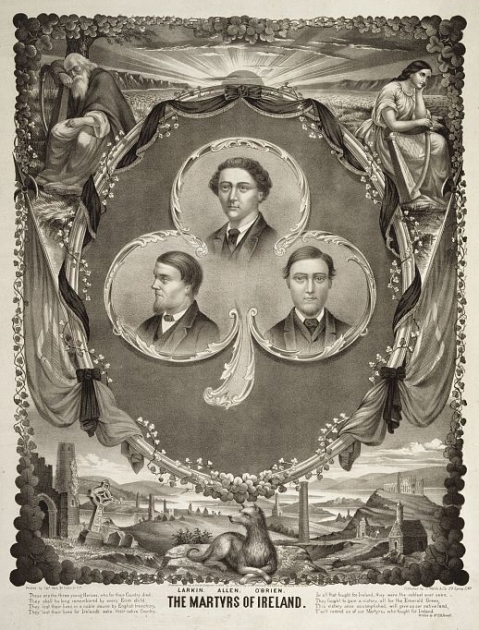
The other three - William Allen, Michael O'Brien and Michael Larkin - the 'Manchester Martyrs', were hanged in front of thousands of baying spectators on Saturday, 23rd November 1867 - 155 years ago on this date - in Salford, Manchester, outside the New Bailey Jail.
In an address to the court, William Philip Allen, 18, stated - "No man in this court regrets the death of Sergeant Brett more than I do, and I positively say, in the presence of the Almighty and ever-living God, that I am innocent ; aye, as innocent as any man in this court. I don't say this for the sake of mercy : I want no mercy — I'll have no mercy. I'll die, as many thousands have died, for the sake of their beloved land, and in defence of it.
I will die proudly and triumphantly in defence of republican principles and the liberty of an oppressed and enslaved people. Is it possible we are asked why sentence should not be passed upon us, on the evidence of prostitutes off the streets of Manchester, fellows out of work, convicted felons — aye, an Irishman sentenced to be hanged when an English dog would have got off.
I say positively and defiantly, justice has not been done me since I was arrested. If justice had been done me, I would not have been handcuffed at the preliminary investigation in Bridge Street ; and in this court, justice has not been done me in any shape or form. I was brought up here and all the prisoners by my side were allowed to wear overcoats, and I was told to take mine off. What is the principle of that? There was something in that principle, and I say positively that justice has not been done me.
As for the other prisoners, they can speak for themselves with regard to that matter. And now, with regard to the way I have been identified. I have to say that my clothes were kept for four hours by the policemen in Fairfield station and shown to parties to identify me as being one of the perpetrators of this outrage on Hyde Road. Also in Albert station there was a handkerchief kept on my head the whole night, so that I could be identified the next morning in the corridor by the witnesses.
I was ordered to leave on the handkerchief for the purpose that the witnesses could more plainly see I was one of the parties who committed the outrage. As for myself, I feel the righteousness of my every act with regard to what I have done in defence of my country. I fear not. I am fearless — fearless of the punishment that can be inflicted on me ; and with that, my lords, I have done."
However, he then added the following - "I beg to be excused. One remark more. I return Mr. Seymour and Mr. Jones my sincere and heartfelt thanks for their able eloquence and advocacy on my part in this affray. I wish also to return to Mr. Roberts the very same. My name, sir, might be wished to be known. It is not William O'Meara Allen. My name is William Philip Allen. I was born and reared in Bandon, in the County of Cork, and from that place I take my name ; and I am proud of my country, and proud of my parentage. My lords, I have done."
Michael Larkin, 32, lived in the Banagher region of County Offaly and was a tailor by trade. He was not of good health and himself and his two comrades were captured as they carried him away from the scene of the rescue. He, too, addressed the court :
"I have only got a word or two to say concerning Sergeant Brett. As my friend here said, no one could regret the man's death as much as I do. With regard to the charge of pistols and revolvers, and my using them, I call my God as witness that I neither used pistols, revolvers, nor any instrument on that day that would deprive the life of a child, let alone a man.
Nor did I go there on purpose to take life away. Certainly, my lords, I do not want to deny that I did go to give aid and assistance to those two noble heroes that were confined in that van, Kelly and Deasy. I did go to do as much as lay in my power to extricate them out of their bondage ; but I did not go to take life, nor, my lord, did anyone else. It is a misfortune there was life taken ; but if it was taken it was not done intentionally, and the man who has taken life we have not got him.
I was at the scene of action, when there were over, I dare say, 150 people standing by there when I was. I am very sorry I have to say, my lord, but I thought I had some respectable people to come up as witnesses against me ; but I am sorry to say as my friend said — I will make no more remarks concerning that. All I have to say, my lords and gentlemen, is that so far as my trial went, and the way it was conducted, I believe I have got a fair trial.
What is decreed a man in the page of life he has to fulfil, either on the gallows, drowning, a fair death in bed, or on the battle-field. So I look to the mercy of God. May God forgive all who have sworn my life away. As I am a dying man, I forgive them from the bottom of my heart. God forgive them."
Michael O'Brien, 31, from Ballymacoda in Cork, was a lieutenant in the US Army and was better known in England by the name 'William Gould'. He delivered the following speech to the court :
"I shall commence by saying that every witness who has sworn anything against me has sworn falsely. I have not had a stone in my possession since I was a boy. I had no pistol in my possession on the day when it is alleged this outrage was committed. You call it an outrage, I don't. I say further my name is Michael O'Brien. I was born in the county of Cork and have the honour to be a fellow-parishioner of Peter O'Neal Crowley, who was fighting against the British troops at Mitchelstown last March, and who fell fighting against British tyranny in Ireland.
I am a citizen of the United States of America, and if Charles Francis Adams had done his duty towards me, as he ought to do in this country, I should not be in this dock answering your questions now. Mr. Adams did not come, though I wrote to him. He did not come to see if I could not find evidence to disprove the charge, which I positively could, if he had taken the trouble of sending or coming to see what I could do.
I hope the American people will notice this part of the business."
He then read a passage from a paper he was holding - "The right of man is freedom. The great God has endowed him with affections that he may use, not smother them, and a world that may be enjoyed.
Once a man is satisfied he is doing right, and attempts to do anything with that conviction, he must be willing to face all the consequences. Ireland, with its beautiful scenery, its delightful climate, its rich and productive lands, is capable of supporting more than treble its population in ease and comfort.
Yet no man, except a paid official of the British Government, can say there is a shadow of liberty, that there is a spark of glad life amongst its plundered and persecuted inhabitants. It is to be hoped that its imbecile and tyrannical rulers will be for ever driven from her soil amidst the execrations of the world.
How beautifully the aristocrats of England moralise on the despotism of the rulers of Italy and Dahomey — in the case of Naples with what indignation did they speak of the ruin of families by the detention of its head or some loved member in a prison. Who has not heard their condemnations of the tyranny that would compel honourable and good men to spend their useful lives in hopeless banishment?
They cannot find words to express their horror of the cruelties of the King of Dahomey because he sacrificed 2,000 human beings yearly, but why don't those persons who pretend such virtuous indignation at the misgovernment of other countries look at home, and see that greater crimes than those they charge against other governments are not committed by themselves or by their sanction?
Let them look at London, and see the thousands that want bread there, while those aristocrats are rioting in luxuries and crimes. Look to Ireland ; see the hundreds of thousands of its people in misery and want. See the virtuous, beautiful and industrious women who only a few years ago — aye, and yet — are obliged to look at their children dying for want of food.
Look at what is called the majesty of the law on one side, and the long deep misery of a noble people on the other. Which are the young men of Ireland to respect — the law that murders or banishes their people or the means to resist relentless tyranny, and ending their miseries for ever under a home government? I need not answer that question here. I trust the Irish people will answer it to their satisfaction soon.
I am not astonished at my conviction. The Government of this country have the power of convicting any person. They appoint the judge ; they choose the jury ; and by means of what they call patronage (which is the means of corruption) they have the power of making the laws to suit their purposes. I am confident that my blood will rise a hundredfold against the tyrants who think proper to commit such an outrage.
In the first place, I say I was identified improperly by having chains on my hands and feet at the time of identification, and thus the witnesses who have sworn to my throwing stones and firing a pistol have sworn to what is false, for I was, as those ladies said, at the jail gates. I thank my counsel for their able defence, and also Mr. Roberts, for his attention to my case."
All three men shouted the words "God Save Ireland!" at different times during the 'trial', perhaps realising that, then, as now, the British were going to get their 'pound of flesh' one way or the other.
The three men were, as stated, hanged by the British on this date - 23rd November - 155 years ago, and are still remembered and commemorated today by Irish republicans.
'THE BRITISH STORY...'
Roy Foster (pictured) in the British media.
By Barra Ó Séaghdha.
From 'Magill' Annual, 2002.
It can hardly be denied that the years immediately before and after the anniversary produced a rich crop of sober work on the Famine (sic) ; overviews, specialised collections of essays, studies in local history, folklore and so on. Fifteen minutes in a library should be enough to reassure Jonathan Freedland and Tim Teeman that Irish history-writing has not descended into a welter of sentiment and self-indulgence, as suggested by Roy Foster's comment.
In the Teeman interview, we are also told - "You get these appalling, winsome, self-indulgent little snippets of autobiography in the middle of what should be history books. There are a number of Irish historians who used to write beautifully but now collapse genres into each other."
To whom can the good professor be referring? The year 1994 saw the publication by a prominent writer - formerly renowned for his style, wit and perceptiveness - of a historical study that presented no coherent framework of understandng, that frequently reduced the complexities of history to caricature and mumbo-jumbo about the Irish psyche, that was interrupted by irrelevant personal and family reminiscences, that grotesquely misrepresented Bloody Sunday, and that sometimes clashed on fundamental points with Roy Foster's book, 'Modern Ireland'...
(MORE LATER.)
ON THIS DATE (23RD NOVEMBER) 109 YEARS AGO : 'IRISH CITIZEN ARMY' FOUNDED.
Ireland 1915 ; The 'Irish Volunteer' movement had split ; approximately 170,000 men stayed with John Redmond and fought with England in the belief that to do so would guarantee a form of 'Home Rule' for Ireland - but about 10,000 men broke away as they had no faith in Redmond's plan.
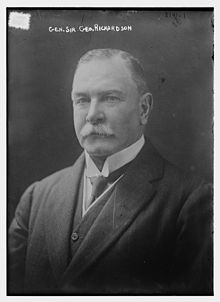
Months earlier, British 'Sir' George Richardson had taken command of the Ulster Volunteer Force (a pro-British militia) and had landed about 25,000 rifles and two-and-a-half million rounds of ammunition at Larne in County Antrim - when the British Government in Westminster attempted to move against the UVF (as they had no control over them then), British Army officers mutinied in objection.
Meanwhile, elsewhere in Ireland, other forces were recruiting : Irish republicans were re-organising ; the 'Irish Citizen Army' was recruiting for volunteers, as was Sinn Féin, the 'Irish Republican Brotherhood' and John Redmond's 'United Irish League'. There was turmoil in the country.
On the 11th of November 1913 in Dublin, in the then 68-year-old Wynn's Hotel on Lower Abbey Street, a group of Irishmen and women held a meeting to discuss the formation of an 'Irish National Volunteer Force'.
Those present at that meeting and/or at five other such meetings which were held immediately afterwards in the space of a two-week period, included Sean Fitzgibbon, John Gore, Michael J Judge, James Lenehan, Michael Lonergan, Peadar Macken, Seamus O'Connor, Colm O'Loughlin, Peter O'Reilly, Robert Page, George Walsh, Peadar White and Padraig O'Riain, amongst others (all of whom were well known in Irish nationalist circles ie Sinn Féin, Cumann na mBan, Na Fianna Éireann, the Gaelic League, the IRB, the Ancient Order of Hibernians, the Irish Parliamentary Party and the United Irish League).
Then, on the 25th November 1913, the inaugural enrolment meeting for the 'Irish Volunteers' was held at the Rotunda Rink in Dublin, to "secure the rights and liberties common to all the people of Ireland". That meeting was overseen by a provisional committee consisting of thirty members, all of whom had been elected at the above-mentioned meetings.
Previous to the formation of the 'Irish Volunteers', James Connolly and others had formed the 'Irish Citizen Army', and both groups were in competition for members, the former on a 32-county basis whereas the latter was confined to the Leinster area, although attempts were made, through trade union structures, to recruit in Cork, Belfast, Derry, Sligo, Limerick, Kilkenny, Waterford, Dundalk, Galway and Wexford, but with little success.
Also, those joining the 'Volunteers' were supplied with a uniform and other equipment while those joining the 'ICA' had to purchase their gear themselves. Relations between the two organisations were not the best, as the 'Volunteers' allowed, for instance, employers to join and this at a time when employees and other trade unionists would most likely be 'ICA' members or supporters and, actually, when the 'Volunteers' were in conference for the first time (25th November 1913) Irish Citizen Army members and supporters loudly made their presence felt and they also objected in print - their first leaflet stated that the 'Volunteers' were controlled by those who were opposed not only to trade unionism but also to workers rights regarding working conditions etc.
Within a few months, however, the animosity had lessened to the extent that there was some official co-operation between both groups at the Wolfe Tone commemoration in June 1914 and again in October that year during the events held to commemorate Charles Stewart Parnell, and both groups joined forces at Easter 1916 and took part side-by-side in the 1916 Rising, during which almost 100 women, members of Cumann na mBan and the Irish Citizen Army, played a full part in the fighting : Cumann na mBan , formed in April 1914, and the Irish Citizen Army, were in training months before the 1916 Rising.
Both groups received instruction in first aid, signalling and weapons preparation. Connolly's daughters, Nora and Agnes, who were both members of Cumann na mBan, joined other members of that organisation in travelling around the country to ascertain the strengths and weaknesses in a particular area.
'The Irish Citizen Army :
Founded as workers’ Defence corps during the Dublin Lock-Out by James Larkin and James Connolly on 23 November 1913. Their Headquarters was at Liberty Hall. The movement was eventually taken over by Connolly in the spring of 1914. He re-organised them into an armed and uniformed force whose aims were the ownership of the land of Ireland by the people of Ireland and the establishment of a Workers Republic.
The General Secretary of the Army was Sean O' Casey. About 200 members took part in the 1916 Rising in Dublin. The Irish Citizen Army supported the Irregulars/anti Treaty forces during the Civil War. A prominent influencing role in refusing to accept The Treaty was played by Constance Markievicz...' (from here.)
The 'Irish Citizen Army' was formed by James Connolly and Jack White on the 23rd November 1913 - 109 years ago on this date - and other prominent members included Seán O'Casey, Constance Markievicz, Francis Sheehy-Skeffington, P. T. Daly and Christopher Poole.
The organisation proper became inactive in the late 1930's although its ethos lives on to this day.
FUNDS AND FINE GAEL'S LEADER.
Michael Lowry has so far been the focus of media attention about Fine Gael fundraising.
But the party's current leader, Enda Kenny (pictured), hosted a £1,000-a-plate dinner two days before the second mobile phone licence was awarded. And other guests say that one of the bidders for that licence was in attendance.
By Mairead Carey.
From 'Magill' magazine, January 2003.
Fine Gael leader Enda Kenny (pictured) hosted a fundraising event days before the contract for the second mobile phone licence was awarded. Guests say that a man claiming to be a bidder for the licence was also in attendance.
The then Taoiseach John Bruton and (State) Communications Minister Michael Lowry were the guests of honour at the £1000-a-plate dinner at the Conrad Hotel in Dublin, even though Lowry had been advised by his department officials not to meet bidders.
It is not known whether any of the senior Fine Gael politicians at the dinner knew of this businessman's apparent involvement with the bidding consortium...
(MORE LATER.)
Thanks for the visit, and for reading,
Sharon and the team.
ON THIS DATE (19TH OCTOBER) 277 YEARS AGO : DEATH OF THE MAN WHO URGED THE IRISH "TO BURN EVERYTHING ENGLISH EXCEPT THEIR COAL".
"Burn everything English but their coal" - the 'Hibernian Patriot' [from the 'Drapier's Letters' collection], Jonathan Swift (pictured), an Irish author and satirist (perhaps best known for 'Gulliver's Travels' and for his position as dean of St. Patrick's Cathedral in Dublin) was born in Dublin on the 30th November 1667 ; his father (from whom the 'Patriot' got his first name) was an attorney, but he died before the birth of his son.
As if that wasn't misfortune enough, young Jonathan suffered from Meniere's Disease and, between the bill's mounting up and her sickly son, his mother, Abigail, found that she was unable to cope and the young boy was put in the charge of her late husband's brother, Godwin, a wealthy member of the 'Gray's Inn' legal society.
His position in St. Patrick's Cathedral ensured that he had a 'pulpit' and a ready-made audience to listen to him, an opportunity he readily availed of to question English misrule in Ireland - he spoke against 'Wood's Halfpence' and in favour of 'burning everything English except their coal' and, satirically, wrote a 'modest proposal' in which he suggested that poor children should be fed to the rich ('a young healthy child well nursed is at a year old a most delicious, nourishing, and wholesome food, whether stewed, roasted, baked, or boiled..')!
In 1742, at 75 years of age, Jonathan Swift suffered a stroke, severely affecting his ability to speak, and he died three years later, on the 19th October, 1745 - 277 years ago on this date. He was buried next to the love of his life, Esther Johnson, in St. Patrick's Cathedral in Dublin.
"It is impossible that anything so natural, so necessary, and so universal as death, should ever have been designed by providence as an evil to mankind" - Jonathan Swift.
'TOMÁS MacCURTAIN COMMEMORATION...'
From 'The United Irishman' newspaper, April 1955.
In his oration, Domhnall O Cathain said -
"In his validictary address to the insurgent Volunteers on the Friday before the surrender, Pádraig Pearse wrote - 'Justice can never be done to their heroism, to their discipline, to their gay and unconquerable spirit in the midst of peril and death..'.
As in all his writings, Pearse spoke not only for his own time and for the past but also for the future.
How full, how complete a description of the 16 men who went over the barrack wall in Omagh, how beautiful, how fitting an appreciation of the eight men in the court of 'imperialist justice'. And to follow in the same strain with Pearse, if they did not win they had deserved to win, and like the Volunteers they had won a great thing.
The 1916 Volunteers had redeemed Dublin from many shames. The Armagh and Omagh Volunteers had pulled aside the veil, unloosened the drapery of words, had shown us all the light ; they had floodlit the path of freedom, had shown that there was but one way. They had shown that the staccato of the Thompson Gun was the most effective way of making the Orange junta sit up and take notice.
They did for Ireland what Ireland needed to have done for her. They did for Ireland what Ireland deserved to have done for her..."
(MORE LATER.)
ON THIS DATE (19TH OCTOBER) 102 YEARS AGO - BRITISH 'HAMAR' MISSES ITS TARGET.
British 'Chief Secretary for Ireland', Lieutenant-Colonel 'Sir' Hamar Greenwood (pictured, and short video here showing 'the Hamar' rewarding his troops in this country for the destruction they wrought while maintaining 'law and order') promised to put an end to republican "outrages" but that was just another outrageous false promise by the British!
In May 1920 the British Foreign Secretary, 'Lord' George Nathaniel Curzon, proposed vigorous 'Indian measures' to suppress the rebellion in Ireland and he and other British imperialist 'gentlemen' formulated a policy with that objective in mind. On the 9th August 1920, the British 'Lords Commissioners' announced that 'Royal Assent' had been granted for the following 14 items -
1. Overseas Trade (Credit and Insurance) Act, 1920.
2. Unemployment Insurance Act, 1920.
3. Restoration of Order in Ireland Act, 1920.*
4. Aberdeen Corporation Order Confirmation Act, 1920.
5. Pilotage Orders Confirmation (No. 3) Act, 1920.
6. Local Government Board (Ireland) Provisional Orders Confirmation (No. 3) Act, 1920.
7. Ministry of Health Provisional Order Confirmation (Chesterfield Extension) Act, 1920.
8. Mid-Glamorgan Water Act, 1920.
9. Wallasey Corporation Act, 1920.
10. Life Association of Scotland Act, 1920.
11. Uxbridge and Wycombe District Gas Act, 1920.
12. Exmouth Urban District Council Act, 1920.
13. North British and Mercantile Insurance Company's Act, 1920.
14. Lever Brothers, Limited (Wharves and Railway) Act, 1920.
On the 19th October 1920 - 102 years ago on this date - the British 'Chief Secretary for Ireland', Lieutenant-Colonel 'Sir' Hamar Greenwood (who later threatened to resign his position if Westminster agreed to a ceasefire with Irish republicans before they had surrendered their weapons!) stated, re the British 'law and order' campaign in Ireland -
"The outrages against the police and military forces since the 1st January last, which I regret to say include the loss of no less than 118 lives, are as follows: police killed -100, military killed -18, police wounded -160, military wounded -66. There have been 667 attacks on police barracks, resulting in most cases in their complete destruction.
There has been an organised attempt to boycott and intimidate the police, their wives and relations. The hon. Member will realise that I cannot publish the steps that are being taken to cope with the campaign of murder, outrage and intimidation, but I can assure him that the means available to the Government for protecting all servants of the Crown in the discharge of their duties, and for bringing to justice those who commit or connive at outrages, are steadily improving.

Fighters in every clime;
Fillers of trench and of grave,
Mockers bemocked by time.
War dogs hungry and grey,
Gnawing a naked bone,
Fighters in every clime -
Every cause but our own. (Emily Lawless, 1902 ; "With the Wild Geese".)
She was born into a politically mixed background, the eldest daughter and one of eight children ('Sir' Horace Plunkett was her cousin).
Her father was 'Titled' by Westminster (he was a 'Baron') even though his father (Emily's grandfather) was a member of the 'United Irishmen'.
Her brother, Edward, seems to have taken his direction from his father rather than his grandfather - he held and voiced strong unionist opinions, wouldn't have a catholic about the place and was in a leadership position within the anti-Irish so-called 'Property Defence Association'.
Perhaps this 'in-house' political confusion, mixed between staunch unionism and unionism with sympathies for Irish nationalism/republicanism, coupled with the 'whisperings of shame' that Emily was a lesbian and was having an affair with one of the 'titled' Spencer women, was the reason why her father and two of his daughters committed suicide.
She wrote a full range of books, from fiction to history to poetry, and is best remembered for her 'Wild Geese' works, although some of her writings were criticised by journalists for its 'grossly exaggerated violence, its embarrassing dialect and staid characters..' - 'The Nation' newspaper stated that 'she looked down on peasantry from the pinnacle of her three-generation nobility..' and none other than William Butler Yeats declared that she had "an imperfect sympathy with the Celtic nature.." and that she favoured "theory invented by political journalists and forensic historians."
But she had a great talent :
After Aughrim :
She said, "They gave me of their best,
They lived, they gave their lives for me ;
I tossed them to the howling waste
And flung them to the foaming sea."
She said, "I never gave them aught,
Not mine the power, if mine the will ;
I let them starve, I let them bleed,
they bled and starved, and loved me still."
She said, "Ten times they fought for me,
Ten times they strove with might and main,
Ten times I saw them beaten down,
Ten times they rose, and fought again."
She said, "I stayed alone at home,
A dreary woman, grey and cold ;
I never asked them how they fared,
Yet still they loved me as of old."
She said, "I never called them sons,
I almost ceased to breathe their name,
then caught it echoing down the wind
blown backwards, from the lips of fame."
She said, "Not mine, not mine that fame ;
Far over sea, far over land,
cast forth like rubbish from my shores
they won it yonder, sword in hand."
She said, "God knows they owe me nought,
I tossed them to the foaming sea,
I tossed them to the howling waste,
Yet still their love comes home to me."
She considered herself to be a Unionist although, unlike her brother, she appreciated and acknowledged Irish culture (or, in her own words - "I am not anti-Gaelic at all, as long as it is only Gaelic enthuse and does not include politics..") and, despite being 'entitled' to call herself 'The Honourable Emily Lawless', it was a 'title' she only used occasionally.
She spent a lot of her younger days in Galway, with her mother's family, but it is thought that family tragedies drove her to live in England, where she died, on the 19th of October 1913 - 109 years ago on this date - at the age of 68, having become addicted to heroin. She is buried in Surrey.
Emily Lawless, 1845-1913.
'FORTH HIS BANNERS GO...'
Jer O'Leary (pictured) has become bannermaker to the radical and labour movement. Brian Trench reports on the growing recognition of his art.
From 'Magill' magazine, May 1987.
It was in John Arden's and Margaretta D'Arcy's 'Non-Stop Connolly Show' in Liberty Hall in 1974 that Jer O'Leary first took up his imposing Jim Larkin stance. Since 1977, he has done it in half-a-dozen productions of James Plunkett's 'The Risen People'.
Jer O'Leary had also been painting as well as acting, winning two art competitions organised by the ITGWU. Encouraged by the union's late general secretary, Michael Mullen, O'Leary applied his skills to posters and then to banners. Union banners which usually spend very long periods in storage had been much in evidence in the tax marches of the late 1970's.
Jer O'Leary approached his banners with the demands of the street in mind - "I always felt that the old union banners were too intricate for the street ; I purposely used stark black and white images on a colour background to make more impact..."
(MORE LATER.)
ON THIS DATE (19TH OCTOBER) 33 YEARS AGO : BRITISH ESTABLISHMENT AGREE THAT 'THE CONVICTIONS ARE UNSAFE AND UNSATISFACTORY...OUR POLICE OFFICERS MUST HAVE LIED...' (Page 22, here.)
On the 19th October 1989 - 33 years ago on this date (after serving 15 years in prison)- the 'Guildford Four' - Gerard Conlon, Patrick Armstrong, Carole Richardson and Paul Hill - are released from prison in what is considered to be one of the biggest-ever miscarriages of justice in Britain.
Their convictions in 1974 for the Guildford pub bombings of that year were quashed at the Old Bailey in London on the 19th October 1989. All four had been falsely accused of the attacks on two pubs in which five people died and more than sixty people were injured. 'Confessions' were obtained by the use of torture and attempts to appeal the convictions were unsuccessful - the British establishment and its police force wanted 'those responsible' (and/or those whom it could somewhat plausibly present as being responsible) caught and for 'justice' to be done.
'After the incredulity and then the euphoria of release from jail, the four people who had served 15 years for the Guildford pub bombings in 1974 had to find a life. Three are now married with families but the years of adjustment have been painful...the only thing that mattered was when Lord Lane, the lord chief justice, pronounced those magic words: the convictions of Gerry Conlon, Carole Richardson, Paul Hill and Paddy Armstrong were unsafe and unsatisfactory..."
Gerry Conlon punched the air in defiance and ran the wrong way down the street. Just like a confused animal, his lawyer thought. Conlon was then 35...Richardson, 17 at the time of her arrest, was shocked and weak at the knees. She and her former boyfriend, Armstrong, disappeared separately out the back. She just wanted to hide. Hill was taken to Crumlin Road prison in Belfast and bailed two days later...theirs was the first of the momentous Irish miscarriage of justice cases which convulsed the criminal justice system and led to a rare royal commission.
The crisis of confidence was encapsulated in one of Lord Lane's concluding remarks: "The officers must have lied..." (from here.)
"Officers" of that same calibre (albeit in a different uniform), answerable to a similar political establishment as mentioned above, are still in a powerful position in the north-east of this country (and, indeed, are not confined to that area) and are still willing and able to frame innocent people for their objective of securing the British military and political presence in Ireland.
As we stated on this blog on the 5th October last - 'Westminster didn't care who was found 'guilty' once they satisfied the gutter press and it's readership that 'justice had been served', and they continue with that policy to this day - 'The Craigavon Two', Brendan McConville and John-Paul Wootton, are the 'Guildford/Birmingham' etc examples of 'British justice' in Ireland today.' The only long term solution is to end that presence and flush out the contaminants left behind.
ON THIS DATE (19TH OCTOBER) IN...
...1610 :
One of our English 'rulers' who was somewhat less cruel to us than others in his social circle was born on the 19th October 1610, in Clerkenwell, in London.
James Fitzthomas Butler was 51 years of age when he was announced as the '1st Duke of Ormond, KG, PC' and 'Lord High Steward' of England ; he was by then already a Lieutenant-General in the English Army and was a 'land owner' in Ireland.
He had spent a small fortune over the previous decades 'in royal service' and, now as a 'Duke' and 'High Steward', he was awarded large grants and a one-off payment of £30,000, all of which, apparently, kept him and 'his' estates in Ireland ticking-over but, overall, his losses still exceeded his gains!
During his political 'career' in Ireland he was in Office as 'Lord Lieutenant of Ireland' three times and, by the (anti-Irish) standards of the day, he was said to be somewhat less cruel than other 'Irish masters'.
He died in the Kingston Lacy mansion in Dorset, England, on the 21st July, 1688, and was buried on the 4th August in Westminster Abbey. Incidentally, his wife, Elizabeth, died four years earlier (in 1684) on the same date as her husband, the 21st July.
If this short piece wasn't about British imperialism in Ireland, that would almost be romantic!
======================================
...1751 :
A boy born in Dublin on the 19th October 1751 - Charles Edward Saul Jennings (pictured) - took a leaf from his Da's book and took a title from his Da's heritage. Sort of!
His Da, Theobald, from Polaniran, in Tuam, County Galway, was a doctor, and his Ma, Eleonore (Jennings, née Saul, aka 'Lady Eleonore') was the daughter of a rich Dublin distiller and, indeed, that may have given her husband, Theobald, the notion that he, too, should be 'titled'.
So when the family moved to Tonnay-Charente in the south of France in the mid-to-late 1700's, the Da continued to practice as a doctor and, in order to improve his customer base (!) declared himself to all and sundry to be the 'Baron of Kilmaine', and was accepted in posh French society as such!
Charles Edward had a rebellious streak about him and soon found an outlet for it in the French Army, where he rose to the rank of General - he supported the revolutionaries in France and Ireland (he was a devoted friend to Theobald Wolfe Tone and a close confidant of Napoleon I, and was described as the only officer Bonaparte ever trusted completely) and had, by then, already accepted his Da's 'title' and was known among his military comrades as the 'Baron of Kilmaine' and/or 'Brave Kilmaine'.
He helped to secure the financial well-being of Matilda Tone and her children after her husband was killed by the British and, such was his standing in France, he was appointed military governor of Switzerland in 1799, when he was only 48 years of age, but had to resign from the position because of health issues.
He died in Paris on the 11th of December, 1799, and was buried with full military honours, leaving behind his wife, Susanne (née Kirchmeyer) - the couple had no children, so the 'title' died with him.
======================================
...1919 :
At about 2am on Sunday morning, 19th October 1919, 23-year-old 'Dublin Metropolitan Police Constable' Michael Downing (pictured), a farmer's son from Adrigole on the Beara Peninsula in County Cork, was 'on patrol' and crossing a road near High Street in the Liberties area of Dublin, walking towards a group of men on that side of the street.
As he got nearer to the men, one of them pulled out a revolver and shot him dead.
The men were IRA Volunteers and were tending to an arms dump that the 'Constable' was (inadvertently) walking towards. He was in the wrong place at the wrong time.
======================================
...1920 :
On the 19th October, 1920, British Crown Forces stormed into a pub in Turloughmore, in County Galway and dragged a number of men out of the premises and flogged them by the side of the road, and in the nearby villages of Corofin and Cummer, on consecutive nights, men were taken from their beds, stripped and flogged by the roadside.
This issue was raised in Westminster on the 21st October but, as expected, British politicians attempted to cover-up for the offenders, their military colleagues in Ireland, by claiming that republicans in stolen British Army uniforms were responsible! -
'Mr. T. P. O'CONNOR (by Private Notice) asked the Chief Secretary for Ireland whether his attention has been called to the statements in several newspapers that on Saturday night last two lorries of uniformed men seized Thomas and Martin Feeney at the village of Corbally and flogged them with a rope, and assaulted one of them in addition with a rifle; whether on the same night at the town of Corofin Patrick Raferty was also flogged; whether on Sunday evening a number of young men were stripped and were whipped and otherwise assaulted on the road; whether a young man named Michael Welby and a young woman named Miss Glynn were shot and wounded at the village of Cummer by the police on the same occasion; and whether an inquiry will be immediately instituted and the persons guilty of these floggings and other assaults will be brought to justice...?'
The pathetic 'they-flogged-themselves-Sir!!' absurdity can re read here, if you can stomach it.
======================================
...1921 :
In the run-up/ prep work for the signing of the 'Treaty of Surrender' (which was signed by the Free Staters and the British on the 6th December 1921) a number of meetings were held between the Staters and Westminster political and military representatives.
One such meeting was held on the 19th October, 1921, to discuss financial issues regarding 'repatriable financial assets' ie 'because of your actions we spent this amount and you have to pay us back'. The British reps stated that the fledging Free State entity 'owed' Westminster £153 million sterling for "debt and pension charges" incurred during the British visit to the State (!!) but the Staters - masters at fumbling in greasy tills - replied that, on the basis of past over-taxation "since the Union" (!!) and retardation of the Free State's industrial and commercial development, the charge to Westminster should be about £3 billion sterling!
That was of course a bluff by the Staters, and it was called by the British (who knew the 'strength' of their new allies) - a 'compromise' arrived at was that 'Article 5' of that Treaty would contain an agreement that '...the Free State was required to pay a fair and equitable share of the UK public debt and war pensions..' and that 'settlement' was worked through by both entities involved.
Incidentally, the Staters continue to believe that they owe various British 'Lords' and 'Dukes' money, and they continue to pay them!
======================================
...1921 :
While the Staters were capitulating, politically and militarily, to Westminster - see above - on the 19th October, 1921, religious capitulation was also taking place.
It was on that same date that Pope Benedict XV sent a telegram to the English 'king' George V rejoicing at the resumption of the 'Treaty of Surrender' discussions, instead of telling him that he and his ilk should get the hell out of Ireland, politically and militarily.
The English 'king', delighted to have received such a 'thumbs-up' from that Pope, wrote back saying that he hoped that "...a settlement may initiate a new era of peace and happiness for my people..". That "new era", your kingship, won't materialise in Ireland until the British military and political presence has left the country for good.
======================================
...1922 :
Two Free State soldiers died on the 19th October 1922 ; Private Michael M Bailey, 20 years of age, was born in Wales and was stationed in Portobello Barracks in Dublin, in the Transport Division of the FSA.
He was in a convoy which was travelling to Naas in County Kildare when a sniper shot him dead.
Two State troopers, a Sergeant Clarke and a Sergeant-Major Sean O'Suillivan (who was only 17 years of age) came across a crowd of people outside a shop on Corporation Street, in Dublin city centre.
They wanted to disperse the crowd but they wouldn't move anywhere so Sergeant Clarke fired a warning shot into the air, but the bullet rebounded off a wall and hit the young Sergeant-Major, killing him. We presume the crowd then left the scene.
======================================
...1922 :
On Thursday, 19th October 1922, Aghadoe House (pictured) in Killarney, County Kerry, was burned down by the IRA, to ensure that it would not be used as a base by the Free Staters. It was rebuilt three years later.
In 1870, 97% of the 32 Counties of Ireland was 'owned' by English 'landlords' and the 'big house on the hill' (the 'landlords' residence)was availed of by English troops and militia as a base from which to secure their presence, and those vermin were welcomed in by the owners. When he was the IRA Chief of Staff, Liam Lynch issued a directive that "all Free State supporters are traitors and deserve the latter's stark fate, therefore their houses must be destroyed at once...", and that order was followed with gusto by the rebels, as the 'landlords' were hated in their community by the majority.
======================================
...1923 :
On the 19th October, 1923, a State 'Criminal Investigation Department' (CID) operative named Thomas Fitzgerald was killed, following an armed robbery in a factory in Castleknock, Dublin. A Free State soldier, William Downes, was later hanged for killing Fitzgerald -
'At 8am on Monday, 29 November 1923, William Downes climbed the scaffold in Mountjoy and became the first man executed by the Irish Free State...
it is ironic then that the first man to climb the scaffold would not be an 'irregular' or opponent of the new State. Downes was in fact a pro-Treaty soldier.
At 5pm on 19 October 1923, Superintendent F O'Driscoll of the Criminal Investigation Department (CID) received a phone call from the Castleknock Candle Factory. The CID was an armed police force which dealt with crime during the Civil War period and the panicked caller told him that his premises had just been robbed by armed raiders...' -More here.
======================================
=======================
=======================
Only back after our absence last week [...bet ya never even noticed..] and we have to excuse ourselves again for next Wednesday, 26th October 2022 ; we have a christening and a funeral to attend over the weekend and early next week and, although one event is obviously more sombre than the other, both will end up in a pub, where we'll reacquaint ourselves with old friends, colleagues and comrades, and make new ones, as ya do!
We'll be back 'on air' on Wednesday, 2nd November 2022 and, if ya want, you can catch-me-if-you-can on 'Facebook' and 'Twitter'.
Oh, and by the way - we sourced three cabins in Waterford for the now-37 of us that are heading off on a ten-day break in November. The six of us that'll be sleeping in the vans and cars at night are the lucky ones...!
Thanks for the visit, and for reading!
See y'all on the 2nd November next.
Sharon and the team.