ON THIS DATE (23RD AUGUST) 219 YEARS AGO : FRENCH BATTLECRY ON IRISH SOIL.
"UNION, LIBERTY, THE IRISH REPUBLIC!" - the words and ideals proclaimed in Ballina, County Mayo, on the 23rd August 1798 - 219 years ago on this date - by French General Jean Joseph Amable Humbert, who had landed with 1,090 seasoned French troops (including 80 officers) at Cill Chuimin (Kilcummin) on the 22nd August.
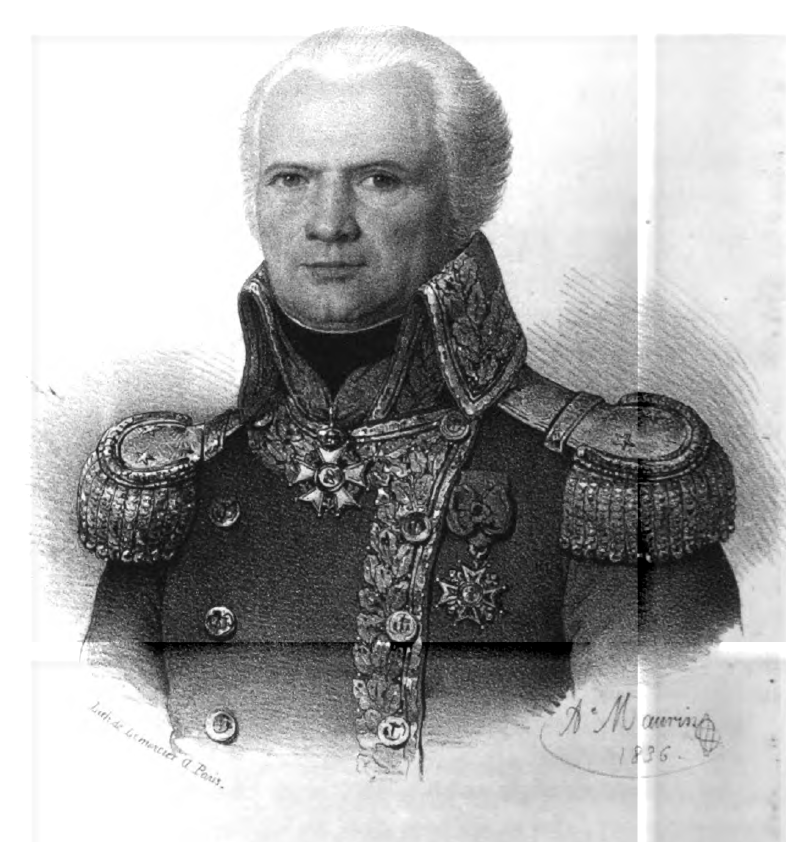
Three expeditions to aid the 'United Irishmen' were authorised by the French Directory in July of 1798 ('In 1791, the newly installed French government offered military assistance to any group who wanted to overthrow their own King. This was very worrying for the surrounding monarchies of England, Spain, Germany and Austria..' - from here) and command of the first and smallest of these was given to General Jean Joseph Amable Humbert (pictured, left). His small fleet of three frigates, under the command of Chef de Division André Daniel Savary, landed at Cill Chuimin (on August 22nd, 1798).
They marched by night across the mountains in torrents of rain (a distance of about 18 miles which, it has been estimated, would take maybe six hours to do on foot) and then a surprise attack at dawn ; and a masterly assault by General Jean Sarrazin (who later disgraced himself) on the British 'defenders' left flank gave warning of what was to come : brave Mayo men faced pounding artillery with nothing but pikes hammered out by skilled blacksmiths who had worked night and day for five days.
'Erin's sons be not faint-hearted
Welcome! Sing then Ca ira
From Killala they are marching
To the tune of Viva La!
They come, they come, see myriads come
Of Frenchmen to relieve us ;
Seize, seize the pike, beat, beat the drum
They come, my friends, to save us.'
To confuse the enemy further, General Humbert suddenly changed tactics - he launched his full reserve, and changed from closed formation to open file. Rising up in his saddle, and brandishing his sword, he gave the order , in Irish - "Eirinn go Brach!" The drums sounded the 'pas de charge' and a blue line, now within a few paces of the British troops, regrouped back into closed lines and moved swiftly forward , their bayonets gleaming in the morning sun, a fierce and threatening determination in their countenances. The famed army of the French Revolution was here in the fields of Mayo : veterans of many victorious campaigns on the continent, men who had endured much and who believed passionately in their cause. They had measured their enemy and marked them down as 'the defenders and upholders of tyranny and injustice'. The Sasanaigh and their Irish militias and Yeomen hesitated, and then turned their backs and fled in terror.
In Humbert's footsteps we commemorate today
in 1798 they came our way.
Arriving in three ships, the British flags flew
to conceal a plan that no British man knew.
At Kilcummin they landed, Irish pikemen joined the might,
and together they marched with Killala in sight.
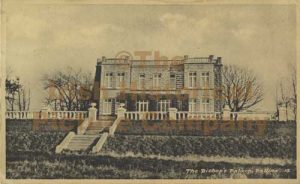
The town was captured, Bishop Stock’s palace was made
the Franco-Irish headquarters where new plans were laid.
On August 23rd Ballina was the next plan,
between Moyne and Rosserk abbeys' the British, they ran.
The British we'll beat them, Érin go Bragh,
as they made their way to Béal an Átha.
They reached Ballina August 24th that morning,
but before the British departed they left a warning.
They captured Patrick Walsh and hung him from a crane,
the British departed, a United Irishman slain.
In Ballina the French marched through Barr na Dearg and Bóthar na Sop
with straw torches and a mattress, their way was lit up.
The people excited, a sight to behold,
as the flames of the night lit up buttons of gold.
From Ballina they left to Castlebar they go,
and marched through the mountains, a route the British didn't know.
Humbert captured Castlebar and the British they flee
in panic leaving behind cannon and artillery.
But at Ballinamuck Humbert faced a tough fight,
General Lake and troops behind him and Lord Cornwallis on his right.
The British overtook them, the battle no more,
many Irish were butchered, the French returned to their shore.
In memory of 1798, Ballina streets renamed,
Walsh, Tone, Teeling and Humbert who came to bring victory to Ireland, make her shores free,
to make her the ruler of her own country.
(Ann Marie Murphy, from here.)
36TH ANNUAL HUNGER STRIKE COMMEMORATION FOR PEACE WITH JUSTICE : SATURDAY 26TH AUGUST 2017, 3PM, EAST END, BUNDORAN.
On Saturday 26th August 2017, the Bundoran/Ballyshannon H-Block Committee will be holding a rally in Bundoran, Donegal, to commemorate the 36th Anniversary of the 1981 Hunger Strike and in memory of the 22 Irish republicans that have died on hunger strike between 1917 and 1981 ; those participating have been asked to form-up at 3pm at the East End. All genuine Irish republicans are welcome to attend!
Unseen Sorrow. (By Bobby Sands.)Her tears fall in the darkness as the rain falls in the night,
silvery tears like silvery rain, hidden out of sight,
the stars fall from her eyes like floating petals from the sky,
is there no one in all this world who hears this woman cry?
A simple little floating dreamy thought has stired this woman's heart,
the golden sleepy dream of yesterdays before they were apart,
what comfort can there be found for a petal so fair and slim
alone in a forest dark of sorrow she weeps again for him?
Warm silver rolling tears blemish a once complexion fair,
that once shown in the fairest radiance midst a cloak of golden hair,
and the children whimper and cry for a father's care
and love they've never known.
Who sees their little tears of innocent years,
as the winds of time are blown?
What sorrow will you know tonight,
when all the worlds asleep,
when through the darkness comes the wind
that cuts the heart so deep.
For there is no one there to dry your tears,
or your children's tears who cling around your frock,
when there has been another bloody slaughter,
in the dungeons of H Block.
JOKER IN THE PACK...?
Padraig Flynn (left) has been facing the flak since he became Minister for the Environment. But Michael O'Higgins finds that nothing phases him. He retains the same certainty he had when saying quite different things. From 'Magill' magazine, May 1987.
At a meeting of the Fianna Fáil Parliamentary Party held the day after the budget, deputies were angry about the abrupt ending of the schemes under which people had entered into legally binding agreements under the impression they were to benefit from grants. It was widely reported that Charles Haughey told his deputies "to cut out the codology and to stay out of the kitchen if they couldn't stand the heat." Padraig Flynn, always convinced and convincing, says he has no recollection of a stormy meeting.
The following weekend, the government announced that anybody with verbal approval of grants or who had entered into contracts with the legitimate expectation that they were entitled to a grant would be paid it. The media described it as a u-turn. Fianna Fáil claimed it was a "clarification".
Padraig Flynn is visibly wounded and upset at any suggestion that the government's position after that cabinet meeting represented anything other than a clarification. He had planned to explain the situation himself during his budget speech in the Dáil (sic - Leinster House) the following week : as far as he was concerned, the army of inspectors going around giving verbal approvals ('Carry on now, mam, you are getting your grant and good luck to you...') were the arm of the minister out on site. He wasn't going to invite 134,000 people awaiting home improvement grants to sue him... (MORE LATER).
PERCEPTIONS...
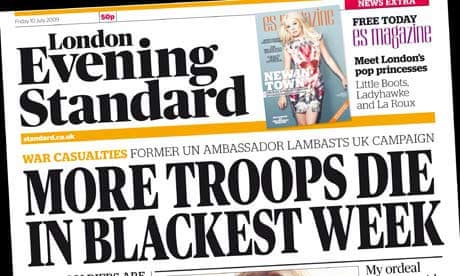
"We British are sometimes told we do not understand the Irish but, if this is so, the failure to understand is a two-way street. Everything on which the IRA is currently engaged suggests that it does not understand us at all." - So wrote Peter Brooke, Secretary of State for 'Northern Ireland', last July in 'The London Evening Standard' newspaper. More august* persons such as CJ Haughey and Garret Fitzgerald have also said the same from their varying points of view. By Cliodna Cussen, from 'Iris' magazine, Easter 1991. ('1169' comment : *'August' as in ' dignified and impressive'? Haughey and Fitzgerald? How so? From what point of view? Certainly not from a republican perspective, anyway...)
For us, our constant lack of belief in our own importance is the main reason for our ability to take racist insults and diplomatic evasions lying down. The Irish take no offence at successive waves of anti-Irish hysteria in the British media because they believe they themselves are not important. They also believe they are powerless to change anything. The country that the Irish intellegentia, media and politicians find themselves inhabiting no longer seems worth defending - for we no longer believe in ourselves, or in our own integrity or importance. And if you no longer believe in yourself you do not take offence.
The weary cynicism so prevalent in 'the Republic' today is part of this malaise. That England has exhibited a special tenacity and savagery in the North of Ireland for the past 20 years is no longer permitted to trouble us. We know that to challenge the British presence would mean a struggle, even if only a political one, and among Irish politicians - even those who were most vociferous 20 years ago - it no longer seems politically desirable to speak from a strong Irish position. This bourgeois consensus extends right through the middle classes... (MORE LATER).
ON THIS DATE (23RD AUGUST) 59 YEARS AGO : IRISH TRICOLOUR + RUC = BEING SHOT DEAD.
Internment under the 'Offences Against the State Act' was enacted on the 4th July 1957 and, by October 1958, there were 141 detainees in the Curragh, with morale being described as 'very low'. A total of 206 internees were detained by the State in that Camp, all of whom had been released by March 1959, as the State administration considered the IRA to be a spent force and the latter's political, military and paramilitary colleagues in the Occupied Six Counties were of the same frame of mind, to the extent that the pro-British 'police force' in that part of Ireland, the RUC, felt secure in declaring that they had a top-level informer in the IRA leadership, whom they codenamed 'Horsecoper', and had it on his/her information that the IRA had 455 members in Dublin and about 500 members in the rest of the Free State.
However, 'demoralised/a spent force' or not, both British-established administrations in Ireland - Leinster House and Stormont - were still attempting to 'put the boot in' on republican activity and continued to operate 'Most Wanted' lists, where those named on same would be seized on sight, or worse. One man that that British 'police force' were particularly interested in was James Crossan, a native of Baunboy in Cavan, and a prominent Sinn Féin organiser (and IRA intelligence officer and active member of the Teeling Flying Column) in the border area.
On Saturday, 23rd August 1958 - 59 years ago on this date - James Crossan and one of his neighbours, Seán Reilly, were in a van on their way to Swanlinbar, in Cavan - only a stones throw from the 'border' with Fermanagh - to collect a flag and finalise details for a demonstration to be held the next day (Sunday August 24th) in Ballyconnell. Having done their business in Swanlinbar, the two men, and a local youth and Sinn Féin member, Ben McHugh, decided to go for a pint ; in the pub they met up with two friends from County Fermanagh. Near the end of the night, the barman, Thomas McCarron, asked James Crossan's friend, Seán Reilly, if he would drop him and the two men from Fermanagh to the border, to collect a van belonging to one of the men, Glover Rooney, a cattle dealer from Kinglass, Macken, in County Fermanagh (the other man was Stanley Moffat, a sergeant in the B-Specials!), and Reilly agreed. He parked his van about 100 yards from the border and about 300 yards from Mullan British customs post in Fermanagh ; James Crossan and the young McHugh got out with the three northerners and all five walked towards where the van was parked, near the border. With the few drinks on him and the time of the day it was - about 3am - Seán Reilly fell asleep in the van.
The sound of gunfire woke him up and flares lit-up the sky around him; he got out of the van and saw two RUC men about 30 yards in front of him - they were running towards the British customs post. It later transpired that the five men (Crossan, McHugh, the barman and the two Fermanagh men), all unarmed, parted company on the Cavan side of the border at about 3.30am and, as Crossan and McHugh were walking back to the van, Crossan, 26 years of age, was shot dead by a group of RUC men who had positioned themselves on the southern side of the border. Ben McHugh was arrested, and Crossan's body was taken to Enniskillen. The RUC claimed that they had come across an IRA reconnaissance mission of Mullan British customs post, which was a total fabrication ; at the inquest (held in Enniskillen) no witnesses were called and no attempt was made to investigate the circumstances of the shooting. The coroner simply justified Crossan's death as "justifiable homicide". James Crossan was given a republican funeral and was buried in Kilnavert Cemetery, County Cavan, on the 26th August 1958.

a volley rang out without any warning,
a young man fell dead in the cold grey of morning.
God bless you, God rest you, James Crossan from Bawn.
Forget not this young man, so gay and so cheery,
in working for Erin, he never grew weary,
But he'll toil never more round his own loved Clonleary.
God bless you, God rest you, James Crossan from Bawn.
There's no sleep for the Specials, they're tumblin' and tossin'
they are haunted with fear, every man every gossan,
for they'll pay for it yet, those who murdered James Crossan.
God bless you, God bless you, James Crossan of Bawn. (From here.)
GROWING UP IN LONG KESH...
SIN SCÉAL EILE.
By Jim McCann (Jean's son). For Alex Crowe, RIP - "No Probablum". Glandore Publishing, 1999.
Biographical Note : Jim McCann is a community worker from the Upper Springfield area in West Belfast. Although born in the Short Strand, he was reared in the Loney area of the Falls Road. He comes from a large family (average weight about 22 stone!). He works with Tús Nua (a support group for republican ex-prisoners in the Upper Springfield), part of the Upper Springfield Development Trust. He is also a committee member of the 'Frank Cahill Resource Centre', one of the founders of 'Bunscoil an tSléibhe Dhuibh', the local Irish language primary school and Naiscoil Bharr A'Chluanaí, one of the local Irish language nursery schools.
His first publication last year by Glandore was 'And the Gates Flew Open : the Burning of Long Kesh'. He hopes to retire on the profits of his books. Fat chance!
THE CO-OP.
Every Saturday morning Paddy got his visit and you would think to hear him that that was all he talked about on his weekly visit - "I pulled my ma and she says that there's definitely a chocolate sandwich cake in my parcel today." We listened to this with no shortage of cynicism. "I'm telling you, my ma swore on St Anthony's Prayer that the cake is there..." But St Anthony's prayer or not, we couldn't give him the benefit of the doubt. Two weeks before she had swore on a stack of bibles and we didn't get any cake.
The comrade in charge of the parcels collected them at the gate and brought them into the canteen for distribution. Paddy waited for his parcel, and we sat in the hut waiting for him to bring it in so that we could get the supper on. "The bastards!", Paddy screamed, coming in the door of the hut. "What's the matter?" I asked. "The screws stole my chocolate sandwich cake." The more cynical members of the co-op looked round at one another with that 'Ach, Jesus, not again..'-look on our faces.
Paddy swore on his mother's life that the cake was there, but he could see that we didn't believe him. "Right", said Paddy, "I'm going to see the OC. This is the last straw." So we all trooped off to the OC's cubicle and, on entering, we noticed that he was sitting down with a cup of tea in his hand and a big slice of chocolate cake... (MORE LATER).
THE STAYCATION : WHEN YOU JUST SIMPLY DELAY DOING THE USUAL STUFF!
We checked the bank
The news was bad
We'd spent all the money
That we had
We wouldn't travel
on vacation
We were gonna take
a forced Staycation... (apologies to the author.)
I'd like to write that we're back and tell you all about our break, but...we weren't really anywhere to be 'back' from, but it still wasn't a bad mini-holiday (spoiled by New York, we are, constantly making comparisons, even though we know we shouldn't be!) considering that we stayed more-or-less local, the weather wasn't the best (typical Irish summer...) and there wasn't a roof-top party to be had anywhere!
We never got too far out of Dublin as it was just too awkward to arrange a day-trip anywhere else : myself and my four girlfriends had the best of intentions to take the extended clan of kids (which numbered anywhere between seven and twelve) away for a day or two but then life intervened - transport issues, what time we could get the gang ready to leave at, who had to be home at a certain time, whatshername won't go unless she can bring her fella with us but that fella used to go out with one of the other young girls with us and she wouldn't go if...etc!
We did, however, manage to get to Dublin Zoo, to Bray in Wicklow, for a group picnic on a lovely day to Corkagh Park, which is on our doorstep and, on one occasion (and never again!) eleven of us attempted to get to Stephens Green in the city centre but never made it...our shenanigans were (thankfully!) interrupted by a 650-ticket function for the Cabhair organisation, which took us the best part of a week, from start to finish, but even then we ended up with an extended entourage.
Anyway - we're back, and badly need a holiday to recover. For now, however, that's out of the question. But we're definitely going somewhere else the next time...
Thanks for reading, Sharon.
TWO 'WRONGS', BUT ONLY ONE GETS THE HEADLINE.
The newspaper article (pictured, left) which was published in 'The Sunday Times' on the 30th July last, authored by Free State unionist Kevin Myers is, at the time of writing, still receiving top billing in other newspapers and on radio and television news programmes. The 'Jews-and-women' piece has, rightly, brought both Myers and the newspaper into (further) disrepute and has elicited apologises from all concerned except, at the time of writing, from the author himself.
However, in our opinion, an even bigger injustice has been ignored because of the publicity generated by that article - on page 3 of that same edition a piece by Justine McCarthy , entitled 'St Patrick may make way for independence day celebration', was published and, to date, there has been no turmoil as a result of it -
- the piece opened by stating that "The advisory committee on state commemorations is to recommend an annual independence day to celebrate the foundation of the state..unlike other countries, Ireland does not mark its independence with a national holiday.." and finished by informing those that managed to get to the end of the article without their head been turned inside-out like their stomachs would have been that "...India, which won its independence from Britain later than Ireland, has its independence day every August 15..". Between the beginning and the end of that piece there were other equally misleading statements and claims in which the author continued to show her confusion in relation to the difference between 'state' and 'country' ie the state consists of 26 counties but the country consists of 32 counties and, as the country has not yet achieved its independence it is a nonsense to talk about organising 'independence day celebrations'.
And, Justine, if you and other politically-confused individuals want to celebrate Free State 'independence', could I suggest that you put Kevin Myers in charge of organising the event and doing the publicity for it. That would be most appropriate and such an occasion would deserve it.
JOKER IN THE PACK...?
Padraig Flynn (left) has been facing the flak since he became Minister for the Environment. But Michael O'Higgins finds that nothing phases him. He retains the same certainty he had when saying quite different things. From 'Magill' magazine, May 1987.
Residents' associations and tenants' associations have queued up to meet the new minister, to protest about local charges and increased local authority rents, and have been only temporarily mollified by Flynn's promise of "reviews".
The government's determination to take control, partly through the Department of the Environment, of the complex situation surrounding the wreck of the Kowloon Bridge, Flynn's popular call, as minister, for the closure of the Sellafield nuclear reprocessing plant and the endless declaration of good intentions which the 'European Year of the Environment' allows for, have not eased the discomfort for the new occupant of the minister's office in the Custom House.
The housing grants had first been introduced by Fianna Fáil in 1979 but were terminated a year later. On that occasion, they gave notice of their intention and had been flooded with 40,000 new applications. The decision on this occasion to terminate retrospectively was aimed at preventing a recurrence of that kind of rush. John Boland had reintroduced the grant schemes in 1985 and, in that first year of operation, £8.5 million was paid out. In 1986, the figure had jumped to £27.5 million and this year (1987) £100 million had been allocated and the department had taken on extra inspectors to cope with the applications, many of whom had given verbal approval to applicants who had proceeded with work.
Under the terms of the budget these people would now not receive their grants... (MORE LATER).
ON THIS DATE (2ND AUGUST) 95 YEARS AGO : DEATH OF "AN INFLUENTIAL AND FORMIDABLE" IRISH REPUBLICAN SOLDIER.
Henry James 'Harry' Boland (27th April 1887 – 2nd August 1922). "I rise to speak against this Treaty because, in my opinion, it denies a recognition of the Irish nation...I object to it on the ground of principle, and my chief objection is because I am asked to surrender the title of Irishman and accept the title of West Briton...I object because this Treaty denies the sovereignty of the Irish nation, and I stand by the principles I have always held — that the Irish people are by right a free people.
I object to this Treaty because it is the very negation of all that for which we have fought. It is the first time in the history of our country that a body of representative Irishmen has ever suggested that the sovereignty of this nation should be signed away..we secured a mandate from the Irish people because we put for the first time before the people of Ireland a definite issue ; we promised that if elected we would combat the will, and deny the right of England in this country, and after four years of hard work we have succeeded in bringing Ireland to the proud position she occupied on the fifth December last. The fight was made primarily here in Ireland ; but I want to say that the fight that was made in Ireland was also reflected throughout the world ; and we — because we had a definite object — had the sympathy of liberty-loving people everywhere....I have taken one oath to the Republic and I will keep it. If I voted for that document I would work the Treaty, and I would keep my solemn word and treat as a rebel any man who would rise out against it. If I could in conscience vote for that Treaty I would do so, and if I did I would do all in my power to enforce that Treaty ; because, so sure as the honour of this nation is committed by its signature to this Treaty, so surely is Ireland dead. We are asked to commit suicide and I cannot do it..we are asked to annihilate the Irish nation. This nation has been preserved for seven hundred and fifty years, coming down in unbroken succession of great men who have inspired us to carry on. We were the heirs of a great tradition, and the tradition was that Ireland had never surrendered, that Ireland had never been beaten, and that Ireland can never be beaten.." (7th January, 1922,from here.)
It is generally considered that Harry Boland was the first man to be 'unofficially executed' by a Michael Collins-controlled Free State death squad, on the evening of Sunday 30th July/early Monday morning 31st July 1922 and, following that shooting, in the Grand Hotel in Skerries, Dublin, the State gunmen issued this statement (on Monday 31st July 1922) - "Early this morning a small party of troops entered the Grand Hotel to place Mr. H.Boland T.D., under arrest. Mr. Boland had been actively engaged in the irregular campaign. When accosted in his bedroom he made an unsuccessful attempt to seize a gun from one of the troops and then rushed out to the door. After firing two shots at random and calling on Mr. Boland to halt, it was found necessary to fire a third shot to prevent an escape. Mr. Boland was wounded and removed to hospital. A man giving his name as John J.Murphy with residence at 3 Castlewood Avenue, Ranelagh,Dublin, who was found with Mr. Boland, was taken prisoner. Subsequently he was identified as Joseph Griffin* , an active irregular, belonging to Dublin." (*'1169' Comment - Joe Griffin was an IRA operative within the Movement's Intelligence Department.)
One of the Free State troops present at the time stated afterwards - "Mr.Boland was wanted and we went to the hotel and two or three of us entered his room. He was in bed. We wakened him and he got up out of bed and partly dressed himself. He had no gun. Suddenly he turned and rushed to tackle one of our fellows for his gun. A shot was fired over his head to desist but he continued to struggle and almost had the gun when a second shot was fired and Mr.Boland was wounded." The bullet entered his right side near the ribs, passed through his body and came out through his left side causing very serious injuries.
A photograph of the actual bullet which killed Harry Boland....
...and his funeral service, Glasnevin Cemetery, Dublin.
Although unarmed at that moment, as admitted by his executioners, caught by surprise and outnumbered (a "small party" of Free State troops were in the room at the time) the Staters attempted to present the execution of Harry Boland as 'a killing in self-defence' ie 'he attempted to jump us and then tried to flee...'. They had learned well from their British colleagues. Harry Boland died from his wounds on the 2nd August 1922 - 95 years ago on this date - in St. Vincents Hospital, Dublin and, as he lay waiting for death, he told family members that the Stater who shot him had been imprisoned with him in Lewes Prison, in England, but he refused to put a name to him - when his sister, Kathleen, asked him who had fired the shot he refused to tell her, saying "The only thing I'll say is that it was a friend of my own that was in prison with me, I'll never tell the name and don't try to find out. I forgive him and I want no reprisals". The funeral expenses were taken care of by the Cumann na Poblachta organisation.
'Boland's mix of animal charm, gregariousness, wit and a dash of ruthlessness made him an influential and formidable character. Though not an intellectual in his manner he was a clear thinker, a forceful orator and a graceful writer....' (from here.) Thankfully, there are those like him who continue to this day to work for the Movement....
PERCEPTIONS...
"We British are sometimes told we do not understand the Irish but, if this is so, the failure to understand is a two-way street. Everything on which the IRA is currently engaged suggests that it does not understand us at all." - So wrote Peter Brooke, Secretary of State for 'Northern Ireland', last July in 'The London Evening Standard' newspaper. More august* persons such as CJ Haughey and Garret Fitzgerald have also said the same from their varying points of view. By Cliodna Cussen, from 'Iris' magazine, Easter 1991. ('1169' comment : *'August' as in ' dignified and impressive'? Haughey and Fitzgerald? How so? From what point of view? Certainly not from a republican perspective, anyway...)
The English never define themselves in relation to the Irish. In fact their whole attitude in relation to Ireland, one of exhausted irritation and sporadic hatred mixed with fear, has been around since the 16th century. Constant influxes of the Irish into England since the 1800's have caused strains on English society, but their ability to assimilate them only points to the strength of their culture.
The English never define their relation with Ireland, nor have they, since William Gladstone had a clear definite policy in regard to Ireland- their actions are political reactions as Garret Fitzgerald said ; "Their system is uncoordinated because there's no system. Northern Ireland (sic) secretary people think there's a 'Northern Ireland' policy, but there isn't. No British government has succeeded, except in a very brief period of negotiation or an immediate reaction to something like the fall of Stormont, in concentrating its attention sufficiently to ensure the actions of all ministers are directed towards the same objective.
The result is that things are done, the cumulative effect of which can be negative, not because of ill-will but because of a lack of appreciation of the consequences of the action being taken. To Irish governments (sic - should read 'Dublin administrations') the whole issue is so important that we cannot afford to act negatively regardless of consequences." In fact, "Ireland is very rarely on the Cabinet agenda," as Merlyn Rees said in 1989, "to us it is not very important." (MORE LATER).
ON THIS DATE (2ND AUGUST) 36 YEARS AGO - DEATH OF A 'REVOLUTIONARY LARK'.
'As Ireland buries her heroes and martyrs,
Britain should hang her head in shame,
As Kieran Doherty fought for freedom
And gave his life to Ireland's name...' (from here.)
"On July 13th, 1981, we were shocked and dismayed to hear that Martin Hurson had been violently ill and had died unexpectedly and prematurely. The next significant development was the British government-sponsored intervention of the 'International Red Cross' (IRC), which tried to initiate direct dialogue between the Brits and ourselves - the Brits rejected this and suggested mediation based on their July 8th statement, which was aimed at defeating us and unproductive, and we rejected this as futile.
We pointed out to the IRC that, as the Brits were not interested in an honourable settlement, their interest in the IRC must logically be to use them ; a Red Cross delegate asked for a further break-down of our July 4th statement and was initially refused. However, after discussion, we complied and issued the August 6th statement and asked the British government, the Dublin government, the SDLP and the Catholic Church to respond to our statement. Soon Kieran Doherty, Kevin Lynch and Thomas McElwee were to be murdered by Britain.." - part of the text of a statement released by the H-Block 'Blanket Men', announcing the end of the 1981 Hunger-Strike, as published in 'IRIS' magazine, Vol. 1 No.2, November 1981.
'Kieran hailed from the Andersonstown area of Belfast, being born into a family with a proud history of republican activity. He was a keen sportsman and won a minor Antrim county medal in 1971 for St. Theresa's GAC. After seeing Loyalist gangs burning nationalists out of their homes while the RUC and British army stood idly by, he joined Na Fianna Éireann in the autumn of 1971. His outstanding ability led to him progressing to the ranks of the IRA very quickly. After evading capture on a couple of occasions, he was eventually arrested in early 1973 and interned in Long Kesh until November 1975. Upon his release he reported back to the IRA for service straight away.
In April 1976 he was involved in an operation which saw his comrade Sean McDermott killed and Mairead Farrell of future Gibraltar fame arrested. In August of that year he was arrested and and remanded to Crumlin Road Jail, where he often received ill treatment for refusing to bend the knee to the screws. In January 1978 he was sentenced to 18 years in the H-Blocks. He joined the blanket protest immediately and found himself in relentless conflict with the screws. He always resisted their efforts to enforce degrading anal searches, and in July 1978 he had to be hospitalized after taking a severe beating.
Kieran became fluent in his native tongue during his imprisonment, which was used as a weapon against the prison regime. As the painful struggle for political status continued, he joined the hunger strike on May 22nd 1981. In June he was elected as TD for the Cavan/Monaghan constituency during the 26-county general election with an impressive tally of 9,121 first preference votes, only 303 votes behind the sitting Free State minister for Education. He died on August 2nd 1981 after 73 agonizing days of hunger strike. He was buried with full military honours in Milltown Cemetery. He was 25 years of age. (from here.)
Between the years 1917 and 1981, twenty-two Irish men died on hunger-strike in our on-going fight for Irish freedom :
Thomas Ashe, Kerry, 5 days, 25th September 1917(force fed by tube , died as a result).
Terence MacSwiney, Cork, 74 days, 25th October 1920.
Michael Fitzgerald, Cork, 67 days, 17th October 1920.
Joseph Murphy, Cork, 76 days, 25th October 1920.
Joe Witty, Wexford, 2nd September 1923.
Dennis Barry, Cork, 34 days, 20th November 1923.
Andy O Sullivan, Cork, 40 days, 22nd November 1923.
Tony Darcy, Galway, 52 days, 16th April 1940.
Jack 'Sean' McNeela, Mayo, 55 days, 19th April 1940.
Sean McCaughey, Tyrone,22 days, 11th May 1946 (hunger and thirst strike).
Michael Gaughan, Mayo, 64 days, 3rd June 1974.
Frank Stagg, Mayo, 62 days, 12th February 1976.
Bobby Sands, Belfast, 66 days, 5th May 1981.
Frank Hughes, Bellaghy (Derry), 59 days, 12th May 1981.
Raymond McCreesh, South Armagh, 61 days, 21st May 1981.
Patsy O Hara, Derry, 61 days, 21st May 1981.
Joe McDonnell, Belfast, 61 days, 8th July 1981.
Martin Hurson, Tyrone, 46 days, 13th July 1981.
Kevin Lynch, Dungiven (Derry), 71 days, 1st August 1981.
Kieran Doherty, Belfast, 73 days, 2nd August 1981.
Tom McIlwee, Bellaghy (Derry), 62 days, 8th August 1981.
Micky Devine, Derry, 60 days, 20th August 1981.
"It is not those who can inflict the most, but those that can suffer the most who will conquer" - Terence MacSwiney.
GROWING UP IN LONG KESH...
SIN SCÉAL EILE.
By Jim McCann (Jean's son). For Alex Crowe, RIP - "No Probablum". Glandore Publishing, 1999.
Biographical Note : Jim McCann is a community worker from the Upper Springfield area in West Belfast. Although born in the Short Strand, he was reared in the Loney area of the Falls Road. He comes from a large family (average weight about 22 stone!). He works with Tús Nua (a support group for republican ex-prisoners in the Upper Springfield), part of the Upper Springfield Development Trust. He is also a committee member of the 'Frank Cahill Resource Centre', one of the founders of 'Bunscoil an tSléibhe Dhuibh', the local Irish language primary school and Naiscoil Bharr A'Chluanaí, one of the local Irish language nursery schools.
His first publication last year by Glandore was 'And the Gates Flew Open : the Burning of Long Kesh'. He hopes to retire on the profits of his books. Fat chance!
THE CO-OP.
The normal practice in the Kesh was for groups of men to organise themselves into co-ops. This was concerned with better utilisation of the weekly parcel and the tea-making rota. If you had six men in a co-op then each member would get their parcels in on designated days, which meant we had a fresh parcel each day then, whatever was left on Sunday could be made up into a Long Kesh Goulash (but you don't want to hear about that..!)
In Cage 22 when I was there I was 'Man Friday' - we also had a 'Man Monday', 'Man Tuesday' and so on, but our 'Man Saturday' was proving to be troublesome. He got his parcels all right but there was never a cake in it. This was very annoying for although he was getting a packet of Jammie Dodgers , we liked a bit of cake of an evening after our supper, with our tea, and what made it worse was his weekly attack on the prison service, accusing them of stealing his cake. Every week, that was!
Now, of course, we wouldn't put it past the screws for doing just that, but it was always his and, by association, our Saturday night cake... (MORE LATER).
HAPPY HOLIDAYS - GOING FOR A SHORT BREAK!
It's that time of year again - or, rather, it is and it isn't. Myself and the girlfriends are having a 'staycation' this year, as finances and/or time off work and/or kids/partners etc haven't gelled for the five of us and we have decided to postpone our yearly shenanigans and just enjoy the time at home (as best we can!) with all our clans, with two or three outings a week and, probably, an overnighter or two in Tyrone and/or Donegal.
Between the jigs and the reels (and the 650-ticket raffle on Sunday 13th next) it's looking like it'll be Wednesday 23rd August before we can put together one of our usual offerings but, seeing as we won't be eating apples :-( this year, we'll probably get a word or two posted here before then. But that depends - if the weather doesn't get us down, the fact that we're not 'over yonder' might, and we just may not feel like talking! However, our 'troubles' are nothing of the sort when compared with the poor souls in the following piece...
WHAT HAVE WE COME TO?
'Paralysed on one side by a stroke and barely able to speak, the woman was left to die at the side of a road - by her own children...the 75-year-old only survived because a stranger took pity on her as she lay in the street..the wards are crowded with beds, all just a few centimetres apart, filled with elderly people who sit quietly staring into space or lie huddled under blankets..on one, a frail old lady whispered into the ear of a smiling plastic doll, her only companion since she moved to the facility from the shed she used to occupy in her family's back yard..
Another woman was thrown out of a car next to a rubbish dump, where she was found covered in cuts and bite marks from rats. She made it to the nursing home but survived for only a few months.' "We have nowhere to go. We have come here to wait to die..here we feel less alone and people feed us.."
From here.
Puts things in perspective, doesn't it? Proves that some of us are worse than the so-called 'wild animals' we share this planet with. 'Go back, we f****d up'.
Thanks for reading, Sharon.
PURPOSELY MISSING THE BIGGER PICTURE...
Whether intentional or not - and I suspect not - the result of the fallout from that article by Kevin Myers has been that an even more monsterous proposition has gone unchallenged. There has been no comment, no angry editorials, no 'talking head' panels of 'worthies' discussing the proposition in question, no calls for heads to roll or no apologises demanded from or issued by those concerned. The 'elephant in the room' is reading a different newspaper article to a deaf man in the land of the blind...
Check back here with us on Wednesday next, 2nd August.
Sharon.
ON THIS DATE (26TH JULY) 103 YEARS AGO : HOWTH GUNS AND A BRITISH MASSACRE ON THE DUBLIN QUAYS.
'A nationalist depiction of the shootings at Bachelor's Walk, in which British troops killed three civilians...' (from here.)
In the early afternoon of Sunday, 26th July, 1914 - 103 years ago on this date - a consignment of over one-thousand rifles and ammunition for same was landed at Howth harbour, in Dublin, and unloaded by the newly-formed 'Irish Volunteers', assisted by members of Na Fianna Éireann. On its way in to Dublin city, the republican convoy was halted by a force of about fifty British RIC 'policemen' and over one-hundred British soldiers from the 'Kings Own Scottish Borderers', known as the 'Kosbies'.
A large crowd of civilians gathered to watch the confrontation ; the Assistant British RIC Commissioner, William Harrell ('..a vehement unionist..') , approached the republicans and demanded that their weapons be handed over. Two of the rebel leaders, Thomas MacDonagh and Darrell Figgis, left the main body of armed republicans and marched over to Harrell and told him it was their understanding that he (Harrell) had no legal authority to issue such a demand!
While RIC Chief Harrell issued chapter and verse of how, and from whom, he derived his 'authority', the two Irish republicans were quoting him chapter and verse of why it was that his 'authority' was not valid in Ireland ; Harrell's RIC colleagues were lined-up on the road about ten feet behind him and the British 'KOSBIES' were, in turn, lined-up behind the RIC men - both groups were concentrating on the verbal sparring-match between Harrell, MacDonagh and Figgis. But the group of Irish republicans, standing in military formation behind MacDonagh and Figgis, had directed their concentration elsewhere : as the verbal disagreement continued, republicans at the very back of the gathering simply walked away in the opposite direction with their weapons under their coats and other men in the republican contingent handed their weapons to known members of the public who, again , walked off with the equipment under their coats!
Meanwhile, after about half-an-hour of trying to get the better of MacDonagh and Figgis, RIC Chief Harrell gave up and ordered his men, and the British military, to move-in and seize the guns - they got 19 of the 1000 rifles, the rest having been spirited away. The British were not amused, but the crowd that had gathered to watch the confrontation cheered, clapped and laughed at the RIC and the British KOSBIES, as the two British gangs formed-up for the march back into the city centre. Word of the incident had spread at this stage and a large number of the public decided to walk alongside the British, laughing and jeering at them. When the procession was about three miles from Dublin city centre, they were joined by about fifty more members of the KOSBIES who fell in behind their colleagues. Likewise, dozens of men, women and children - out for a Sunday walk - had heard about the 'disappearing rifles' and joined with their neighbours in walking beside the British, poking fun at them. It being a Sunday afternoon, families were out in force in the city and were lined-up along the Quays, having heard that the British military detachment was headed that way : people spilled-out from the old tram terminus on Bachelors Walk to view the spectacle.
The British were by now near breaking-point ; they were more accustomed to being feared or, at best, ignored, by the public, and were seething with rage now that they were being laughed at by them. An Officer in charge felt the same, and ordered one line of his men (approximately twenty soldiers) to halt and turn to face the jeering crowd ; when the soldiers had done as commanded, he instructed them to "ready weapons" and fire on the crowd, if he so ordered. It is not clear whether the order to "fire" was given or not but, regardless, the British did open fire. The people on the footpaths - men, women and children - were easy targets. Forty-one people were hit : a man in his mid-forties died on the spot, as did a woman in her early fifties, and a teenage boy. Of the other thirty-eight people, one died later. Such was the outcry from Ireland and abroad, the British Government decided to hold a so-called 'Commission of Inquiry' into the shooting and, in August that year (1914), that body announced its conclusion and, as expected, the 'Commission of Inquiry' was nothing of the sort. It amounted to a mere 'slap-on-the-wrist' for those who pulled the triggers.
The 'Commission' simply stated that the actions of their gunmen on that day, Sunday, 26th July, 1914, was "..questionable and tainted with illegality.." and scolded their soldiers for "..a lack of control and discipline..". The British Army soldiers responsible for the massacre, the 'Kings Own Scottish Borderers', within hours following the shootings, found themselves even more reviled by the Irish than they had been - their very presence on the street now guaranteed trouble. They were shipped out of Ireland only days after the incident, to the Western Front. The Irish, meanwhile, had buried their dead : on 29th July, 1914, literally thousands of Irish people followed the coffins of those shot dead three days earlier and Dublin city came to a standstill as thousands upon thousands of people filled the footpaths along the funeral route, from the Pro-Cathedral to Glasnevin Cemetery. An armed Company of Irish Volunteers, with weapons reversed, led the mourners to the gravesides.
While the British political and military administrations claim jurisdiction over any part of Ireland, the incident outlined above can happen again. That British claim must be dropped and the political and armed thugs enforcing same must be re-called to their own country. Any other 'solution' only postpones a proper peace.
JOKER IN THE PACK?
Padraig Flynn (left) has been facing the flak since he became Minister for the Environment. But Michael O'Higgins finds that nothing phases him. He retains the same certainty he had when saying quite different things. From 'Magill' magazine, May 1987.
After twenty years in politics, ten of them in the Dáil (sic - should read 'Leinster House') Padraig Flynn retains an irrepressible enthusiasm for the work. But he might reasonably have expected that his elevation to Minister for the Environment would have been easier, giving him greater scope for his boundless confidence. Fianna Fáil had given undertakings in their election manifesto which should have brought the incoming Minister for the Environment ample opportunity to generate good news. Indeed, the coalition's minister, John Boland - almost alone among the senior ministers in that government - had been able to derive considerable personal prestige from that role : he had sustained a popular campaign against the building societies and overseen the operation of a range of housing grants which brought a response from the public far exceeding anything that could have been anticipated.
For Padraig Flynn, however, things were to be quite different. The new government's budget ended the house improvement grants, the builder's grant and the grant towards purchase of local authority houses - and that was just the beginning of his troubles. The resentment at that move has been matched by the irritation of councillors around the country (sic - it's the State that is being referenced here) - not least Fianna Fáil councillors - at being forced to impose or increase charges for local authority services, even to introduce the domestic rates which Fianna Fáil abolished following the landslide 1977 general election win in which Padraig Flynn came into the Dáil (sic - it's the Leinster House/Free State institution which is being referenced here)... (MORE LATER).
PERCEPTIONS...
"We British are sometimes told we do not understand the Irish but, if this is so, the failure to understand is a two-way street. Everything on which the IRA is currently engaged suggests that it does not understand us at all." - So wrote Peter Brooke, Secretary of State for 'Northern Ireland', last July in 'The London Evening Standard' newspaper. More august* persons such as CJ Haughey and Garret Fitzgerald have also said the same from their varying points of view. By Cliodna Cussen, from 'Iris' magazine, Easter 1991. ('1169' comment : *'August' as in ' dignified and impressive'? Haughey and Fitzgerald? How so? From what point of view? Certainly not from a republican perspective, anyway...)
A continuing symptom of this colonised mentality is the refusal of the intellegentia to promote or maintain the Irish language. Trivail items pointing to this are the 'Windsor Heights'-type names on housing estates, the recent adoption of pseudo-English accents by RTE announcers and newsreaders, and Radio Eireann's constant use of British correspondents in countries, like the Philippines, where many Irish are resident. The cosy feeling of being an integral part of Hewitt's 'British Archipelago of Islands' gives constant comfort to a section of Irish people.
It is almost as if they believe that a healthy sense of Irish national identity was in some way reprehensible. As if being pro-Irish made people in some sense anti-English. As if Irish nationality was to be defined only in relation to the British Islands, not in relation to the Irish Islands. This internalised defining of ourselves only in relation to one of our neighbours gives us a feeling that only our relations with England are real and important... (MORE LATER).
ON THIS DATE (26TH JULY) 161 YEARS AGO - BIRTH OF A BRILLIANTLY CONFUSED IRISHMAN.
"Power does not corrupt men ; fools, however, if they get into a position of power, corrupt power" - George Bernard Shaw, dramatist, critic and social reformer (pictured, left).
An enigma, I think, is the best way to describe 'GBS', who was born in Dublin on the 26th of July 1856 - 161 years ago on this date - and was known to be a 'problem child' - he grew into what many of his contemporaries and, indeed, society at large, considered to be a 'problem adult'!
In relation to Irish politics, he supported 'Home Rule' within the British 'empire' ("..socialism can be brought about in a perfectly constitutional manner by democratic institutions.." [which might indeed be possible elsewhere, but the Leinster House institution is not a "democratic institution", as far as Irish republicans are concerned]) and constantly voiced opinion against Irish separatism yet, at 90 years of age, in 1946, he refused an award from Westminster of an 'Order of Merit Honour' ; in 1916, at 60 years of age, he condemned "militant Irish nationalism" and accused those attempting to overthrow British misrule in Ireland as having 'learned nothing and forgot nothing' and again voiced his opinion that independence from England 'was impractical', although he did object to the British executions of the rebels that followed.
He supported Mussolini ("..the right kind of tyrant..") ,spoke of his admiration for Stalin and Karl Marx, condemned all sides in the 'First World War', flirted with 'Fabianism' and 'Eugenics' and flirted occasionally with 'Flat Earthism/Zeteticism'! 'GBS' departed this Earth (flat or not!) on the 2nd November 1950 at the grand age of 94. "Dying is a troublesome business," the man himself opined, " there is pain to be suffered, and it wrings one's heart ; but death is a splendid thing - a warfare accomplished, a beginning all over again, a triumph. You can always see that in their faces." And, in the opinion of this blogger, this world needs more 'faces' and free-thinking attitudes like that of 'GBS' today, even if I wouldn't agree with all of his political positions.
In regards to the 'Irish question', he stated (in 'Man and Superman', 1903) - "The Famine? No, the starvation. When a country is full o' food, and exporting it, there can be no famine. Me father was starved dead; and I was starved out to America in me mother's arms. English rule drove me and mine out of Ireland" - and, unfortunately, as long as Westminster continues to claim jurisdiction over any part of Ireland, the potential to 'drive us Irish' out remains.
GROWING UP IN LONG KESH...
SIN SCÉAL EILE.
By Jim McCann (Jean's son). For Alex Crowe, RIP - "No Probablum". Glandore Publishing, 1999.
Biographical Note : Jim McCann is a community worker from the Upper Springfield area in West Belfast. Although born in the Short Strand, he was reared in the Loney area of the Falls Road. He comes from a large family (average weight about 22 stone!). He works with Tús Nua (a support group for republican ex-prisoners in the Upper Springfield), part of the Upper Springfield Development Trust. He is also a committee member of the 'Frank Cahill Resource Centre', one of the founders of 'Bunscoil an tSléibhe Dhuibh', the local Irish language primary school and Naiscoil Bharr A'Chluanaí, one of the local Irish language nursery schools.
His first publication last year by Glandore was 'And the Gates Flew Open : the Burning of Long Kesh'. He hopes to retire on the profits of his books. Fat chance!
SELF-INFLICTED INJURIES.
We kept looking in his direction and giving him dirty looks. I have to say at the end we got on very well and he was a good man. Cage 10 in 1973 was a cage with open huts, that is, no cubicles. There were two toilets at the end of the hut facing where I slept, and next to me was a comrade from Ballymurphy whom we'll call 'Buff', and it was he who found out about the phone call from Liverpool.
Lights went out at midnight but there was still plenty of light for reading and stuff. I heard bare feet padding up the stone floor of the hut - I looked round to see 'The Caller' making his way towards the toilets and I turned to Buff - "Can you not think of a nickname for our comrade there..?" I asked. "Yeah.." said one of the other lads, "..right enough, Buff, you haven't gave him a nickname yet, but you gave all of us ours." Buff didn't even blink. He just started singing - "Put your sweet lips a little closer to the phone..".
The Intelligence Officer, Buff and myself were gripped by an uncontrollable fit of giggling. "What's going on here?" asked the Officer Commanding, which prompted the I.O. to advise 'The Caller' to tell all before everyone found out from someone else. 'The Caller', before telling his story, spent the first five minutes apologising for his stupidity, and for the next week all you could hear was that song - "Put your sweet lips a little closer to the phone.."
(MORE LATER).
Thanks for reading, Sharon.
PROSE AND CONS.
By prisoners from E1 Landing, Portlaoise Prison, 1999.
ACKNOWLEDGMENTS :
Grateful thanks to the following for their help, support, assistance and encouragement, and all those who helped with the typing and word processing over the past few months. Many thanks to Cian Sharkhin, the editor of the book, Mr Bill Donoghue, Governor, Portlaoise, Mr Seán Wynne, supervising teacher, the education unit in Portlaoise Prison and the education staff, especially Zack, Helena and Jane. Education officers Bill Carroll and Dave McDonald, Rita Kelly, writer, print unit, Arbour Hill.
First Print : November 1999, reprinted March 2000, illustrations by D O'Hare, Zack and Natasha. Photograph selection : Eamonn Kelly and Harry Melia.
FOR ALL THE HARD WORK.
For all the hard work, soul searching, enjoyment, reflection and silent pondering that went into crafting this book from all concerned. We would like to thank Sister Caoimhín for all her hard work on behalf of prisoners in this country, for her kindness and compassion. For she is truly a great woman with a big heart.
All proceeds from the sale of this book will go to Sister Caoimhín Ní Uallacháin OP, Matt Talbot Community Trust, 42 St. Laurence's Road, Chapelizod, Dublin 20 -
"Our organisation is a non-residential drug free community founded to befriend and work in solidarity with young disadvantaged adults, mostly young men over 17 years, returning to their community from prison, addiction therapy, state/psychiatric care or struggling in the face of poverty or homelessness.
We offer education, training, work, counselling and therapy, recreation and meals to those employed with us on a CE scheme. We are also involved in prison and home visitation, a woman's group, a family summer project and local networking and partnership."
(END of 'PROSE AND CONS'. Next - 'Joker In The Pack', from 1987.)
PERCEPTIONS...
"We British are sometimes told we do not understand the Irish but, if this is so, the failure to understand is a two-way street. Everything on which the IRA is currently engaged suggests that it does not understand us at all." - So wrote Peter Brooke, Secretary of State for 'Northern Ireland', last July in 'The London Evening Standard' newspaper. More august* persons such as CJ Haughey and Garret Fitzgerald have also said the same from their varying points of view. By Cliodna Cussen, from 'Iris' magazine, Easter 1991. ('1169' comment : *'August' as in ' dignified and impressive'? Haughey and Fitzgerald? How so? From what point of view? Certainly not from a republican perspective, anyway...)
The English concepts of 'doing the honourable thing' and of 'duty to a colony' which were recently agonised over when making settlements about Hong Kong, have never had the moral force to stand up to economic reality. 'Good moral reasons' are always found for their own actions ; although British governments have a masterly grasp of the effective use of propaganda, they must sometimes wish we were not quite so gullible, so easily cowed, so trusting of the authoritative voice of English mentors.
Questioning voices on the truth of the British government line always come from independent newspapers or television in Britain, not from programme-makers or media people in Ireland. The 'master-servant' relationships taboos are alive and well in the Irish media.
One of the saddest facts of Irish history is the way, time and time again, the Irish 'intelligentsia' have allowed themselves to be pushed into a welcome acceptance of 'Britishness' ('1169' comment - lol! And lol again!) : this acceptance of colonised mental status is as true for the North as it is for the rest of Ireland. Discussion programmes on television emanating from Belfast contain constant references to 'the mainland', while in 'the Republic', the present reappearance of the colonised mentality is more insidious but none the less real. (MORE LATER).
GROWING UP IN LONG KESH...
SIN SCÉAL EILE.
By Jim McCann (Jean's son). For Alex Crowe, RIP - "No Probablum". Glandore Publishing, 1999.
Biographical Note : Jim McCann is a community worker from the Upper Springfield area in West Belfast. Although born in the Short Strand, he was reared in the Loney area of the Falls Road. He comes from a large family (average weight about 22 stone!). He works with Tús Nua (a support group for republican ex-prisoners in the Upper Springfield), part of the Upper Springfield Development Trust. He is also a committee member of the 'Frank Cahill Resource Centre', one of the founders of 'Bunscoil an tSléibhe Dhuibh', the local Irish language primary school and Naiscoil Bharr A'Chluanaí, one of the local Irish language nursery schools.
His first publication last year by Glandore was 'And the Gates Flew Open : the Burning of Long Kesh'. He hopes to retire on the profits of his books. Fat chance!
SELF-INFLICTED INJURIES.
The drunken boaster was caught red-handed in the pub, handcuffed to a cop, escorted onto the Liverpool boat and transported back to Ireland. He was handed over to the RUC on the dock at Belfast and, after a short visit to the Petty Sessions Court in Townhall Street in Belfast, where he was remanded in custody, he was sent to Long Kesh.
We of course had no idea as to why he was in prison - it was none of our business. Usually a new guy would just tell you over a cup of tea but this new guy wouldn't come across with any info at all. We thought this was very selfish and told him so, but he wouldn't say anything about his charge. The I.O. (Intelligence Officer) in Cage 10 was a mate of a mate, so we cornered him the next day : "What's the crack with yer man?" we asked. "The new guy", we said.
"I can't tell you", he said, but we knew by his face that he was bursting to tell us. "Ah go on, tell us, we'll not say anything to anybody..." we said to him. And he told us all about the new guy - the'phone caller' - and the phone call he made. We could scarcely believe the stupidity of the guy but there it was, and we were duty-bound not to tell anyone about it... (MORE LATER).
Thanks for reading, Sharon.
VOLUNTEER PAT CANNON COMMEMORATION, WEDNESDAY 19TH JULY 2017, DUBLIN.
Pat Cannon (left), Dublin, and Peter McElchar, Donegal.
At 2.15pm on Saturday, 17th July 1976, two IRA Volunteers on active service - Patrick Cannon from Dublin and Peter McElchar from Donegal - set out in a car in which they were transporting an explosive device. They crossed the border from Donegal into Tyrone and were approaching the town of Castlederg when the device exploded prematurely. Peter McElchar was killed instantly. Patrick Cannon was gravely injured and was taken to Tyrone County Hospital in Omagh. He was being transferred to hospital in Belfast when he died.
Born in Dublin on November 28th 1955 - one of a family of seven (three girls and four boys)- Pat Cannon and his family lived in Edenmore, on the northside of the city. He was a fitter/welder by trade, and was only 20 years of age when he died. A wreath will be laid to mark the 41st anniversary of the death of this young Irish soldier on Wednesday 19th July 2017 at 6.30pm in Old Balgriffin Cemetery, off the Malahide Road, in Dublin (the number 42 bus from Talbot Street in Dublin city centre will leave you at Campion's Pub, right beside the graveyard). Organised by Republican Sinn Féin Poblachtach : ALL WELCOME!
Thanks for reading, Sharon.
ON THIS DATE (5TH JULY) 77 YEARS AGO : THOMAS ÓG MacCURTAIN'S LAST DAY ON EARTH...
Tomás Óg MacCurtain, left, 33 years of age, pictured in Cork in 1948 (thanks to Brendan O'Neill for the pic!).
In Cork, in 1920, Irish republican Tomás MacCurtain was elected as 'Lord Mayor' of the city, just one of the many changes that resulted from the 15th January local council elections that were held in Ireland that year, in which Sinn Féin won control of 11 out of 12 cities and boroughs - the only municipal council in all Ireland left under Unionist control was in Belfast ; out of 206 councils elected on the island , 172 now had a
republican/nationalist majority.
The British had 'outlawed' Dáil Éireann (the 32-county body, not the pretend 'Irish parliament' in Kildare Street, in Dublin, which Free Staters claim, falsely, to be the same institution) directed all local council's in Ireland to break their connection with the (British) Dublin Castle system of local administration and, within months, most of the local councils in the country were reporting to the republican administration. Incidentally, that All-Ireland (32 County) Dáil continued to function underground until 1938, when it delegated its executive powers to the Army Council of the IRA, in accordance with a resolution of the First Dáil in 1921. With the 1969 split, Tom Maguire, the last and faithful survivor of the All-Ireland Dáil, stated that the Provisional IRA was the successor of the 1938 body - similarly, following the 1986 split, he nominated the Continuity IRA as the legitimate IRA. Tom Maguire died in 1993, aged one-hundred-and-one (101).
Anyway - back to Tomás Óg who, in the year that his father was elected as 'Lord Mayor' of Cork, was only five years of age. He developed an interest in all things Irish, encouraged as much by his mother, Eibhlís Breathnach, as well as his father and, as an adult, became every bit as active in Irish republicanism as was his father, and quickly became a trusted and leading republican, sitting on the Executive of the IRA. This, plus his family history, marked him out to the Free State 'authorities' as 'a person of interest'.
On Wednesday, 3rd January 1940, in St. Patrick Street in Cork, Tomás Óg was jumped-on by a number of Free State Special Branch men, who had decided to 'arrest' him - he fought with them and, in the scuffle, a gunshot was fired. A Free State detective, from Union Square Barracks, by the name of Roche, who in particular had been harassing Tomás Óg for weeks, fell to the ground - he was fatally wounded and died the next day. On the 13th June 1940, the Free State 'Special Criminal Court' sentenced Tomás Óg MacCurtain to death, to be carried out on the 5th July 1940 - 77 years ago on this date. An application for 'Habeas Corpus' was lodged and the execution was postponed for a week, but the Free State Supreme Court then dismissed the appeal. The whole country was divided over the issue - some demanded that he be put to death immediately as a 'sign' from the Fianna Fail administration that they were serious about 'cracking-down' on their former comrades in the IRA, while others demanded that he be released. Finally, on the 10th July 1940, the Free Staters issued a statement - "The President, acting on the advice of the government, has commuted the sentence of death on Tomás (Óg) MacCurtain to penal servitude for life."
It has since been alleged that a sister of Cathal Brugha's widow, who was then the Reverend Mother of an Armagh Convent, had requested that her 'boss' , Cardinal MacRory, should 'speak to' Eamon de Valera about the case. This, if indeed it did happen, and the fact that Tomás Óg's father had actually shouldered a gun alongside many members of the then Fianna Fail administration (before they went Free State, obviously), saved his life.
Tomás MacCurtain (Senior) died in 1920, only 36 years of age, and his son, Tomás Óg, died in 1994, at 79 years of age.
PROSE AND CONS.
By prisoners from E1 Landing, Portlaoise Prison, 1999.
ACKNOWLEDGMENTS :
Grateful thanks to the following for their help, support, assistance and encouragement, and all those who helped with the typing and word processing over the past few months. Many thanks to Cian Sharkhin, the editor of the book, Mr Bill Donoghue, Governor, Portlaoise, Mr Seán Wynne, supervising teacher, the education unit in Portlaoise Prison and the education staff, especially Zack, Helena and Jane. Education officers Bill Carroll and Dave McDonald, Rita Kelly, writer, print unit, Arbour Hill.
First Print : November 1999, reprinted March 2000, illustrations by D O'Hare, Zack and Natasha. Photograph selection : Eamonn Kelly and Harry Melia.
THE GENERAL. (By Brendan Walsh.)
For this world you were too good,
the media clamoured for your blood.
They couldn't see that from childhood
you were a real life Robin Hood.
The evil Minister once did say,
Martin Cahill can't win the day.
So assassins called into play,
it was the extrajudicial way.
In the Dáil (sic) she did stay,
the wicked day to while away.
Waiting for the news to say,
The General has died today.
('1169' comment - I don't know the author, Brendan Walsh, nor do I know, or understand, how any 'republican' could consider people like Martin Cahill to be a "Robin Hood"-type figure. And I don't understand how the author's comrades in Portlaoise Prison allowed that piece to be published in a book linked to them and to what they believed, at that time (ie 1999) to be 'republicanism'. However, some (small) comfort to be had in the fact that not all in their own organisation supported the "Robin Hood"- type propaganda.)
(Next - 'For All the Hard Work' - a final acknowledgment.)
PERCEPTIONS...
"We British are sometimes told we do not understand the Irish but, if this is so, the failure to understand is a two-way street. Everything on which the IRA is currently engaged suggests that it does not understand us at all." - So wrote Peter Brooke, Secretary of State for 'Northern Ireland', last July in 'The London Evening Standard' newspaper. More august* persons such as CJ Haughey and Garret Fitzgerald have also said the same from their varying points of view. By Cliodna Cussen, from 'Iris' magazine, Easter 1991. ('1169' comment : *'August' as in ' dignified and impressive'? Haughey and Fitzgerald? How so? From what point of view? Certainly not from a republican perspective, anyway...)
"This injurious feeling of inferiority" is also that with which the Northern Protestant deals with England - "His going to the capital (London) to find the central focus of his values, solves nothing. It only proves that his problem is not chiefly one of provincialism, but must be rooted in some species of colonialism or post-colonialism" - JW Foster, 'The Irish Review', Autumn 1988.
According to Joe Lee, Professor of History, UCC, the qualities in the Irish acceptuated by colonialism were "ambiguity, evasiveness, furtiveness and mendacity." All species of fawning behaviour just adds to the thwarted sense of irritation that bedevils our relationships with England. Why, thinks the average English politician, should a problem so fundamentally unimportant take up so much of our time?
As Garret FitzGerald said ('Irish Times' newspaper, 7/6/1989) "We have always in Ireland failed to understand the extent to which the British governmental system has weaknesses and inefficiencies. We tend, because of a traditional inferiority complex, to think they're being clever when they're being stupid. The failure of the Irish to understand how stupidly the British can act is one of the major sources of misunderstanding between our countries."
Commentators in the better-class English newspapers use a half-humourous, patronising tone when writing about Ireland, that manages to make the reader feel that these are an inferior but interesting people. The same tone was always used until recently in articles about Russians ; it signifies that those written about are in some way outside the Pale. This tone of almost affectionate disparagement is beautifully illustrated in an article in the 'Independent' newspaper, 18th March 1989, by Glebern Davis when he writes that "..panic was ever a traditional and economic element in Irish conflict.."
(MORE LATER).
ON THIS DATE (5TH JULY) 155 YEARS AGO : DEATH OF THE NATION'S SHAMROCK.
In Dublin, on the 8th October 1822, a child was born (out of wedlock - a 'mortaler' in those days!) to Mary Williams and a Tipperary Count, Nicholas D'Alton ; the child, Richard Dalton Williams (pictured, left), was reared at Grenanstown, Nenagh, County Tipperary and, at the age of ten, began his education at St. Stanislaus School, Tullabeg, in County Laois, and then at St. Patricks College, County Carlow, where he stayed until he was 21 years of age. By the time he left that college he was fluent in three languages, and was studying medicine in St Vincent's Hospital in Stephens Green, in Dublin, preparing himself for a career as a doctor. He combined both 'crafts' to produce a poem, which he called 'The Dying Girl' -
'From a Munster vale they brought her,
from the pure and balmy air ;
An Ormond peasant's daughter,
with blue eyes and golden hair.
They brought her to the city
and she faded slowly there -
consumption has no pity
for blue eyes and golden hair.' (From here.)
His first published poem was entitled 'The Munster War Song' and it appeared in 'The Nation' newspaper on the 7th January, 1843, under the pseudonym 'Shamrock' (at the time of its publication, he was actually in the process of moving from Carlow, to Dublin, to study medicine in St Vincents Hospital). 'The Nation' newspaper received a great response to Williams' poem, and 'Shamrock' became a regular contributor, with works such as 'Sisters of Charity' and 'The Haunted Man', which raised the profile and readership of the newspaper and of 'Shamrock' himself. As well as the poems, 'The Nation' newspaper published a series of humorous articles from Richard Dalton Williams, entitled 'Misadventures of a Medical Student', and described the author, 'Shamrock' (in its July 1851 issue), in the following terms - "His intellect is robust and vigorous, his passion impetuous and noble, his perception of beauty most delicate and enthusiastic ; his sympathies take in the whole range of human affections, and his humour is irresistible. We think, indeed, that 'Shamrock' excels all his contemporaries in imagination and humour."
By now he was a member of the 'Young Ireland' Movement, and put his medical training to good use during 'The Great Hunger' of 1845-1849, by helping to ease the suffering of hundreds of cholera victims ; he was a hardened opponent of British misrule in Ireland and had joined the 'Irish Confederation' group, which was founded in January 1847 by William Smith O'Brien and other 'Young Irelanders' who had disagreed with Daniel O'Connell's 'Repeal Association'. He was quickly elected to leadership level in the 'Confederation' and was the driving force behind a short-lived newspaper called 'The Irish Tribune', which he published with the assistance of 'Young Ireland' leader, Kevin Izod O'Doherty ; the first issue was published in June 1848, but only five issues of the weekly 'paper made it on to the streets before it was suppressed by the British in early July of that year. But
the British used 'The Irish Tribune' newspaper as a reason to arrest both men, and they were charged under the 'Treason-Felony Act' with "intent to depose the queen and levying war."
A famous barrister of the time, Samuel Ferguson, defended both men in a trial which lasted five months and caused great embarrassment to the British.
Eventually, in November 1848, Williams and O'Doherty were acquitted ; Williams went back to studying medicine, and qualified as a doctor, in Edinburgh, in July 1849. In June 1851, he emigrated to America and, whilst in New Orleans , met and married an Irish woman, Elizabeth Connolly ; the couple moved to a town called Thibodeaux in Louisiana, where he wrote his last poem - 'Song of the Irish-American Regiments' -
'We have changed the battle-field,
but the cause abandoned never -
here a sharper sword to wield,
and wage the endless war for ever.
Yes! the war we wage with thee -
that of light with power infernal -
as it hath been still shall be,
unforgiving and eternal.' (From here.)
On the 5th July, 1862 - 155 years ago on this date - just shy of his fortieth birthday, Richard Dalton Williams, 'Shamrock of the Nation', died in America of consumption in Thibodeaux, Louisiana. A patriot, a poet and a publisher, Dr Richard Dalton Williams is one of the hundreds, if not thousands, of almost unknown and/or practically forgotten Irish men and women that played their part in the on-going struggle to remove the British presence from Ireland. They deserve to be remembered somewhere : 'Now thou art a sink of evil — a serpent's nest — a tiger's den — an Iron-crowned and armed devil, having power to torture men.'
GROWING UP IN LONG KESH...
SIN SCÉAL EILE.
By Jim McCann (Jean's son). For Alex Crowe, RIP - "No Probablum". Glandore Publishing, 1999.
Biographical Note : Jim McCann is a community worker from the Upper Springfield area in West Belfast. Although born in the Short Strand, he was reared in the Loney area of the Falls Road. He comes from a large family (average weight about 22 stone!). He works with Tús Nua (a support group for republican ex-prisoners in the Upper Springfield), part of the Upper Springfield Development Trust. He is also a committee member of the 'Frank Cahill Resource Centre', one of the founders of 'Bunscoil an tSléibhe Dhuibh', the local Irish language primary school and Naiscoil Bharr A'Chluanaí, one of the local Irish language nursery schools.
His first publication last year by Glandore was 'And the Gates Flew Open : the Burning of Long Kesh'. He hopes to retire on the profits of his books. Fat chance!
SELF-INFLICTED INJURIES.
"Hello, which service do you require?" "Gimme the peelers, the RUC in Belfast." "One moment, please, until I connect you." The RUC man who was just about to lift the phone - and at the time didn't know it - was about to have a brilliant day. "Constable Flannigan here. Can I help you?" "You can go and fuck yourself" , answered the caller, who it transpired at his trial, was calling from Liverpool. "Look it was you that rang me," said the RUC man who, at the same time, was getting another RUC man to trace the call. "Well, you don't know me," said the caller, "but you'll be happy to know that I'll be giving you bastards a break for a while." "A break from what?", asked the RUC man.
For the next five minutes the caller, who was the worse for drink, listed all the robberies he had carried out during his illustrious career as a republican activist. The RUC man in Belfast egged him on with platitudes, and pretended to be impressed with his chat-line pal while giving the cops in Liverpool enough time to walk next door from the biggest police station in that city to the pub where the boaster was boasting... (MORE LATER).
ON THIS DAY NEXT WEEK..
..that is, on Wednesday 12th July 2017, we won't be posting our usual contribution, and probably won't be in a position to post anything at all ; this coming weekend (Saturday/Sunday 8th/9th July 2017) is spoke for already with a 650-ticket raffle to be run for the Dublin Executive of Sinn Féin Poblachtach in a venue on the Dublin/Kildare border (work on which begins on the Tuesday before the actual raffle) and the 'autopsy' into same which will take place on Monday evening, 10th, in RSF Head Office on Parnell Street in Dublin, meaning that we will not have the time to post here. But we'll be back, as stated above, on Wednesday 19th July 2017. See ye then!
Thanks for reading, Sharon.