Three different dates listed by our six sources for this shooting in 1919 - 15th April, 25th April and 29th April, and an unlikely scenario.
A British Navy vessel had docked near the village of An Rinn (Ring Village) in the county of Waterford (possibly docked in Helvick Harbour/Helvick Head) and some of the crew members left the ship to have a look around the village.
They ended up in a local pub ('Draper's') in which a few Irish republicans from the area were having a pint and a chat.
The situation in the pub got a bit tense, and voices were raised - and this is the unlikely scenario bit : one of the republicans, a man named Michael Walsh (22,an IRA Volunteer, by some accounts) is said to have left the pub to go for assistance - from the RIC!
As he was walking up to the door of the nearby Ballinagoul RIC barracks a single gunshot was fired at him, through the door of the building.
The bullet struck him in his throat, he fell, the noise of the gunshot drew people to where he was and he was rushed to hospital (probably Dungarvan Workhouse Hospital, later renamed 'St Joseph's', now known as 'Dungarvan Community Hospital') where the medics opened him up from his back and extracted the bullet.
He appeared to be recovering from the wound, but didn't : he died on either the 11th May or the 15th May - both dates stated by different sources.
His funeral took place at Ring, County Waterford, where a large crowd from all parts of the county turned out in attendance, including some members of the Volunteer movement dressed in uniform. The roadsides en route to the village of Ballinagoul were lined with Sinn Féin flags, and music was provided by the Waterford Sinn Féin Brass Band who had travelled from Dungarvan for the occasion.
As the funeral procession made its way from Mr Walsh's home to the church, a distance of about a mile, the band alternatively struck up 'Wrap the Green Flag Round Me', 'A Nation Once Again' and 'The Soldiers Song'.
The unlikely scenario we mentioned is that any IRA Volunteer would purposely and actively seek out the RIC (a pro-British grouping) for its assistance in defusing a tense situation where other (pro-)British forces (Navy, in this instance) are 'getting loud' with Irish republicans...?!
Anyway - the RIC man who fired the shot that struck and killed Michael Walsh was a Mr Michael McCarthy ('Service Number 66105') who, after the shooting, was put in for a transfer out of Waterford by his RIC bosses, citing reasons of personal safety ; they wanted to place him in an RIC Barracks in County Antrim (Templepatrick/Dunmurry), about 350km (220 miles) away, where he supposedly wouldn't be known : he objected to the proposed transfer, probably having fooled himself that, in Waterford, he knew who to be wary of and who to look out for, but his objection was rejected.
He resigned from the RIC on the 2nd June, 1920, with "no bad mark on his service record" - the magistrate involved in the Waterford shooting case had decided that "there was no case to answer...", referencing the RIC man's claim that Michael Walsh "had rushed towards the barracks shouting, 'Give up your arms, you will have to fight now...' "
RIP Michael Walsh.
==========================
On the same date that a pro-British militia gunman fired that shot in Waterford, another of that ilk fired a shot about 290 km (185 miles) away, up the road in Hollywood, in County Down.
That bullet, 'accidently' fired by a 'Somerset Light Infantry' comrade of British Army Private Charles Bernard Kirk ('Service Number 44458'), hit Mr Kirk who died from the wound.
The man was buried in his own country, in New Basford Cemetery, Nottingham, England.
==========================

In December, 1918, the 'Irish Parliamentary Party' ('IPP') was practically wiped-out at the polls by the then Sinn Féin organisation, which led to some verbal and physical jostling between members and supporters of both.
They emerged from that election campaign as a diminished, non-governing 'opposition' half-party, even more ineffectual than they had been before it.
On the 29th April (1919), 'The Waterford Standard' newspaper carried a report that a recent street brawl in Waterford City had resulted in the death of an 'IPP' member, a Mr William Grant.
We couldn't find any more information about that incident or about Mr Grant.
==========================
ON THIS DATE (29TH APRIL) 110 YEARS AGO : REPUBLICAN 'SURRENDER ORDER' AND FR. ALOYSIUS.

On Saturday, 29th April, 1916 - 110 years ago on this date - Pádraig Pearse issued the 'Surrender Order' on behalf of the Irish republican forces who were taken part in the (Easter) Rising in Ireland against the forces of the Crown -
"In order to prevent the further slaughter of Dublin citizens, and in the hope of saving the lives of our followers now surrounded and hopelessly outnumbered, the members of the Provisional Government present at Headquarters have agreed to an unconditional surrender, and the Commandants of the various districts in the City and Country will order their commands to lay down arms.
P. H. PEARSE.
29th April, 3.45 p.m., 1916."
Approximately 64 rebels, 132 crown force members and 230 civilians had been killed. About 2,500 people had been wounded, and the centre of Dublin was devastated by the British shelling.
Sometimes overlooked and/or deliberately played-down is the role that the Capuchin Friars took on during the 1916 Rising, including that of their input regarding the 'Surrender Order' -

'..the Capuchin Friars were heavily involved with the surrender - after the initial surrender had taken place between General Lowe, Patrick Pearse with Nurse Elizabeth O'Farrell as the 'runner' (and) in all the discussion between the British Forces and the Irish Military Army. They ably assisted Nurse Elizabeth O’Farrell [Cumann na mBan] with the task of delivering the surrender order to the other leaders all around the outskirts of Dublin in their strategic positions i.e Eamonn Ceant, Thomas MacDonagh , Dev Valera et.al.
Of course General Lowe, not wanting to take any chances that these surrender orders would not be safely delivered...ordered two of his officers to accompany them. They then went to Dublin Castle to deliver the surrender message..' (from here.)
'While many clerics have supported the armed struggle of the IRA since 1916, the Capuchin Friars have been particularly noted for their republicanism. One such Capuchin was Fr Aloysius Roche, the son of an Irish father and English mother, born in Scotland in 1886. He studied for the priesthood and, following his ordination, he was transferred to Dublin where he was attached to the Capuchin Order in Church Street.
During Easter Week 1916, Fr Aloysius along with Frs Albert, Augustine and Dominic brought spiritual aid to the Volunteers in the numerous garrisons and outposts throughout Dublin. Following Pádraig Pearse’s surrender on Saturday, 29 April 1916, Fr Aloysius spent the next day carrying the surrender order to the main garrisons on the south side of the city. In the early hours of the morning of 3rd May, Fr Aloysius administered the last sacraments to Pearse, MacDonagh and Thomas Clarke, the first three leaders of the Rising to be executed.
On 7th May, he met John Dillon, a leading member of the Irish Parliamentary Party, who agreed to do all in his power to persuade the British government to stop the executions. And it was largely due to his efforts that Dillon, five days later, during a debate on the rising in the House of Commons, launched a blistering attack on the British government’s handling of the situation in Ireland.
Earlier that day, Fr Aloysius accompanied James Connolly by ambulance from Dublin Castle to Kilmainham Gaol for execution and stood behind the firing squad as they fired the final volley. During the Tan and Civil Wars he was an enthusiastic and practical supporter of the national struggle and continued his republican allegiance throughout the following decades...' (from here).

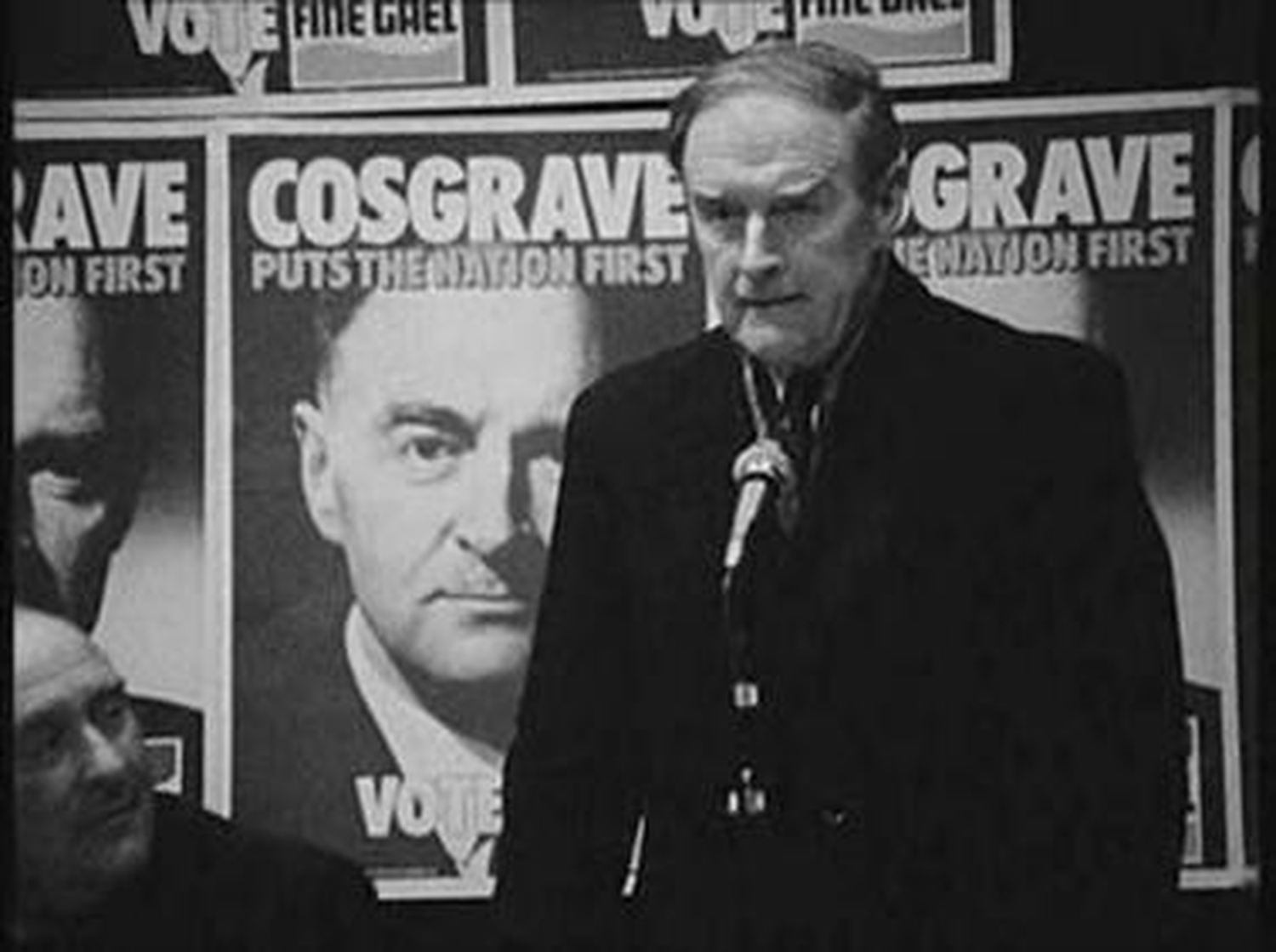
Incidentally, the 'Fr Dominic' mentioned, above, was Fr Dominic O'Connor (Order of Friars Minor Capuchin, pictured, being led away by Free Staters from 'the battle of the Four Courts', in 1922) - it is recorded that the then 'President of the Executive Council of the Irish Free State' [aka 'Taoiseach'], Mr WT Cosgrave, did not agree with the political outlook voiced by the Capuchins and he wrote to the Archbishop, Edward J Byrne, to voice his objections and, in one such letter, actually accused Fr Dominic of "treasonous acts"!
Fr Dominic was, at the time, the chaplain to the local IRA Cork Brigade, and is on record for a reply he gave to the church hierarchy in relation to their anti-republican/pro-British sermons :
"Kidnapping, ambushing, and killing obviously would be grave sins or violation of Canon Law.
And if these acts were being performed by the Irish Volunteers as private persons, they would fall under excommunication.
But they are doing them with the authority of the Republic of Ireland.
Hence the acts performed by the Volunteers are not only not sinful, but are good and meritorious...therefore the excommunication does not affect us. There is no need to worry about it.
There is no necessity for telling a priest in confession that you went to Mass on Sunday, so there is no necessity to tell him one is in the IRA, or that one took part in an ambush or killing etc".
In another letter of complaint that he sent, Mr Cosgrave referred to a different priest, a Fr John Costello, and complained to the Archbishop that that priest had made it his business to approach Free State troops, in 1922, and called on them to lay down their arms ; when they declined to do so, he would call them "murdering green Black and Tans"!
As 'Lord Cosgrave' probably said, in private -
"It rings in my ears as kind of what miserable drones and traitors have I nourished and brought up in my household, who let their lord and president be treated with such shameful contempt by a low-born cleric?
Will no one rid me of this meddlesome priest?" (!)
Sometimes one has to be 'meddlesome' in order to be honourable...
THE GREAT OIL AND GAS ROBBERY...
From 'Magill' Magazine, October 2005.
"I spent an hour with Micheál Ó Seighin (pictured), one of the Rossport Five.
Micheál received us very graciously in the small visiting box. He is a small, quietly-spoken man in his late 60s.
"Tá sibhse ag dhéanamh obair go hiontach. Congratulations. Bhí an scéal Dé Luan go han, han mhaith. Ceim mhór", he said..."

Micheál Ó Seighin.

Michael McDowell.

Pat Rabbitte.
"Is this where you get your visits?"
"We get closed visits", he said. "There is a screen between us and our families. We have no physical contact on visits."
"Even the Brits don't do that", I said.
Micheál grinned at us.
"I knew nothing about prisons before coming here but the people who are in and out of jail hate Cloverhill. They say that it is worse than the Joy and the Midlands. I suppose it's to deal with the drugs problem. Drugs are creating havoc everywhere it seems. I never knew it was so bad until I came here.
I've met some young men here who are not going to last on the outside. They told me that. One of them, he's from Ballymun, was telling me about the turf wars. 'Two things I'm sure of', he told me, 'I'll be back on drugs when I get out. And I'll be killed.'"
It was obvious that Micheál cared deeply about all this.
He had a book with him - 'Nature's Way', by Ian Stewart, and I told him that we had left some books in for him and the other men.
"This book is about chaos", he said ; "A butterfly can flap its wings in Tokyo and cause a storm halfway across the world..."
(The third [ie last] pic above shows a Mr Patrick Rabbitte, ex-State Labour Party leader and ex-'State Minister for Communications, Energy and Natural Resources' ; Mr Rabbittee retired as State Labour Party leader in 2007, and from political life altogether in 2016, on a combined pension package worth over €2 million to him!)
(MORE LATER.)
ON THIS DATE (29TH APRIL) 427 YEARS AGO : DEVIL CHRISTENED ON EARTH.

"The term 'slavery' is rarely associated with the white race, although during the 1600's this was the most significant portion of the market.
More specifically, the Irish were targeted the most and the fact that the population of Ireland fell by 850,000 in the space of one decade highlights just how brutal things were...he (Oliver Cromwell, pictured) is one of the main reasons why the situation got to this point.
His fanatical anti-Catholic views meant that any action he took over the Irish was brutal to say the least and as well as utilising the conquest of Ireland for religious and political means, he was bidding to cleanse the country of Catholics.
In achieving this, selling the Irish off as slaves was one of his biggest weapons, but he also made sure life was as difficult as possible for those that did stay by burning off their crops, removing them from their land.." (from here.)

Pictured - some of Oliver Cromwell's Irish victims, sold as slaves and 'sex workers' to the highest bidder.
On the 29th April, 1599 - 427 years ago on this date - a baby boy, Oliver Cromwell, who had been born on the 25th April, was christened in Saint John the Baptist church in Huntingdon, England.
Decades later, when someone was trawling through the birth records for that period, they came across an unofficial addendum to that particular entry : it read -
"England's plague for five years..."
Cromwell should need no introduction to readers of this blog, but some readers may not be aware of the significance of a particular date - the 3rd September - in relation to the time he wreaked havoc on this Earth.
That creature died on that date in 1658, and it was also on that same date, in 1649, that he began his nine-day siege of Drogheda after which thousands of its inhabitants were butchered (..but they deserved it, according to the man himself - "This is a righteous judgement of God upon these barbarous wretches, who have imbrued their hands in so much innocent blood..").
The infamous 'Death March', which he forced on his enemy after the battle of Dunbar, took place on the 3rd September (in 1650) and, one year later on that same date - the 3rd September, in 1651 - he wallowed in more blood and guts, this time in his own country, at the battle of Worcester.
And, somewhere in between wrecking havoc and stealing and selling Irish children, he found the time (on the 27th September in 1649) to write to his political bosses in London :
'FOR THE HONOURABLE WILLIAM LENTHALL, ESQUIRE, SPEAKER OF THE PARLIAMENT OF ENGLAND :
Dublin, 27th September 1649.
Mr. Speaker - I had not received any account from Colonel Venables - whom I sent from Tredah to endeavour the reducing of Carlingford, and so to march Northward towards a conjunction with Sir Charles Coote - until the last night. After he came to Carlingford, having summoned the place, both the three Castles and the Fort commanding the Harbour were rendered to him. Wherein were about Forty Barrels of Powder, Seven Pieces of Cannon ; about a Thousand Muskets, and Five-hundred Pikes wanting twenty. In the entrance into the Harbour, Captain Fern, aboard your man-of-war, had some danger ; being much shot at from the Sea Fort, a bullet shooting through his main-mast. The Captain's entrance into that Harbour was a considerable adventure, and a good service ; as also was that of Captain Brandly, who, with Forty seamen, stormed a very strong Tenalia at Tredah, and helped to take it ; for which he deserves an owning by you.
Venables marched from Carlingford, with a party of Horse and Dragoons, to the Newry ; leaving the place, and it was yielded before his Foot came up to him. Some other informations I have received form him, which promise well towards your Northern Interest ; which, if well prosecuted, will, I trust God, render you a good account of those parts. I have sent those things to be presented to the Council of State for their consideration. I pray God, as these mercies flow in upon you, He will give you an heart to improve them to His glory alone ; because He alone is the author of them, and of all the goodness, patience and long-suffering extending towards you. Your army has marched ; and, I believe, this night lieth at Arklow, in the County of Wicklow, by the Sea-side, between thirty and forty miles from this place. I am this day, by God's blessing, going towards it.
I crave your pardon for this trouble; and rest, your most humble servant, OLIVER CROMWELL.
P.S. I desire the Supplies moved for may be hastened. I am verily persuaded, though the burden be great, yet it is for your service.
If the Garrisons we take swallow-up your men, how shall we be able to keep the field? Who knows but the Lord may pity England's sufferings, and make a short work of this?
It is in His hand to do it, and therein only your servants rejoice. I humbly present the condition of Captain George Jenkin's Widow. He died presently after Tredah Storm. His Widow is in great want.
The following Officers and Soldiers were slain at the storming of Tredah: Sir Arthur Ashton, Governor; Sir Edmund Varney, Lieutenant-Colonel to Ormond’s Regiment; Colonel Fleming, Lieutenant-Colonel Finglass, Major Fitzgerald, with eight Captains, eight Lieutenants, and eight Cornets, all of Horse; Colonels Warren, Wall, and Byrn, of Foot, with their Lieutenants, Majors, etc; the Lord Taaff’s Brother, an Augustine Friar; forty-four Captains, and all their Lieutenants, Ensigns, etc; 220 Reformadoes and Troopers; 2,500 Foot-soldiers, besides the Staff-Officers, Surgeons, etc.'
A butcher of even his own forces.
But he was appreciated in some circles...


On the 29th April, 1920, an estimated 3,000 people over-filled the Market Square in the village of Athy, in the county of Kildare.
They were there to say a loud and genuine 'Fáilte Abhaile!' ('Welcome Home!') to IRA Volunteer Eamon ('Edward/Ned') Malone, from the locality of Barrowhouse, Dunbrin, in that same county.
IRA Commandant Eamon Malone had been 'arrested' by the British in 1919 and held in Mountjoy Jail, in Dublin, where he went on hunger-strike before being released.
His uncle was Reverend James J. Malone, an author and a Catholic Priest based in Australia, and his cousin, Christiana, was a member of Cumann na mBan in the area.
Incidentally, Volunteer Eamon Malone formed a branch of 'The Irish Volunteers' in Athy in 1917, and had assisted in the formation, locally, in July 1914, of a branch of Cumann na mBan and, in August 1914, he had assisted in establishing the republican youth group Na Fianna Éireann in the area.
Volunteer Eamon 'Edward/Ned' Malone died from asthma-related illnesses at 45 years of age in 1939, in Sutton, County Dublin, and is buried in Barrowhouse Cemetery, in Kildare.
(The one 'downer' from the 'Welcome Home!' rally on the 29th was that a Mr Arthur James Kickham ['Art'] O'Connor delivered the 'Welcome Home' speech ; Mr O'Connor was a 'republican-gamekeeper-turned-Free State-poacher'.)
RIP Volunteer Eamon 'Edward/Ned' Malone.
==========================

On the 29th, as British soldiers and their spies were watching Market Square, Athy, for the homecoming ceremony, other British soldiers, hoping that there were no spies around, were undertaking a 'ceremony' of their own!
Some of the British troops from the 'Royal Horse Artillery' (pictured), who were billeted in Kildare town, met with some of the local IRA Volunteers, as arranged, and the deal was struck ; the rebels purchased 17 revolvers and 723 rounds of ammunition from the enemy troops, and both sides went back to their bases, all in good form!
It sounds unlikely, but it actually happened more than some readers might know about - arms sales from British soldiers to the IRA were a frequent and significant source of weaponry, particularly in Dublin and other garrison towns.
Disgruntled or sympathetic British soldiers, often looking to make extra money or to escape military life, sold their equipment regularly ; the Dublin Brigade IRA, for example, managed to purchase hundreds of rifles from a British Army Quartermaster at Wellington Barracks (Dublin) - in one known instance, two Irish-born British Army soldiers smuggled 4,000 rounds of .303 ammunition from the Athlone barracks and sold the packages to the IRA, with a few revolvers and rifles thrown-in to sweeten the deal, and BA troops stationed at Richmond Barracks (Dublin) were known to sell quantities of rifles to the rebels for £4 each!
In areas outside of Dublin, some British soldiers heading home on leave would sell their service rifles to local Volunteers because they "hated soldiering" and wanted extra money for their journey home and, in one instance that is known about (in 1922), a heavy-duty 'Hotchkiss Machine Gun' was sold to the IRA by British Army engineers who were converting a British naval vessel for civilian use.
Arms were not only sold but also frequently taken, traded, or seized by the IRA from RIC and British Army installations throughout the country and abroad - IRA agents/middlemen (like Owen Moore and Thomas Treacy) operated in London, securing revolvers and ammunition through local gunsmiths and underworld contacts and, in Scotland, the IRA cultivated links with German arms dealers and even broke into university chemistry departments to manufacture explosives.
Also, a steady supply was available from demobilised soldiers who, after 'WWI', kept their service weapons as souvenirs and were often willing to sell them on the black market for cash, and those weapons would be smuggled into Ireland hidden in legitimate cargo ; crates of rifles were smuggled through Liverpool and Southampton by sympathetic Irish dockers and crew members.
Once landed, small arms and ammunition would be carried by Cumann na mBan women, who used their status as civilians to transport such 'contraband' in personal luggage or, before being landed in Ireland, the weaponry would be loaded at sea onto fishing trawlers and yachts.
Indeed - many times throughout this on-going struggle, we have felt like we were all at sea, but we've always managed to reach the shore...
==========================

As that deal was being processed in Athy, County Kildare, about 75km (45 miles) up the road and over to the right (!), in the village of Rush, County Dublin, it was announced locally that an RIC member who had been shot by the IRA on the night of the 20th April was "still dangerously ill" in the Mater Hospital, in Dublin.
Mr John Brady (50, with about 25 years 'service in the force'), an RIC sergeant, was wounded in an attack on Rush RIC Barracks and died from his wounds on the 9th May.
He was born in Bray, County Wicklow, into a farming household, and is buried in Saint Brigid's Cemetery in Killoughter, County Cavan.
==========================

THE MONTH UNSPUN...
The stories that hit the headlines.
From Magill magazine, August 2002.
Expect some efforts to give convincing reassurance that standards will be reviewed but, if George Bush's efforts at same in the US recently are anything to go by, the average investor will remain hugely sceptical.
FAI TAKES SKY-DIVE :
Fresh from the controversial events surrounding Roy Keane's departure from Ireland's World Cup campaign, the FAI sold the rights to our home qualifying matches for the European Championships to SKY for €7.5m, believing the deal was too good to turn down.
RTE claimed that the FAI finished negotiations with the broadcaster unexpectedly and had no way of knowing what RTE's highest bid would be and, meanwhile, TV3 had obtained the rights to screen the matches one hour after they had finished.
The government initially claimed that there was nothing they could do about the sale, until it emerged that the EU's 'Television Without Frontiers' directive could still apply, and Ireland soccer matches, along with other notable sporting events such as the All-Ireland final, could be protected in the same way as Wimbledon and the FA Cup are in England ; in a final twist, Sky bid for Ireland's away matches also, but as yet have not obtained them...
(MORE LATER.)


On the 29th April, 1921, eleven RIC members (including a 'police sergeant' and a 'district inspector') were travelling in two Crossley Tender trucks and, near Castlelack National School (about five miles from the town of Bandon, County Cork) they came across a ten-foot-wide trench in the road, dug by IRA Volunteers to impede the movement of enemy forces.
The two top RIC members ordered the other nine men to get out of the trucks and fill the trench in - they disembarked, placed their rifles against a fence and set to work.
One of them, a Mr John Edward Bunce (31, 'Service Number 79386'), a married man from the county of Kerry, was told to place himself on guard duty, and he headed towards a nearby piece of high ground.
Just as he did so a gunshot was fired, and Mr Bunce collapsed and slipped down from his vantage point.
One of his RIC buddies went over to him and found that he was bleeding from both legs, was in shock and in pain.
It transpired that one of the rifles which had been propped-up against the fence had fallen over and, on hitting the ground, had discharged one shot, which passed through Mr Bunce's legs.
As his pals tried to stop the bleeding, Mr Bunce shouted at them "What are my wife and kiddies going to do now..?" - he was still in shock, was hemorrhaging, and died from the wound.
The RIC record of the shooting stated that it was "..another case of ignorance in handling arms..the safety catch was off and no reason for it..."
('1169' comment - the 'Police Remembrance Trust' organisation gives a wrong date and incorrect location for the shooting ; as they might say themselves - "no reason for having done that, except carelessness...")
==========================

At the same time as Mr Bunce lay dying in a muddy field, one of his military bosses, 'Field Marshal' (!) Mr John French (pictured), was feeling hard done by about 250 km (155 miles) away up the road and over a bit on yer right (!), in Dublin.
In 1918, Mr French had been appointed by his friends in Westminster as the 'Lord Lieutenant of Ireland' (the 'Viceroy') but a new face and attitude was needed for the position in 1921 as a 'peace initiative' with Mr Michael Collins and his people was being discussed - Mr French, a reminder of the bad old days (!) had to go.
The man wasn't too happy about his enforced 'career move' but found himself between a rock and a hard place - he was being replaced as 'Lord Lieutenant' by a Mr Edmund Talbot ('1st Viscount FitzAlan of Derwent' - !), a friend of his, so he 'left office' a bit quieter than he otherwise might have!
And we're sure that his appointment a few months afterwards as the '1st Earl of Ypres', and the £50,000 'retirement grant' that was thrown in with the title, and his later appointment as 'Captain of Deal Castle' in Kent, in his own country had nothing a'tall to do with him accepting the move...!
==========================

On the 15th September, 1920, a Mr Sean O'Callaghan (28), an ex-British Army soldier ('Royal' Munster Fusiliers and the Worcestershire Regiment) was shot dead by the IRA in Cork City.
Mr O'Callaghan was employed by the British Army as a clerk in Victoria Barracks in Cork City and was arrested by two IRA men (Volunteer Patrick Collins and Volunteer Jeremiah Keating) from 'G Company', 2nd Battalion, Cork No. 1 Brigade IRA, and taken to the Farmer's Cross area of the city.
He was shot dead and his remains were never recovered ; he had discussed IRA business over a phone which had an IRA tap on it with a British Army Captain, a Mr Kelly, who was the 'Intelligence Officer' for the BA 6th Division and, during their discussion, a Mr Stephen O'Callaghan (no relation) was mentioned.
Mr Stephen O'Callaghan (29), also an ex-British Army soldier who had also 'served' with the 'Royal' Munster Fusiliers and the Worcestershire Regiment, was an out-of-work dock labourer who was trying to get by on a BA disability pension.
On the 29th April, 1921, he was shot dead in Cork by the IRA, who pinned a 'SPY'S BEWARE!' notice to his coat.
==========================
DEATH IN THE MEDITERRANEAN...

Desmond Boomer, a Belfast engineer working in the Libyan oil-fields, disappeared seven years ago.
Officially, the plane on which he was a passenger crashed as a result of mechanical failure and pilot error.
But is that the real story?
Or were the Irishman and his fellow passengers unwitting victims of the shady war between Islamic fundamentalism and Mossad, Israel's intelligence network?
A special 'Magill' investigation by Don Mullan, author of 'Eyewitness Bloody Sunday'.
From 'Magill' magazine, January 2003.
The front-page article, written by journalists Joe Mifsud and Felix Agius, claimed that the Shqaqi assassins may have left Malta on a Maltese private plane, flown by a Maltese pilot.
Alarmingly, the paper printed alongside this story a photograph of an aircraft which the bereaved families say was similar to one owned by Captain Bartolo.
'The Times Of Malta' newspaper, four days later, led with the headline - 'Shqaqi's Assassins May Have Left Malta On Private Plane' ; the article, penned by journalist Sharon Spiteri, stated that the Maltese police had received information from Interpol detailing how the assassins left the island.
That newspaper stated that no further details could be given, citing security reasons for this, but the article went on to state that "...other sources said the police were working on the theory that the men left the island on board a private plane hired from a local company and flown by a Maltese pilot.."
But, the following day, that newspaper carried a small front-page article saying that the Maltese police commissioner had refuted those assertions...
(MORE LATER.)


On the 29th April, 1922, 'The Roscommon Herald' newspaper reported on the burning of the Parke Masonic Hall in Carrick-on-Shannon, County Leitrim : the structure had been deconstructed (!) by the IRA ('the Irregulars') as per their intention to deny resources to British and pro-British forces.
Ballinamore, County Leitrim : The Masonic Hall in that town was noted as one of the first to be destroyed ; the IRA attacked it in the early hours of the 17th April 1920.
Dublin : On April 24–25th, 1922, the IRA seized the Freemason Hall on Molesworth Street, occupying it for 38 days.
Ballinasloe, County Galway : A Masonic Hall was attacked by "the Irregulars" in July 1922.
Wexford : The front of a building was partially burned by armed men on the 23rd November, 1922.
Mullingar, County Westmeath : Armed men raided a Masonic Hall, smashing windows and furniture, and poured petrol over the debris, but complete destruction was reportedly prevented by the intervention of a local priest.
Raphoe, County Donegal : the IRA commandeered and fortified the Masonic Hall on the 28th April, 1922, using it as a garrison.
Dundalk, County Louth : The Masonic Hall was raided, with books and property seized ; the members were given notice to leave the town and most of them fled to Belfast.
Freemasonry in Ireland during the 1920's was considered by the IRA to be a pro-British and imperialist-minded organisation ; they were not a formal military unit campaigning against the IRA, but they were associated with the British 'Establishment' and the Unionist movement, making them targets for republican attacks.
==========================

On the 29th April, 1922, 'The Clare Champion' newspaper reported that a 91-year-old man, a Mr James McGuane, Coolmeen, West Clare, had been taken from his bed and shot.
Mr McGuane died from his wound.
This was apparently the result of an agrarian dispute, and we could find no information regarding the who, what and why.
==========================
ON THIS DATE (29TH APRIL) 110 YEARS AGO - THOMAS PATRICK ASHE / BATTLE OF ASHBOURNE.

Thomas Patrick Ashe, pictured, was born in Lispole, in County Kerry, on the 12th of January, 1885, the seventh of ten siblings. He was active in Irish republicanism, trade unionism and cultural circles, and commanded the 5th Battalion of the Dublin Brigade which won the Battle of Ashbourne on the 29th of April 1916 (a battle which lasted for over five hours), 104 years ago on this date. He qualified as a teacher in 1905 at De La Salle College, Waterford and after teaching briefly in Kinnard, County Kerry, in 1906 he became principal of Corduff National School in Lusk, County Dublin.
He was a fluent Irish speaker and a member of the Keating branch of the Gaelic League and was an accomplished sportsman and musician setting up the Round Towers GAA Club as well as helping to establish the Lusk Pipe Band. He was also a talented singer and poet who was committed to Conradh na Gaeilge.

The funeral procession in Dublin, 30th September 1917 (pictured) for Thomas Ashe, an IRB leader who died on the 25th September that year, after being force fed by his British jailers - he was the first Irish republican to die as a result of a hunger-strike and, between that year and 1981, twenty-one other Irish republicans died on hunger-strike.
The jury at the inquest into his death found "..that the deceased, Thomas Ashe, according to the medical evidence of Professor McWeeney, Sir Arthur Chance, and Sir Thomas Myles, died from heart failure and congestion of the lungs on the 25th September, 1917 and that his death was caused by the punishment of taking away from the cell bed, bedding and boots and allowing him to be on the cold floor for 50 hours, and then subjecting him to forcible feeding in his weak condition after hunger-striking for five or six days.."
Michael Collins organised the funeral and transformed it into a national demonstration against British misrule in Ireland ; armed Irish Republican Brotherhood Volunteers in full uniform flanked the coffin, followed by 9,000 other IRB Volunteers and approximately 30,000 people lined the streets.
A volley of shots was fired over Ashe's grave, following which Michael Collins stated - "Nothing more remains to be said. That volley which we have just heard is the only speech which it is proper to make over the grave of a dead Fenian."
The London-based 'Daily Express' newspaper perhaps summed it up best when it stated, re the funeral of Thomas Ashe, that what had happened had made '100,000 Sinn Féiners out of 100,000 constitutional nationalists.'
The level of support shown gave a boost to Irish republicans, and this was noted by the 'establishment' in Westminster - 'The Daily Mail' newspaper claimed that, a month earlier, Sinn Féin, despite its electoral successes, had been a waning force.
That newspaper said -
'..It had no practical programme, for the programme of going further than anyone else cannot be so described. It was not making headway. But Sinn Féin today is pretty nearly another name for the vast bulk of youth in Ireland..'
Politically, he was a member of the Irish Republican Brotherhood (IRB) and established IRB circles in Dublin and Kerry and eventually became President of the Supreme Council in 1917. While he was actively and intellectually nationalist he was also inspired by contemporary socialism.
Ashe rejected conservative Home Rule politicians and as part of that rejection he espoused the Labour policies of James Larkin. Writing in a letter to his brother Gregory he said "We are all here on Larkin's side. He'll beat hell out of the snobbish, mean, seoinín employers yet, and more power to him".
He supported the unionisation of north Dublin farm labourers and his activities brought him into conflict with landowners such as Thomas Kettle in 1912. During the infamous lockout in 1913 he was a frequent visitor to Liberty Hall and become a friend of James Connolly. Long prior to its publication in 1916, Thomas Ashe was a practitioner of Connolly’s dictum that "the cause of labour is the cause of Ireland, the cause of Ireland is the cause of labour".
In 1914, he travelled to the United States where he raised a substantial sum of money for both the Gaelic League and the newly formed Irish Volunteers of which he was an early member.
Volunteer Ashe founded the Volunteers in Lusk and established a firm foundation of practical and theoretical military training, and provided charismatic leadership first as Adjutant and then as O/C (Officer Commanding) the 5th Battalion of the Dublin Brigade.
He inspired fierce loyalty and encouraged personal initiative in his junior officers and was therefore able to confidently delegate command to Charlie Weston, Joseph Lawless, Edward Rooney and others during the Rising and, most significantly, he took advantage of the arrival of Richard Mulcahy at Finglas Glen on the Tuesday of the Rising and appointed him second in command.
The two men knew one another through the IRB and Gaelic League and he recognised Mulcahy’s tactical abilities. As a result he allowed himself to be persuaded by Mulcahy not to withdraw following the unexpected arrival of the motorised force at the Rath crossroads.
At Ashbourne on the 28th of April, Volunteer Ashe also demonstrated great personal courage, during a battle which lasted over five hours, first exposing himself to fire while calling on the RIC in the fortified barracks to surrender and then actively leading his Volunteers against the RIC during the fight.
After the 1916 Rising he was court-martialled (on the 8th of May 1916) and was sentenced to death, but the sentence was commuted to penal servitude for life.
He was incarcerated in a variety of English prisons before being released in the June 1917 general amnesty and immediately returned to Ireland and toured the country reorganising the IRB and inciting civil opposition to British rule.
In August 1917, after a speech in Ballinalee, County Longford, he was arrested by the RIC and charged with "speeches calculated to cause disaffection" ; he was detained in the Curragh camp and later sentenced to a year's hard labour in Mountjoy Jail - he became O/C of the Volunteer prisoners, and demanded prisoner-of-war status and, as a result, he was punished by the Governor.
He went on hunger strike on the 20th September 1917 and five days later died as a result of force-feeding by the prison authorities. He was just 32 years old.
The death of Thomas Ashe resulted in POW status being conceded to the Volunteer prisoners two days later.
Thomas Ashe's funeral was the first public funeral after the Rising and provided a focal point for public disaffection with British rule. His body lay in state in Dublin City Hall before being escorted by armed Volunteers to Glasnevin Cemetery.
30,000 people attended the burial where three volleys were fired over the grave and the Last Post was sounded. While imprisoned in Lewes Jail in 1916, Thomas Ashe had written his poem 'Let Me Carry Your Cross for Ireland, Lord' which later provided the inspiration for the Battle of Ashbourne memorial unveiled by Sean T. O'Kelly on Easter Sunday, 26th April 1959 at the Rath Cross in Ashbourne :

Let me carry your Cross for Ireland, Lord, the hour of her trial draws near, and the pangs and the pains of the sacrifice, may be borne by comrades dear.
But, Lord, take me from the offering throng, there are many far less prepared, through anxious and all as they are to die, that Ireland may be spared.
Let me carry your Cross for Ireland, Lord, my cares in this world are few, and few are the tears will for me fall, when I go on my way to You.
Spare Oh! spare to their loved ones dear, the brother and son and sire, that the cause we love may never die, in the land of our heart's desire!
Let me carry your Cross for Ireland, Lord! Let me suffer the pain and shame, I bow my head to their rage and hate, and I take on myself the blame.
Let them do with my body whate'er they will, my spirit I offer to You, that the faithful few who heard her call, may be spared to Roisin Dubh.
Let me carry your Cross for Ireland, Lord! For Ireland weak with tears, for the aged man of the clouded brow, and the child of tender years.
For the empty homes of her golden plains, for the hopes of her future, too! Let me carry your Cross for Ireland, Lord! For the cause of Roisin Dubh.
(from here.)
Thomas Patrick Ashe - born 12th January 1885, died, at 32 years of age, on the 25th September 1917.


On the 29th April, 1924, 'The Daily Herald' newspaper printed an article under the heading 'Ulster Boundary Crisis', in which it condemned the pro-partition, anti-Irish 'Ulster Clauses' of the 1921 Treaty of Surrender.
The newspaper was not favoured by the political leadership in Westminster as it was not a 'propaganda pusher' for the 'Establishment' and was not as anti-Irish republican as Mr Lloyd George and his 'learned colleagues' would have liked.
The 'Ulster Clauses' (Articles 11 to 15, mostly) established the political mechanisms for the Occupied Six Counties to opt out of the new Irish Free State, should the (pro-British) Stormont administration decide to do so which, of course, was why the British established Stormont in the first place!
The 'Opt-Out' options, referenced in Articles 11 and 12, allowed for a 'grace period' of one month for Stormont politicians to judge the Leinster House (Free State) set-up and decide, basically, whether the occupied area should join the Staters or express allegiance to Westminster (a foregone conclusion, obviously, otherwise the 'option' would not have been offered!).
In its objection, the newspaper referenced Article 12, which established a 'Boundary Commission' ; the newspaper editor knew that such a commission, and its objective, would perpetuate the conflict rather than resolve it.
'The Daily Herald' frequently highlighted how the 'Ulster Clauses' and, indeed, the British military and political presence in Ireland, led to violence in the Occupied Six Counties and elsewhere in Ireland, viewing it as a direct result of Lloyd George's divisive policy, designed by him and his for political expediency.
A mainstream media outlet that's not bought by the politicians is sorely missed...
==========================
Thanks for the visit, and for reading - appreciated!
Sharon and the team.
(We'll be back on Wednesday, 13th May 2026 - we're taking a 'lil more time off before then, 'cause me and himself are off soon for a few days in Waterford, so the 13th is an 'almost defo' date but...ah sure, ya know yerself...!)